| Specifications |
 |
Publisher: University Of Madras |
| Author: Dr. Premeela Gurumurthy | |
| Language: English | |
| Pages: 269 (8 B/W Illustrations) | |
| Cover: Paperback | |
 |
8.5 inch X 5.5 inch |
 |
Weight 280 gm |
| Edition: 2009 | |
 |
NAJ413 |
| Delivery and Return Policies |
 |
|
 |
Returns and Exchanges accepted within 7 days |
 |
Free Delivery |


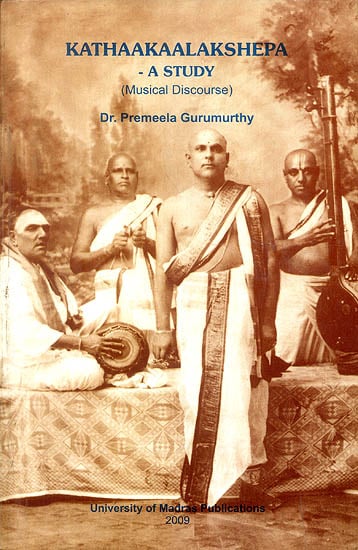
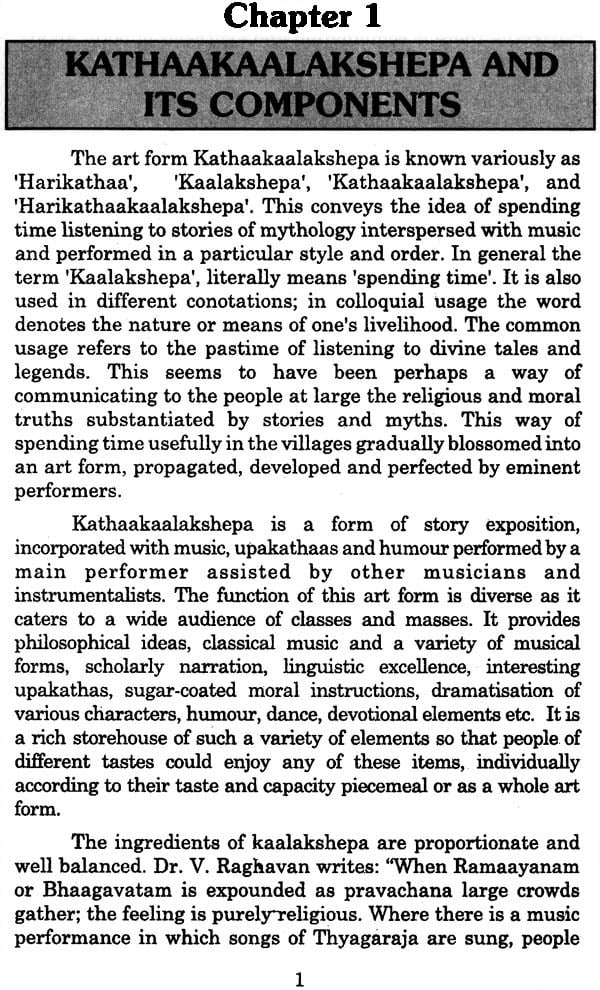
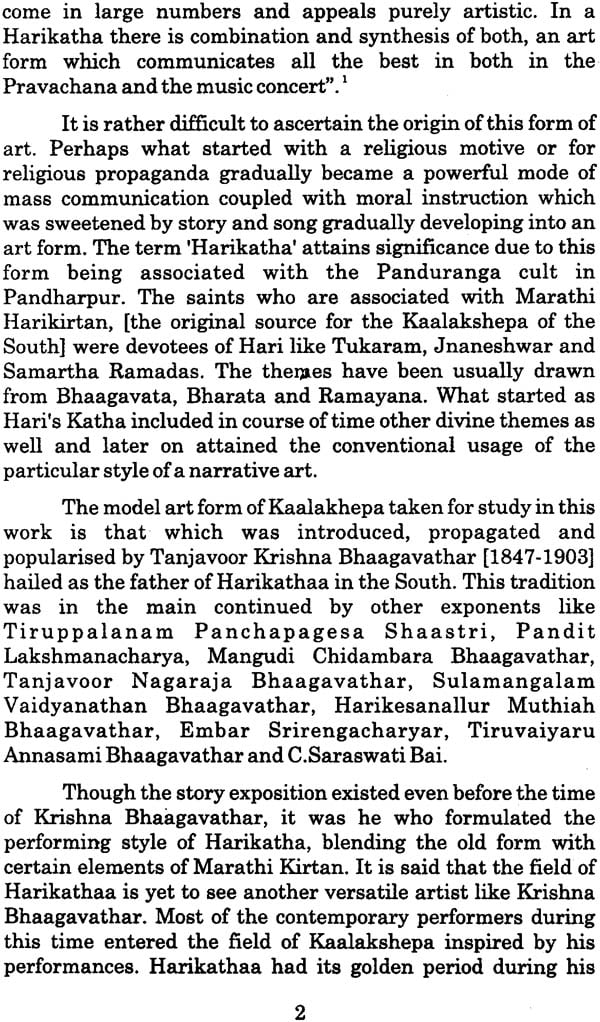
Dr. Premeela Gurumurthy, Professor and Head of the Department of Indian Music, University of Madras, is also the President and Chairperson of the School of Fine and Performing Arts. Holding two Post Graduate Degrees in Indian Philosophy and Indian Music she worked on the Art of Kathakalakshepa of the various States in India with special reference to the Tanjavur Style for her Doctoral Dissertation. This book based on her research has been acclaimed as the only authentic work analyzing the history, performance, the metrical compositions along with the contributionof the veterans of the art. She is a vocalist specialized in Karnatik and Hindustani Classical Music along with Tamil Tirumuraj hymns. She has also learnt the rudiments of Kathakalakshepa, its history and performance styles Embar S. Vijayaraghavachariar and C. Bannibai, both celebrities of this art form. She has also occasionally performed Harikatha in India and abroad. She is a rare combination of an academician who is also a vocalist of high merit who continues to perform concerts and lecture demonstrations. She was awarded a fellowship by the Cultural Ministry of the Government of India for her research in this art form. This book has been well received.
Nominated by the Governor of Tamil Nadu, she is at present a member of the Syndicate of the University of Madras. During her headship she has introduced PG Degrees in Bharatanatyam and Rhythmology along with a five-year integrated course entitled Natya consisting of two majors viz., Bharatanatyam and theatre. Apart from this, under the UICIC (University Industry Community Interaction Center) certificate courses in Karnatik Music, Harikatha and Bhajana, Hindustani Music, Western Music, voice conservation and care (in collaboration with Sri Ramachandra University) have been initiated.
I am indeed very pleased that a book on ‘Harikathakalakshepam’ has been authored by Dr. Premeela Gurumurthy. As proud patrons of our fine arts, religion, philosophy and literature, we should try to promote and preserve our traditional arts. Our temples and places of worship have been centres of learning where traditional art forms flourished.
It is timely that Dr. Premeela had taken up the study of Kathakalakshepam “a one person theatre form”. I am happy that this book is available for those interested in our arts and culture.
I have known Dr. Premeela had taken her student days and am very happy that she has blossomed out to be a musician, musicologist and scholar. Her knowledge of several languages is also a great asset to her. Her research work on Kalakshepam is commendable. I have listened to her lecture demonstrations with great interest. She is one who is devoted to her work and present her programmes to the joy and satisfaction of her listeners. Her lecture demonstrations on Gopalakrishna Bharati’s Nandan Charithram’ and ‘Harikatha’ at our music festivals, evoked great interest. Her articles in magazines are very informative and provide good reading.
| Foreword | ||
| Prof. S. Ramchandran | (i) | |
| Dr. N. Mahalingam | (iii) | |
| Sangeeta Kalaanidhi Dr. Semmangudi R. Srinivasier | (v) | |
| Kalaimamani C. Banni Bai | (vii) | |
| Acknowledgements | (ix) | |
| Source of the study | (xiv) | |
| Chapter I | Kathaakaalakshepaandi Its Components | 1 |
| The essential Features | ||
| The Historical growth | ||
| The Birth of the Tanjavur Style of kaalakshepa | ||
| Purana Pathana and Upanyasa | ||
| Kaalakshepa form prior to Krishna Bhaagavatar | ||
| Impact of Marathi Kirtan on Kathaakaalakshepa | ||
| Contribution of Periyanna and Krishna Bhaagavatar to the development of Kathaakaalakshepa | ||
| Pandit Lakmanaachaarya and Tiruppalanam Panchaapagesa | ||
| Shastri their contribution | ||
| The Tamil Tradition | ||
| Katai Paadai | ||
| Kathaakaalakshepa and Performing Arts | ||
| First set of Arts Forms | ||
| Kootiyaattam | ||
| Yakshagaana | ||
| Taala Maddale | ||
| Terukkottu | ||
| Bhagavatamela Naataka | ||
| Second set of Art Forms | ||
| Prabhandam Kottu | ||
| Chakyar Kottu | ||
| Tullal | ||
| Villu Paattu | ||
| Kanian Koottu | ||
| Burra Kathaa | ||
| Chitra Kathaa | ||
| Role of Music | ||
| Forms | ||
| Melody | ||
| Rhythm | ||
| Themes | ||
| Elements of Improvisation | ||
| Music element in the narration | ||
| Musical instruments used in Harikathaa | ||
| Tales of Kathaakaalakshepa | ||
| Seven beat Tala | ||
| Five beat Tala | ||
| Three beat Tala | ||
| Usi | ||
| Themes | ||
| Nirupana Upakathaas | ||
| Pundarikam | ||
| Dance in Harikathaa | ||
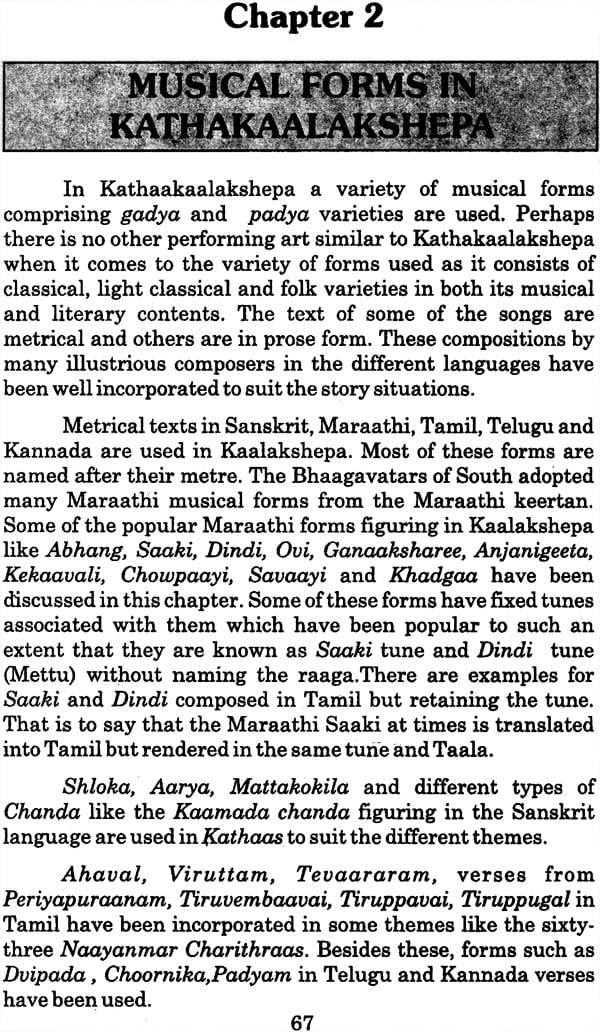
| Chapter II | Musical Forms IN Kathaakaalakshepa | 67 |
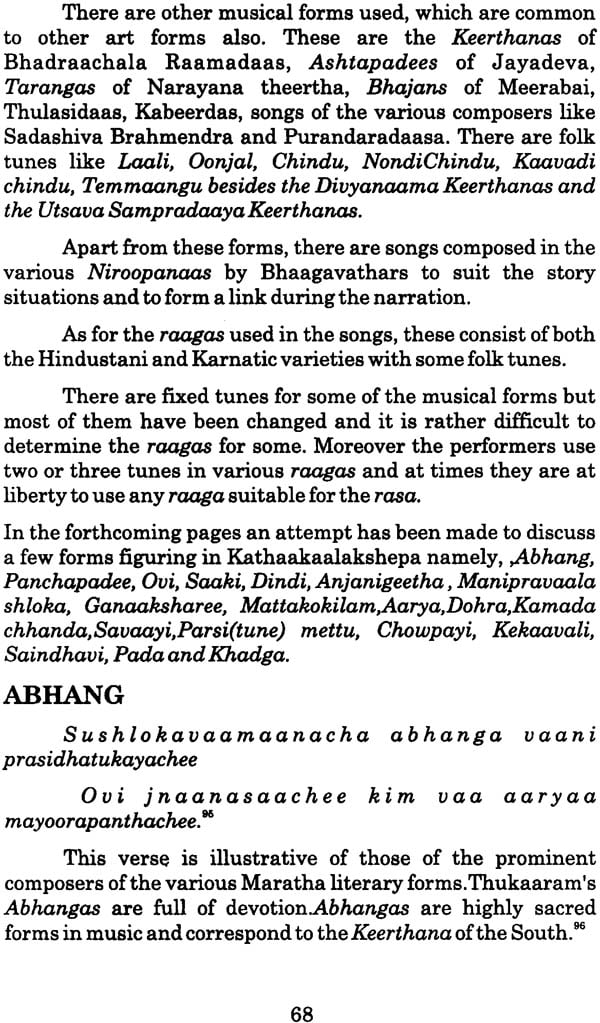
| Abhang | ||
| Panchapadi | ||
| Ovi | ||
| Saki | ||
| Dindi | ||
| Ajanigita | ||
| Manipravaala sloka | ||
| Gaanaksari | ||
| Mattakokilam | ||
| Aarya | ||
| Dohra | ||
| Kamade Chanda | ||
| Savayi | ||
| Paarsi Tune | ||
| Chowpaayi | ||
| Kekaavali | ||
| Saindhavi | ||
| Pada | ||
| Khadga | ||
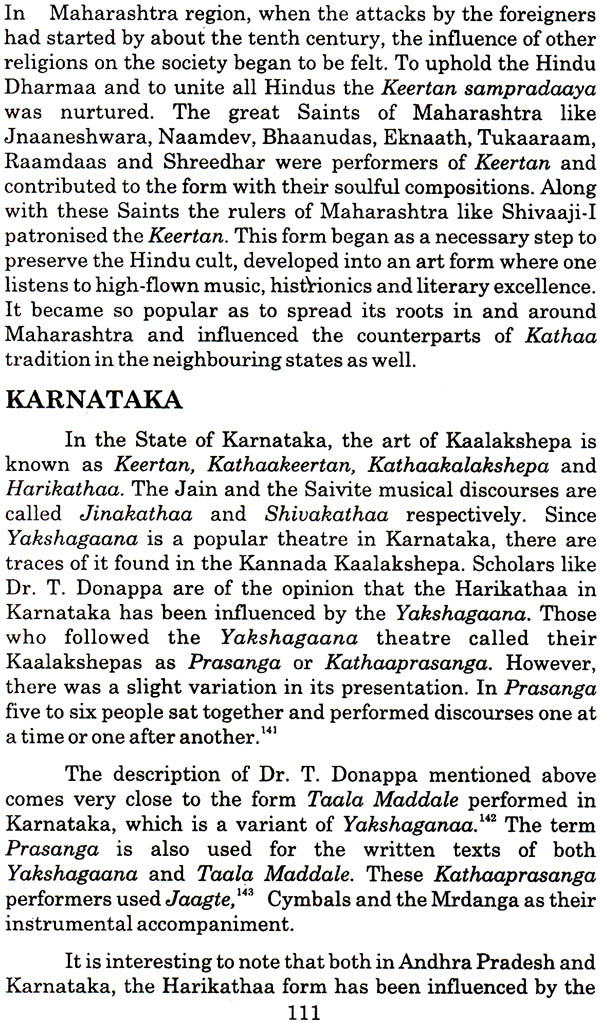
| Chapter III | Katha Tradition In The States-Maharashtra, Karnataka, Kerala And Andhra Pradesh | 105 |
| Maharashtra | ||
| The Naaradiya style | ||
| The Vaarkari style | ||
| Kathaakathan | ||
| Gaagariya purana | ||
| Karnataka | ||
| Haridaasaas | ||
| Influence of Maharashtra | ||
| Musical Forms | ||
| Patronage of the Rulers | ||
| Kerala | ||
| Pathakam | ||
| The Kottu tradition | ||
| Harikathaa | ||
| Kathaaprasangam | ||
| Andhra Pradesh | ||
| Bhajana, Harikathaa and Yakshagaana in Andhra Pradesh | ||
| Bith of the Modern Telugu Harikathaa Tradition | ||
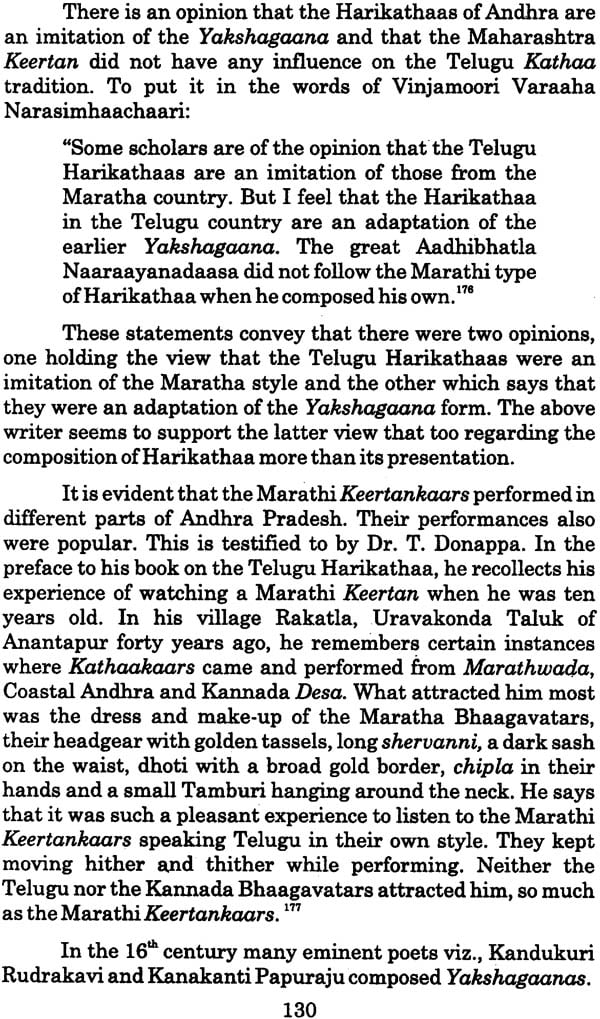
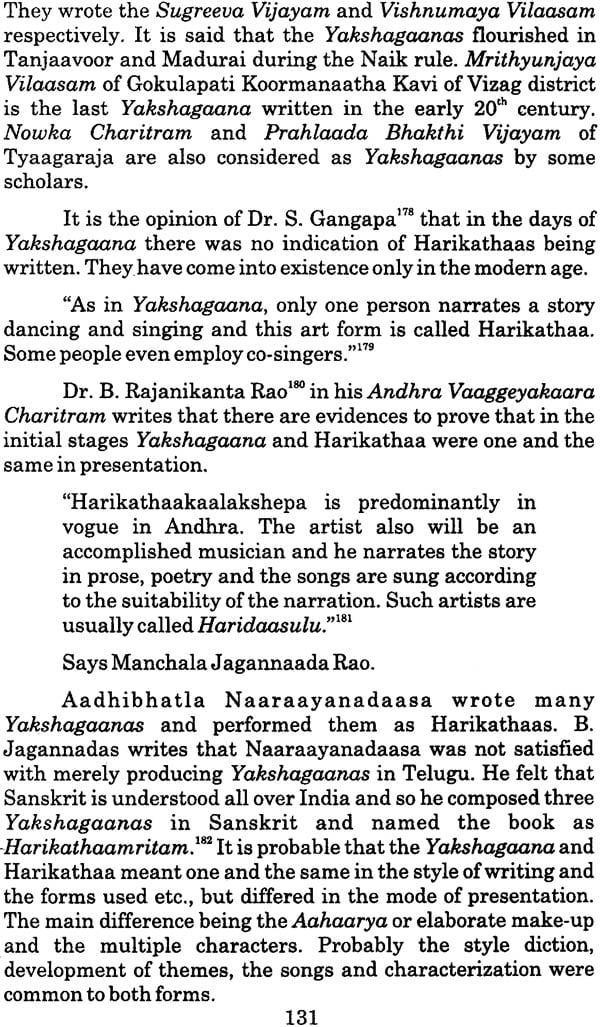
| Harikathaa and Yakshagaana | ||
| The style of performing | ||
| Music in Telugu Harikathaas | ||
| A brief outline of the Telugu Harikathaa Literature | ||
| Lady writers | ||
| Important styles of Kaala kshepa during the 19th and 20th century | ||
| Chapter IV | Performers of Harikathaa | 140 |
| Varahur Gopaala Bhaagavathar | ||
| Tanjaavoor Krishna Bhaagavatar | ||
| Hits visit to Madras | ||
| Bhaagavatar's special talents | ||
| Disciples and Upagaayakass of Tanjaavoor krishna Bhagavatar | ||
| Tanjaavoor Panchaagesa Bhaagavatar | ||
| Tanjaavoor Govinda Bhaagavatar | ||
| Tanjaavoor Naagaraaja Bhaagavatar | ||
| Tanjaavoor N. Subramania Bhaagavatar | ||
| Those who followed the style of Tanjaavoor Krishna Bhaagavatar | ||
| Soolamangalam Vaidhyanaatha Bhaagavatar | ||
| Maangudi Chidambara Bhaagavatar | ||
| Chitrakavi Sivaraama Bhaagavatar | ||
| Soolamangalam Soundaraaja Bhaagavatar | ||
| Tanjaavoor N.S. Krishna Bhaagavatar | ||
| C. Saraswathi Bai | ||
| C. Banni Bai | ||
| Pandit Lakshmanaachaaryar | ||
| Tiruppaanam Panchaapagesha Shaastri | ||
| Disciples of Tiruppalanam Panchaapagesha Shaastri | ||
| Nallur Vishwanatha Bhaagavatar | ||
| Valangaiman Raamaiah Bhagavatar | ||
| Kumbakonam S. Vadiraaja Bhaagavatar | ||
| Tiruvaiyaru D. Annasamy Bhaagavatar | ||
| The two disciples of Annasamy Bhaagavatar | ||
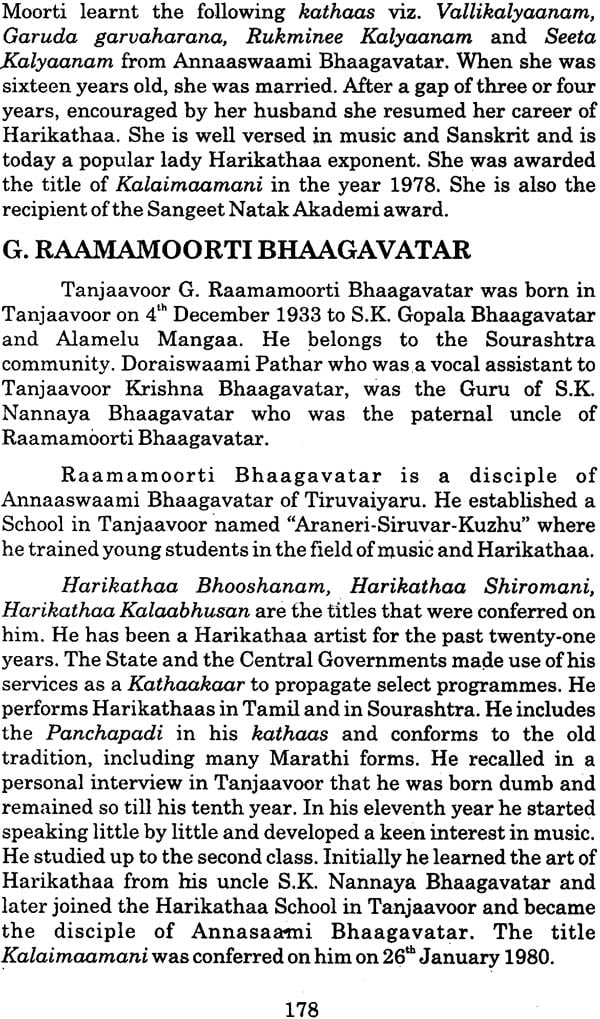
| Kamala Moorthi | ||
| G. Ramamoorthi Bhaagavatar | ||
| The Embaar School | ||
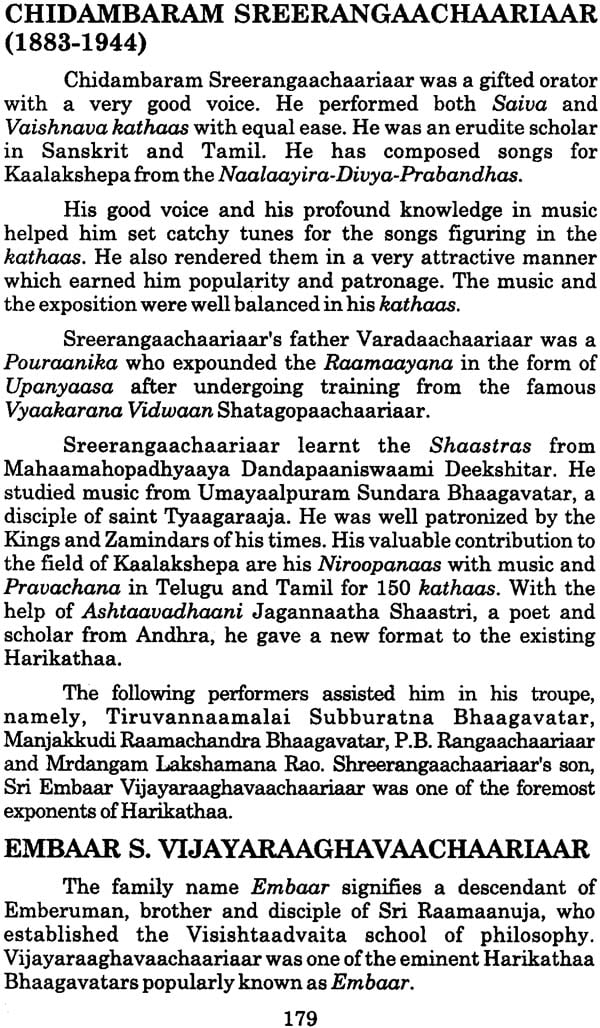
| Chidambaram Srirangaachaaryar | ||
| Embaar S. Vijayaraagavaachaaryar | ||
| Musicians who entered the field of Harikathaa | ||
| Harikesanalur Muthiah Bhaagavatar | ||
| Kallidaikurchi M. Vedanta Bhaagavatar | ||
| Mannargudi R. Saambasiva Bhaaavatar | ||
| Some other performers of Harkathaa | ||
| Palani Subramanya Bhaagavatar | ||
| P.K. Rahunaatha Bhaagavatar | ||
| Trivandrum R. Naaraayana Bhaagavatar | ||
| Brief account of some Kathaa perfomers of Maharashtra, Kamaataka, Kerala and Andhra Pradesh | ||
| Marashtra | ||
| Gayaacchaarya Daada Buva Badodekar | ||
| Kirtan Saarvabhauma Naana Buva Badodekar | ||
| Ranganath Buva Supekar | ||
| The Gadre Family of Kirtankars | ||
| Dattatreya Gadre Family of Kitankars | ||
| Dattatreya Gadre Family of Kitankars | ||
| Purushottam Dattatrey Gadre Maharaj | ||
| Raajaaram Purushottam Gadre Maharaj | ||
| Karnataka | ||
| Bhadragiri Achuta Das | ||
| Bhadragiri Kesava Das | ||
| Konanur Family of Bhaagavatars | ||
| Fururaajulu Naidu | ||
| L.Lakshmipati | ||
| Tumkur K. Venugopaladasa | ||
| Kerala | ||
| M.P. Manmadan | ||
| K.K. Vaadhyar | ||
| Joseph Kaimamparamban | ||
| V. Saambasivan | ||
| Andhra Pradesh | ||
| Aadibhatla Naaraayandas | ||
| Orighanti Seetaaraamaanjaneya Bhaagavatar | ||
| Vatlamani Narasimha Dasu | ||
| Manthripragada Lalithakumari | ||
| Ammani Bhagavatarini | ||
| Appauli Raaghavendra Rao | ||
| Mulukutla Sadasiva Shastri | ||
| Chapter V | Modern Trends | 206 |
| Public Performances | ||
| Early period | ||
| Present day | ||
| Performance style: Early Period | ||
| Present day | ||
| Upagaayakaas | ||
| Duration | ||
| Concert form | ||
| Narration, music and dance | ||
| Themes | ||
| Teaching of Harkathaa | ||
| Early period | ||
| Present day | ||
| School of Harikathaain Tanjaavoor | ||
| The Tamil Nadu Government College of Music | ||
| Kirtan Mahaavidyaalaya | ||
| The Dasaaraama International Centre | ||
| Sant Dhyaaneshwar Harikathaa Kirtan Mahaavidhyaalaya | ||
| Sri Sarvaraya Harithaa Pathasala | ||
| Harikathaa, its application | ||
| Chapter VI | Conclusion | 218 |
| The Tanjaavoor style | ||
| The contribution of Harikathaa to Carnatic Music | ||
| Performing Arts | ||
| Themes | ||
| Katha tradition in the different States | ||
| Performers of Harikathaa | ||
| Modern Trends | ||
| Suggestion for future research | ||
| Preserving the Art | ||
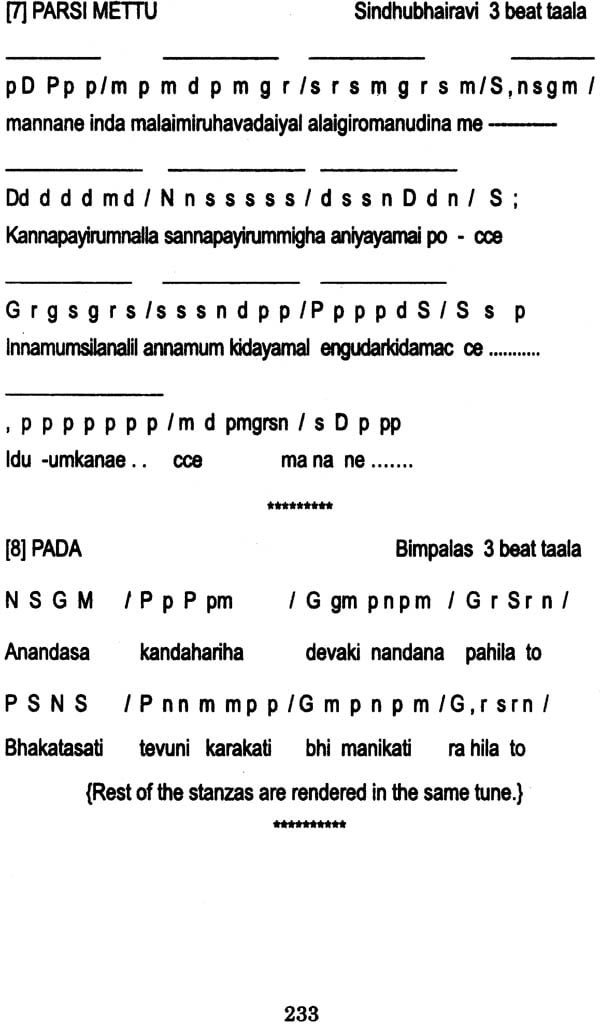
| Appendix I | Nation of some musical forms figuring in Kathaakaalakshepa | 230 |
| Bibliography | 235 |


Send as free online greeting card