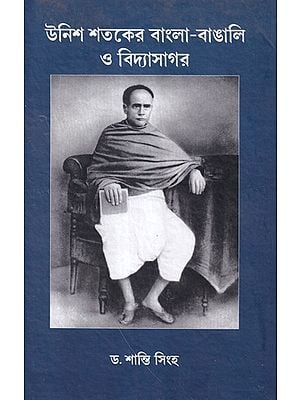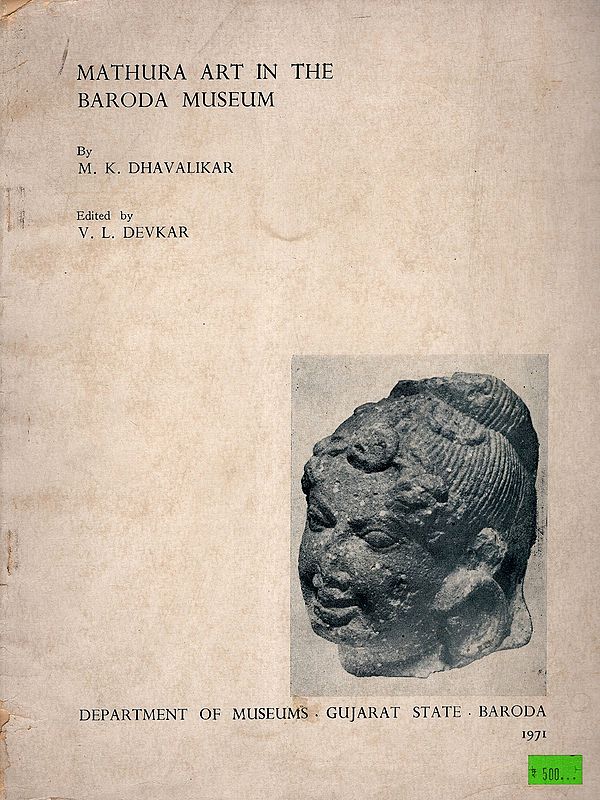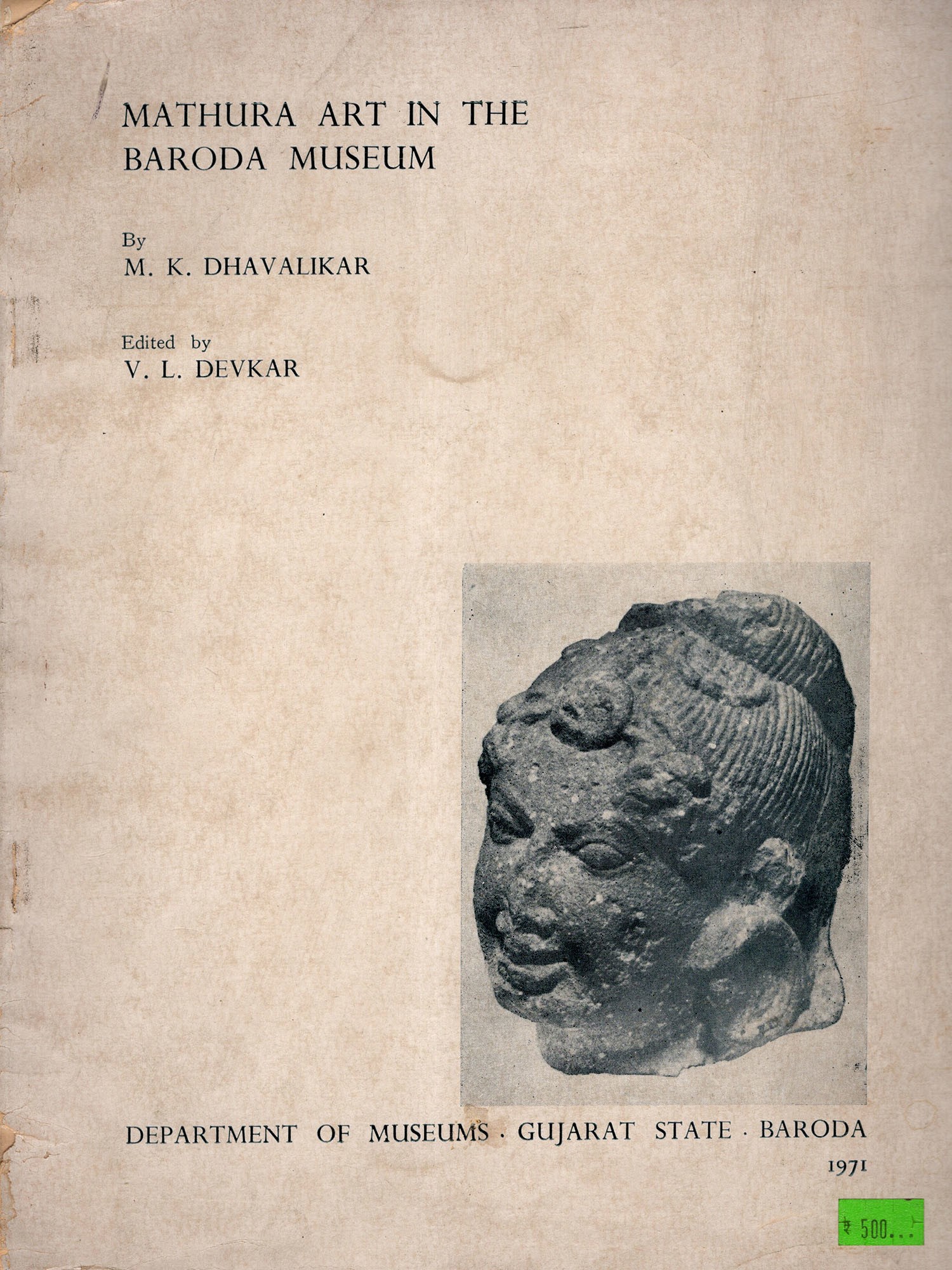
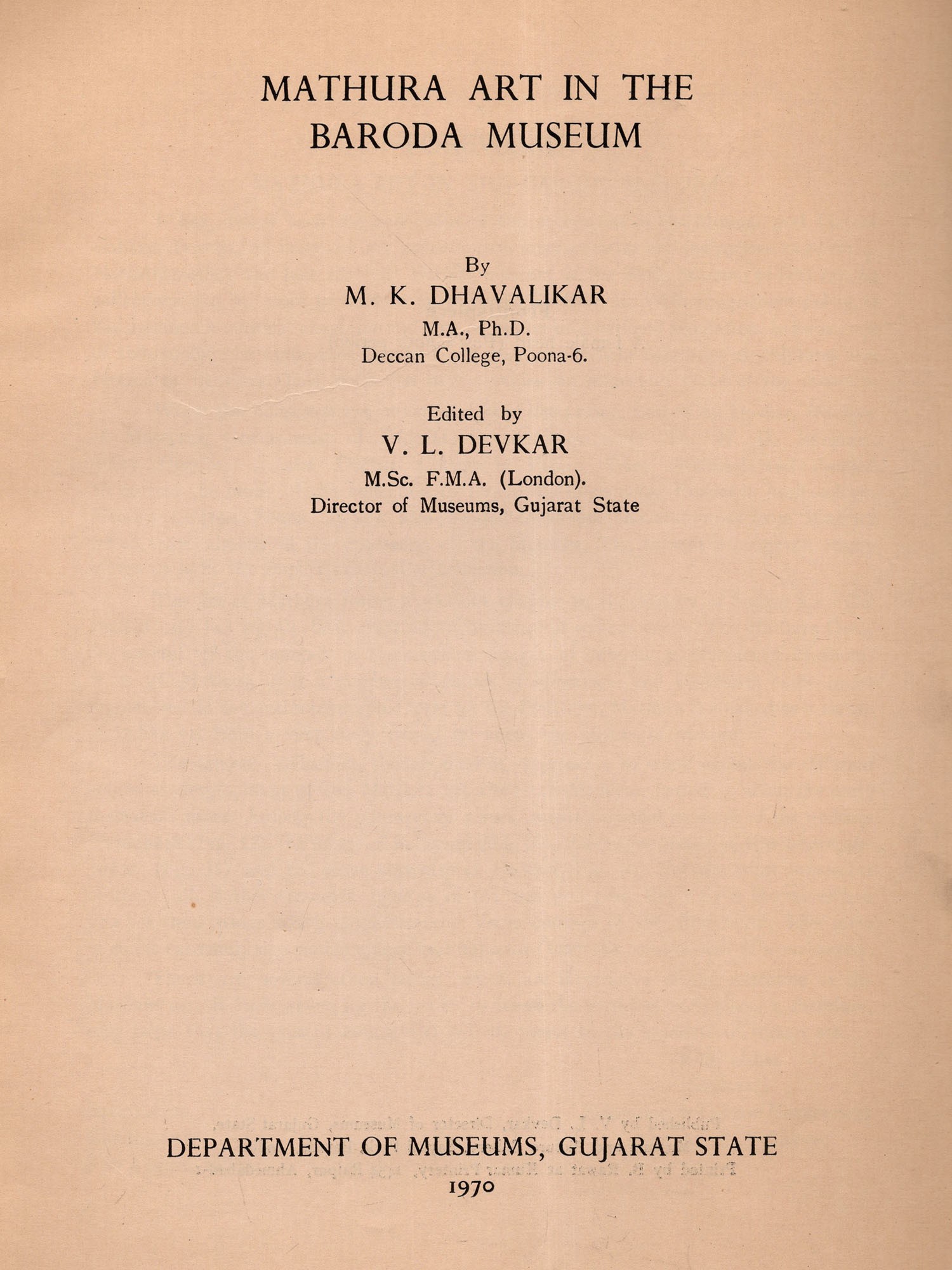
Mathura Art in the Baroda Museum (An Old and Rare Book)
| Specifications |
 |
Publisher: Department Of Museums, Gujarat State, Baroda |
| Author M. K. Dhavalikar | |
| Language: English | |
| Pages: 55 (B/W Illustrations) | |
| Cover: PAPERBACK | |
 |
11.00x9.00 inch |
 |
Weight 200 gm |
| Edition: 1970 | |
 |
HBX416 |
| Delivery and Return Policies |
 |
Returns and Exchanges accepted within 7 days |
 |
Free Delivery |


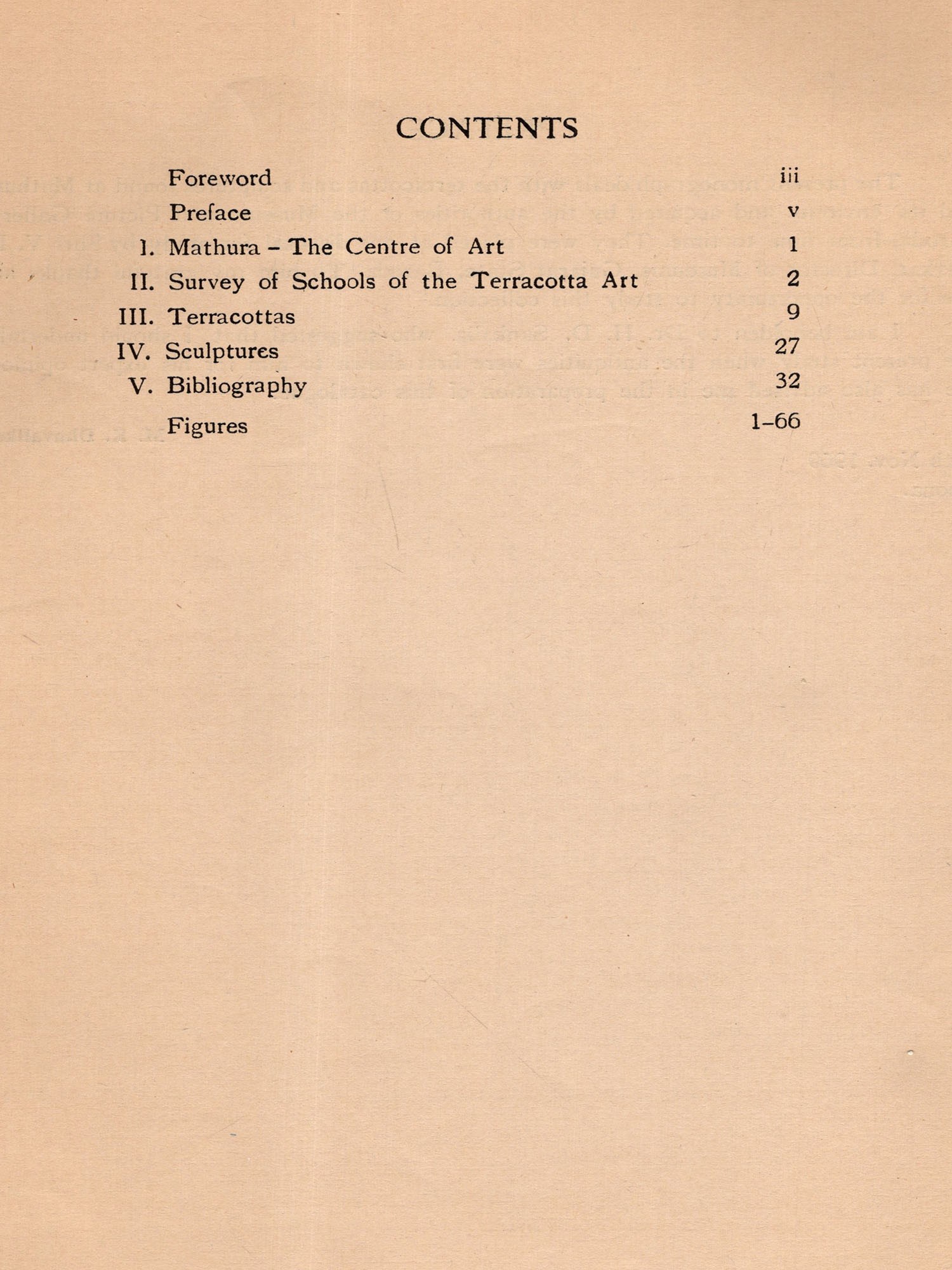
MATHURA ART IN THE BARODA MUSEUM
It has always been the endeavour of the authorities of the Museum and Picture Gallery, Baroda, to make its art collections as representative and instructive as possible. Notwithstanding the fact that the Baroda museum is the State Museum of Gujarat, its collections can no more be said to be regional; far from it. With progressive policy, it has assumed a national character and now enjoys an international reputation. In pursuance of this policy, the authorities acquired last year an excellent collection of sculptures and terracotta figurines. This collection now occupies an important place in the museum.
When the collection was in the process of acquisition, Shri V. L. Devkar, Director Dr. H. D. Sankalia, of Museums, Government of Gujarat, happened to meet Joint Director of the Deccan College in Poona. They discussed and decided to entrust the study of the collection to Dr. M. K. Dhavalikar, Reader in Archaeology. Deccan College, Poona. It was also decided to include the antiquities from Mathura which were already in the possession of the Museum. The present monograph amply brings to light the importance of the collection.
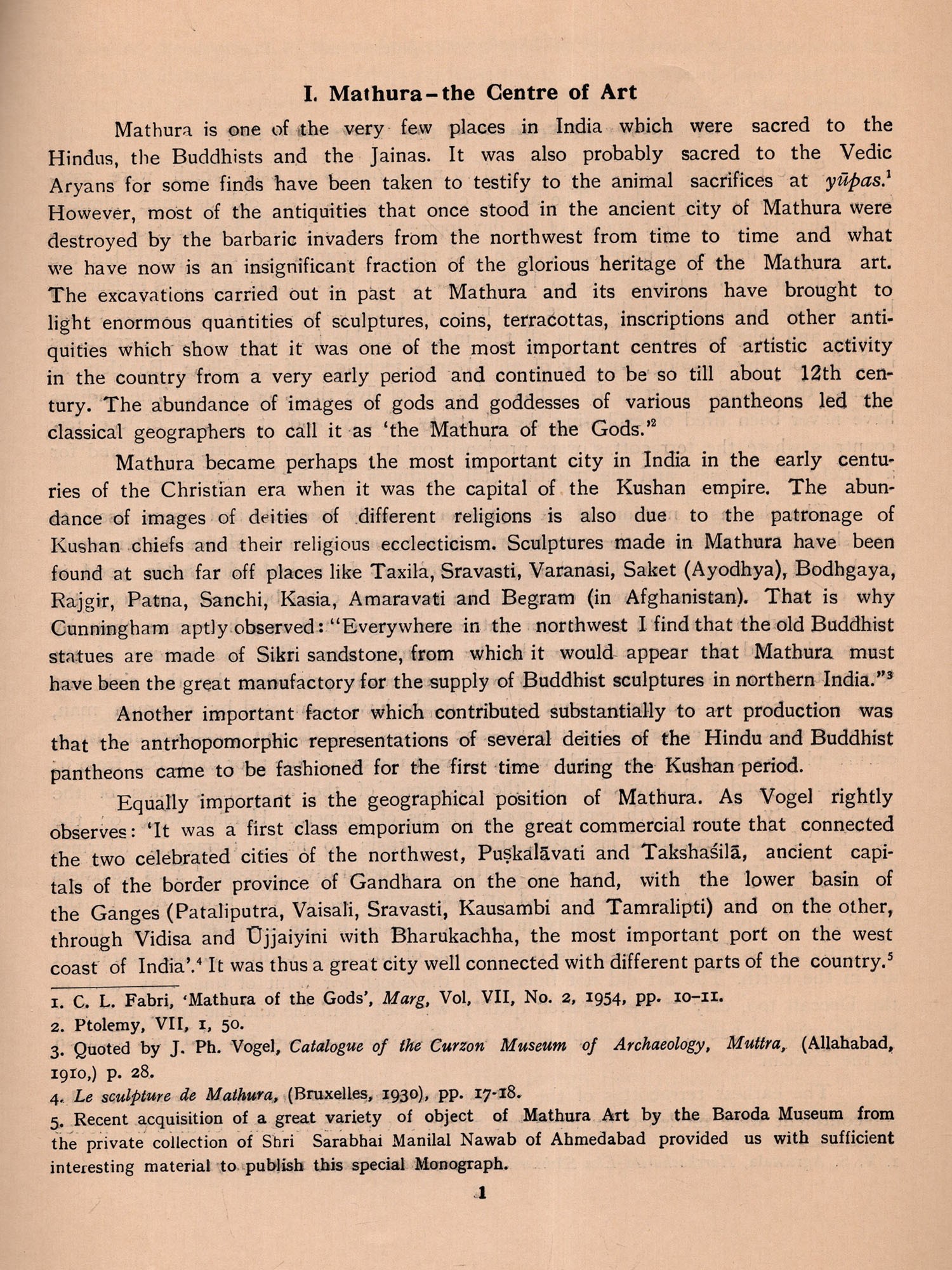
The art of Mathura forms a glorious chapter in the history of Indian art. The ancient city has rightly been referred to by classical writers as the 'The Mathura Gods on account of the number of temples and images of different pantheons at Mathura. It is at Mathura that a number of deities of Hinduism and Buddhism came to be represented in the anthropomorphic form for the first time. Mathura flourished as a centre of Indian art from a very early period till about the advent of Muslims.
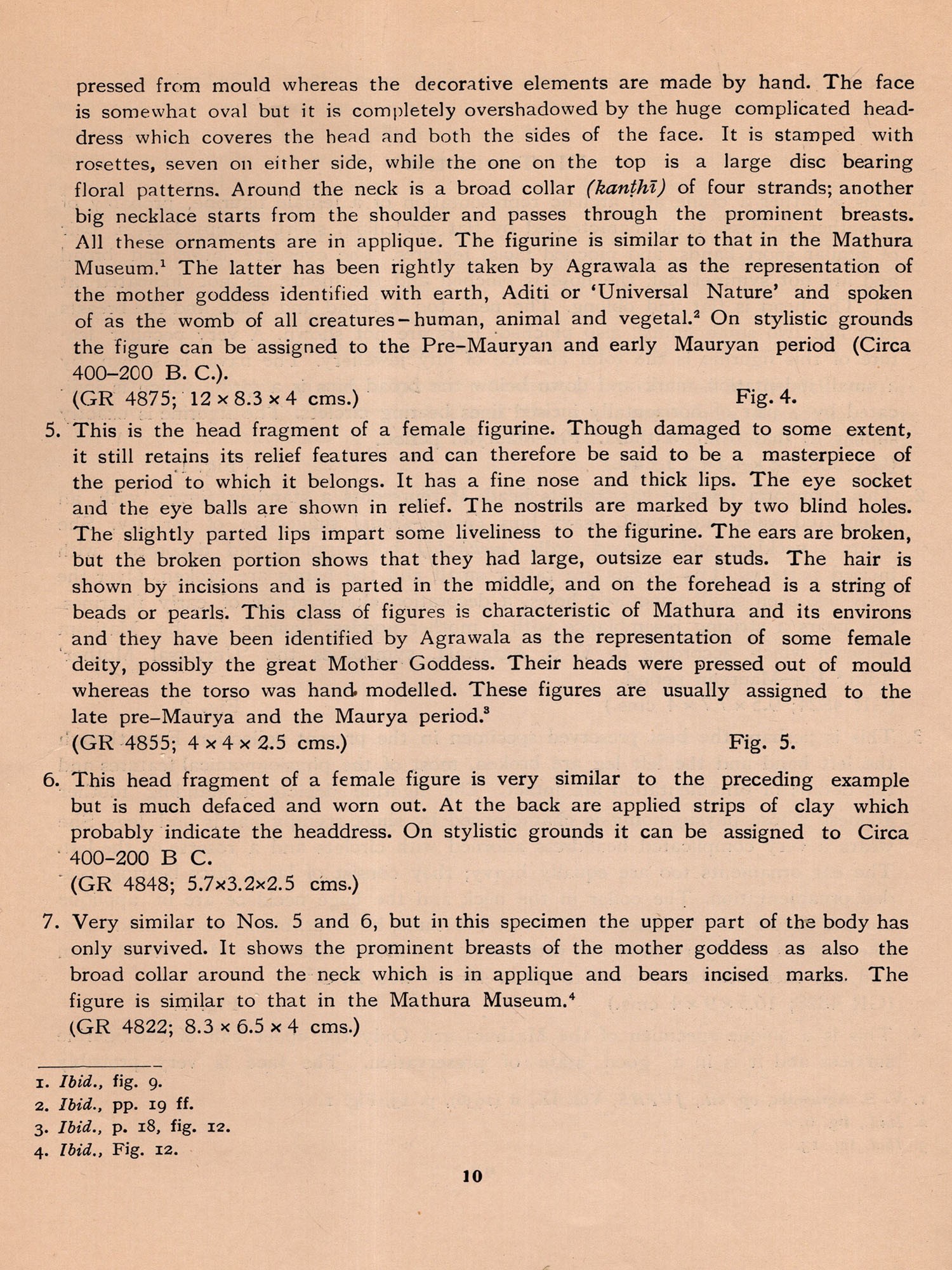
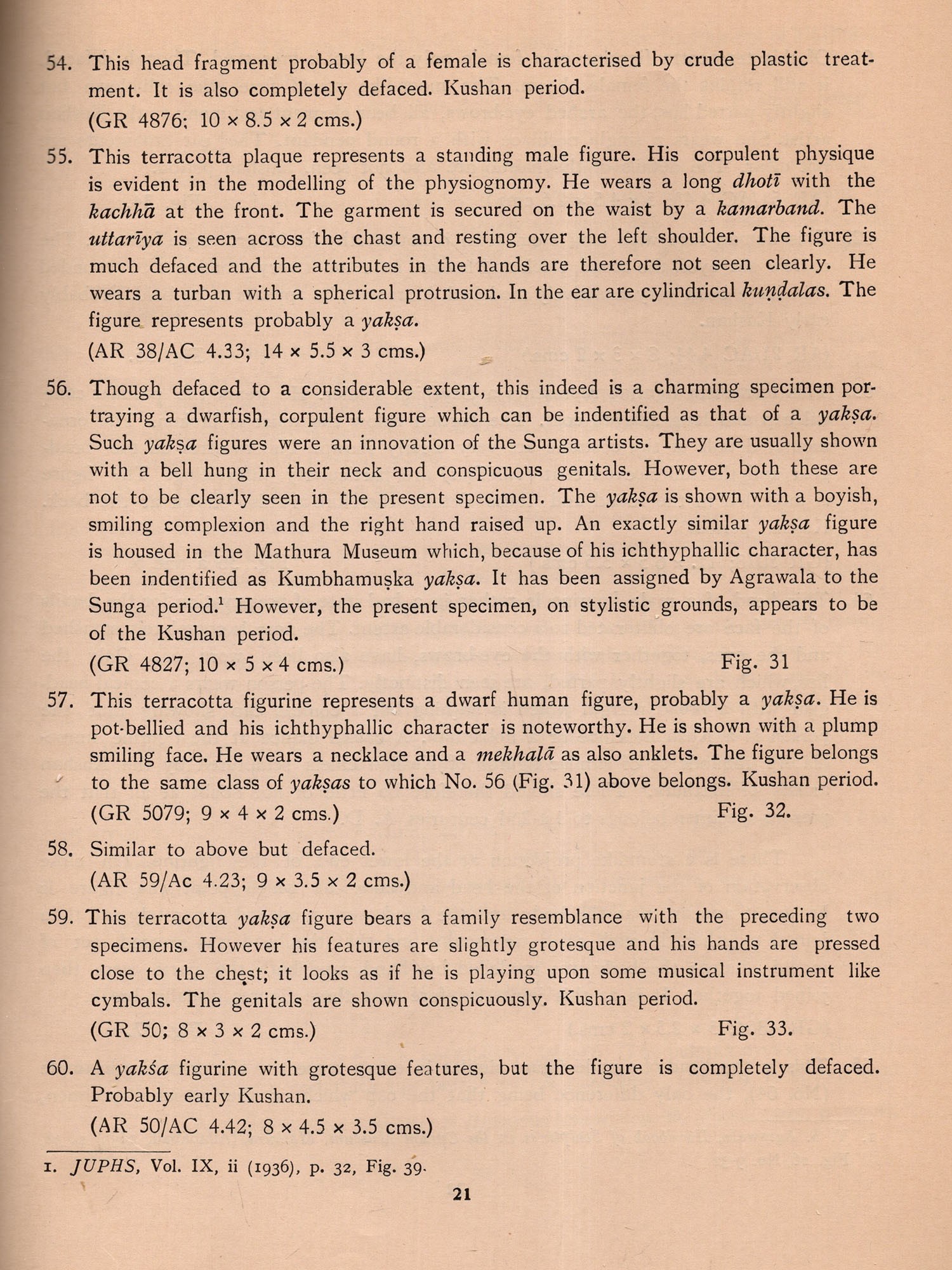
The present collection, though modest, represents to some extent the different stages of development of the Mathura art from pre-Mauryan period to about the early mediaeval times. Among the noteworthy pieces, mention should be made of the goddess Vasudhārā (Fig. 12), the image of Sarasvati (Fig. 50), the representation of Kumbhamuska yaksa (Fig. 31) and the stone statuette of Buddha (Fig. 51). Yet the most important of them all is the terracotta figurine of the sun god (Fig. 25) who is shown with a pair of short wings which emphasize the Vedic concept of the Sun bird. This form of sun is extremely rare and is unique and important from the point of view of iconography.
There are several other pieces which are illustrative of the evolution of the Mathura art. It is, however, for the reader to assess the merits of each piece. I, therefore, only hope that the present monograph will be useful to the students of Indian art.
The present monograph deals with the terracottas and sculptures found at Mathura and its environs and acquired by the authorities of the Museum and Picture Gallery, Baroda, from time to time. They were placed at my disposal for study by Shri V. L. Devkar, Director of Museums, Gujarat State. Baroda. To him my grateful thanks are due for the opportunity to study this collection.
I am beholden to Dr. H. D. Sankalia who suggested that I should undertake the present study when the antiquities were first shown to him for his expert opinion. He has also advised me in the preparation of this catalogue.
-
Q. What locations do you deliver to ?A. Exotic India delivers orders to all countries having diplomatic relations with India.
-
Q. Do you offer free shipping ?A. Exotic India offers free shipping on all orders of value of $30 USD or more.
-
Q. Can I return the book?A. All returns must be postmarked within seven (7) days of the delivery date. All returned items must be in new and unused condition, with all original tags and labels attached. To know more please view our return policy
-
Q. Do you offer express shipping ?A. Yes, we do have a chargeable express shipping facility available. You can select express shipping while checking out on the website.
-
Q. I accidentally entered wrong delivery address, can I change the address ?A. Delivery addresses can only be changed only incase the order has not been shipped yet. Incase of an address change, you can reach us at help@exoticindia.com
-
Q. How do I track my order ?A. You can track your orders simply entering your order number through here or through your past orders if you are signed in on the website.
-
Q. How can I cancel an order ?A. An order can only be cancelled if it has not been shipped. To cancel an order, kindly reach out to us through help@exoticindia.com.