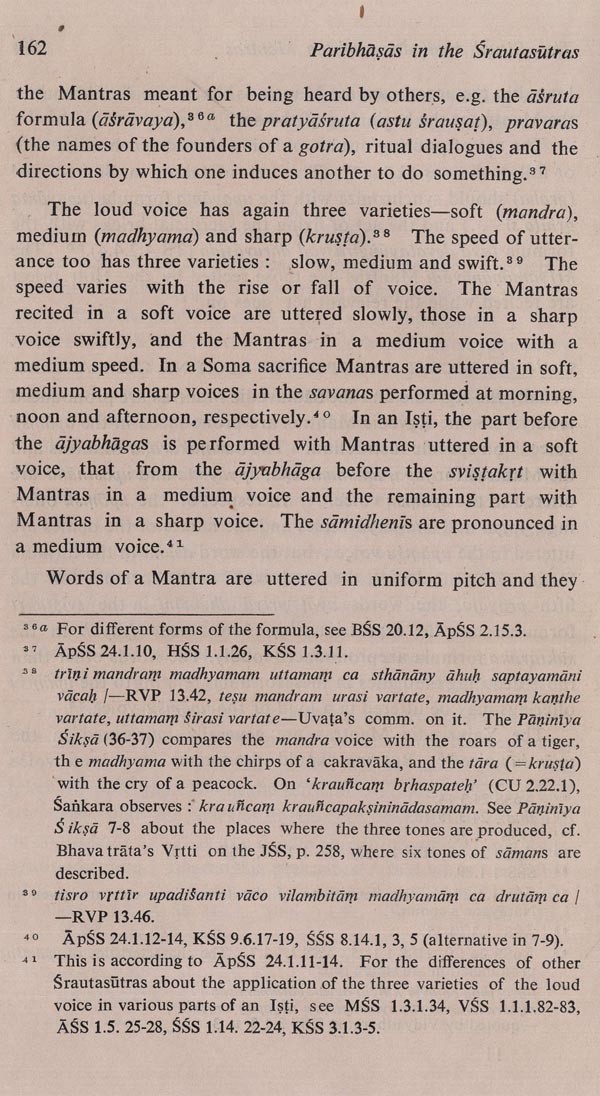
| Specifications |
 |
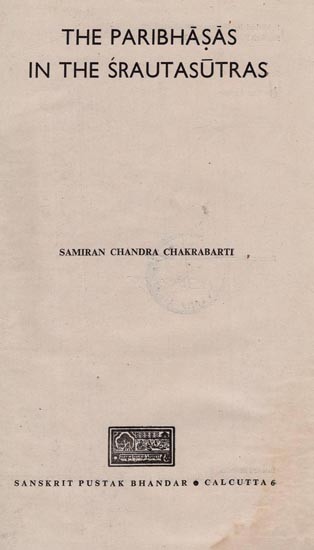
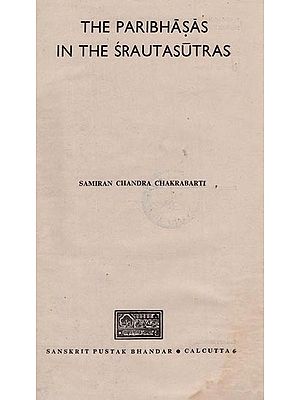
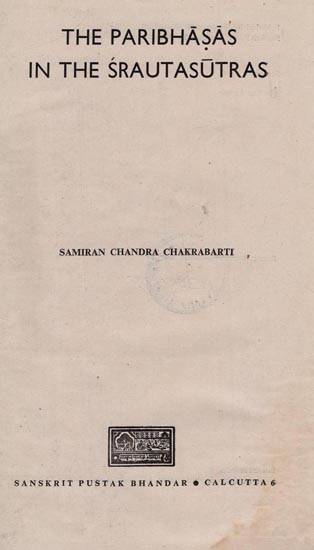
Publisher: Sanskrit Pustak Bhandar, Kolkata |
| Author Samiran Chandra Chakrabarti | |
| Language: English | |
| Pages: 230 | |
| Cover: Hardcover | |
 |
8.50 X 5.50 inch |
 |
Weight 400 gm |
| Edition: 1980 | |
 |
HAL013 |
| Delivery and Return Policies |
 |
|
 |
Returns and Exchanges accepted within 7 days |
 |
Free Delivery |


Sacrifices are the central theme of the Vedic religion and literature. It has been proclaimed that a sacrifice is indeed the best deed, yajno vai sresthatamam karma. Even the gods obtained their elevated status by the performance of sacrifices. A sacrifice is the safe boat for crossing the troubled waters of this world, yajno vai sutarmanauḥ." This boat must be free from defects so that the passengers taking refuge in it should not be endangered. The Vedic texts accordingly warn us that any flaw in the performance of a sacrifice may lead to disastrous results. For example, Tvastṛ's son (Vṛtra) was killed by Indra, Pusan lost his teeth, and Bhaga his eyesight, Bhallaveya fell victim of a chariot-accident, and Așadhi Sausromateya lost his life-all for committing errors in the sacrificial procedure. Hence the correct procedure is a desideratum.
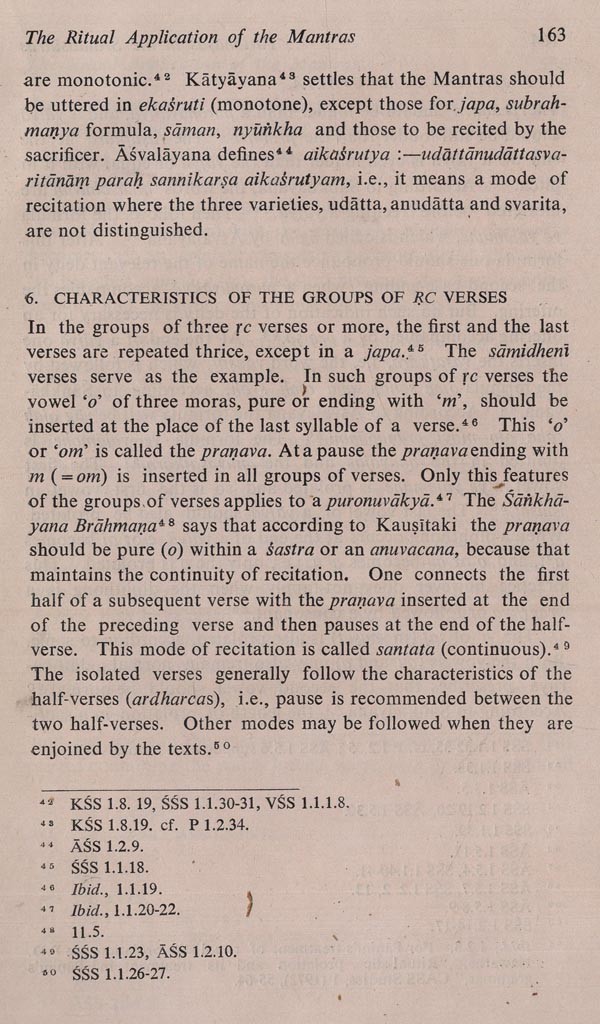
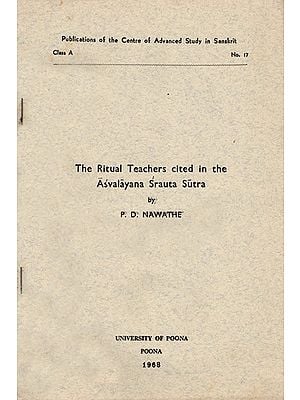
The sacrificial procedure is given in the Vedas, especially in the Brahmana portions. In ancient period the Aryans per- formed the Vedic sacrifices under the directions contained in the Mantra and the Brahmana texts. With the development of ritual and ritualistic controversies, the necessity for more concise and systematic treatment of the sacrifices was felt, and the Srautasutras were composed to serve the purpose. The Srautasutras are thus the connecting link between the Vedic and the post-Vedic literature of India. Though they are based on the Brahmanas, they show considerable difference in matter and the manner of expression. In some cases of sacerdotal controversy, the Brahmanas record several conflicting views, whereas a Srautasutra gives only one. On the other hand, a Srautasutra at times gives several optional views not recorded in the corresponding Brahmanas. It appears to be a natural development, since some of the older alternative views lost importance and new ones developed in the course of time. The Brahmanas show, often with the help of legends and mystic interpretations, the origin and the propriety of the rites and the meaning of the mantras employed in sacrifices. The Srautasutras furnish a well-connected and systematized description of the rites in due sequence from the beginning to the end of a sacrifice. They avoid legends and mystic interpretations, which are the chief interest of the Brahmanas. They are less discursive and more practical. The authors of the Srautasutras assimilated some ritual details from other different schools than their own, on the supposition that the Veda comprising all the branches is the authority on the Vedic sacrifices and that the texts of one's own school should be supplemented by those of other schools whenever necessary. Such mutual impact of the schools and their Srautasutras also gave rise to s differences between a Brahmana and its Srautasutra.
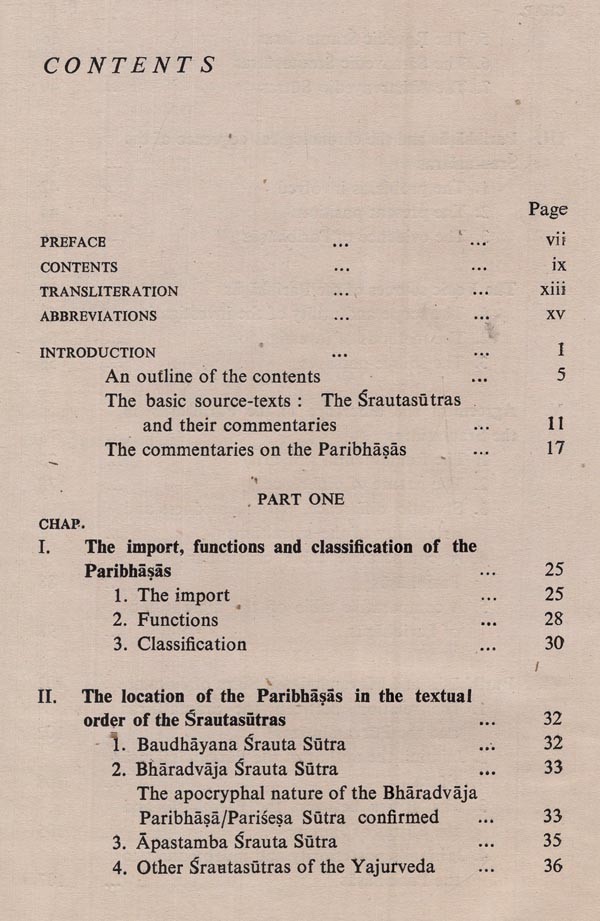
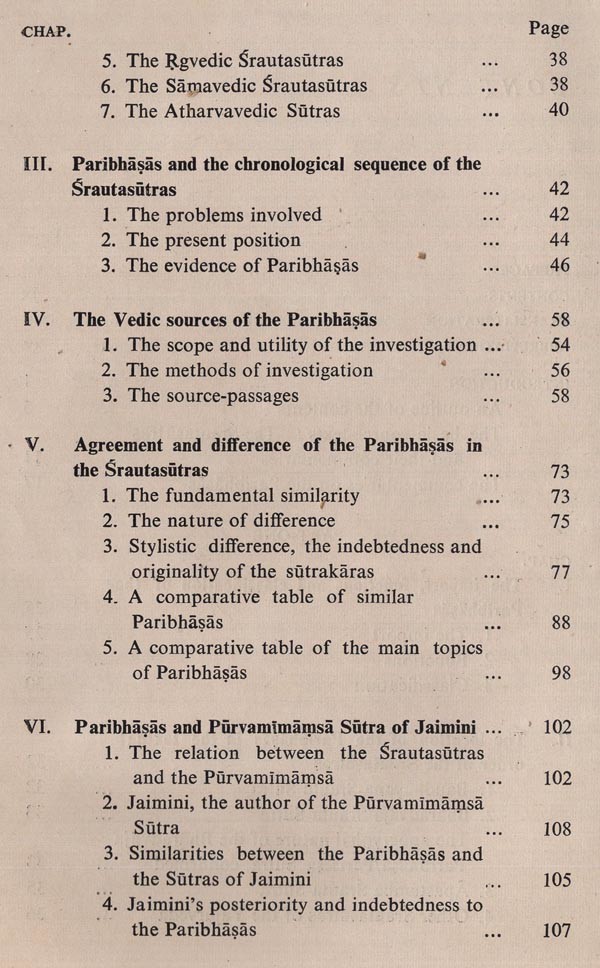
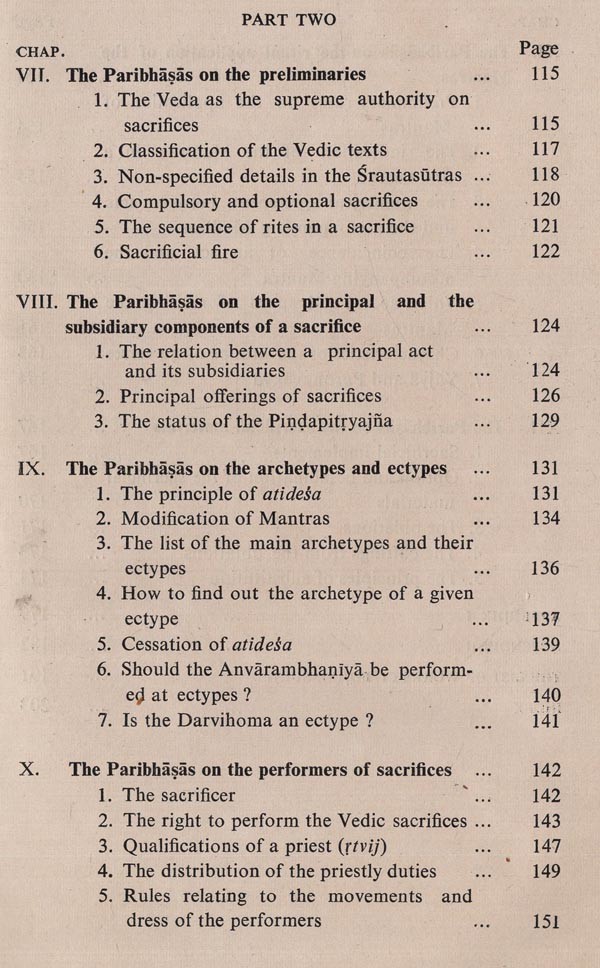
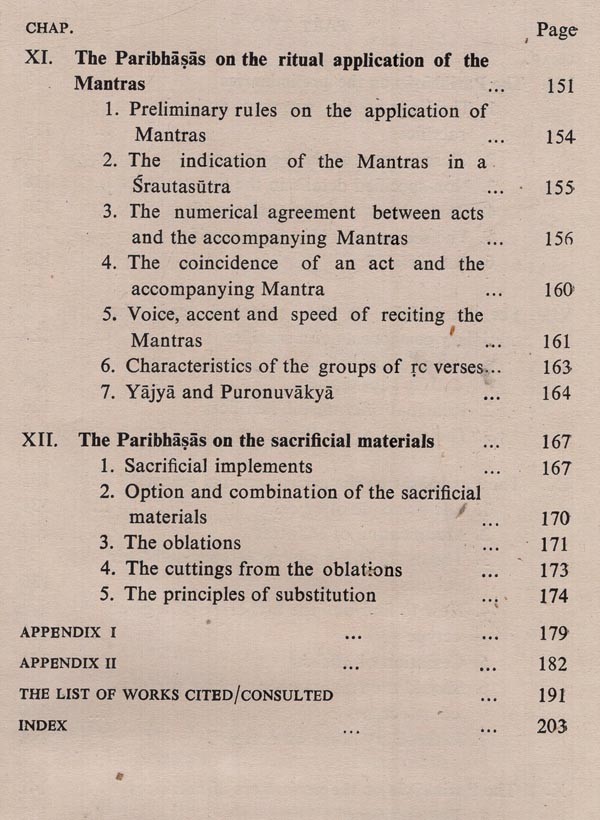
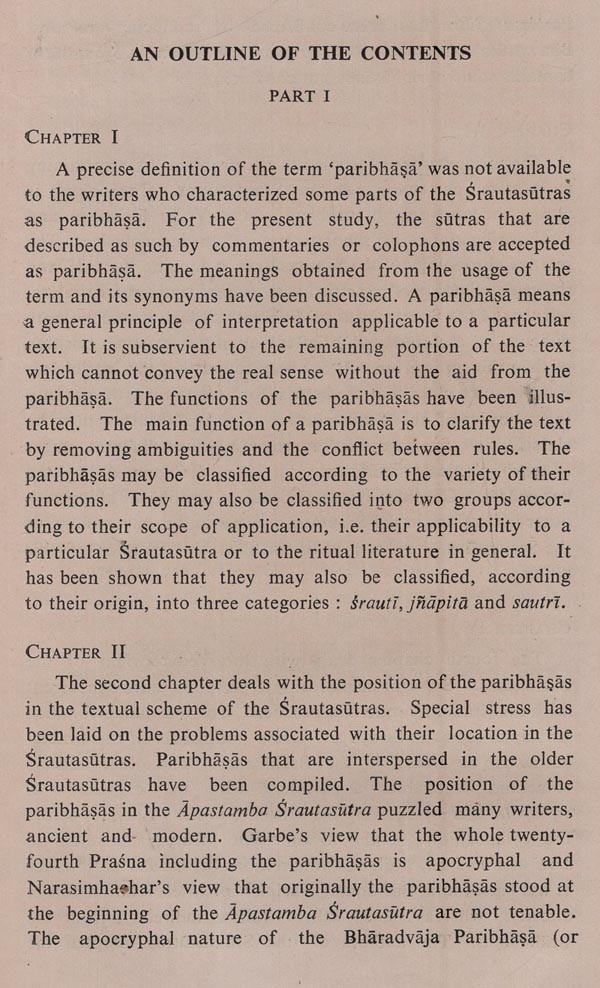
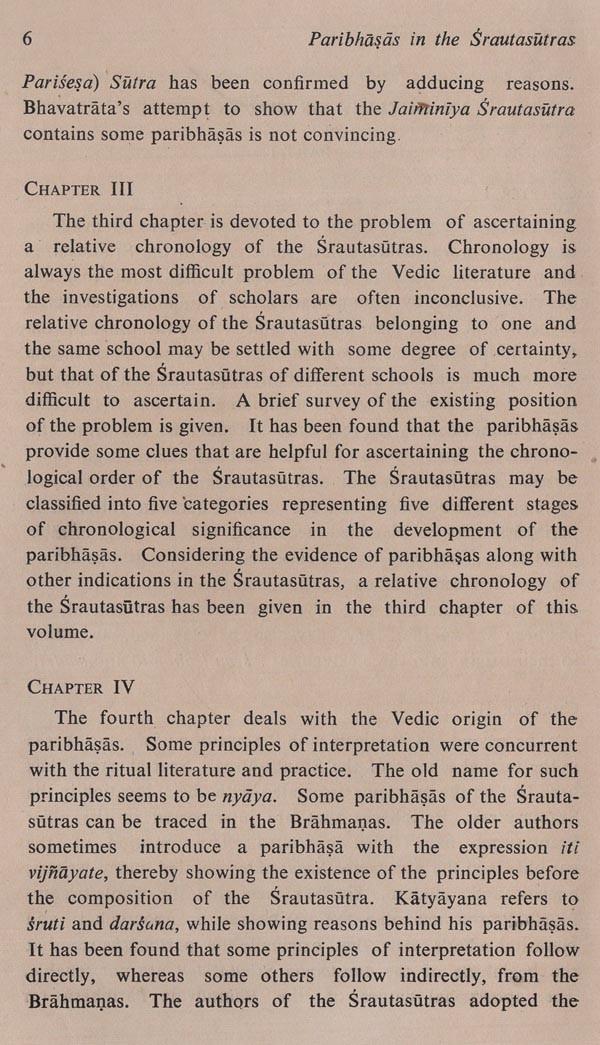
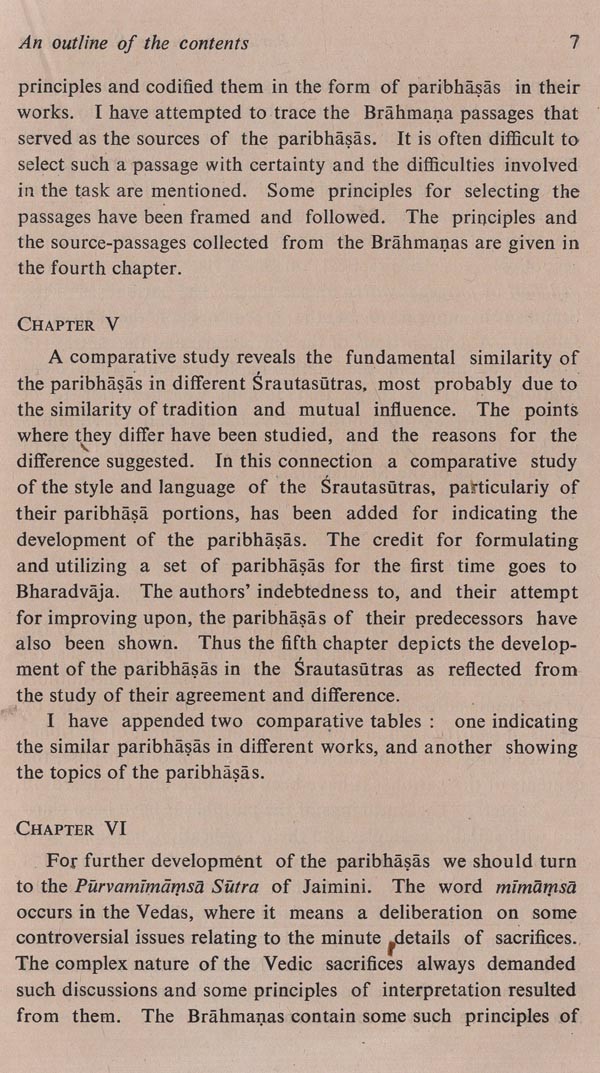
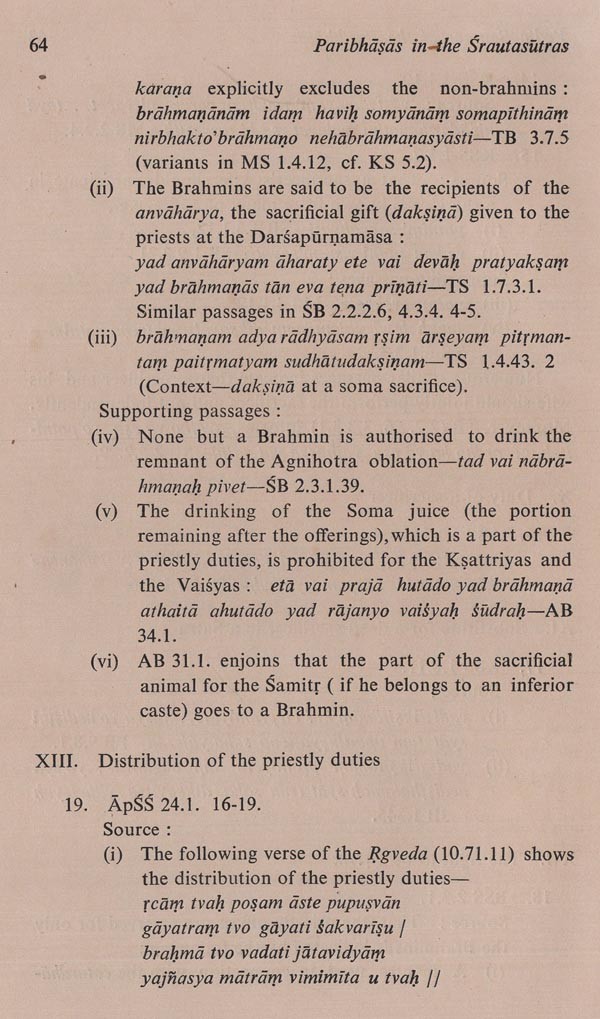
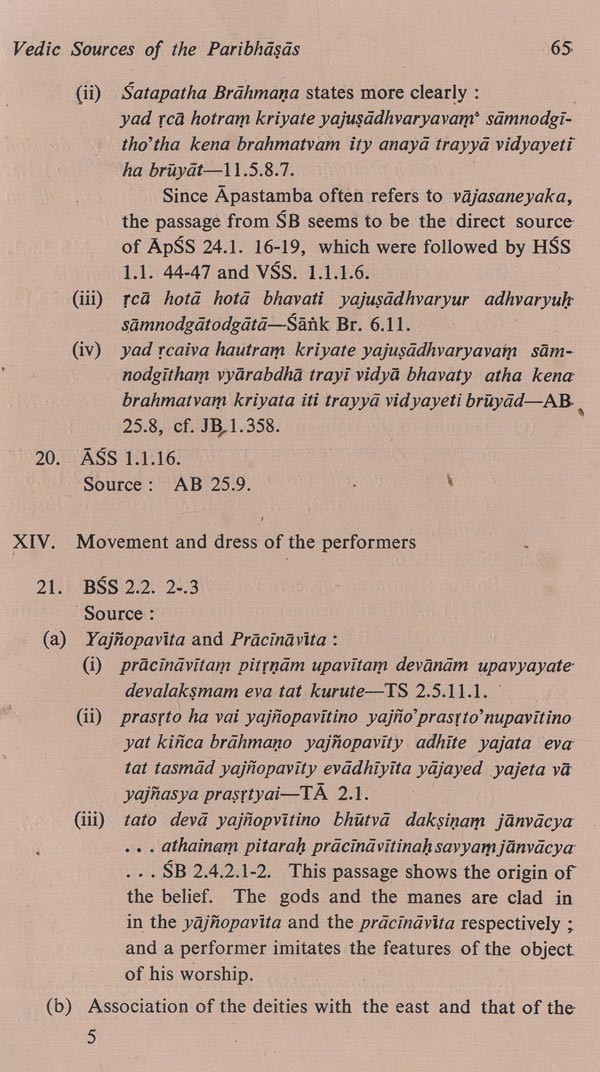
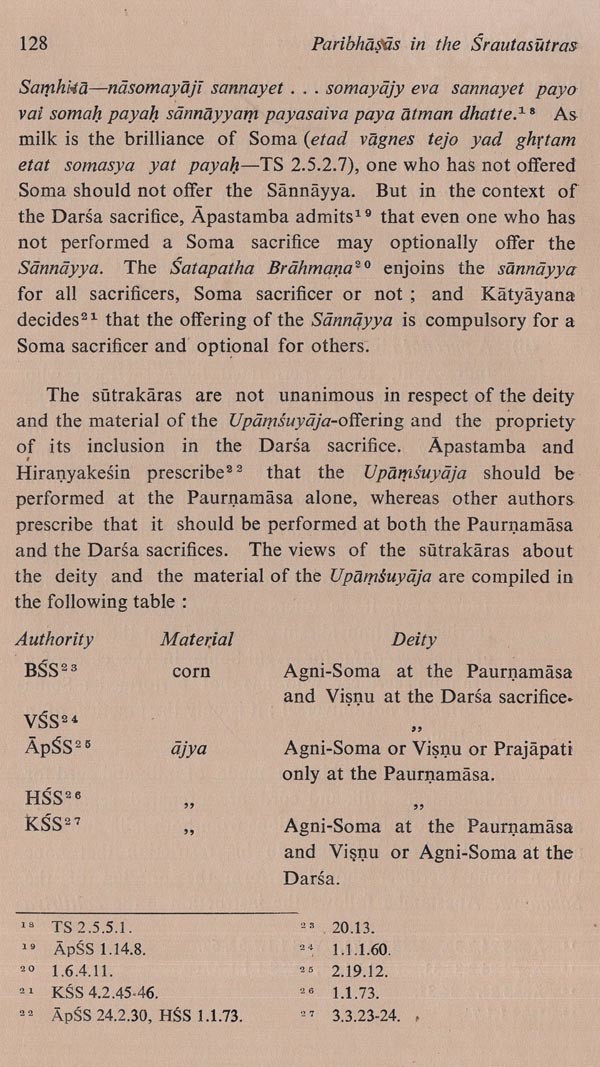
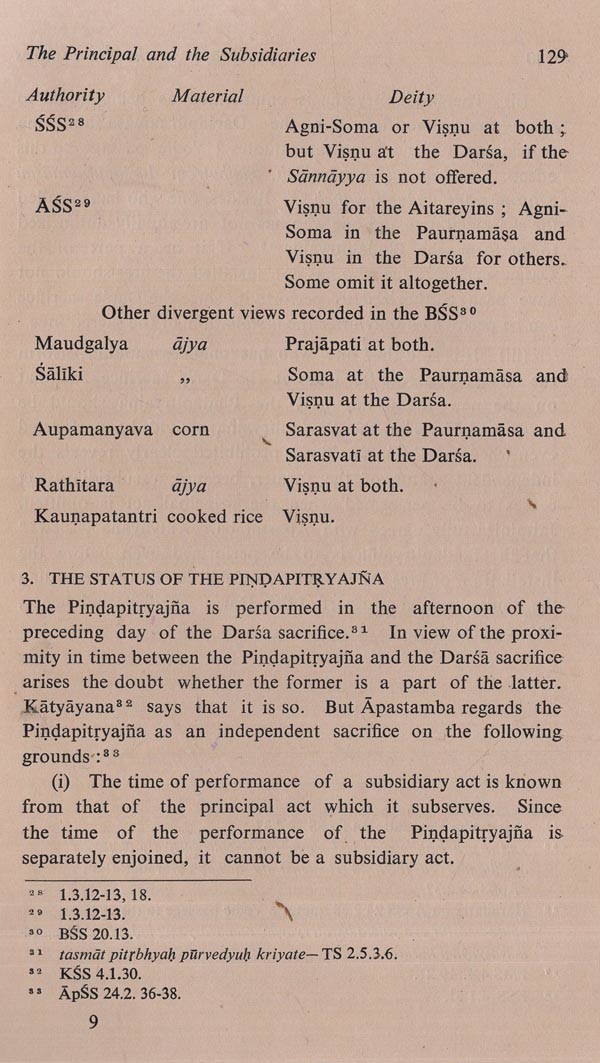
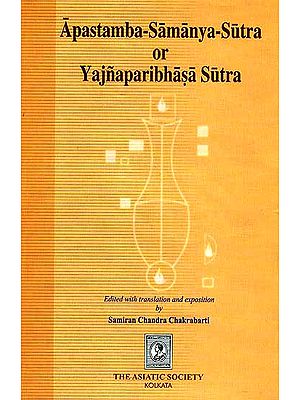
The present work aims at a study of the canons of interpretation known as paribhaṣa laid down in the principal Srautasutras: their nature, origin, development and contents. It is a revised version of the dissertation entitled "The Paribhaṣas in the Srautasutras-A Study", accepted by the University of Calcutta for the award of Ph.D. Degree. The volume comprises twelve chapters, numbered in one arithmetical sequence and grouped in two parts. Part one deals with the nature, origin and development of the paribhaṣas and part two deals with their contents. This study concerns itself with the sutras characterized as paribhaṣa. The term paribhaṣa was not well-defined and it appears that no definition was strictly adhered to when the sutras were characterized as paribhaṣa. Not only the basic interpretative clues, but also the general rules were regarded as paribhaṣa. They contain some heterogeneous topics, and some insignificant rules too crept into the paribhasas. Greater emphasis has been laid on the authors of the creative period, who may reasonably claim originality in codifying the paribhapas. The collections of the local libraries are too poor to keep us abreast of all the significant publications. Most of the foreign publications, particularly those in languages other than English, are only titles for us. There is every possibility, therefore, that some relevant works have missed my notice. If any such reference is missing, it is neither intentional nor out of dis- regard for the merit of the work; the omission is due to the deplorably inadequate facilities for Vedic research here. This is also the reason why in some cases editions other than the standard ones of the texts have been referred to. It is a matter of regret that there is not a single centre of Vedic studies in the whole of eastern India. To the authorities, both ancient and modern, whose relevant works have been used by me, I wish to express my debt. I am grateful to my esteemed teacher Dr. Krishnagopal Goswami Shastri (formerly Ashutosh Professor & Head of the Dept. of Sanskrit, Calcutta University) for his kind supervision of my work and valuable suggestions. I take this opportunity of expressing my gratitude to my teachers, Shri Sachindranath Ghose Shastri (formerly Head of the Department of Sanskrit, Krishnath College, Berhampore), who made me acquainted with the Vedic texts for the first time in my college days, and Shri P. N. Pattabhiram Shastri (formerly Reader in Sanskrit, Calcutta University), who instilled in me the interest in the Srautasutras. I am indebted to Dr. Asko Parpola, Dr. Klaus Mylius and Dr. C. G. Kashikar for reprints of some of their publications. My cordial thanks are due to Pundit Madhusudana Vedanta- Sastri, Librarian of the Sanskrit Sahitya Parishat, Calcutta, for his ungrudging help. The publication of the present volume was much delayed for various reasons. I am thankful to Sri Shyamapada Bhattacharya of Sanskrit Pustak Bhandar for undertaking the publication and to Sri Suresh Dutta of Modern Printers and his staff for their cooperation. I regret the misprints that might have occurred because of inadvertence. Scholars will lay me under obligation if they kindly favour me with their valuable suggestions and criticism which will be very useful for my future work.
Send as free online greeting card



Visual Search
 Upload an Image