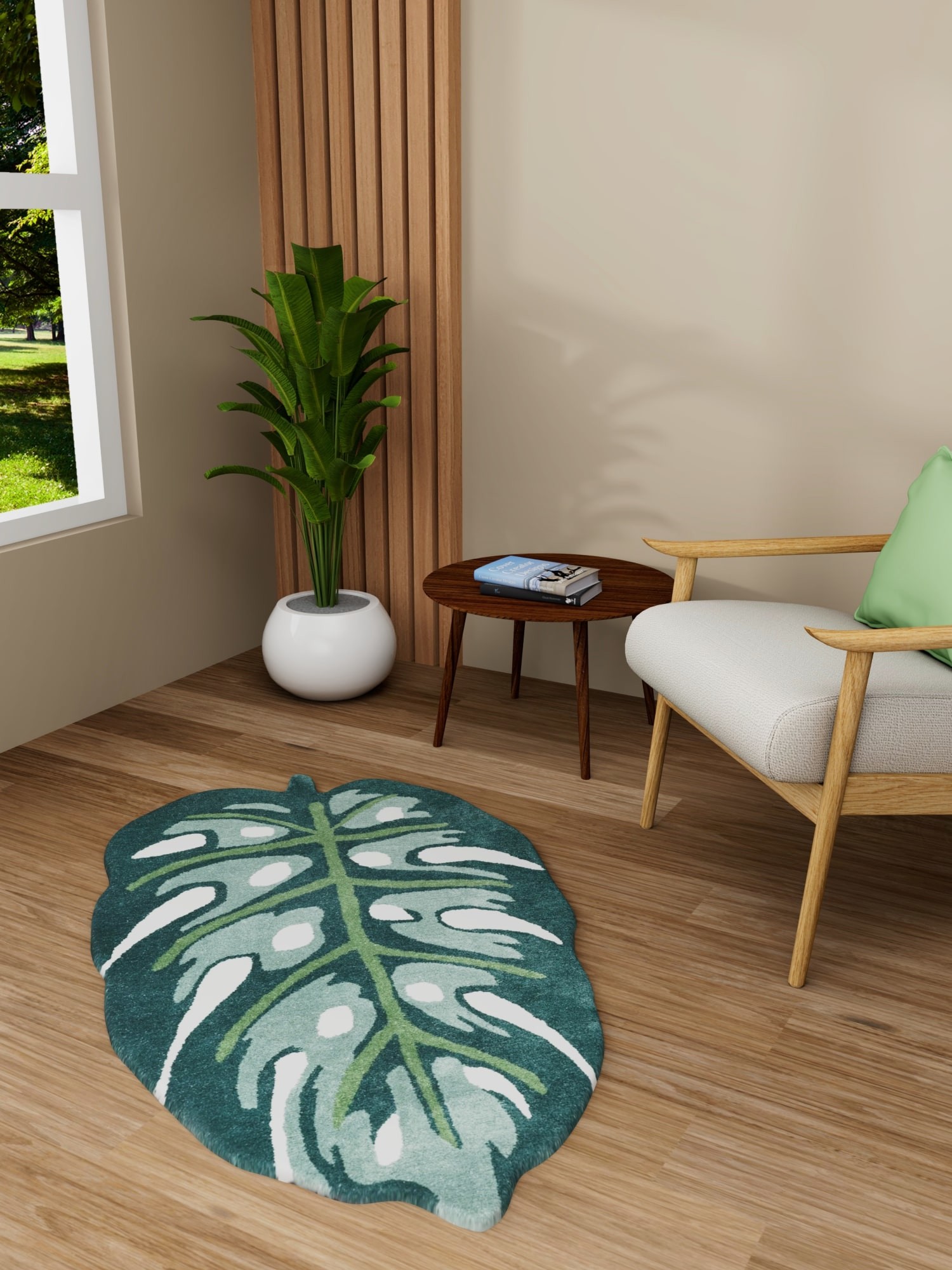
Sit in the lap of
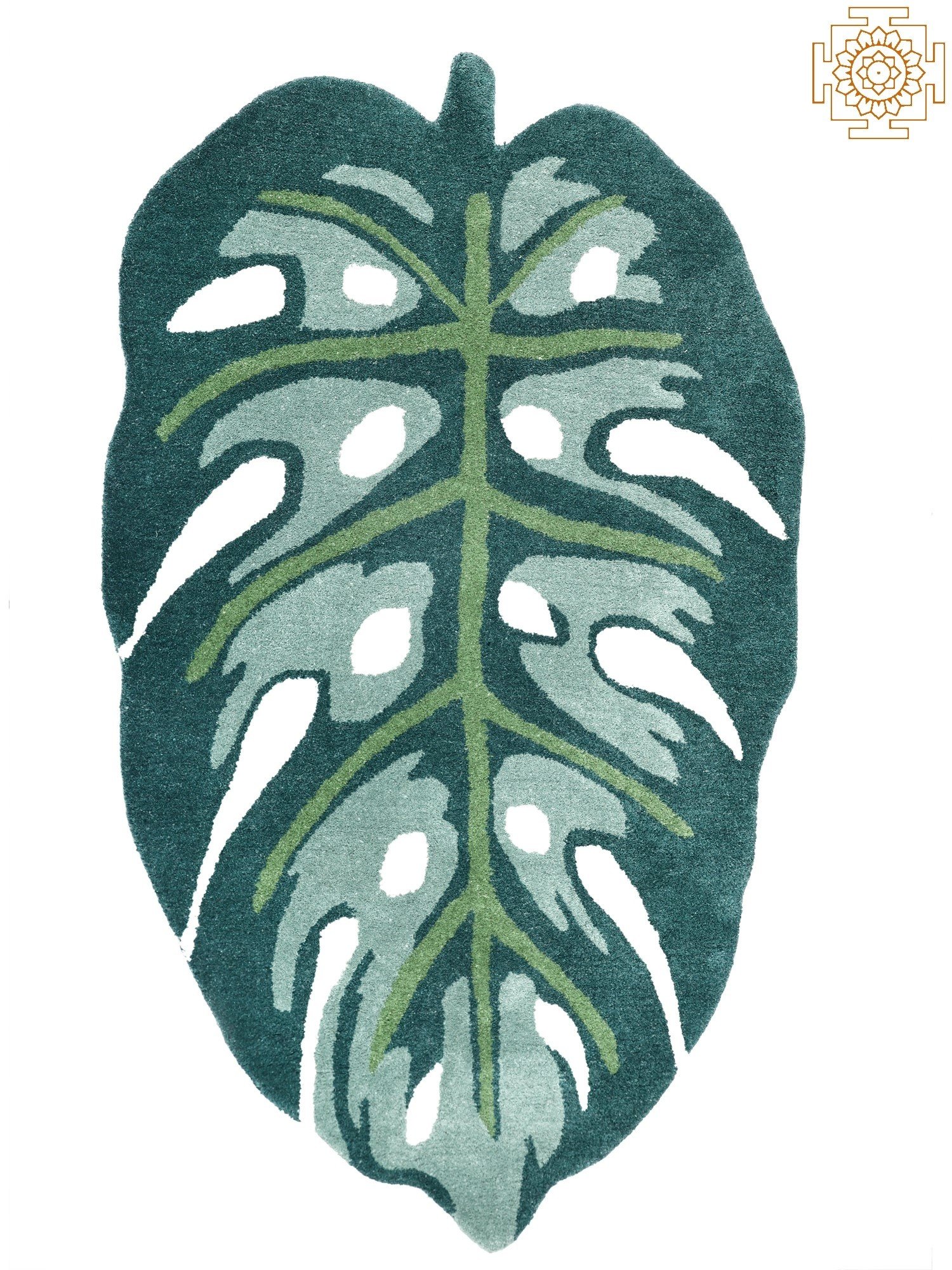
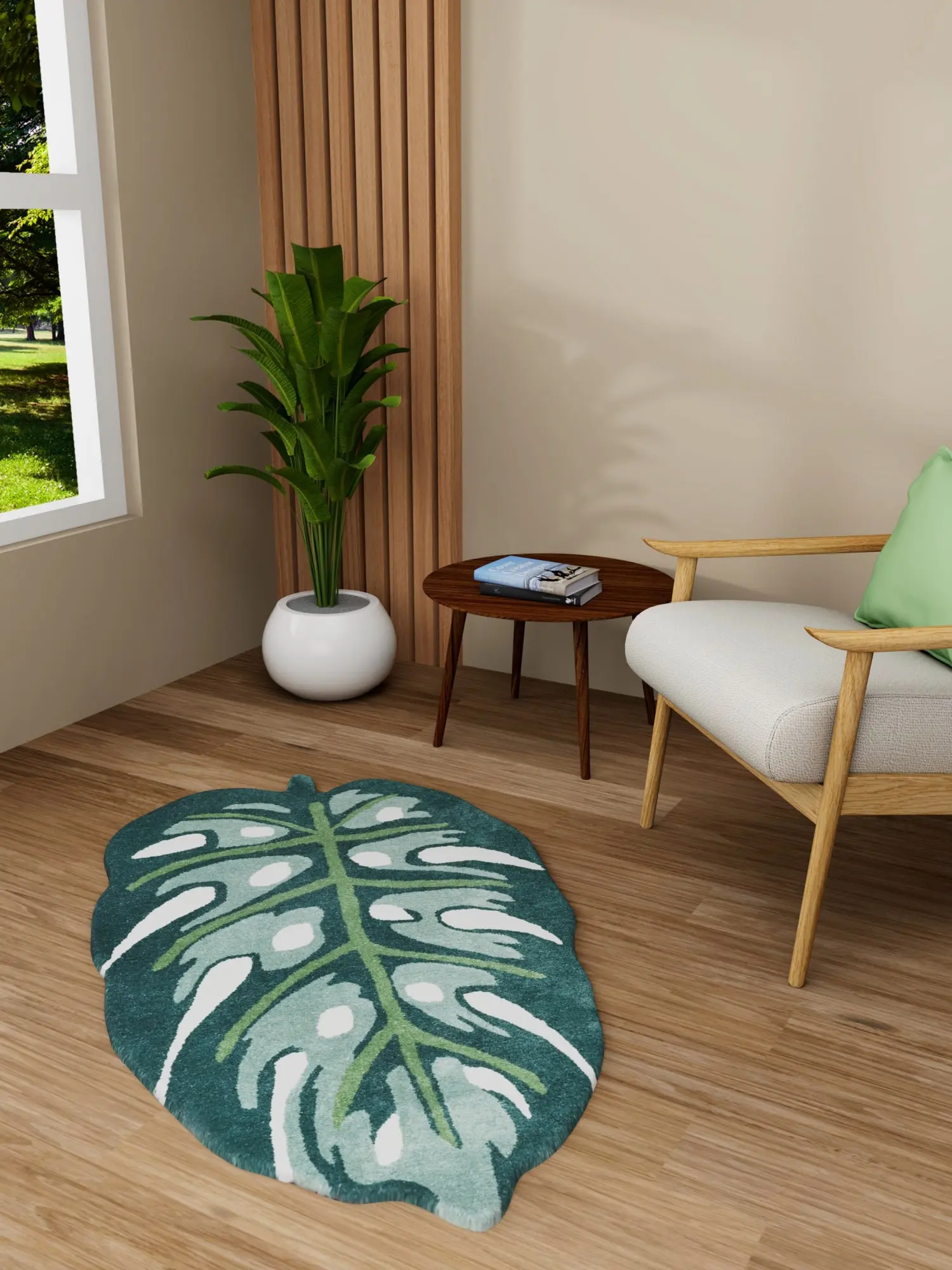
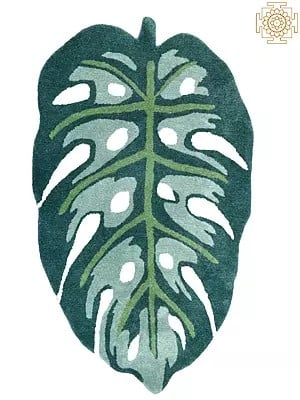
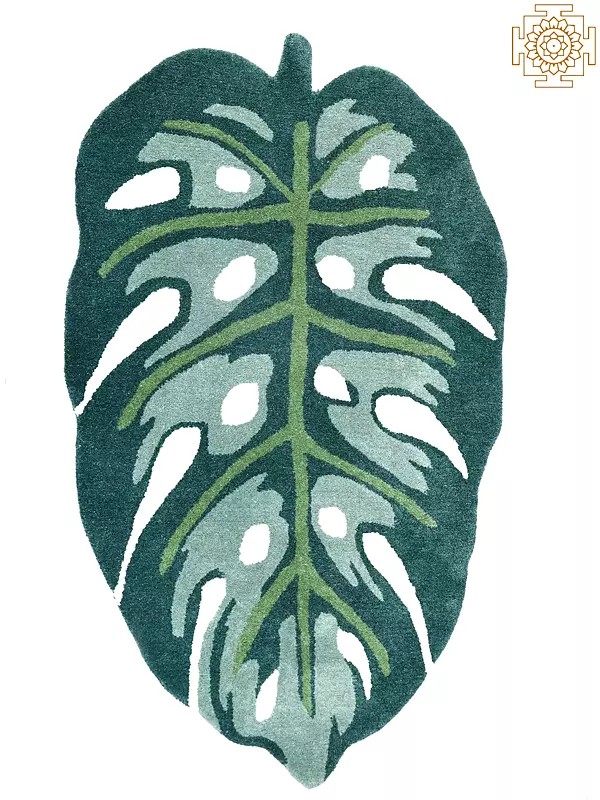
nature with this evergreen leaf-shaped Yogic aasan, woven by the trained mat
weavers of Mirzapur, Uttar Pradesh. Made with wool, the mat offers a comforting
warmth and ease as you sit and relax, read, meditate, worship, or do any of
your chores. With a beautiful representation of the vivid hues and patterns on
a leaf, this mat is not just an element of utility, but an aesthetic addition
to your space.
A Touch of Nature for Your Sanctuary
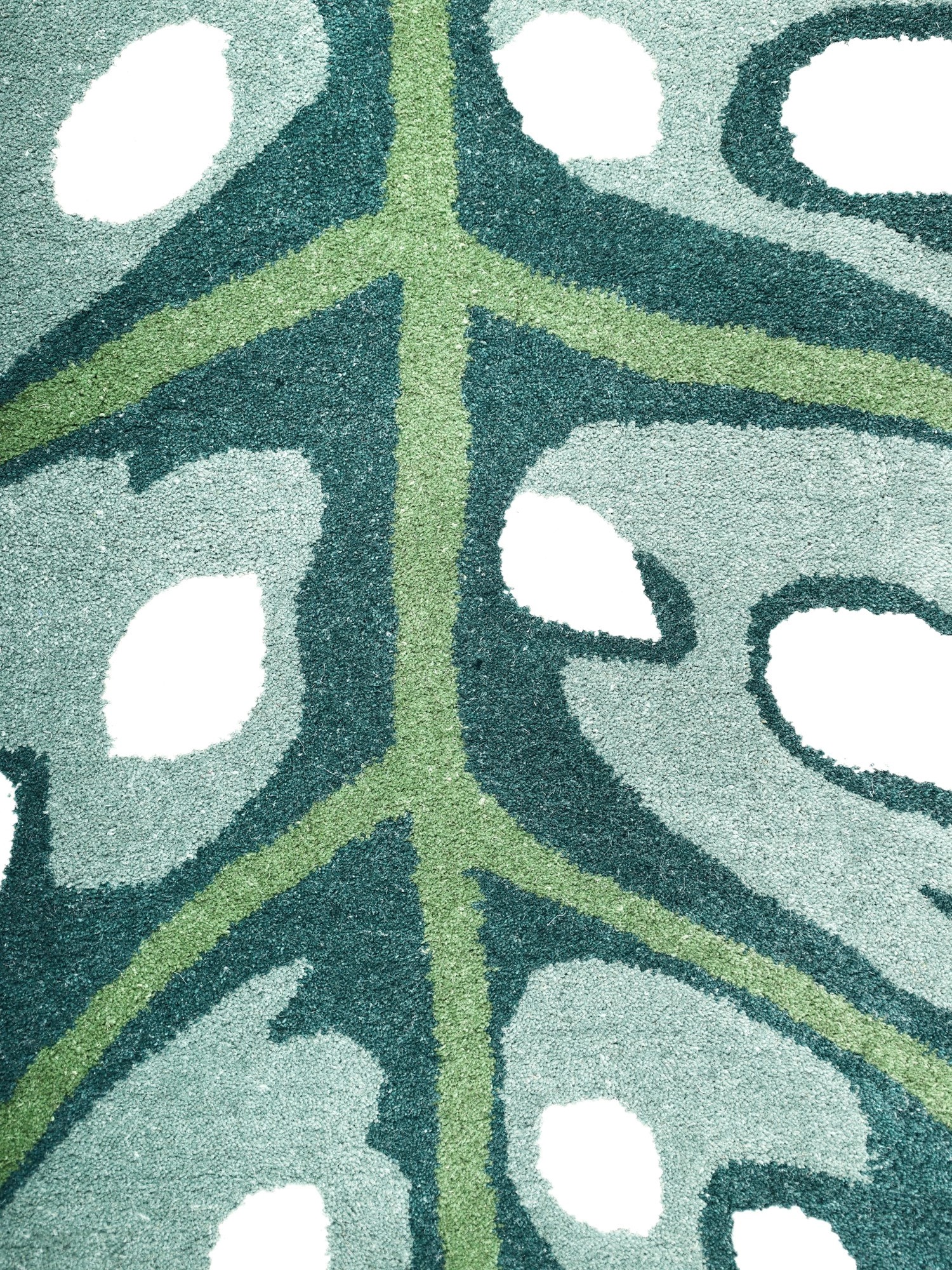
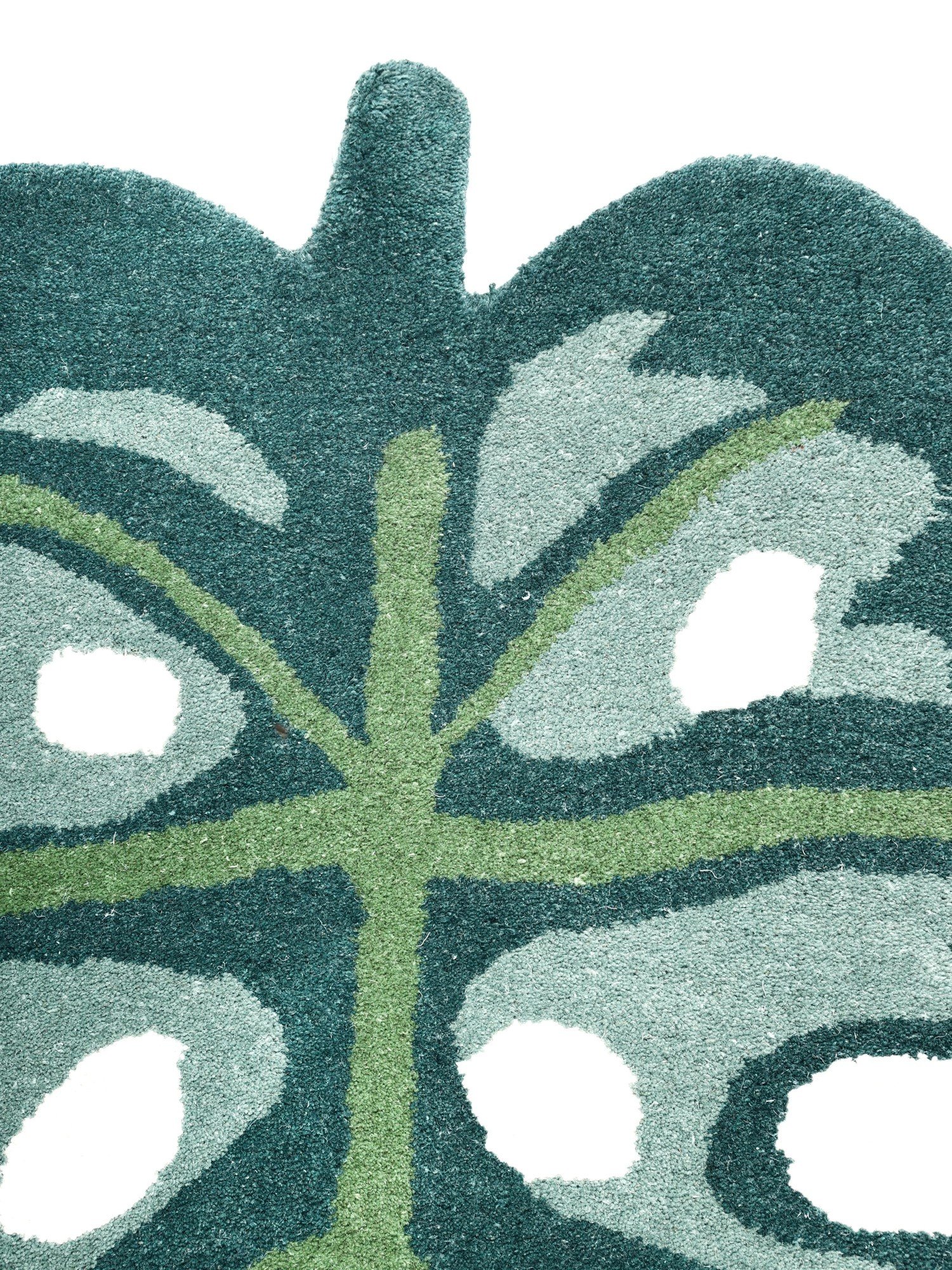
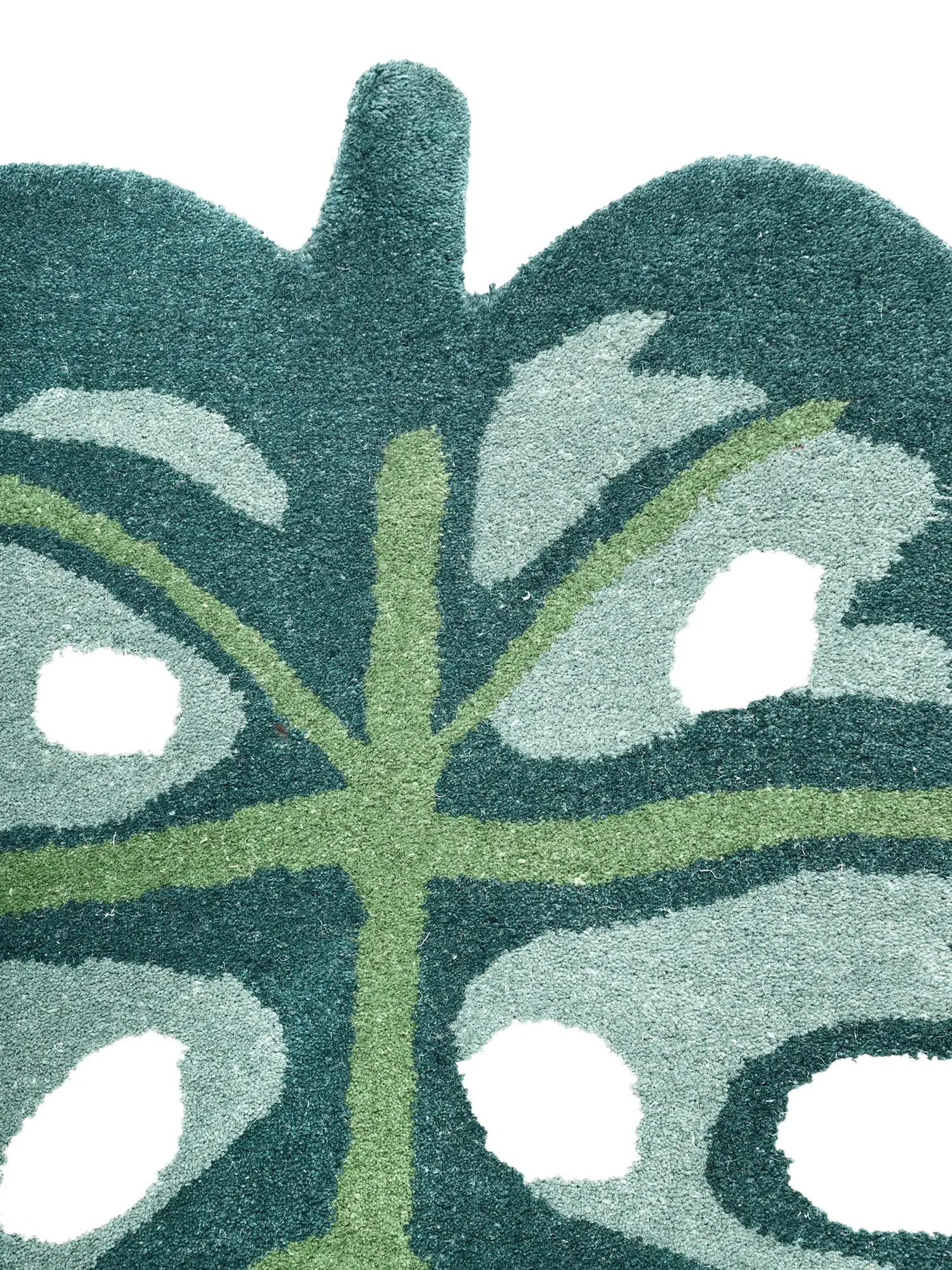
Bring the serene beauty of the natural world into your home with this exquisite leaf-shaped mat, a piece that seamlessly blends artistry with functionality. Inspired by the lush, verdant foliage of tropical plants, this mat captures the essence of an evergreen leaf with its distinctive fenestrations and intricate vein detailing. The deep teal hues, complemented by softer sage greens and striking white accents, create a captivating visual that evokes the feeling of a sun-dappled forest floor.Crafted with Natural Luxury
Handcrafted from the finest wool, this mat offers a luxurious and comforting feel underfoot. Wool is renowned for its inherent softness, durability, and natural resilience, ensuring this piece will be a cherished addition to your living space for years to come. The natural fibers provide a gentle cushioning, making it ideal for a variety of uses, from adding a welcoming touch to your entryway to creating a dedicated space for mindfulness and relaxation. Its unique shape and natural material make it a statement piece that speaks to a love for nature and artisanal craftsmanship.
Versatile Elegance
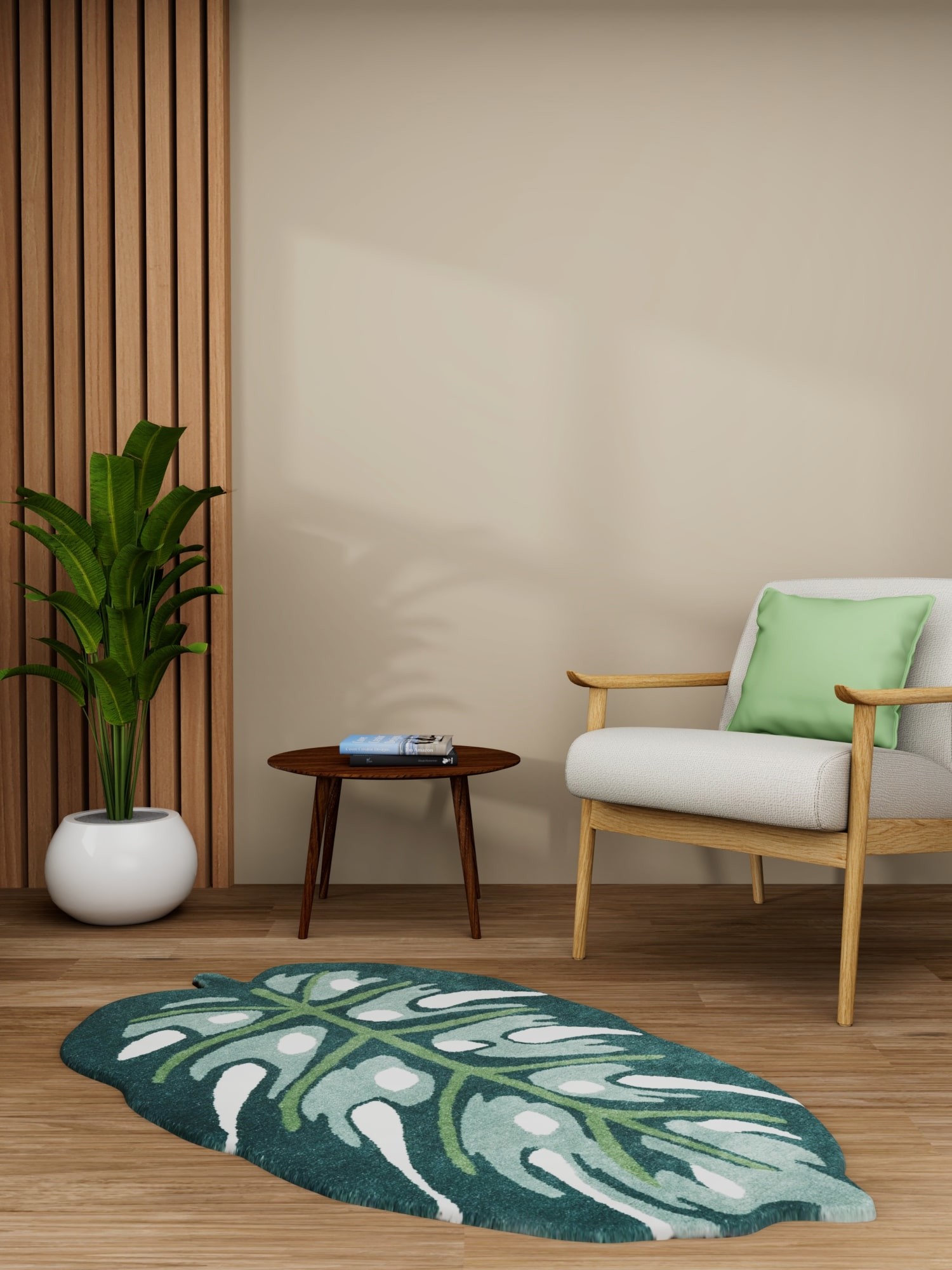
More than just a floor covering, this mat is designed to enhance the ambiance of any room. Its organic form makes it a perfect accent for a yoga or meditation corner, providing a grounded and calming surface for your practice. It can also serve as a striking decorative element in a living room, bedroom, or even a nursery, adding a touch of botanical charm and artisanal flair. The mat's substantial size offers ample coverage, while its eye-catching design ensures it will be a conversation starter. Whether used as a practical floor mat or a piece of tactile art, it brings a sense of tranquility and natural beauty to your surroundings.From Fiber to Finery: Unveiling the Craftsmanship Behind Handmade Rug Creation
A carpet serves as a textile floor covering and can be seen in
almost all Asian homes. European nations also are fascinated by their beauty and thus hand-knotted carpets are in great demand all
over the world. A carpet typically consists of an upper layer of
fabric and backing attached to it. Carpets can be made in any
color by using dyed fibers. Different types of motifs and patterns
are fabricated or embroidered on the fabric to beautify the floor.
Indian craftsmen make carpets in such a way that every piece bears
designs with attention to detail. Bright colors and high-quality
fabric are used for their production.
Hand-knotted carpets are made using different types of techniques
such as the Turkish knot (symmetrical), Persian knot
(asymmetrical), Jufti Knot (tied around four warps instead of
two), or Spanish knot (solo warp symmetrical). Common materials
used in the making of the finest carpets are cotton, silk, wool,
and jute.
1. Wool collection and processing
This is the step in the carpet-making process in which the best
quality raw wool is imported or bought from the market. It is then
cleaned and any unwanted particles are removed by washing it
thoroughly. Now the clean wool is dried in the sun for two to
three days.
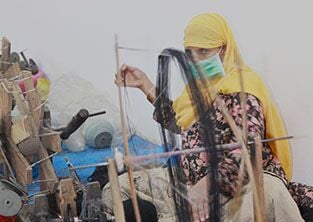
2. Woolen yarn spinning
Spinning involves a process called carding which is either done
on carding rollers run by hand or with the help of a carding
brush. This wool is now spun into yarn by spinning it on a
spinning wheel, also called a charkha. The thickness of the yarn
depends on the type and quality of the carpet to be made.
3. Dyeing yarn
After the yarn is obtained, it is then dyed into different colors
as per the requirement. The dyed yarn is now allowed to be
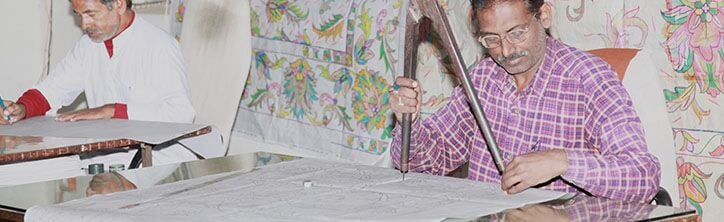
sun-dried for at least two days.4. Designing
Designing a carpet is time-consuming and the most important
step. The size, designs/patterns, and colors of the carpet
contribute to the overall look of the carpet. The artisan first
draws the design on paper and then copies it on graph paper.
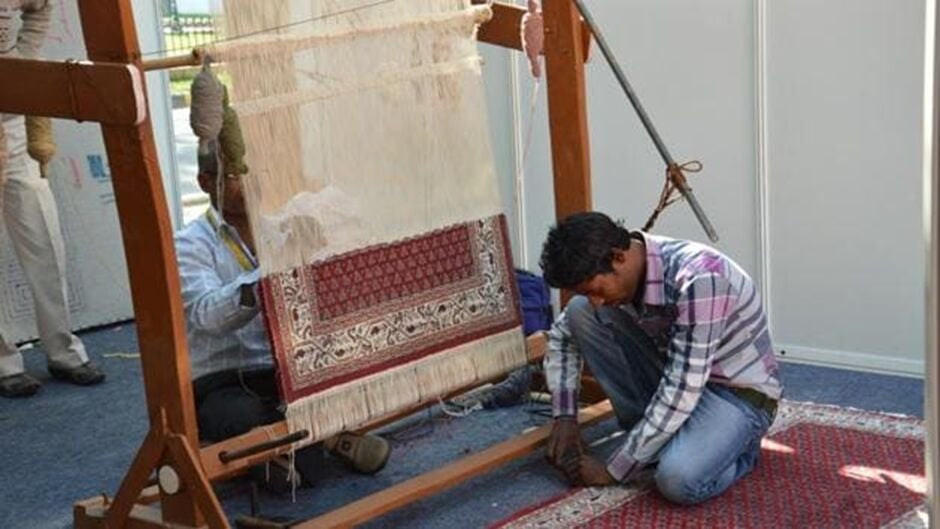
5. Weaving (Hand-knotting)
Weaving involves two important parts; weft (dyed yarn) and warp
(reeled yarn). The warp yarn is loaded to the vertical loom and
the graph paper containing the carpet sample design is put in
front of the weaver. Each weft yarn is knotted to each warp yarn
by hand. In this way, the whole carpet is weaved and the desired
pattern is obtained.
6. Washing
The carpet is now sent for washing multiple times with water and
cleansing agents to remove dust and dirt from it.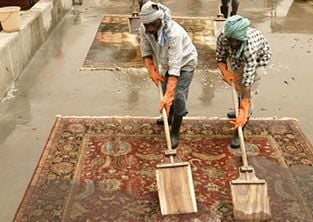
7. Clipping and Binding
Now any protruding knots and extra threads are cut off using
scissors and clippers. Now the craftsmen ensure that all four
sides of the carpet and weaves are locked by stitches so that
the carpet remains intact and strong.
8. Final washing and drying
The carpet is again washed and dried for the last time to make it
appear absolutely neat and clean, ready to be put for sale.
Handmade carpets are often more expensive than those made by
machines. It takes a minimum of six months to complete one carpet
and this elaborate process involves around 20 - 25 artisans
working at the same time.











 Upload an Image