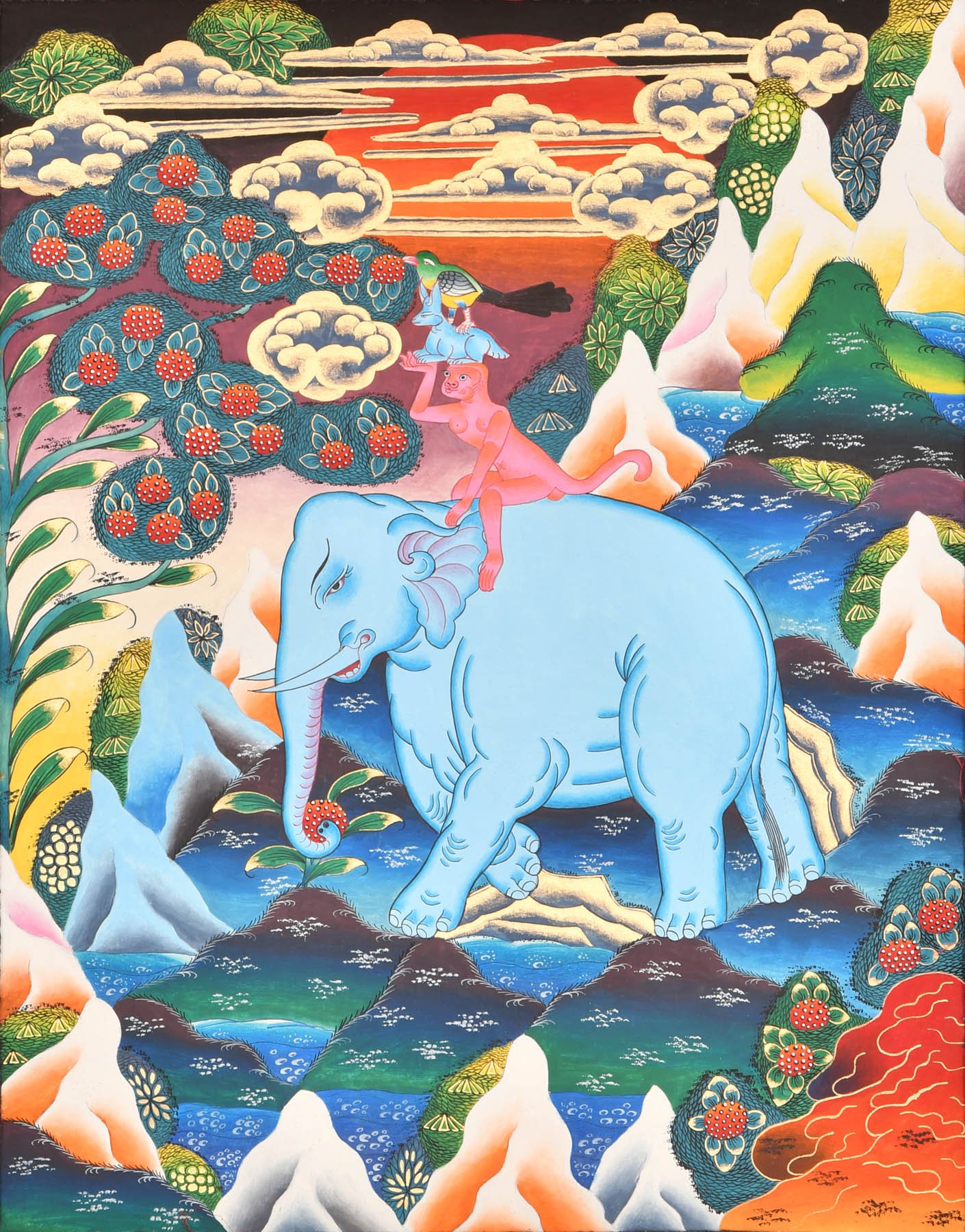
THE GROUP OF SYMBOLS CONSISTS of the following animals:
1). The Partridge or Grouse (gong-ma-sreg, Skt. kapinjala)
2). The Hare (ri-bong, Skt. sasa)
3). The Monkey (spre'u, Skt. kapi)
4). The Elephant (glang-po-che, Skt. hastin)
The fable of the Four Harmonious Brother is told in the canonical text, the
Foundation of Discipline ('Dul-ba gzhi, Skt. Vinayavastu). Buddha Sakyamuni
is supposed to have told it to his disciples in order to impress on them the
importance of mutual respect and the practice of the Buddhist virtues. The
following short account comes from Panglung Rinpoche's German version of the
narratives found in the Mulasarvastivada-vinaya:
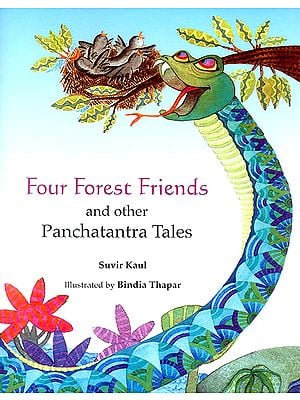
Once there lived in the forest a partridge, a hare, a monkey, and an
elephant, who were friends. With the aid of a tree, they established their
respective ages, and accordingly, the younger animals respected the elder
ones. They obeyed the law and lived a virtuous life. Soon, all the animals
adopted their ways, and eventually the king of the country did likewise. On
this account, peace and happiness prevailed in the land, and this was
praised by Indra. Buddha was the partridge, Sariputra the monkey,
Maudgalyayana the elephant, and Ananda was the hare.
It is clearly a deeply rooted wish in various cultures to propagate the
message of unity, harmony, and collaboration as valuable factors for
survival, and fables are often employed for this purpose. In the West, there
is the somewhat similar tale of the Bremen Town Musicians, told by the
Brothers Grimm. The tale of the Four Harmonious Brothers was no less beloved
in ancient India, and remains so to this day in Tibet and Mongolia.
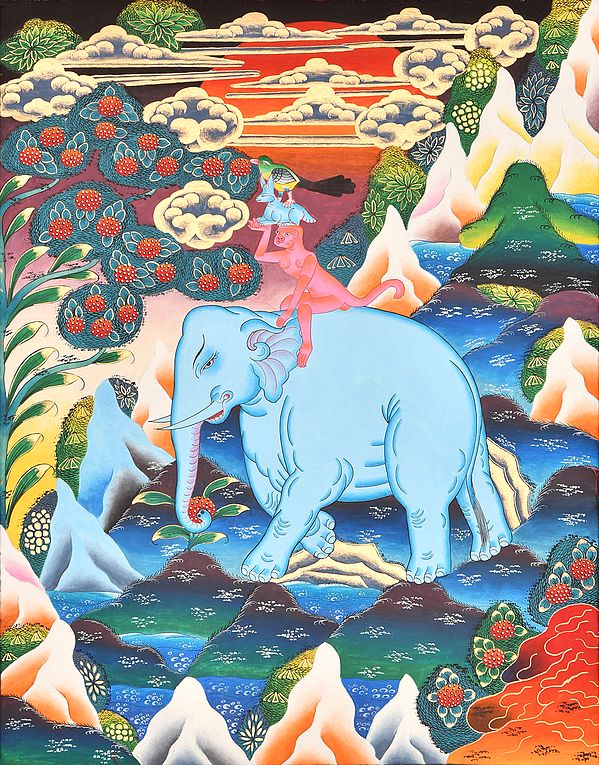
In pictures, the animals are always shown as a pyramid with the partridge at
the top, under him, the hare carried by the monkey, who is sitting on the
elephant. Whether this pyramid represents the different generations, the
social classes, or simply the cooperation of different types of individuals,
in any case they are meant to show the viewer the benefits of cooperation
for the general good.
This scene is often painted on temple doors. It is also found adorning
tables and beds, and as a decoration for vessels, saucers, lids, and
currency notes. Further, it adorns tent walls and is modeled in butter for
offerings.
Unveiling the Divine Art: Journey into the Making of Thangkas
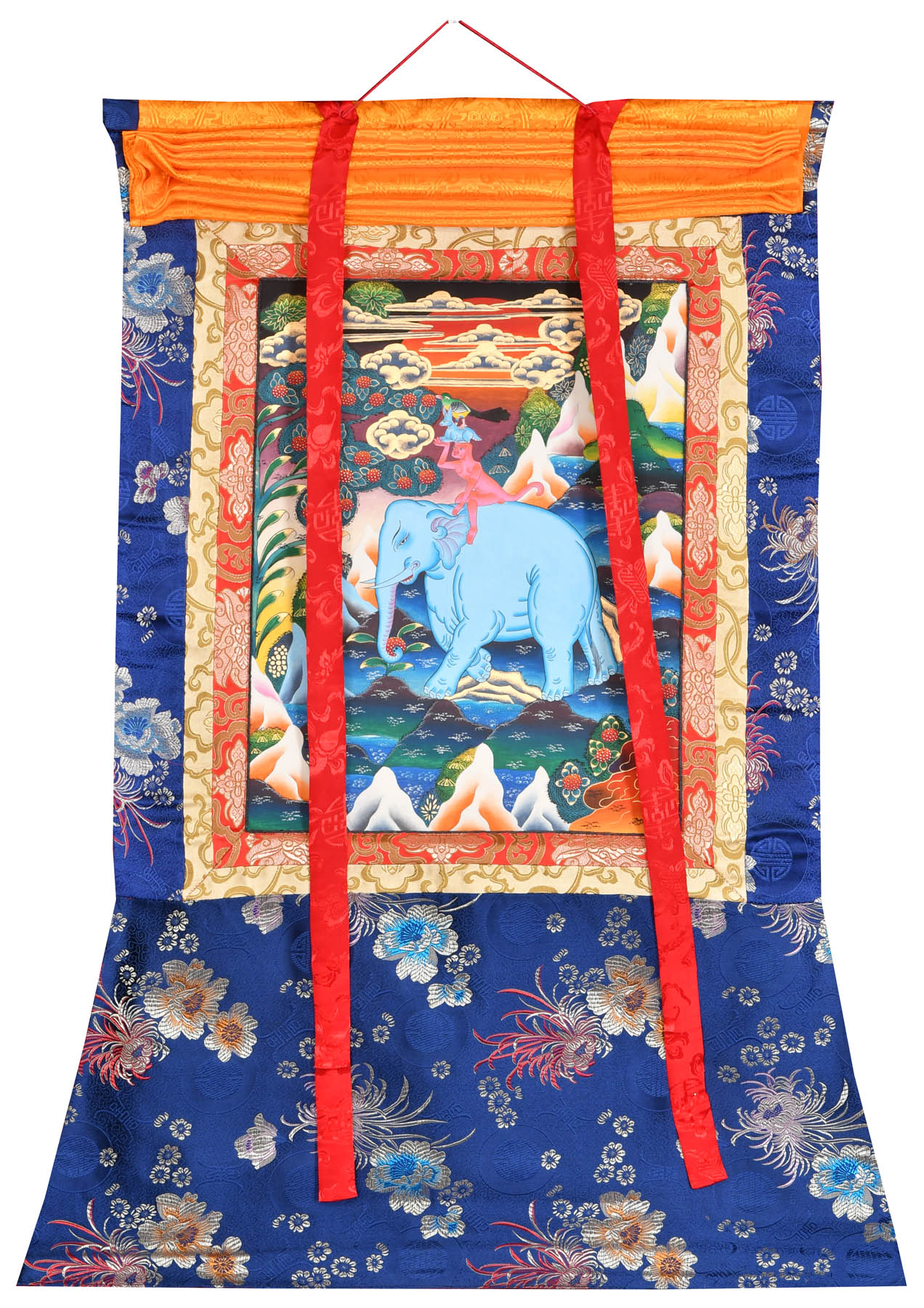
A Thangka is a traditional Tibetan Buddhist painting that usually depicts a Buddhist Deity (Buddha or Bodhisattva), a scene, or a mandala. These paintings are considered important paraphernalia in Buddhist rituals. They are used to teach the life of the Buddha, various lamas, and Bodhisattvas to the monastic students, and are also useful in visualizing the deity while meditating. One of the most important subjects of thangkas is the Bhavacakra (the wheel of life) which depicts the Art of Enlightenment. It is believed that Thangka paintings were developed over the centuries from the murals, of which only a few can be seen in the Ajanta caves in India and the Mogao caves in Gansu Province, Tibet.
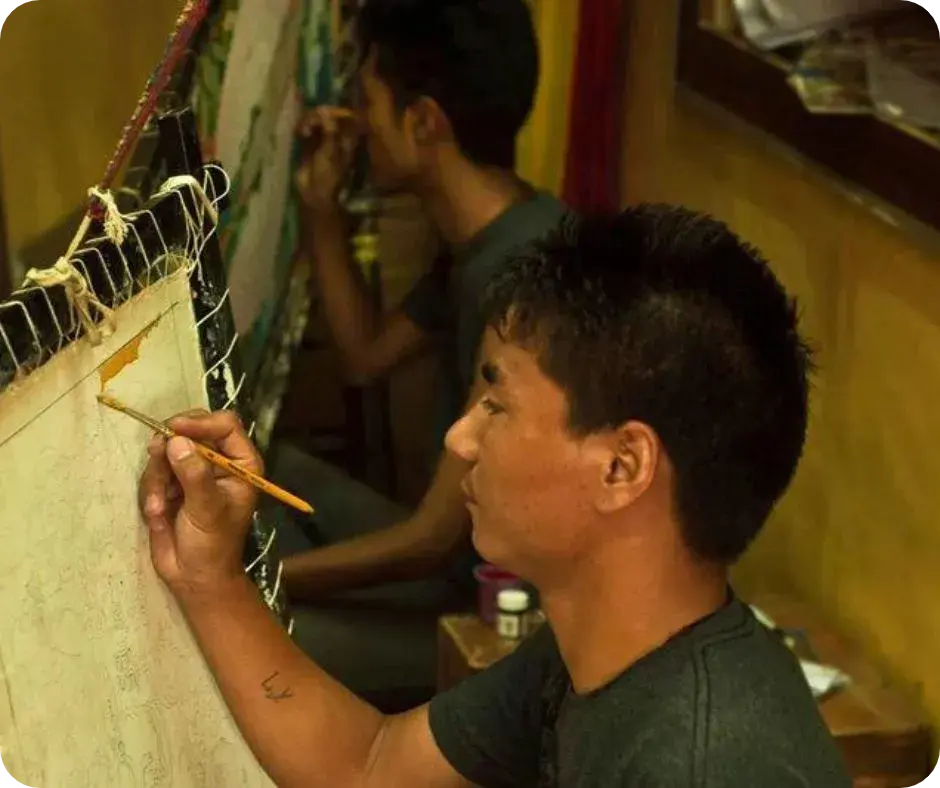
Thangkas are painted on cotton or silk applique and are usually small in size. The artist of these paintings is highly trained and has a proper understanding of Buddhist philosophy, knowledge, and background to create a realistic and bona fide painting.
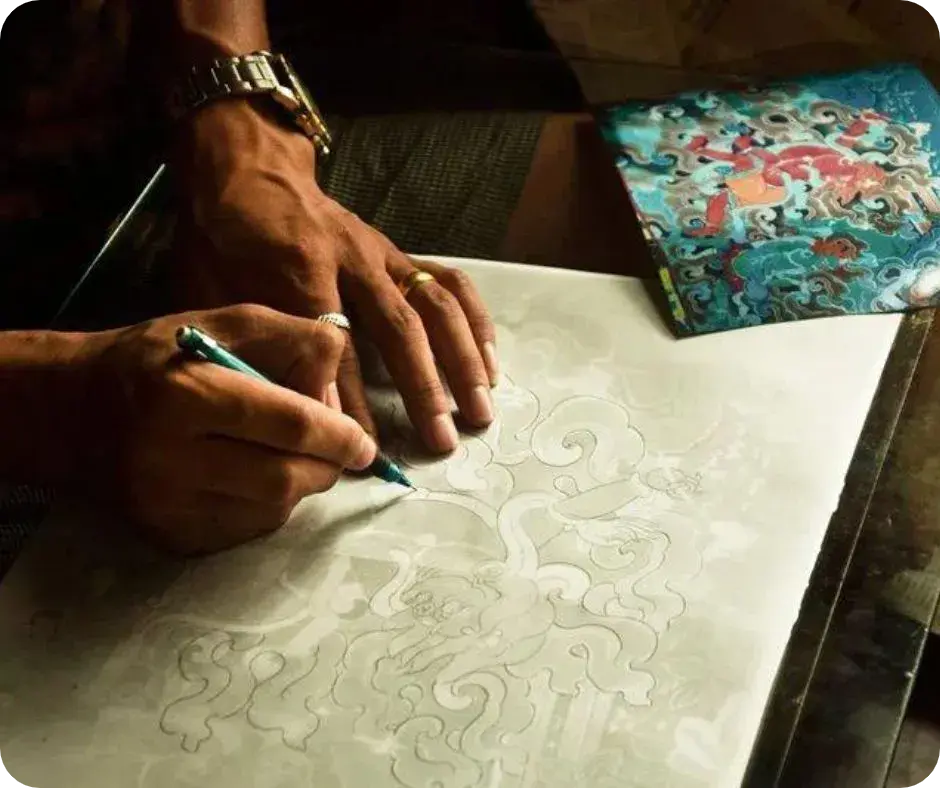
The process of making a thangka begins with stitching a loosely woven cotton fabric onto a wooden frame. Traditionally, the canvas was prepared by coating it with gesso, chalk, and base pigment.

After this, the outline of the form of the deity is sketched with a pencil or charcoal onto the canvas using iconographic grids. The drawing process is followed in accordance with strict guidelines laid out in Buddhist scriptures. The systematic grid helps the artist to make a geometrical and professional painting. When the drawing of the figures is finalized and adjusted, it is then outlined with black ink.

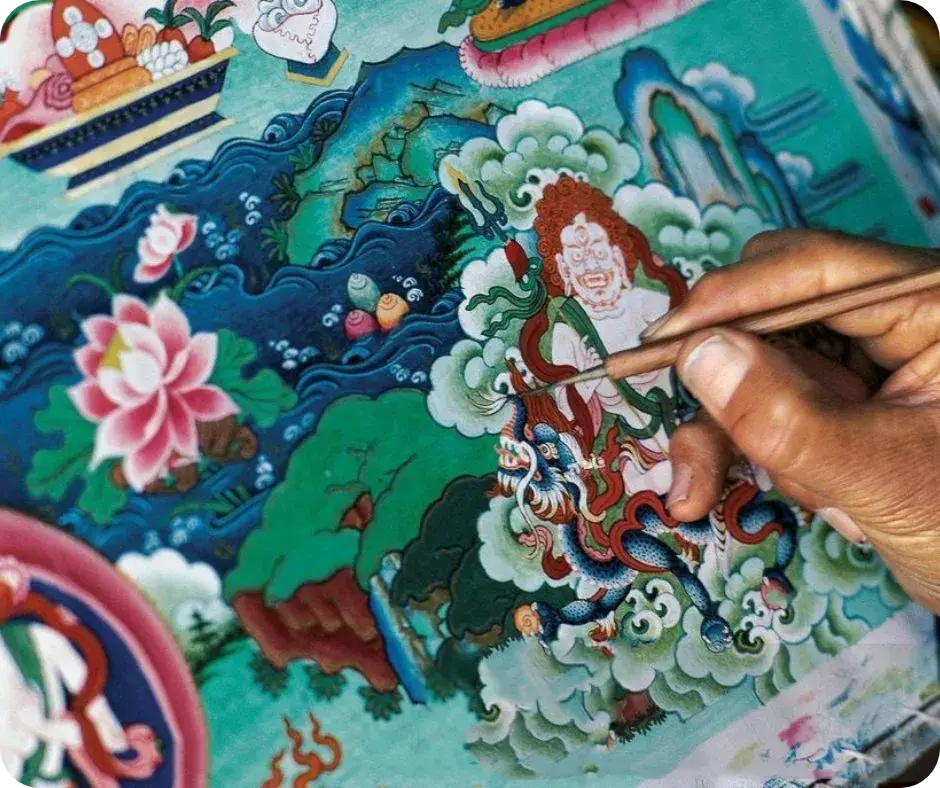
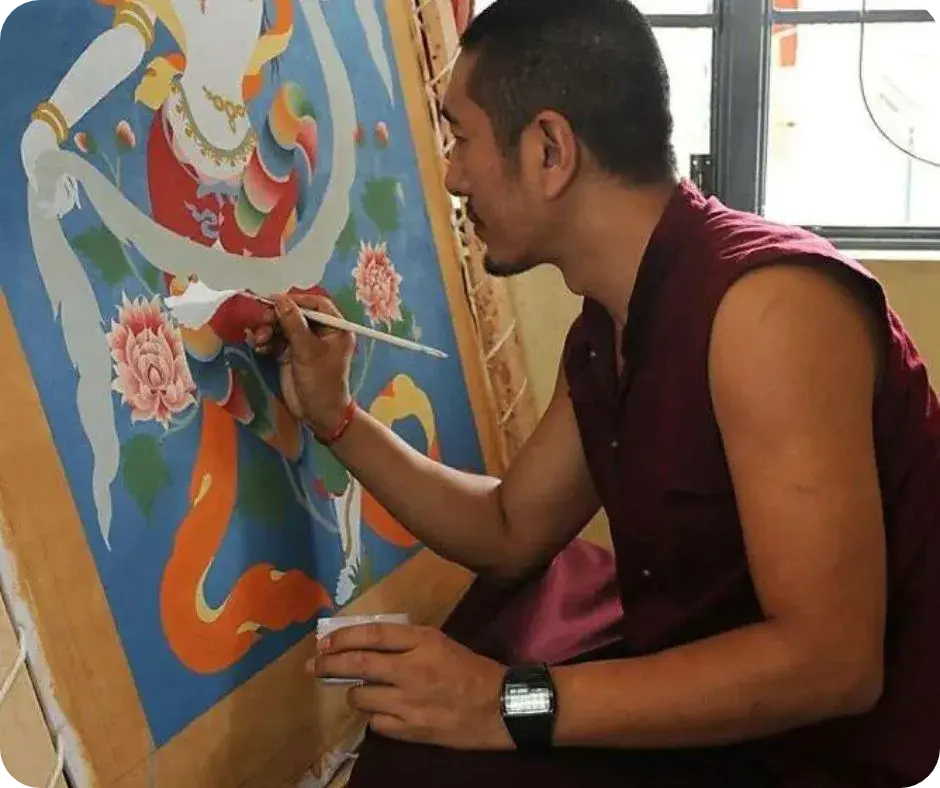
Earlier, a special paint of different colors was made by mixing powdered forms of organic (vegetable) and mineral pigments in a water-soluble adhesive. Nowadays, artists use acrylic paints instead. The colors are now applied to the sketch using the wet and dry brush techniques. One of the characteristic features of a thangka is the use of vibrant colors such as red, blue, black, green, yellow, etc.

In the final step, pure gold is coated over some parts of the thangka to increase its beauty. Due to this beautification, thangkas are much more expensive and also stand out from other ordinary paintings.

Thangka paintings are generally kept unrolled when not on display on the wall. They also come with a frame, a silken cover in front, and a textile backing to protect the painting from getting damaged. Because Thangkas are delicate in nature, they are recommended to be kept in places with no excess moisture and where there is not much exposure to sunlight. This makes them last a long time without their colors fading away. Painting a thangka is an elaborate and complex process and requires excellent skills. A skilled artist can take up to 6 months to complete a detailed thangka painting. In earlier times, thangka painters were lamas that spent many years on Buddhist studies before they painted.