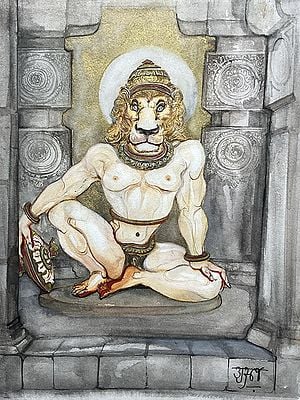
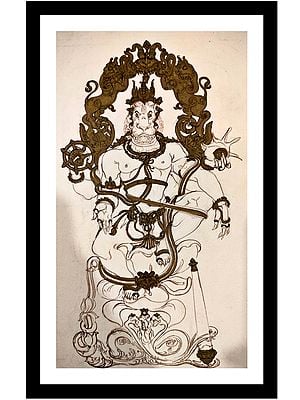
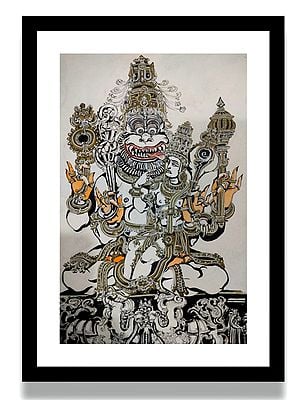
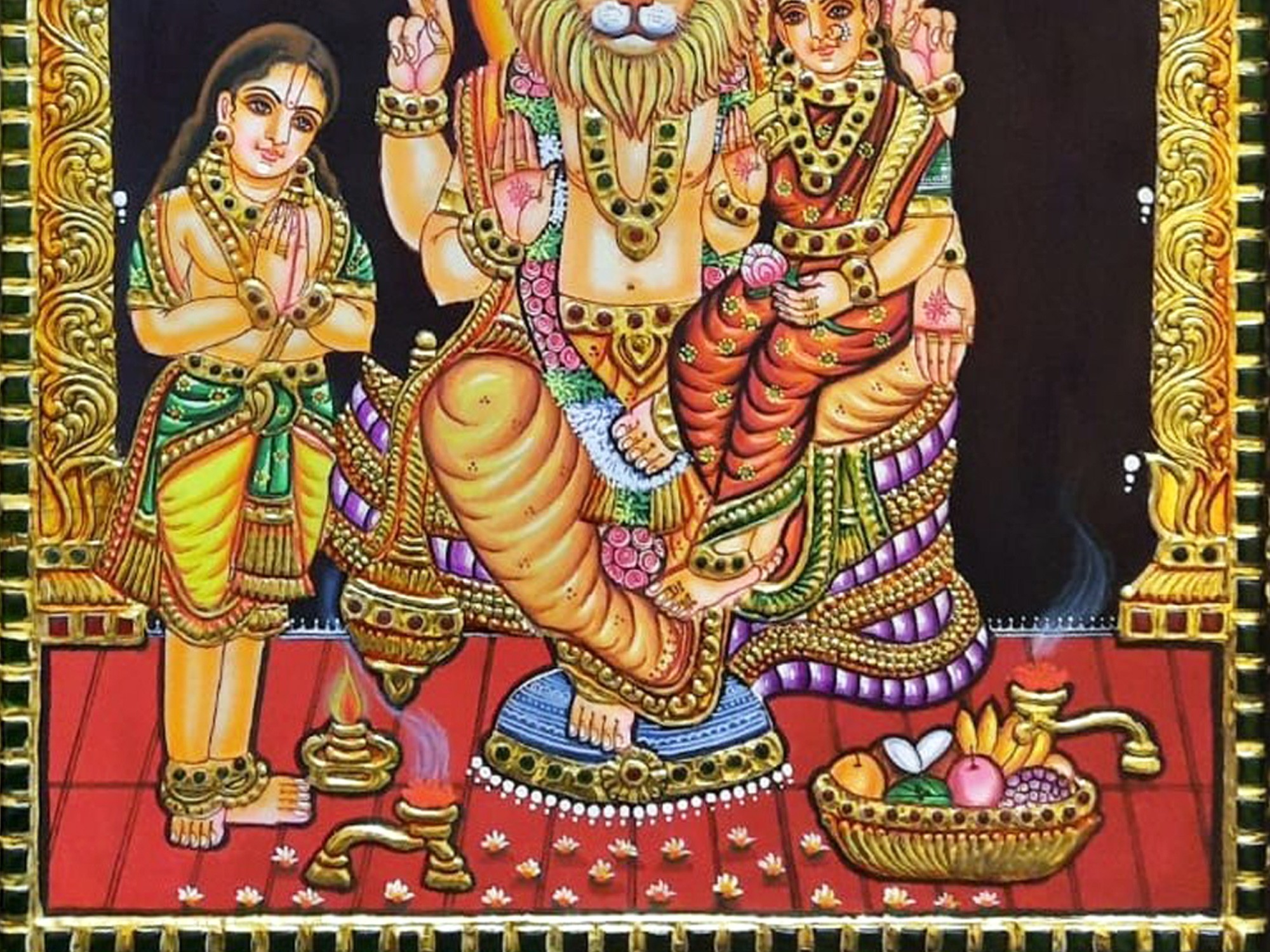
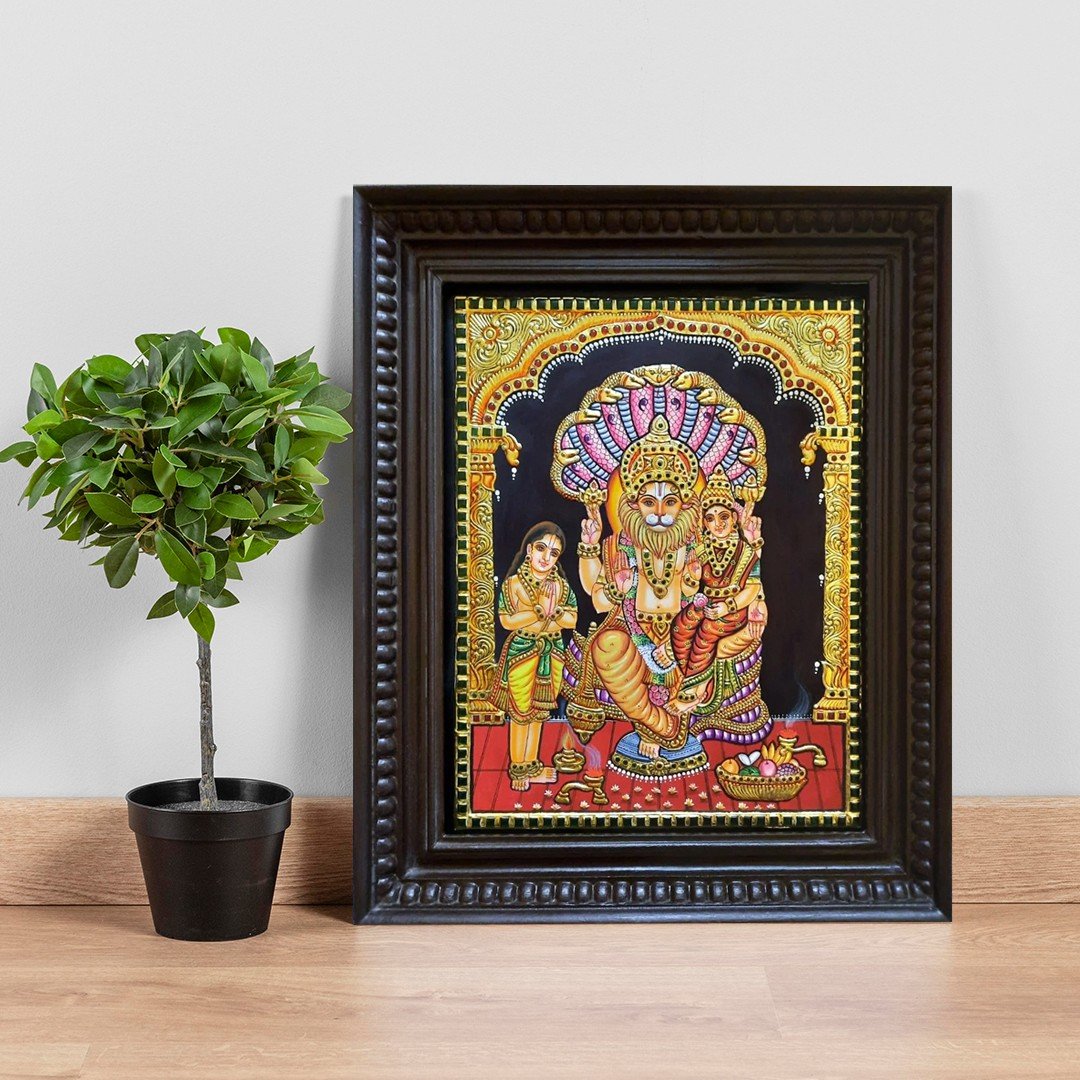
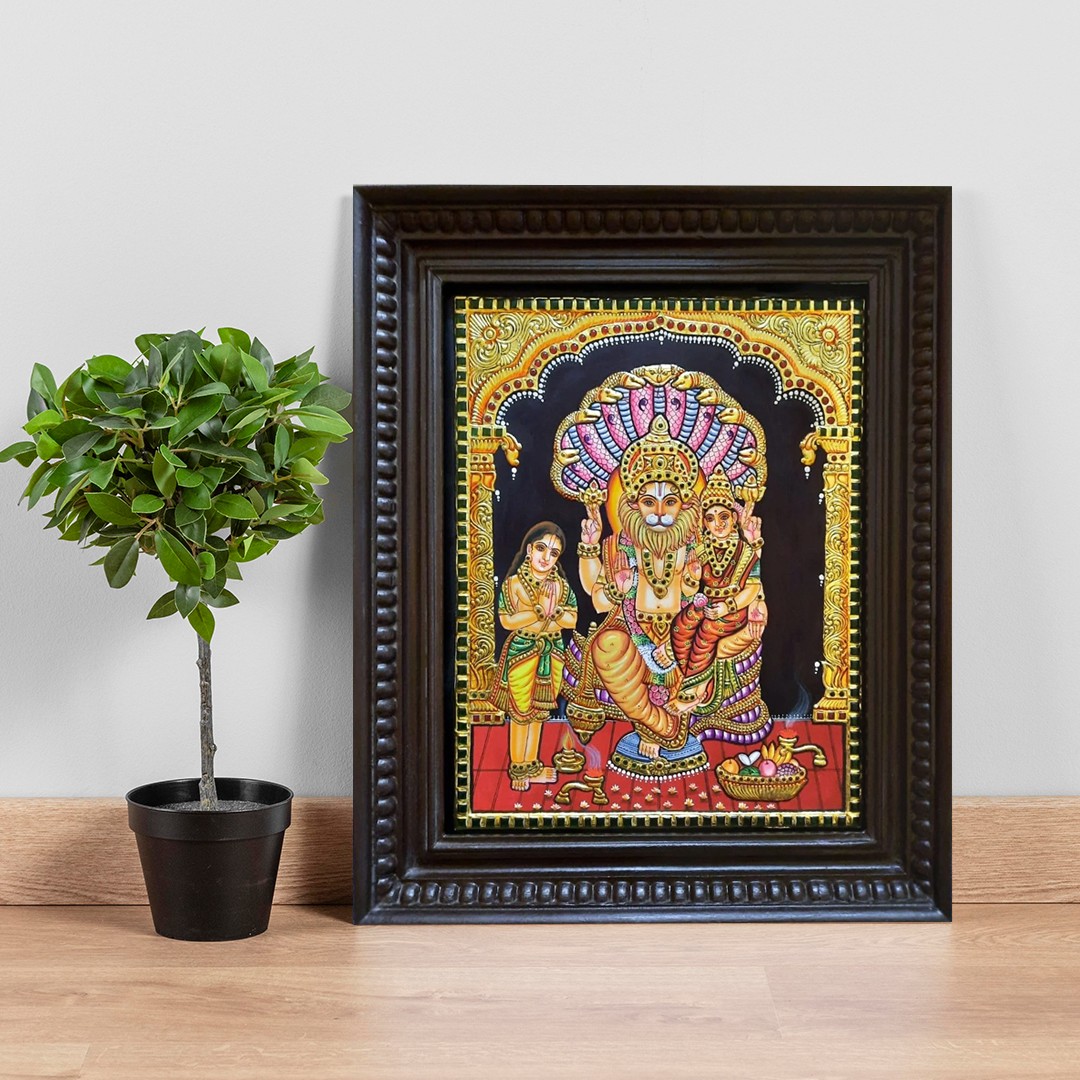
At the center of
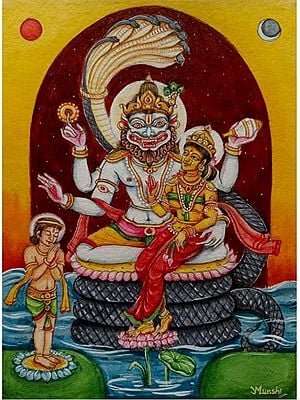
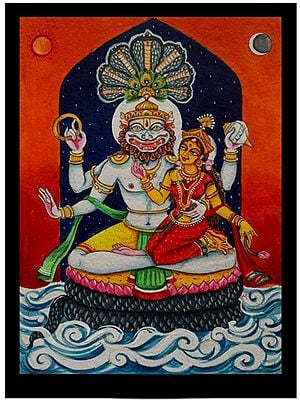
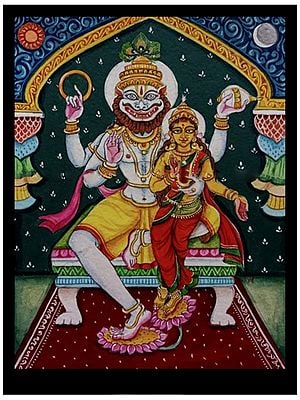
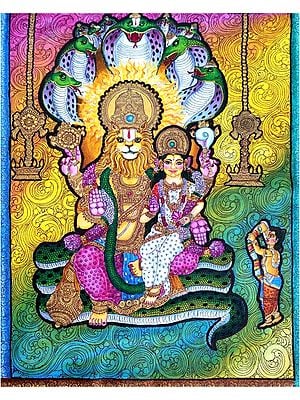
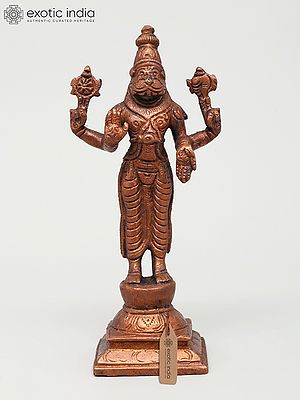
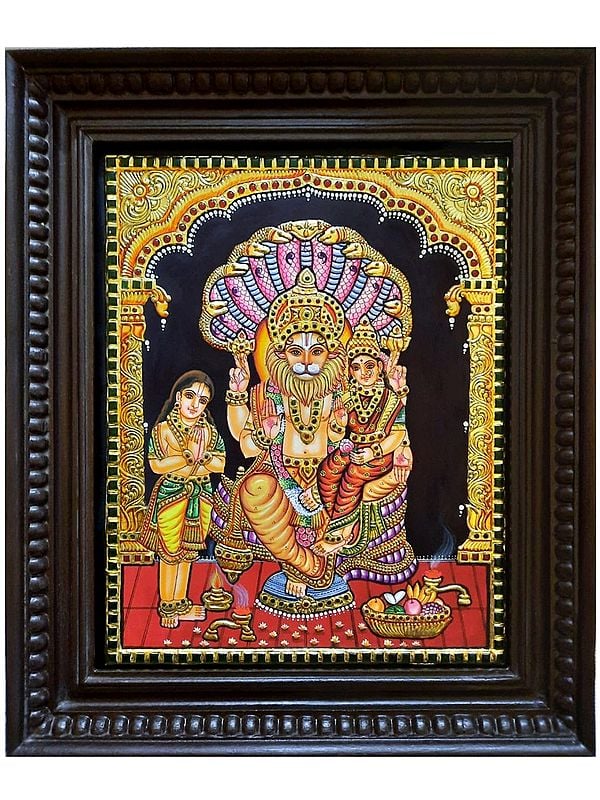
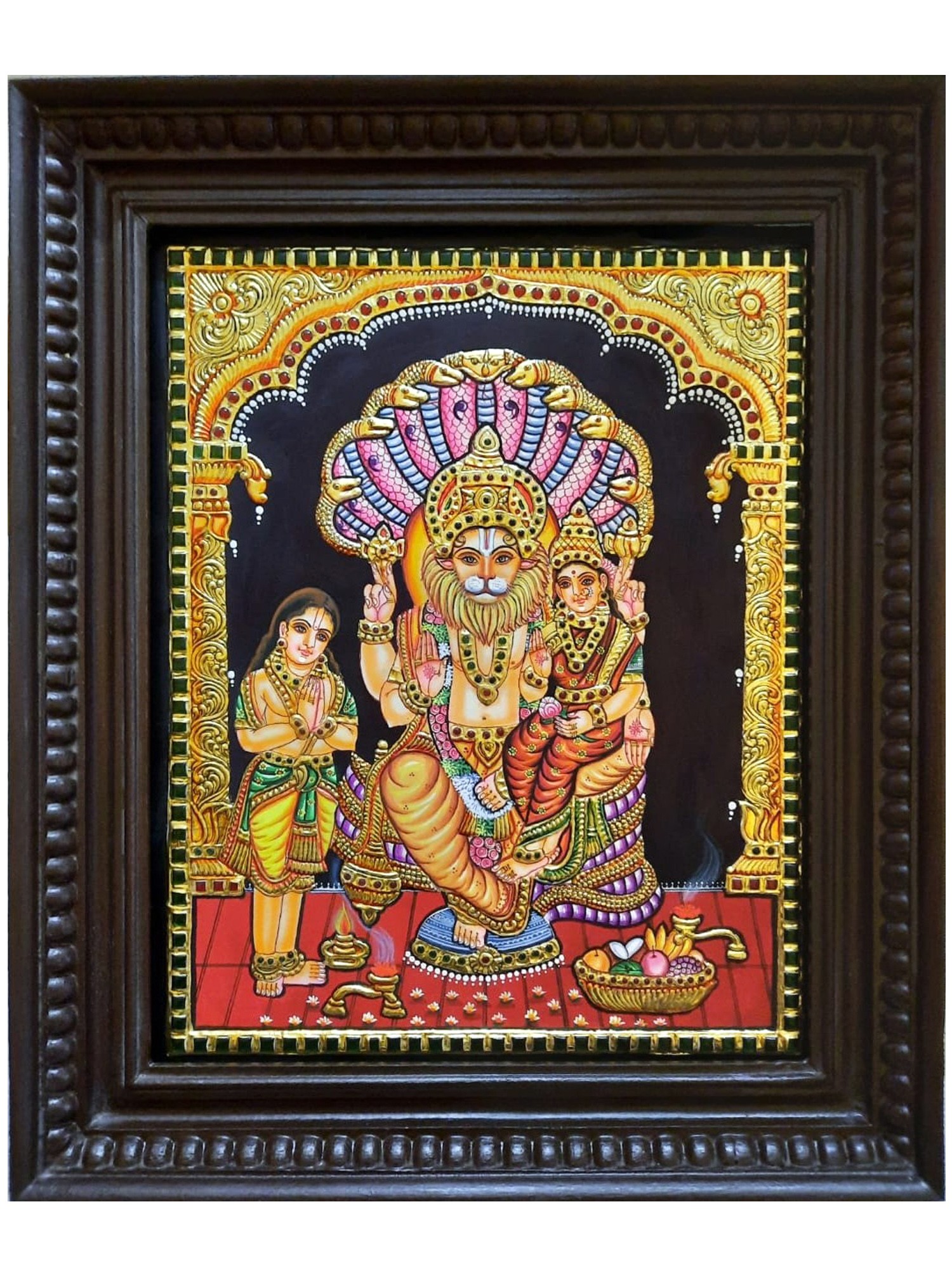
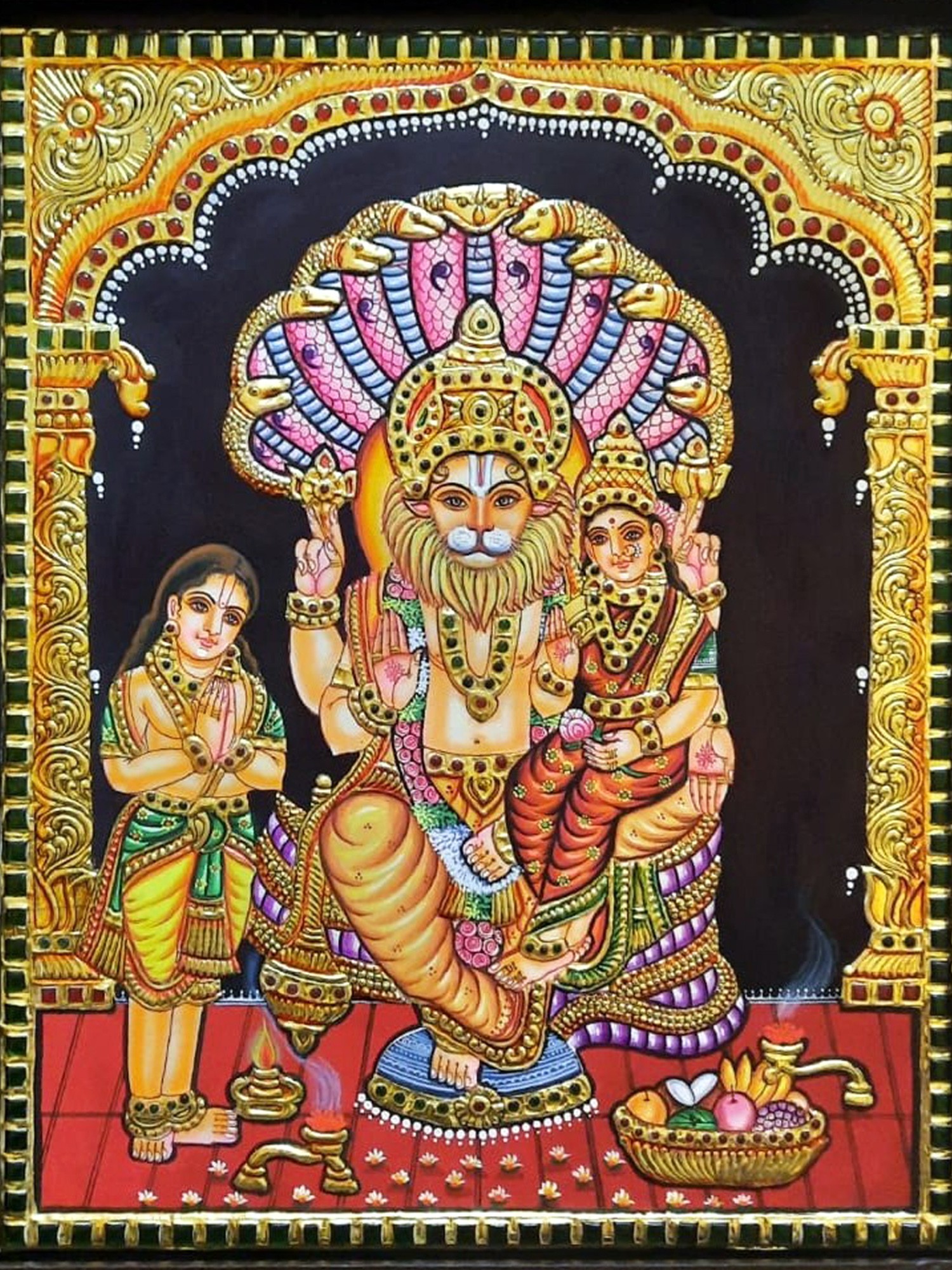
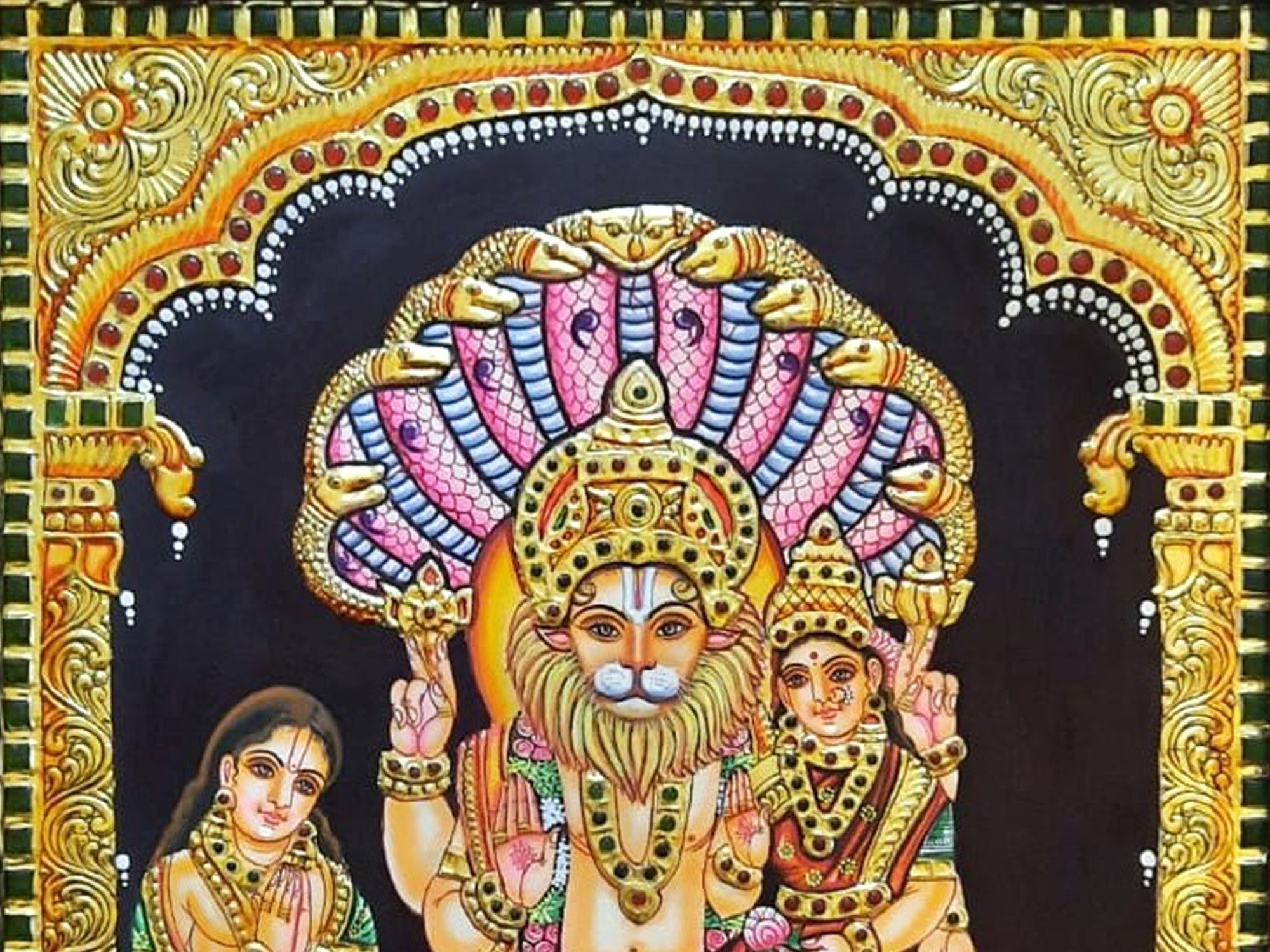
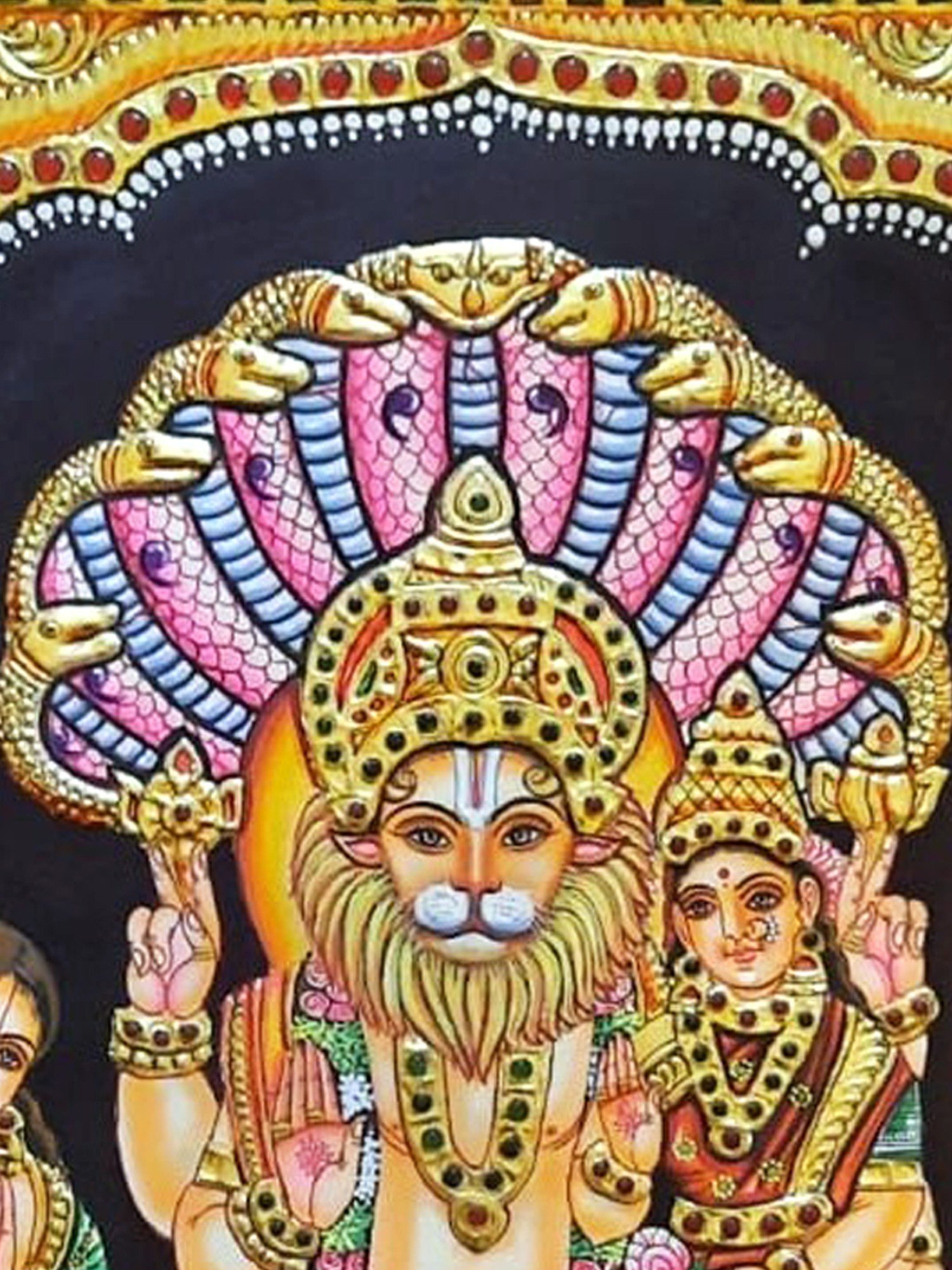
the painting, Lord
Narasimha is seated on his serpent, a
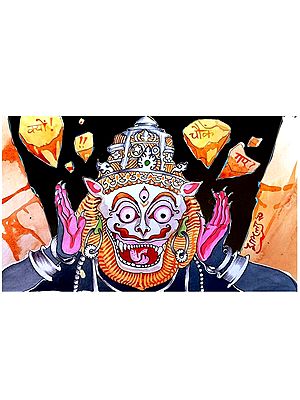
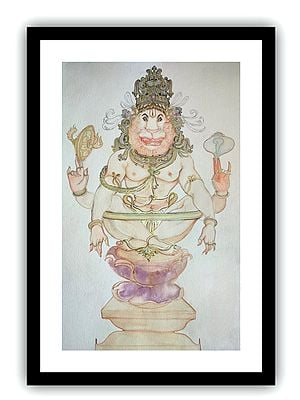
magnificent fusion of a lion’s head and a human body. His eyes blaze with
righteous anger, and his sharp claws extend menacingly, symbolizing his
formidable presence. Yet, amidst this fearsome form, there’s a sense of divine protection.
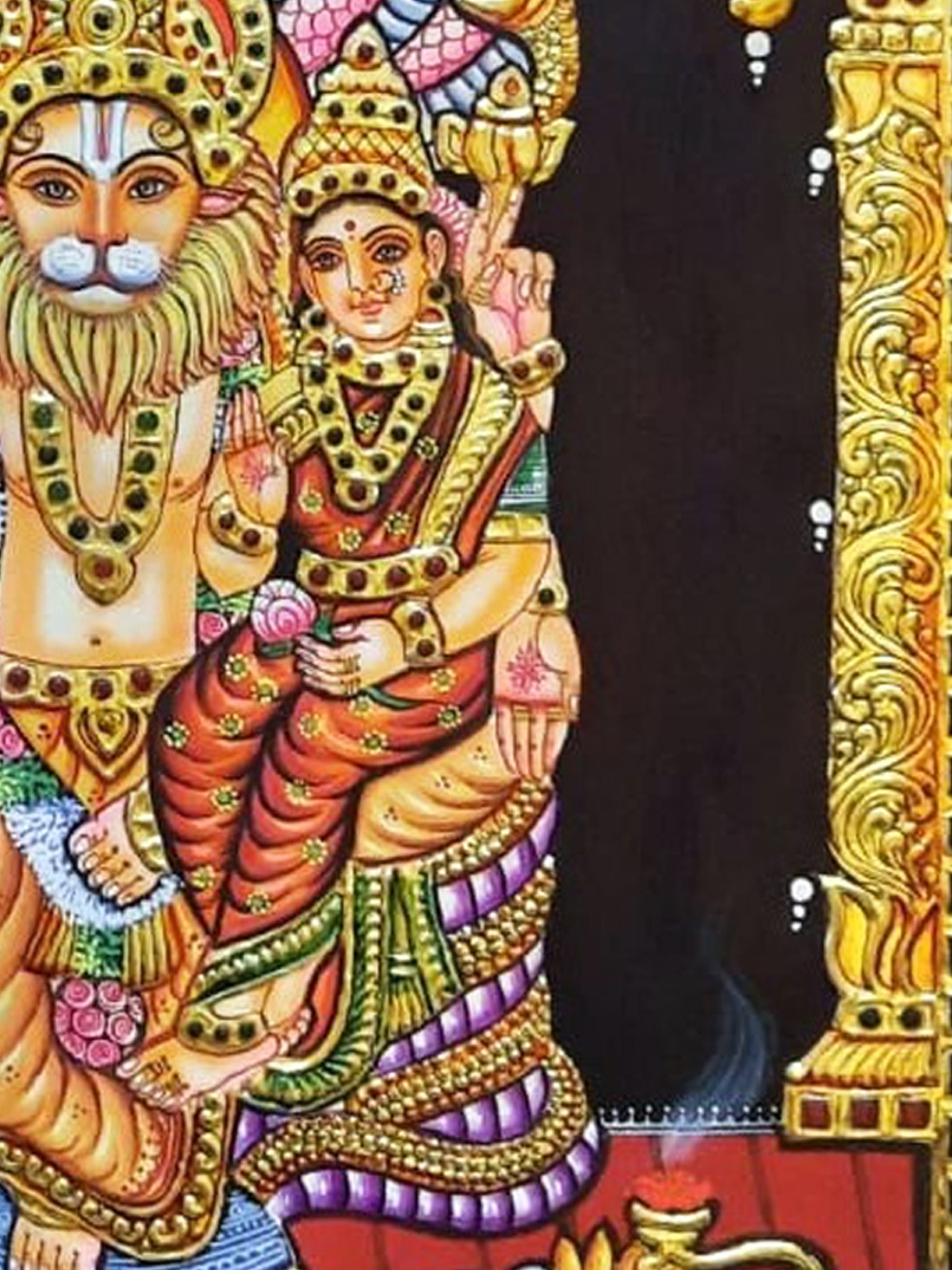
Seated on the lap of Lord Narasimha is Goddess
Lakshmi, the consort of Lord Vishnu, she is
often depicted beside Lord Vishnu and in his various forms. On the right-side
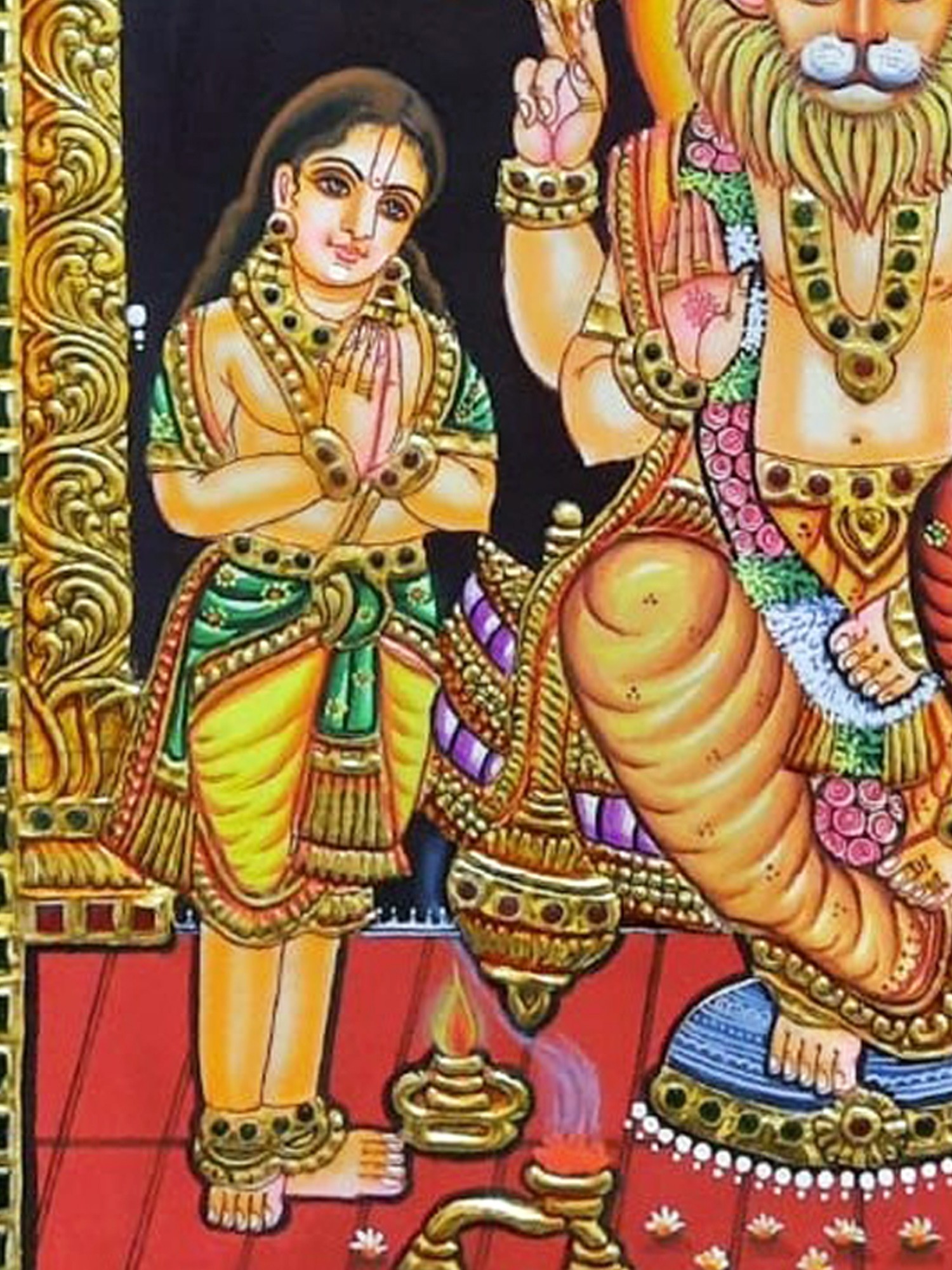
Bhakta Prahalad is standing, the epitome of unwavering devotion. His hands are
folded in prayer, symbolizing his complete surrender to the divine. His
expression radiates pure faith and innocence, as his gazes look at the Lord
with love and trust. Goddess Laxmi has bestowed her blessings on Prahlada,
symbolizing the divine rewards of unwavering devotion.
Gilded Elegance: Unraveling the Artistry of Tanjore Paintings
Tanjore painting is a traditional form of art in the South Indian style and was started by the inhabitants of a small town known as Thanjavur of Tamil Nadu. This gives it another name called “Thanjavur painting”. This painting draws its figures, designs, and inspiration from the time when Vedic culture was prevalent in India. Certain remarkable features of a Tanjore painting distinguish it from other paintings. Some of these are pure gold or gold foil coating on gesso work, the use of rich and vivid colors, and the inlay of cut-glass or semi-precious and precious stones. The subjects of most of the Tanjore paintings are Hindu Gods, Goddesses, and saints. The main devotional figure is portrayed in the central portion of the painting and is usually surrounded by various secondary figures.
The process of making a Tanjore painting
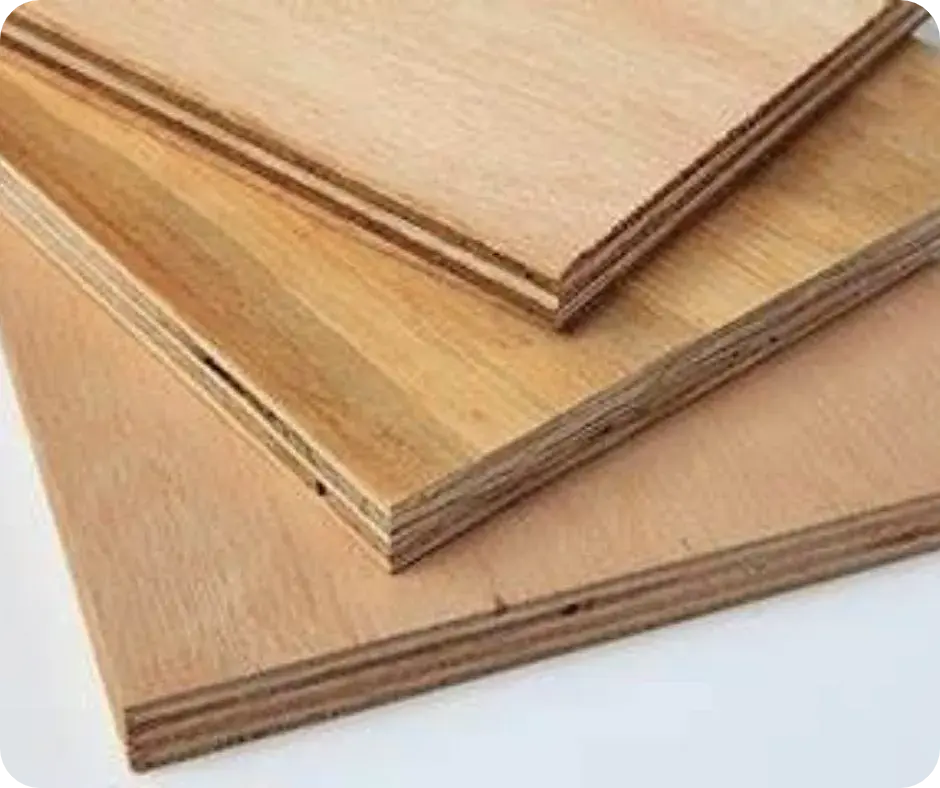
The classic Tanjore paintings are done on wooden planks and hence are also referred to as Palagai Padam in South India (Palagai = Wooden plank, Padam = Picture). Creating a masterpiece is never an easy task but the skilled artists of Thanjavur have been following the tradition of making timeless Tanjore paintings for decades.The making process begins with preparing the wooden board or canvas. The size of the board depends upon the choice of the patron. The next step is to paste cardboard over the wooden board and then a cotton fabric is stretched and pasted upon it using Arabic gum.
Now that the cloth is attached to the wooden panel, a rough sketch of the motifs and figure is drawn onto the fabric. After this, a paste of chalk powder and water-soluble adhesive is evenly applied over the base and smoothed.
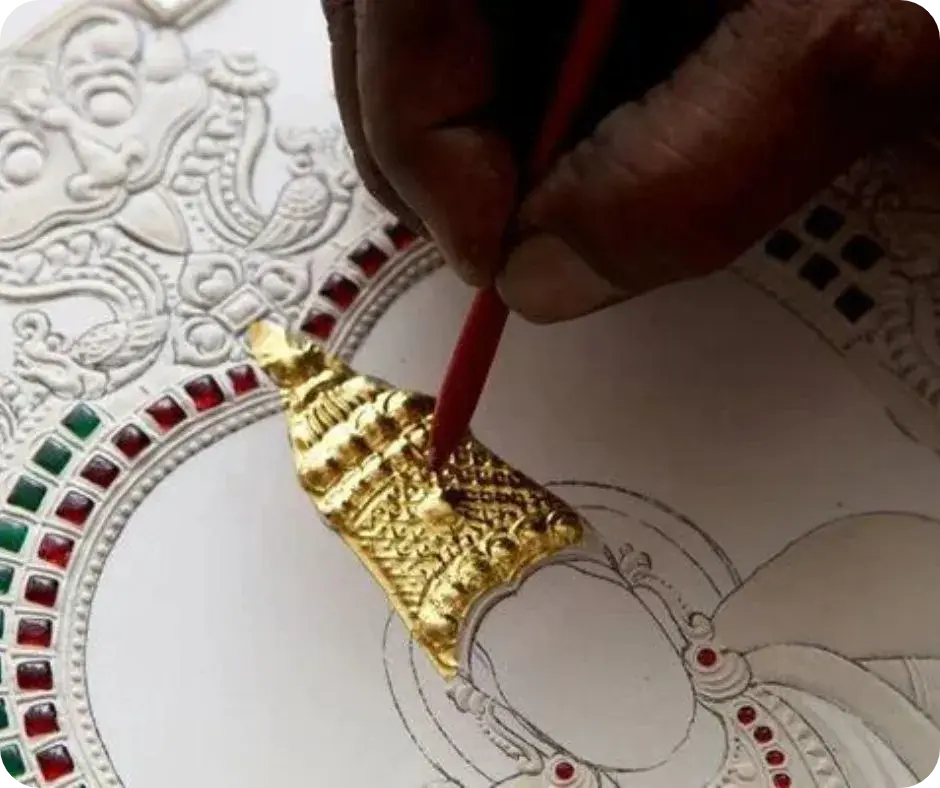
Thereafter, the outlines which were made or traced using a stencil are now ready to be beautified and decked with various add-ons. The usual materials for decoration are cut-glass, pearls, semi-precious and precious gems, gold leaf, and laces. 22 or 18 Karat Gold leaves and gems of varied hues are especially inlaid in areas like pillars, arches, walls, thrones, and dresses.
In the final step, the rest of the painting is filled with rich and striking colors such as shades of red, blue, and green. Formerly, the artists used natural colors like vegetable and mineral dyes instead of chemical paints. The entire painting is then cleaned and refined to give a flawless finished look.
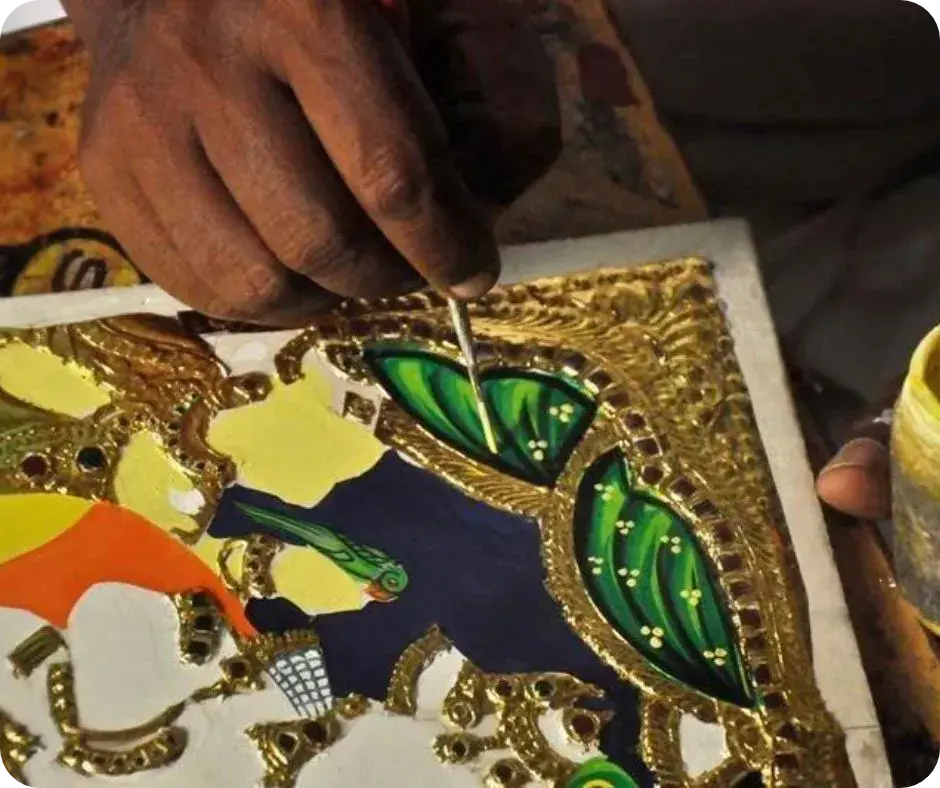
Since the making of a single piece of Tanjore painting requires a complex and elaborate process, the artists usually take at least one or two months to complete it. The use of pure gold foil and gems for beautification is a characteristic of an authentic Tanjore painting. Due to this, Tanjore paintings last for generations without getting tarnished and are much more expensive than general paintings. Though the art form has undergone various changes and technique modifications over the years, it continues to attract the hearts of art lovers.