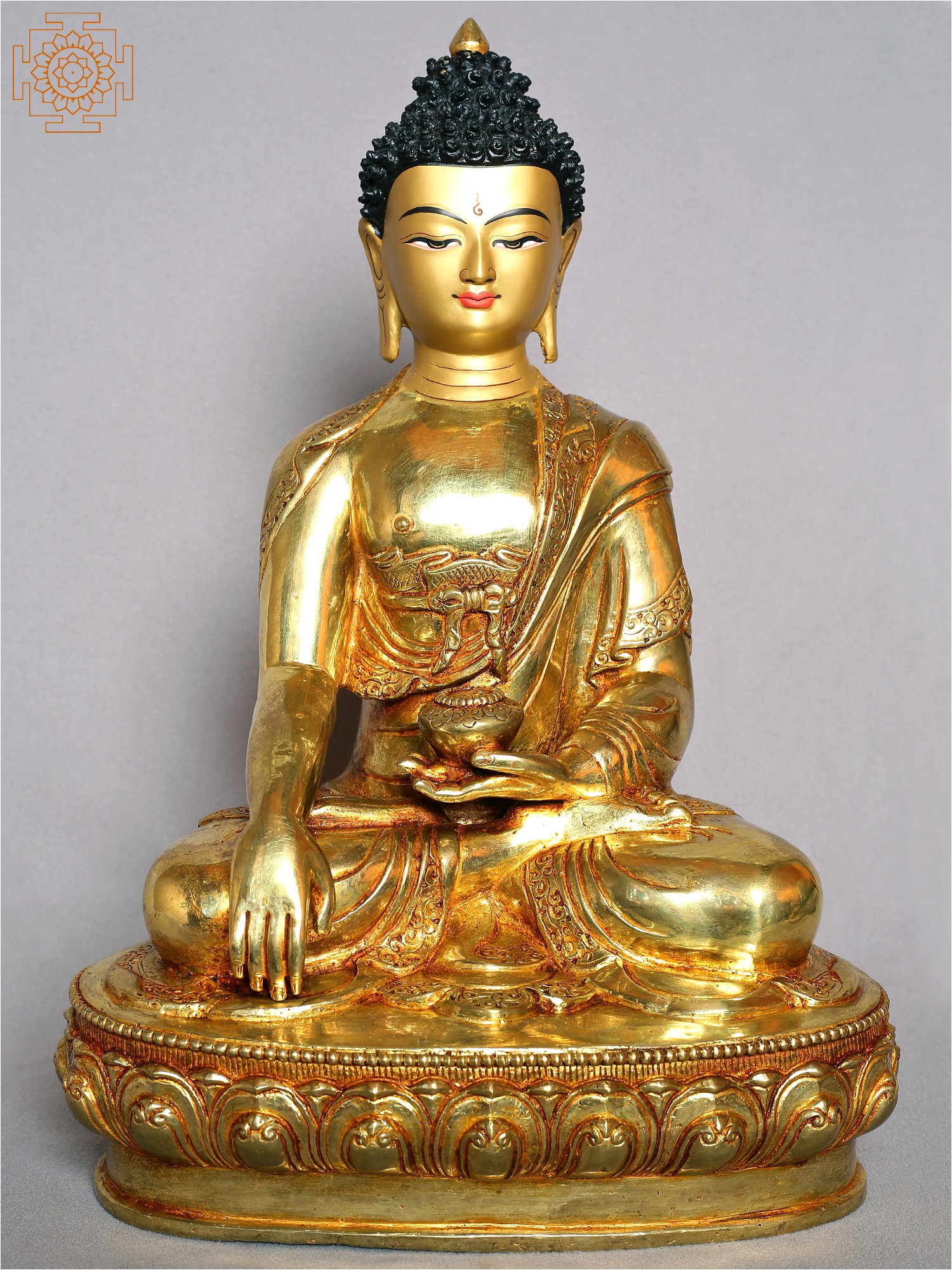
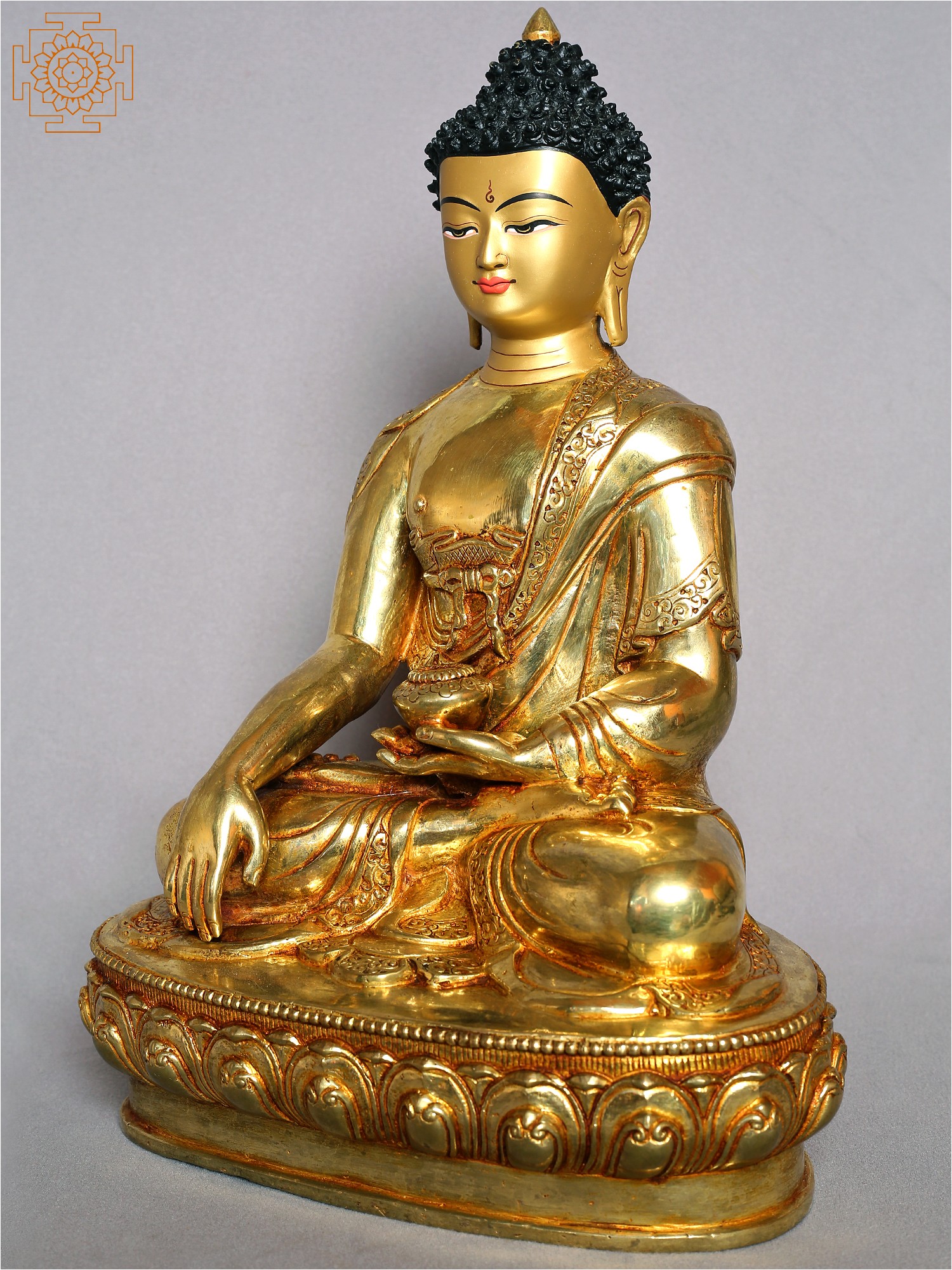
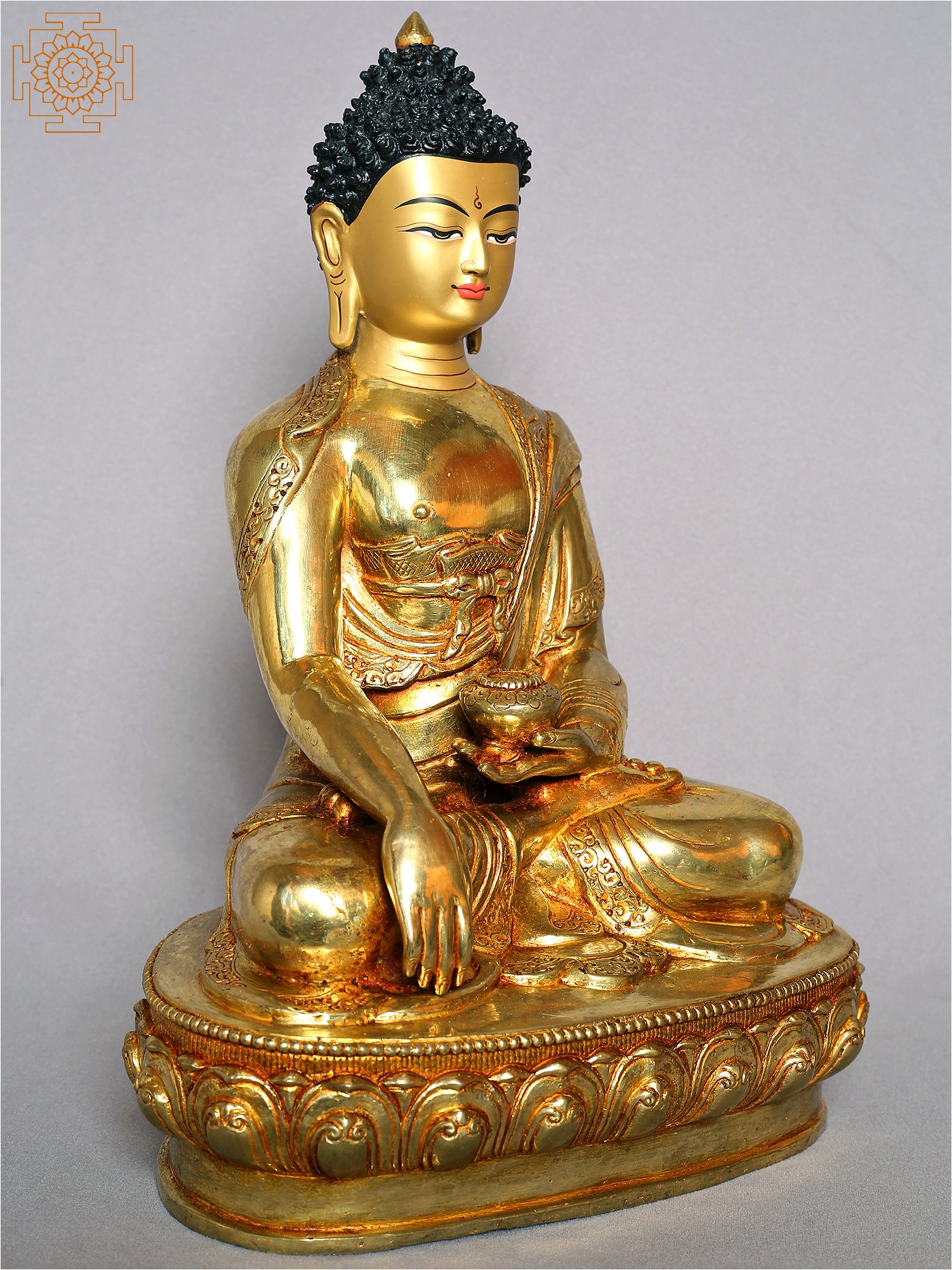
A tranquil grandeur
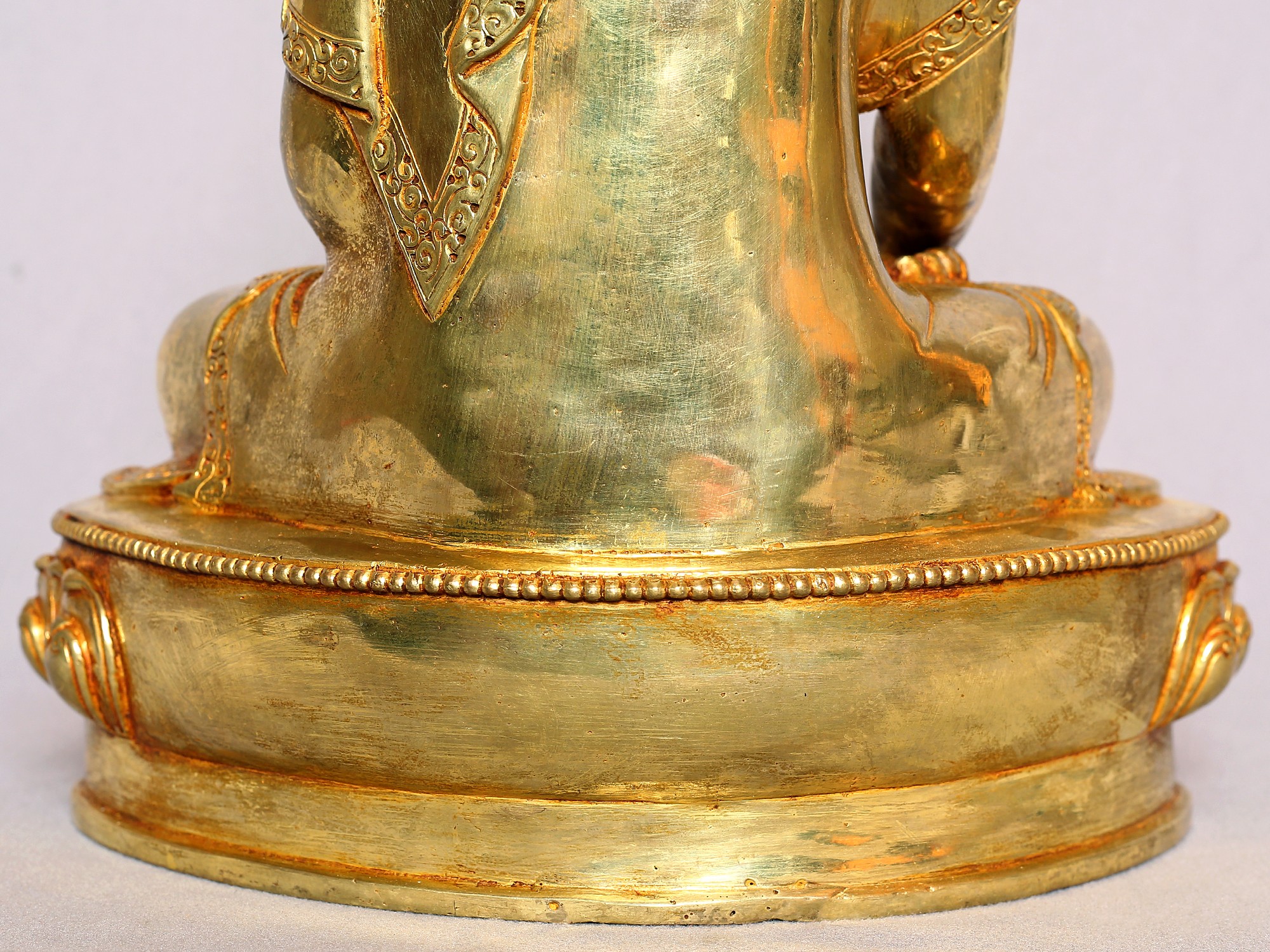
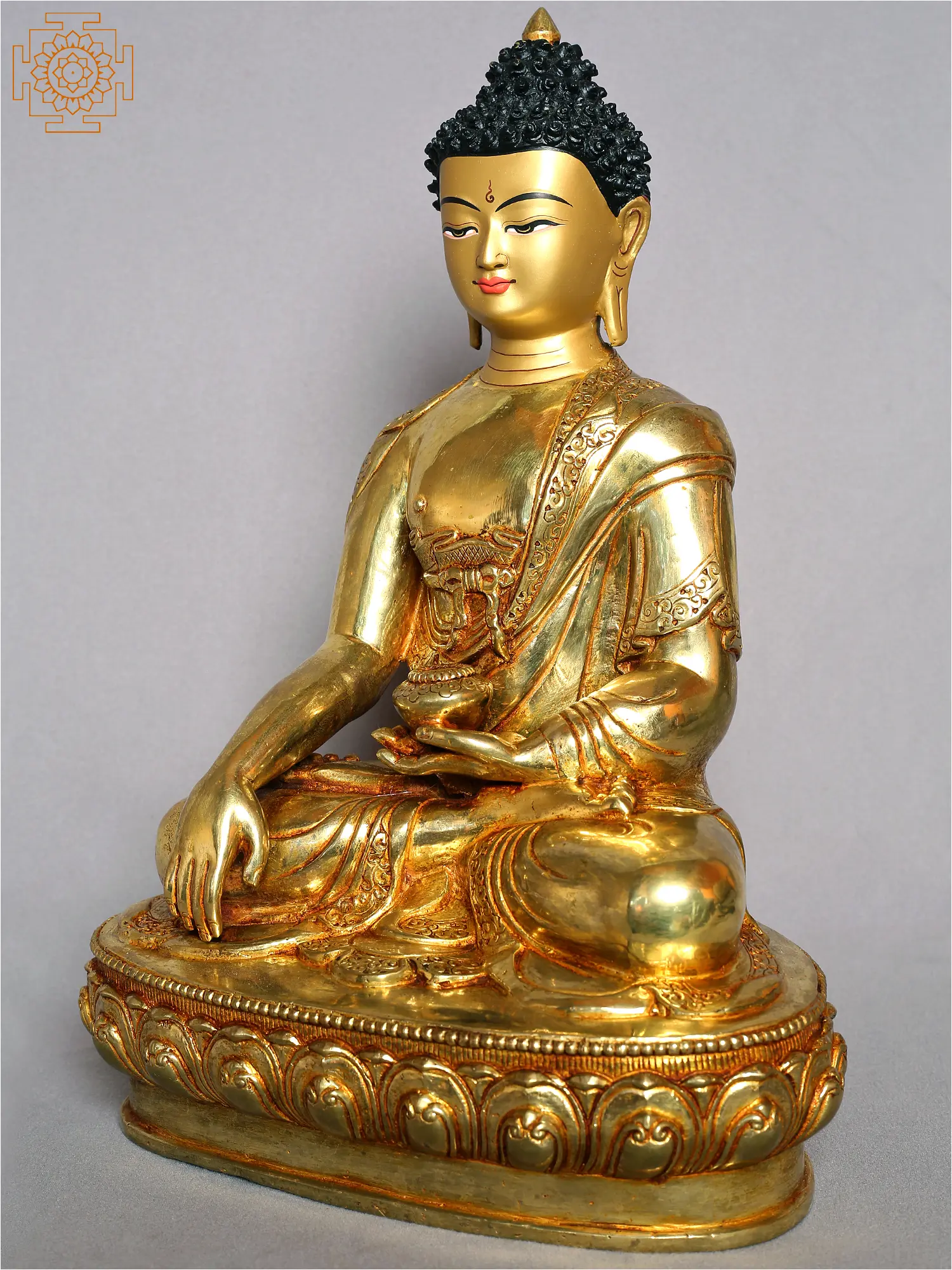
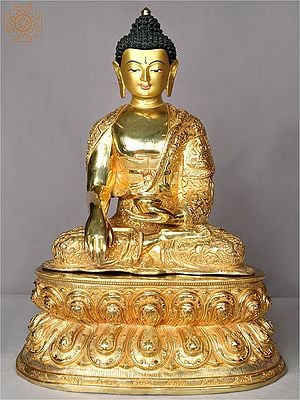
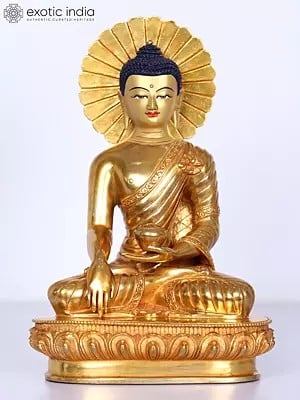
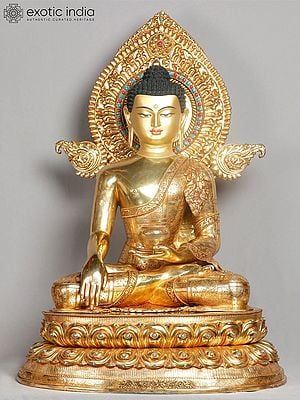
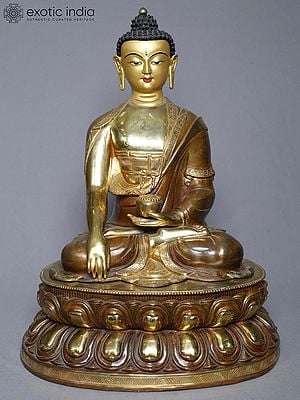
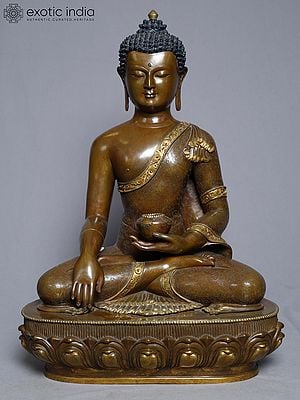
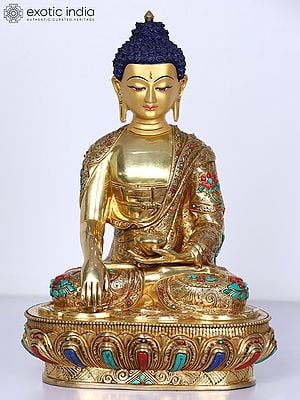
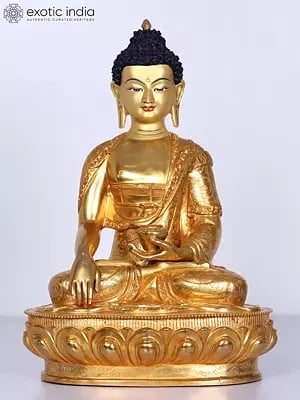
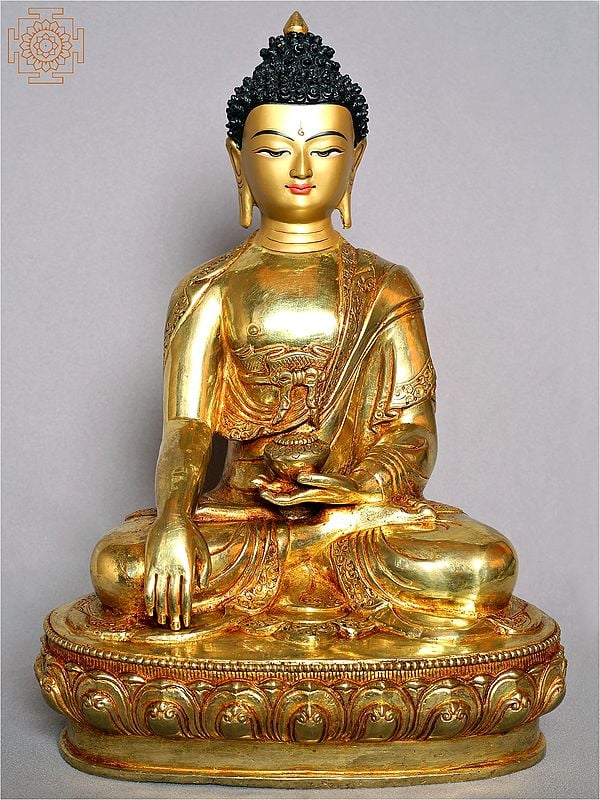
permeates the sculpture of Shakyamuni Buddha, which is made of radiant
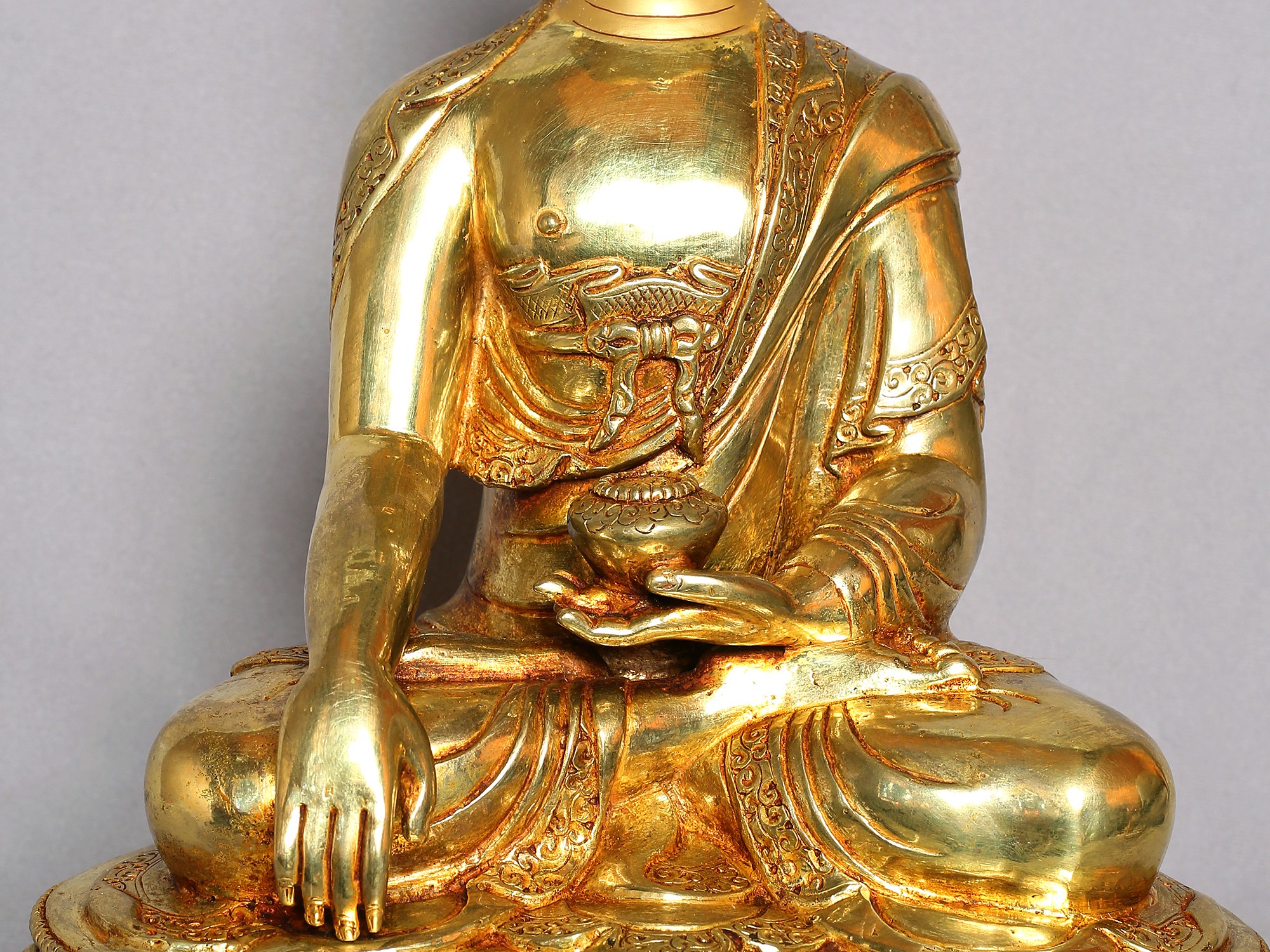
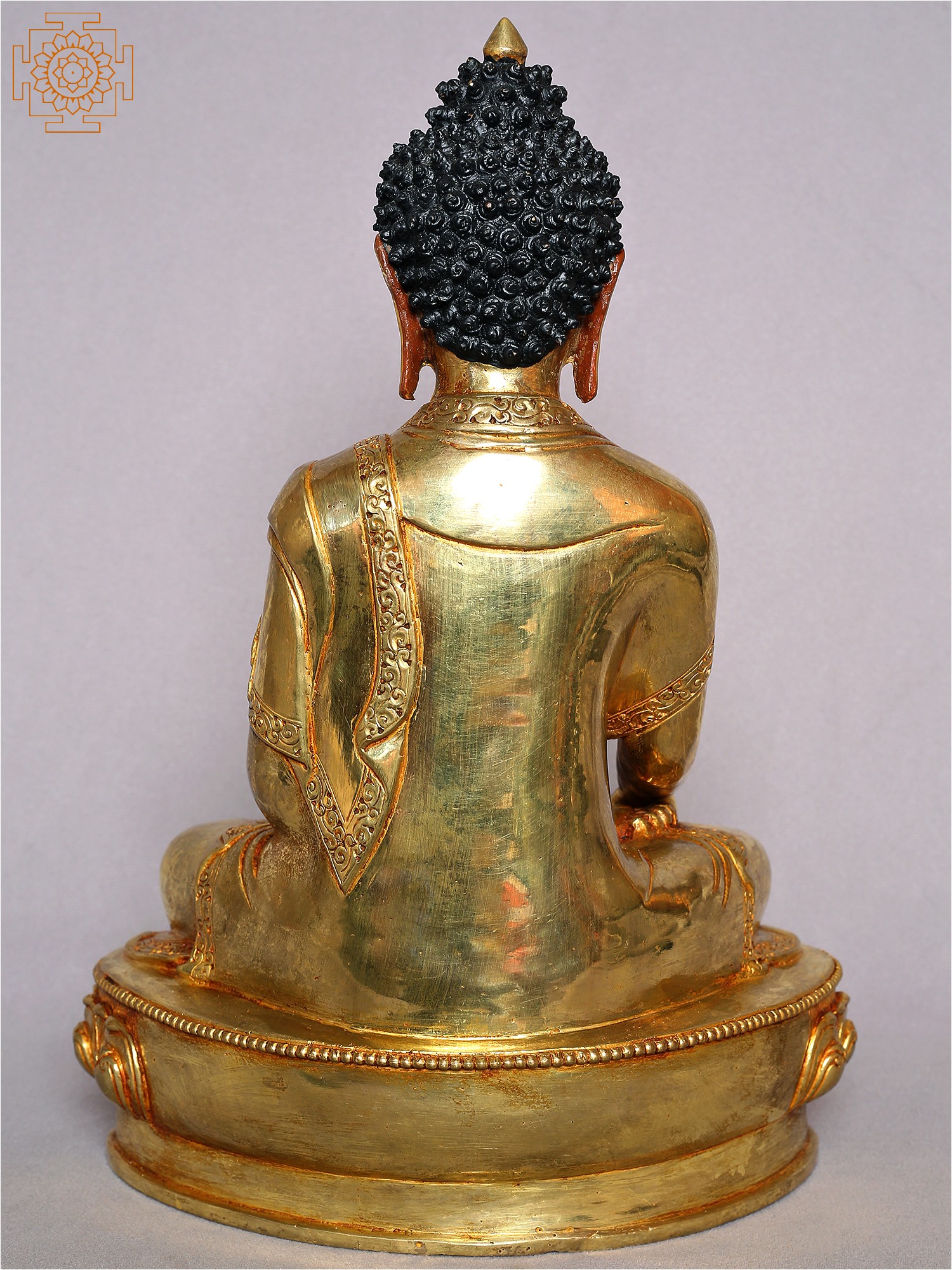
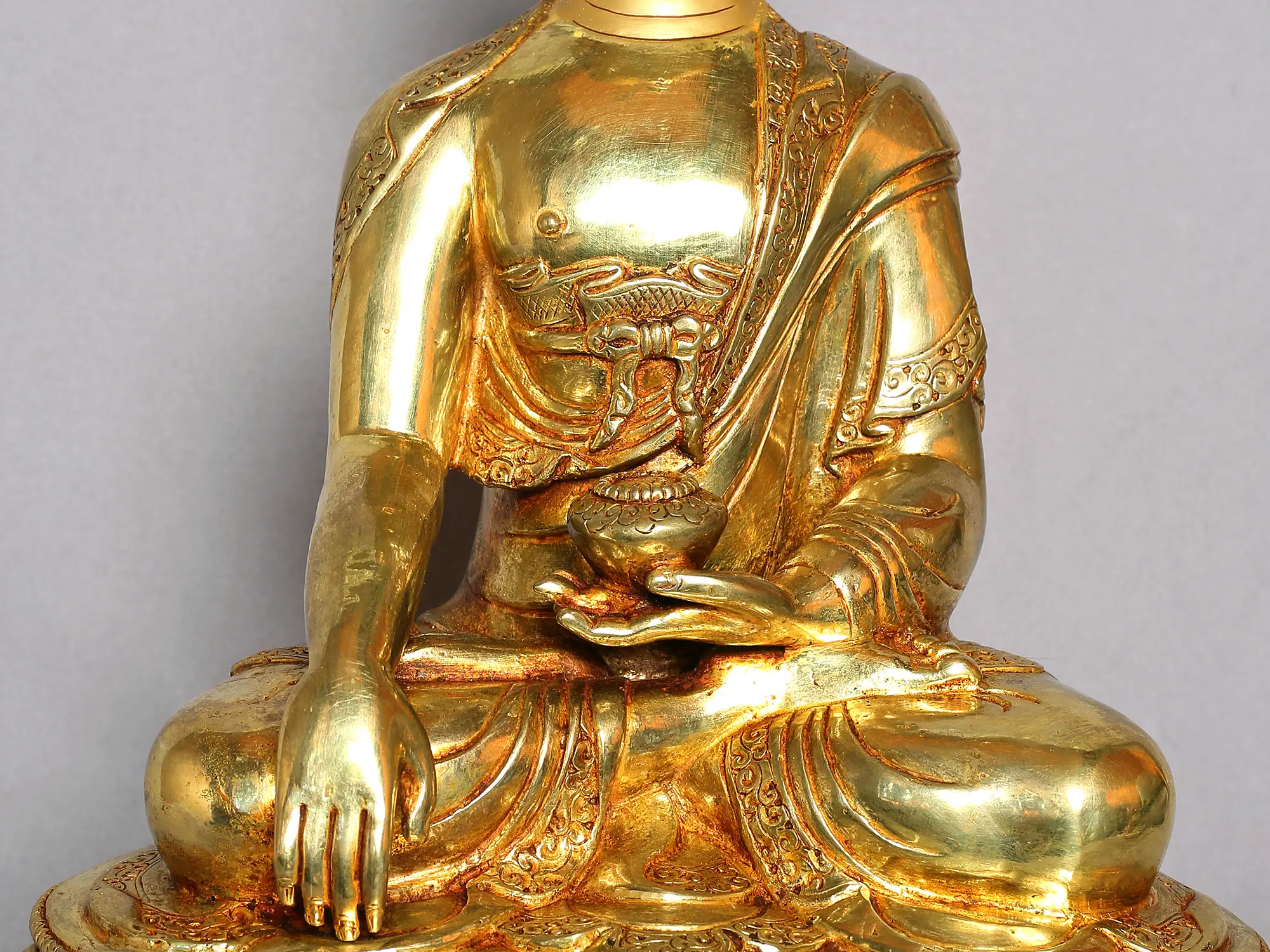
copper-colored gold. His monastic garment had elaborate border decoration.
Every fine detail makes this work of art an eternal fusion of spiritual depth
and artistry, testifying to the extraordinary craftsmanship that went into it.
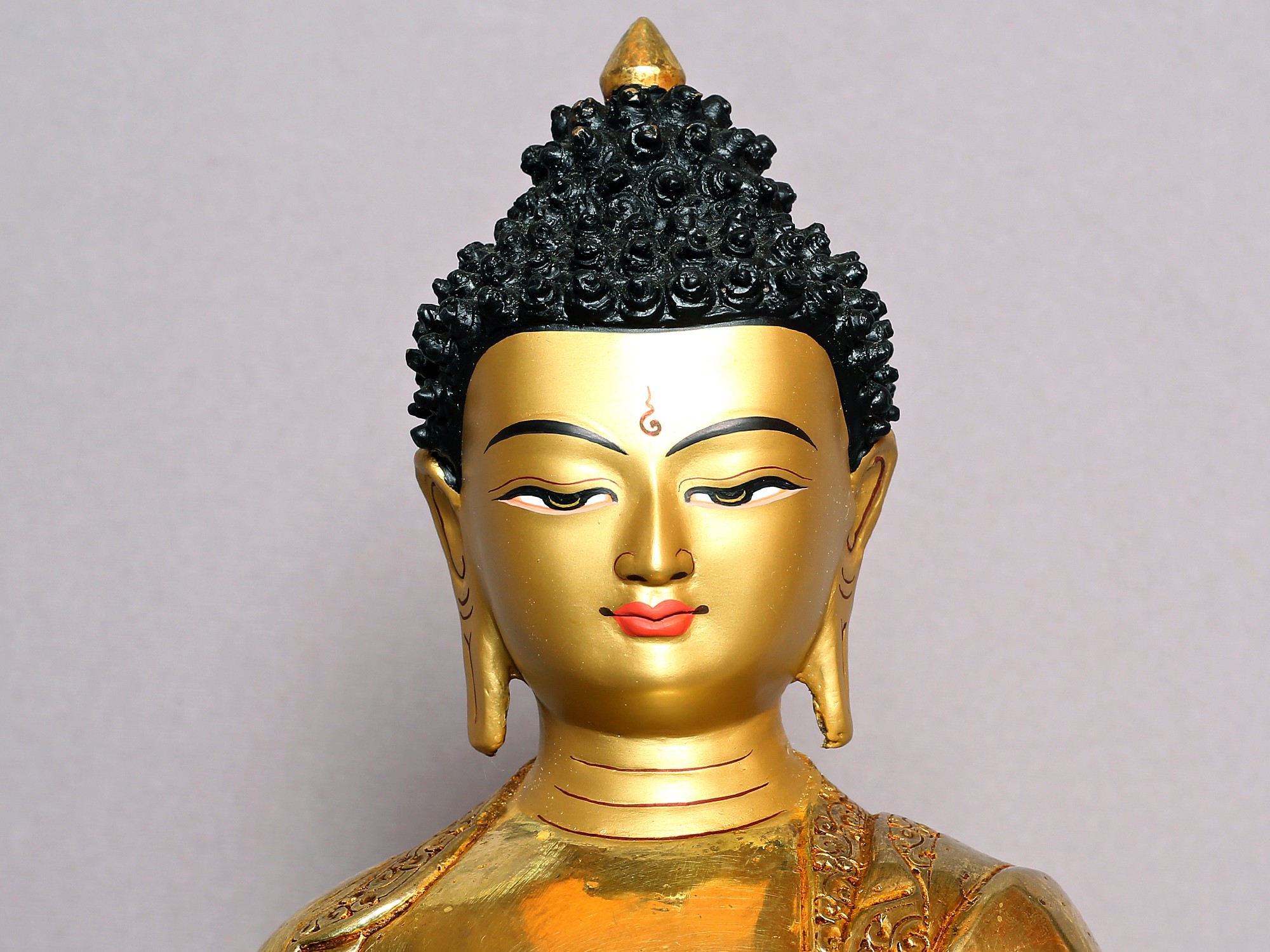
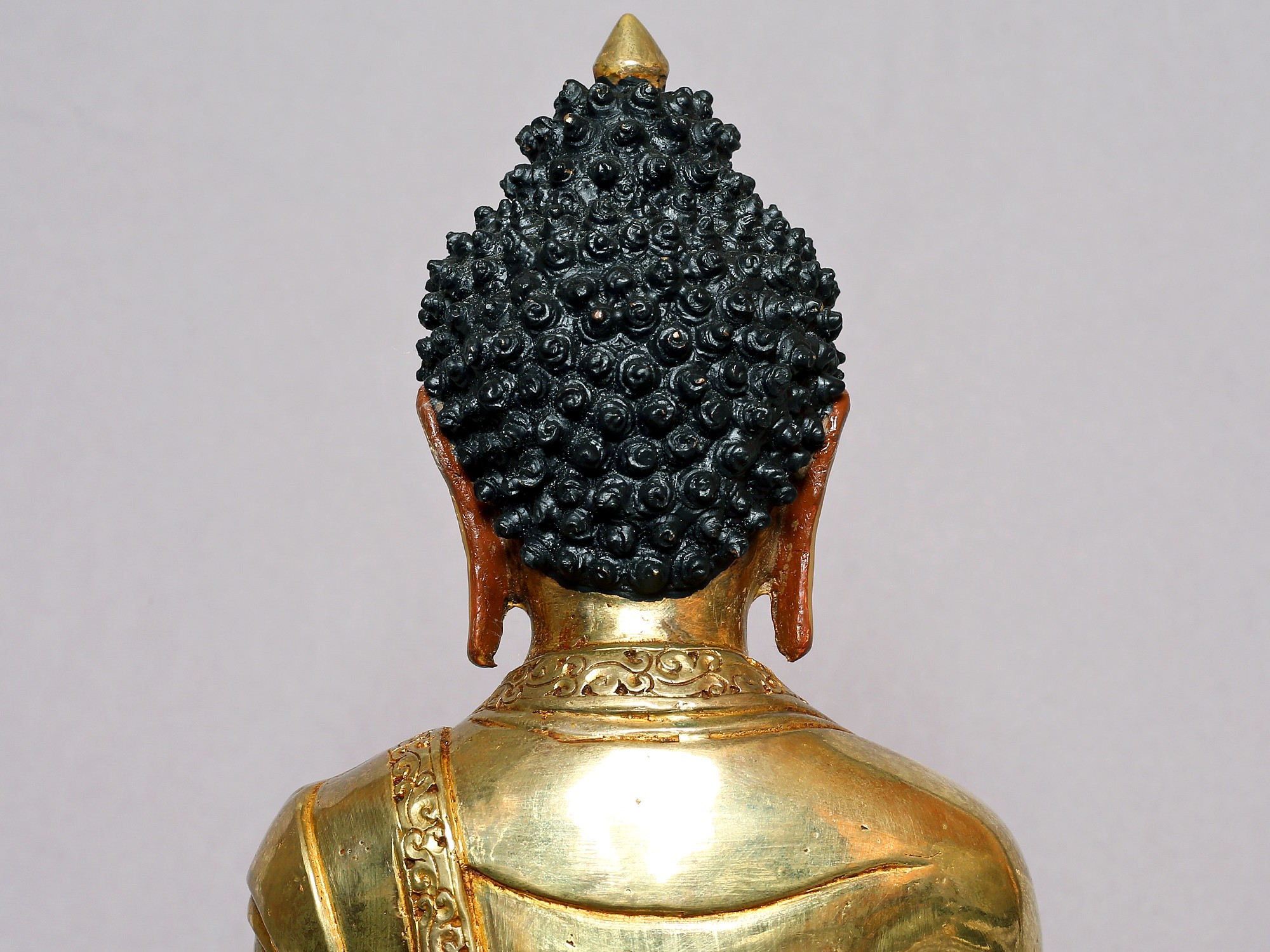
Gleaming golden, the Ushnisha, a symbol of wisdom and enlightenment, crowns the
head of the Buddha.
This shining
characteristic captivates everyone who sees it as if it were wisdom itself.
This sculpture captures the spirit of enlightenment by fusing creativity with
spirituality. It serves as an incredible focal point, inviting contemplation on
the everlasting wisdom and inner serenity that Buddhism bestows via its
profound teachings and the exquisite craftsmanship that captures these ideas in
every little detail.
The Embodiment of Enlightenment
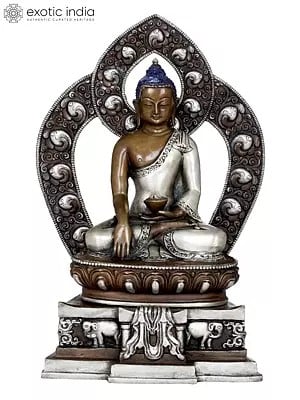
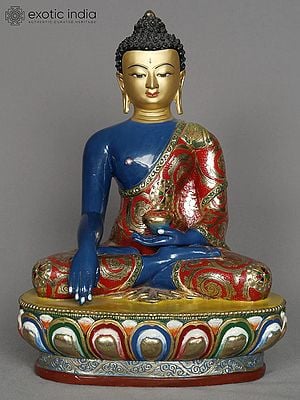
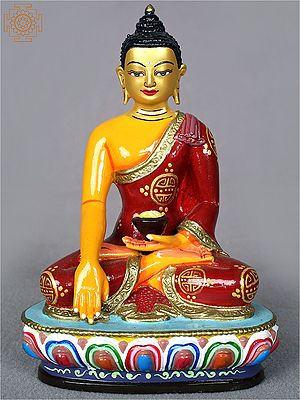
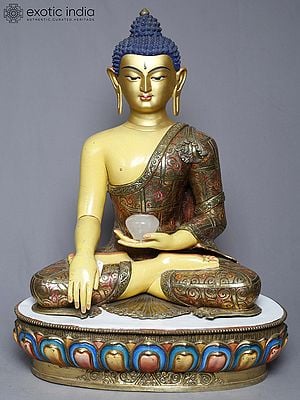
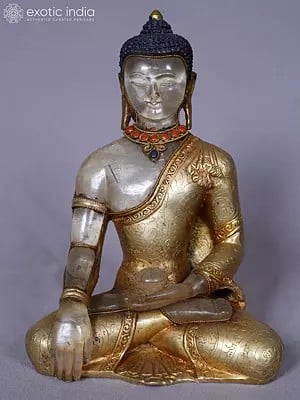
This exquisite Shakyamuni Buddha figurine, meticulously crafted in Nepal, embodies the serene wisdom and profound compassion of the Awakened One. Cast in copper and lavishly gilded with gold, its radiant surface reflects the light of inner peace and spiritual understanding. The artist's skill is evident in every detail, from the gentle curve of the Buddha's serene smile to the intricate folds of his monastic robe. Seated in the traditional lotus posture, or Padmasana, the figure radiates an aura of unwavering tranquility, inviting contemplation and mindfulness.
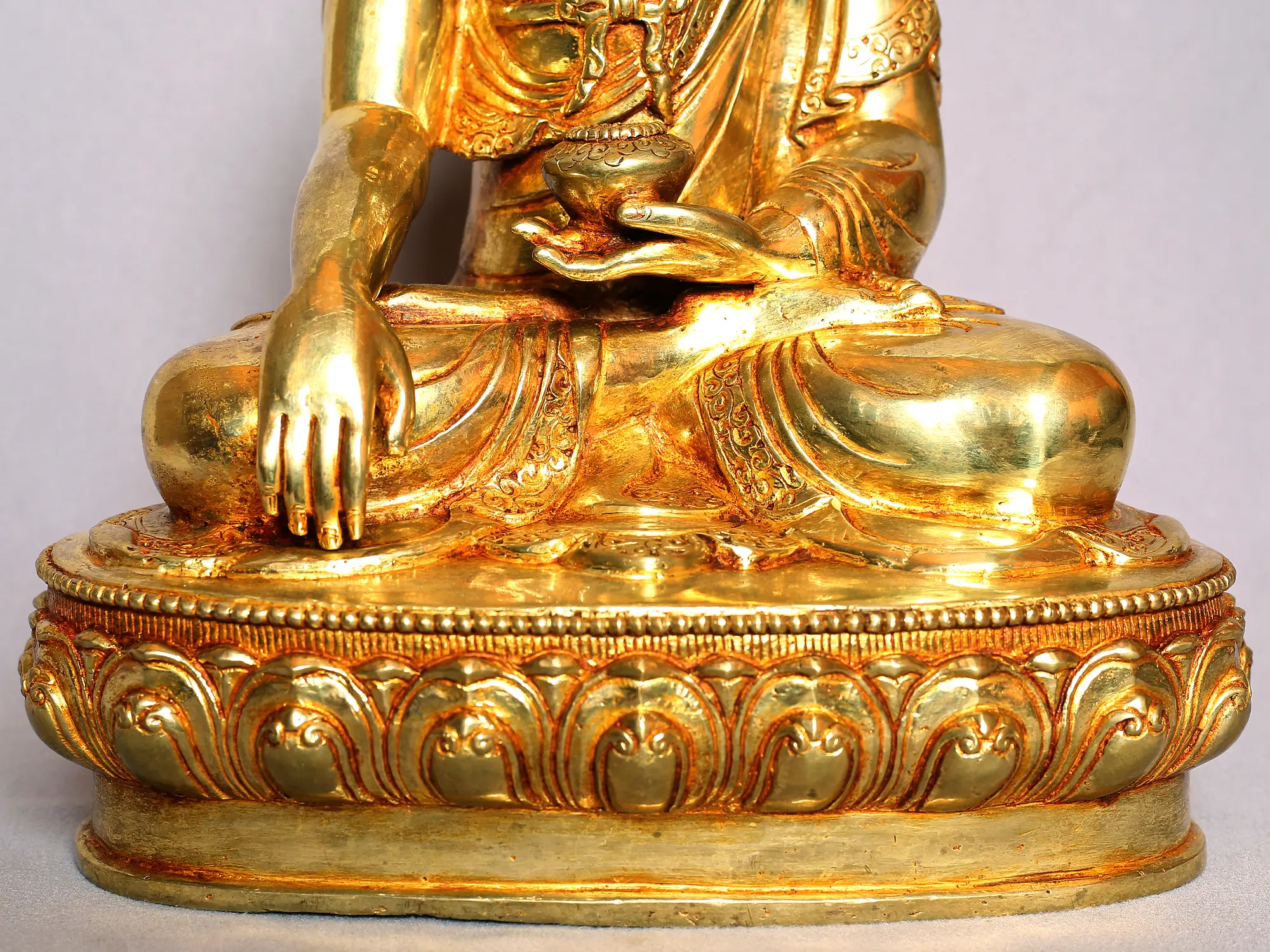
The Shakyamuni Buddha, Siddhartha Gautama, is revered as the historical founder of Buddhism. His journey from prince to enlightened being is a timeless tale of renunciation, deep meditation, and the ultimate realization of the Four Noble Truths and the Eightfold Path. This figurine captures a pivotal moment, often depicting him in the gesture of *Bhumisparsha Mudra*, the earth-touching gesture, where his right hand reaches down to touch the earth, symbolizing his victory over the temptations of Mara and his attainment of enlightenment under the Bodhi tree. This powerful gesture signifies his rooting in the earth and his unwavering resolve to achieve liberation for all sentient beings.Artistry and Symbolism
The use of copper as the base material speaks to its durability and conductivity, traditionally believed to enhance spiritual energies. The subsequent gilding with gold imbues the statue with a celestial brilliance, representing purity, divinity, and ultimate truth. Gold, in many cultures, is associated with the sun, prosperity, and the divine, perfectly complementing the enlightened nature of the Buddha. The black, curly hair symbolizes his ascetical renunciation of earthly adornments and the boundless energy of his awakening.
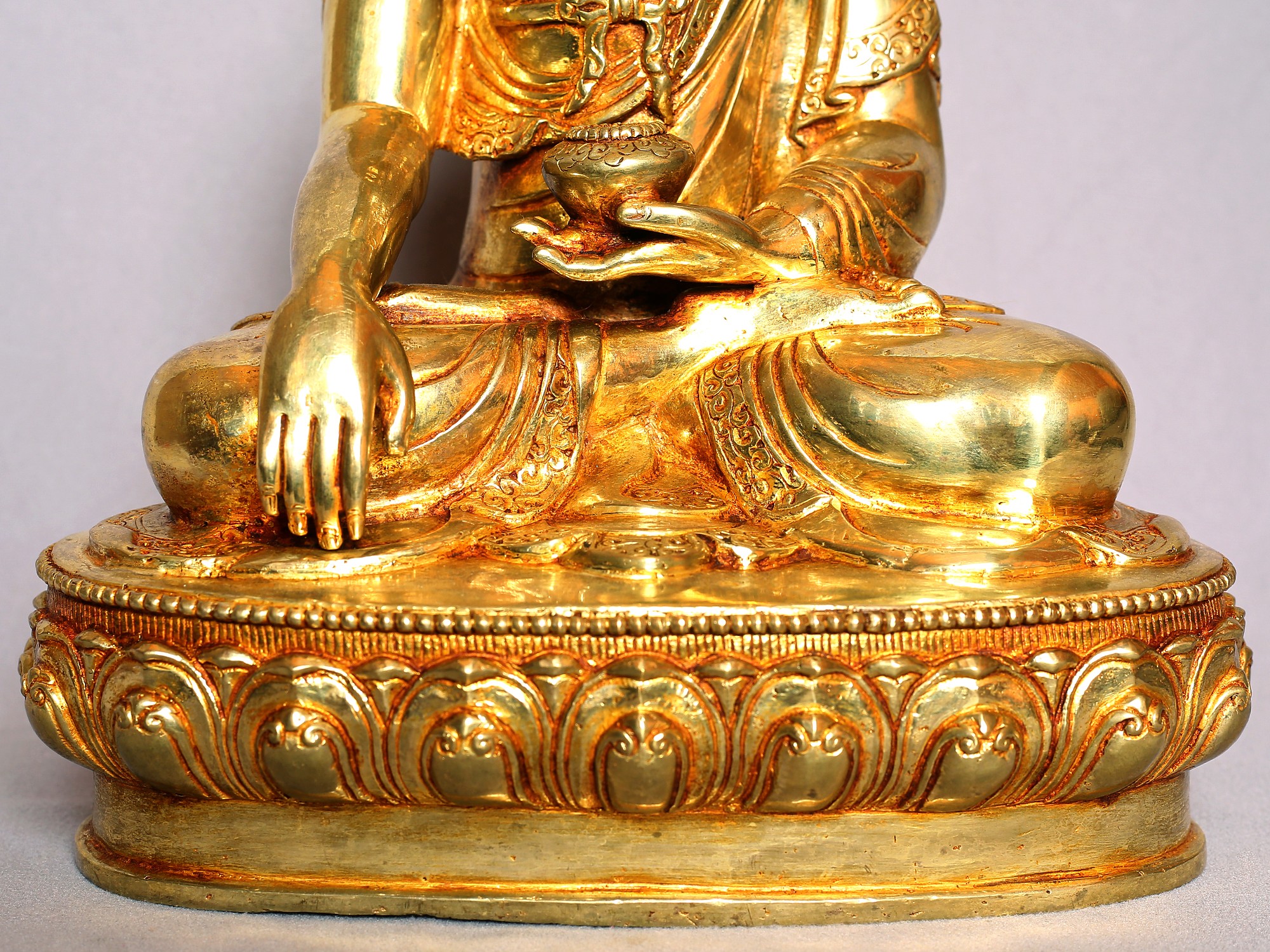
The lotus base, upon which the Buddha sits, is a potent symbol in Buddhist iconography. The lotus flower, with its roots in muddy waters yet blooming beautifully and unstained above the surface, represents purity, spiritual awakening, and the overcoming of worldly attachments. The intricate carvings on the base further enhance the spiritual significance, often featuring decorative patterns that echo sacred geometry or auspicious symbols from Nepalese Buddhist traditions. This figurine is not merely an object of art but a sacred vessel, designed to inspire devotion and facilitate spiritual practice.A Beacon of Peace and Wisdom
Originating from Nepal, a land rich in spiritual heritage and a nexus of Tibetan Buddhism, this Shakyamuni Buddha figurine carries the blessings of centuries of artistic and devotional tradition. Such statues are central to Buddhist practice, serving as focal points for meditation, prayer, and the cultivation of positive qualities like compassion, wisdom, and equanimity. Placing this statue in your home or meditation space can create an atmosphere of peace and mindfulness, serving as a constant reminder of the Buddha's teachings and the potential for enlightenment within us all. It is a testament to the enduring power of his message and a beautiful piece to connect with the profound spiritual legacy of Buddhism.How are Nepalese copper statues made?
Nepalese statues and sculptures are best known for their unique
small religious figures and ritual paraphernalia for over two
thousand years. These are mainly cast in copper alloy. Nepal draws
influences from the artistic styles of Buddhism and Hinduism, and
therefore the sculptors of the country specialize in making the
icons of both these religions. Over the years, Nepalese sculptures
evolved into their own distinctive iconography. Some
characteristic features of these sculptures that differ from other
pieces are exaggerated physical postures, youthful and sensual
features, languid eyes, wider faces having serene expressions, and
ornate flourishes. The Buddhist deity icons of Nepal have
tremendous demand in countries such as China and Tibet for ritual
purposes in their temples and monasteries.
Nepalese statues and sculptures have a high copper content and
therefore develop a slightly reddish patina on the surface as they
age. However, the most unique feature of Nepalese copper statues
is their decorative detailing. The pieces are heavily gilded and
sometimes inlaid with semi-precious stones. This embellishment
protects them from getting tarnished. The traditional lost-wax
method for casting Nepalese copper statues remains the most
practiced technique in Nepal for many centuries. This process
involves many steps and requires skilled artists.
The first step in lost-wax sculpting is to make a wax replica of
the desired Buddhist deity to be cast in copper. This replica is
created by hand and therefore needs excellent artistic skills
otherwise fine features will be lacking.
Once the wax replica is made, it is then coated with a special
mixture of clay with a brush. This layer of clay is hardened when
left to dry. A small hole is made on the base of the wax mould so
that the wax flows away when it is heated.
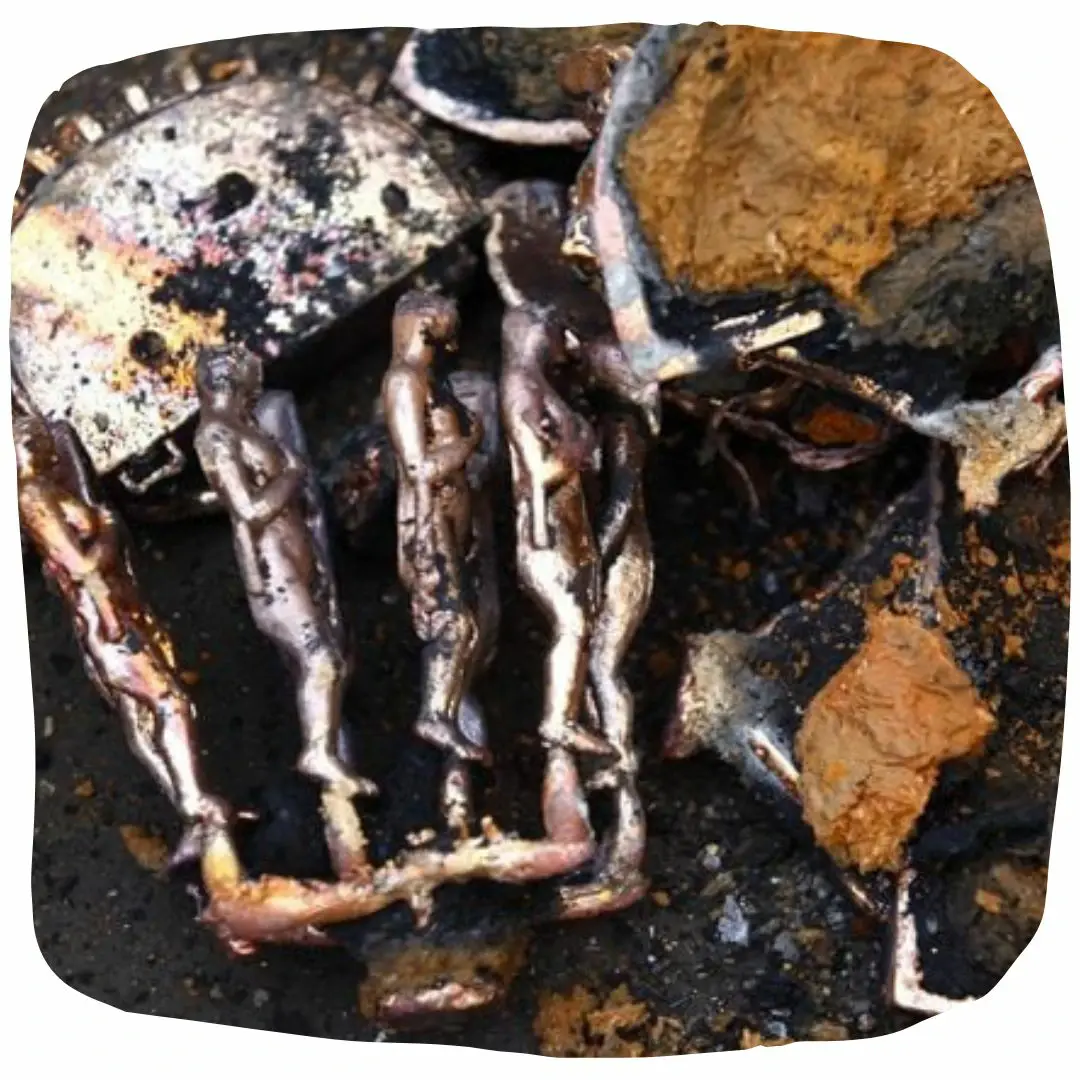
At this stage, a hollow mould in the shape of the deity is
obtained.
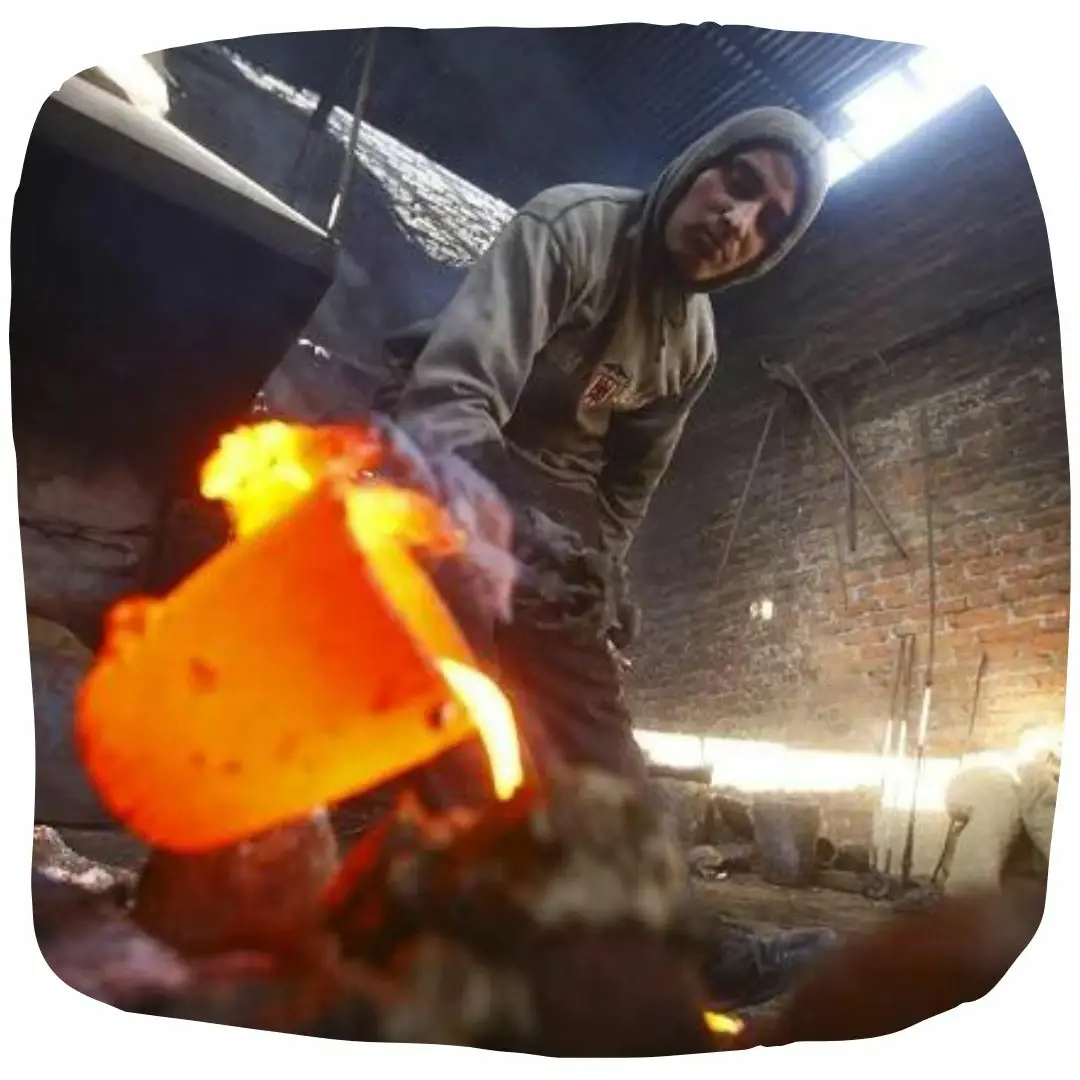
This is the time to pour liquid copper into the hollow mould which
is then allowed to cool and harden inside a container of cold
water. When the liquid metal has hardened, the mould is removed
and the statue within is revealed.
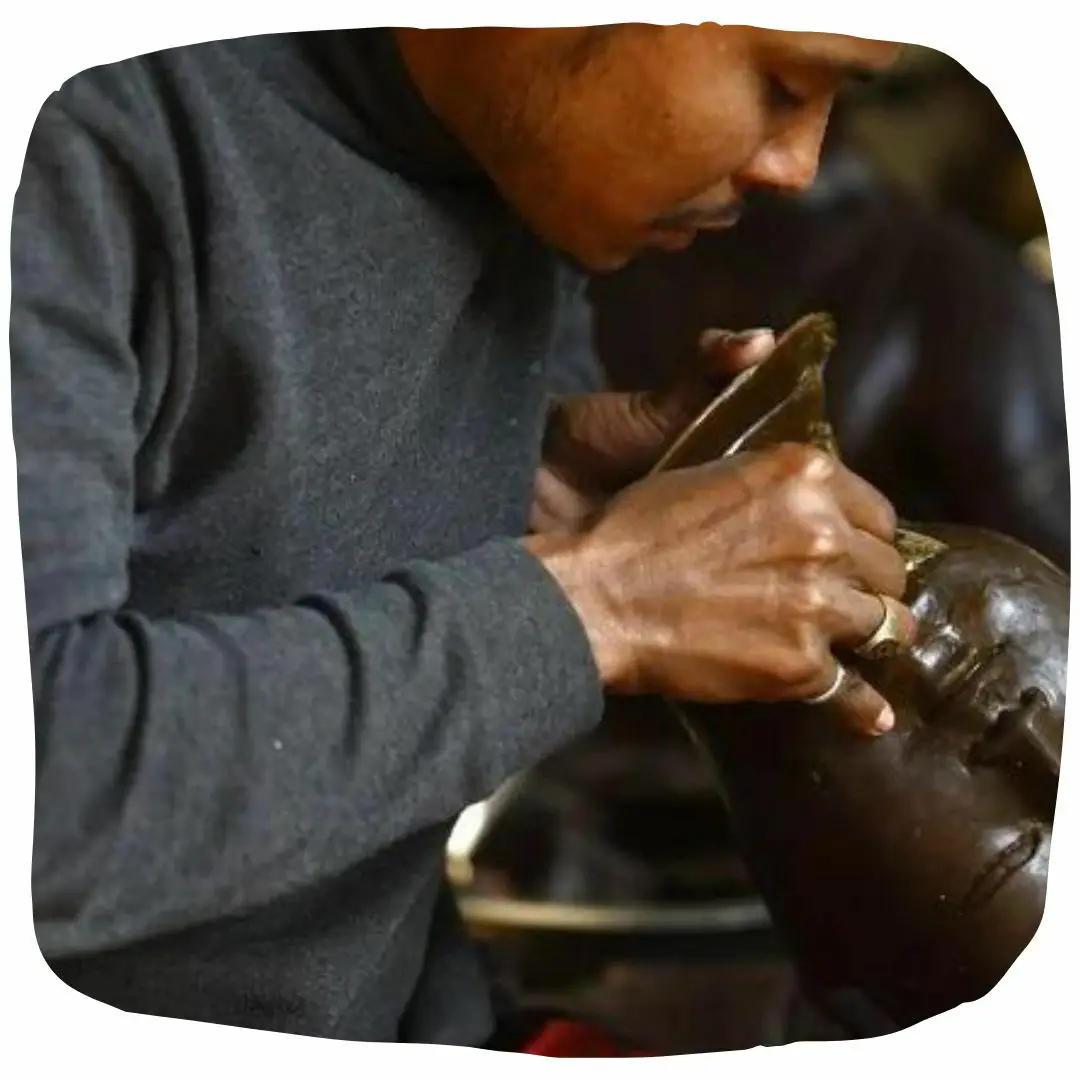
The artist works on the details of the statue using various tools.
It is then polished to get a shiny and lustrous surface.
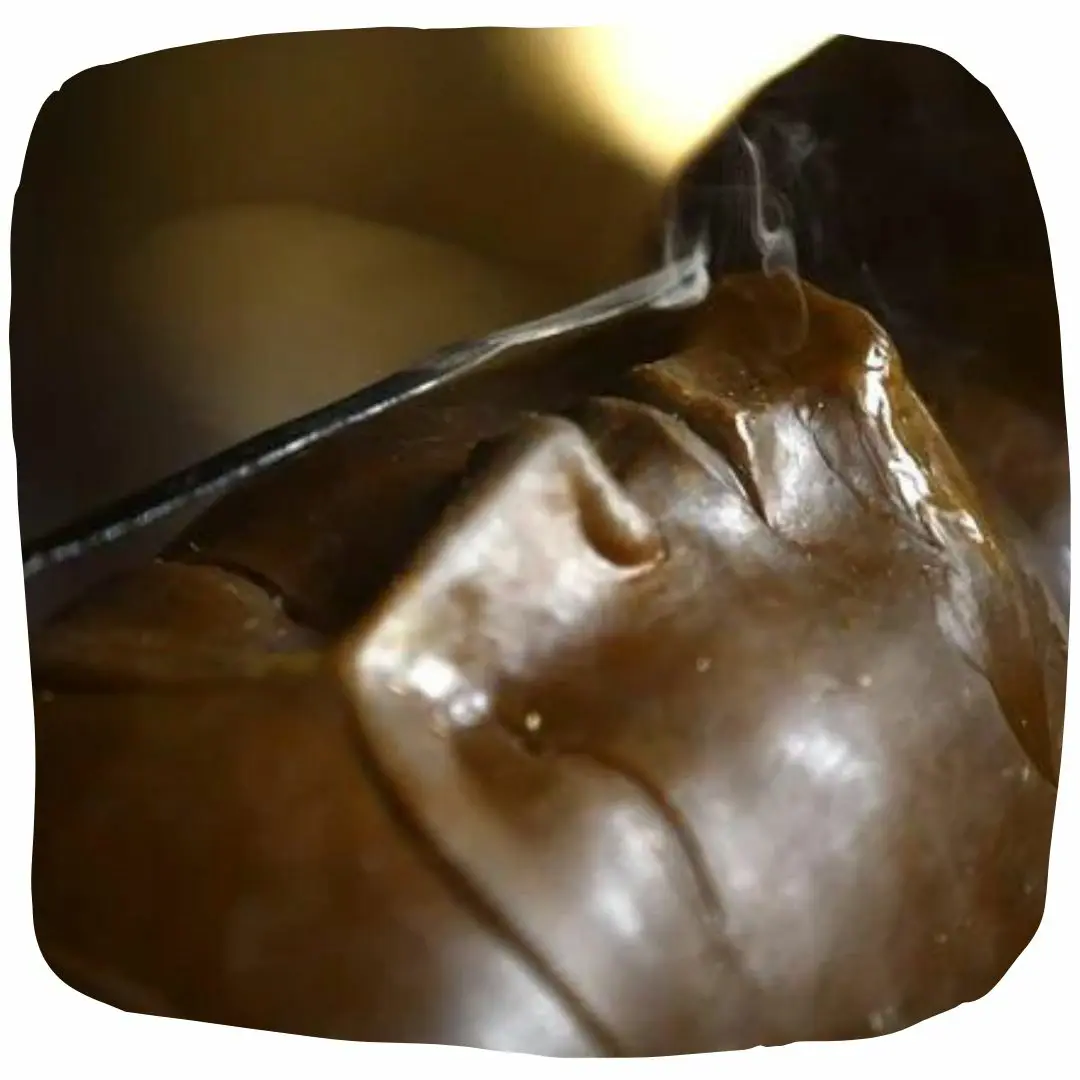
Now comes the most important part of Nepalese art which is gold
gilding. This is done by the traditional fire gilding method. A
mixture of mercury and 18K gold is applied on the surface of the
statue and heat is applied using a flame torch. The result is that
mercury evaporates along with impurities, leaving a pure 24K gold
finish.
The lost-wax method of sculpting is the most preferred technique
for artists to cast a metallic statue having intricate details.
Since Nepalese copper sculptures require extraneous effort for
giving a majestic look by adding special embellishments, it takes
several weeks to complete one masterpiece. A 24K gold gilded
copper sculpture retains its brilliant luster for many years and
appears as like before. Nepalese sculptures continue to remain one of the finest specimens of the art of the East that have a strong
aesthetic appeal that other sculptures cannot match.















 Upload an Image