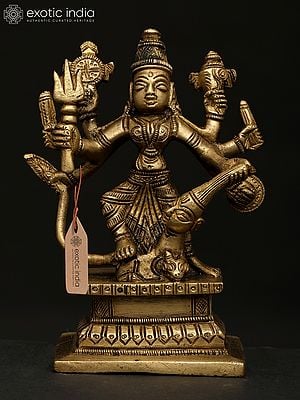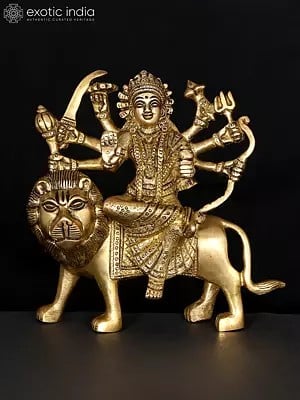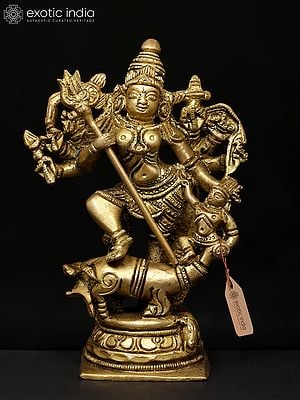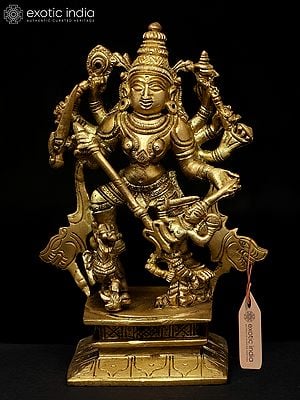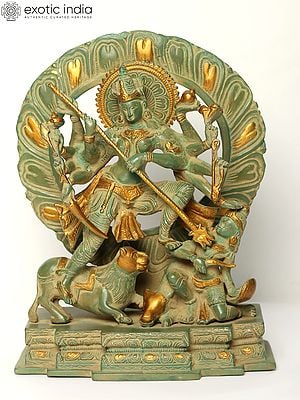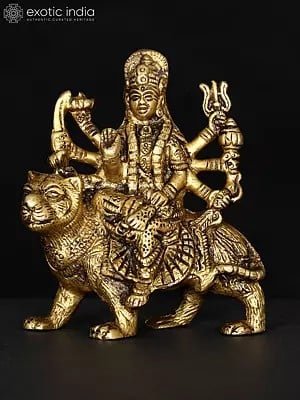

Devi Durga is born of the wrath of all the devas of devaloka (realm of existence of the devas) combined. They were overwhelmed by the sabotaging antics of Mahishasura, the buffalo-demon, when they gathered to give birth to Devi Durga.
As a Devi, She embodies the extremes of wrath and prowess. In Her asankhya (innumerable) hands, She wields the finest weapons, each of which has been bestowed upon Her by the likes of Lord Brahma and Lord Vishnu and Lord Shiva.
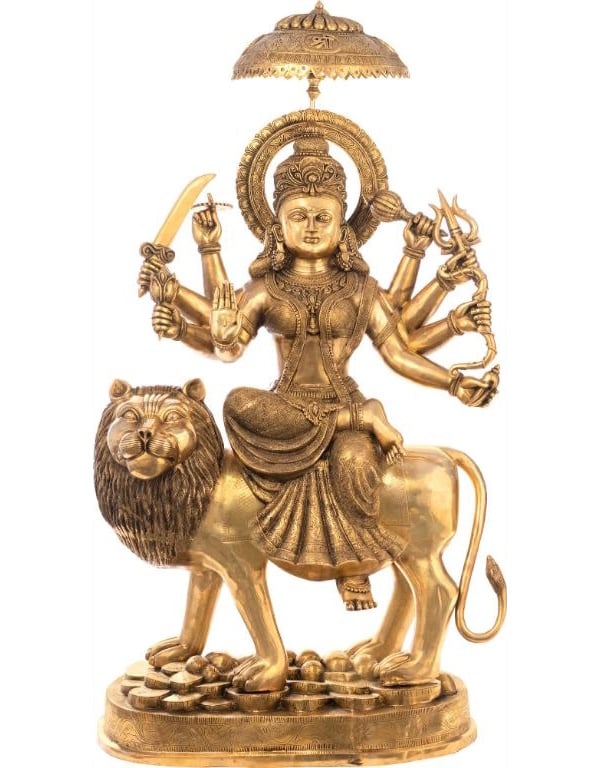
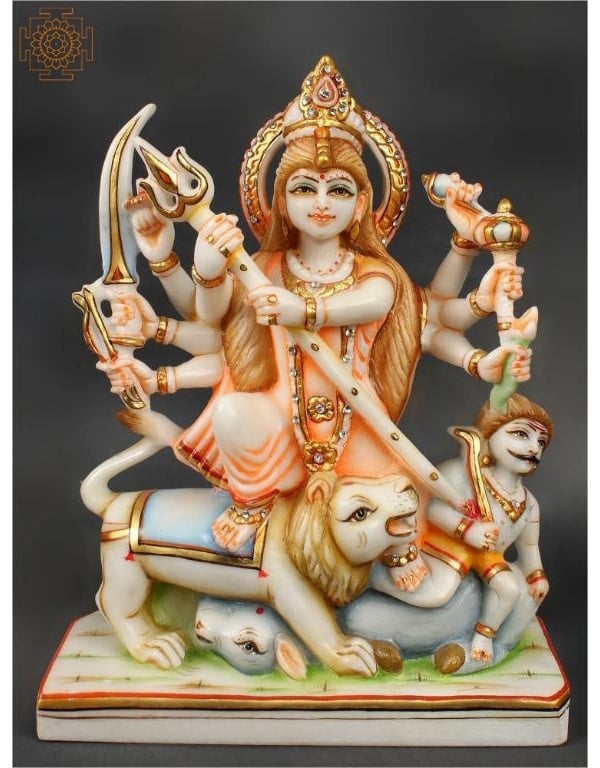
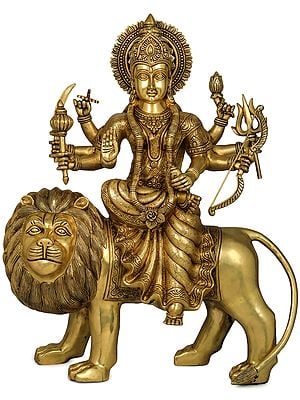
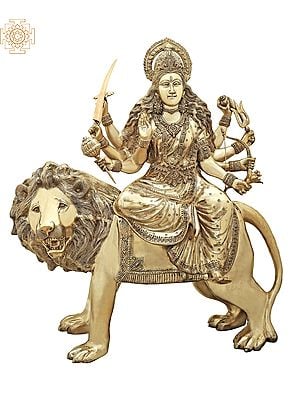
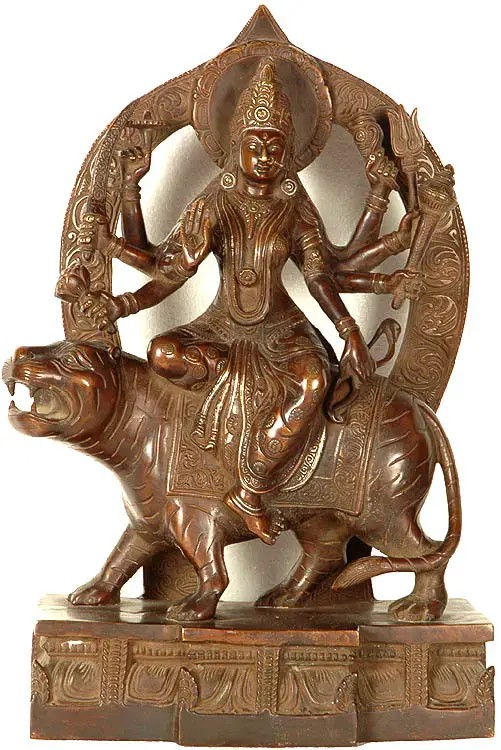
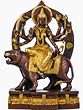
On this page you see the ashtabhujadhari (eight-armed) Devi Durga, with one of Her anteriormost hands raised in blessing over Her devotees. Coloured in the wrath and raw ferocity of Her Mahishasuramardini iconography (‘mardini’ is Sanskrt for ‘slayeress’), it is easy to overlook the tranquil and beauteous side of Devi Durga.
After all, She is the wife of Lord Shiva and the queen of the Hindi devi pantheon. This brass composition captures the beauty and grace of Her solitary image.
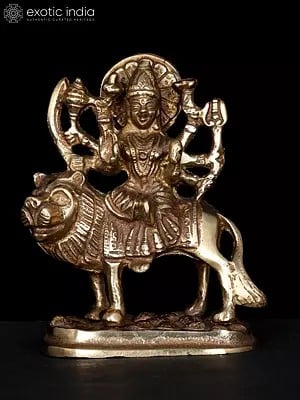
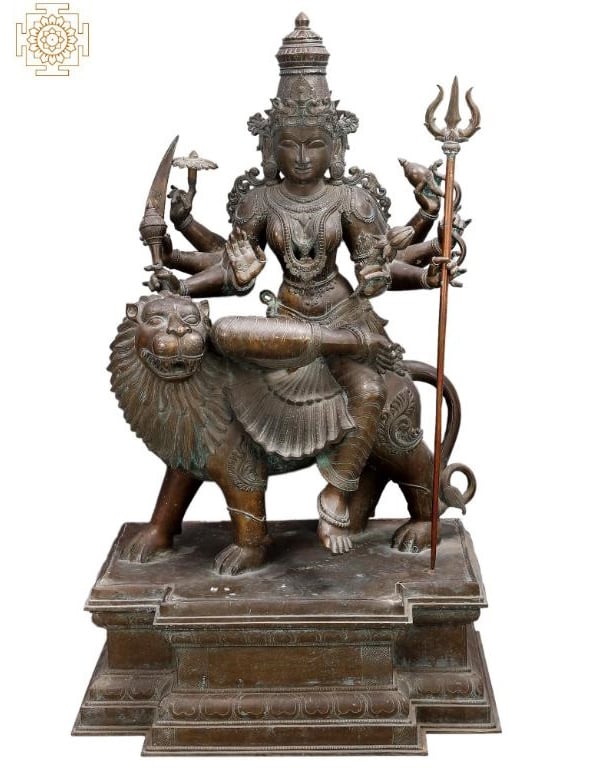
She mounts (vahini) the back of Her simha (lion). The silk of Her dhoti lies in lifelike folds over Her lalitasana legs. Her long, slender torso is bedecked with ample gold jewellery, fit for a queen as powerful as She is.
Her crowned and haloed countenance bears a composure of calm and determination and independence. The engraved aureole and intricately sculpted pedestal frame the composition.
The Fierce and Powerful Goddess Durga: Discovering the Symbolism
and Significance
Goddess Durga is a revered deity in Hinduism and she is
worshiped by many people in the eastern part of India and also
in other countries such as Nepal and Bangladesh. She is
considered the mother of this material world who takes care of
the conditioned souls trapped in the material existence. She
protects them from the demons who threaten peace and establishes
Dharma. In the Shakta tradition or Shaktism (those who believe
that feminine energy is supreme), Mother Durga has been given
the highest position. She is often considered the expansion of
Mother Parvati, the consort of Lord Shiva who is the destroyer
of the material world. The Vaishnavas consider Mother Durga as
the external energy of the Supreme Lord Krishna or Vishnu. She
takes charge of the material world and reforms those souls who
do not abide by the rules of the Supreme Lord.
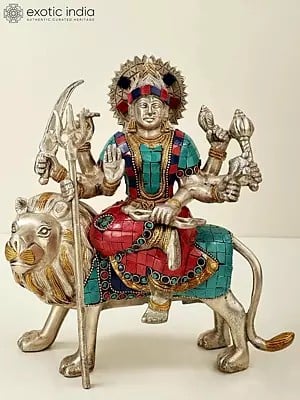
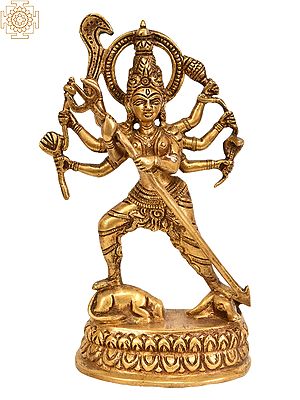
Mother Durga is often depicted as a young and beautiful woman,
wearing a saree, and sitting on a tiger or lion. She has
multiple arms (usually ten arms) that hold different items and
weapons that express her martial skills. She tramples down the
demon Mahishasura, with her trident, representing the subduer of
vices.
What does Durga symbolize?
Being the powerful assistant of the Supreme Lord, Mother Durga
tests our dedication to the Lord. She represents the material
nature and like a loving mother, she gives a clarion call to all
forgetful souls to turn their faces towards Lord Krishna, who is
the only well-wisher of all living entities. The depiction of
her violently killing the demon Mahishasura with her trident
shows her extraordinary prowess. Mahishasura represents our
demoniac mentality that wants to enjoy separately from the
Supreme Lord, forgetting our eternal relationship with Him.
Goddess Durga killing the demon symbolizes the victory of good
over evil or wisdom over ignorance.
Where are Durga statues made in Kolkata?
The worship of Goddess Durga is prominent in festivals such as
Durga Puja, Durga Ashtami, Navaratri, etc. On those days, people
gather at a place and a big idol or deity of Goddess Durga is
worshiped with faith and devotion. These idols of the Goddess
are made in a place called Kumortuli, located near Kolkata, West
Bengal. This city is renowned for its beautiful clay sculptures
made by local manufacturers.
Can we keep Durga idol at home?
You can keep a Durga deity at your home if you want to attract
her mercy into your life. Goddess Durga is very merciful toward
her devotees and when pleased, she bestows them with both
material and spiritual benefits. Those who approach and worship
Goddess Durga with material desires in their hearts, she
fulfills them. But if a person genuinely approaches her and
prays to her to reveal about the Absolute Truth and the real
goal of human life to them, being the superintendent of the
Supreme Lord Vishnu, she blesses them with the light of
knowledge about the Lord and inspires them to walk the path of
devotion to Lord Vishnu.
How to keep a Brass statue well-maintained?
Brass statues are known and appreciated for their exquisite beauty and luster. The brilliant bright gold appearance of Brass makes it appropriate for casting aesthetic statues and sculptures. Brass is a metal alloy composed mainly of copper and zinc. This chemical composition makes brass a highly durable and corrosion-resistant material. Due to these properties, Brass statues and sculptures can be kept both indoors as well as outdoors. They also last for many decades without losing all their natural shine.
Â
Brass statues can withstand even harsh weather conditions very well due to their corrosion-resistance properties. However, maintaining the luster and natural beauty of brass statues is essential if you want to prolong their life and appearance.
Â
- The best and simplest way to maintain a brass statue is to clean it at least twice a week using a soft cloth or cotton rag. This will prevent dust from accumulating on the surface. Dusting is especially important for outdoor statues since it is prone to dust accumulation much more than indoors.
Â
Â
- To give a natural shine and luster to the statue, you may apply coconut or olive oil using cotton on every portion. You can use a toothbrush to get to the small crevices but do not be too harsh. This will make the brass statue appear fresh and new with a polished look.
In case you have a colored brass statue, you may apply mustard oil using a soft brush or clean cloth on the brass portion while for the colored portion of the statue, you may use coconut oil with a cotton cloth.Â
Â
Brass idols of Hindu Gods and Goddesses are especially known for their intricate and detailed work of art. Nepalese sculptures are famous for small brass idols portraying Buddhist deities. These sculptures are beautified with gold gilding and inlay of precious or semi-precious stones. Religious brass statues can be kept at home altars. You can keep a decorative brass statue in your garden or roof to embellish the area and fill it with divinity.Â