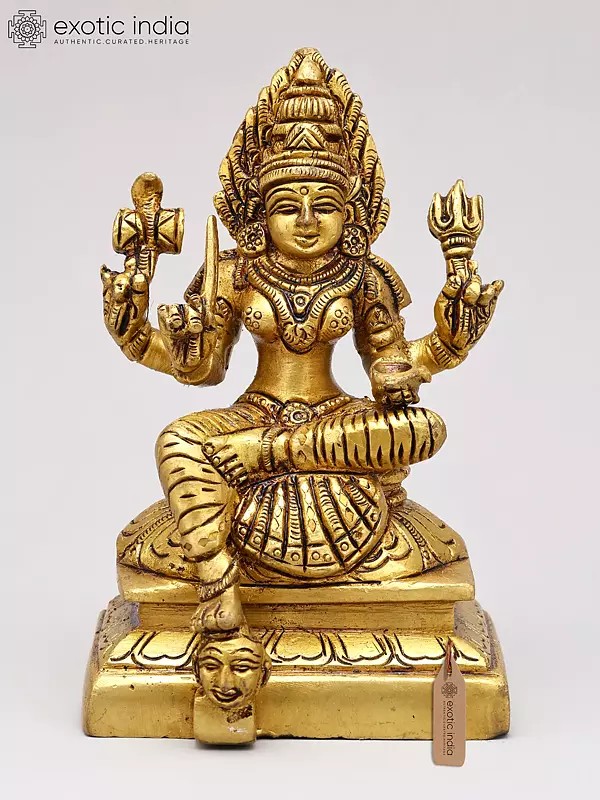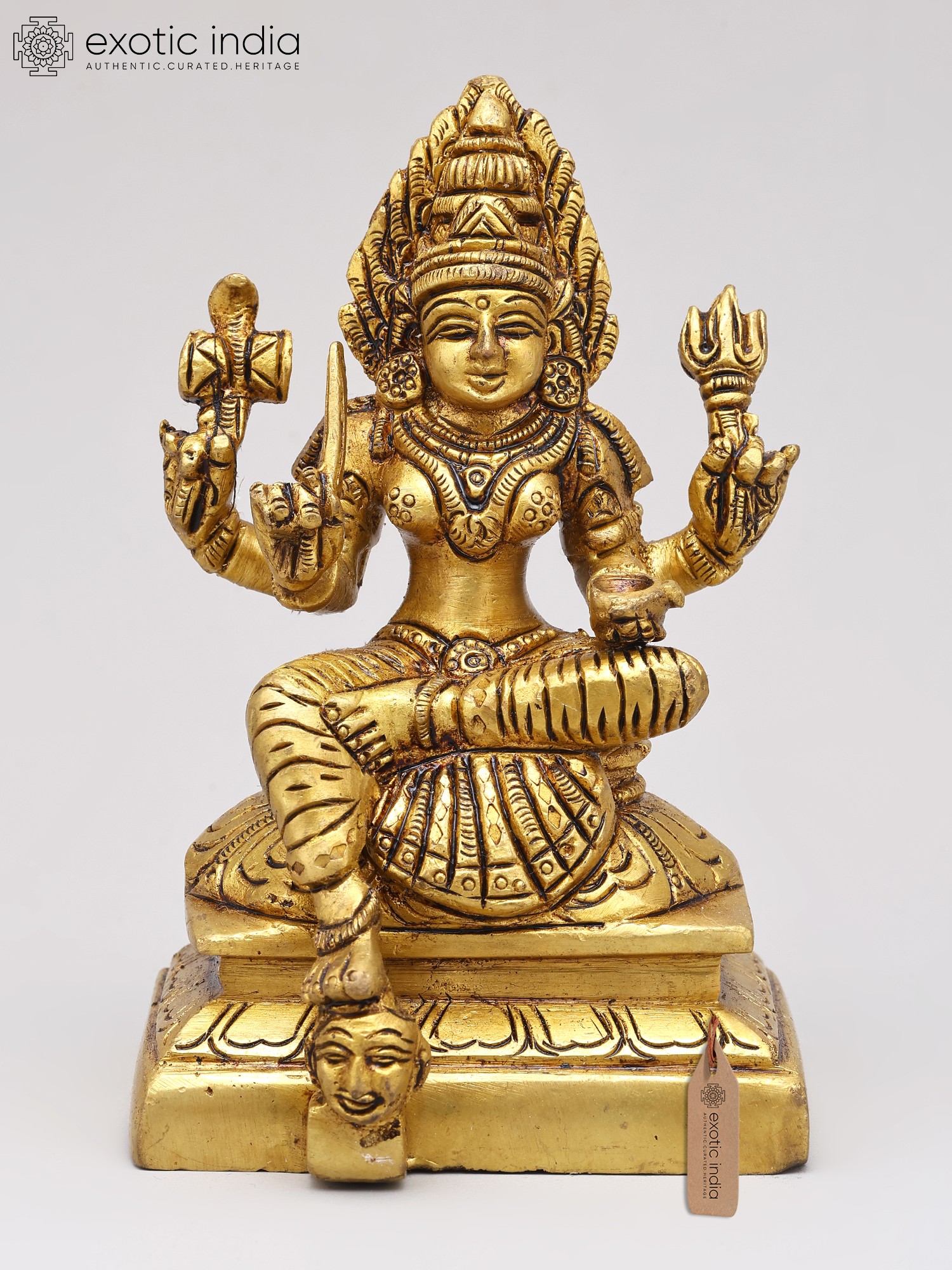
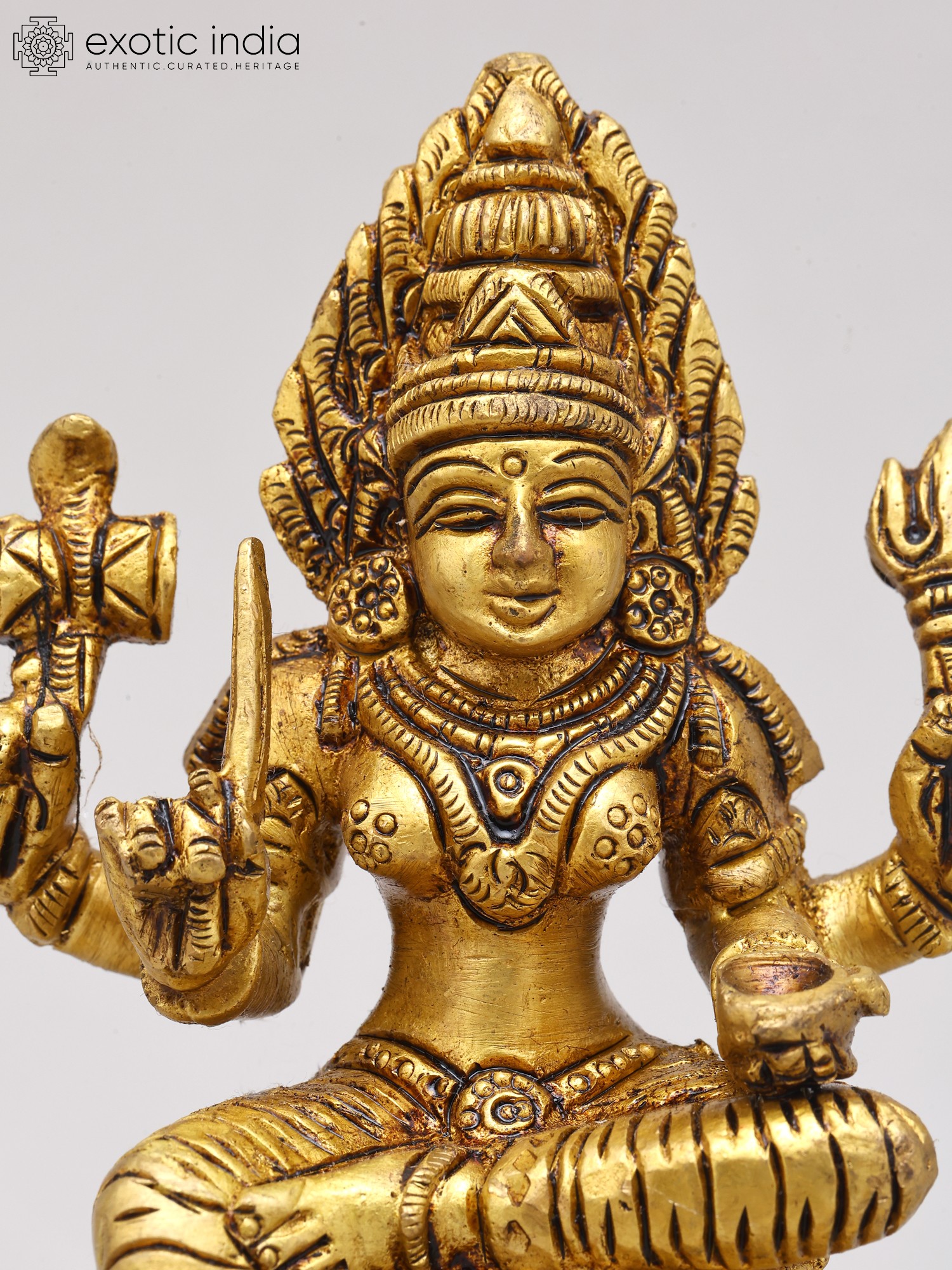
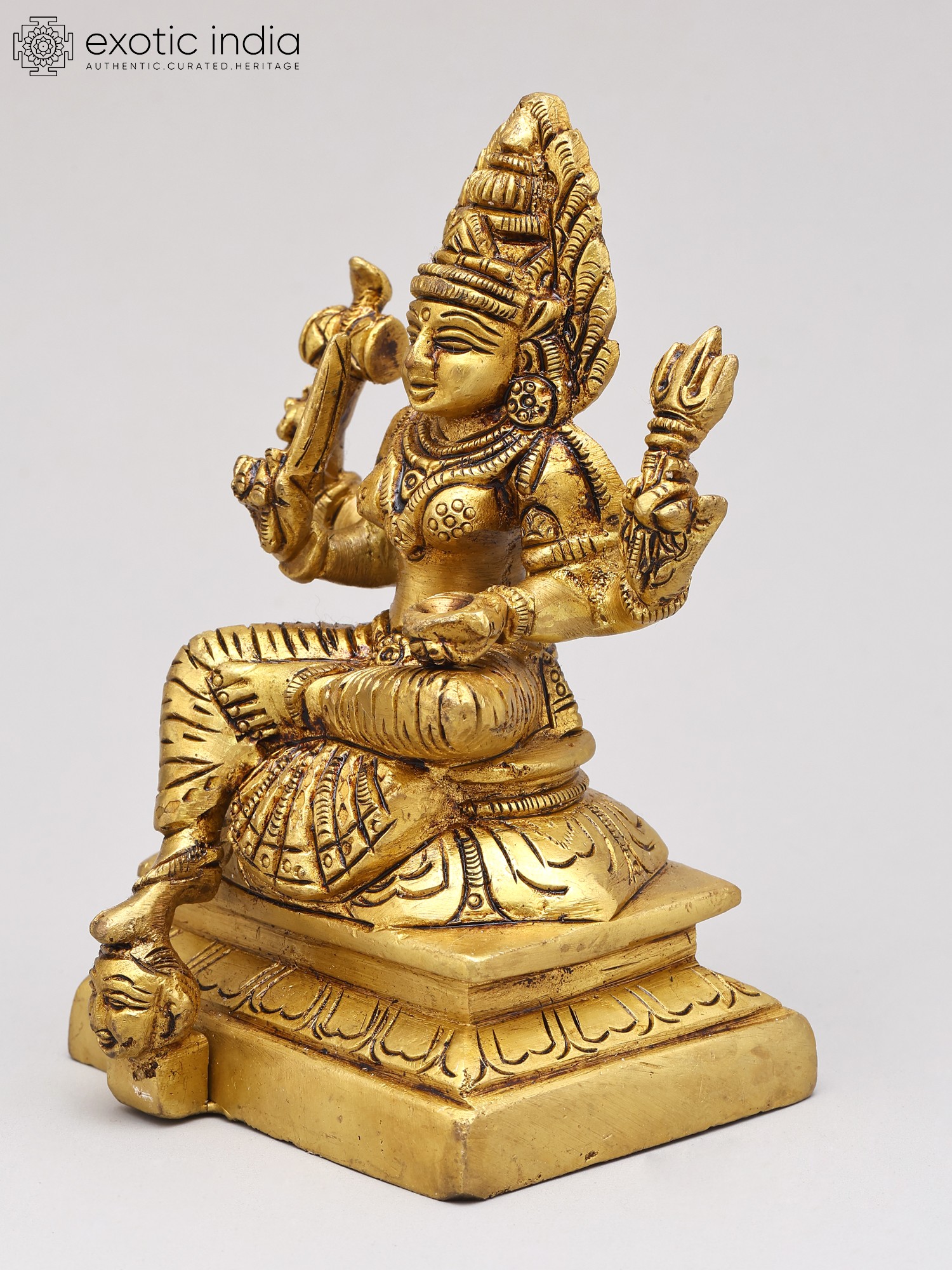
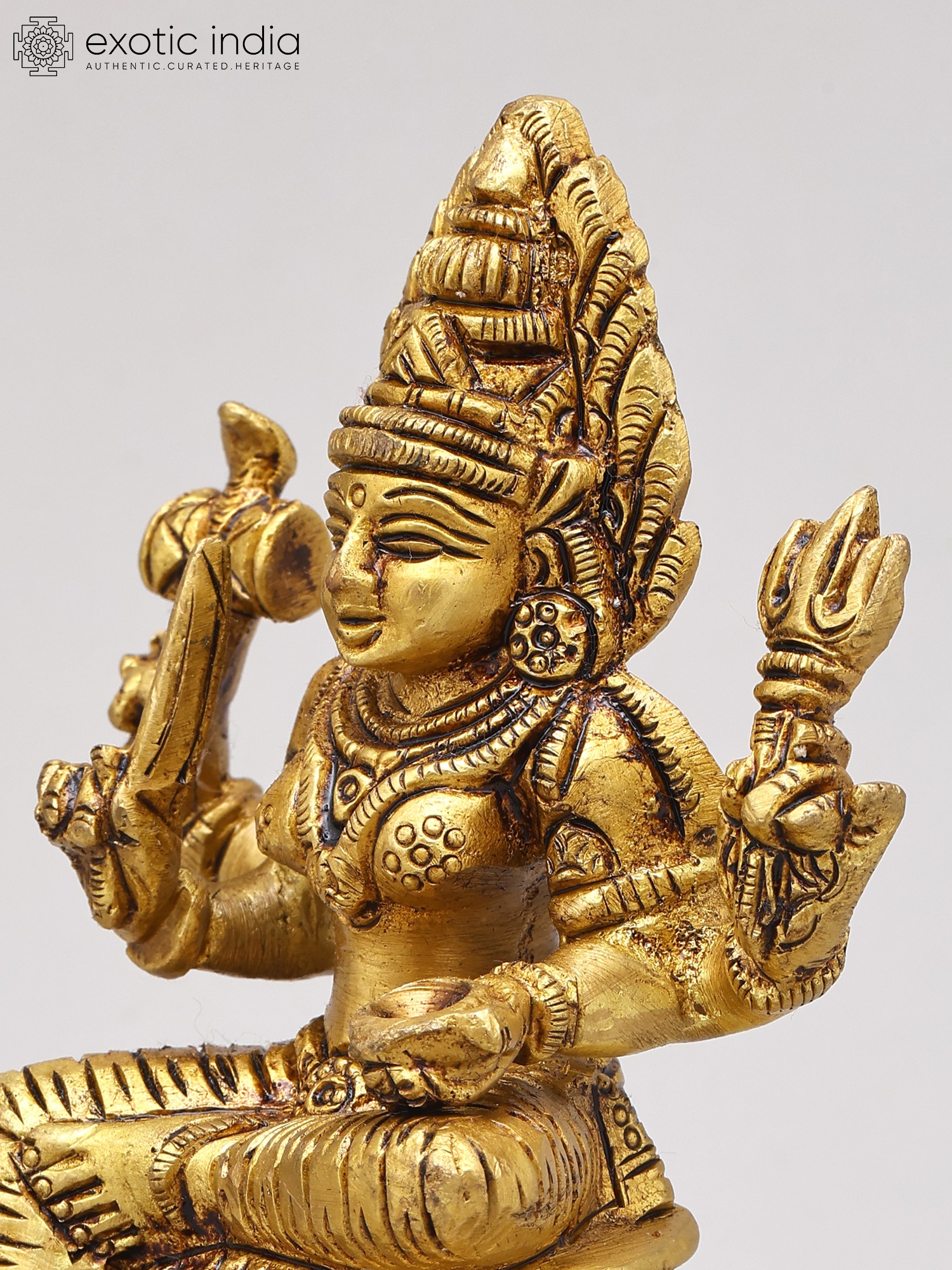
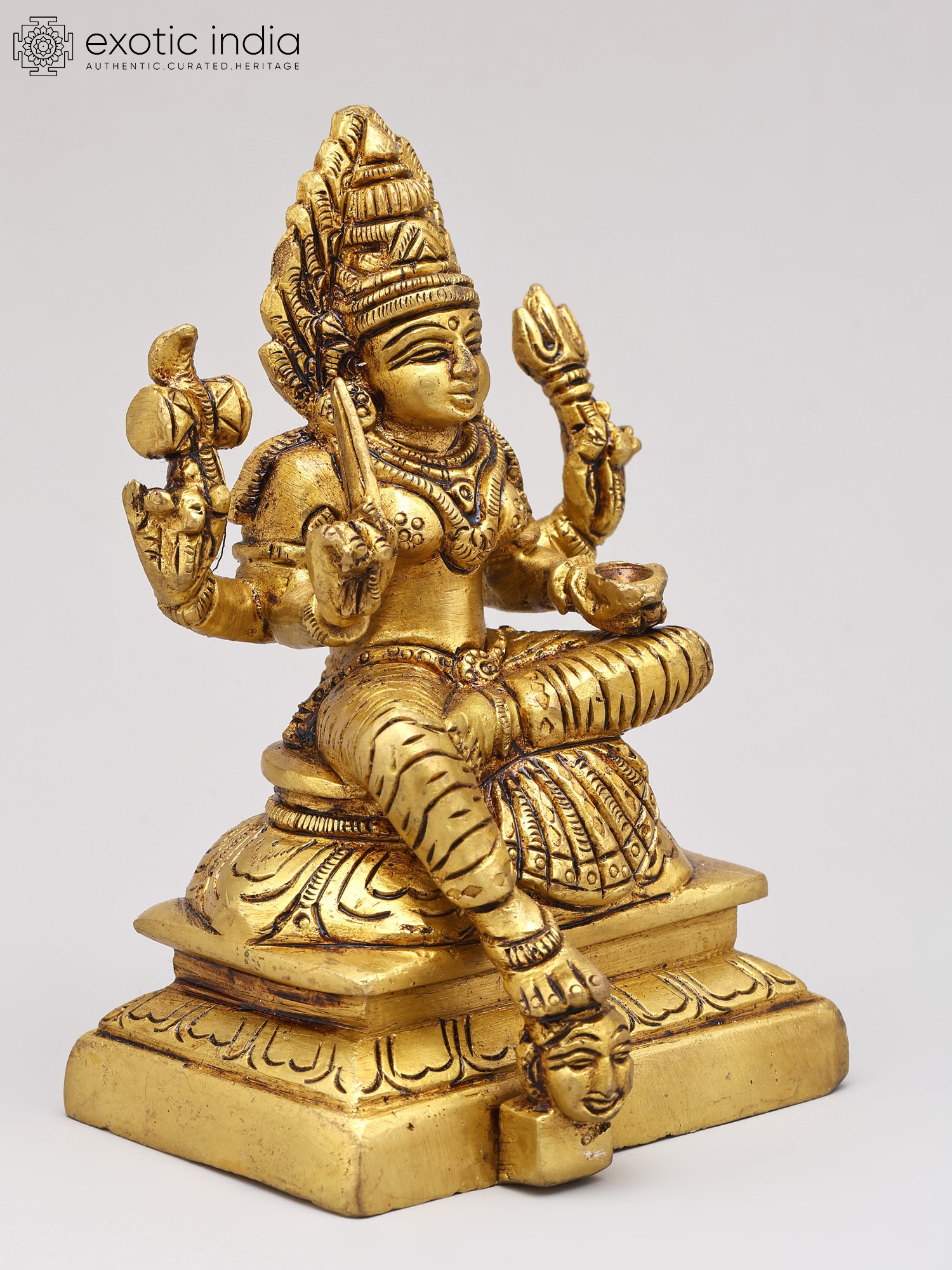
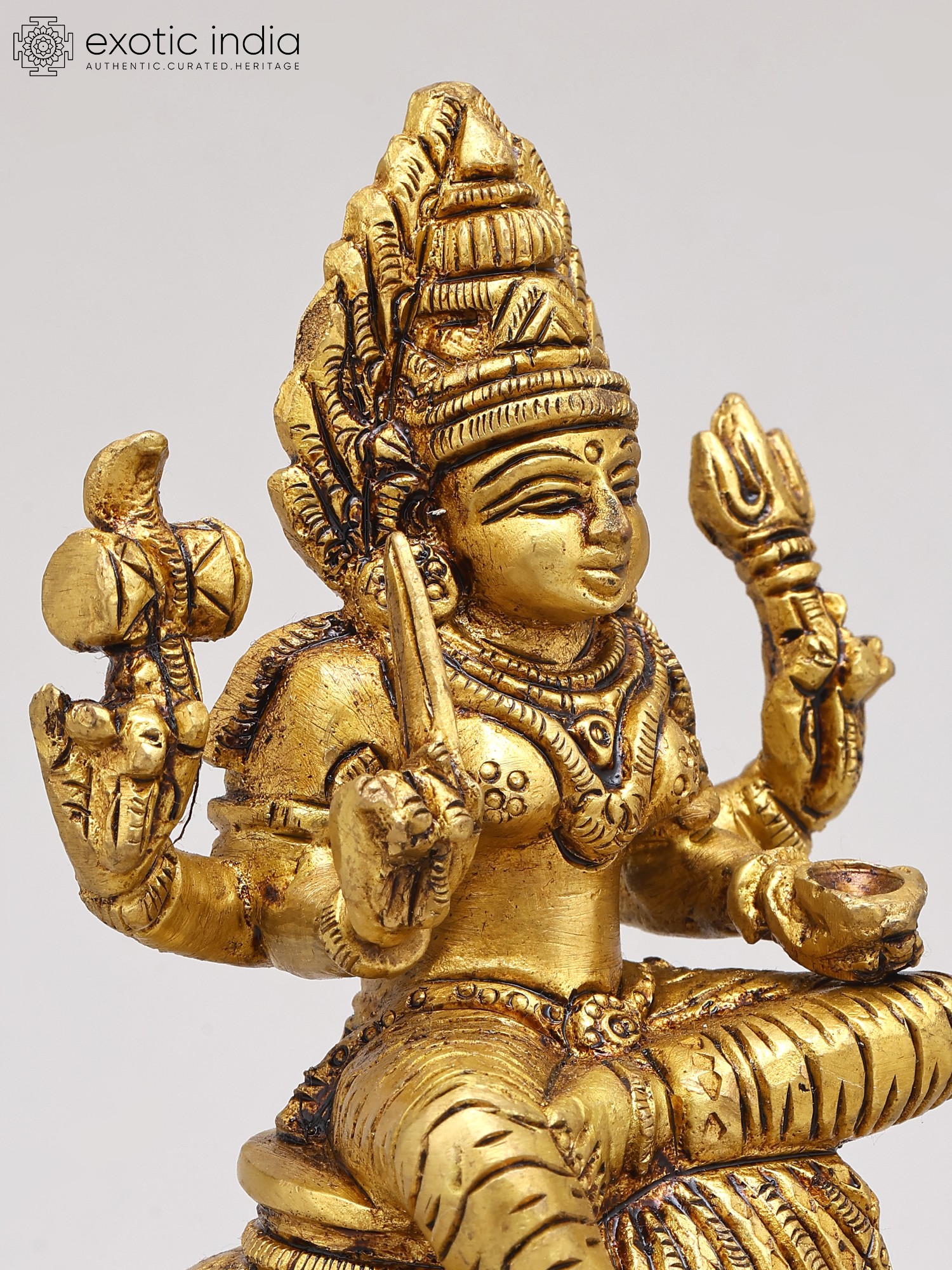
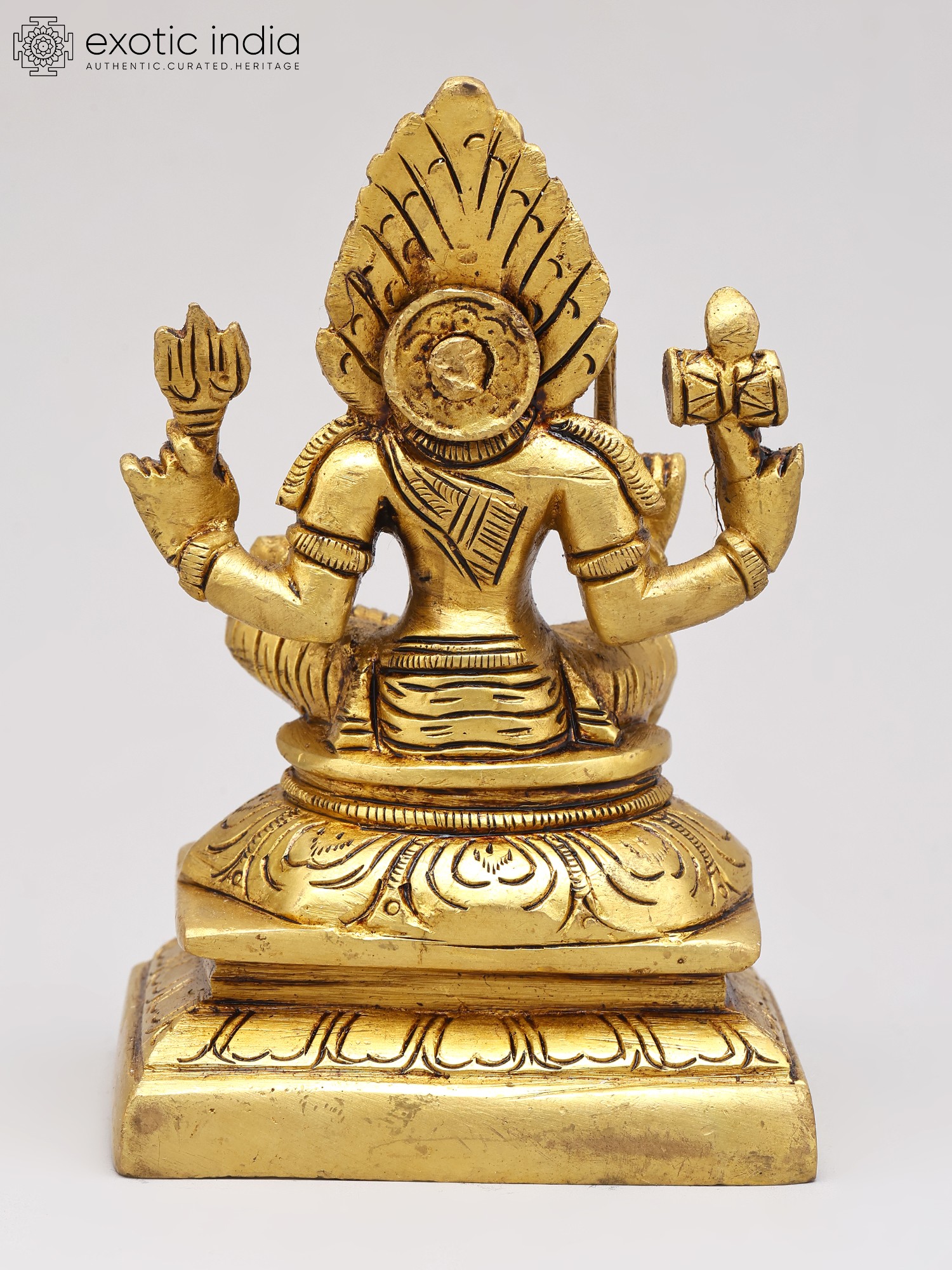
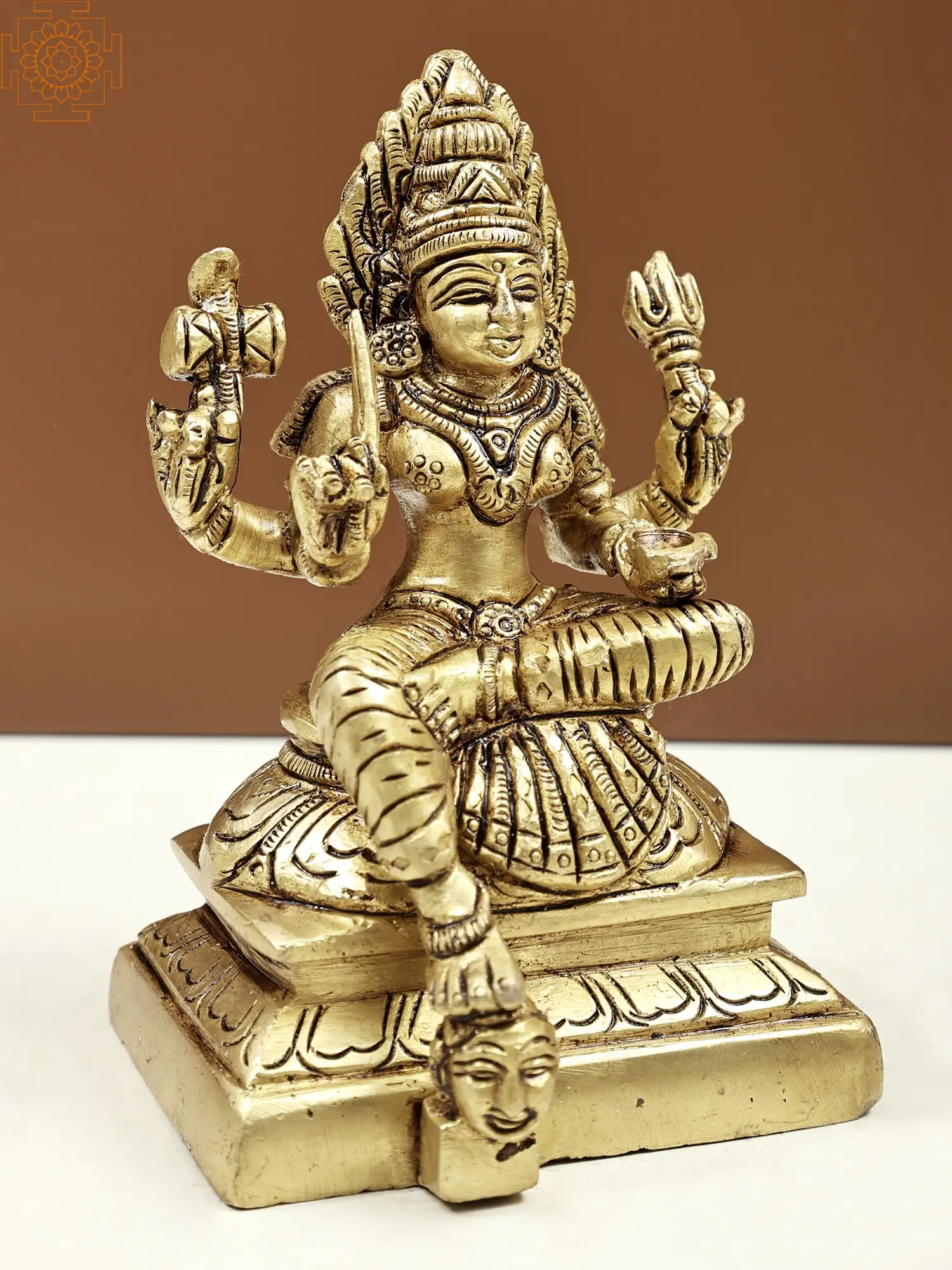
5" Goddess Mariamman Brass Sculpture | Handmade
$100.20
$167
40% off
Includes any tariffs and taxes

Protective Lacquer Coating
Protective Lacquer Coating

Get your Statue - Lacquer Polish Protection
Lacquer Polish Protection is a protective coating of lacquer that is applied on the statue to protect it from tarnishing and dirt.
Express Shipping
Express Shipping
Express Shipping: Guaranteed Dispatch in 24 hours
Notify me when this item is available
| Specifications |
 |
ZEQ225 |
 |
BRASS |
 |
5.40 inch Height X 3.20 inch Width X 3.20 inch Depth |
 |
Weight 1.26 kg |
| Delivery and Return Policies |
 |
Ships in 1-3 days |
 |
Returns and Exchanges accepted within 7 days |
 |
Free Delivery |

Easy Returns

Fully Insured

100% Handmade
Mariamman,
also known as Karumariamman, is a mighty South Indian manifestation of the
great goddess who guards her worshippers against disease and bad omens and
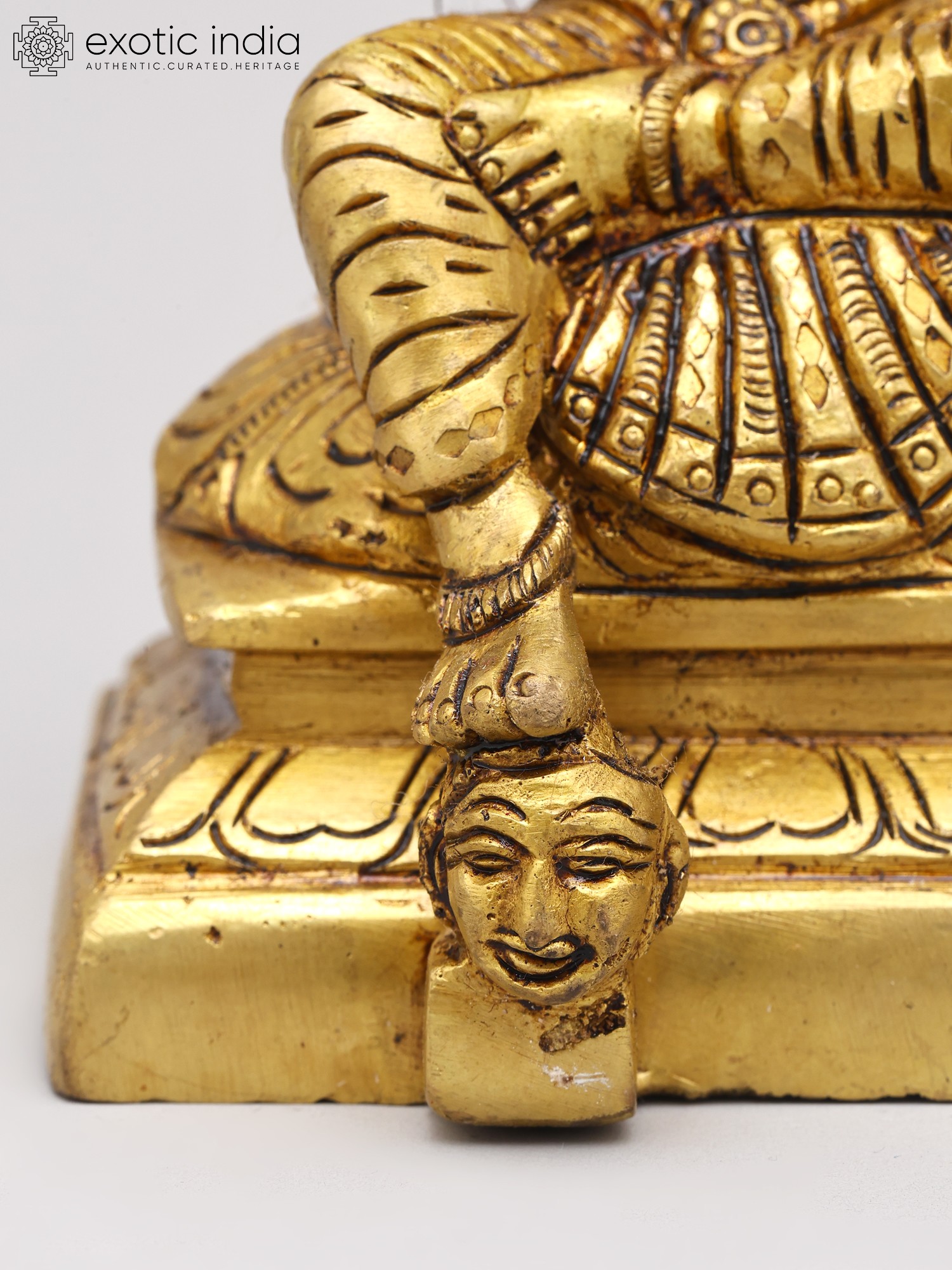
bestows prosperity upon them. The head of Devi Angala Paramaeshwari is
positioned beneath the foot of the goddess Mariamman in this exquisite brass
statue, representing the total destruction of self or ego in order to reach
oneness with divinity. Devi Mariamman is depicted as a royal deity and is
seated beneath a Kirtimukha prabhavali.
Embodying Divine Power and Protection
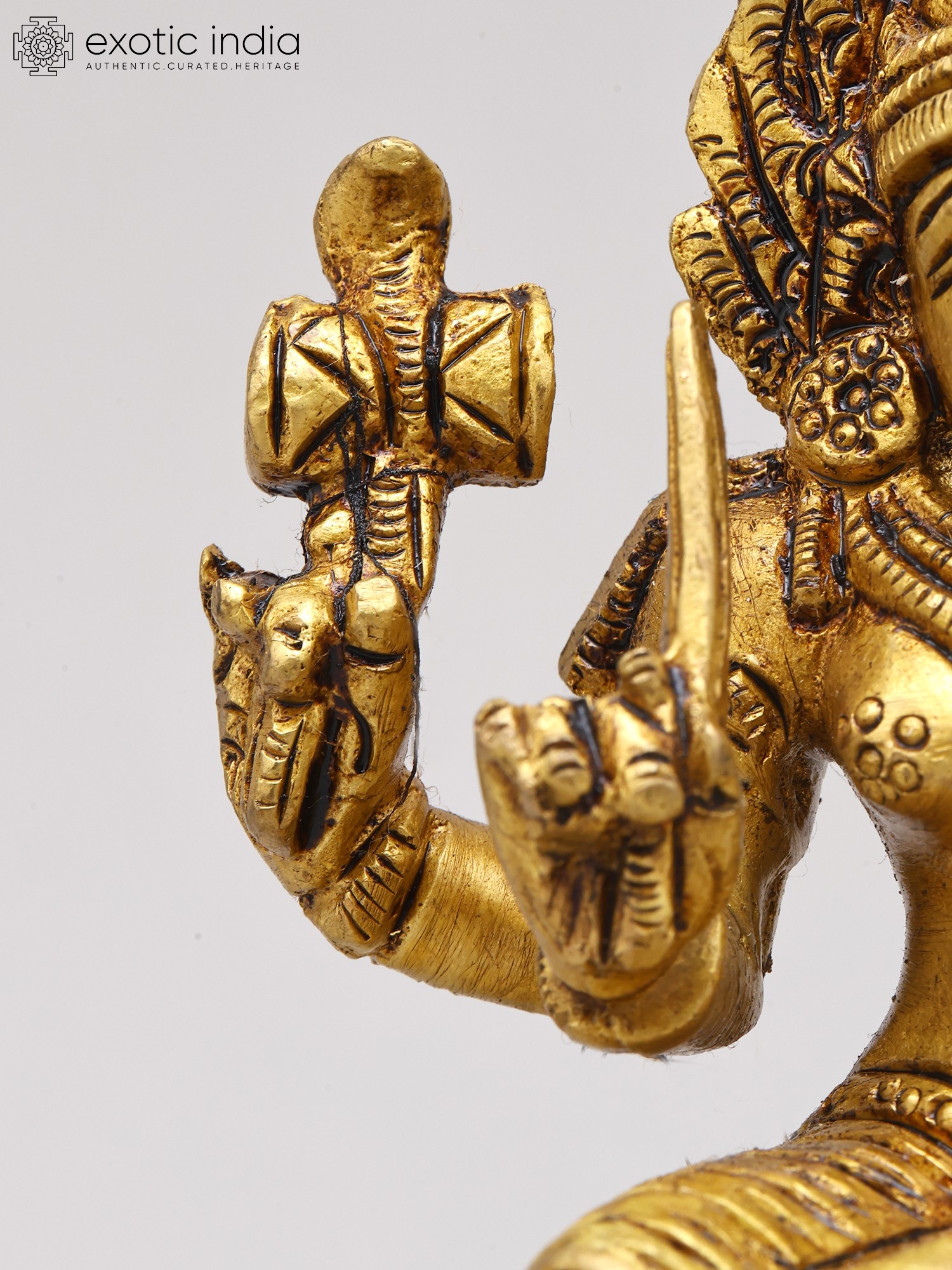
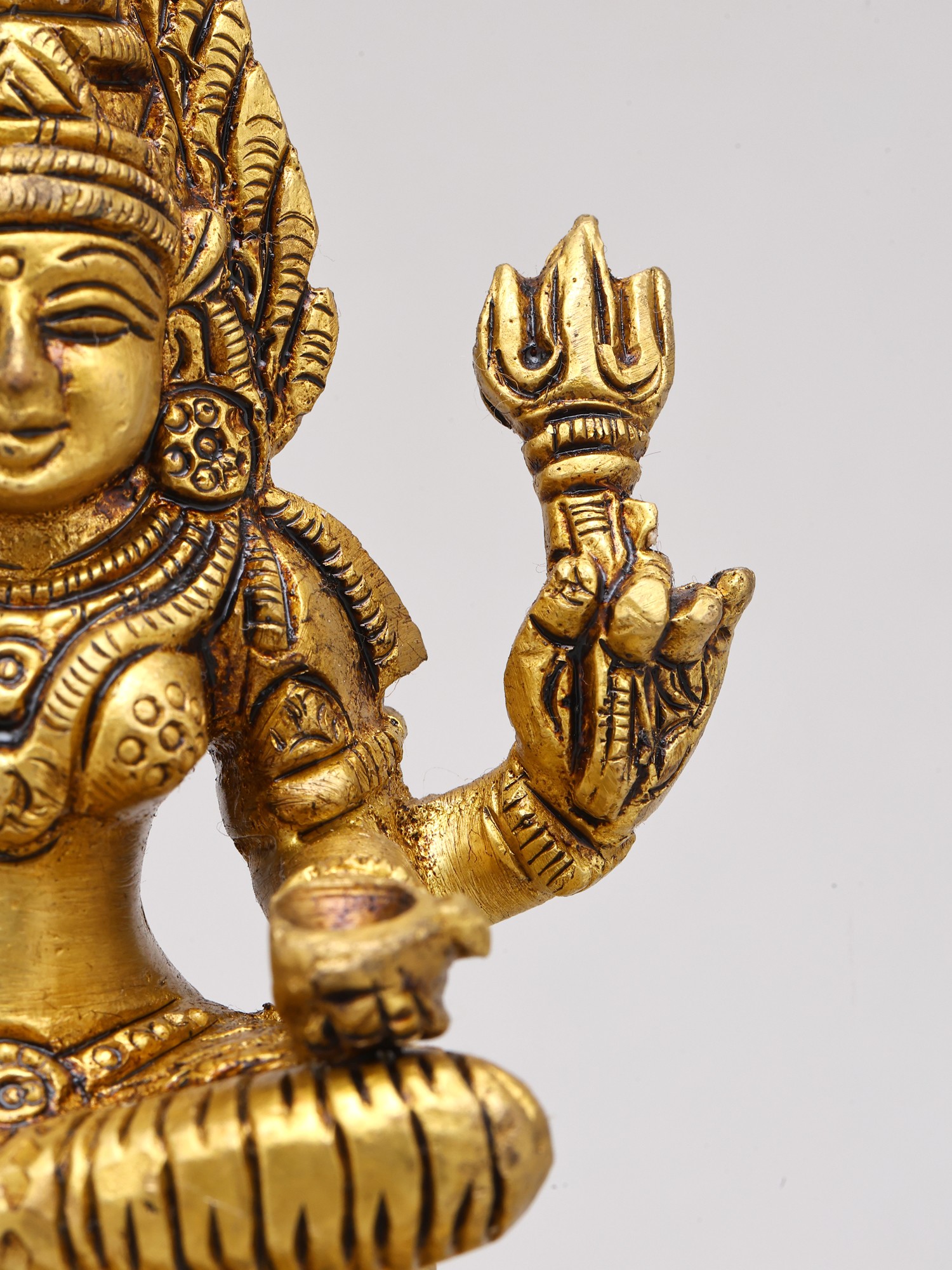
This exquisite brass sculpture captures the formidable presence of Goddess Mariamman, a revered Hindu deity often invoked for protection against diseases and for the bestowal of boons. Crafted with meticulous detail, this piece is a testament to traditional artistry, bringing a touch of sacred grace into your home or sacred space. The warm, golden hue of the brass evokes the divine radiance of the goddess herself, imbuing the sculpture with an aura of spiritual significance. The goddess is depicted in a seated posture, radiating both serenity and strength. Her divine form is adorned with intricate jewelry, a richly decorated headdress, and flowing garments, each detail meticulously rendered by skilled artisans. Her multiple arms hold symbolic objects, representing her multifaceted powers. In one hand, she holds a trident (Trishul), a weapon signifying her ability to destroy evil and ward off negative forces. In another, she grasps a mace or pestle (Musal), often associated with dispensing justice and overcoming obstacles. The presence of these attributes underscores her role as a fierce protector and a dispenser of divine justice. The sculpture also features a striking detail at its base: a severed head, symbolizing the goddess's triumph over malevolent forces and her power to subjugate negative energies. This iconography further emphasizes her formidable nature and her commitment to safeguarding her devotees.A Guardian of Well-being and Prosperity
Goddess Mariamman is particularly venerated in South India, where she is believed to be a manifestation of the divine feminine energy (Shakti). Tales of her intervention are abundant, often recounting miraculous cures from ailments and protection during times of plague or widespread disease. Her worship is deeply rooted in folk traditions, with festivals dedicated to her marked by fervent devotion, ecstatic dances, and the offering of prayers for health, fertility, and prosperity. She is seen as a mother goddess, compassionate and nurturing, yet possessing the fierce power to eradicate suffering and ensure the well-being of her followers. This sculpture serves as a potent reminder of these blessings and a focal point for devotion, inviting the goddess's protective energies into your environment. The use of brass, a metal revered in Hindu traditions for its purity and auspiciousness, further enhances the spiritual significance and aesthetic appeal of this artwork. Whether placed on an altar, a shelf, or as a centerpiece in a devotional corner, this sculpture invites contemplation and connection to the divine.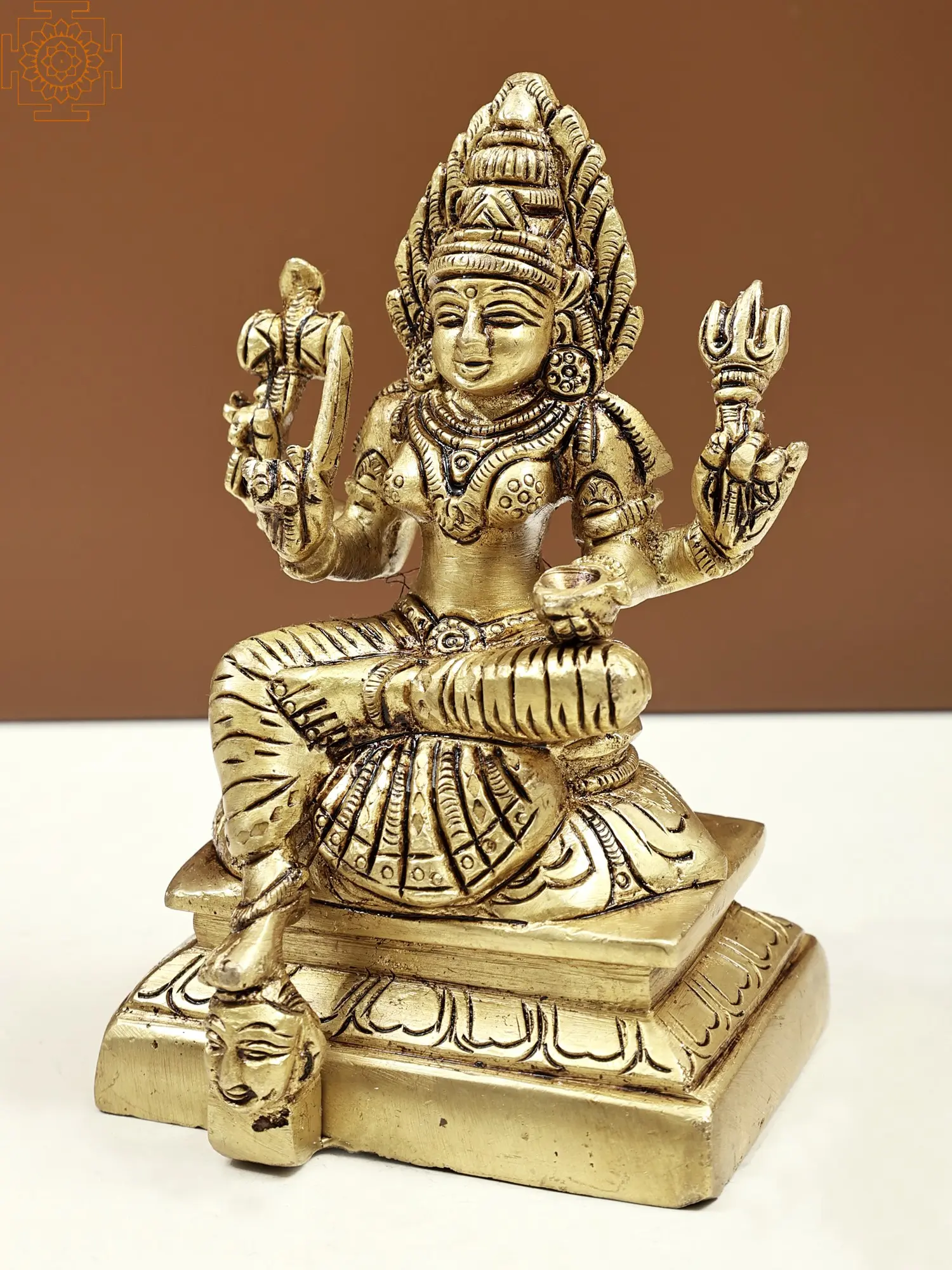
The Fierce and Powerful Goddess Durga: Discovering the Symbolism and Significance
Goddess Durga is a revered deity in Hinduism and she is
worshiped by many people in the eastern part of India and also
in other countries such as Nepal and Bangladesh. She is
considered the mother of this material world who takes care of
the conditioned souls trapped in the material existence. She
protects them from the demons who threaten peace and establishes
Dharma. In the Shakta tradition or Shaktism (those who believe
that feminine energy is supreme), Mother Durga has been given
the highest position. She is often considered the expansion of
Mother Parvati, the consort of Lord Shiva who is the destroyer
of the material world. The Vaishnavas consider Mother Durga as
the external energy of the Supreme Lord Krishna or Vishnu. She
takes charge of the material world and reforms those souls who
do not abide by the rules of the Supreme Lord.
Mother Durga is often depicted as a young and beautiful woman, wearing a saree, and sitting on a tiger or lion. She has multiple arms (usually ten arms) that hold different items and weapons that express her martial skills. She tramples down the demon Mahishasura, with her trident, representing the subduer of vices.
Mother Durga is often depicted as a young and beautiful woman, wearing a saree, and sitting on a tiger or lion. She has multiple arms (usually ten arms) that hold different items and weapons that express her martial skills. She tramples down the demon Mahishasura, with her trident, representing the subduer of vices.
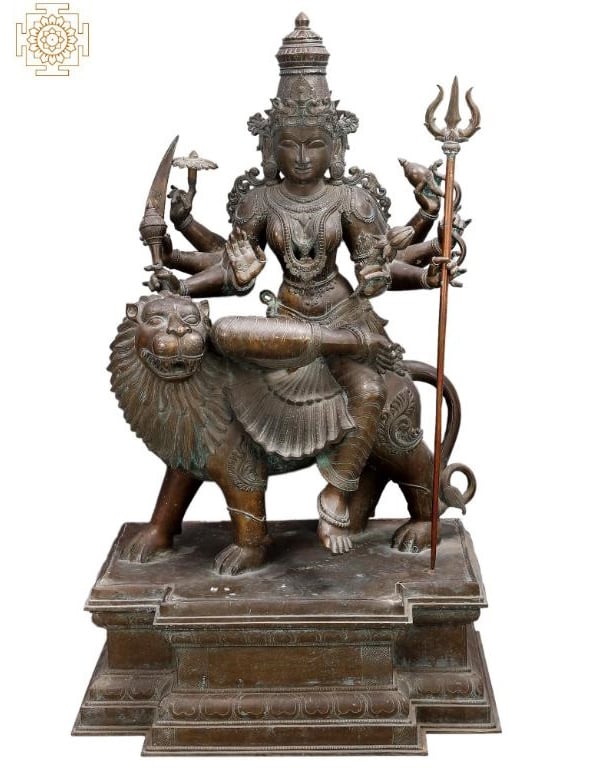
What does Durga symbolize?
Being the powerful assistant of the Supreme Lord, Mother Durga tests our dedication to the Lord. She represents the material nature and like a loving mother, she gives a clarion call to all forgetful souls to turn their faces towards Lord Krishna, who is the only well-wisher of all living entities. The depiction of her violently killing the demon Mahishasura with her trident shows her extraordinary prowess. Mahishasura represents our demoniac mentality that wants to enjoy separately from the Supreme Lord, forgetting our eternal relationship with Him. Goddess Durga killing the demon symbolizes the victory of good over evil or wisdom over ignorance.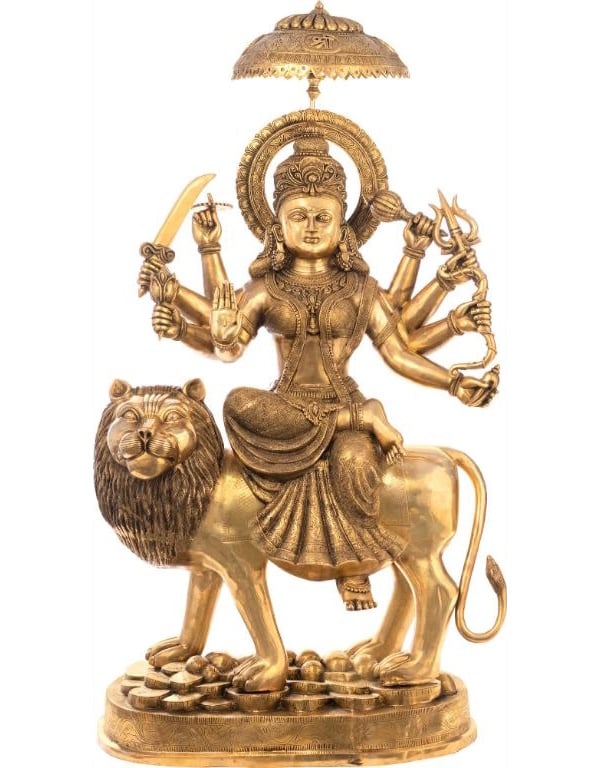
Where are Durga statues made in Kolkata?
The worship of Goddess Durga is prominent in festivals such as Durga Puja, Durga Ashtami, Navaratri, etc. On those days, people gather at a place and a big idol or deity of Goddess Durga is worshiped with faith and devotion. These idols of the Goddess are made in a place called Kumortuli, located near Kolkata, West Bengal. This city is renowned for its beautiful clay sculptures made by local manufacturers.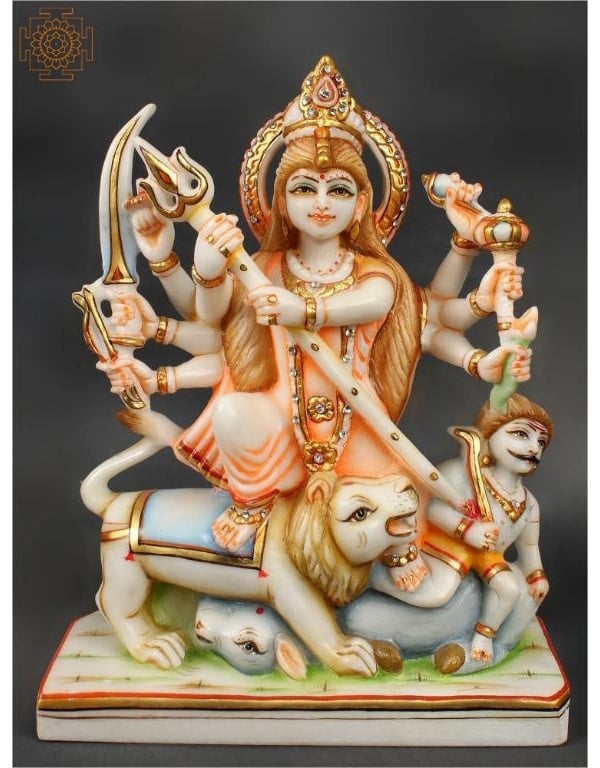
Can we keep Durga idol at home?
You can keep a Durga deity at your home if you want to attract her mercy into your life. Goddess Durga is very merciful toward her devotees and when pleased, she bestows them with both material and spiritual benefits. Those who approach and worship Goddess Durga with material desires in their hearts, she fulfills them. But if a person genuinely approaches her and prays to her to reveal about the Absolute Truth and the real goal of human life to them, being the superintendent of the Supreme Lord Vishnu, she blesses them with the light of knowledge about the Lord and inspires them to walk the path of devotion to Lord Vishnu.Products related to this item
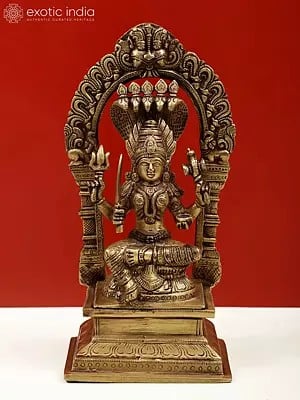
9.5 inch Height x 5 inch Width x 3.5 inch Depth
$201
Best Seller
Express Shipping
Includes any tariffs and taxes
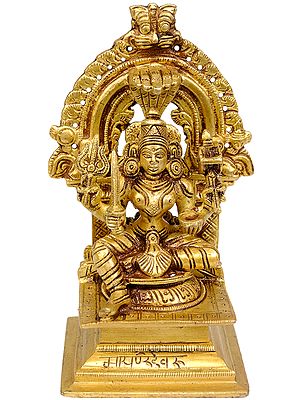
5.7 inch x 3.3 inch x 2.7 inch
$98
Best Seller
Express Shipping
Includes any tariffs and taxes
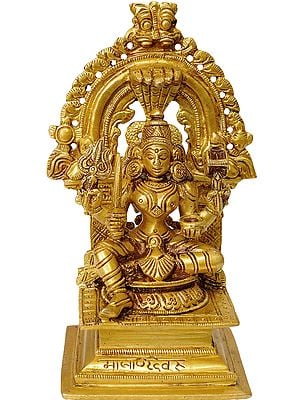
5.5 inch x 3.5 inch x 2.5 inch
$109
Best Seller
Express Shipping
Includes any tariffs and taxes
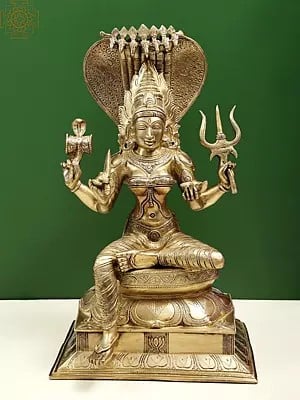
18.70 inch Height X 10.20 inch Width x 9.20 inch Depth
$494.45
Express Shipping
$899 45% off
Includes any tariffs and taxes
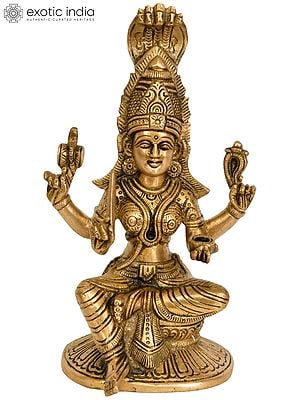
7.5 inch Height x 4.3 inch Width x 3.5 inch Depth
$144
Best Seller
Express Shipping
Includes any tariffs and taxes
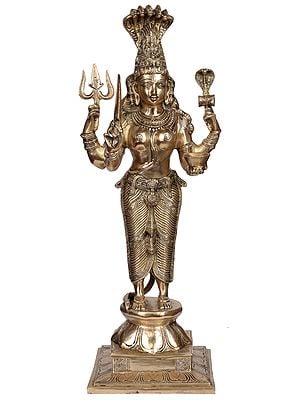
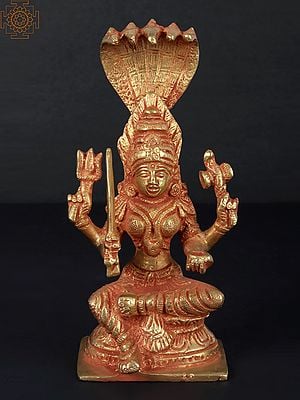
6.5 inch Height x 3.5 inch Width x 3.0 inch Depth
$114
Best Seller
Express Shipping
Includes any tariffs and taxes
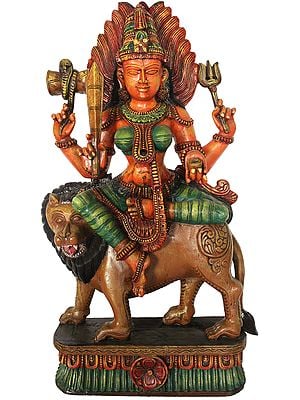
36 inch Height x 20.5 inch Width X 6.8 inch Depth
$841.40
Express Shipping
$1202 30% off
Includes any tariffs and taxes
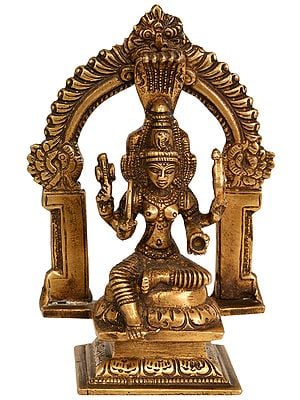
5 inch Height x 3.5 inch Width x 1.8 inch Depth
$75
Best Seller
Express Shipping
Includes any tariffs and taxes
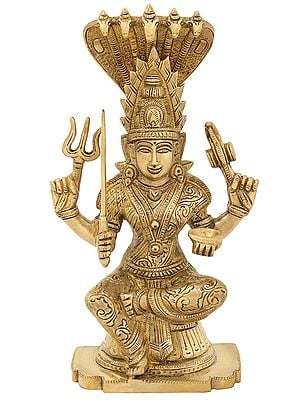
10.5 INCH HEIGHT X 6.50 INCH WIDTH X 3.5 INCH DEPTH
$259
Includes any tariffs and taxes
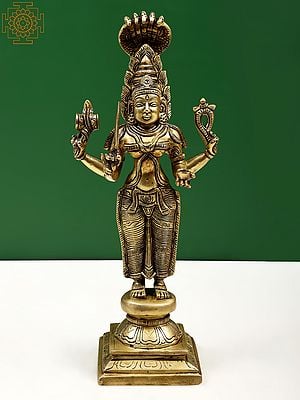
12.50 inch Height X 5.50 inch Width X 3.50 inch Depth
$114
Express Shipping
$190 40% off
Includes any tariffs and taxes
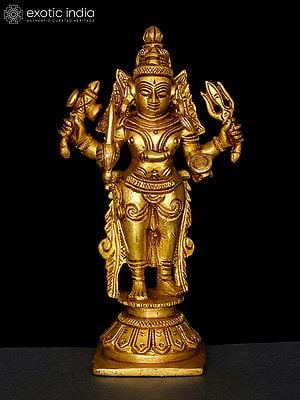
More Colors
5.5 inch x 3.5 inch x 1.6 inch
$75
Best Seller
Express Shipping
Includes any tariffs and taxes