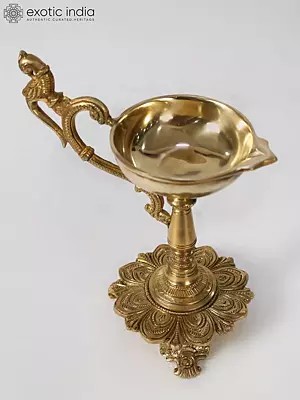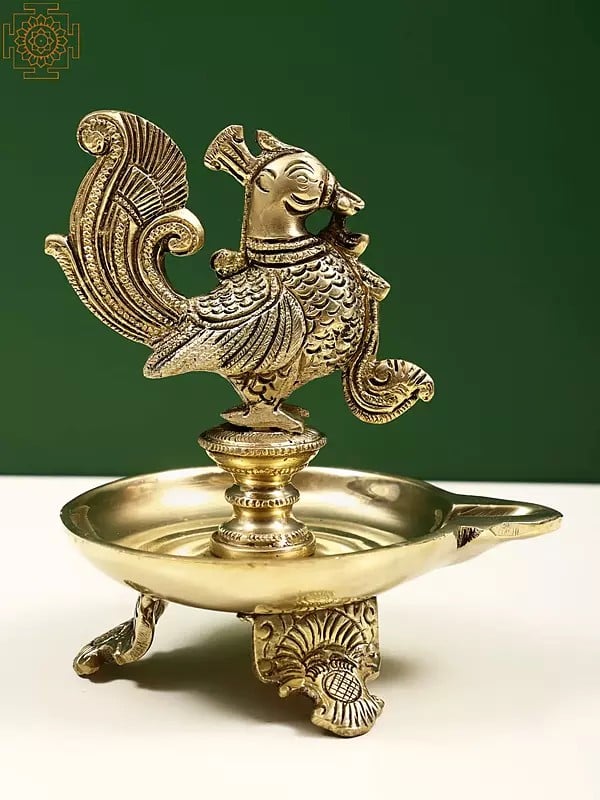

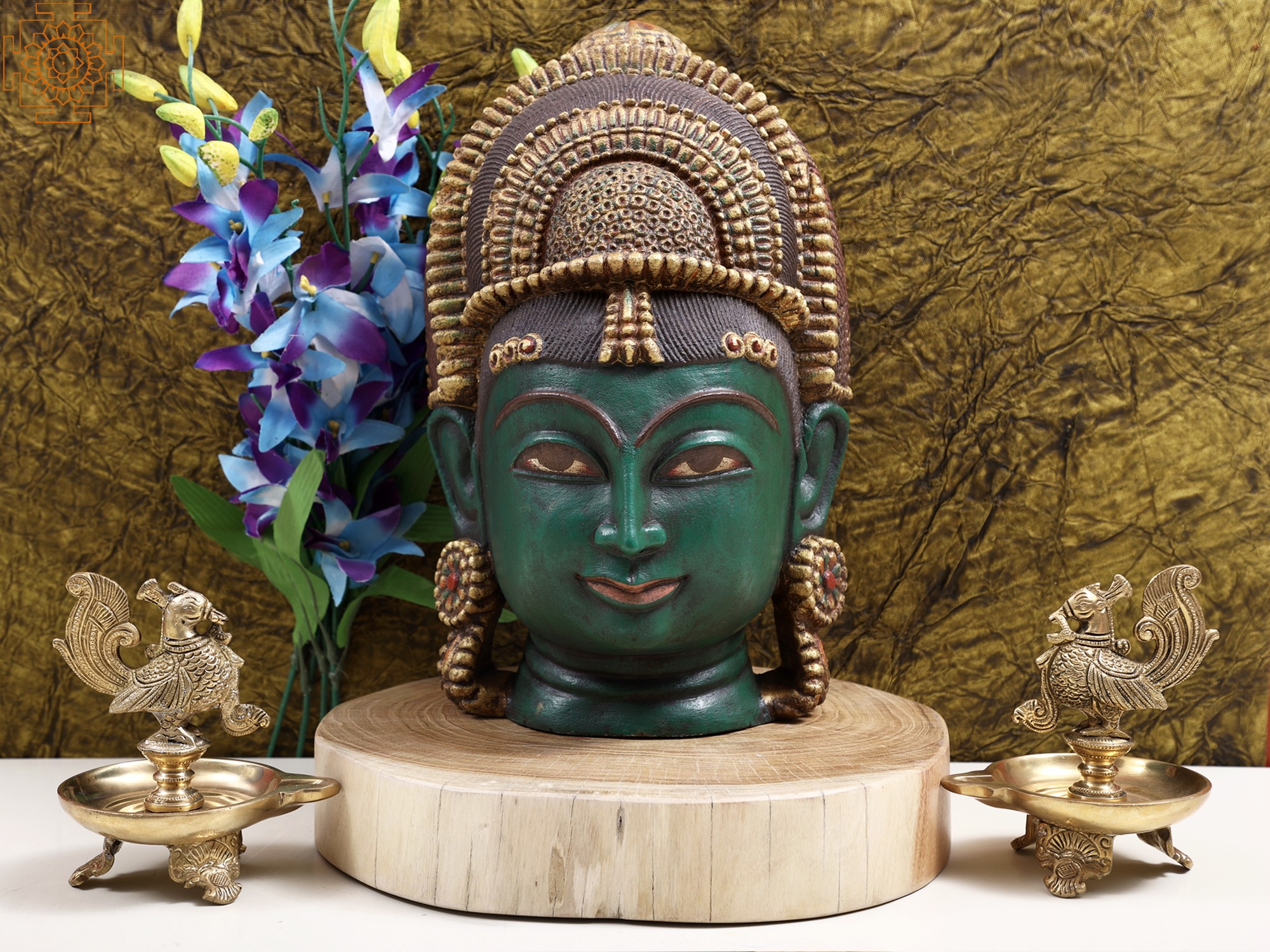

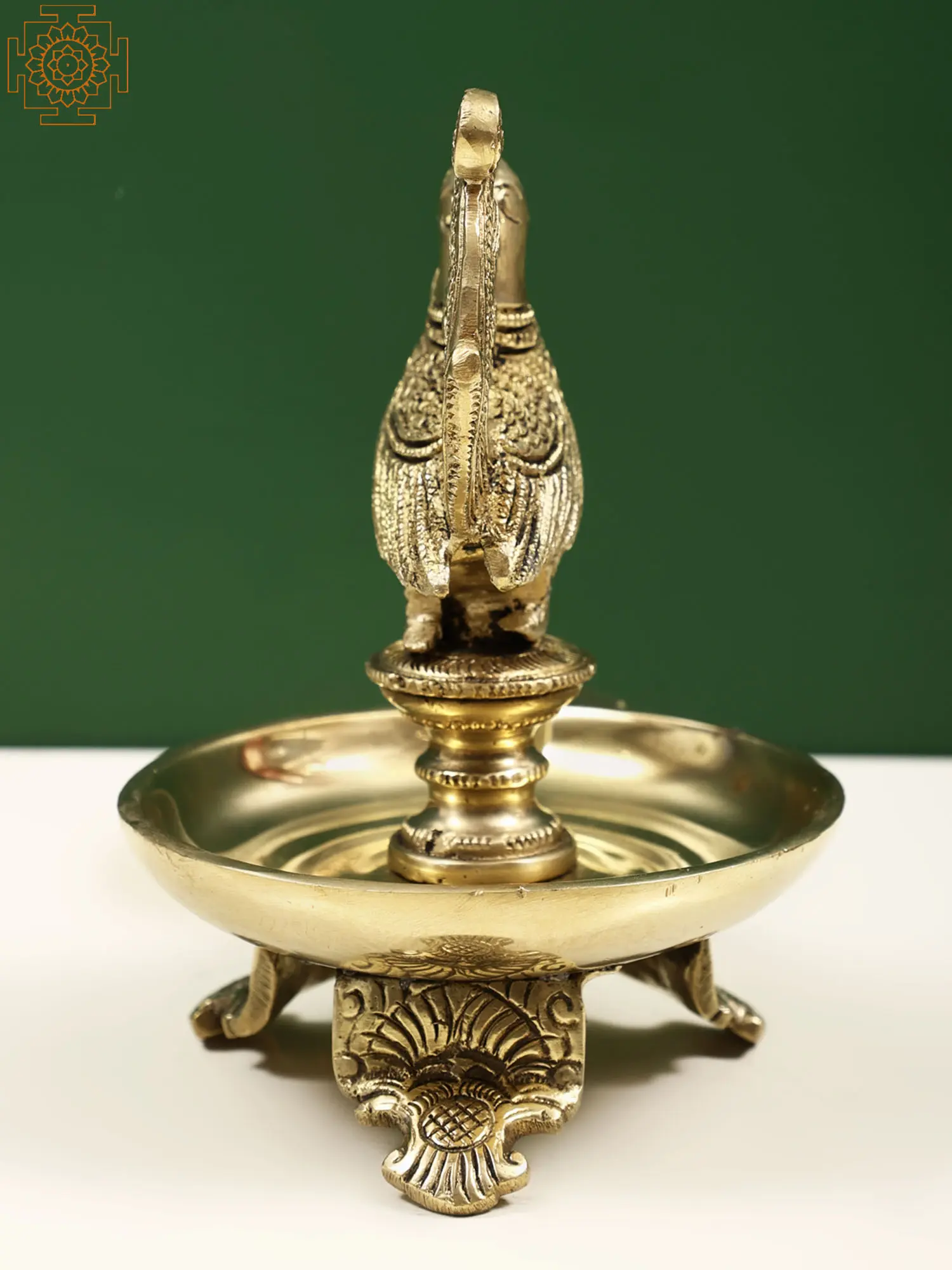
5" Small Brass Peacock Diya
$114
Includes any tariffs and taxes

Protective Lacquer Coating
Protective Lacquer Coating

Get your Statue - Lacquer Polish Protection
Lacquer Polish Protection is a protective coating of lacquer that is applied on the statue to protect it from tarnishing and dirt.
Notify me when this item is available
| Specifications |
 |
ZER015 |
 |
BRASS |
 |
Height: 5 inch |
| Width: 4 inch | |
| Depth: 5 inch | |
 |
Weight 800 gm |
| Delivery and Return Policies |
 |
Usually ships in 10 days |
 |
Returns and Exchanges accepted within 7 days |
 |
Free Delivery |

Easy Returns

Fully Insured

100% Handmade
Super Saver Bundles you cannot miss
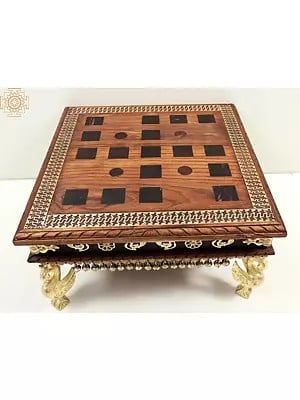
16" Wooden Chowki with Brass Decoration and Ghungroos | Wooden Pedestal | Handmade
8.50 inch Height X 16.00 inch Width X 16.00 inch Depth
$434.70
Sold Out
$483 10% off
Includes any tariffs and taxes
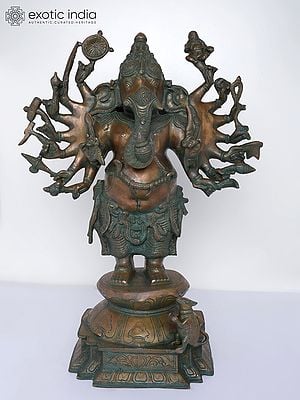
Sixteen-Armed Vira-Ganesha Brass Statue | Exquisite Handmade Craft | Symbol of Strength
19 inch X 11 inch X 7 inch
$1091.70
Best Seller
Express Shipping
$1213 10% off
Includes any tariffs and taxes
| Color |
|
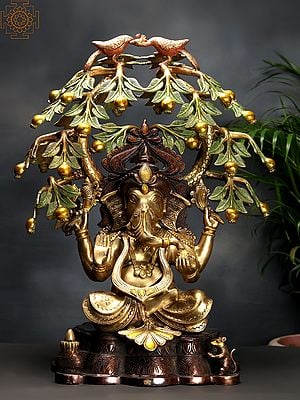
24" Brass Lord Ganesha with Tree | Handmade
24.00 inch Height X 17.00 inch Width X 15.00 inch Depth
$1945.80
$2162 10% off
Includes any tariffs and taxes
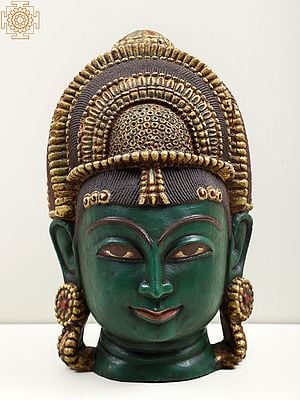
13" Stone Goddess Uma Devi Head
13.65 inch Height X 8.75 inch Width X 7.30 inch Depth
$936.90
Sold Out
$1041 10% off
Includes any tariffs and taxes
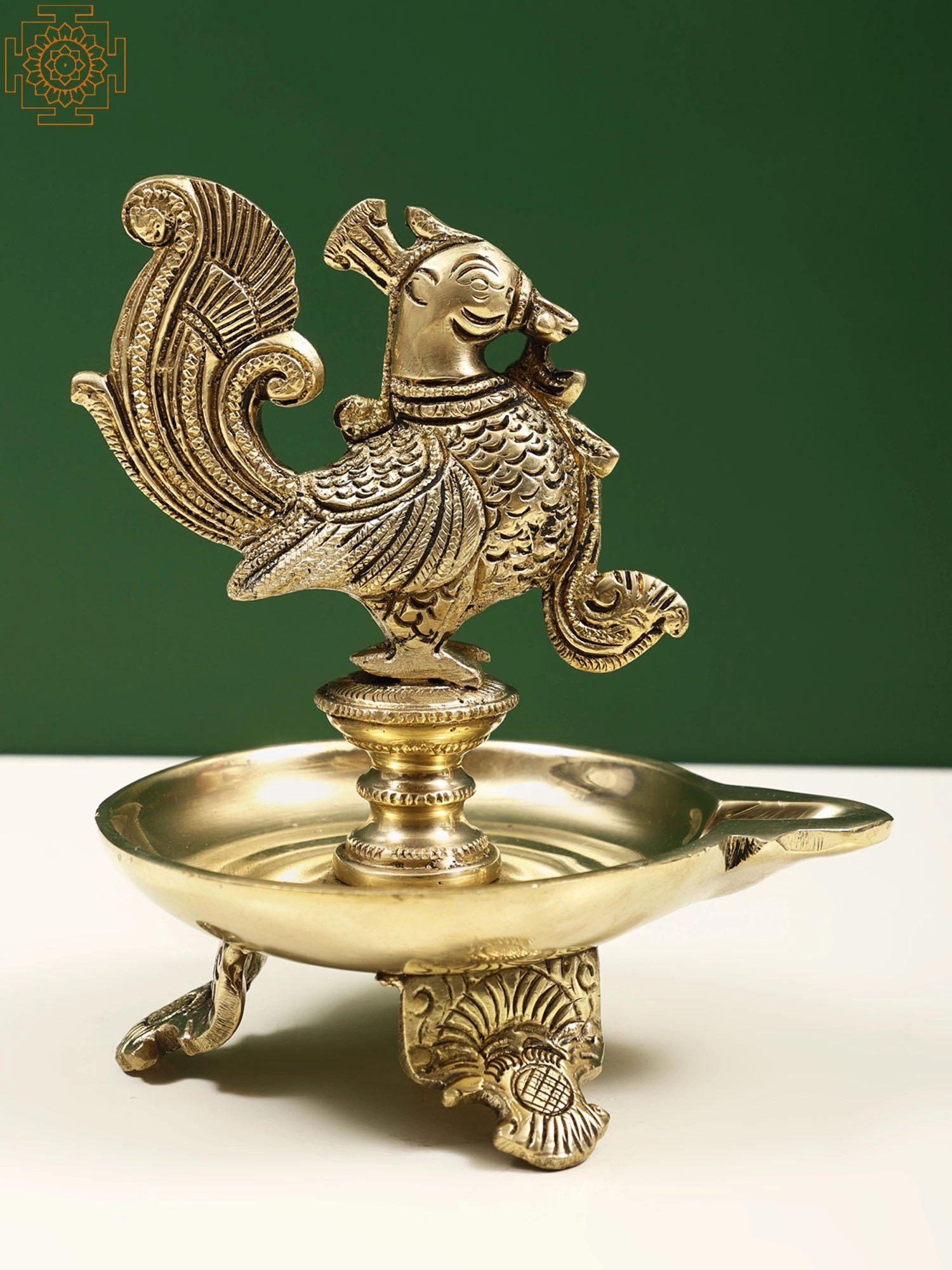
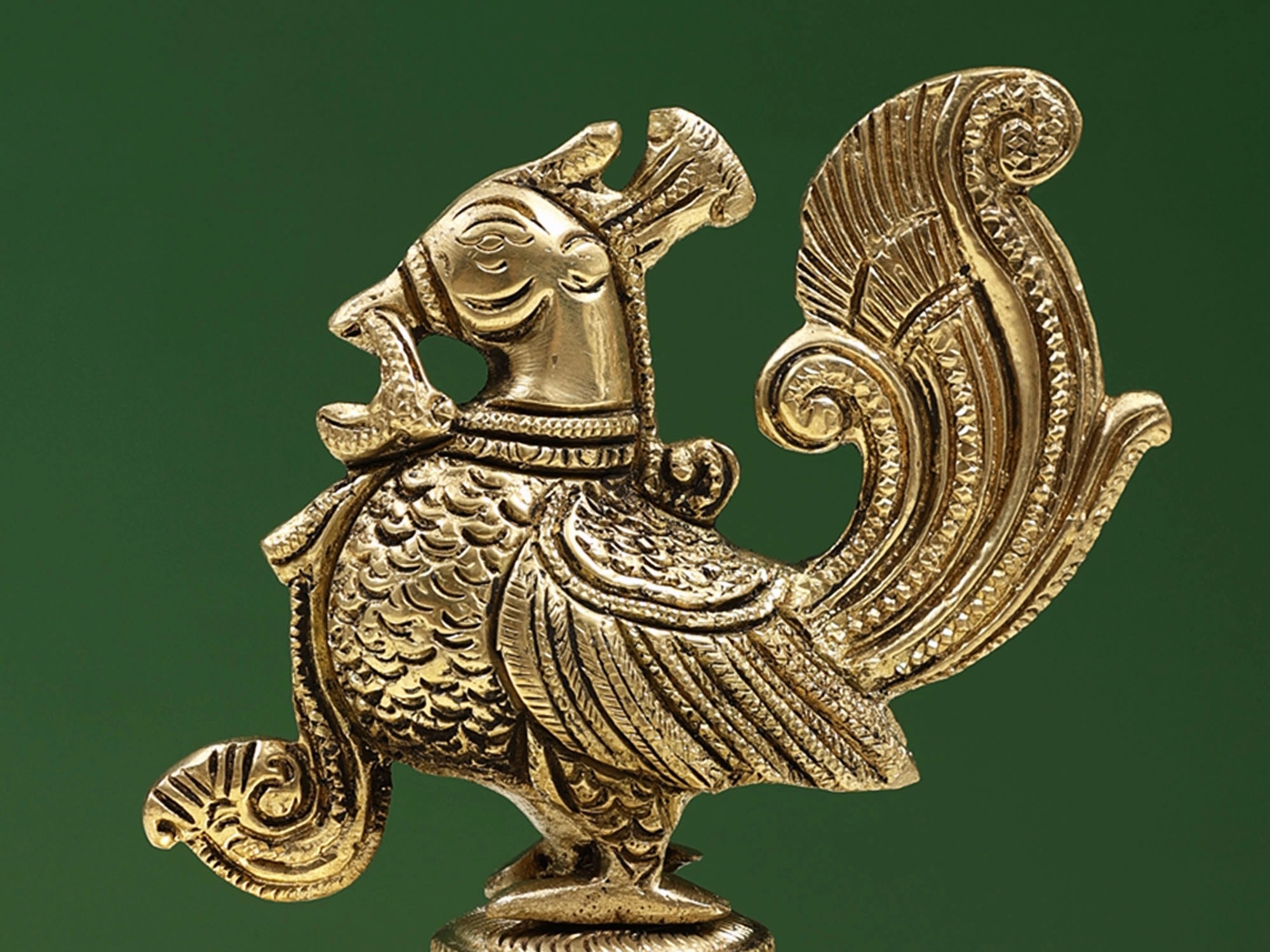
Birds have particular
symbolic connotations in Indian art. The peacock is the most auspicious of all
birds. Because of the tale of a peacock being created from a Garuda feather, it
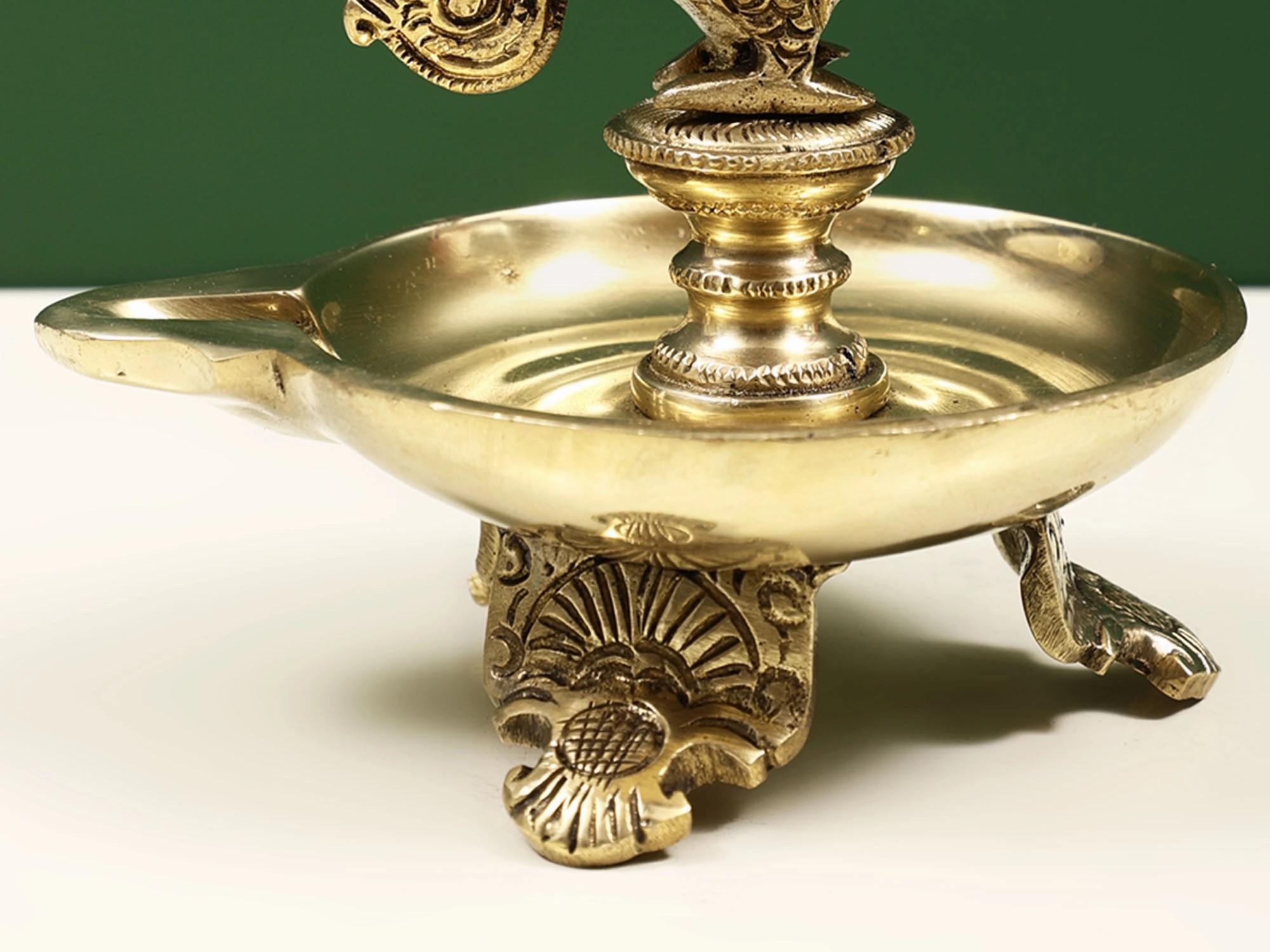
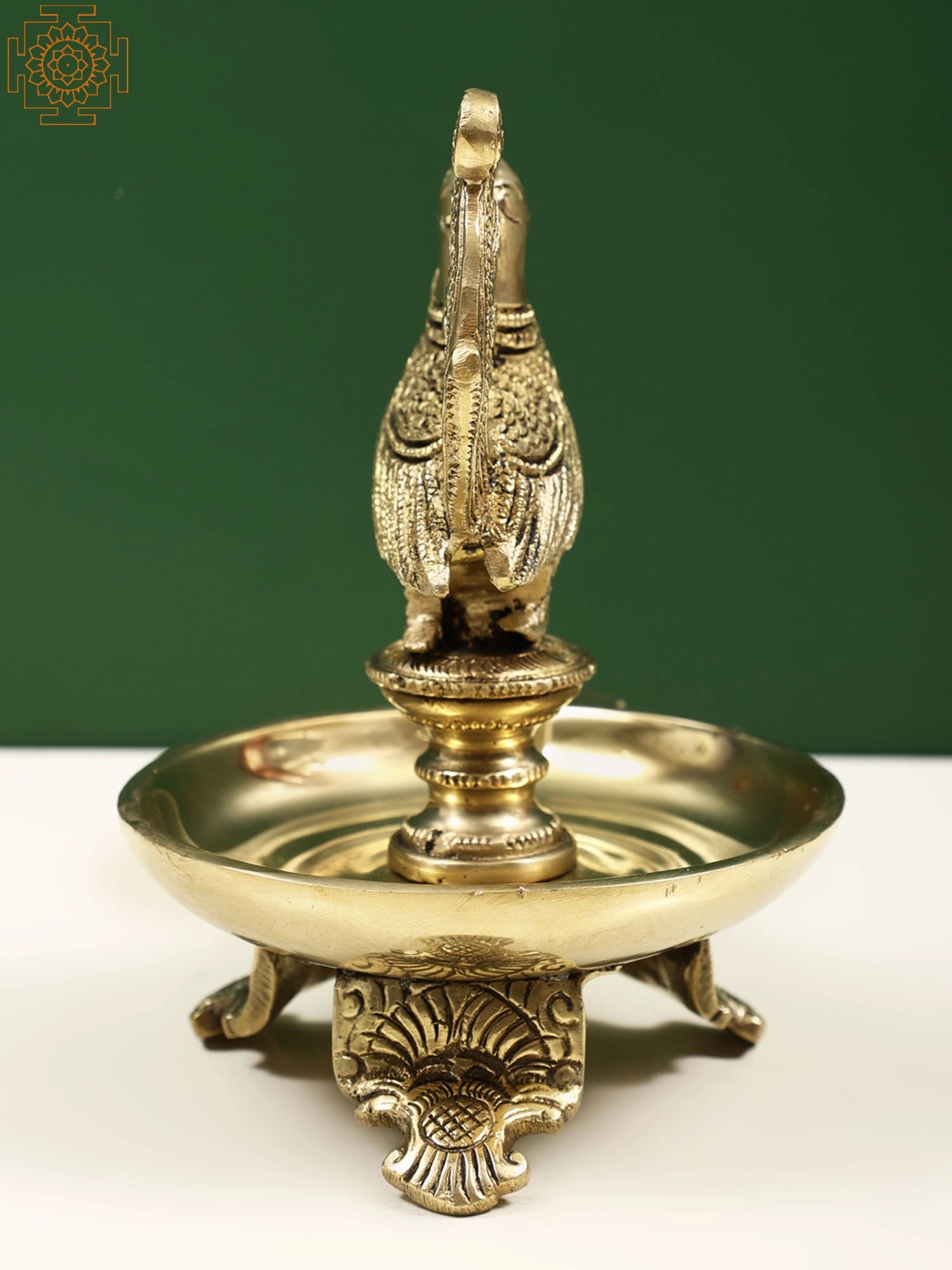
denotes liberation from worldly worries. This metal lamp with a center peacock
pattern and a single wick is an unusual representation of the bird. The bird's
tail melts into a flowery design rather than feathers, emphasizing the bird's
magical character. When lit with great devotion, lamps bearing motifs of
mythological birds are said to bring deity benefits. These lamps are quite
popular in South India and have now extended to other regions of the nation.
A Beacon of Auspiciousness: The Brass Peacock Diya
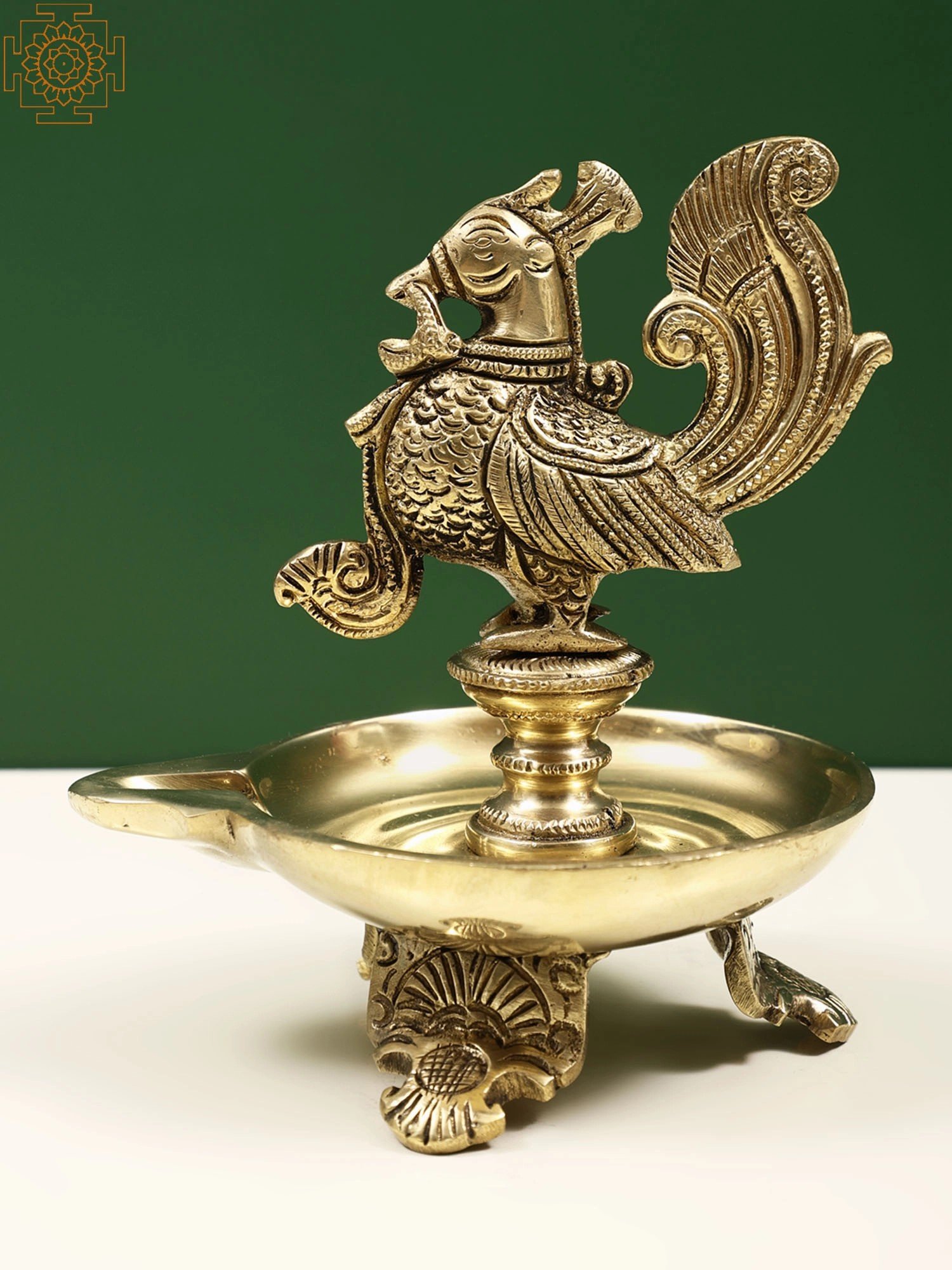
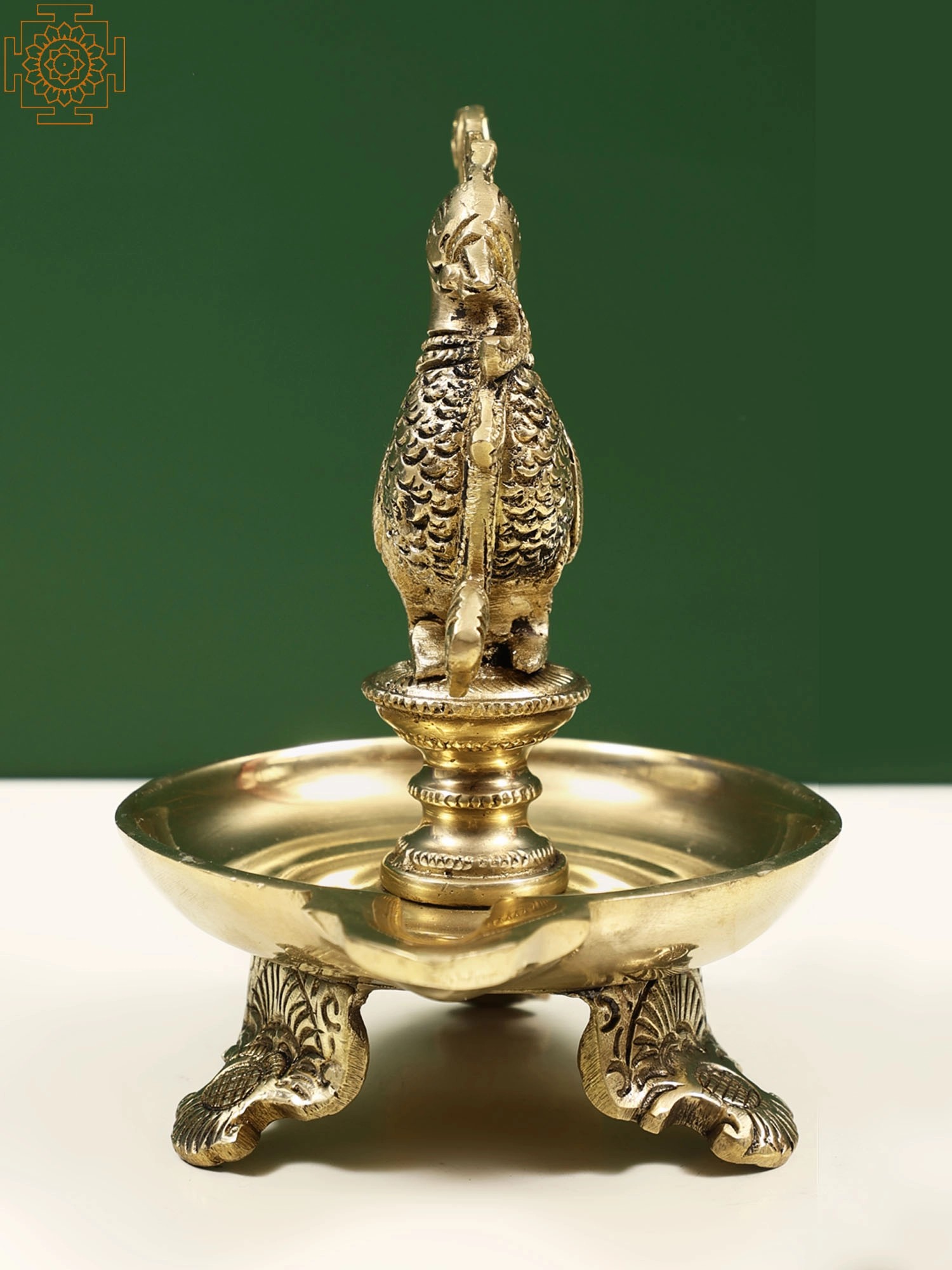
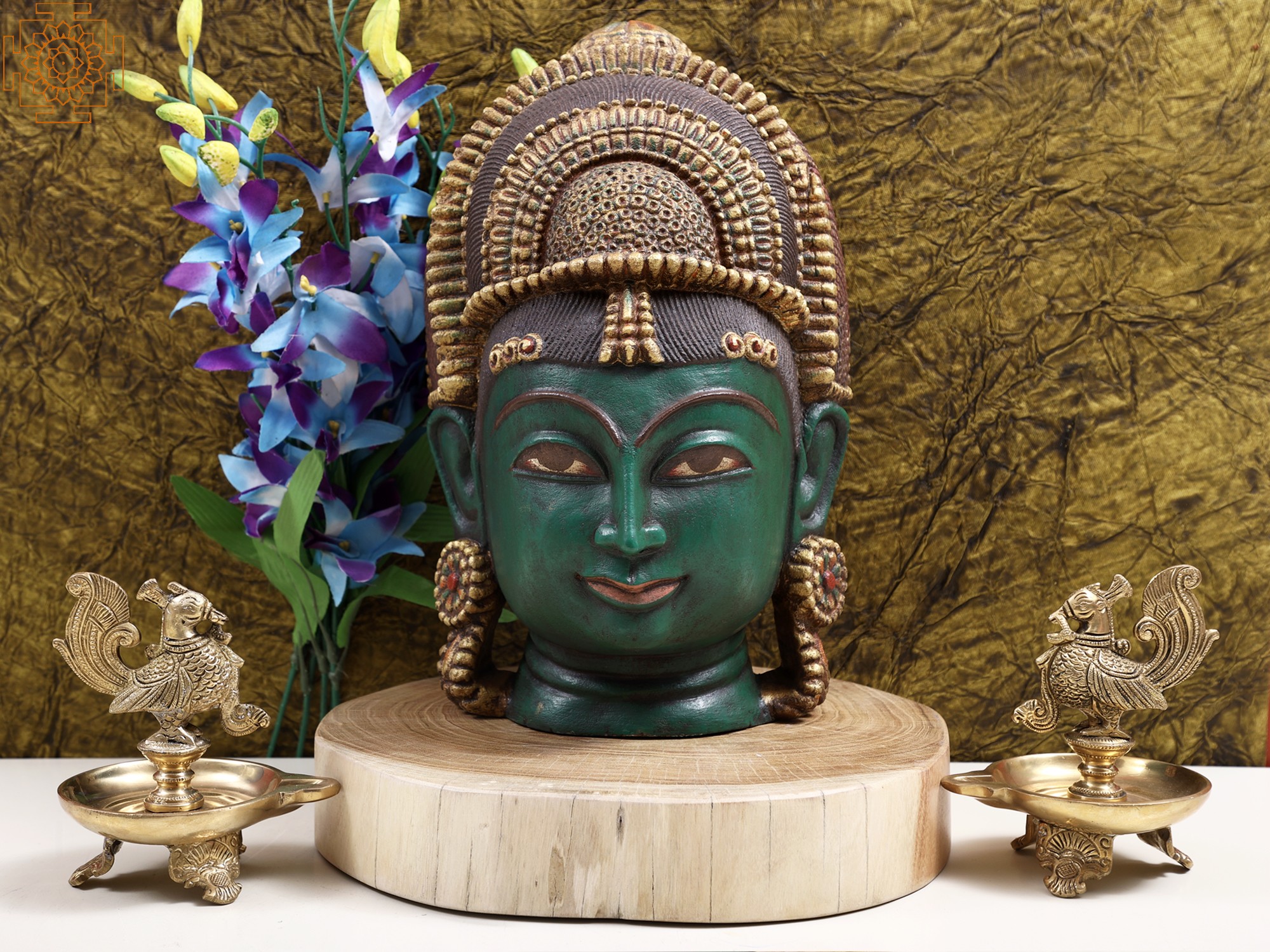
Illuminate your sacred spaces and imbue your home with the radiant energy of this exquisite brass diya, crafted in the form of the majestic peacock. This handcrafted piece is more than just a lamp; it's a symbol of beauty, prosperity, and auspiciousness, deeply woven into the cultural tapestry of India. The peacock, revered in Hindu mythology as the vehicle of Lord Kartikeya, the god of war and victory, embodies grace, pride, and divine protection. Its vibrant plumage is said to ward off evil, and its presence is believed to bring good fortune. The intricate detailing on this diya captures the peacock in all its glory. From its finely etched feathers to its regal crest, every element speaks of skilled artistry and devotion. The warm, golden hue of the brass further enhances its allure, promising to cast a gentle, inviting glow that soothes the soul and elevates the ambiance. This diya is perfectly sized to grace any altar, puja room, or even a thoughtfully decorated corner of your living space.Symbolism and Sacred Traditions
The lighting of a diya is a central ritual in many Indian traditions, signifying the triumph of light over darkness, knowledge over ignorance, and good over evil. Whether used during daily prayers, festivals like Diwali, or special ceremonies, the diya's flame is a powerful symbol of life, purity, and spiritual awakening. The choice of the peacock as the motif adds another layer of meaning, connecting the light to themes of beauty, renewal, and divine blessings. In ancient tales, the peacock's dazzling display of feathers is also linked to the cosmic egg and creation itself, making this diya a conduit for potent spiritual energies.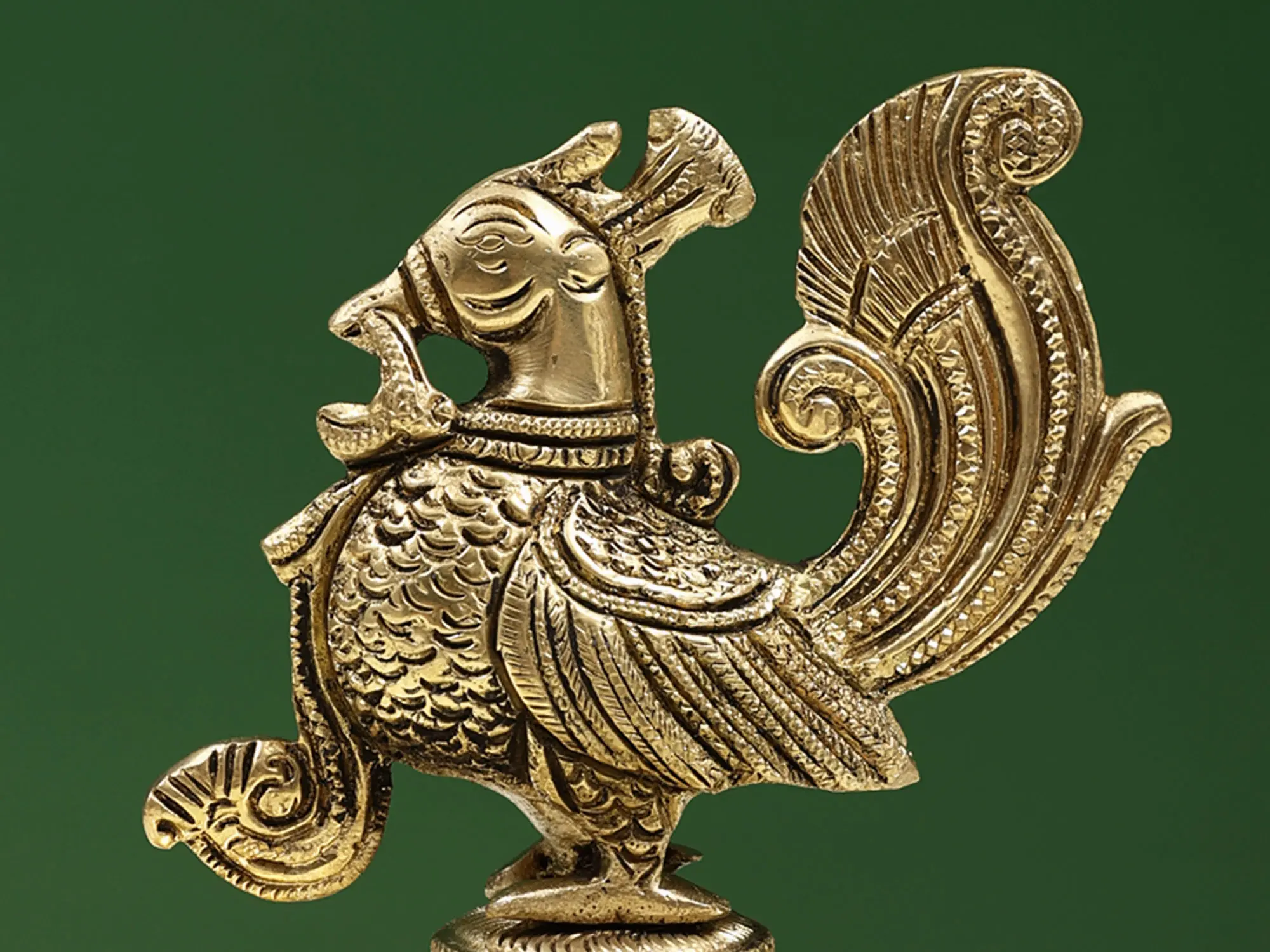
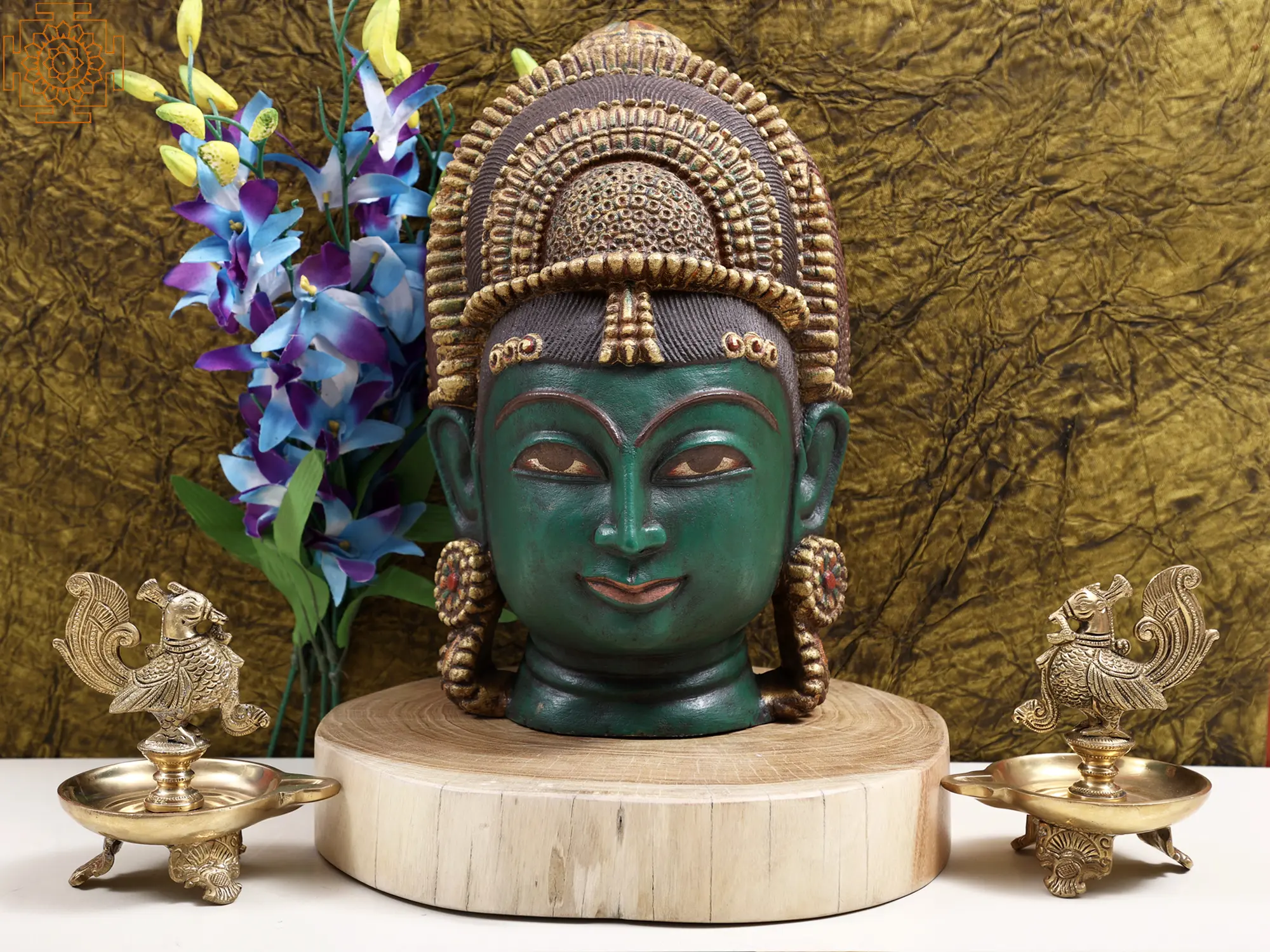
An Enduring Craftsmanship
Fashioned from durable and lustrous brass, this diya is designed to be a treasured possession for years to come. Brass, known for its longevity and antimicrobial properties, has been a preferred material for sacred objects and decorative art in India for centuries. The weight and feel of the metal speak to its quality, while the careful craftsmanship ensures that each detail is rendered with precision. This diya is not merely a decorative item but a functional piece of art that bridges the gap between the material and the spiritual, enhancing the sanctity of your rituals and adding a touch of timeless elegance to your home. Let the gentle flicker of its flame be a constant reminder of beauty, divinity, and the ever-present light within.The Power of Light: Understanding the Role of Oil Lamps in
Hinduism
Hinduism is a boon to human society for it guides everyone to
follow their Dharma and rise above the material concept of life.
Hinduism is also known as “Sanatan Dharma”. These are Sanskrit
terms in which Sanatan means “eternal” and Dharma means “Intrinsic
nature or occupation”. Thus it deals with the intrinsic nature or
the real identity of the living entities; that which can never be
taken away from them. The principles of Hinduism are given in the
Vedic literature or scriptures that are considered “Apaurusheya”;
they have not been written by any ordinary person but have been
compiled by Vyasadev, the literary incarnation of the Supreme Lord
Krishna. The word “Veda” means complete knowledge, both material
and spiritual. The knowledge in Vedic literature is so vast and
precise that if one looks carefully, he will notice that nothing
is sentimental or imaginary but is based on facts and truth. There
is a clear description and information about the identity of all
living beings, the nature of the Absolute Truth, the reason for
the existence of this world, the information about the world
beyond this universe, and the relationship between us and God, the
Absolute Truth.
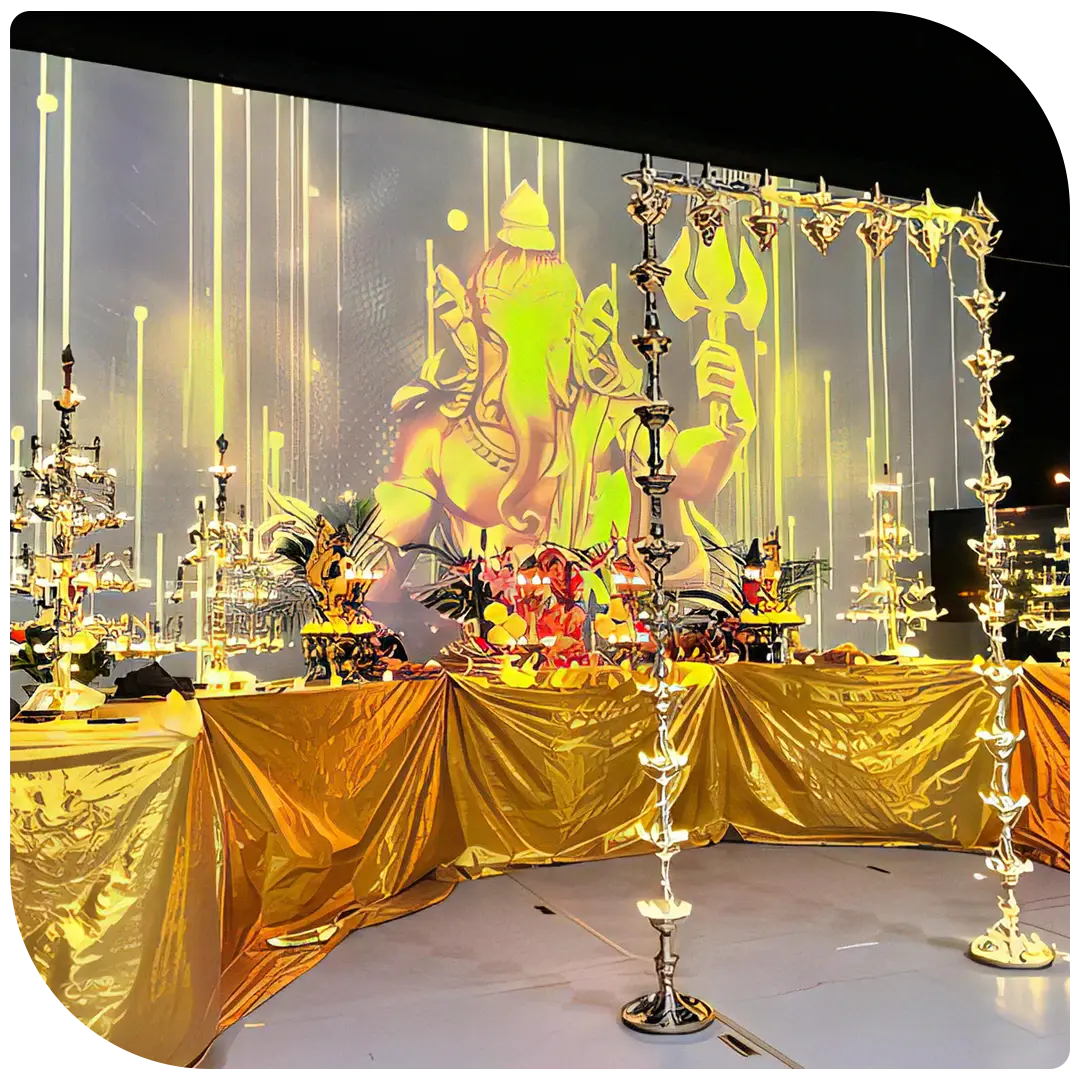
Why do we light a lamp?
There are many rituals recommended in the Vedas for engaging our body and mind in the service of God. One of them is the lighting of ghee or oil lamps before the deity. According to the Vedic injunctions, all auspicious functions begin with lighting a lamp. It has a great spiritual significance. It is believed that the light of the lamp symbolizes “knowledge”, the wick symbolizes the false ego of the living entity, and ghee (clarified butter) or oil symbolizes all the negative tendencies (Anarthas) accumulated in the heart such as greed, lust, anger, and envy. When the lamp is lit by spiritual knowledge, all the Anarthas are exhausted, and the false ego, which is the root cause of conditional life, is also burnt. Therefore, the lamp is lit before the Lord as a sacrifice of our false ego in His service. Just as the light of the lamp dissipates all darkness, similarly, the light of knowledge dissipates ignorance of the Jivas and enables us to realize our real identity and purpose of life.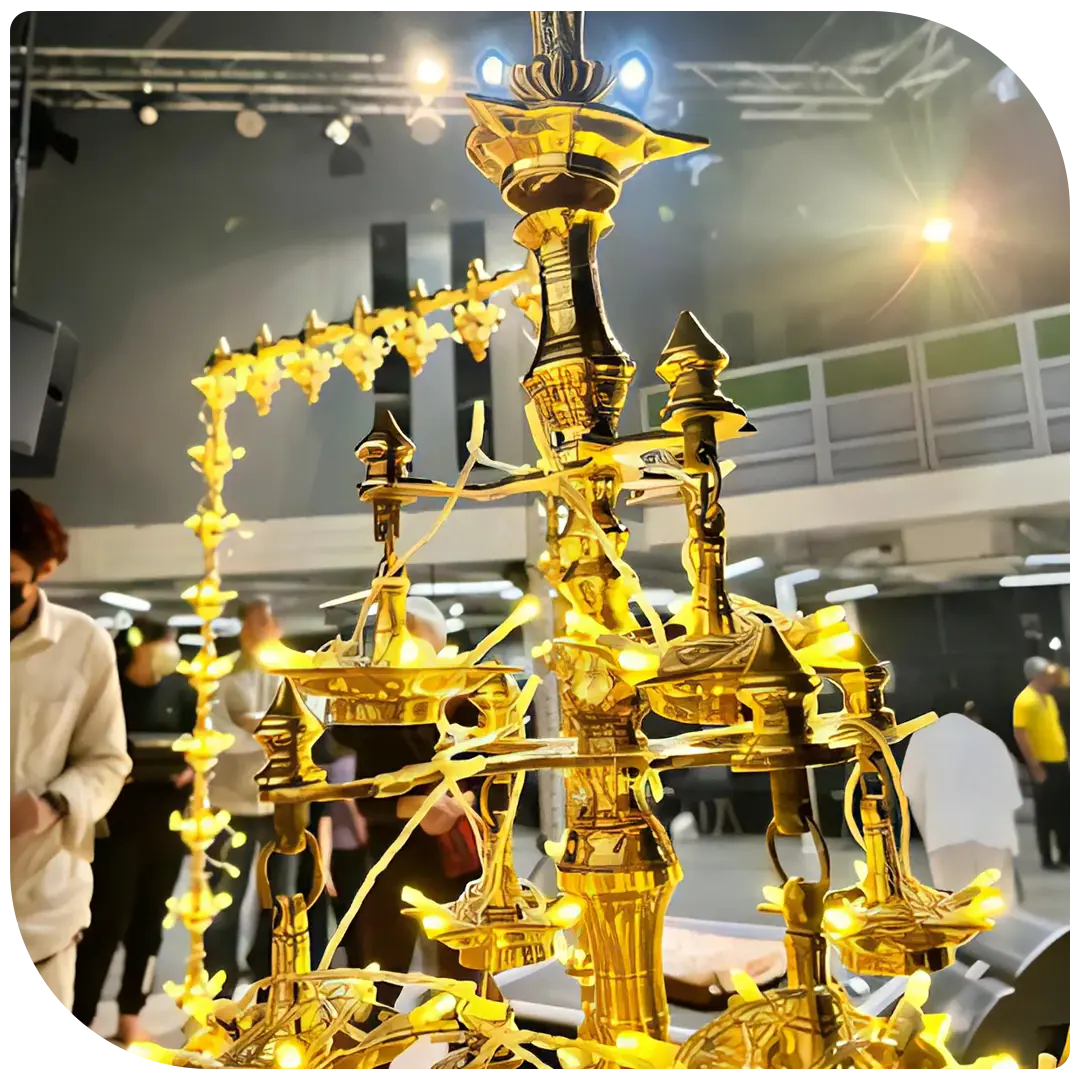
Why only an oil or ghee lamp?
One may question why only an oil lamp is lit before the Lord and why not an artificial light source. This may sound logical but lighting a lamp has a further spiritual significance. The flame of the light in a lamp always burns upwards indicating that by cultivating spiritual knowledge, one achieves the highest perfection of life and is always victorious. Also, a traditional lamp is the purest form of offering.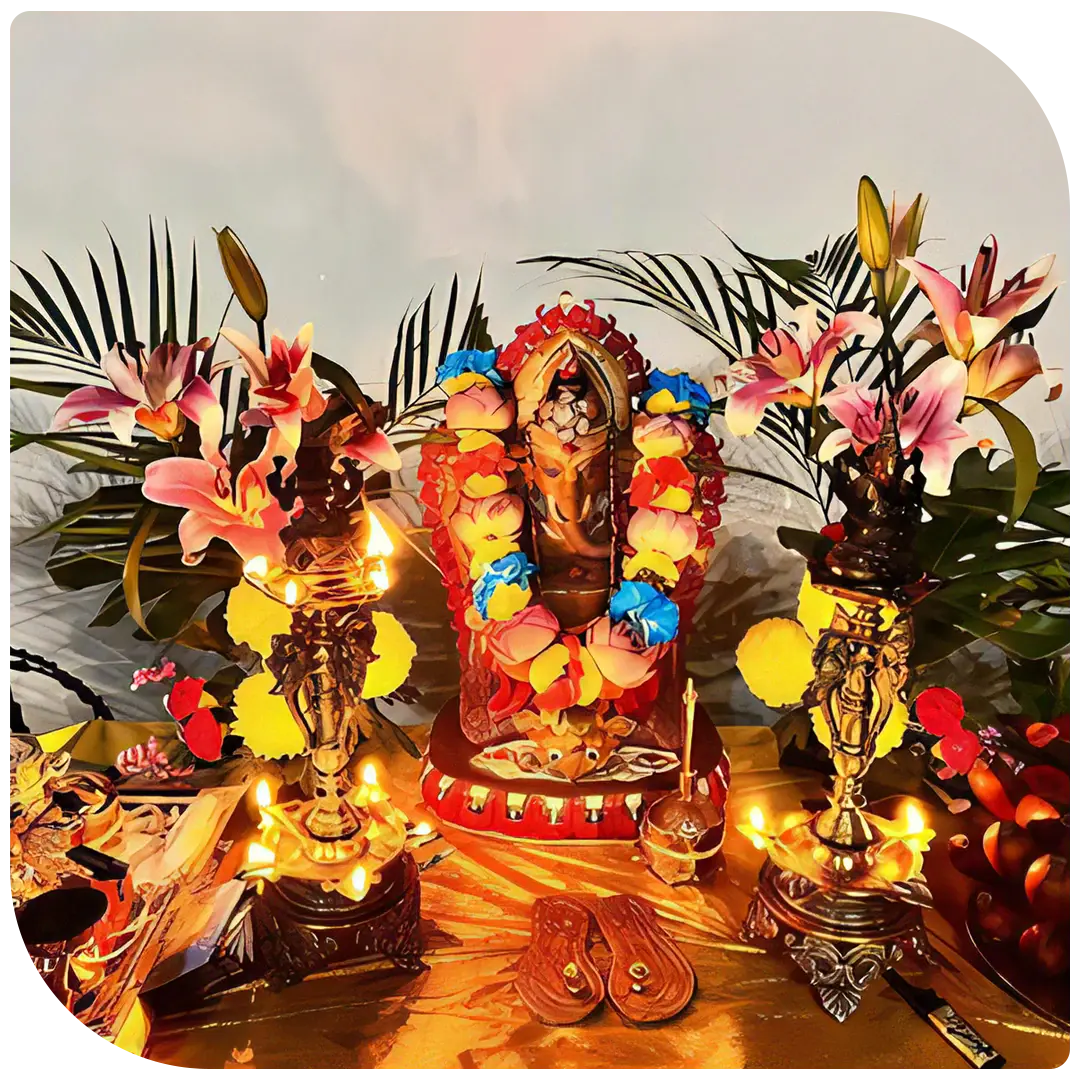
In almost every house of a follower of Sanatan Dharma, an oil or
ghee lamp is lit before the altar of the Lord or before the Tulsi
plant. Some people light it at dawn, some at dusk, and some people
prefer to light it at dawn and dusk. Either ghee or sesame oil can
be used to burn the wick. Vaishnavas (devotees of Lord Vishnu or
Krishna) especially light a ghee lamp every day in the month of
Kartik to offer their love and devotion to the Lord.
Products related to this item
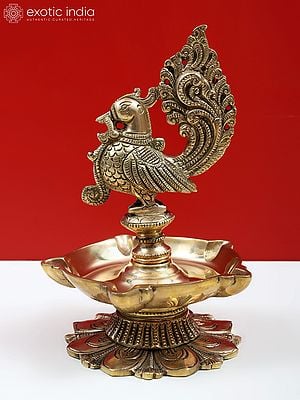
7" Brass Peacock Diya
7.20 inch Height X 4.80 inch Width X 4.80 inch Depth
$155
Best Seller
Express Shipping
Includes any tariffs and taxes
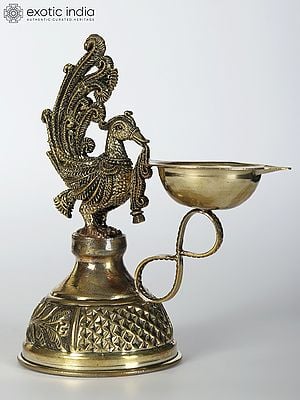
5" Small Brass Superfine Attractive Peacock Diya
5.5 inch Height X 5.2 inch Width X 2.8 inch Length
$86
Express Shipping
Includes any tariffs and taxes
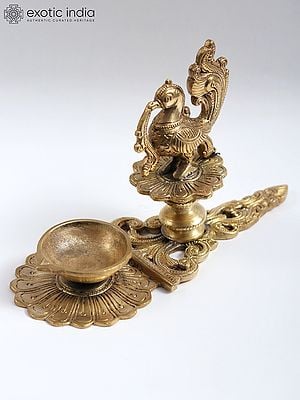
7" Brass Handheld Peacock Diya
4.25 inch Height X 7.00 inch Width X 3.00 inch Depth
$85.50
Express Shipping
$114 25% off
Includes any tariffs and taxes
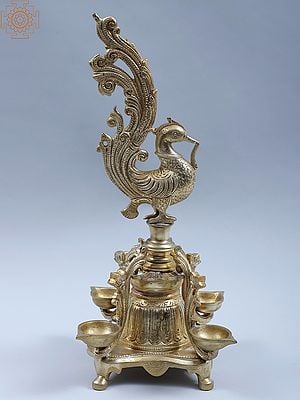
13" Bronze Designer Peacock Diya (Hoysala Art)
13.50 inch Height X 5.80 inch Width X 5.80 inch Depth
$317.80
Express Shipping
$454 30% off
Includes any tariffs and taxes
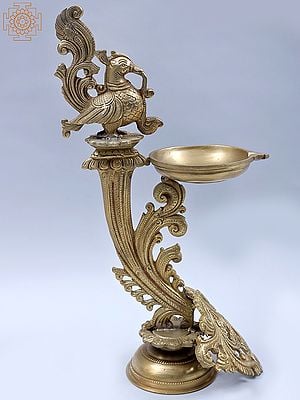
12" Bronze Designer Peacock Diya (Hoysala Art)
12.50 inch Height X 7.00 inch Width X 4.50 inch Depth
$178.50
Express Shipping
$357 50% off
Includes any tariffs and taxes
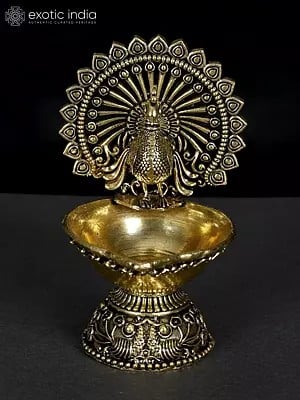
4" Small Superfine Designer Peacock Diya in Brass
4 inch Height X 2.5 inch Width X 2.5 inch Length
$52
Best Seller
Express Shipping
Includes any tariffs and taxes
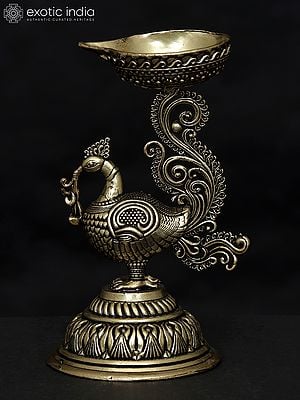
5" Small Superfine Peacock Diya in Brass
5 inch Height X 3.2 inch Width X 2.7 inch Length
$63
Best Seller
Express Shipping
Includes any tariffs and taxes
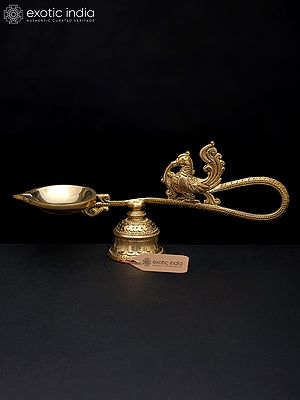
9" Handheld Peacock Aarti Diya with Stand in Brass | Handmade Lamp | Made in India
4.2 Inch Height X 9.5 Inch Width X 2.5 Inch Length
$86
Includes any tariffs and taxes
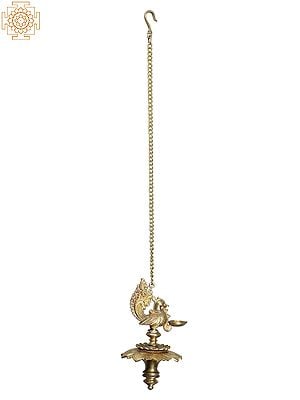
9" Peacock Hanging Diya | Handmade | Hoysala Art
9.00 inch Height X 5.00 inch Width X 5.00 inch Depth
$156.80
Express Shipping
$224 30% off
Includes any tariffs and taxes
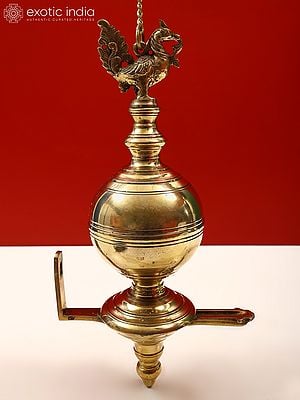
Traditional Brass Hanging Diya with Peacock Motif (16")
16.00 inch Height X 5.00 inch Width X 8.50 inch Depth
$339
Includes any tariffs and taxes
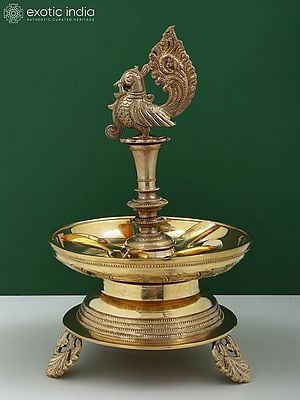
12" Brass Peacock Oil Diya with Five Wicks
12.50 inch Height X 7.50 inch Width X 7.50 inch Depth
$135
Express Shipping
$270 50% off
Includes any tariffs and taxes