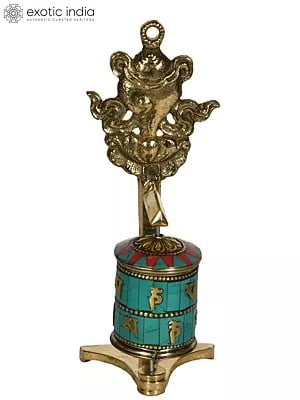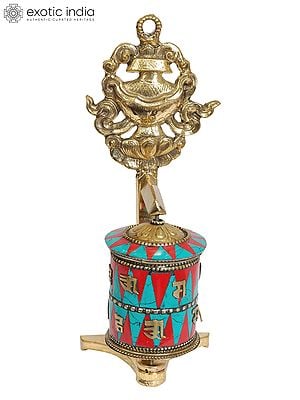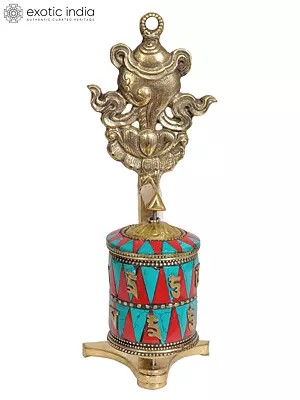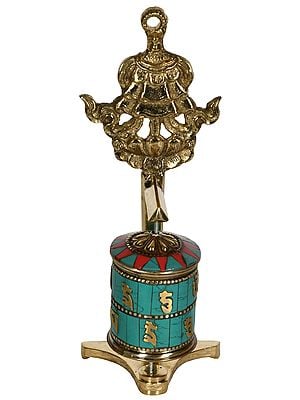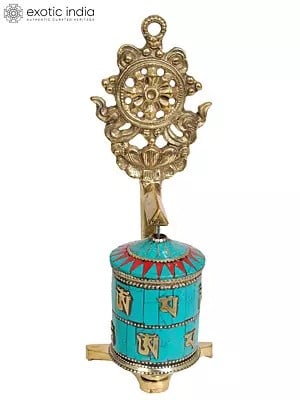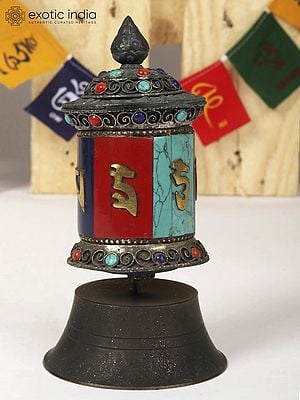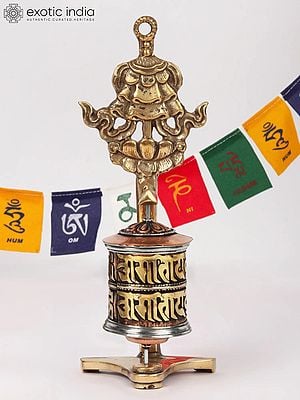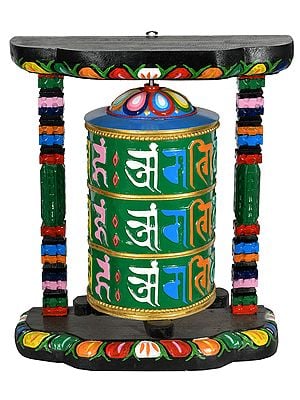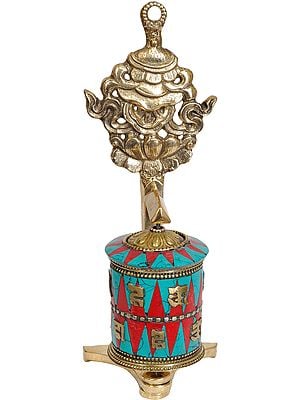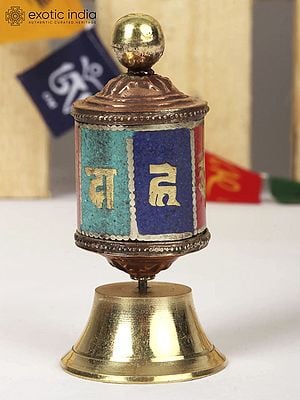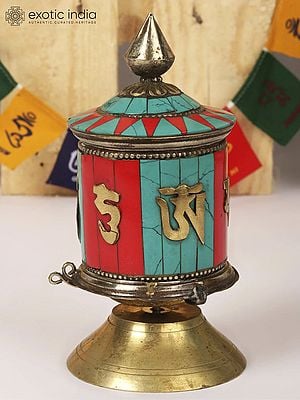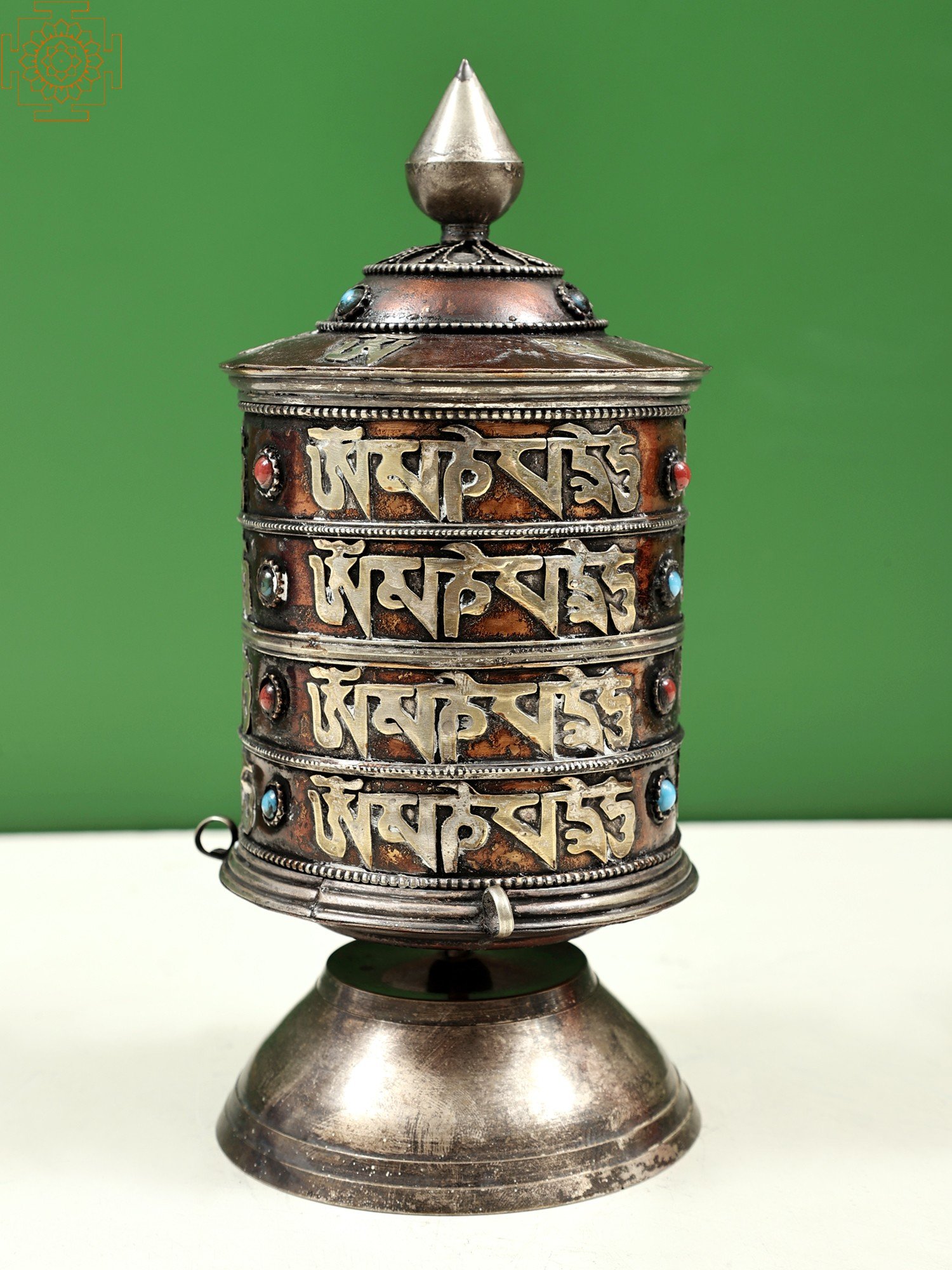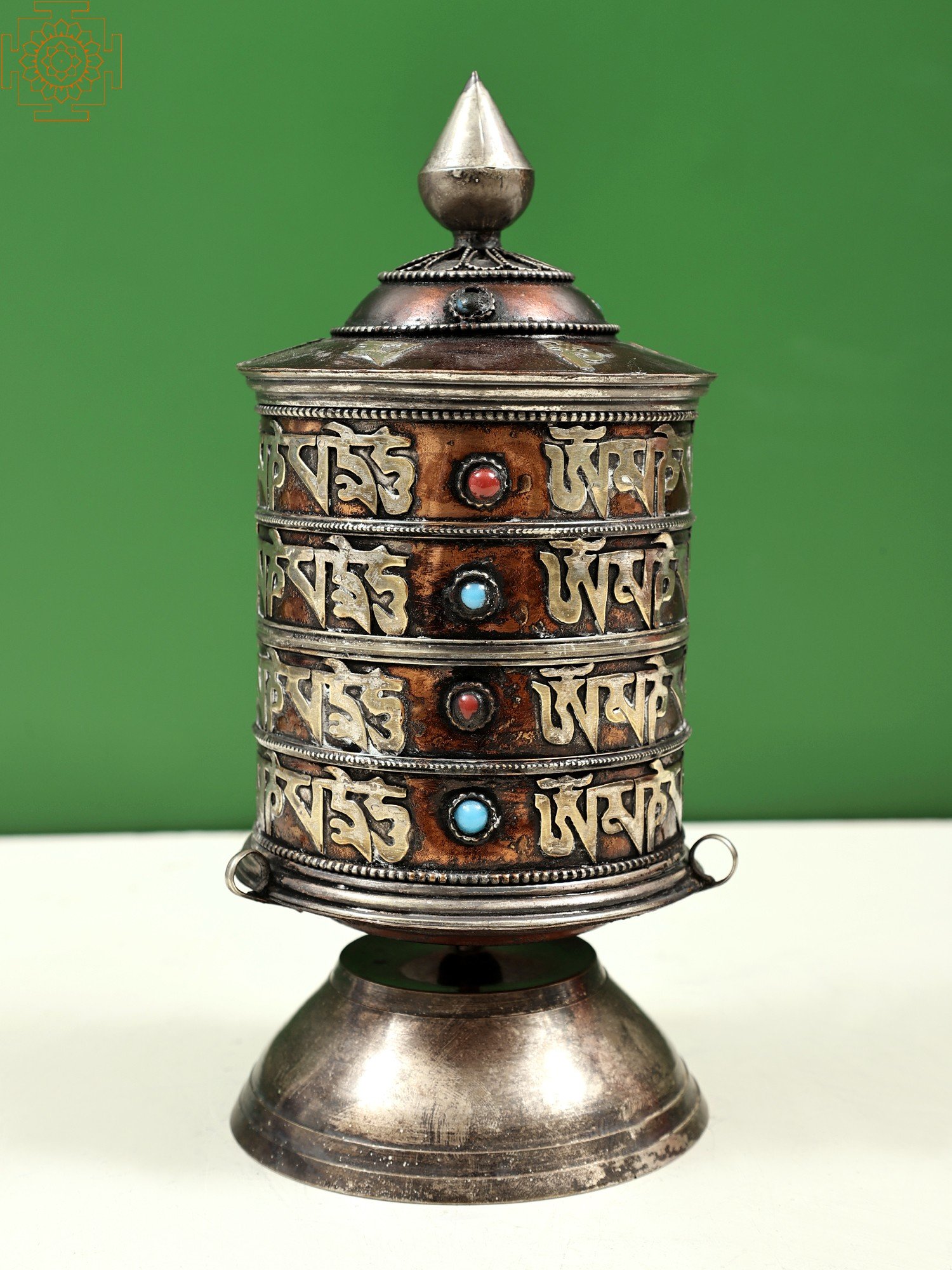
The prayer wheels are
ubiquitous in Buddhist culture. The wheeling prayer is enshrined in a mantra
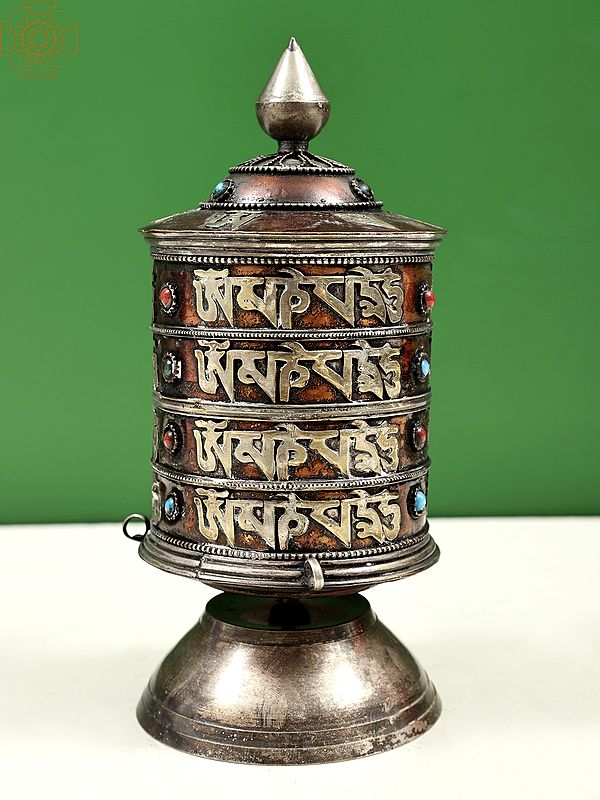
roll. It consists of a hollow cylindrical body, with inlay work which is engraved with a mystic emblem.
Bring peace and serenity to your home with this prayer wheel. The prayer
wheel is filled with a mantra roll printed with the compassion mantra of
Chenrezig and Avalokiteshvara, Om Mani Padme Hum.
The cylinder of the wheel is rotated in the same direction as the sun and each turn is the equivalent of a reading of the prayers enclosed within. Buddhists believe that spinning the wheel allows them to focus their minds on the mantras and prayers they are repeating.
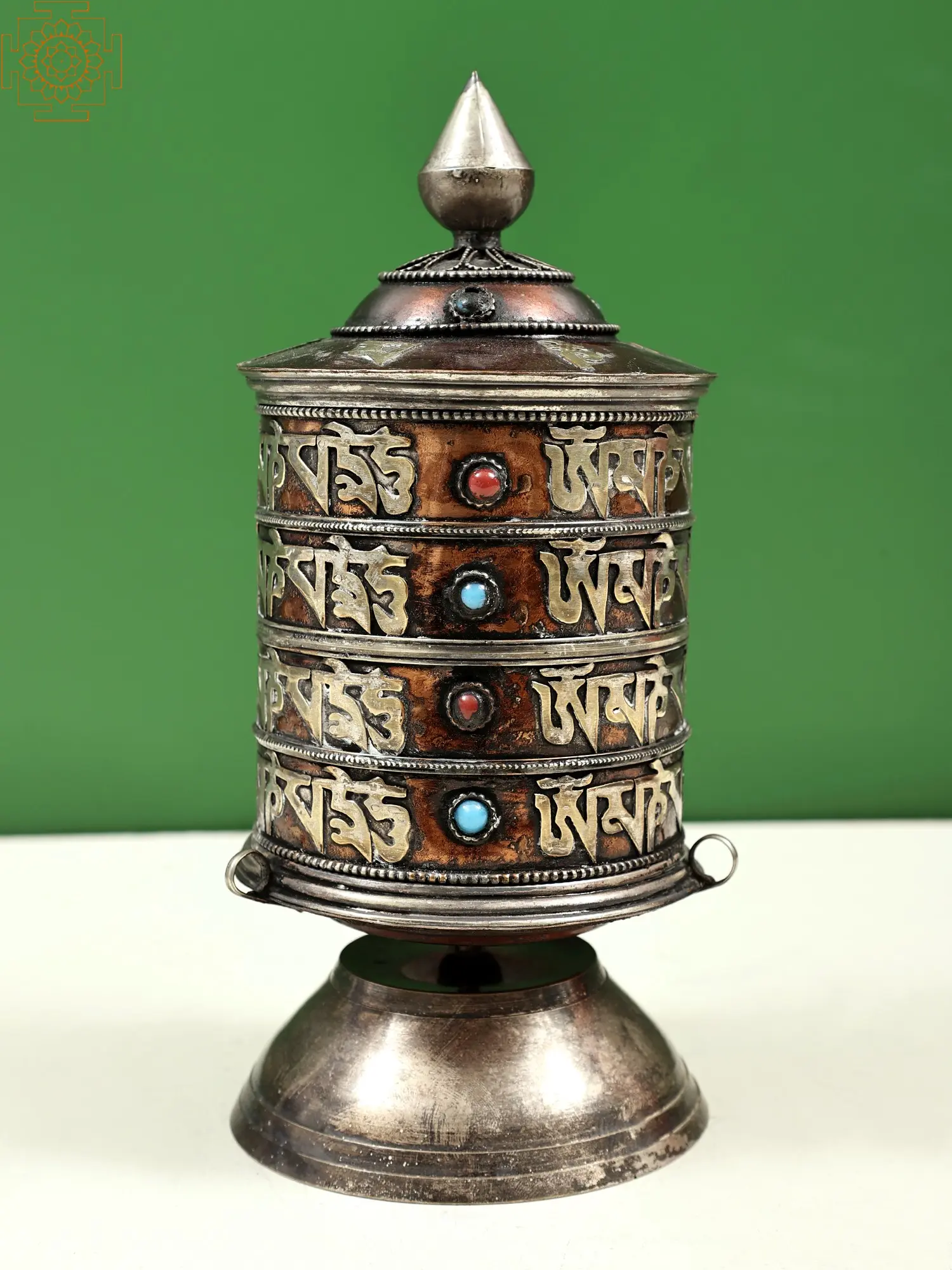
Embrace Serenity and Auspicious Blessings
This exquisite 8-inch Tibetan Buddhist prayer wheel is a testament to the rich spiritual heritage of India. Crafted with meticulous care by skilled artisans, it embodies a profound sense of peace and devotion. The wheel is fashioned from lustrous brass, a metal revered for its purity and conductivity of spiritual energy, and is adorned with vibrant inlays of precious stones, adding a touch of celestial beauty and symbolic meaning.
The central cylinder of the prayer wheel is meticulously engraved with powerful and auspicious mantras in the ancient Tibetan script. These sacred syllables are not merely decorative; they are potent vibrations, each turn of the wheel multiplying their positive energy and sending it out into the universe. According to Buddhist tradition, the spinning of a prayer wheel is equivalent to reciting the mantras contained within it. This act is believed to purify negative karma, accumulate merit, and generate immense blessings for the practitioner and all sentient beings.
A Legacy of Devotion and Wisdom
The tradition of the prayer wheel, or "Mani wheel," has deep roots in Tibetan Buddhism, tracing its origins back to the teachings of Avalokiteshvara, the Bodhisattva of Compassion. It is said that he gifted his devotees the knowledge of the mantra "Om Mani Padme Hum" and instructed them to use a prayer wheel to disseminate its purifying and compassionate essence. This particular wheel, with its carefully inscribed mantras, serves as a conduit for these ancient blessings, bringing a sense of calm and spiritual upliftment to its surroundings. The act of turning the wheel is a physical manifestation of one's spiritual journey, a continuous aspiration towards enlightenment and universal well-being.
Artistry and Symbolism in Every Detail
The craftsmanship of this prayer wheel is truly remarkable. The warm, aged patina of the brass speaks of tradition and authenticity, while the inlaid gemstones—perhaps ruby for passion and protection, or turquoise for wisdom and tranquility—add a visual depth that resonates with the spiritual significance of the piece. The pointed finial at the apex of the wheel symbolizes the upward aspiration towards higher consciousness, mirroring the journey of spiritual awakening. Whether placed in a meditation space, a home altar, or as a decorative piece that radiates positive energy, this prayer wheel is a powerful reminder of the presence of peace and the interconnectedness of all things. Each turn invites mindfulness and a deeper connection to the universal flow of compassion and wisdom.
How to keep a Brass statue well-maintained?
Brass statues are known and appreciated for their exquisite beauty and luster. The brilliant bright gold appearance of Brass makes it appropriate for casting aesthetic statues and sculptures. Brass is a metal alloy composed mainly of copper and zinc. This chemical composition makes brass a highly durable and corrosion-resistant material. Due to these properties, Brass statues and sculptures can be kept both indoors as well as outdoors. They also last for many decades without losing all their natural shine.
Brass statues can withstand even harsh weather conditions very well due to their corrosion-resistance properties. However, maintaining the luster and natural beauty of brass statues is essential if you want to prolong their life and appearance.
- The best and simplest way to maintain a brass statue is to clean it at least twice a week using a soft cloth or cotton rag. This will prevent dust from accumulating on the surface. Dusting is especially important for outdoor statues since it is prone to dust accumulation much more than indoors.
- To give a natural shine and luster to the statue, you may apply coconut or olive oil using cotton on every portion. You can use a toothbrush to get to the small crevices but do not be too harsh. This will make the brass statue appear fresh and new with a polished look.
In case you have a colored brass statue, you may apply mustard oil using a soft brush or clean cloth on the brass portion while for the colored portion of the statue, you may use coconut oil with a cotton cloth.
Brass idols of Hindu Gods and Goddesses are especially known for their intricate and detailed work of art. Nepalese sculptures are famous for small brass idols portraying Buddhist deities. These sculptures are beautified with gold gilding and inlay of precious or semi-precious stones. Religious brass statues can be kept at home altars. You can keep a decorative brass statue in your garden or roof to embellish the area and fill it with divinity.