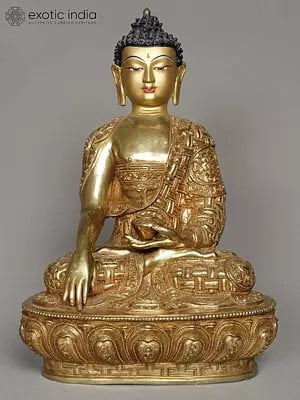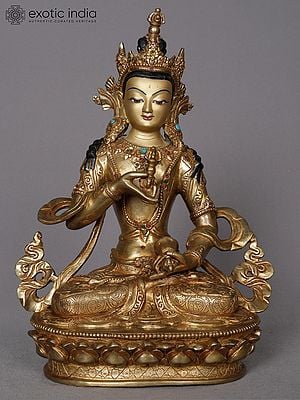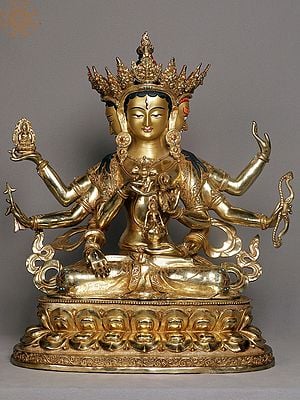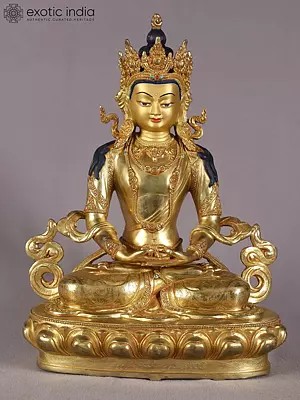

Bhumisparsha Mudra Buddha Statue - 12 Inch Copper and Gold Figurine

| Specifications |
 |
CAA002 |
 |
Copper With Gold |
 |
Height: 12.5 inch |
| Width: 9.5 inch | |
| Depth: 5 inch | |
 |
Weight 4.10 kg |
| About the Item |
|
| Delivery and Return Policies |
 |
Usually ships in 6 days |
 |
Returns and Exchanges accepted within 7 days |
 |
Free Delivery |


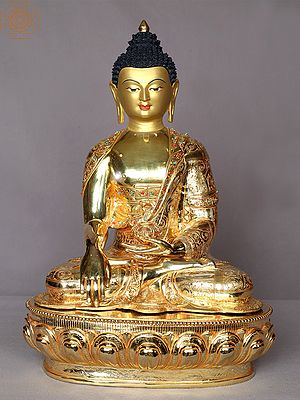
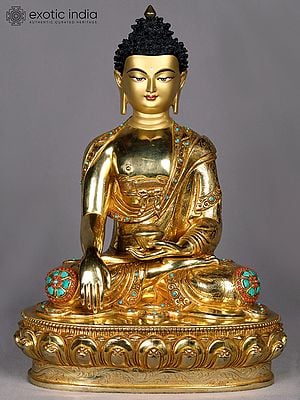
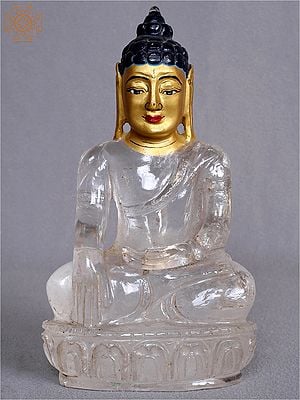
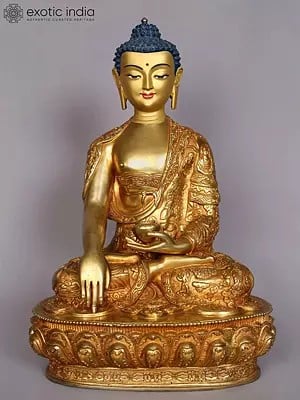
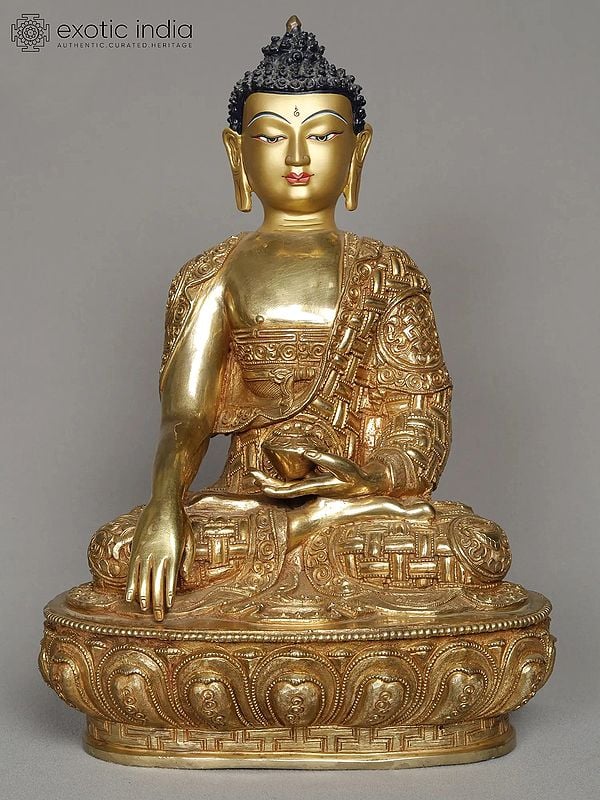
The Bhumisparsha
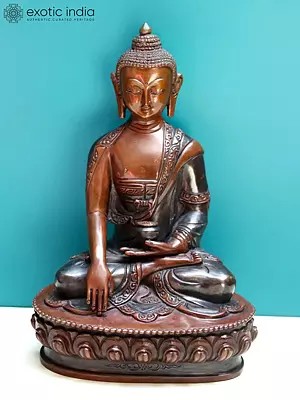
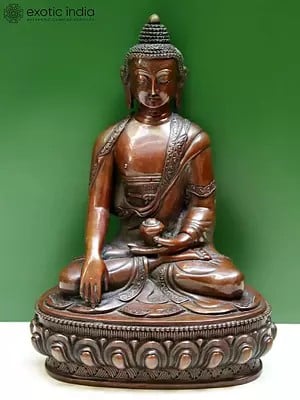
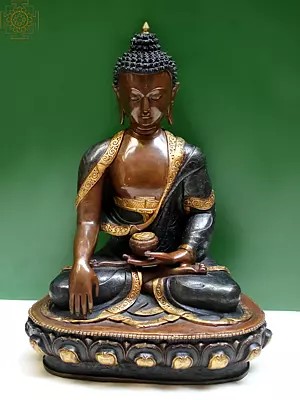
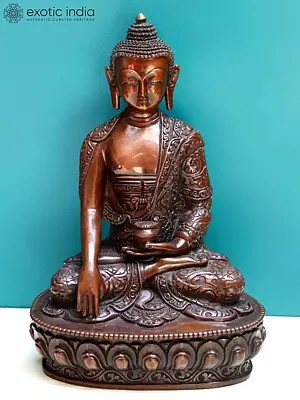
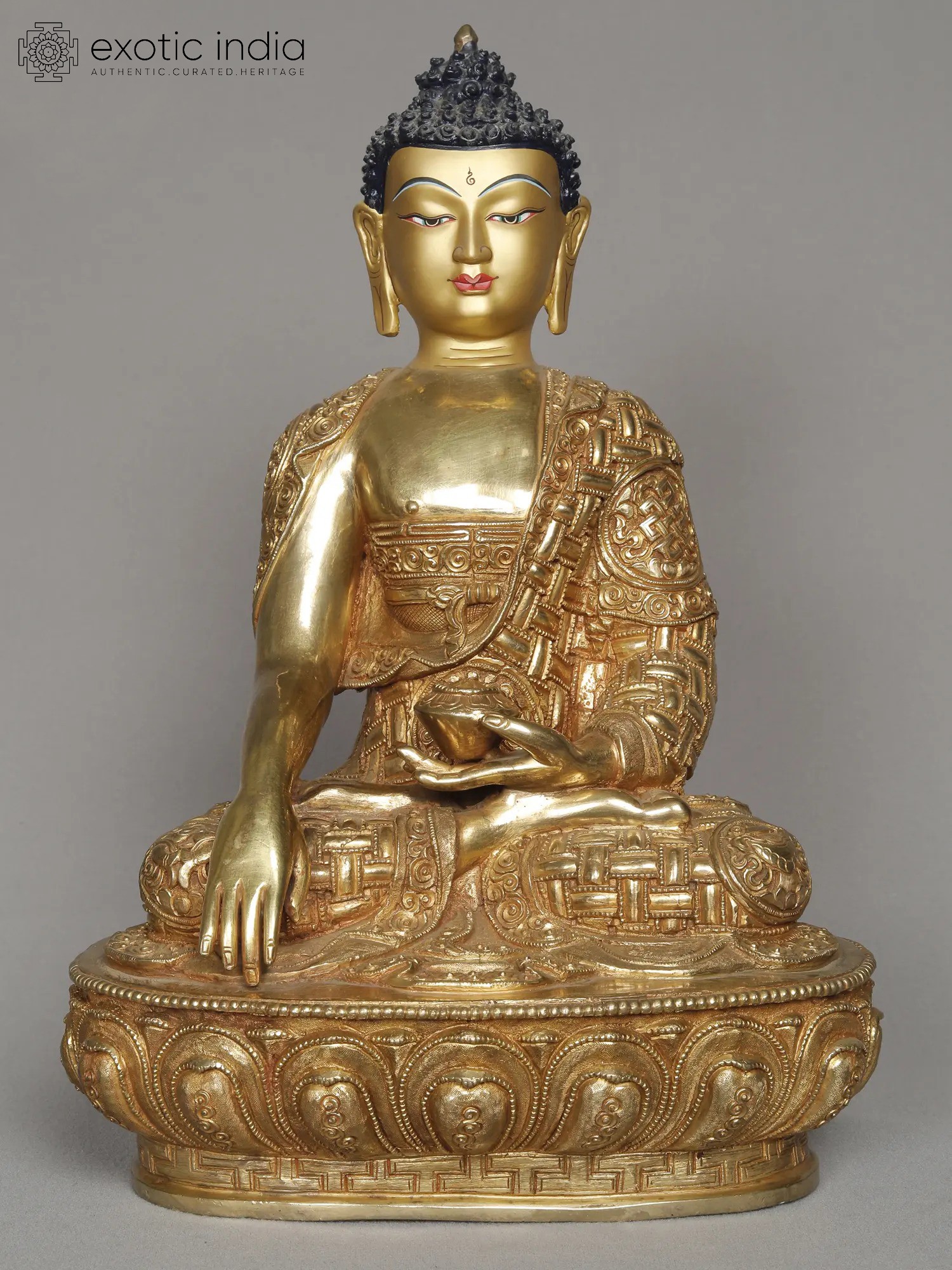
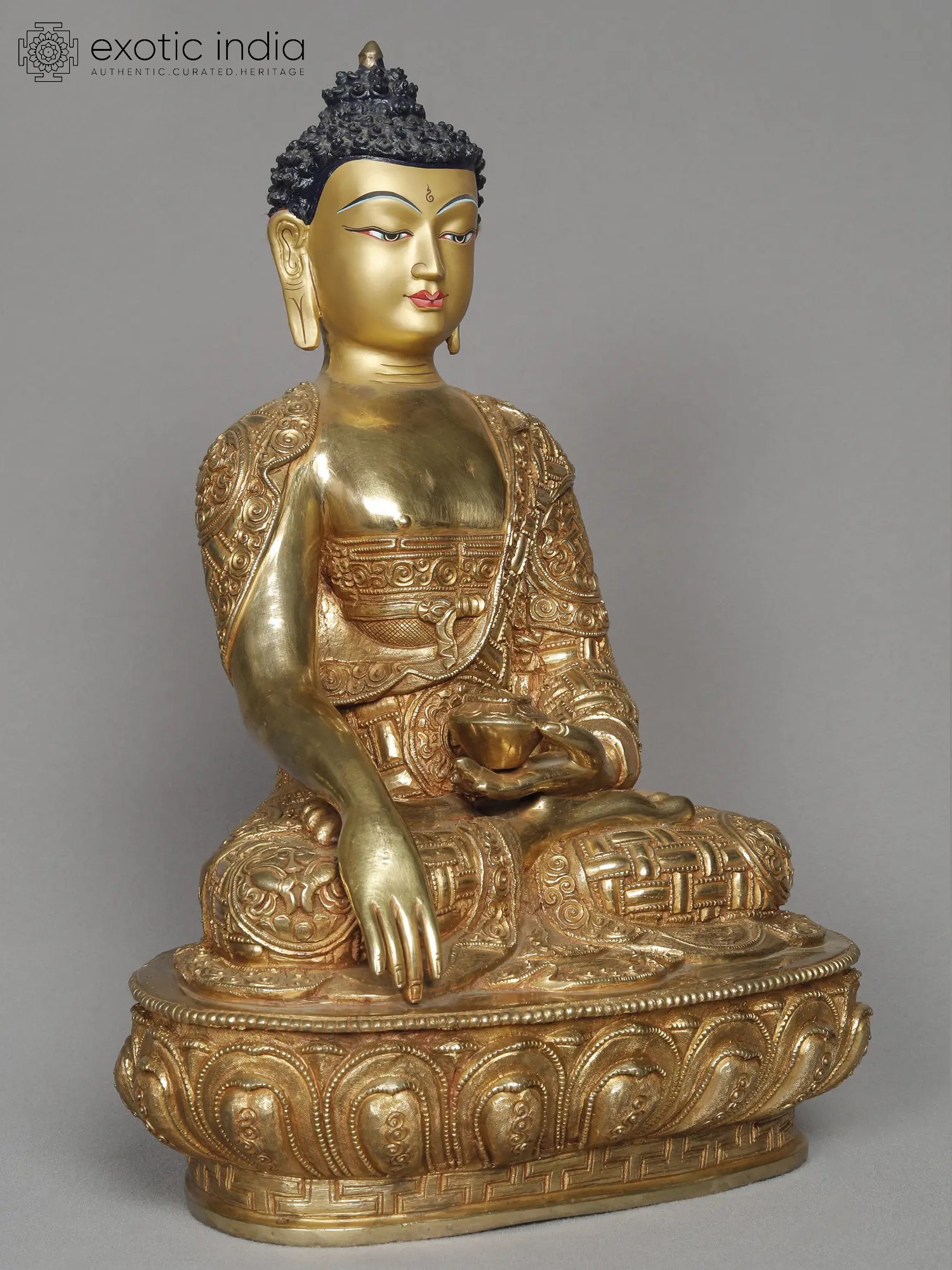
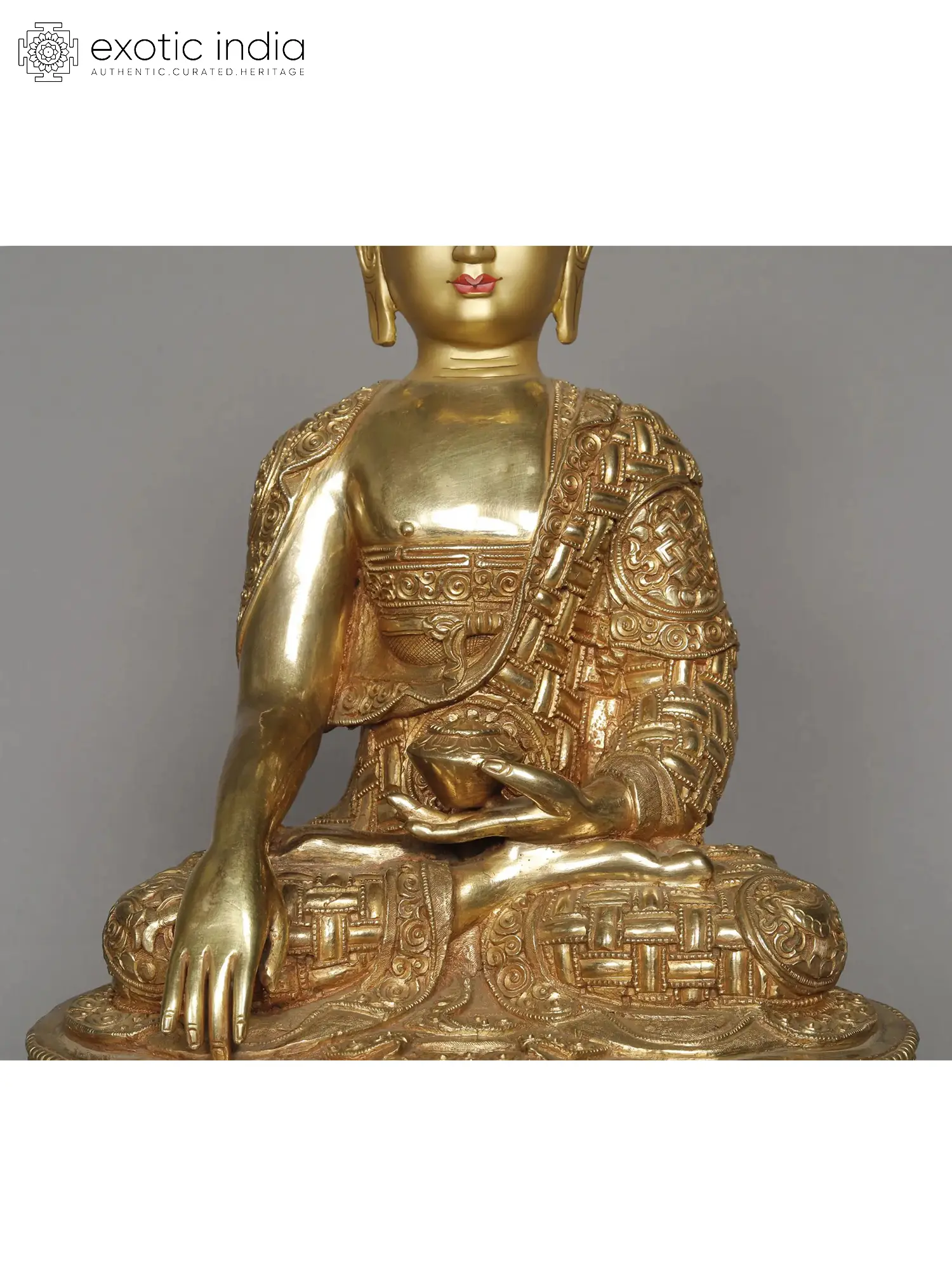
Mudra Buddha statue is a captivating representation of Shakyamuni Buddha. This 12” long statue showcases the
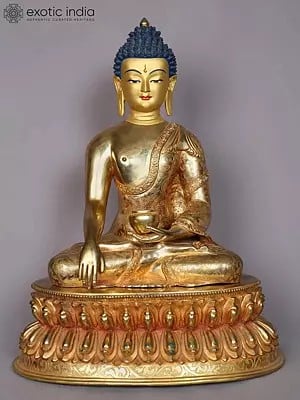
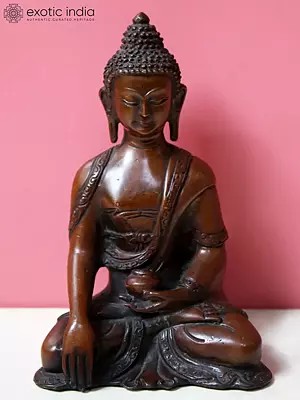
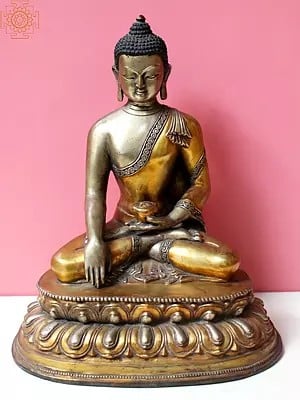
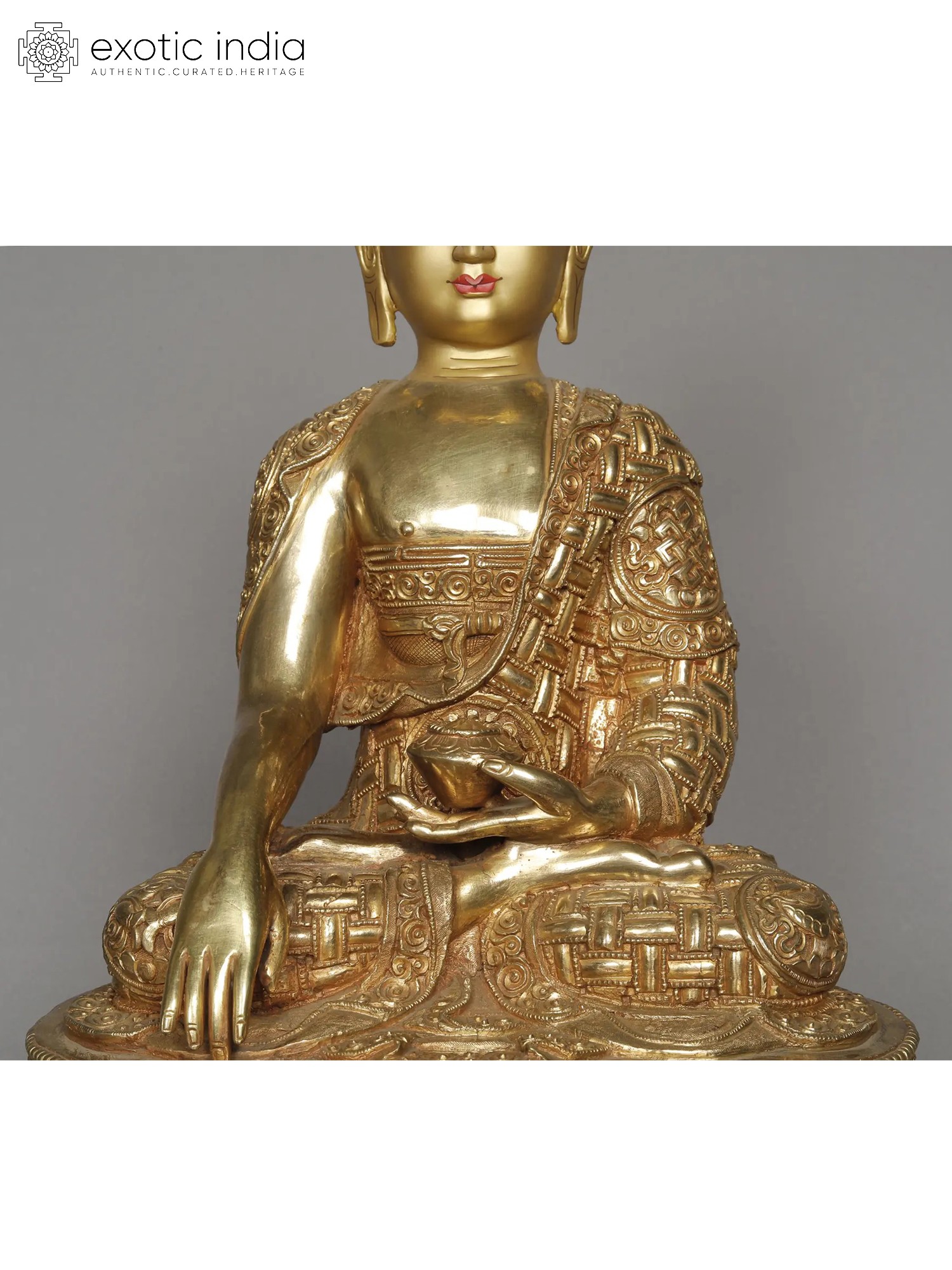
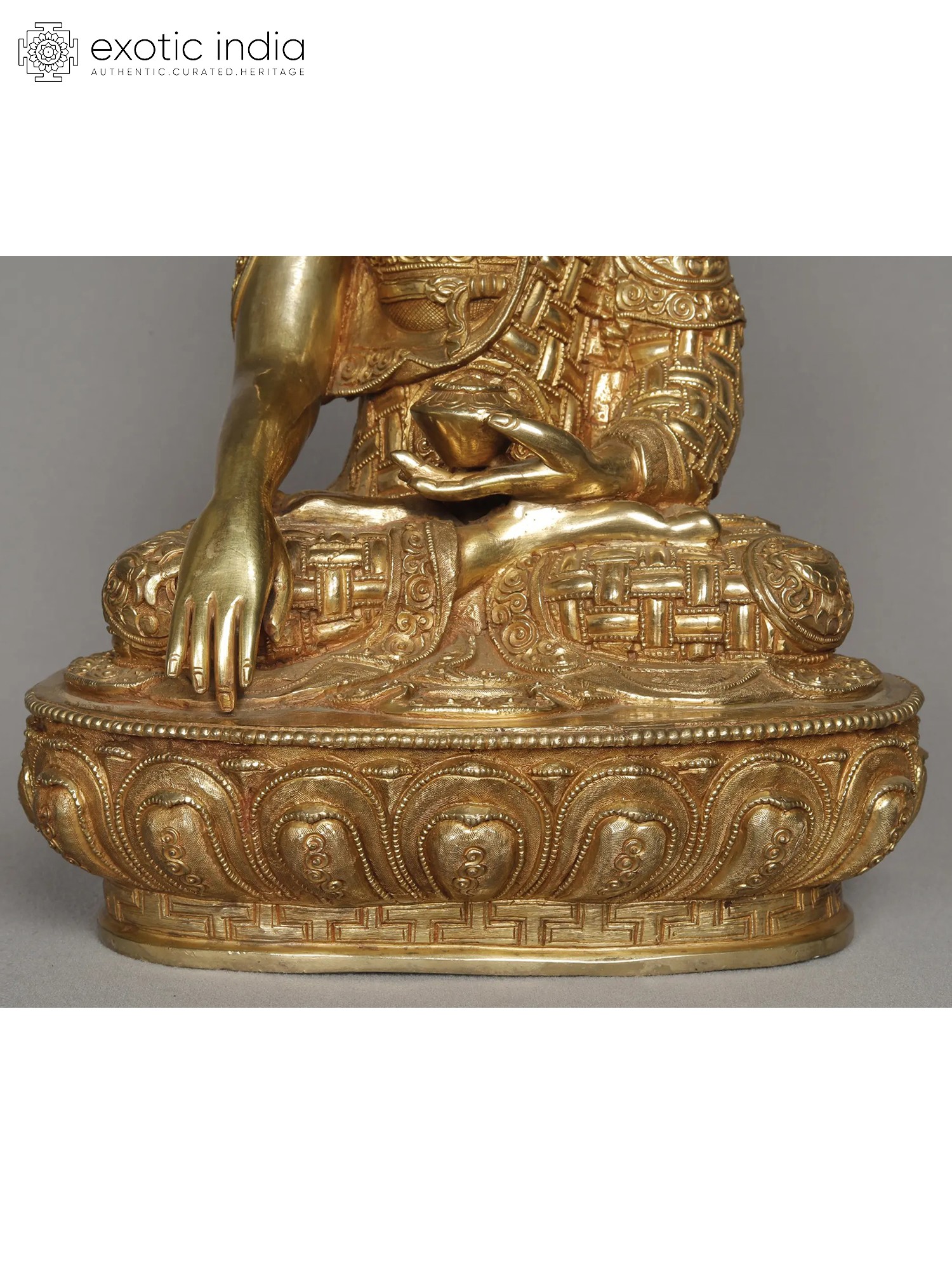
Buddha seated in the Padmasana with his right hand gently touching the ground,
a gesture known as the Bhumisparsha Mudra. The significance of this mudra lies in
its symbolic gesture: the moment of enlightenment when the Buddha called upon
the earth to witness his victory over Mara, the embodiment of ignorance and
desire. This pivotal moment marks the path to Nirvana, signifying the transformation from
delusion to enlightenment. The Buddha's serene facial expression and
half-closed eyes evoke deep contemplation and inner tranquillity, resonating
with seekers in their quest for spiritual awakening. The Bhumisparsha Mudra Buddha statue stands as a timeless representation of
wisdom, compassion, and liberation, inviting devotees to embrace the teachings
and embark on their own transformative journeys.
The Earth-Witnessing Enlightenment
This magnificent statue depicts Siddhartha Gautama, the Buddha, in the Bhumisparsha Mudra, a gesture of supreme enlightenment. The name "Bhumisparsha" translates to "touching the earth," and this mudra symbolizes the moment of Buddha's awakening beneath the Bodhi tree. As Mara, the demon of illusion and temptation, attempted to disrupt his meditation, Buddha simply extended his right hand to touch the earth, calling upon the Earth Goddess to bear witness to his virtue and his attainment of Nirvana. This iconic posture signifies unwavering resolve, the grounding of spiritual power, and the ultimate triumph over worldly distractions.A Masterpiece of Nepalese Craftsmanship
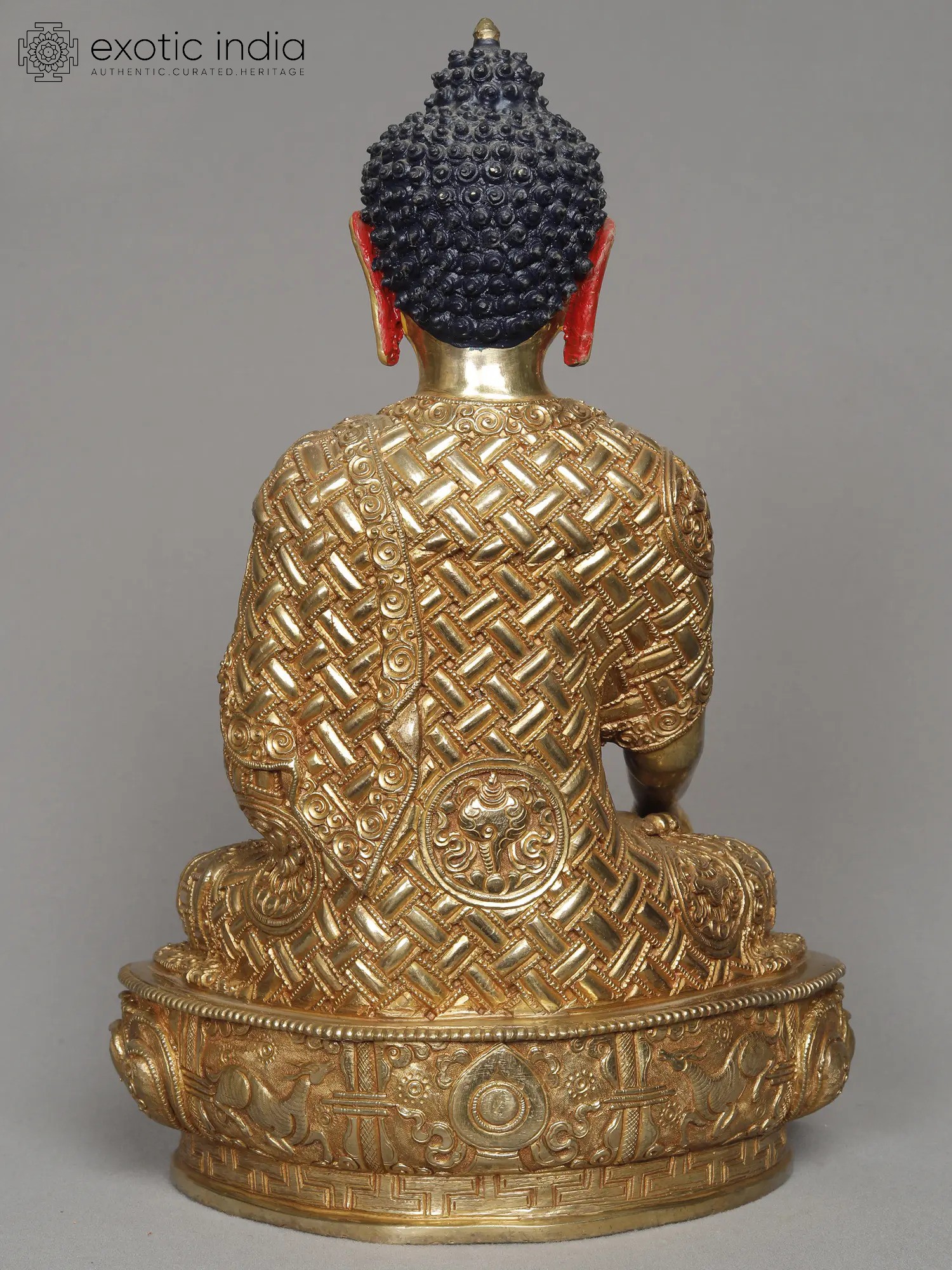
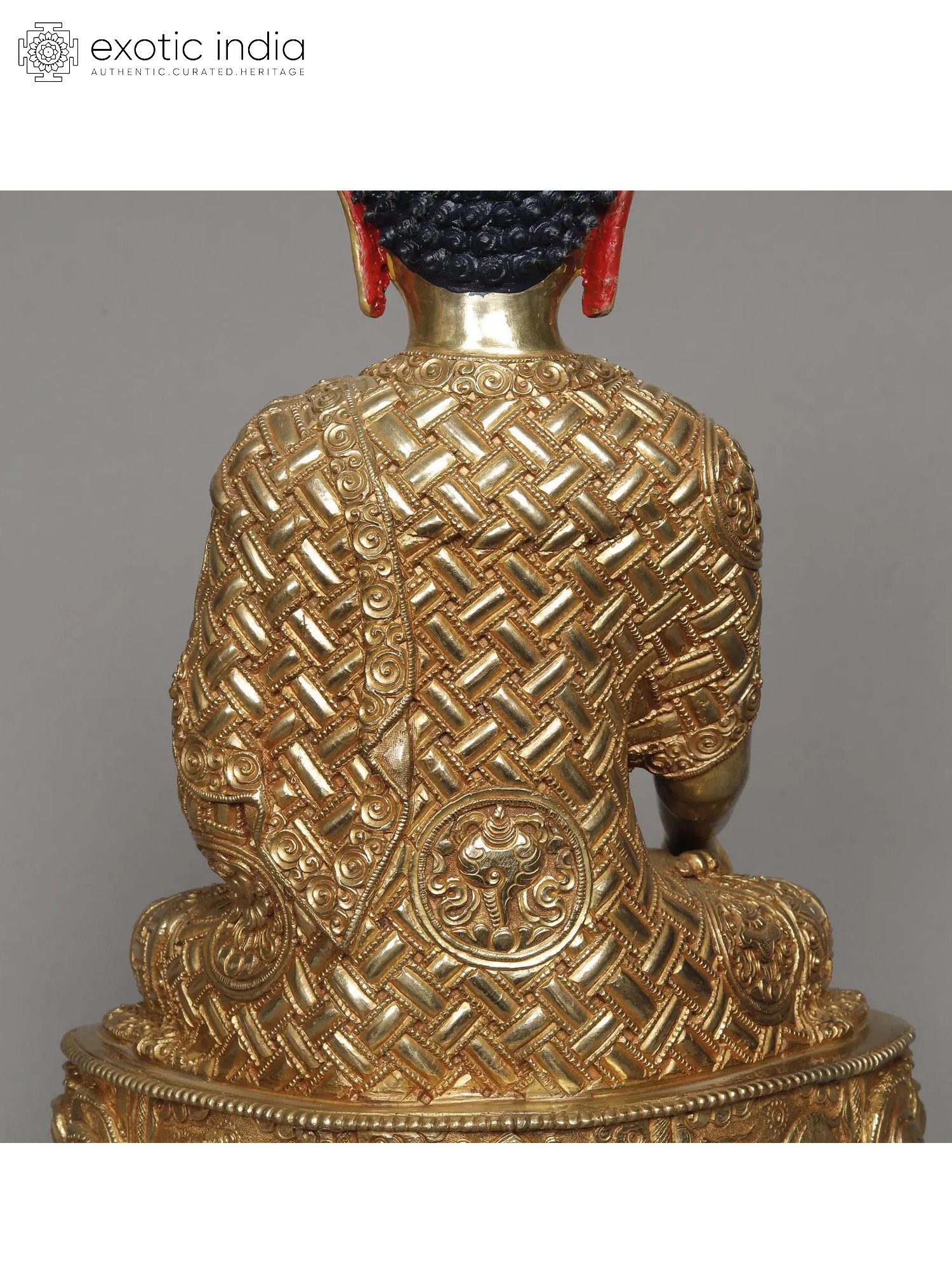
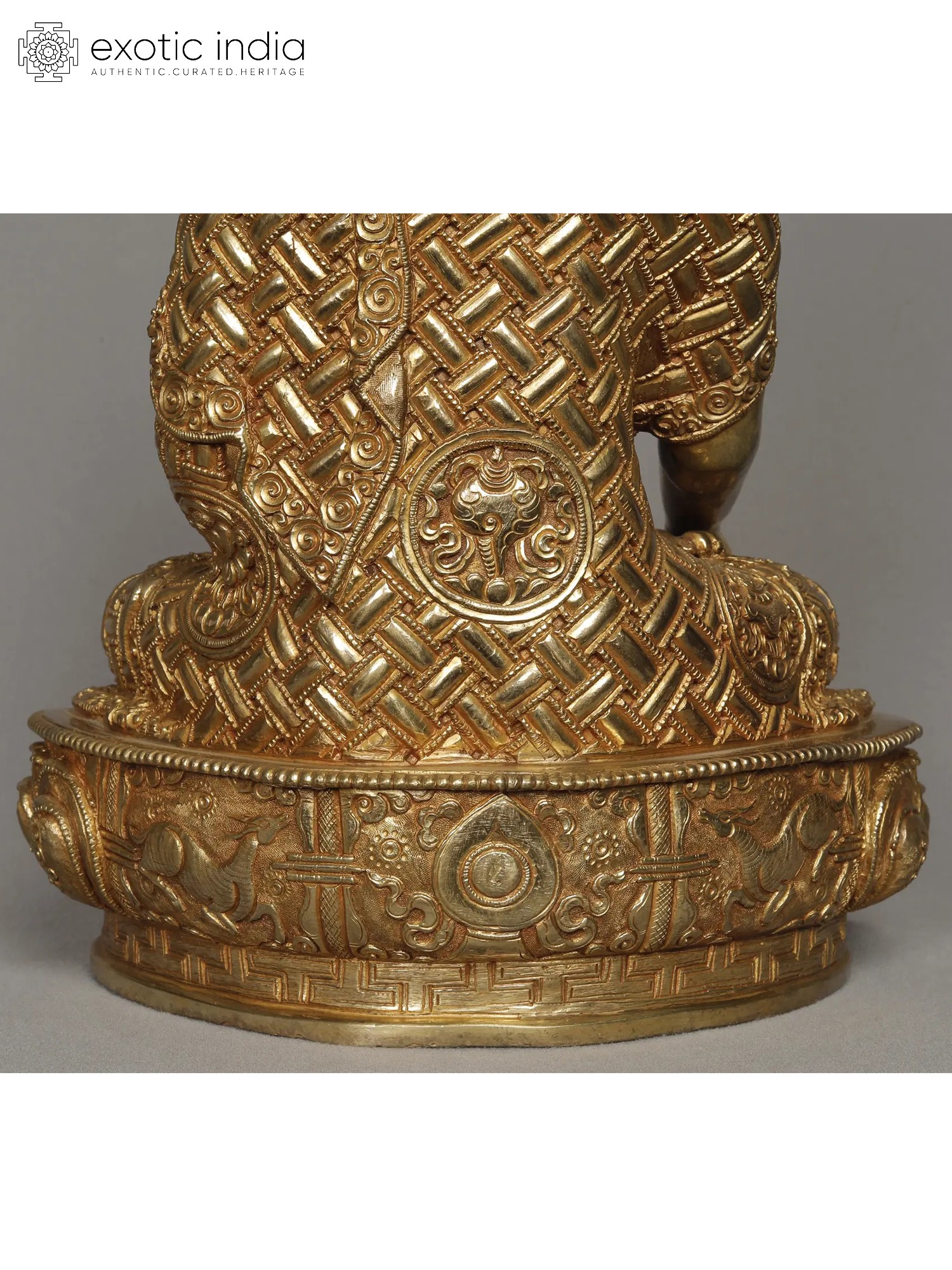
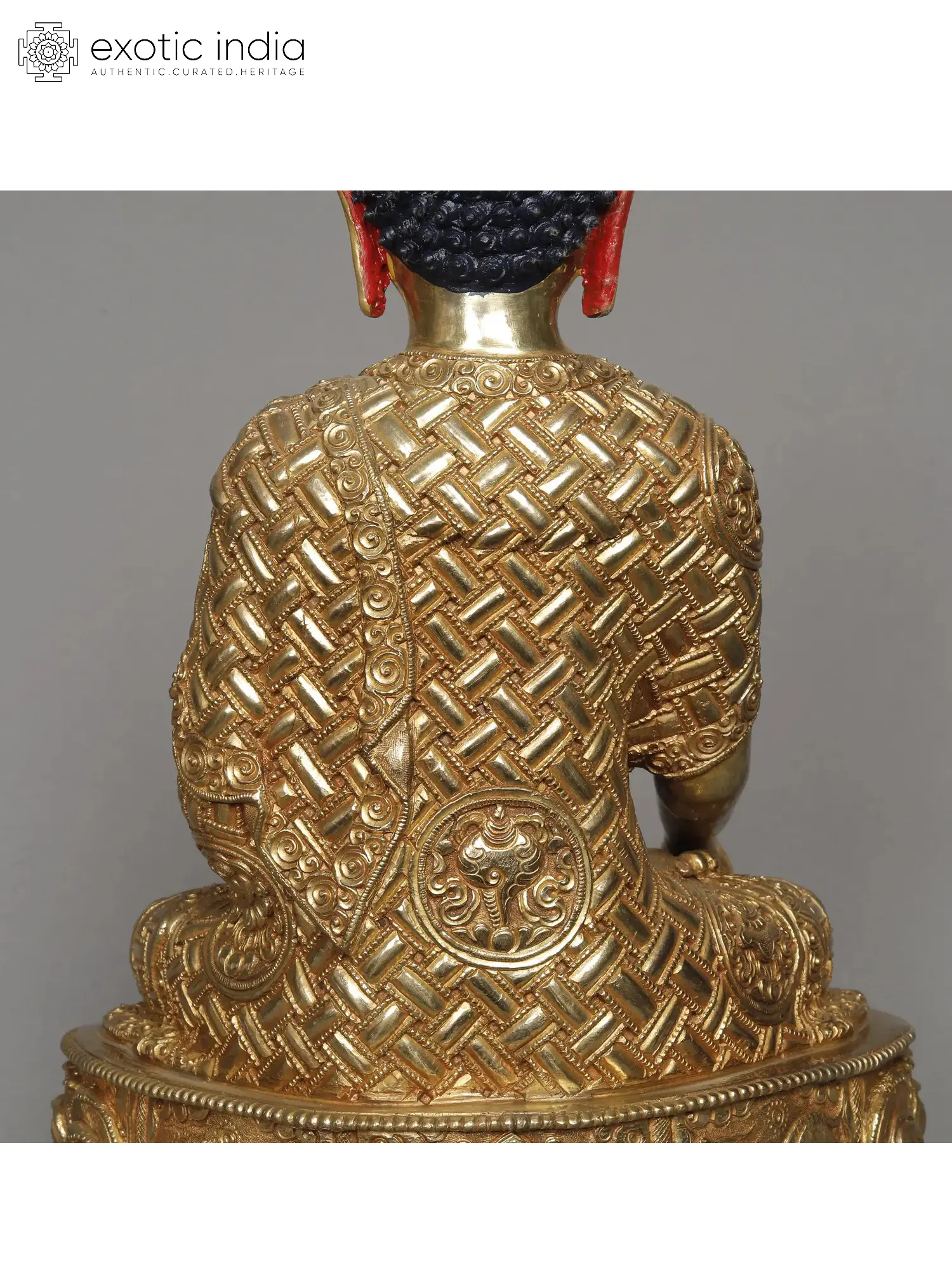
Hailing from Nepal, a land steeped in Buddhist tradition and artistic heritage, this statue is a testament to the meticulous skill of Nepalese artisans. Crafted from copper and adorned with a radiant gold finish, it possesses a profound sense of sacredness and enduring beauty. The intricate details of the robe, flowing with graceful folds, are embellished with delicate patterns that speak of centuries of artistic evolution. The serene expression on the Buddha's face, with its tranquil eyes and gentle lips, invites contemplation and spiritual reflection. The urna, a dot between the eyebrows, represents a third eye, symbolizing inner vision and wisdom, while the ushnisha, the cranial protuberance, signifies his elevated spiritual understanding.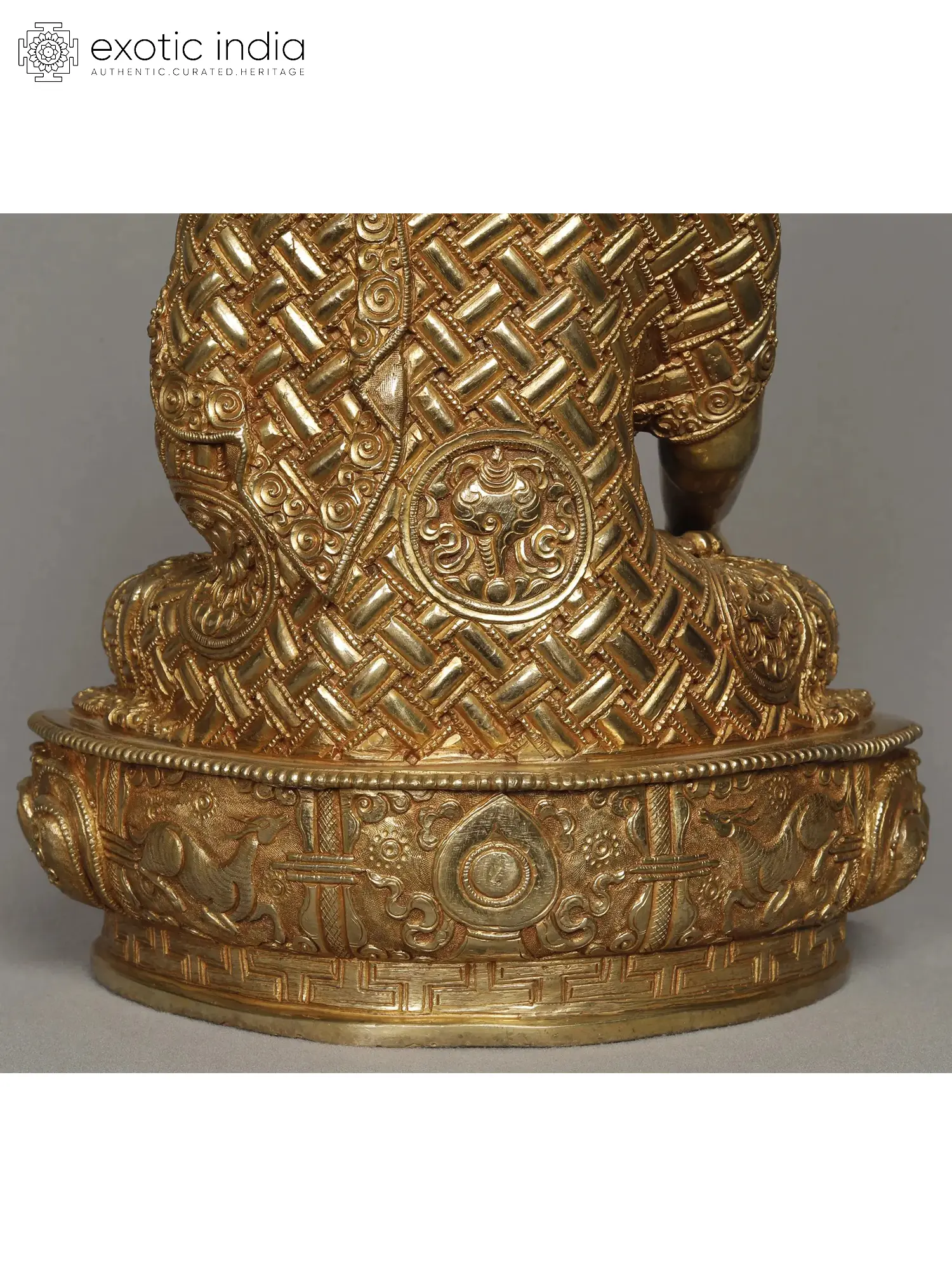
Symbolism and Spiritual Significance
The Bhumisparsha Mudra is one of the most potent and recognized gestures in Buddhist iconography. It serves as a powerful reminder that true strength and enlightenment come from within, drawing upon the fundamental truths of existence. The earth, in many cultures, is seen as a symbol of stability, nourishment, and unshakable foundation. By touching it, the Buddha asserts his deep connection to the earthly realm while transcending its limitations. This statue, therefore, embodies not just a historical event but a timeless spiritual principle – the power of consciousness to overcome obstacles and realize ultimate peace. The lotus pedestal upon which the Buddha sits further enhances this symbolism, as the lotus flower, rising pure and beautiful from muddy waters, represents spiritual purity and awakening.An Auspicious Presence
The presence of such a revered image is believed to bring peace, harmony, and auspicious energy into any space. Whether placed in a home altar, meditation room, or a dedicated shrine, this statue serves as a constant inspiration and a focal point for devotion. Its commanding yet serene presence emanates a sense of profound peace, making it an ideal companion for those seeking to cultivate mindfulness and inner tranquility. The radiant gold finish reflects the light of understanding, illuminating the path to spiritual growth. This exquisite rendition of the Bhumisparsha Buddha is more than just a decorative object; it is a sacred artifact, imbued with spiritual significance and a legacy of artistic excellence from the heart of Nepal.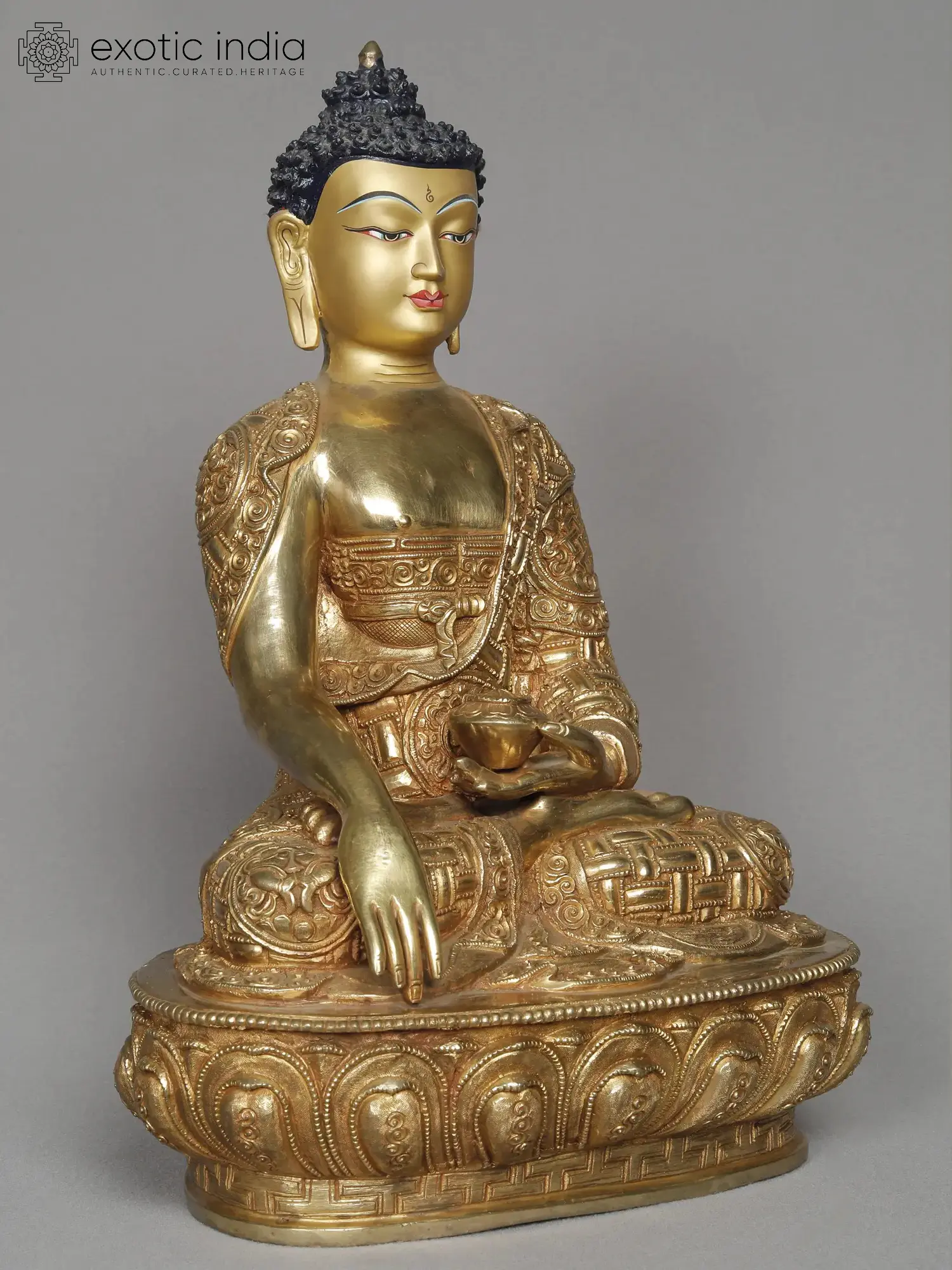
How are Nepalese copper statues made?
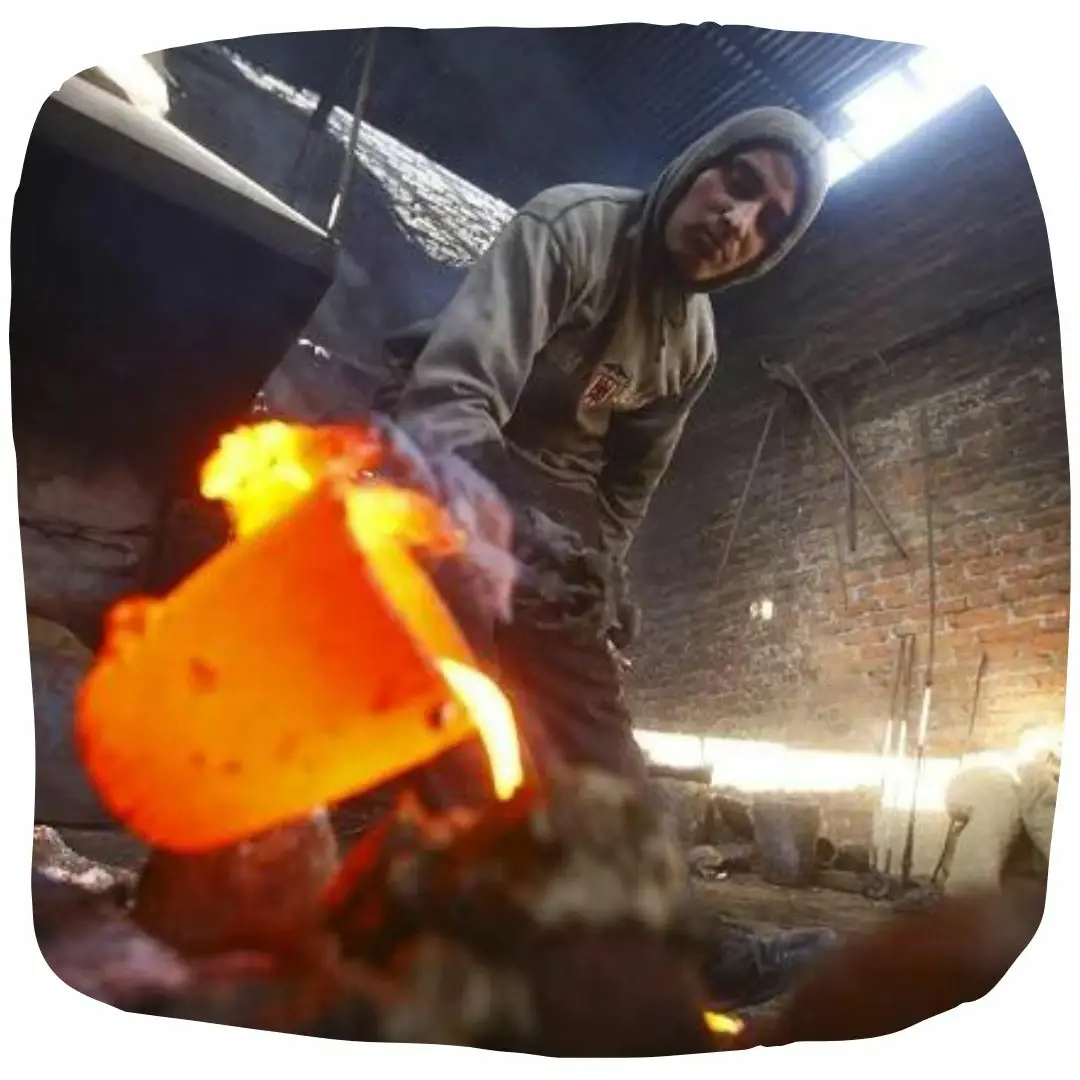
Nepalese statues and sculptures have a high copper content and therefore develop a slightly reddish patina on the surface as they age. However, the most unique feature of Nepalese copper statues is their decorative detailing. The pieces are heavily gilded and sometimes inlaid with semi-precious stones. This embellishment protects them from getting tarnished. The traditional lost-wax method for casting Nepalese copper statues remains the most practiced technique in Nepal for many centuries. This process involves many steps and requires skilled artists.
The first step in lost-wax sculpting is to make a wax replica of the desired Buddhist deity to be cast in copper. This replica is created by hand and therefore needs excellent artistic skills otherwise fine features will be lacking.
Once the wax replica is made, it is then coated with a special mixture of clay with a brush. This layer of clay is hardened when left to dry. A small hole is made on the base of the wax mould so that the wax flows away when it is heated.
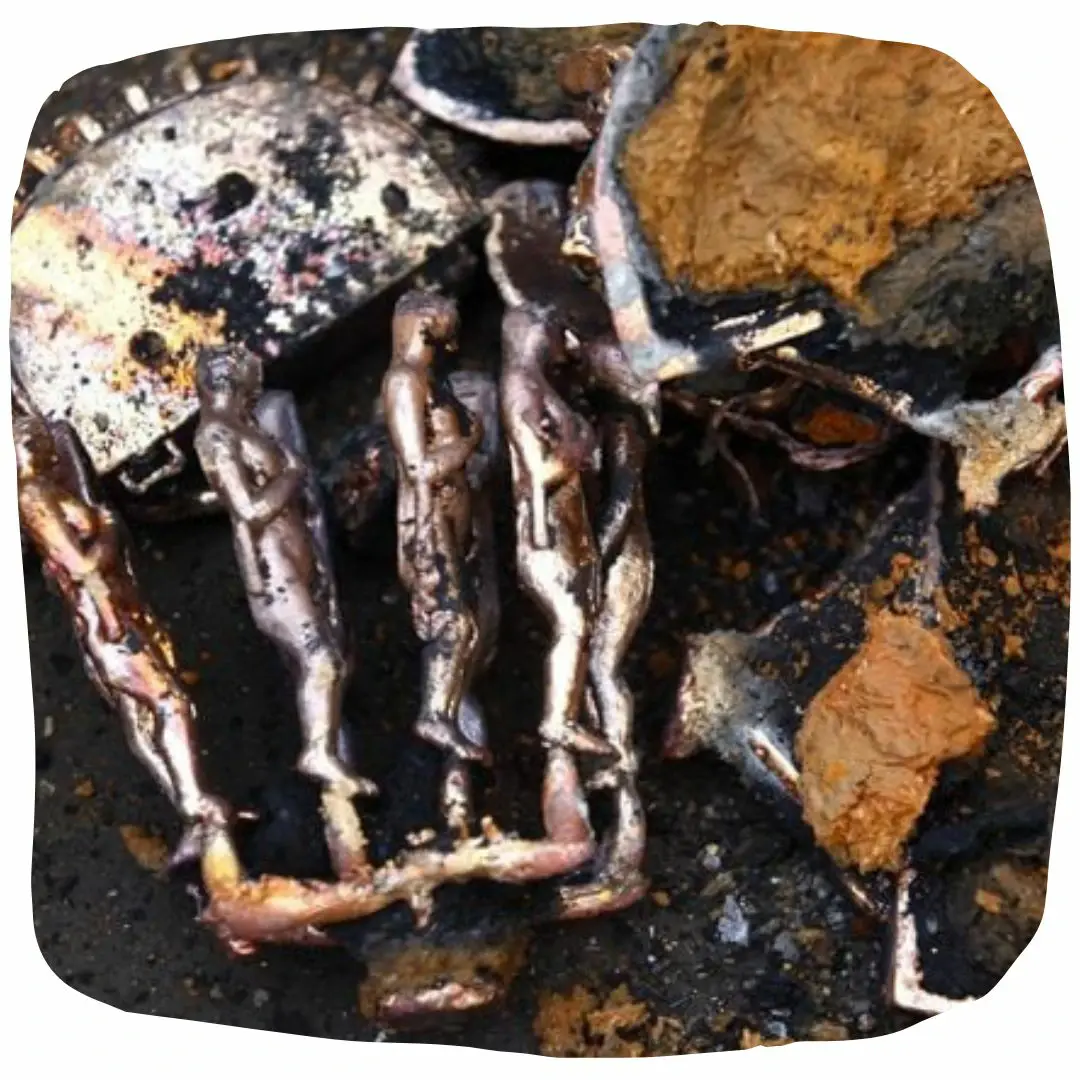
This is the time to pour liquid copper into the hollow mould which is then allowed to cool and harden inside a container of cold water. When the liquid metal has hardened, the mould is removed and the statue within is revealed.
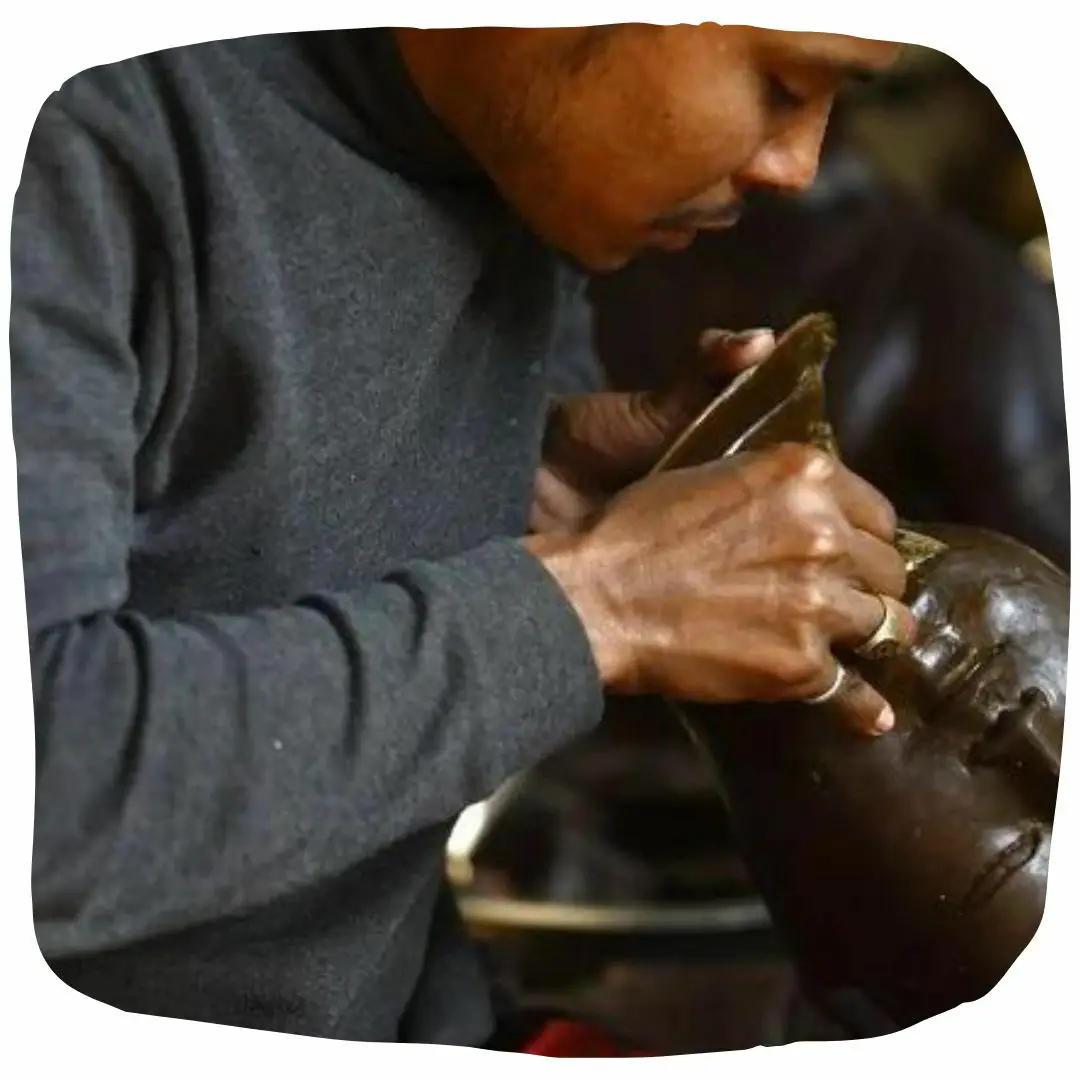
Now comes the most important part of Nepalese art which is gold gilding. This is done by the traditional fire gilding method. A mixture of mercury and 18K gold is applied on the surface of the statue and heat is applied using a flame torch. The result is that mercury evaporates along with impurities, leaving a pure 24K gold finish.
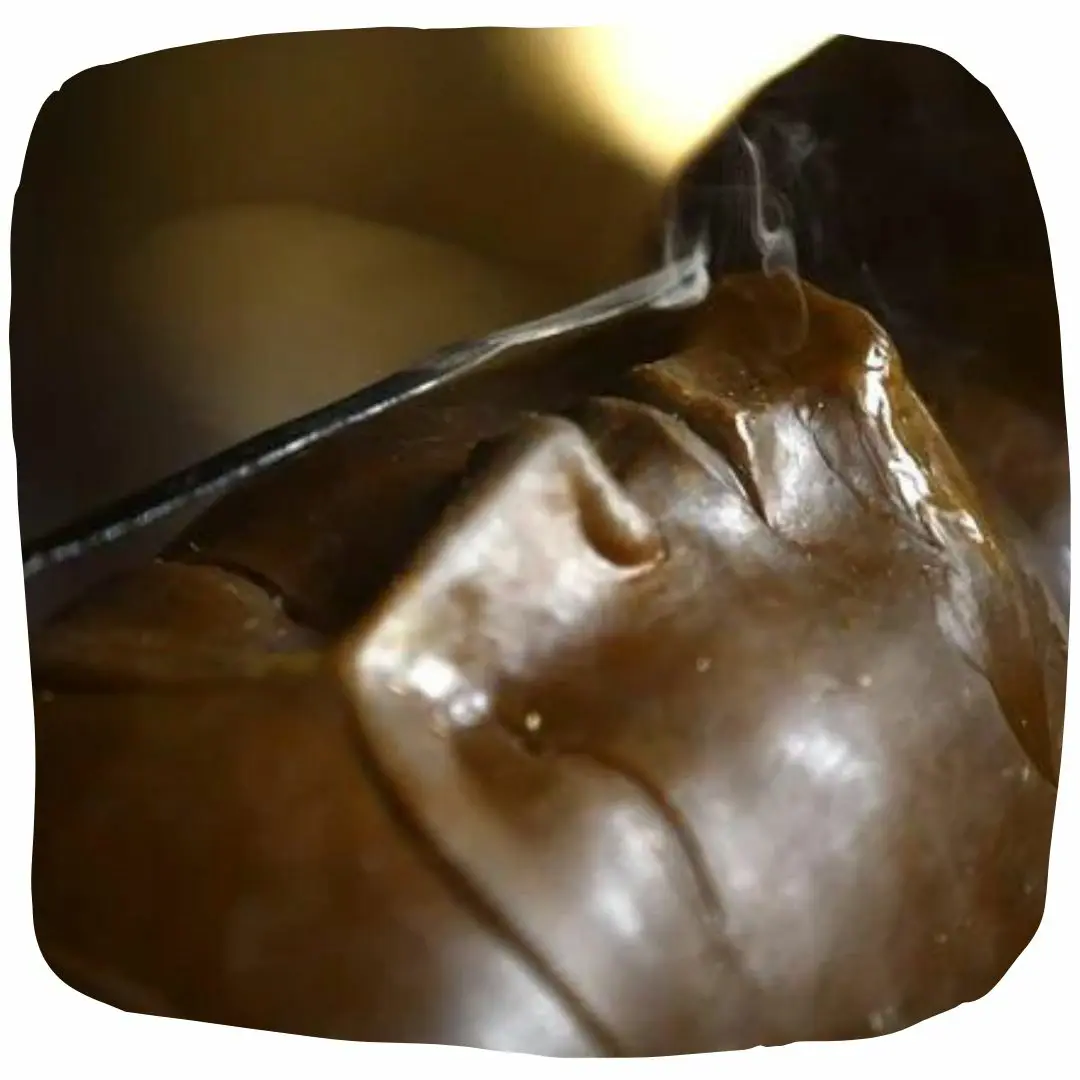
The lost-wax method of sculpting is the most preferred technique
for artists to cast a metallic statue having intricate details. Since Nepalese copper sculptures require extraneous effort for giving a majestic look by adding special embellishments, it takes several weeks to complete one masterpiece. A 24K gold gilded copper sculpture retains its brilliant luster for many years and appears as like before. Nepalese sculptures continue to remain one of the finest specimens of the art of the East that have a strong aesthetic appeal that other sculptures cannot match.