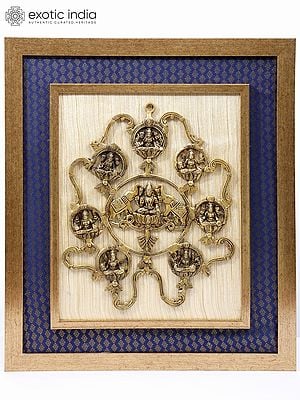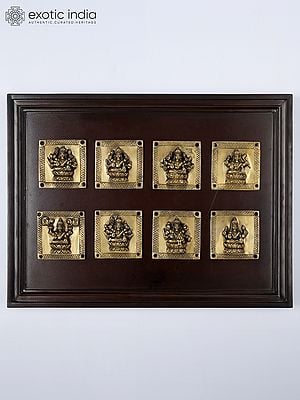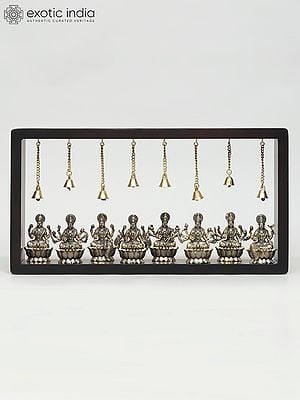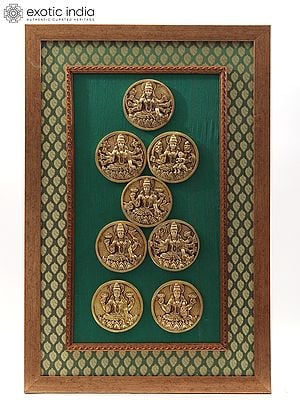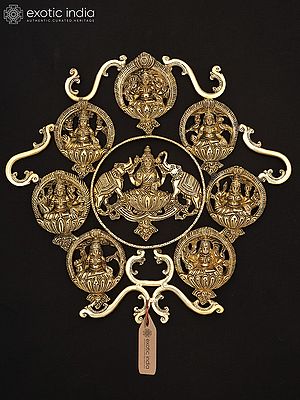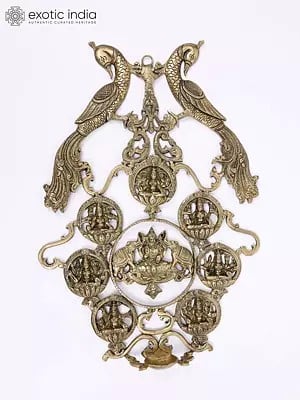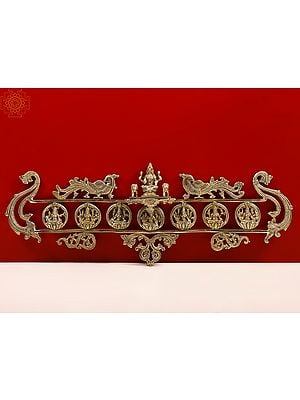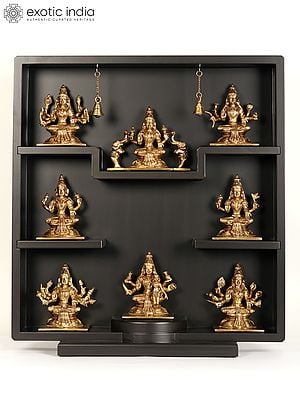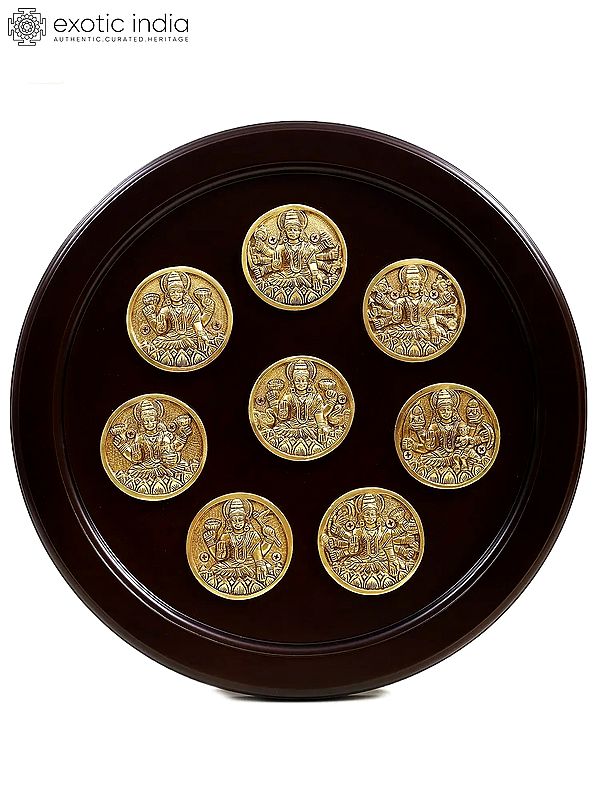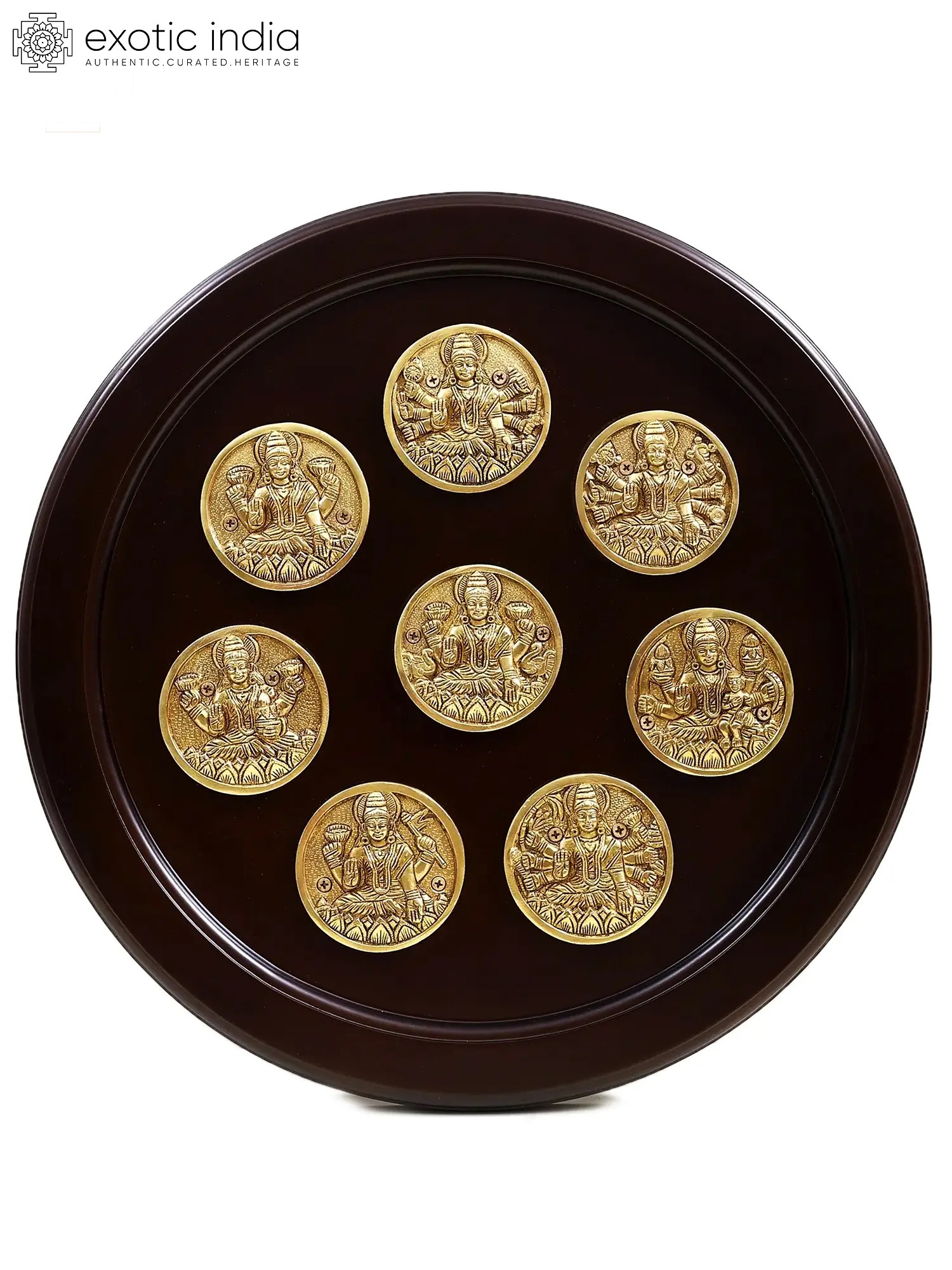
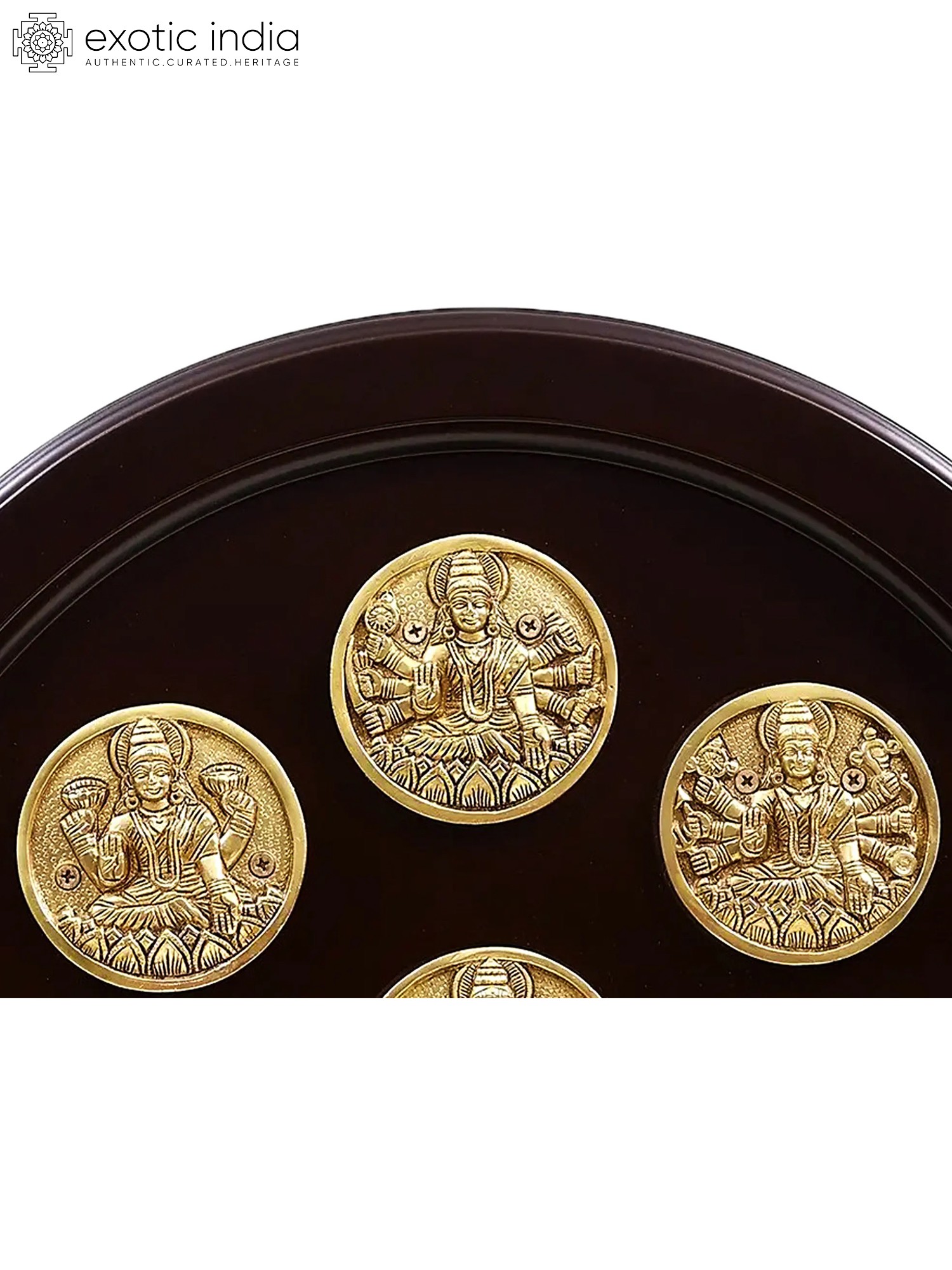
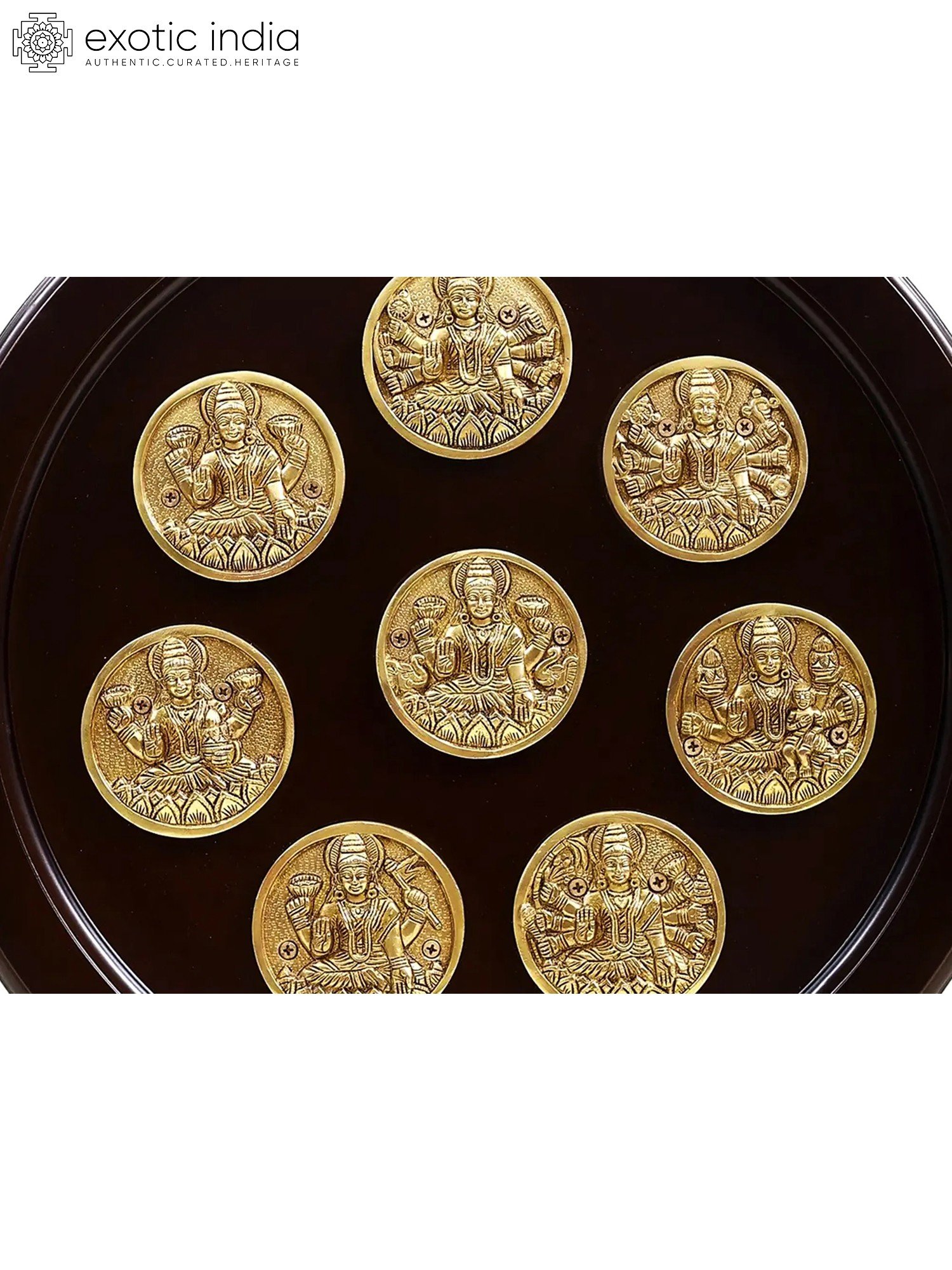
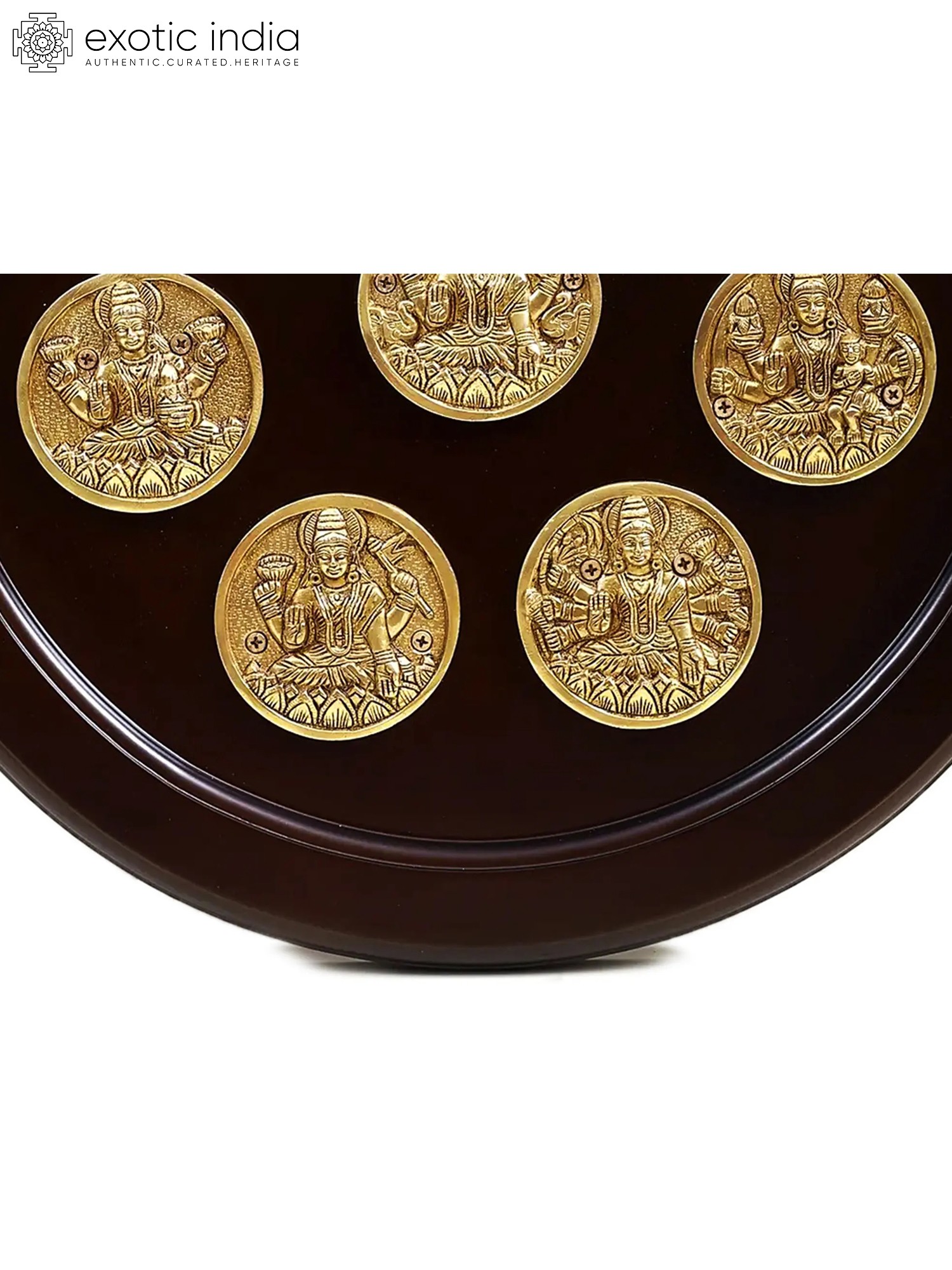
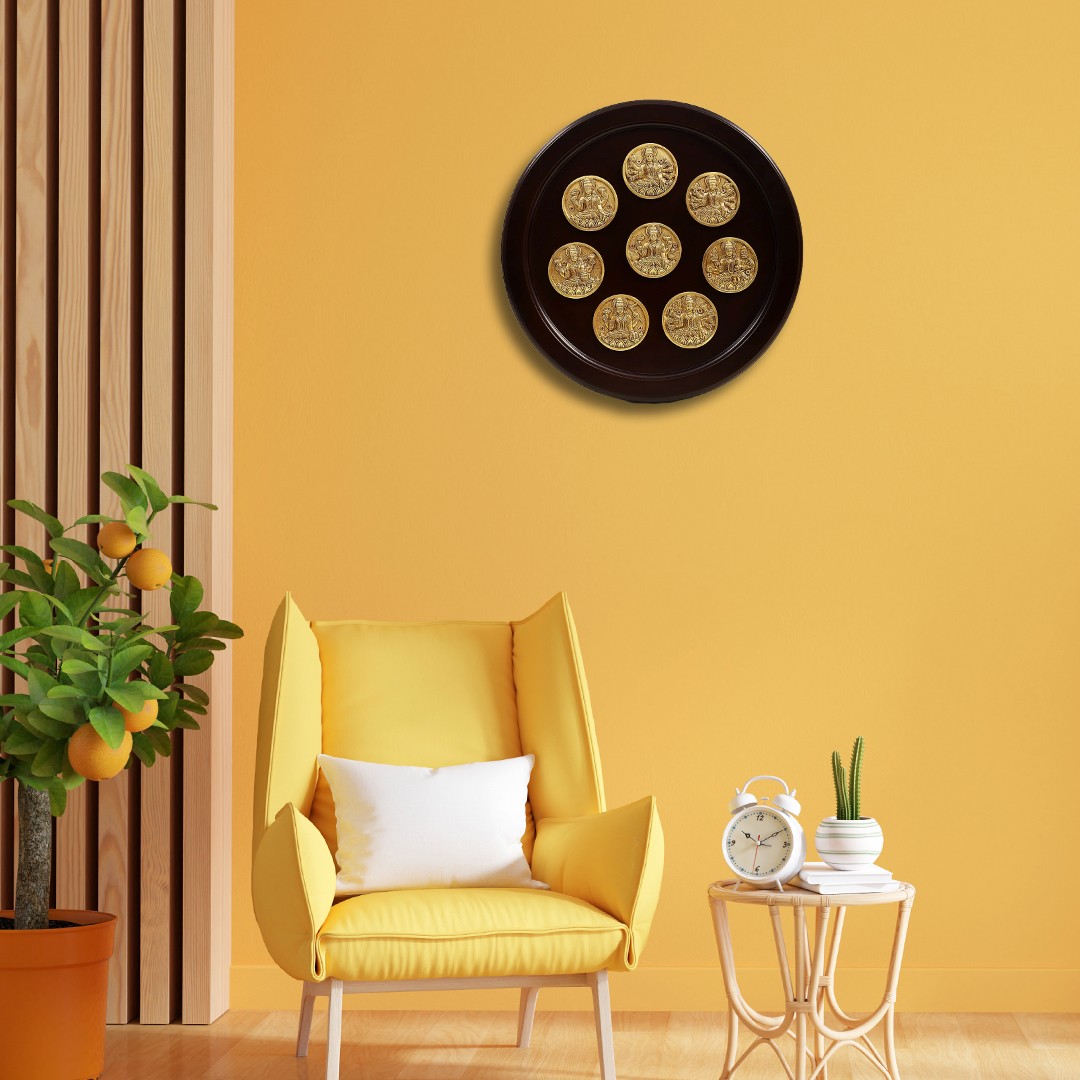
Circular Framed Ashtalakshmi Wall Hanging


| Specifications |
 |
ZEP057 |
 |
WOOD AND BRASS STATUE |
 |
Height: 20 inch |
| Width: 1 inch | |
| Depth: 20 inch | |
 |
Weight 4.90 |
| Delivery and Return Policies |
 |
Ships in 1-3 days |
 |
Returns and Exchanges accepted within 7 days |
 |
Free Delivery |


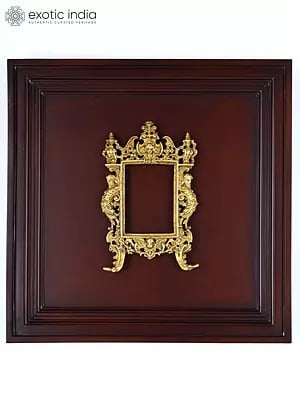
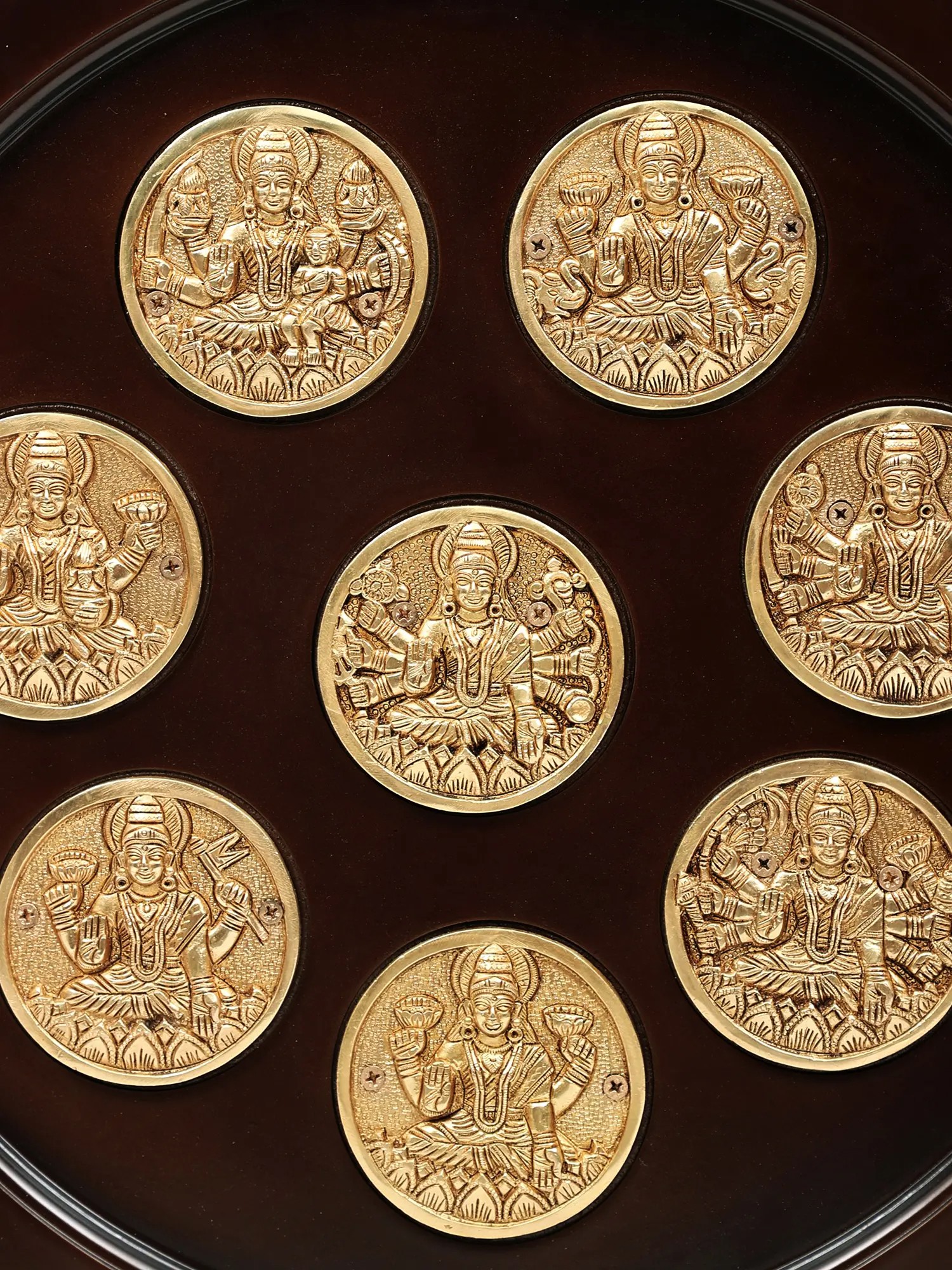
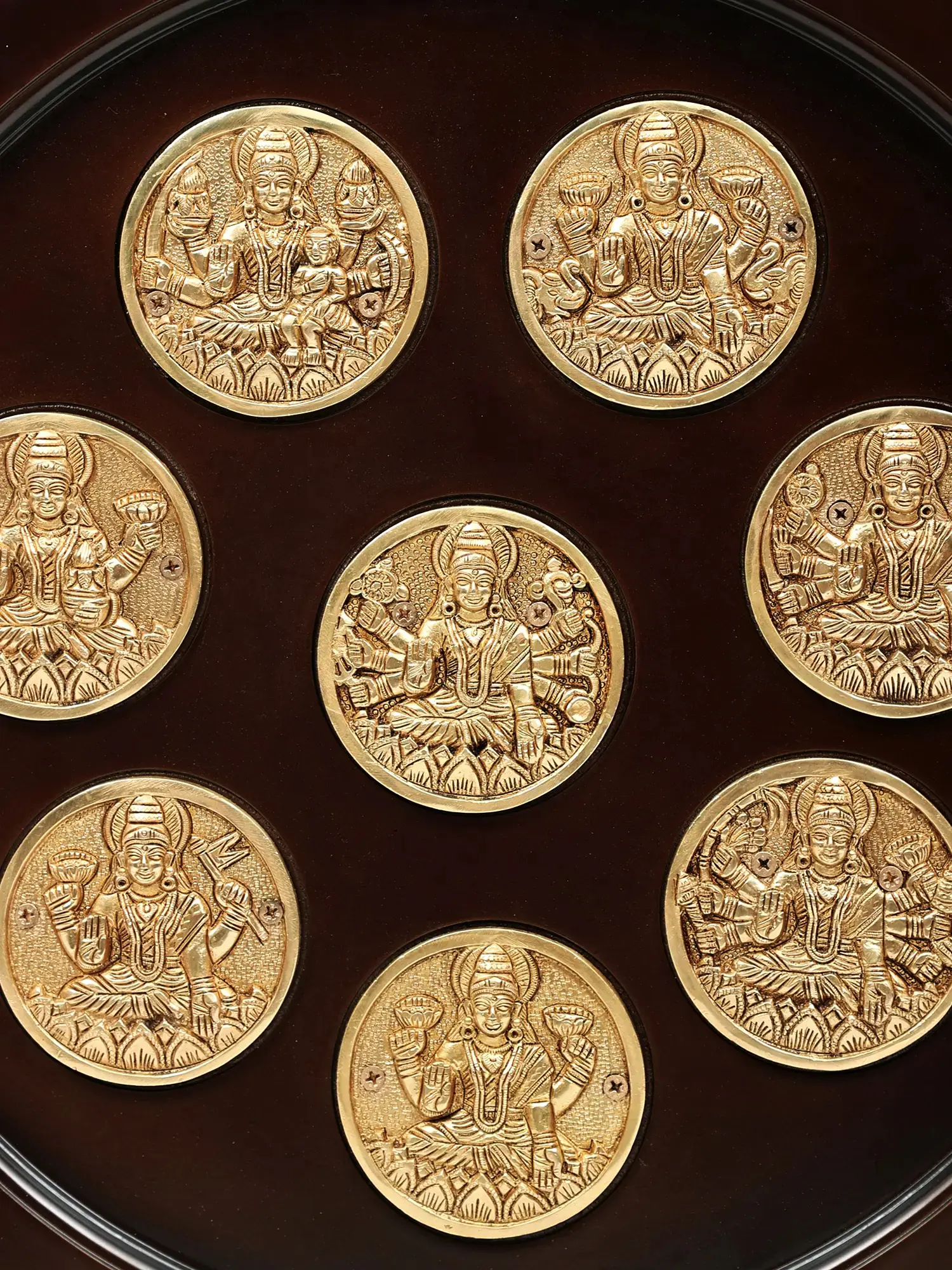
This Circular Framed Ashtalakshmi Wall Hanging is a divine fusion of craftsmanship and spirituality. Encased within a wooden circular frame, this masterpiece features brass circular statues depicting the eight forms of the goddess Lakshmi. Meticulously crafted, each statue exudes intricate details and symbolic richness.
The circular design enhances the sense of continuity and completeness, symbolizing prosperity in various aspects of life. This wall hanging becomes a sacred tableau, blending the warmth of wood with the lustrous appeal of brass. With spiritual significance and artistic finesse, it transforms any space into a harmonious sanctuary, radiating blessings and cultural elegance.
Embodiment of Auspiciousness and Prosperity
This exquisite wall hanging encapsulates the divine essence of the Ashtalakshmi, the eight forms of Goddess Lakshmi, the Hindu deity of wealth, fortune, and prosperity. Crafted with meticulous attention to detail, each of the eight circular brass medallions depicts a unique aspect of the Goddess, radiating her benevolent energy. The arrangement within the deep, rich wooden frame creates a harmonious mandala, symbolizing the cyclical nature of abundance and the pervasive blessings of the divine feminine. The Ashtalakshmi are revered for their blessings across various spheres of life, representing wealth (Shri), success (Siddhi), courage (Dhairyadhana), knowledge (Vidya), nourishment (Annapurna), strength (Yogalakshmi), pleasure (Kāmalakshmi), and beauty (Saundaryalakshmi). Each form is distinct, often depicted with specific attributes and mounts, signifying the multifaceted nature of prosperity that extends beyond mere material riches. In Hindu mythology, Lakshmi is often depicted with lotuses, a symbol of purity and spiritual awakening, and is said to reside where virtue, austerity, and devotion are found. She is the consort of Lord Vishnu, the preserver of the universe, and her presence is believed to bring auspiciousness and well-being to households and communities.Artistry and Cultural Significance
The brass medallions, with their intricate carvings, are a testament to traditional Indian craftsmanship. The warm, golden hue of the brass is believed to attract positive energy and enhance the auspiciousness of the space it adorns. The dark wooden frame provides a sophisticated contrast, grounding the divine imagery and highlighting the beauty of the brass deities. This piece is more than just a decorative item; it is a sacred representation, a conduit for invoking the blessings of Lakshmi. Its circular form further enhances its spiritual significance, representing wholeness, infinity, and the divine cosmic order. Placing this wall hanging in your home or office is an invitation to invite abundance, peace, and spiritual growth. It serves as a constant reminder of the divine presence and the potential for prosperity in all aspects of life. In many Indian homes, images of Lakshmi are traditionally placed at the entrance or in the puja room to welcome fortune and ward off negativity. This framed collection of the Ashtalakshmi offers a comprehensive and aesthetically pleasing way to honor this beloved goddess and invite her manifold blessings into your life. It is a perfect gift for housewarmings, weddings, festivals, or any occasion where you wish to bestow the blessings of prosperity and good fortune.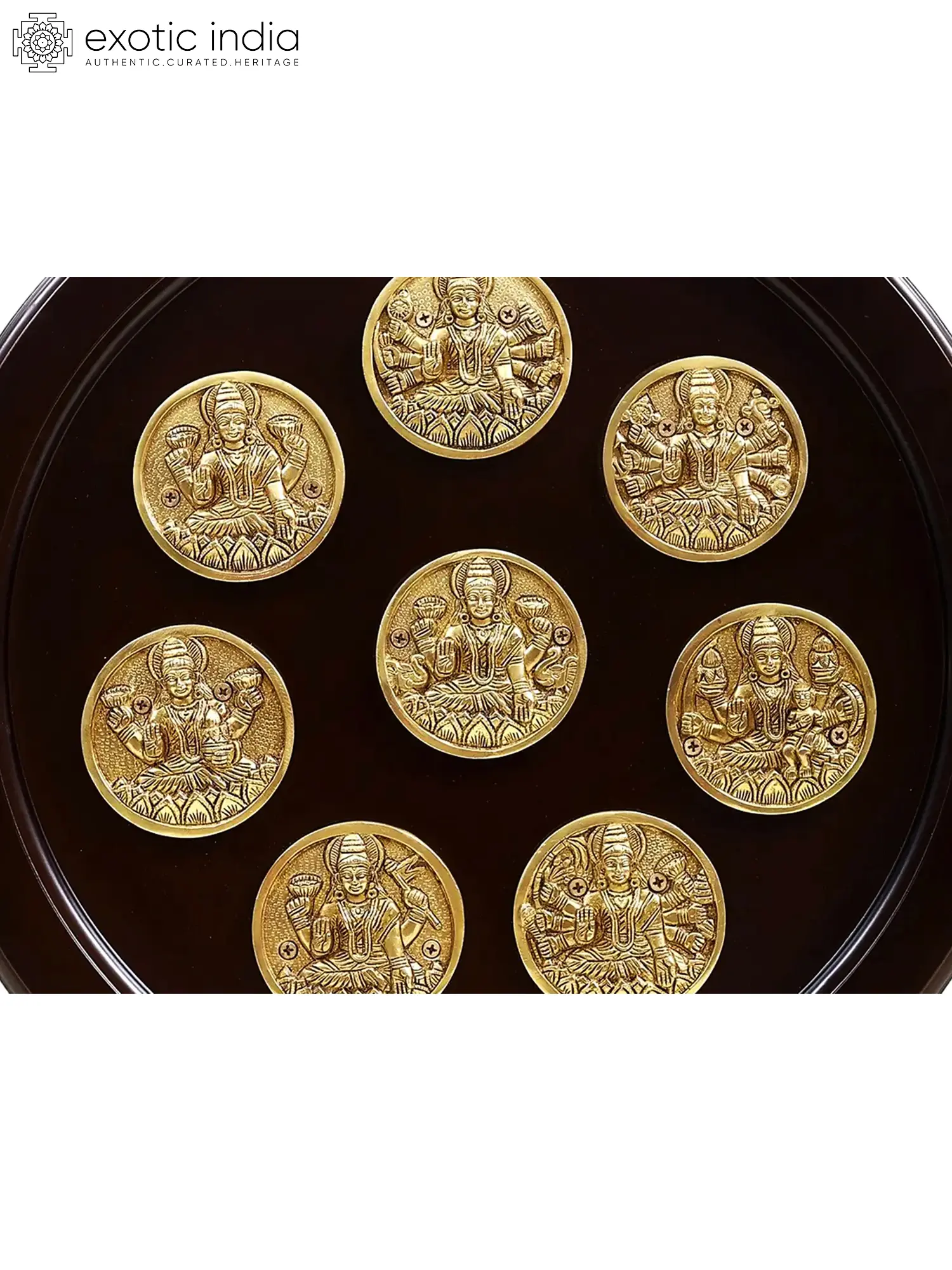
Sculpting Serenity: Unveiling the Art of Crafting Wood Statues
1. Selecting the right wood
The process of wood carving begins with selecting a chunk of wood that is required according to the type and shape of the statue to be created by the sculptor. Both hardwoods and softwoods are used for making artistic pieces, however, hardwoods are preferred more than softer woods because of their durability and longevity. But if heavy detailing is to be done on the statue, wood with fine grain would be needed as it would be difficult to work with hardwood.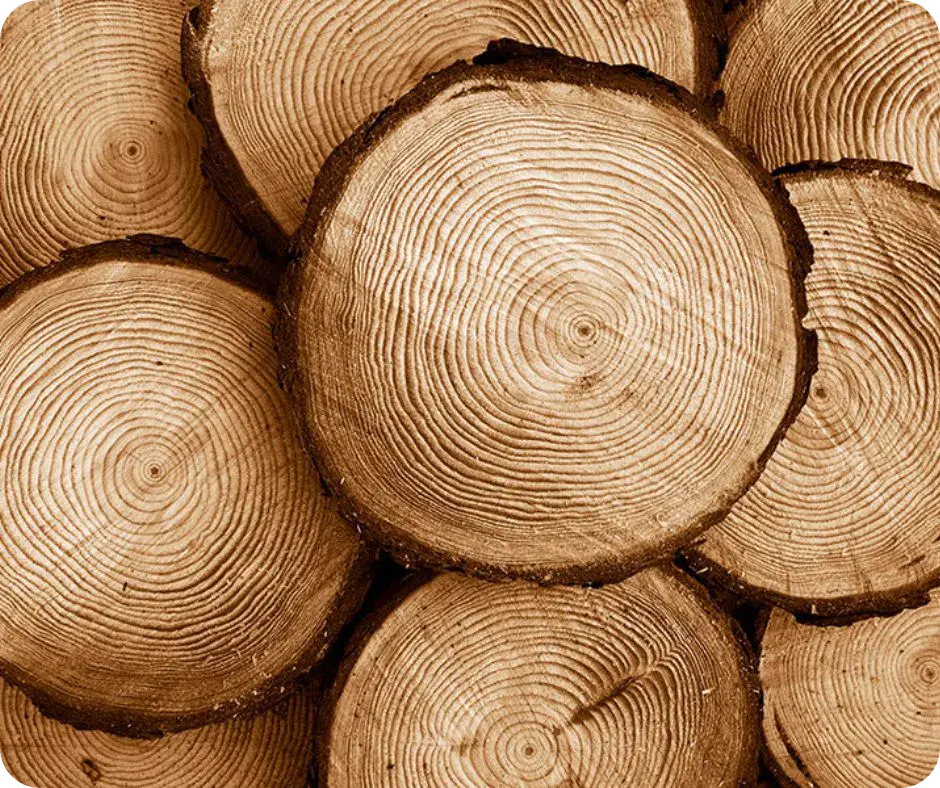
2. Shaping the wood
Once the wood type is selected, the wood carver begins the general shaping process using gouges of various sizes. A gouge is a tool having a curved cutting edge which is useful in removing large unwanted portions of wood easily without splitting the wood. The sculptor always carves the wood across the grain of the wood and not against it.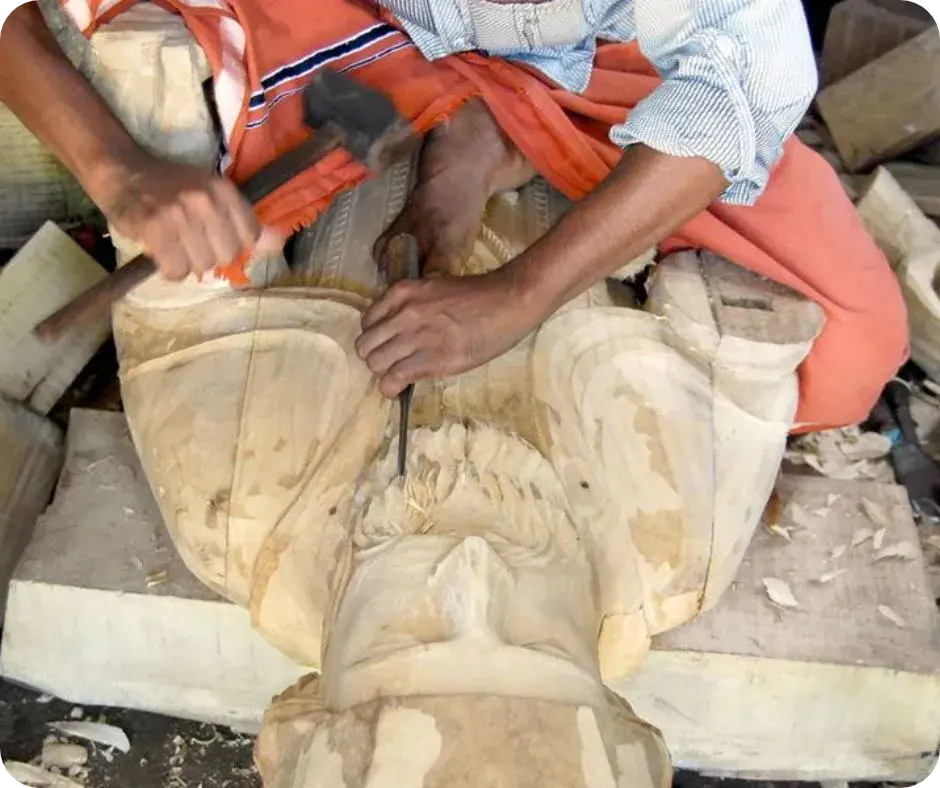
3. Adding detailing
When a refined shape of the statue is obtained, it is time for making details on the statue using different tools. This is achieved by using tools such as a veiner to make and a V-tool to create decorative and sharp cuts.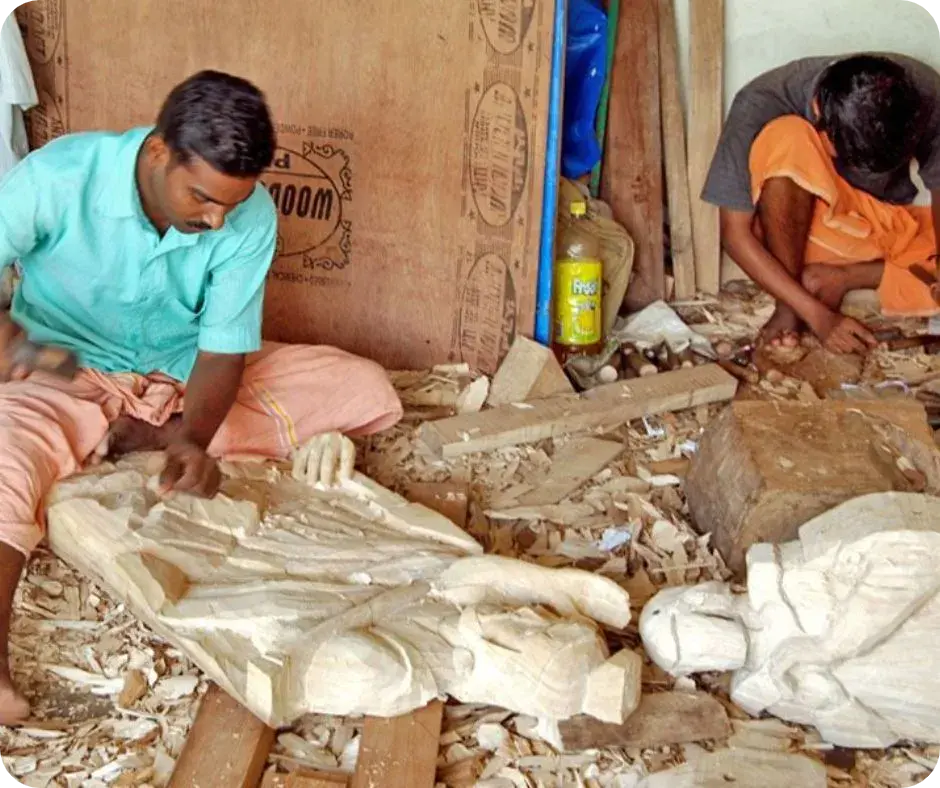
4. Surface finishing
Once finer details have been added, the sculptor is ready to smoothen the surface and give it a perfect finish. Tools such as rasps and rifflers are used to get a smooth surface. The finer polishing is obtained by rubbing the surface with sandpaper. If a textured surface is required, this step is skipped. Finally, to protect the statue from excessive dirt accumulation, the sculptor applies natural oils such as walnut or linseed oil all over it. This also brings a natural sheen to the statue.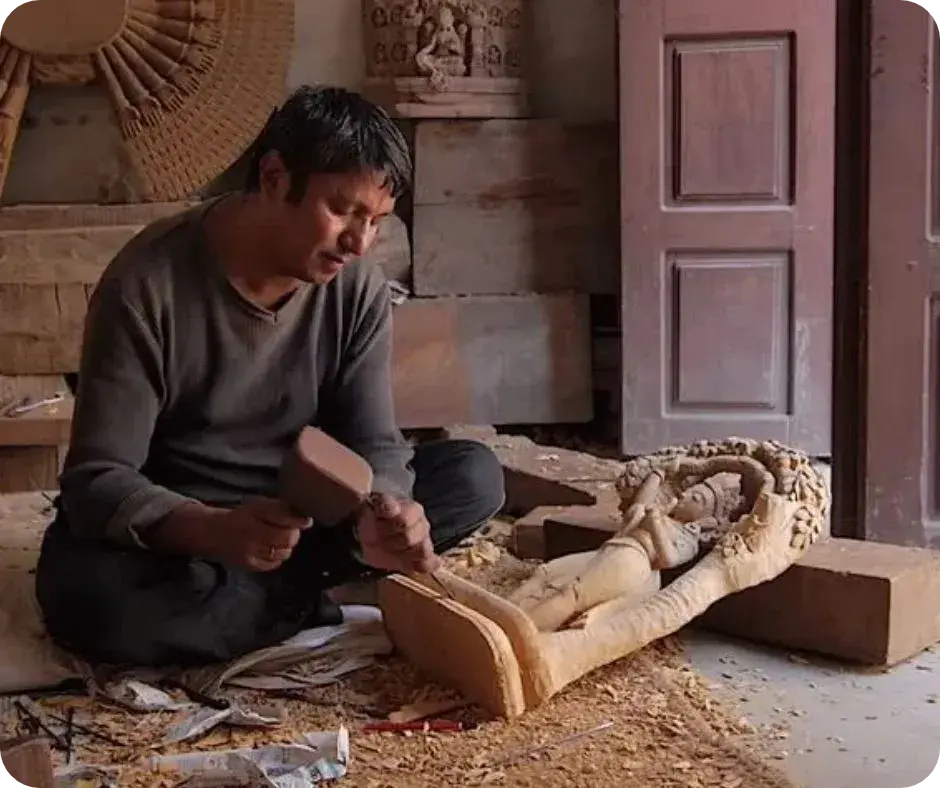
How to care for Wood Statues?
Wood is extensively used in sculpting especially in countries like China, Germany, and Japan. One feature that makes the wood extremely suitable for making statues and sculptures is that it is light and can take very fine detail. It is easier for artists to work with wood than with other materials such as metal or stone. Both hardwoods, as well as softwood, are used for making sculptures. Wood is mainly used for indoor sculptures because it is not as durable as stone. Changes in weather cause wooden sculptures to split or be attacked by insects or fungus. The principal woods for making sculptures and statues are cedar, pine, walnut, oak, and mahogany. The most common technique that sculptors use to make sculptures out of wood is carving with a chisel and a mallet. Since wooden statues are prone to damage, fire, and rot, they require proper care and maintenance.
- Wood tends to expand and contract even after it has been processed, thus it is always recommended to keep the wooden sculptures in rooms with little humidity. Excess moisture can harm your masterpiece.
- Periodical dusting of the finished piece is necessary to maintain its beauty as dust accumulation on the surface takes away the shine of the sculpture. You can use a clean and soft cloth or a hairbrush for this purpose.
- You must avoid applying any chemical-based solutions that may damage the wood from the inside. Instead, you can apply lemon oil or coconut oil using a cotton rag to the sculpture to bring out its natural shine. Lemon oil also helps to clean any stains on the sculpture.
- Applying a layer of beeswax protects the wood from sun damage and hides even the smallest imperfections on the wood.
It is extremely important to preserve and protect wooden sculptures with proper care. A little carelessness and negligence can lead to their decay, resulting in losing all their beauty and strength. Therefore, a regular clean-up of the sculptures is a must to prolong their age and to maintain their shine and luster.
-
Q. Is the statue hollow or solid ?A. Brass statues are made through a process of clay casting, hence are hollow. Whereas, panchaloha bronze statues are made through a process of lost wax casting, hence they are solid.
-
Q. Can I return the statue ?A. Of course you can return a statue. Returns need to be initiated within seven (7) days after delivery. All returned items must be in new and unused condition, with all original tags and labels attached. To know more about our Return Policy, please visit Return Policy.
-
Q. Can you customise the statue for me ?A. For any customisation, kindly email us at help@exoticindia.com.