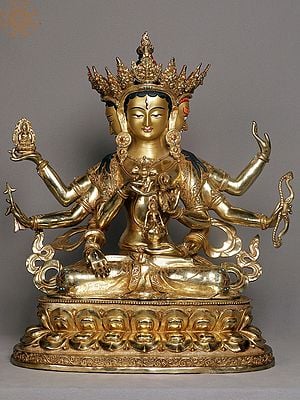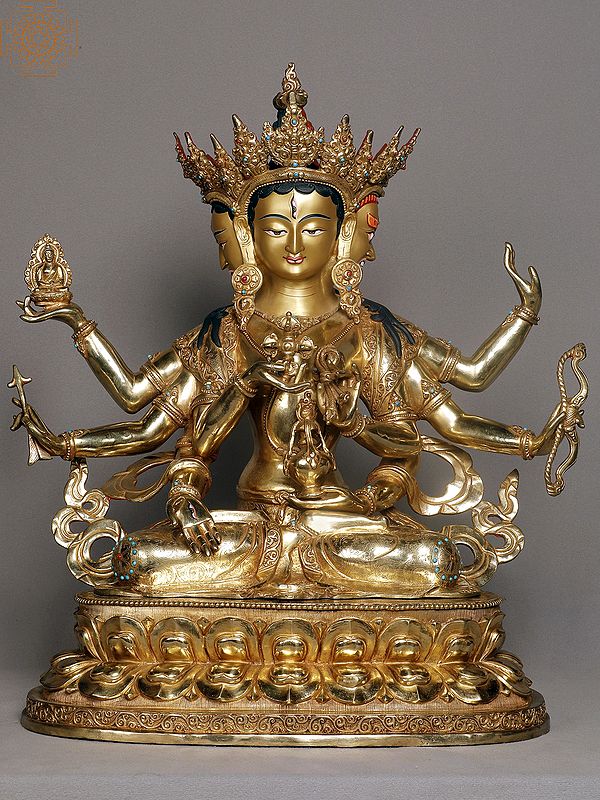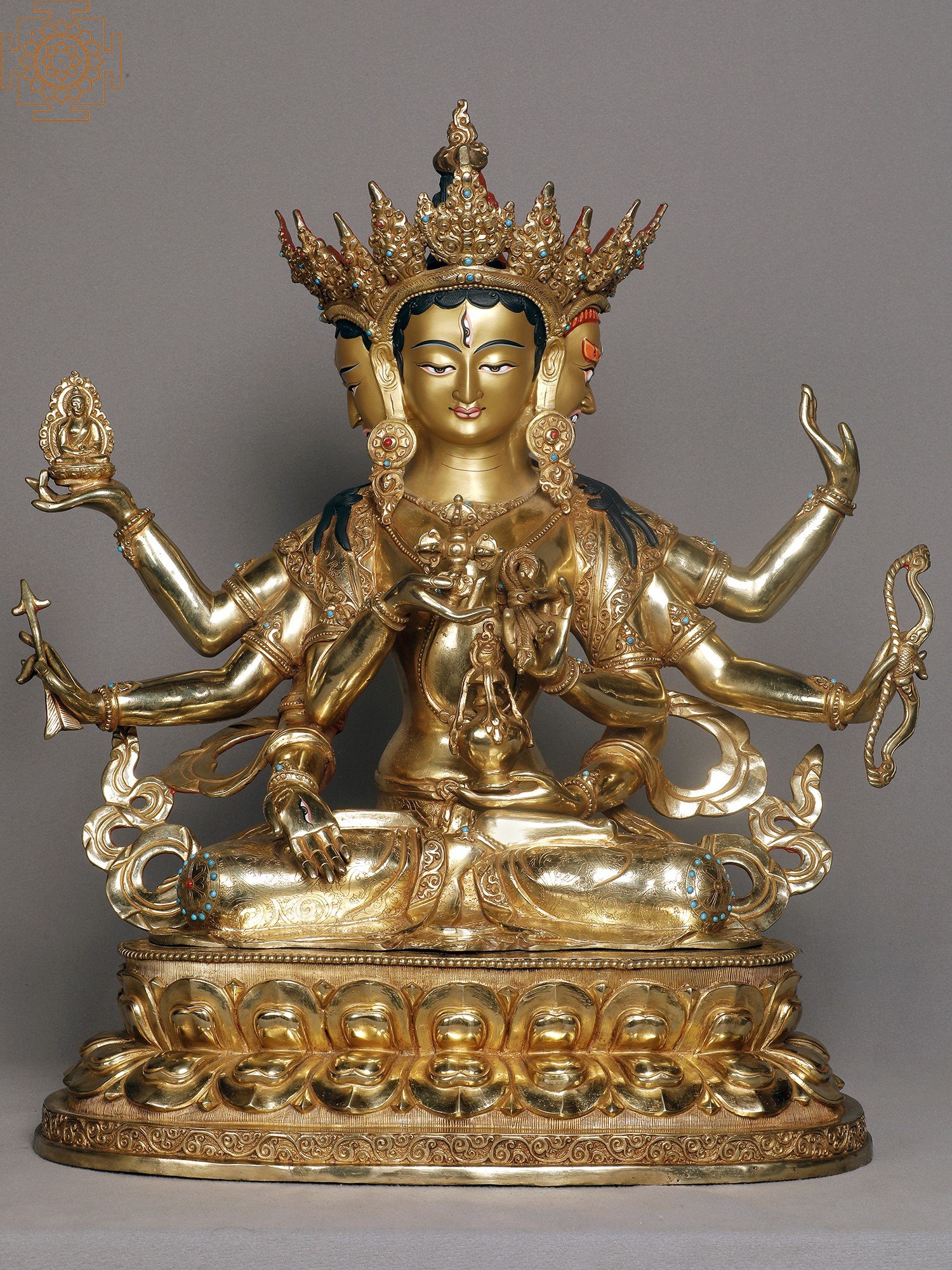

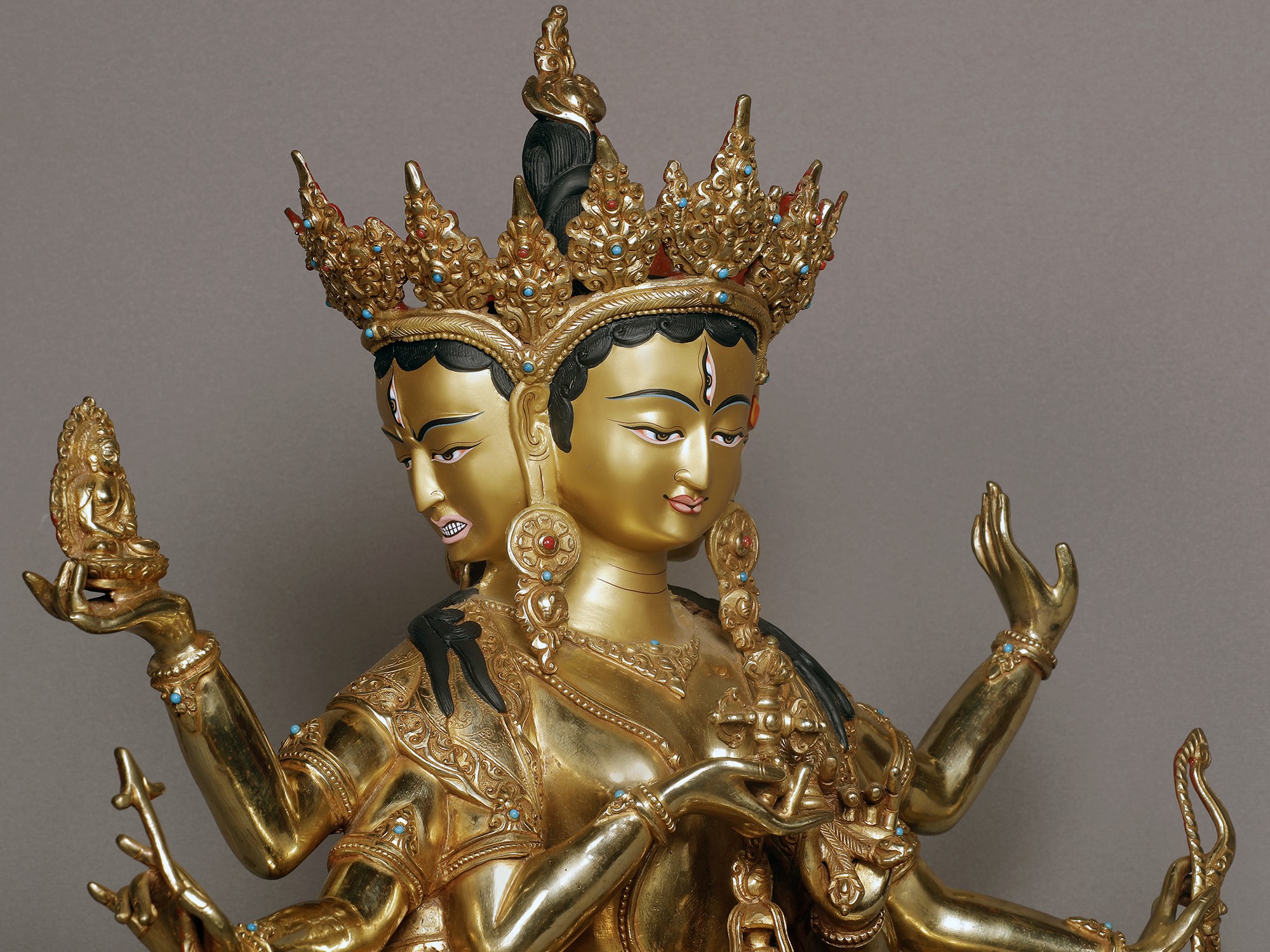
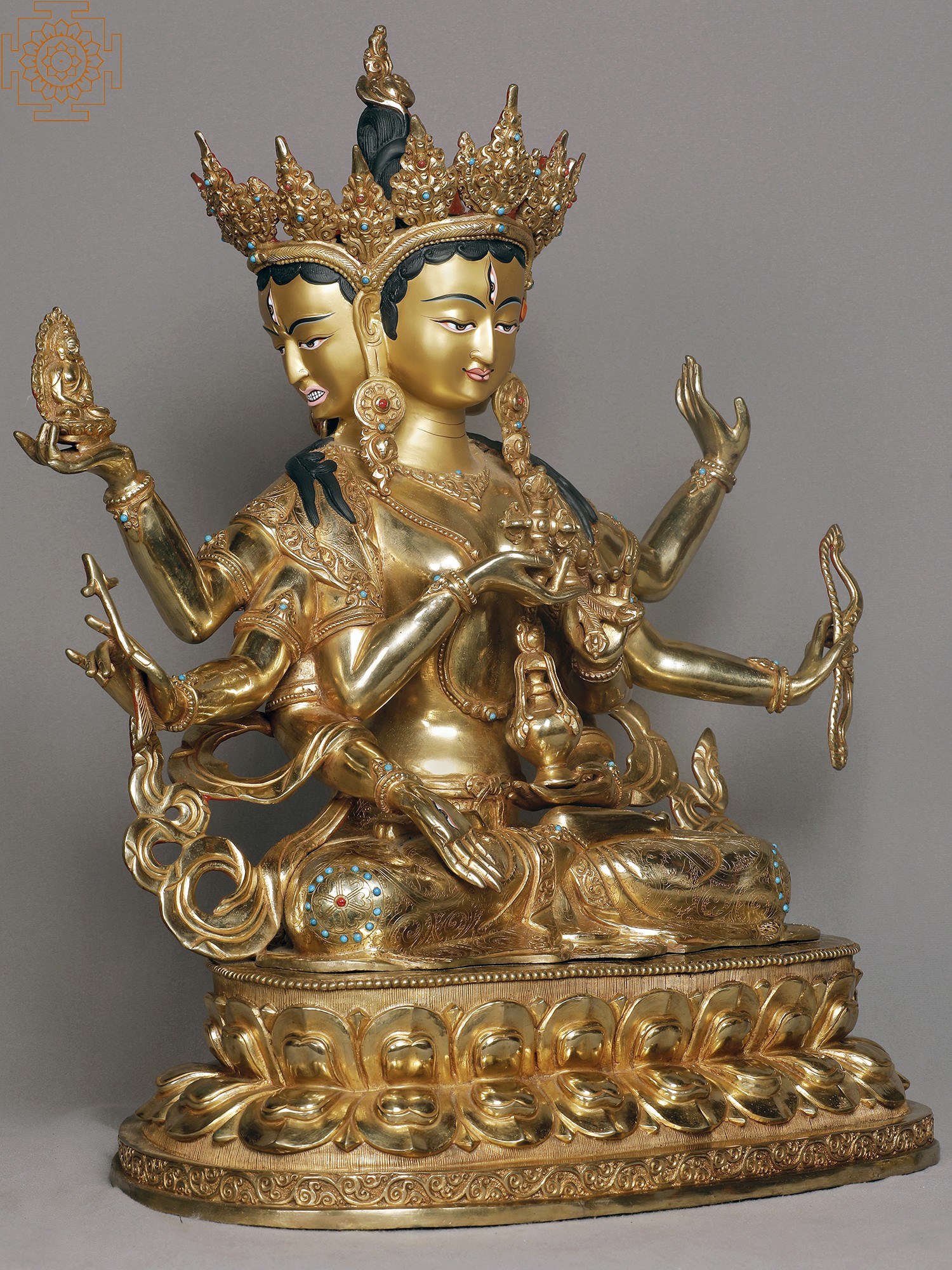


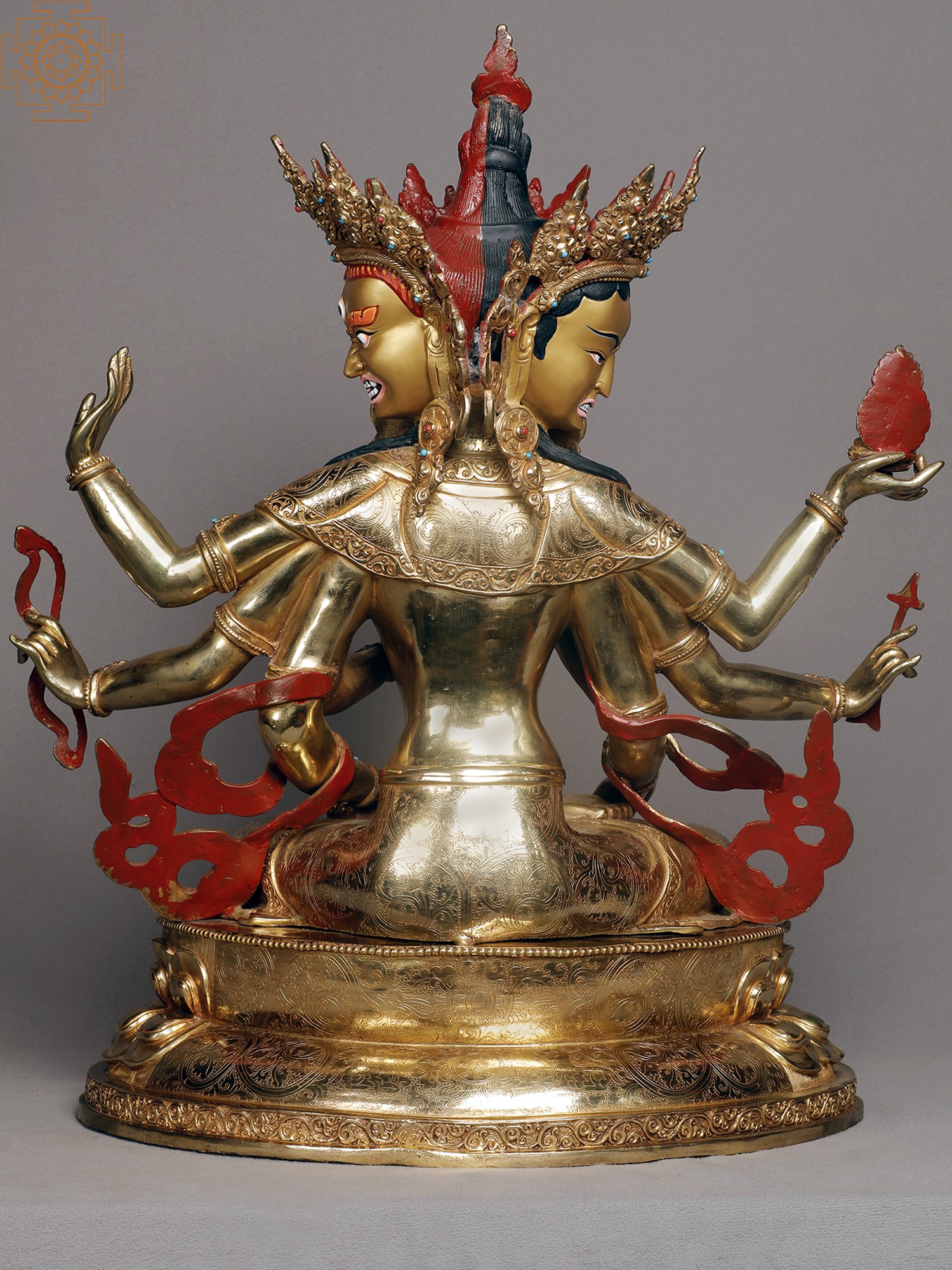
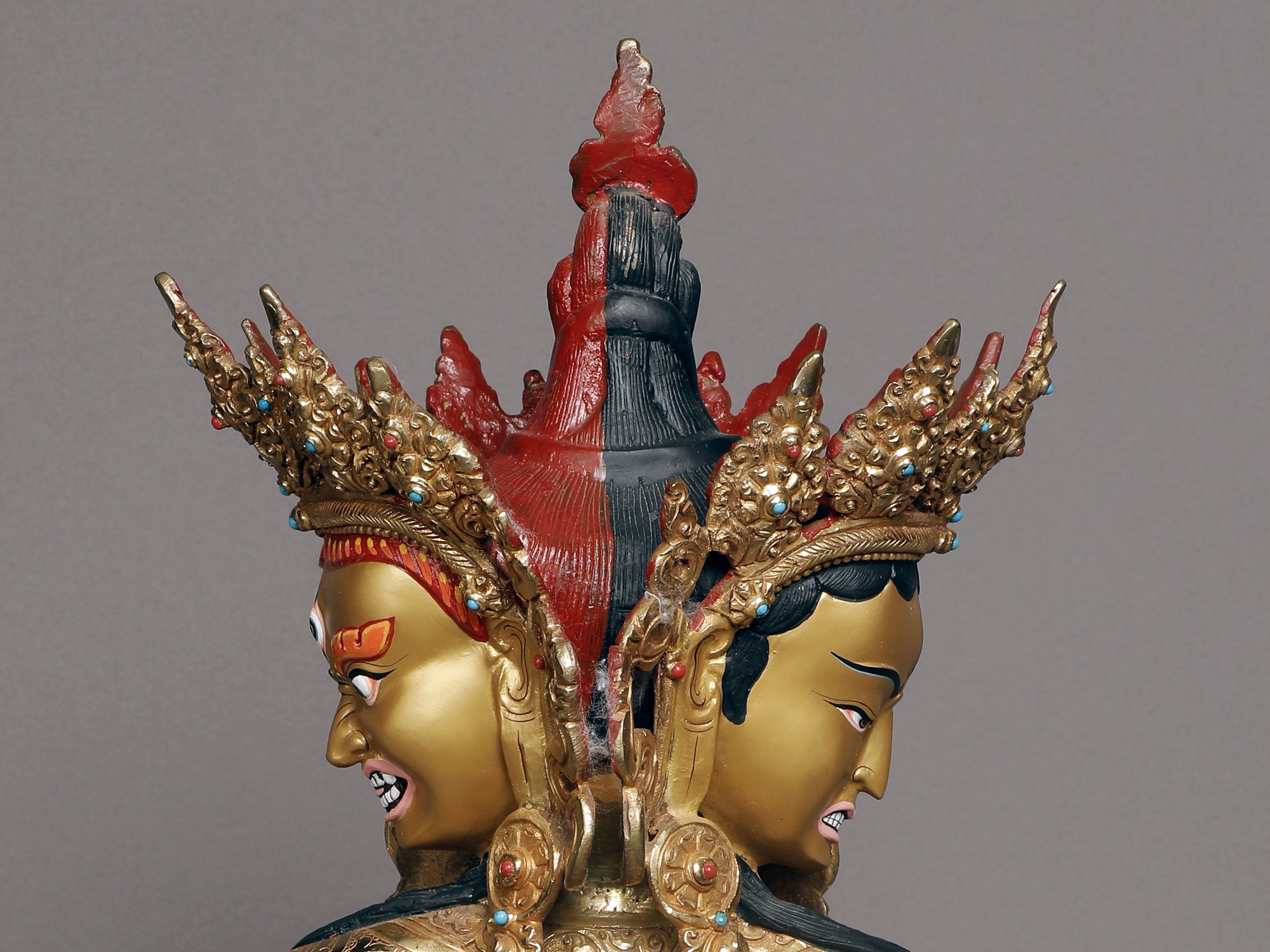
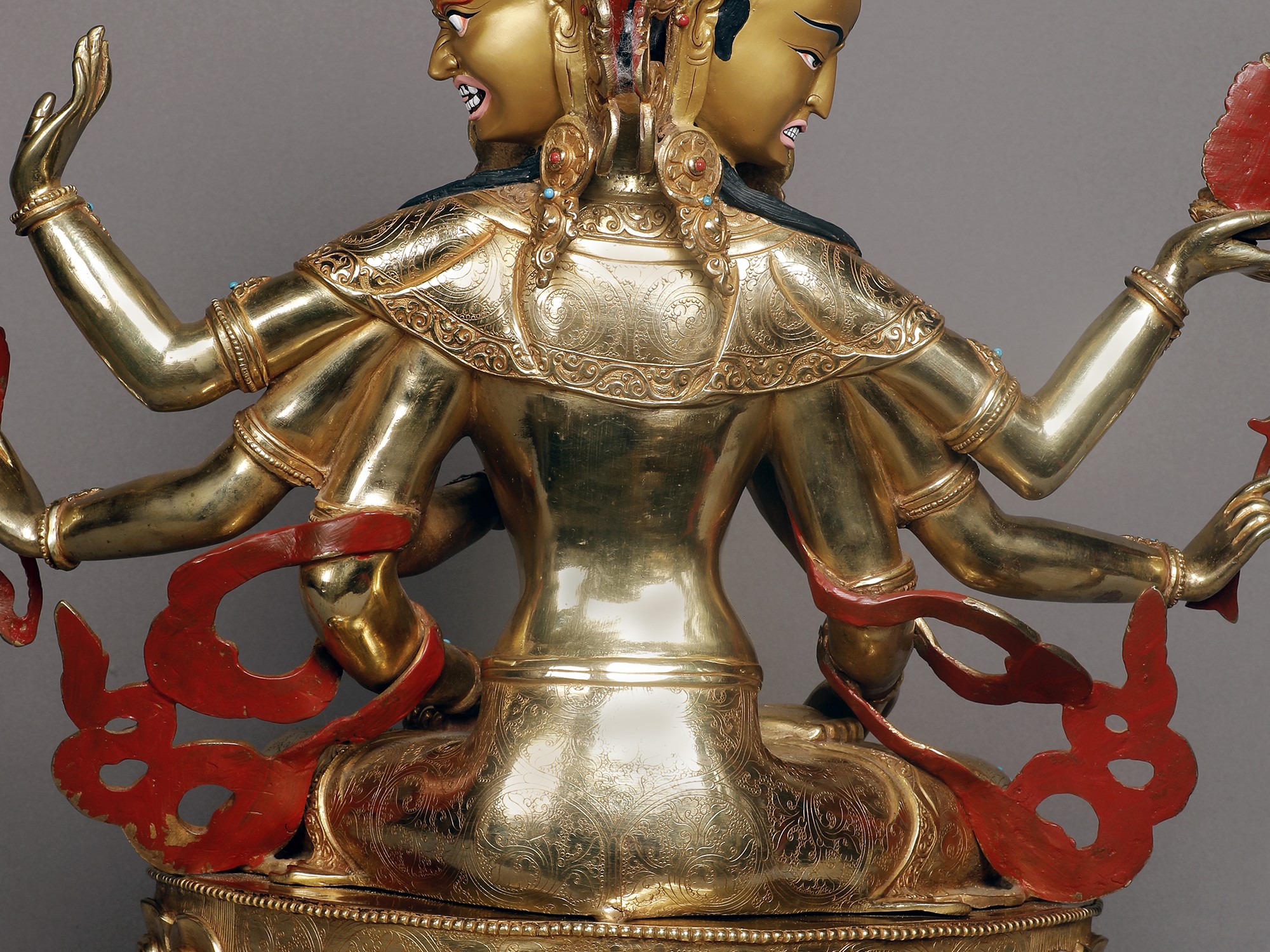

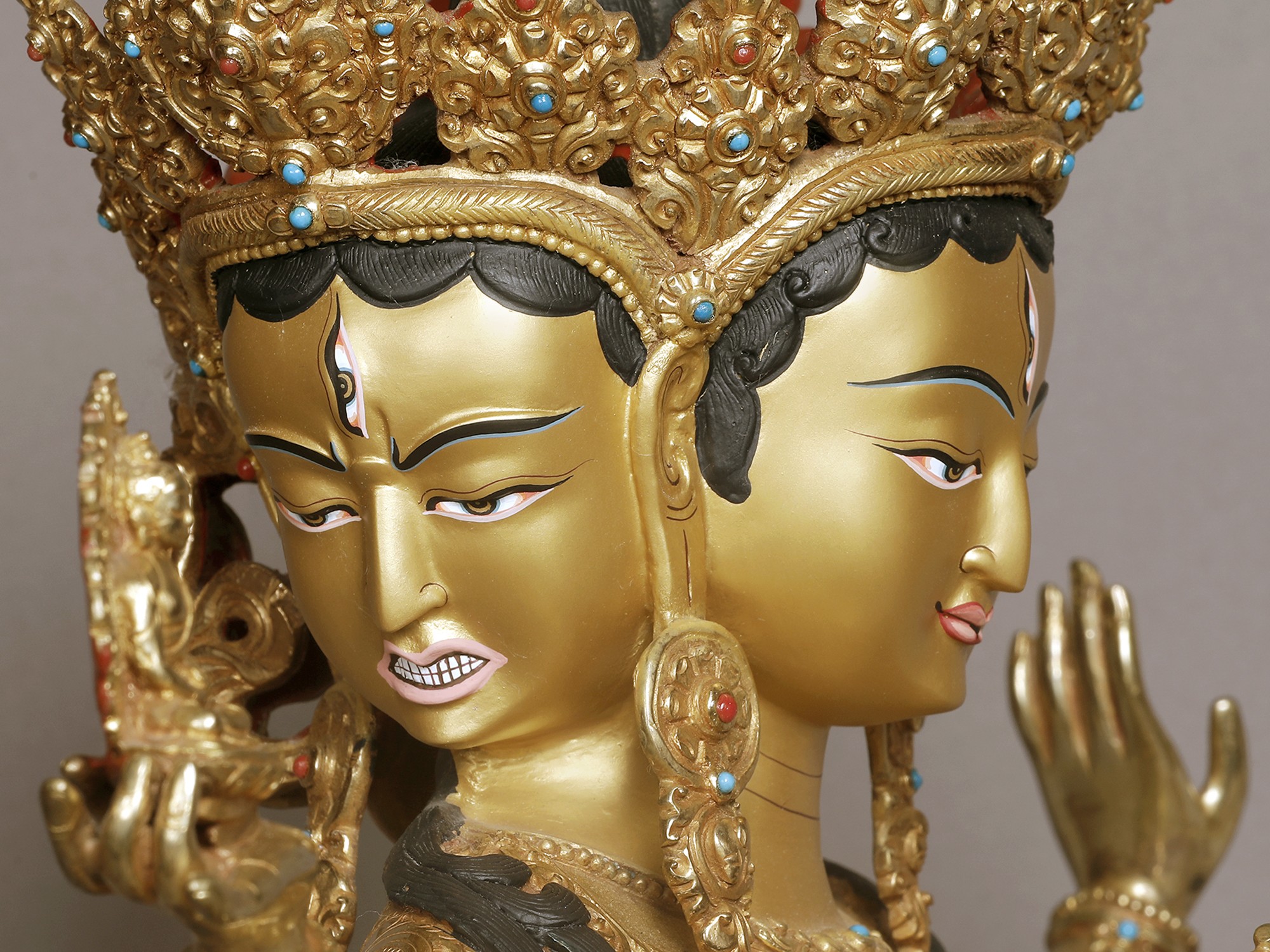
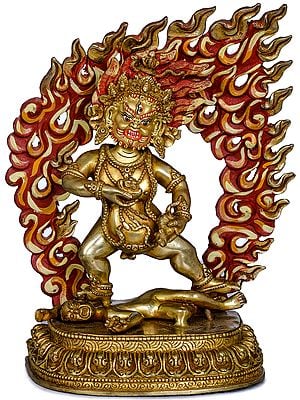
Eight-Armed Namgyalme Buddhist Deity Sculpture, 20 Inches
$3496
Includes any tariffs and taxes

Only 1 available
Notify me when this item is available
| Specifications |
 |
NLH048 |
 |
Copper With Gold |
 |
Height: 18.5 inch |
| Width: 14.5 inch | |
| Depth: 9 inch | |
 |
Weight 10 kg |
| About the Item |
|
| Delivery and Return Policies |
 |
Usually ships in 6 days |
 |
Returns and Exchanges accepted within 7 days |
 |
Free Delivery |

Easy Returns

Fully Insured

100% Handmade
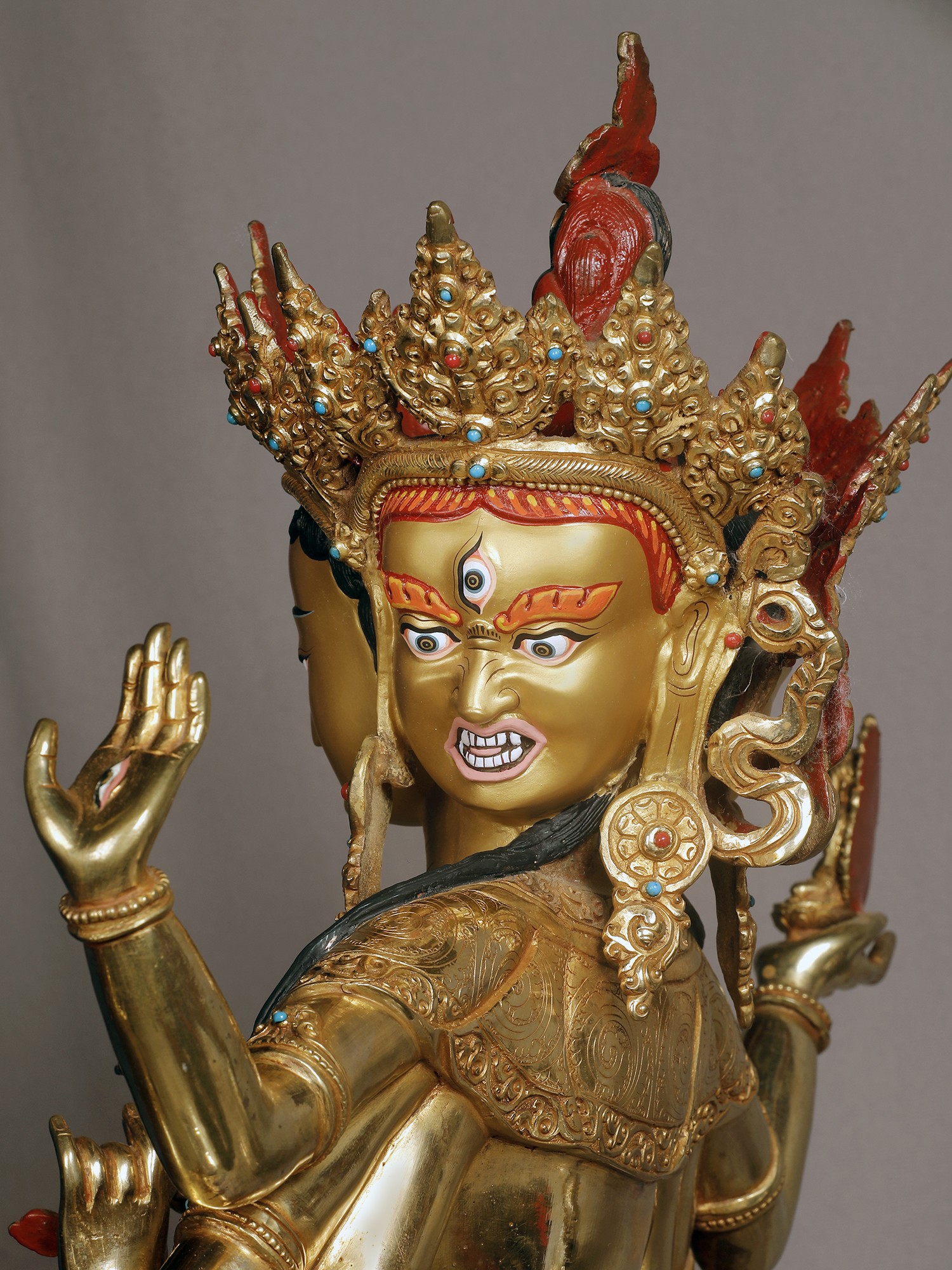
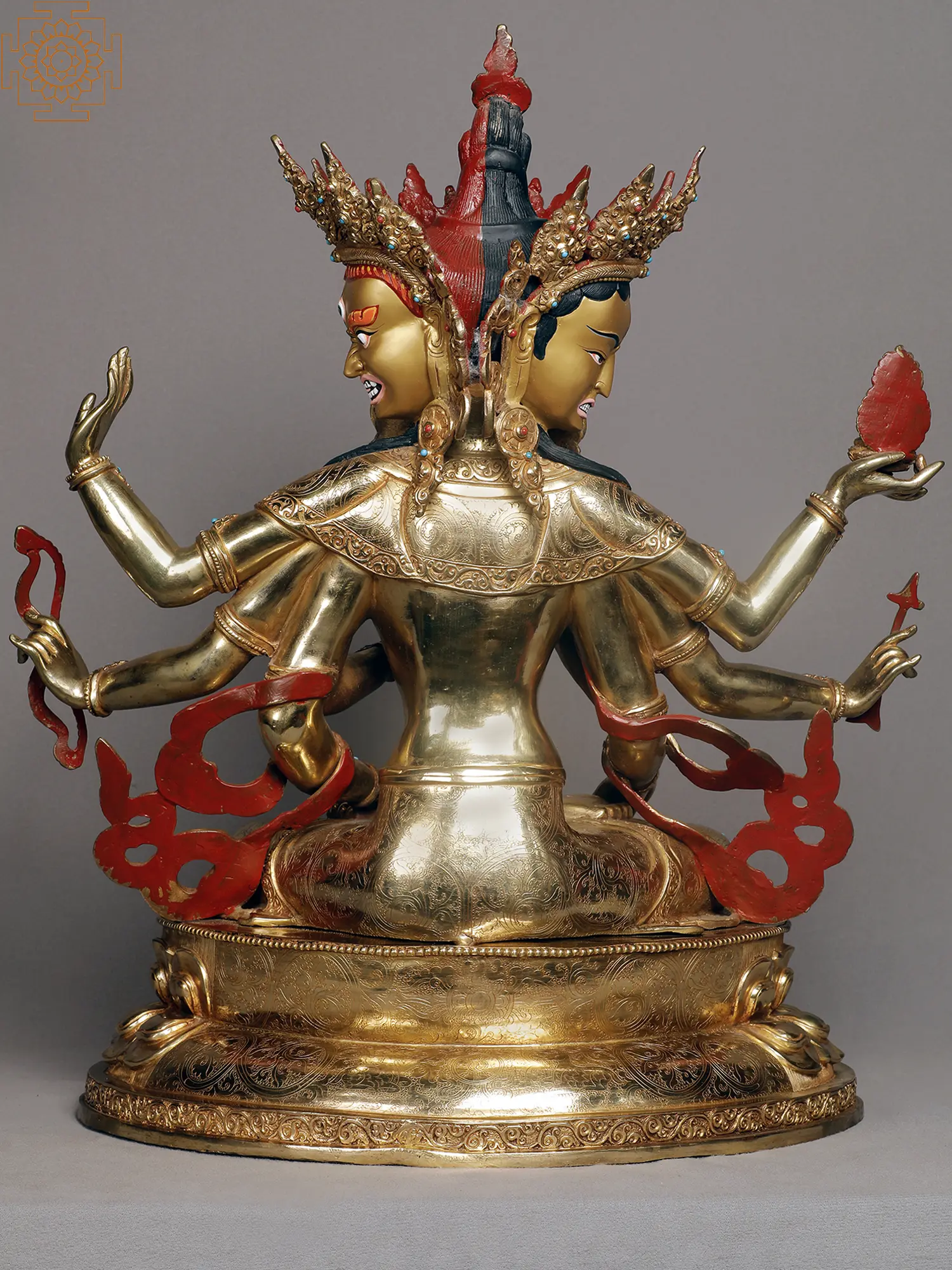
Eight-armed, three-faced,
and emanating a mesmerizing divinity Namagyalme in this Nepalese statue is an inimitable
Buddhist deity who has the power to remove hurdles in all three plains of
existence. The gilded copper statue here shows poise and harmony among all the
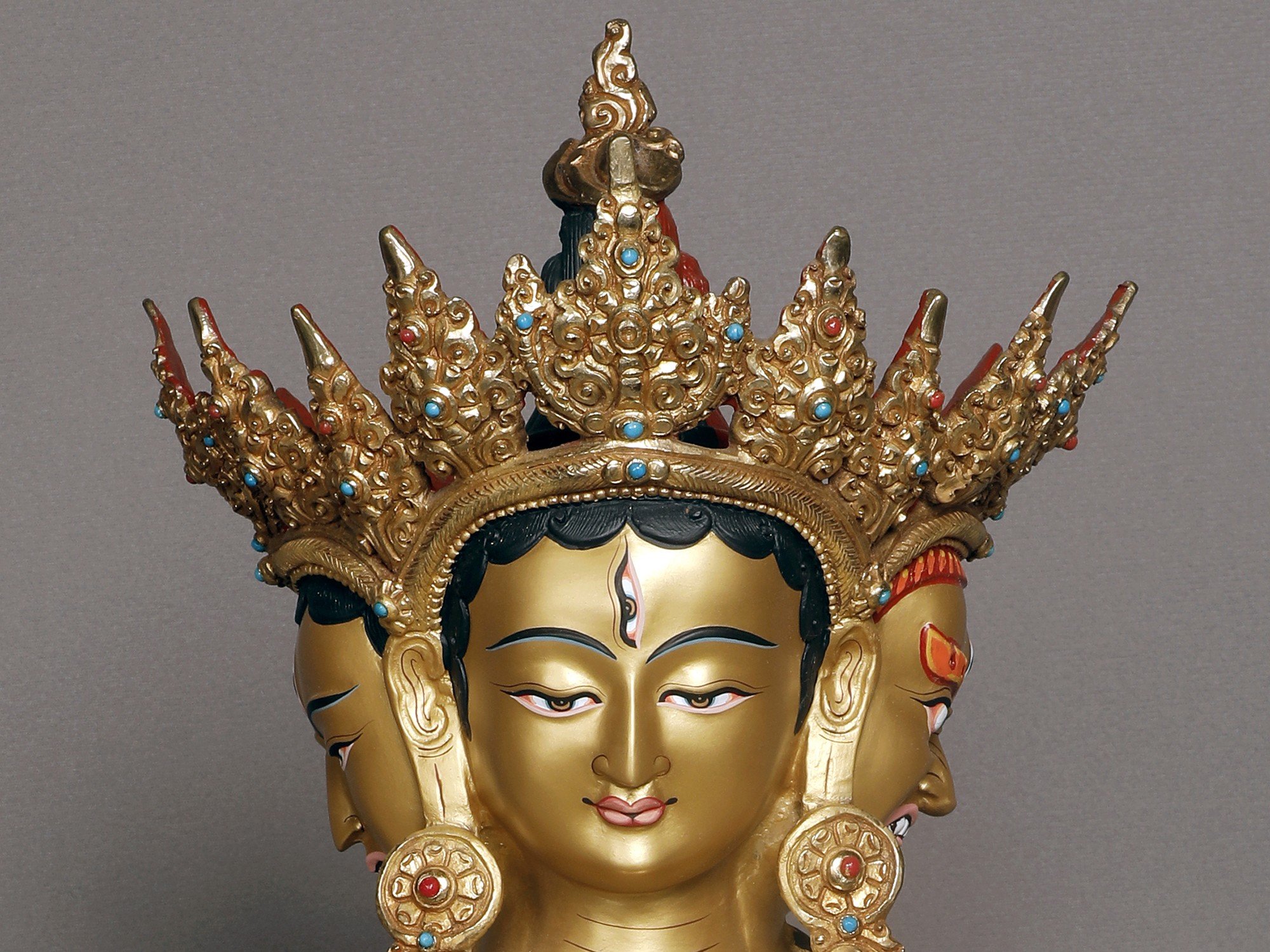
elements, which classifies it as a rare aesthetic masterpiece. Her three faces
represent her ability to regulate three kinds of obstacles while her attributes
which are connected to several potent Buddhist divinities and Bodhisattvas
underline her status as a supreme revered one.
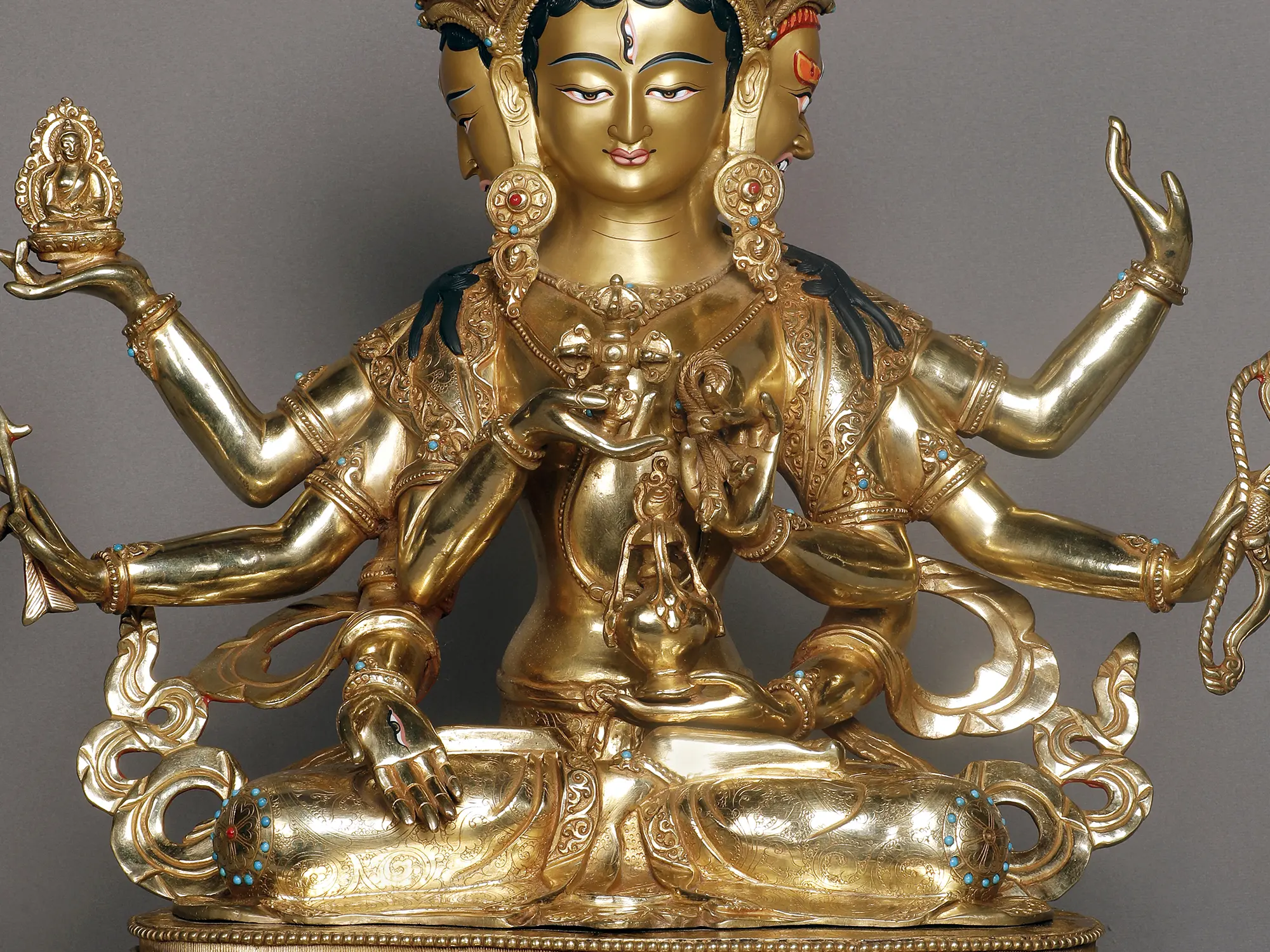
The Embodiment of Boundless Compassion
This exquisite statue, a testament to the rich artistic traditions of Nepal and Tibet, portrays a divine figure with a multitude of arms and faces, each radiating serene wisdom and profound compassion. Crafted from copper and intricately gilded, the statue gleams with an ethereal light, inviting contemplation and reverence. The multiple faces symbolize omniscience, the ability to perceive all phenomena from all angles. The eleven faces, arranged in tiers, represent the stages of spiritual development, with the highest face often depicted as a serene Buddha, signifying ultimate enlightenment.Symbolism in Every Detail
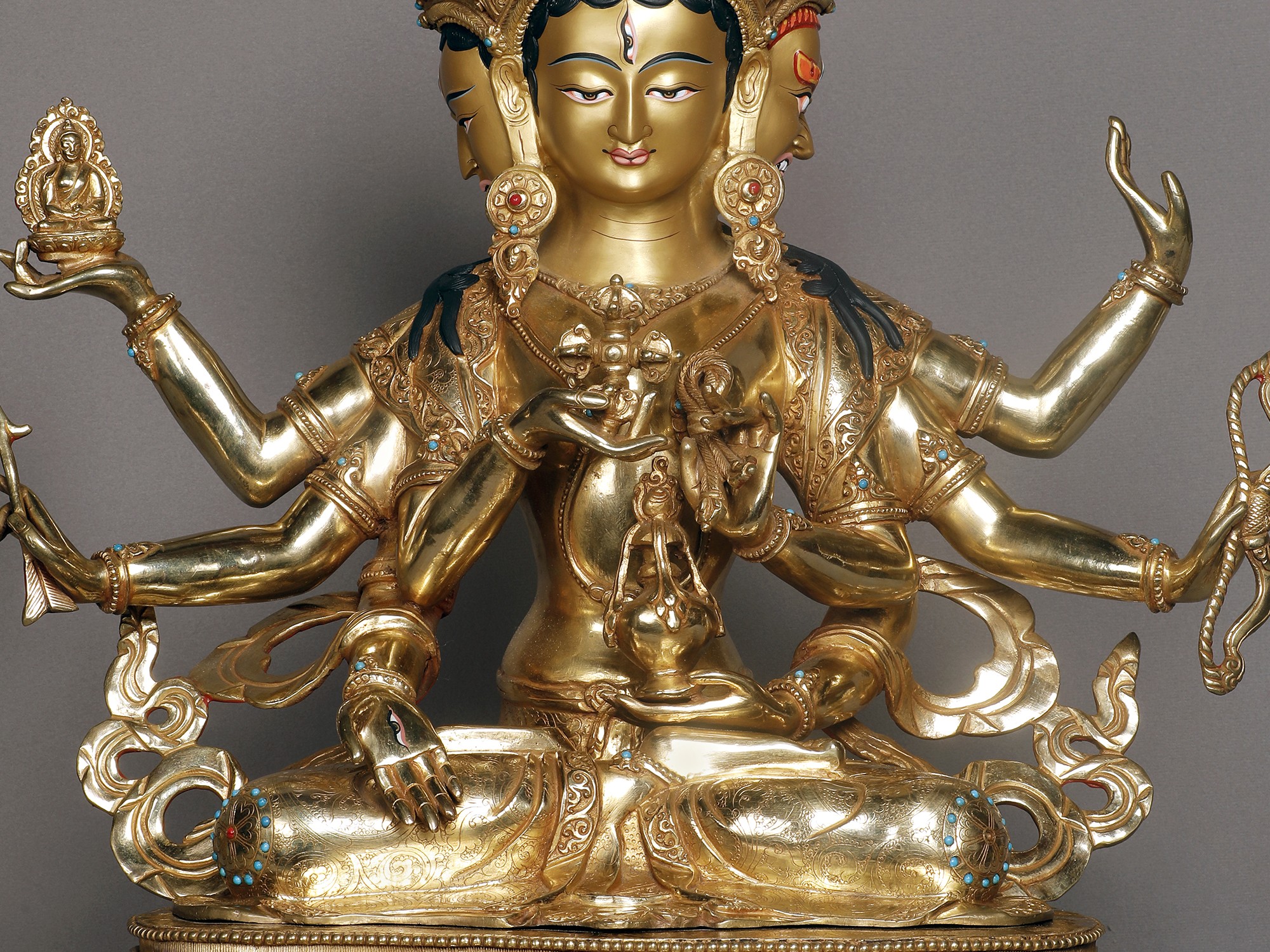
The numerous hands, each adorned with delicate gestures and holding sacred implements, convey the boundless activity of a Bodhisattva. In one hand, a miniature Buddha rests in a palm, representing the lineage and the transmission of wisdom. Another hand holds a wrathful symbol, signifying the power to overcome obstacles and negative forces. Yet another grasps a bow and arrow, symbolizing the skillful means used to guide sentient beings towards liberation. The flowing robes, detailed with intricate patterns, speak of spiritual adornment and the seamless integration of the divine into worldly existence. The figure's posture, seated in a meditative pose upon a lotus throne, signifies purity and spiritual elevation, rising above the mire of samsara.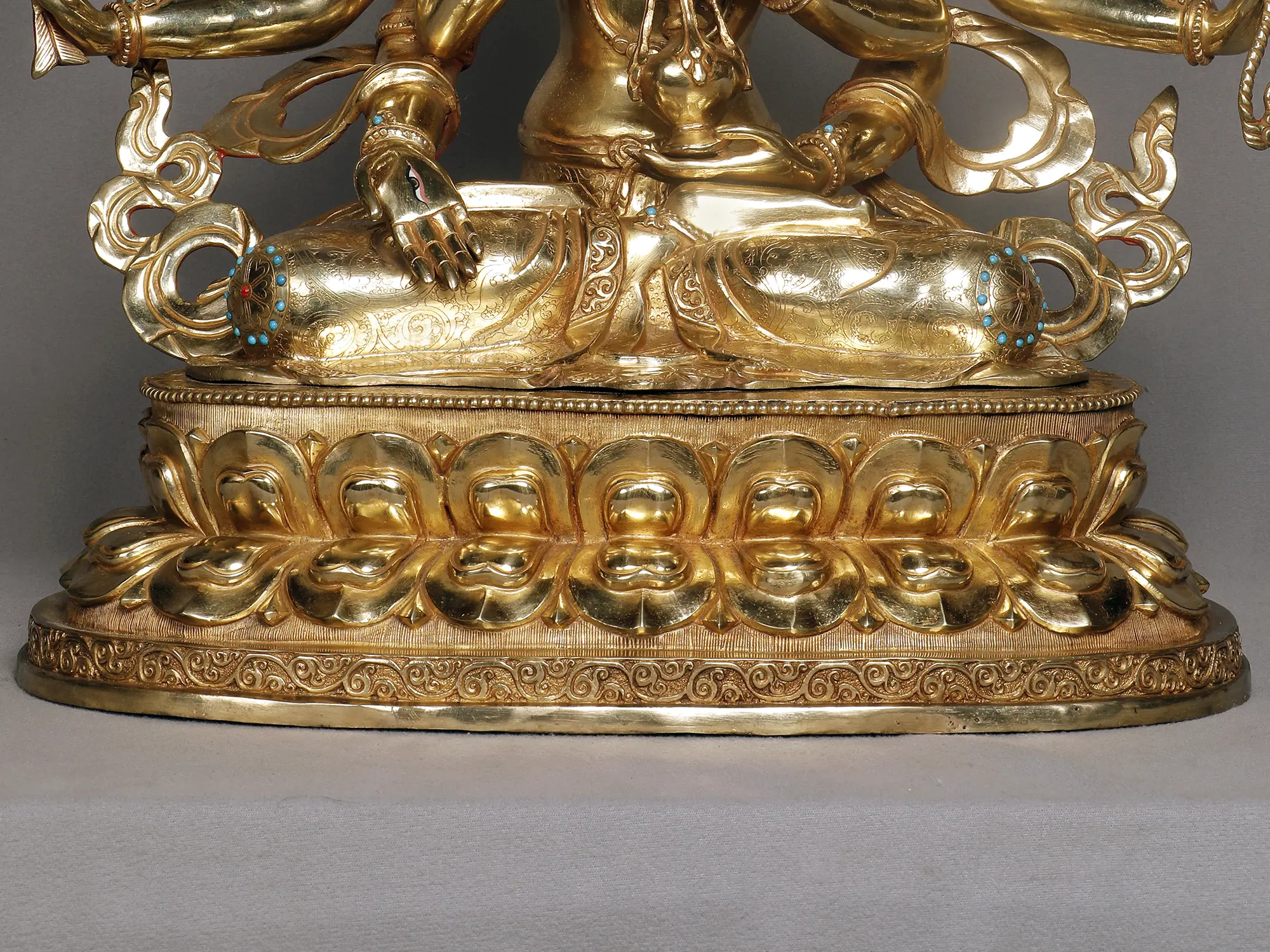
A Connection to Ancient Wisdom
This depiction is deeply rooted in the Mahayana Buddhist tradition, where Bodhisattvas are enlightened beings who have vowed to postpone their own nirvana until all sentient beings are liberated. Figures like this are often associated with Avalokiteshvara, the Bodhisattva of Compassion, or aspects of tantric deities who embody transformative wisdom. The elaborate headdress, adorned with precious jewels and topped with symbolic crowns, signifies the Bodhisattva's regal spiritual authority and the myriad qualities of enlightenment. The serene expression on the main face, with its downcast eyes, conveys deep introspection and boundless love for all beings. This statue serves not merely as an object of art but as a potent reminder of the spiritual path and the ultimate potential for awakening that resides within each individual.Craftsmanship and Cultural Heritage
Hailing from Nepal, a land steeped in spiritual history and renowned for its metalworking artistry, this statue is a masterpiece of craftsmanship. The meticulous attention to detail, from the delicate rendering of the facial features to the precise placement of each jewel, showcases the skill and devotion of the artisans. The use of copper as the base material, revered for its purity and conductivity in sacred art, combined with the luminous gold gilding, creates a powerful and enduring symbol of spiritual aspiration. This piece embodies the vibrant religious and artistic heritage that has flourished in the Himalayan region for centuries, offering a tangible connection to the profound teachings and timeless beauty of Tibetan Buddhism.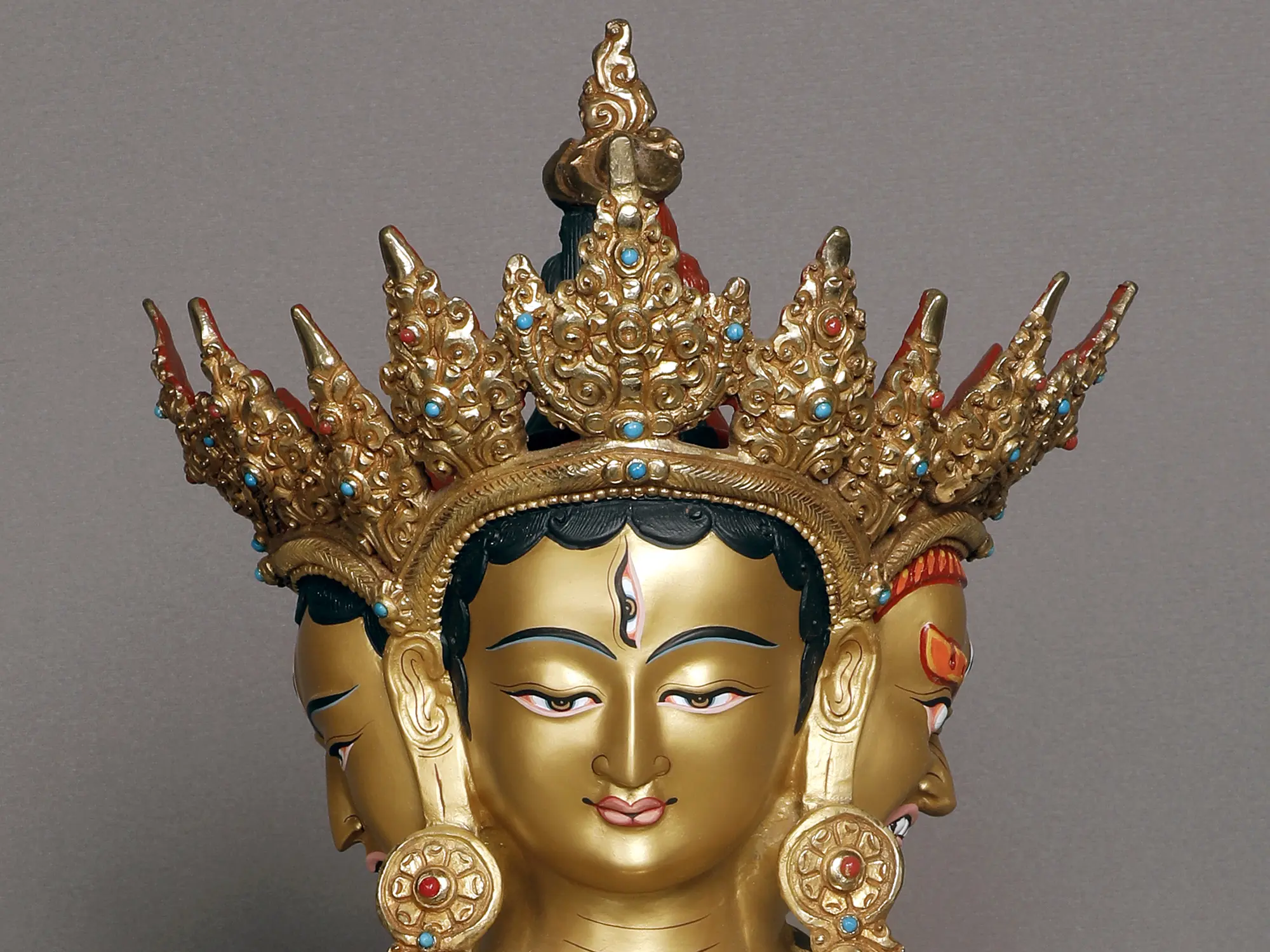
How are Nepalese copper statues made?
Nepalese statues and sculptures are best known for their unique
small religious figures and ritual paraphernalia for over two
thousand years. These are mainly cast in copper alloy. Nepal draws
influences from the artistic styles of Buddhism and Hinduism, and
therefore the sculptors of the country specialize in making the
icons of both these religions. Over the years, Nepalese sculptures
evolved into their own distinctive iconography. Some
characteristic features of these sculptures that differ from other
pieces are exaggerated physical postures, youthful and sensual
features, languid eyes, wider faces having serene expressions, and
ornate flourishes. The Buddhist deity icons of Nepal have
tremendous demand in countries such as China and Tibet for ritual
purposes in their temples and monasteries.
Nepalese statues and sculptures have a high copper content and therefore develop a slightly reddish patina on the surface as they age. However, the most unique feature of Nepalese copper statues is their decorative detailing. The pieces are heavily gilded and sometimes inlaid with semi-precious stones. This embellishment protects them from getting tarnished. The traditional lost-wax method for casting Nepalese copper statues remains the most practiced technique in Nepal for many centuries. This process involves many steps and requires skilled artists.
The first step in lost-wax sculpting is to make a wax replica of the desired Buddhist deity to be cast in copper. This replica is created by hand and therefore needs excellent artistic skills otherwise fine features will be lacking.
Once the wax replica is made, it is then coated with a special mixture of clay with a brush. This layer of clay is hardened when left to dry. A small hole is made on the base of the wax mould so that the wax flows away when it is heated.
Nepalese statues and sculptures have a high copper content and therefore develop a slightly reddish patina on the surface as they age. However, the most unique feature of Nepalese copper statues is their decorative detailing. The pieces are heavily gilded and sometimes inlaid with semi-precious stones. This embellishment protects them from getting tarnished. The traditional lost-wax method for casting Nepalese copper statues remains the most practiced technique in Nepal for many centuries. This process involves many steps and requires skilled artists.
The first step in lost-wax sculpting is to make a wax replica of the desired Buddhist deity to be cast in copper. This replica is created by hand and therefore needs excellent artistic skills otherwise fine features will be lacking.
Once the wax replica is made, it is then coated with a special mixture of clay with a brush. This layer of clay is hardened when left to dry. A small hole is made on the base of the wax mould so that the wax flows away when it is heated.
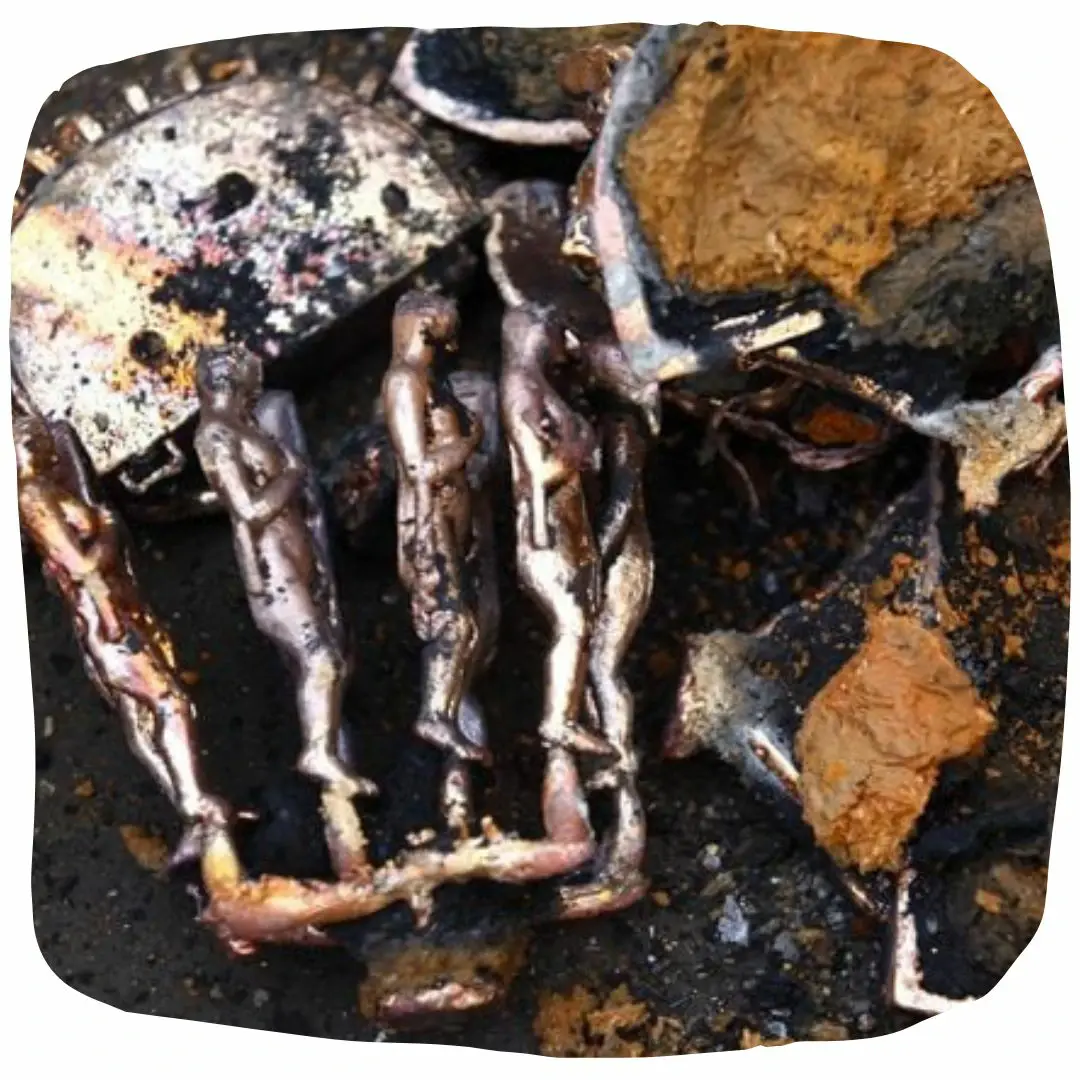
At this stage, a hollow mould in the shape of the deity is
obtained.
This is the time to pour liquid copper into the hollow mould which is then allowed to cool and harden inside a container of cold water. When the liquid metal has hardened, the mould is removed and the statue within is revealed.
This is the time to pour liquid copper into the hollow mould which is then allowed to cool and harden inside a container of cold water. When the liquid metal has hardened, the mould is removed and the statue within is revealed.
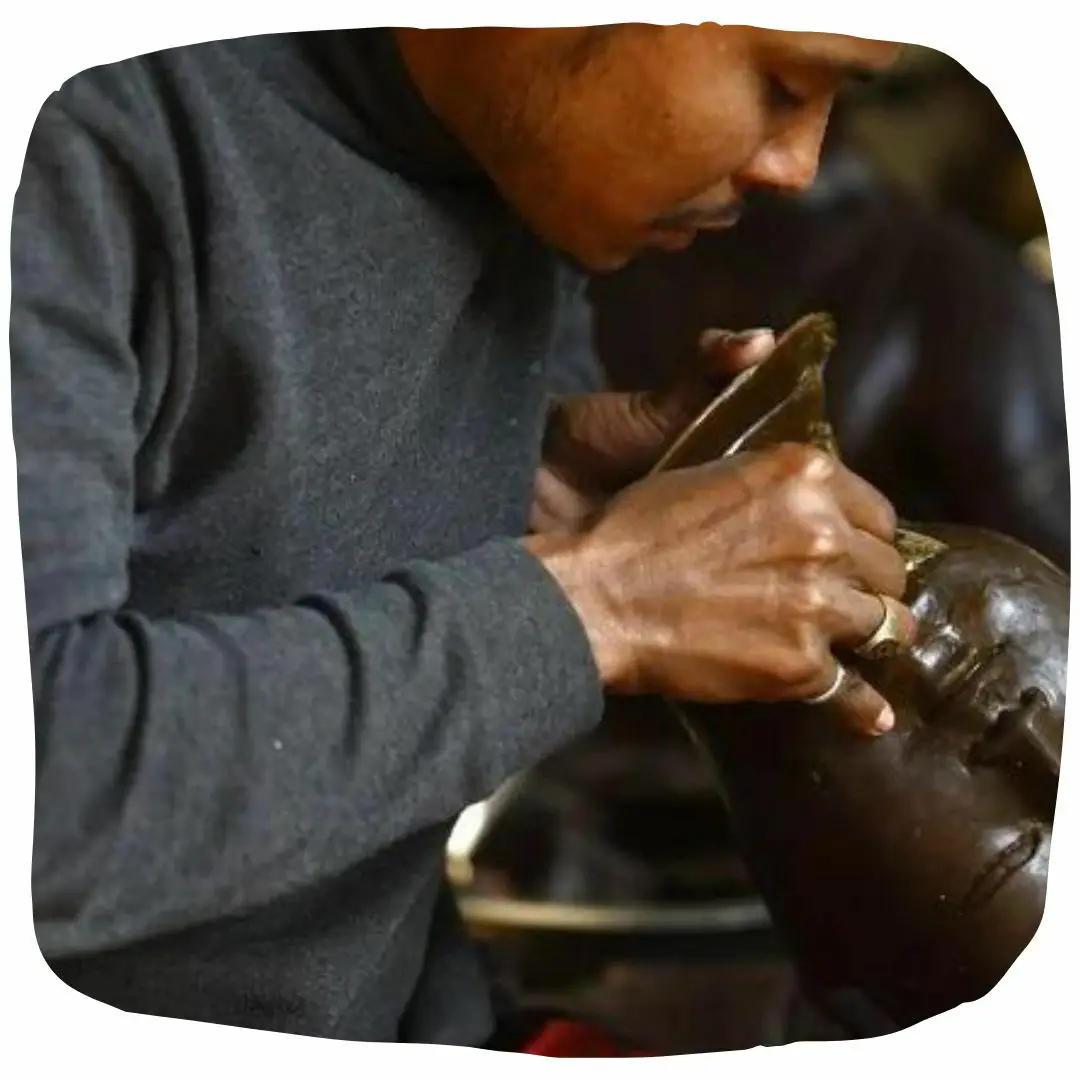
The artist works on the details of the statue using various tools.
It is then polished to get a shiny and lustrous surface.
Now comes the most important part of Nepalese art which is gold gilding. This is done by the traditional fire gilding method. A mixture of mercury and 18K gold is applied on the surface of the statue and heat is applied using a flame torch. The result is that mercury evaporates along with impurities, leaving a pure 24K gold finish.
Now comes the most important part of Nepalese art which is gold gilding. This is done by the traditional fire gilding method. A mixture of mercury and 18K gold is applied on the surface of the statue and heat is applied using a flame torch. The result is that mercury evaporates along with impurities, leaving a pure 24K gold finish.
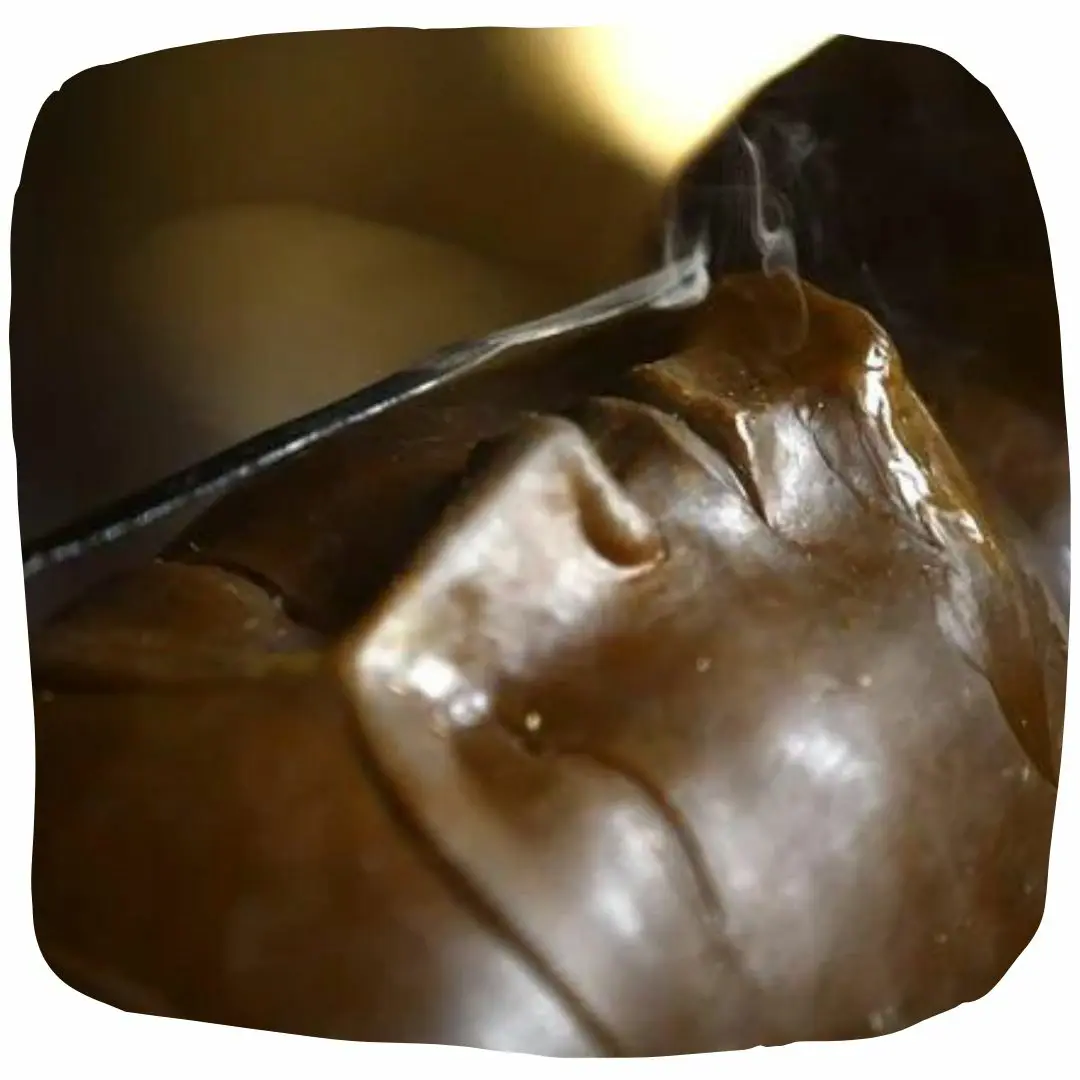
The lost-wax method of sculpting is the most preferred technique
for artists to cast a metallic statue having intricate details. Since Nepalese copper sculptures require extraneous effort for giving a majestic look by adding special embellishments, it takes several weeks to complete one masterpiece. A 24K gold gilded copper sculpture retains its brilliant luster for many years and appears as like before. Nepalese sculptures continue to remain one of the finest specimens of the art of the East that have a strong aesthetic appeal that other sculptures cannot match.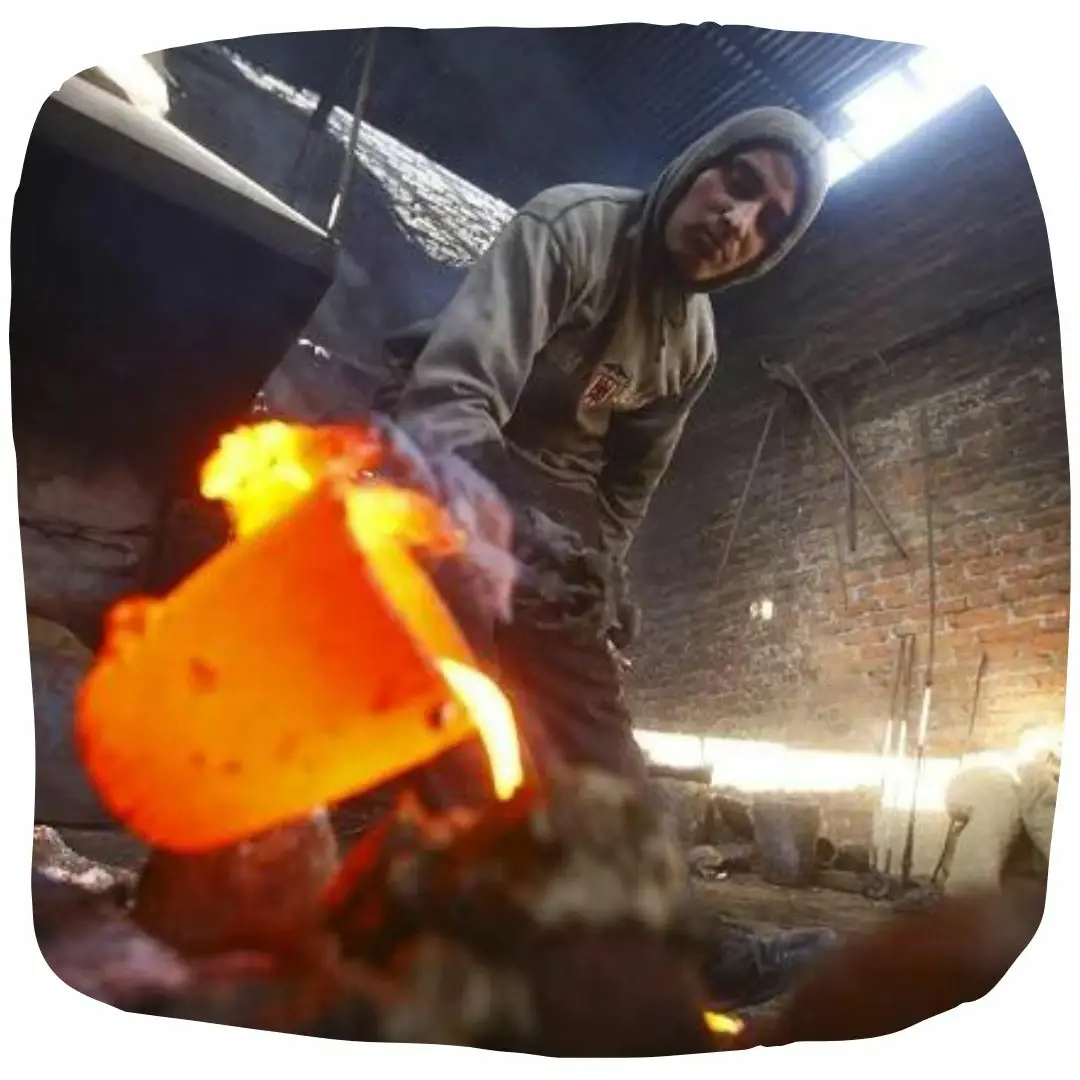
Products related to this item
9.0 inch Height X 7.0 inch width X 4.5 inch depth
$759
Express Shipping
Includes any tariffs and taxes
13.00 inch Height x 9.00 inch Width x 4.20 inch Depth
$904.75
Express Shipping
$1645 45% off
Includes any tariffs and taxes
7.00 inch Height X 4.50 inch Width X 2.30 inch Depth
$443.10
Express Shipping
$633 30% off
Includes any tariffs and taxes
2.60 inch Height X 2.20 inch Width X 1.50 inch Depth
$74.10
Express Shipping
$114 35% off
Includes any tariffs and taxes
2.00 inch Height X 1.60 inch Width X 1.00 inch Depth
$81
Express Shipping
Includes any tariffs and taxes
6.70 inch Height x 5.00 inch Width x 2.50 inch Depth
$464.80
Express Shipping
$581 20% off
Includes any tariffs and taxes
7.5 inch Height x 7.5 inch Width x 3 inch Depth
$510.40
Express Shipping
$638 20% off
Includes any tariffs and taxes
8.70 inch Height x 7.00 inch Width x 4.50 inch Depth
$464.80
Express Shipping
$581 20% off
Includes any tariffs and taxes
8.8 inch Height x 11.2 inch Width x 8 inch Depth
$759
Sold Out
Includes any tariffs and taxes
13.00 inch Height x 10.50 inch Width x 4.20 inch Depth
$904.75
Express Shipping
$1645 45% off
Includes any tariffs and taxes
9.20 inch Height x 7.20 inch Width x 3.20 inch Depth
$607.20
Express Shipping
$1012 40% off
Includes any tariffs and taxes