Embodiment of Divine Power and Cosmic Balance
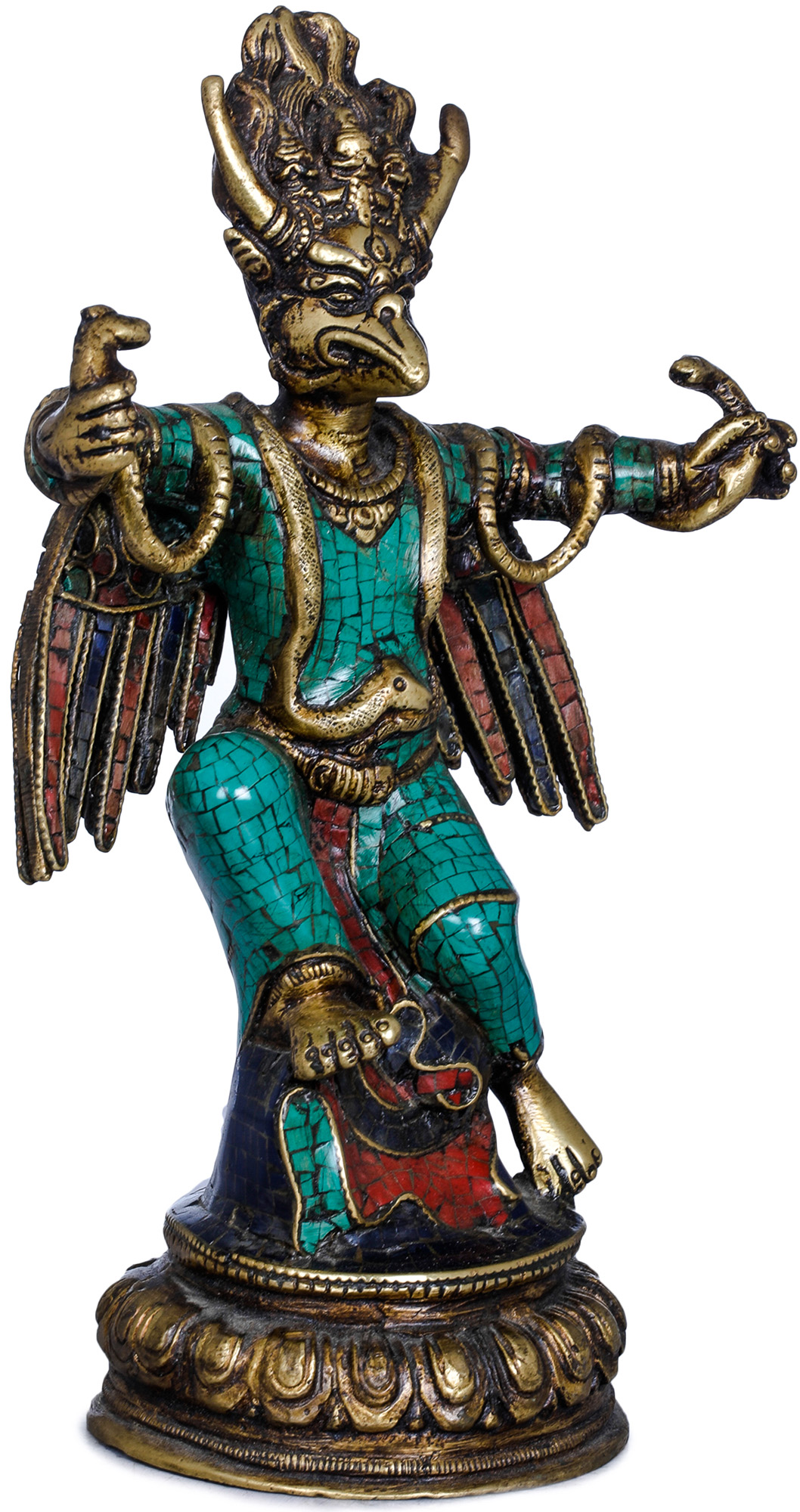
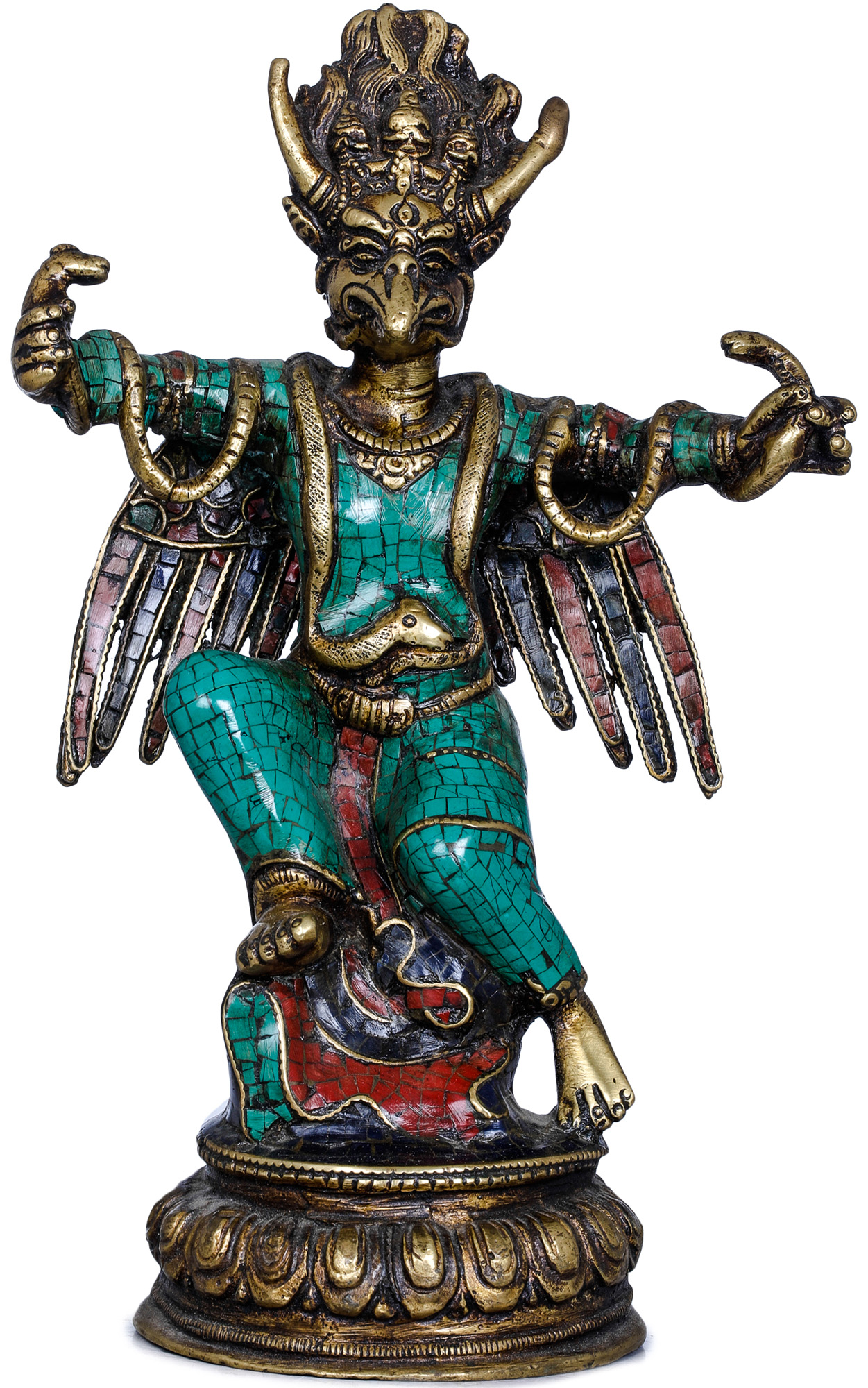
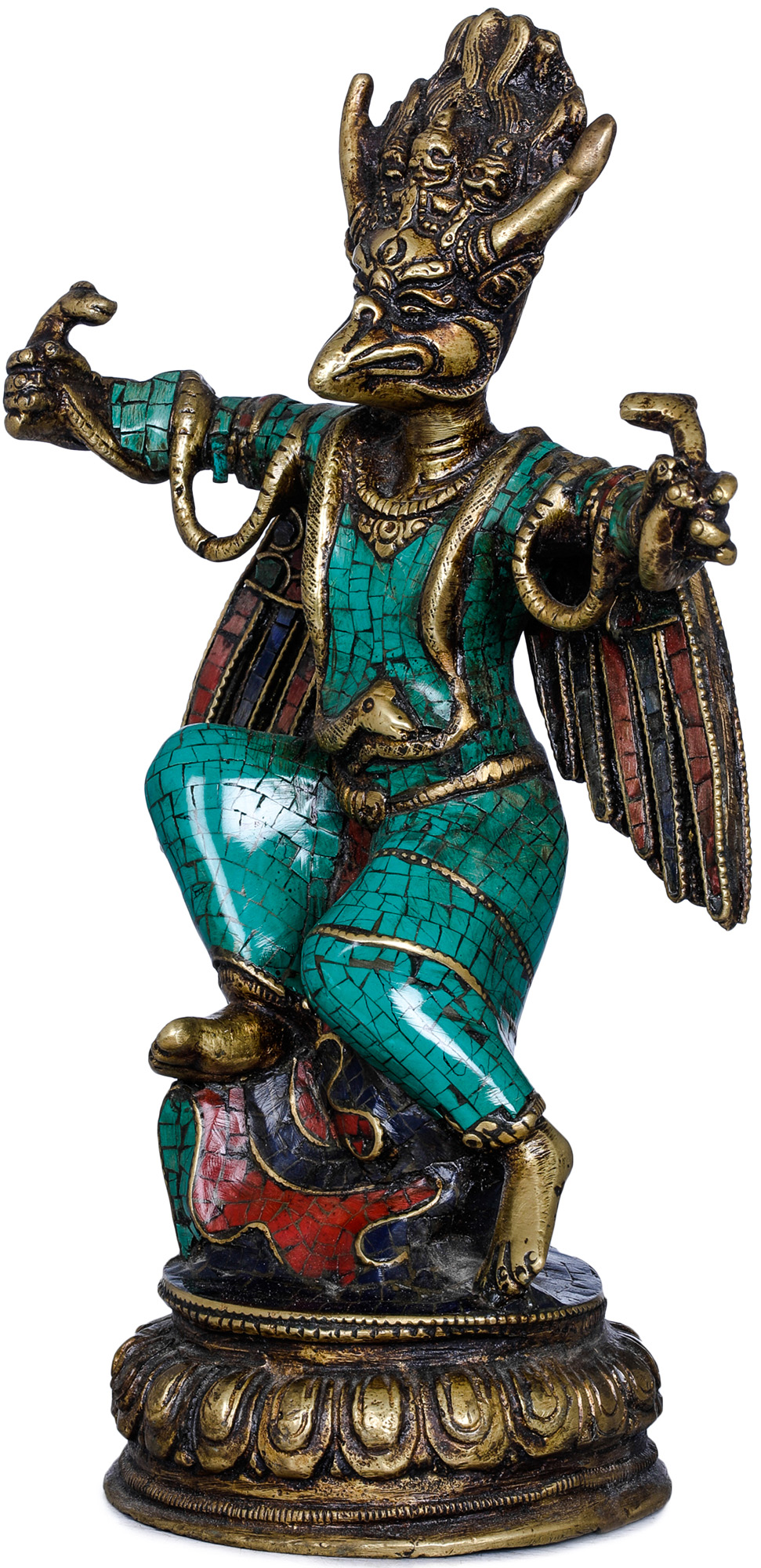
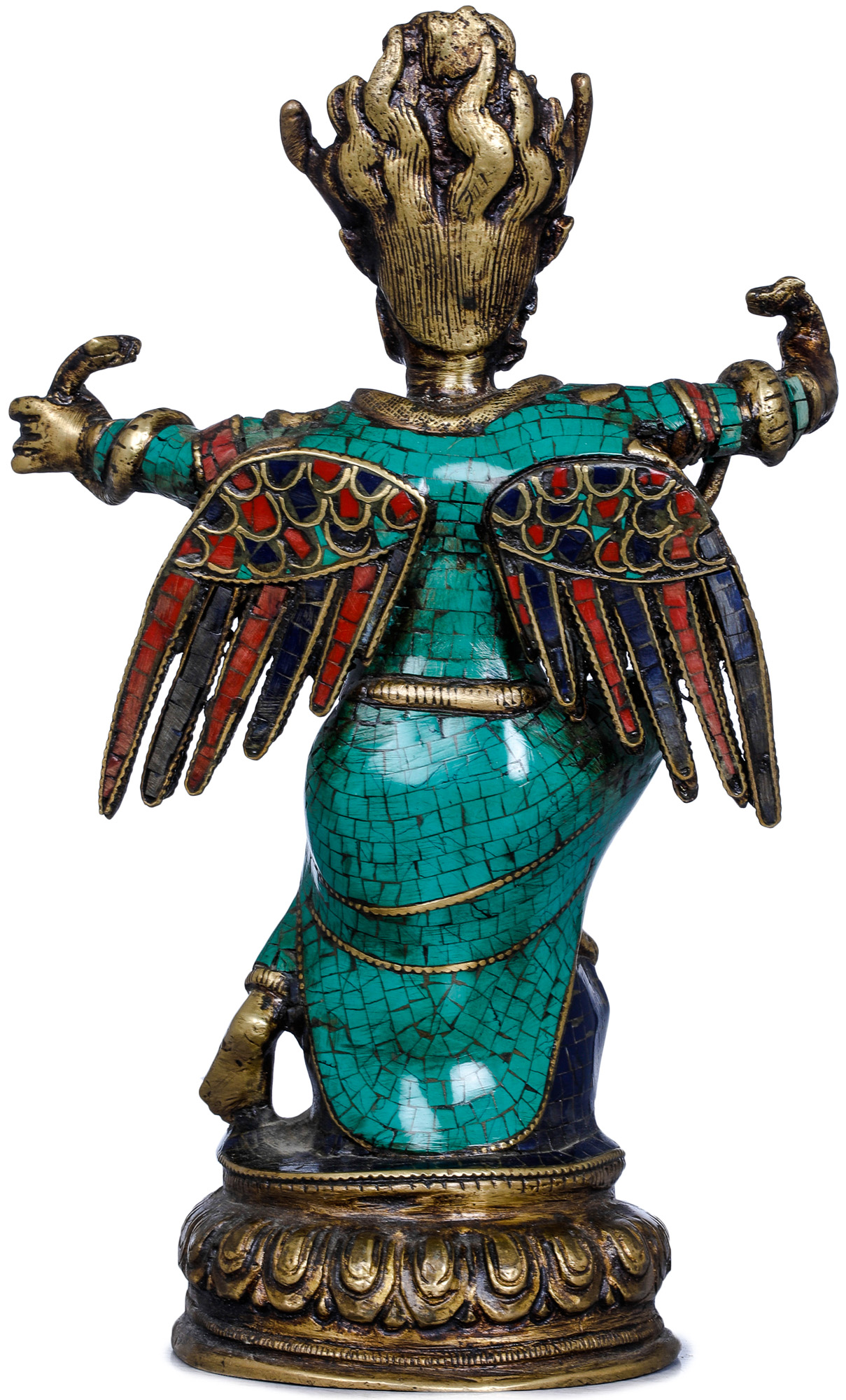
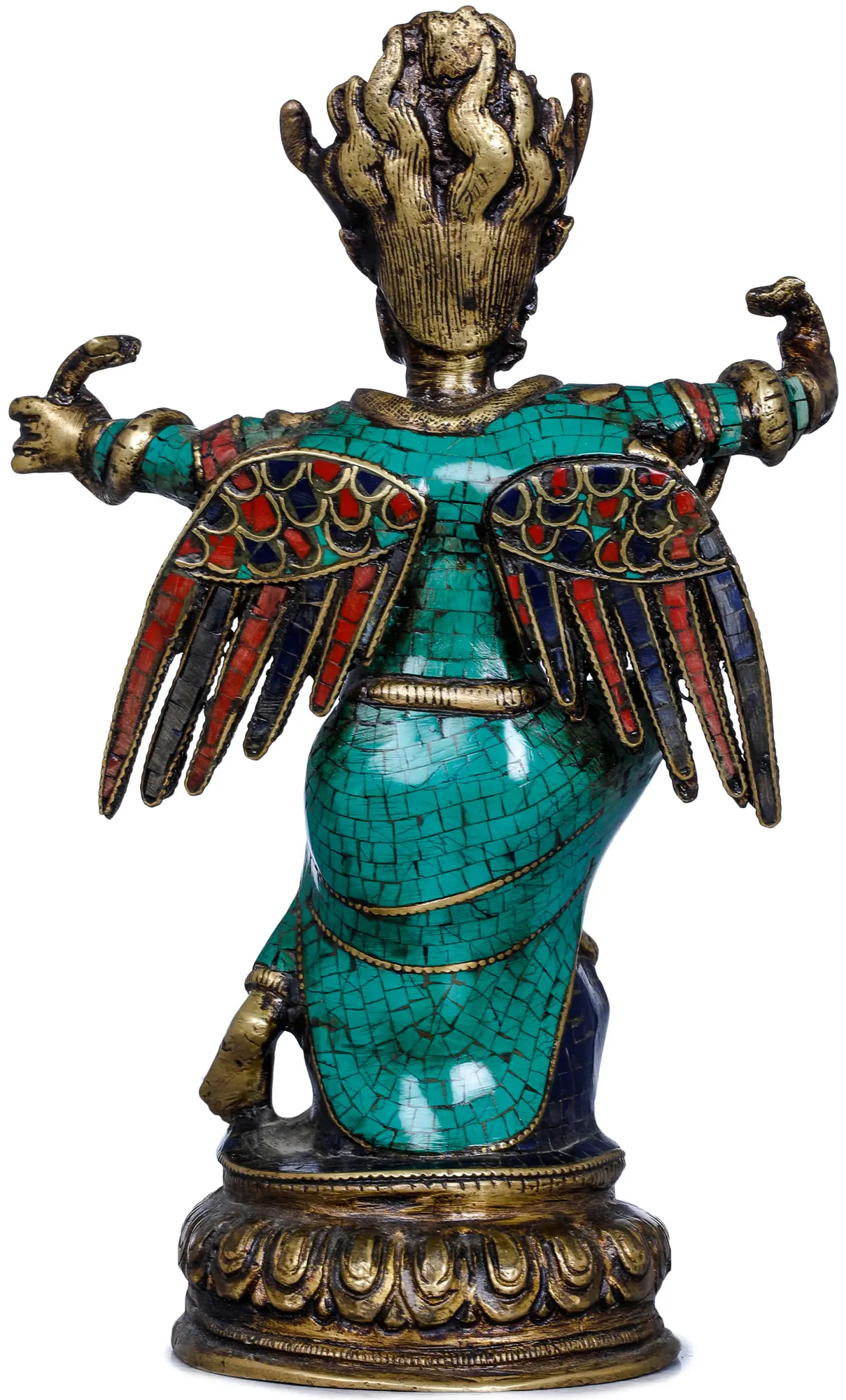
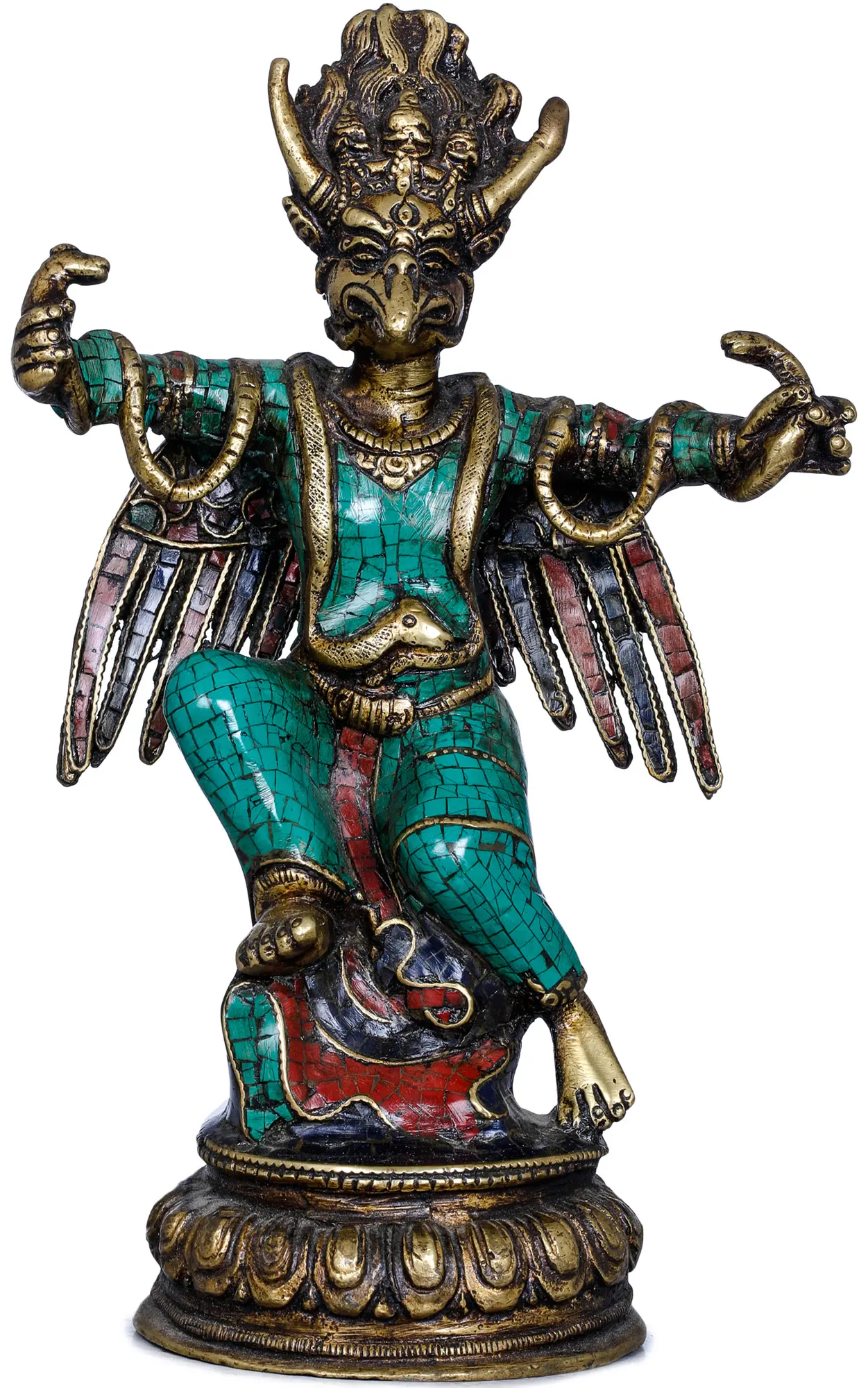
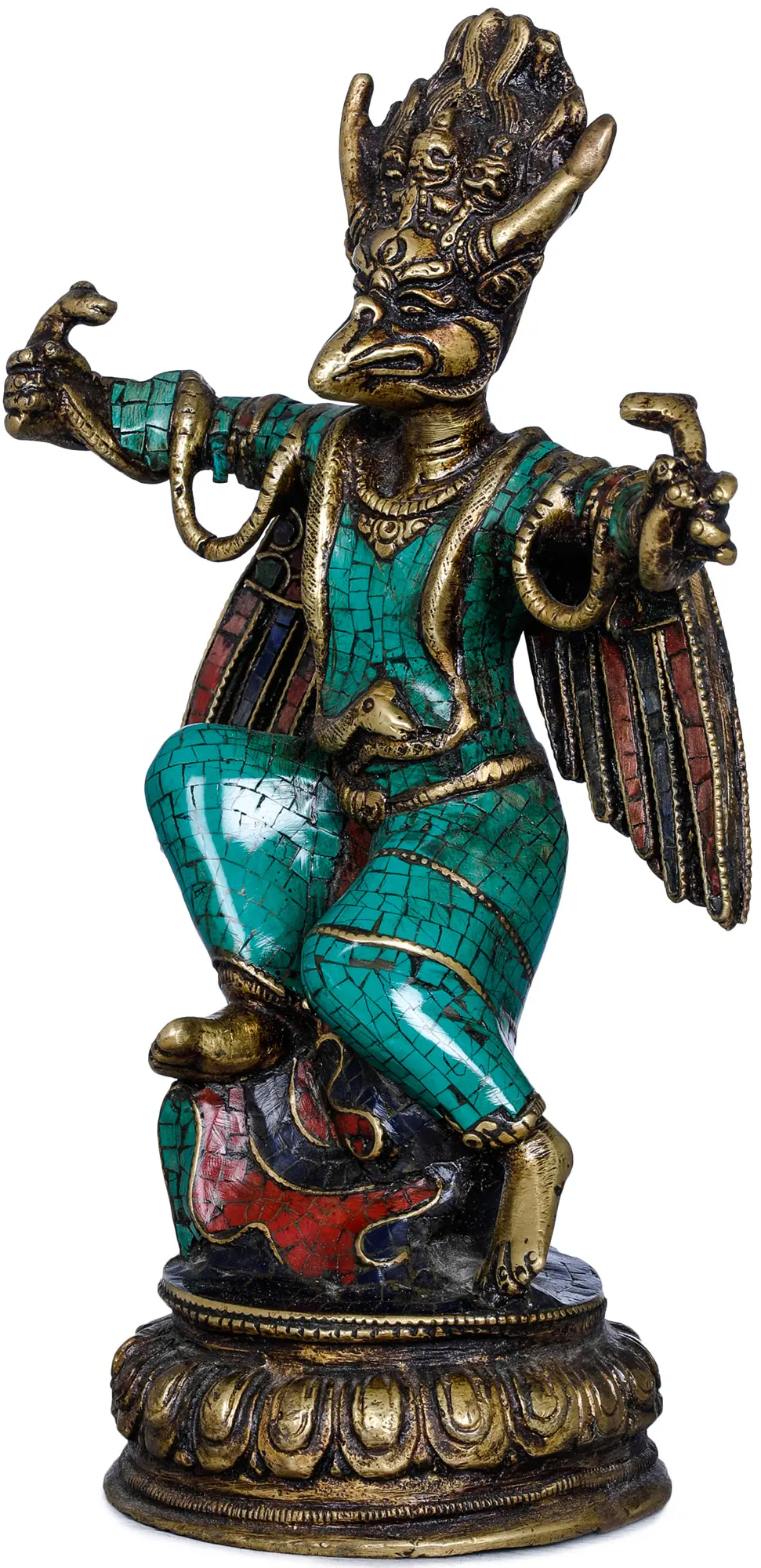
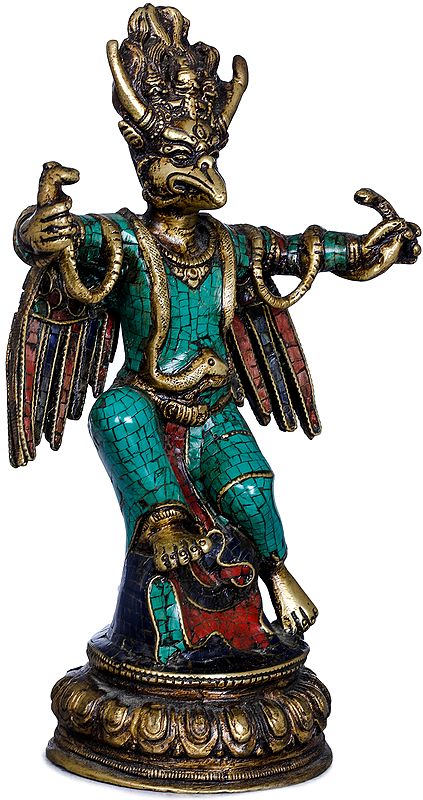
This exquisite brass statue captures the majestic Garuda, a divine avian being revered in Hindu mythology. With his powerful eagle-like visage and formidable stance, this representation embodies strength, speed, and unwavering devotion. The intricate inlay work, featuring vibrant turquoise, deep red, and striking blue stones, elevates the artistry, bringing to life the dynamism of this celestial protector. Each tesserae is meticulously placed, creating a mosaic of color that accentuates the golden sheen of the brass, making this piece a true testament to the skilled craftsmanship of Nepalese artisans.
––––––––––––––––––Garuda: The Celestial Eagle and Enemy of Serpents
Garuda is perhaps most famously known as the mount (vahana) of Lord Vishnu, one of the principal deities of Hinduism. His eternal enmity with the Naga, or serpent deities, is a recurring theme in ancient texts. Tales tell of Garuda's mother, Vinata, being tricked into servitude by Kadru, the mother of the serpents. Garuda's heroic efforts to free his mother from this curse led to his legendary battles against the serpents, establishing him as their vanquisher. This statue powerfully depicts this aspect of Garuda, with serpents coiled and held firmly in both his hands, symbolizing his triumph over negative forces and his role as a protector against the ills represented by the serpent. The dynamic pose suggests an ongoing struggle, frozen in time by the artisan's skill, inviting contemplation of the eternal fight between good and evil.
––––––––––––––––––A Symbol of Protection and Spiritual Ascent
The presence of Garuda is considered auspicious, a powerful symbol of protection against evil, misfortune, and even disease. His swift flight across the heavens and his ability to traverse different realms make him a representation of spiritual ascent and liberation. This statue, with its commanding presence and the rich symbolism it carries, can serve as a focal point for meditation and prayer, invoking courage and resilience in the face of adversity. The vibrant inlays mirror the opulence of divine realms, while the sturdy brass base signifies the grounded strength that supports this celestial power. Display this magnificent piece in your home or sacred space to invite divine protection, foster inner strength, and celebrate the rich tapestry of Hindu philosophy and art.How to keep a Brass statue well-maintained?
Brass statues are known and appreciated for their exquisite beauty and luster. The brilliant bright gold appearance of Brass makes it appropriate for casting aesthetic statues and sculptures. Brass is a metal alloy composed mainly of copper and zinc. This chemical composition makes brass a highly durable and corrosion-resistant material. Due to these properties, Brass statues and sculptures can be kept both indoors as well as outdoors. They also last for many decades without losing all their natural shine.
Brass statues can withstand even harsh weather conditions very well due to their corrosion-resistance properties. However, maintaining the luster and natural beauty of brass statues is essential if you want to prolong their life and appearance.
- The best and simplest way to maintain a brass statue is to clean it at least twice a week using a soft cloth or cotton rag. This will prevent dust from accumulating on the surface. Dusting is especially important for outdoor statues since it is prone to dust accumulation much more than indoors.
- To give a natural shine and luster to the statue, you may apply coconut or olive oil using cotton on every portion. You can use a toothbrush to get to the small crevices but do not be too harsh. This will make the brass statue appear fresh and new with a polished look.
In case you have a colored brass statue, you may apply mustard oil using a soft brush or clean cloth on the brass portion while for the colored portion of the statue, you may use coconut oil with a cotton cloth.
Brass idols of Hindu Gods and Goddesses are especially known for their intricate and detailed work of art. Nepalese sculptures are famous for small brass idols portraying Buddhist deities. These sculptures are beautified with gold gilding and inlay of precious or semi-precious stones. Religious brass statues can be kept at home altars. You can keep a decorative brass statue in your garden or roof to embellish the area and fill it with divinity.









 Upload an Image