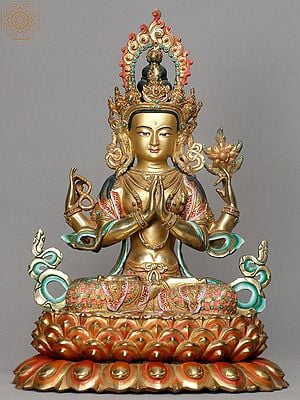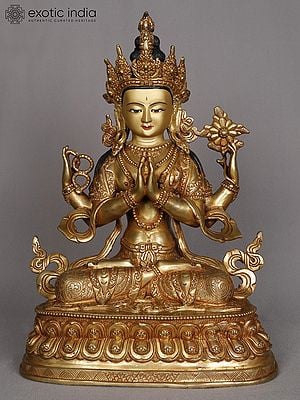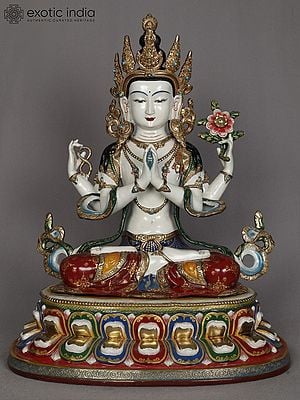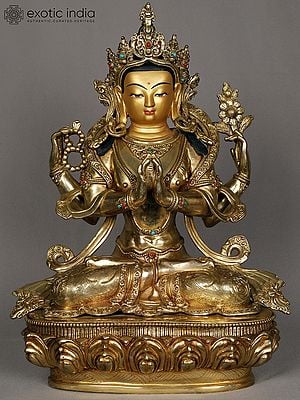
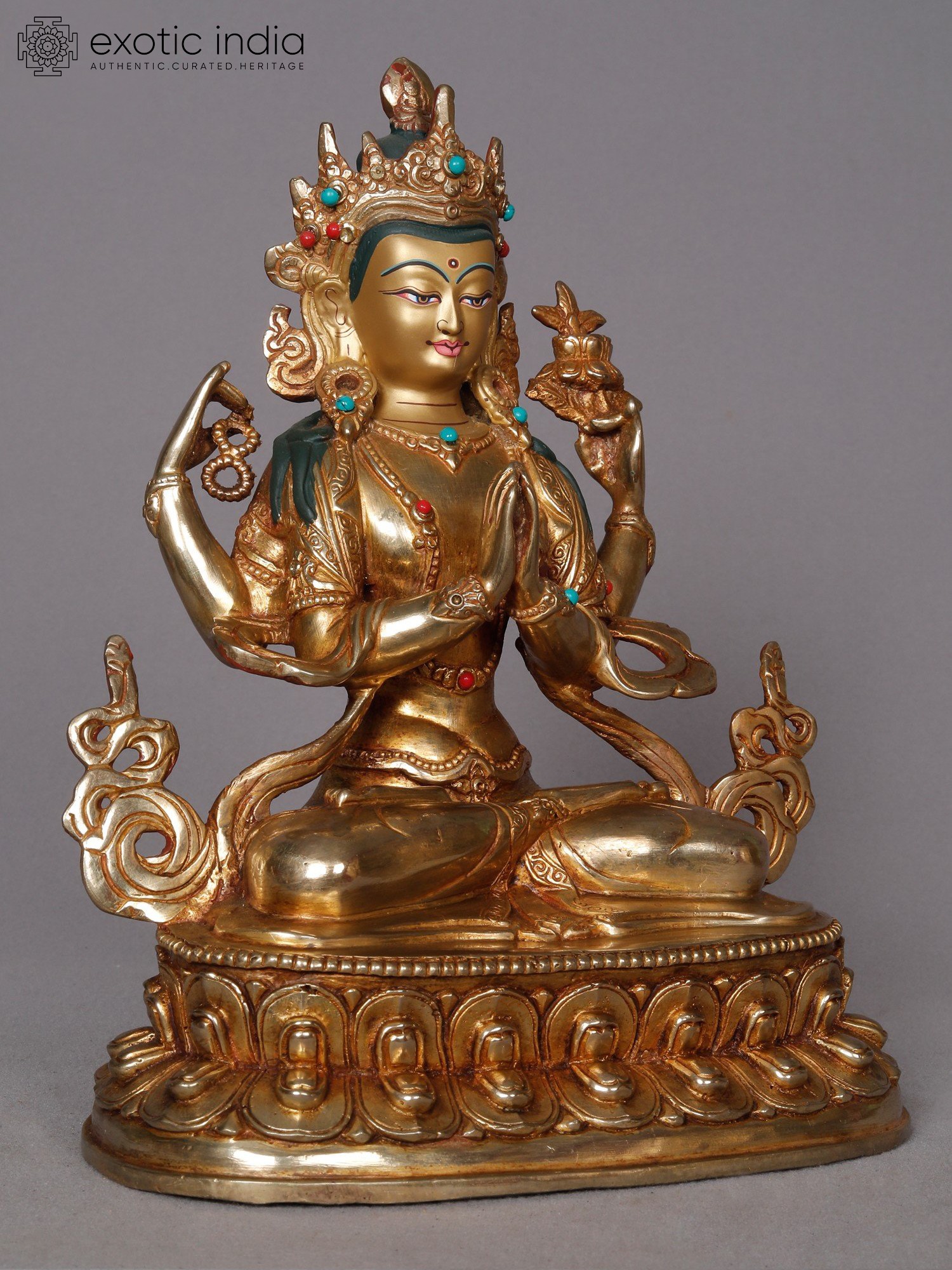
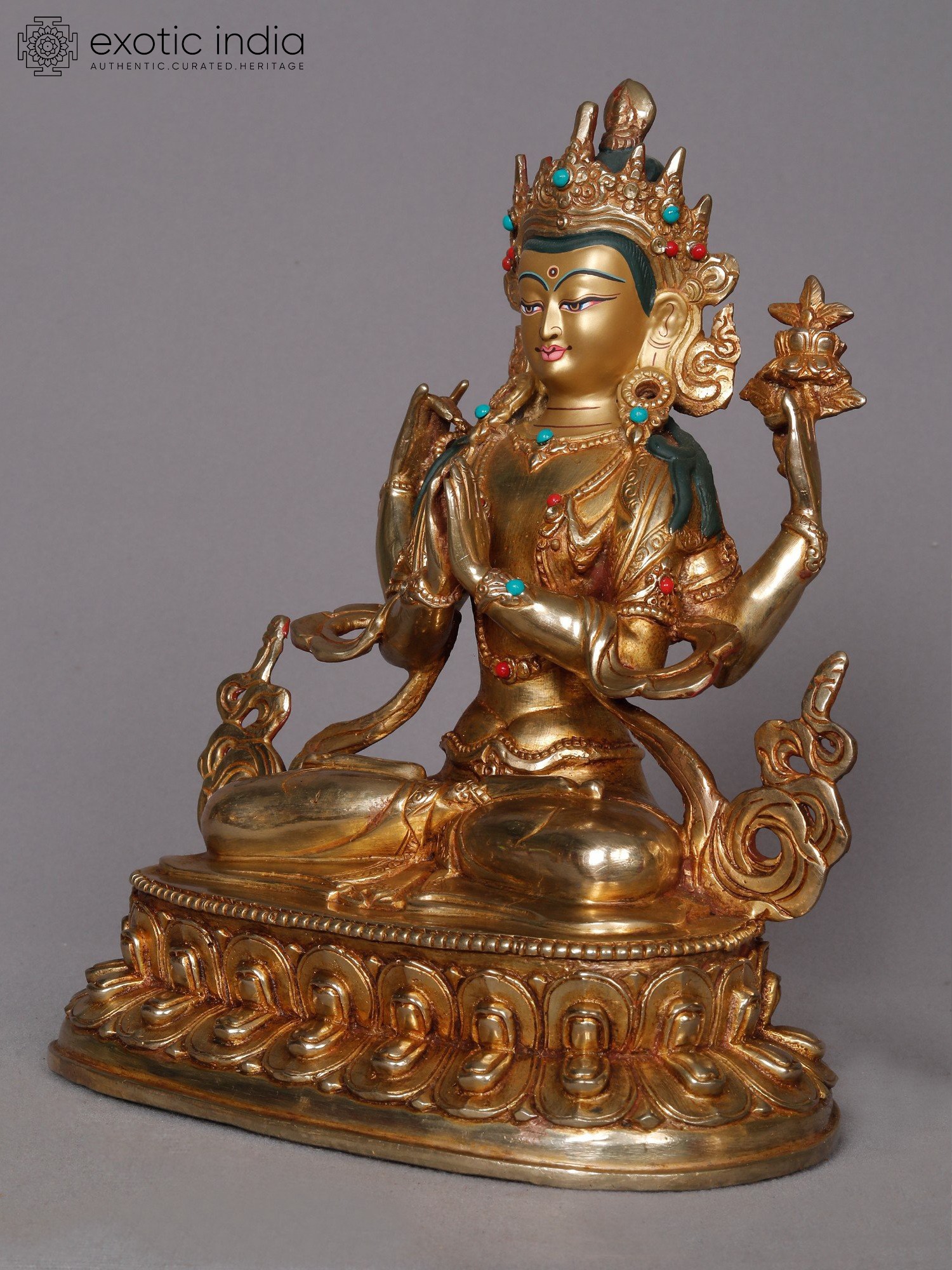
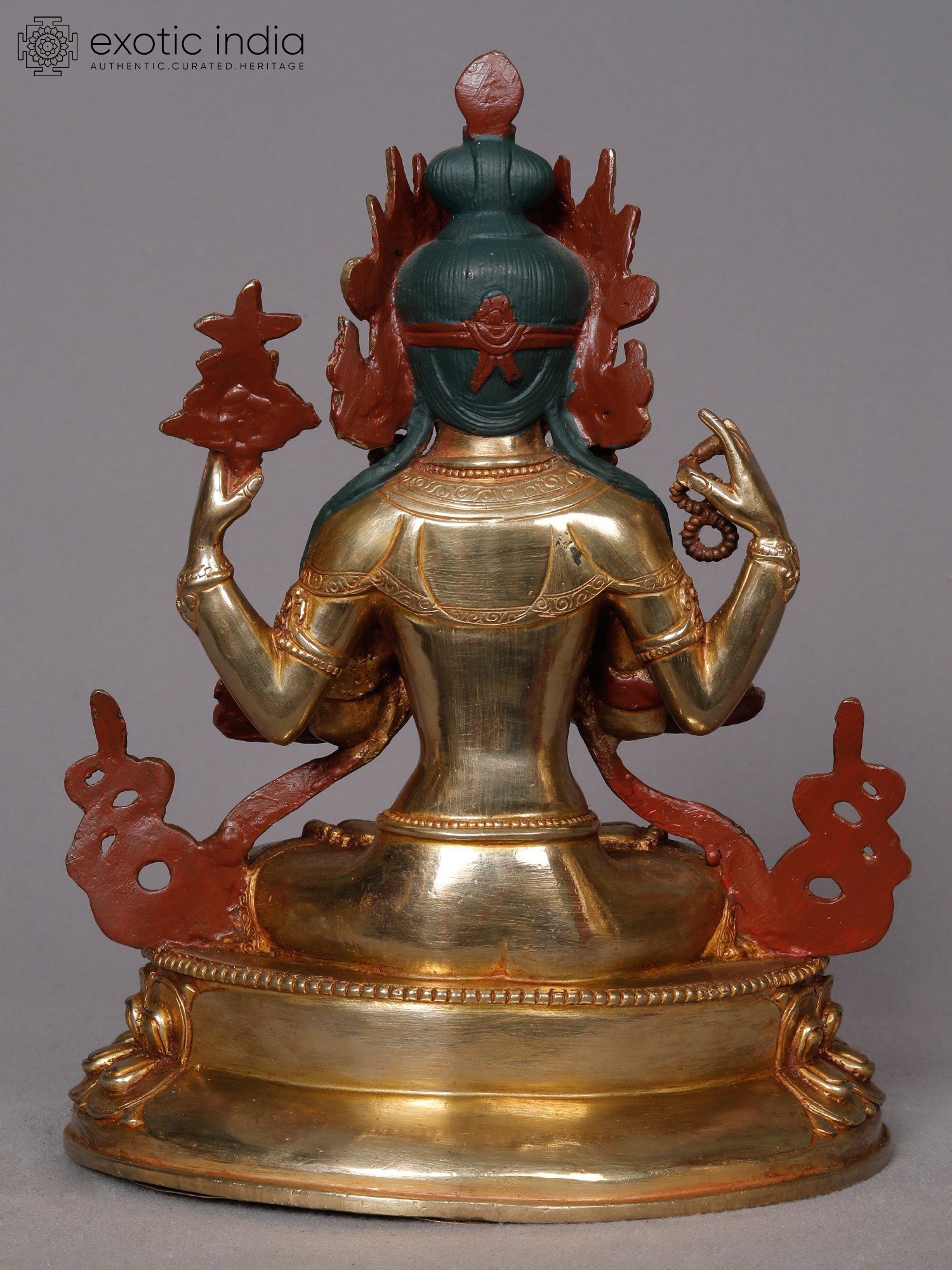
Kharchari Copper Sculpture: Bodhisattva of Compassion, 9 Inches

| Specifications |
 |
CAA136 |
 |
Copper With Gold |
 |
Height: 9 inch |
| Width: 7 inch | |
| Depth: 4.5 inch | |
 |
Weight 1.80 kg |
| About the Item |
|
| Delivery and Return Policies |
 |
Usually ships in 6 days |
 |
Returns and Exchanges accepted within 7 days |
 |
Free Delivery |


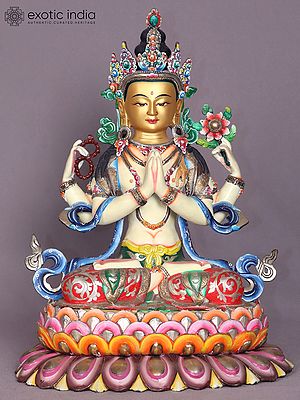
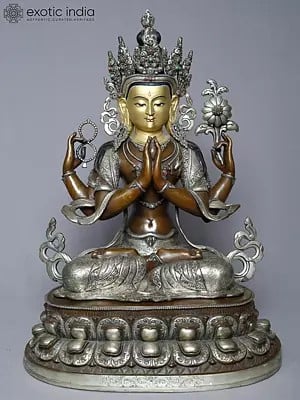
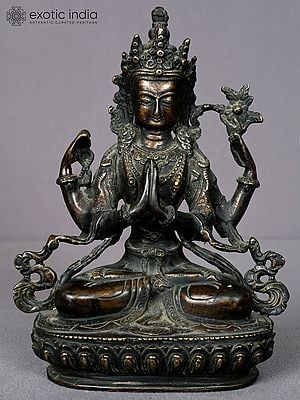
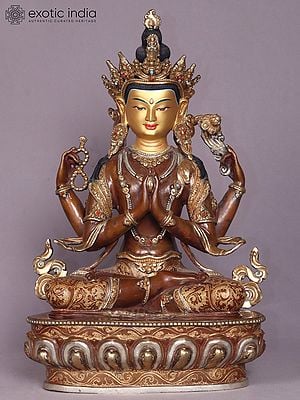
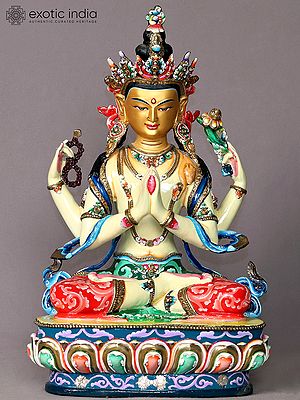
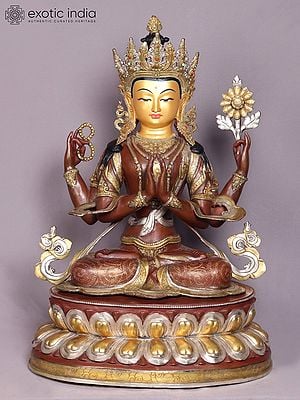
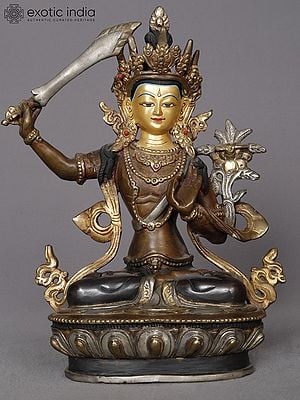
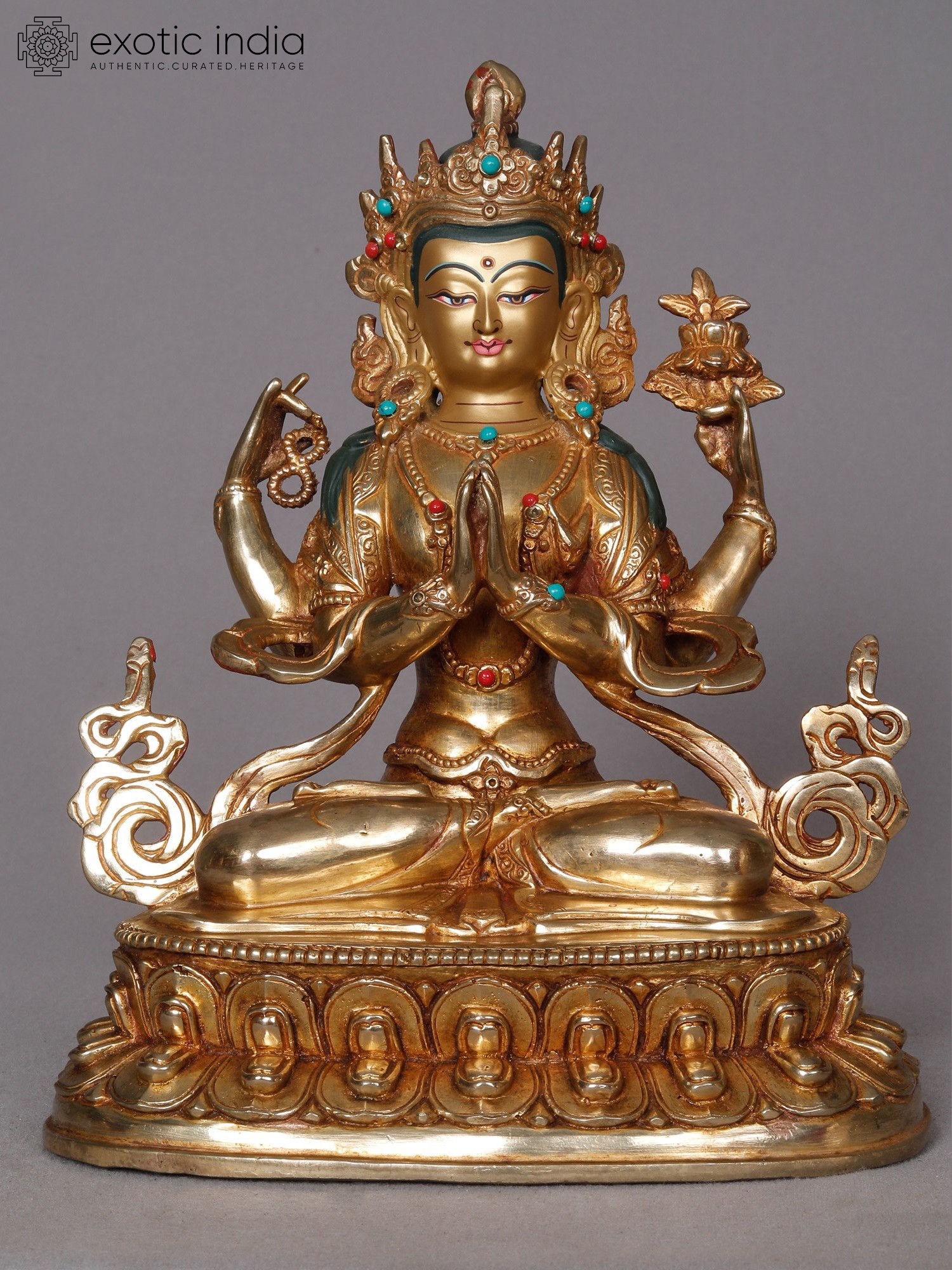
Kharchari, also
recognized as Avalokitesvara,
"One who looks with unwavering eye," is the most revered of all
Bodhisattva, embodying the compassion of all Buddhas. He attentively listens to
the prayers of all sentient beings during times of challenge and adversity. In
one significant Buddhist tale, Kharchari vows to tirelessly assist in
liberating all sentient beings from samsara, but faced with the enormity of the
task, his determination remains unshaken. To extend his reach to countless
cries of suffering, his arms fragment into pieces, multiplying to better reach
those in need.
At times,
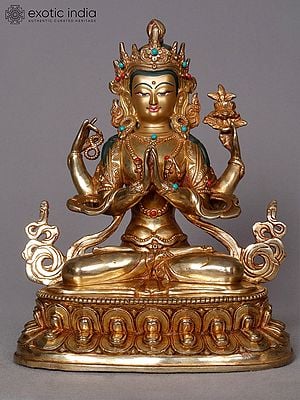
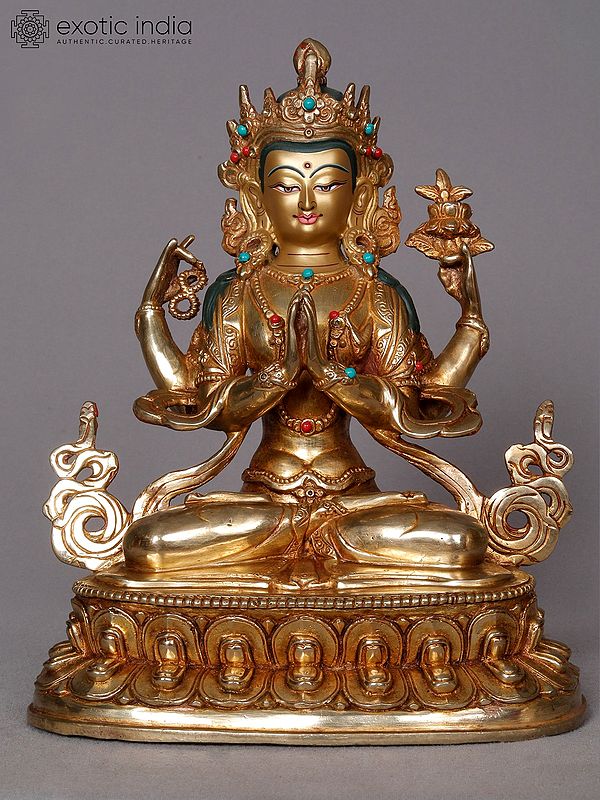
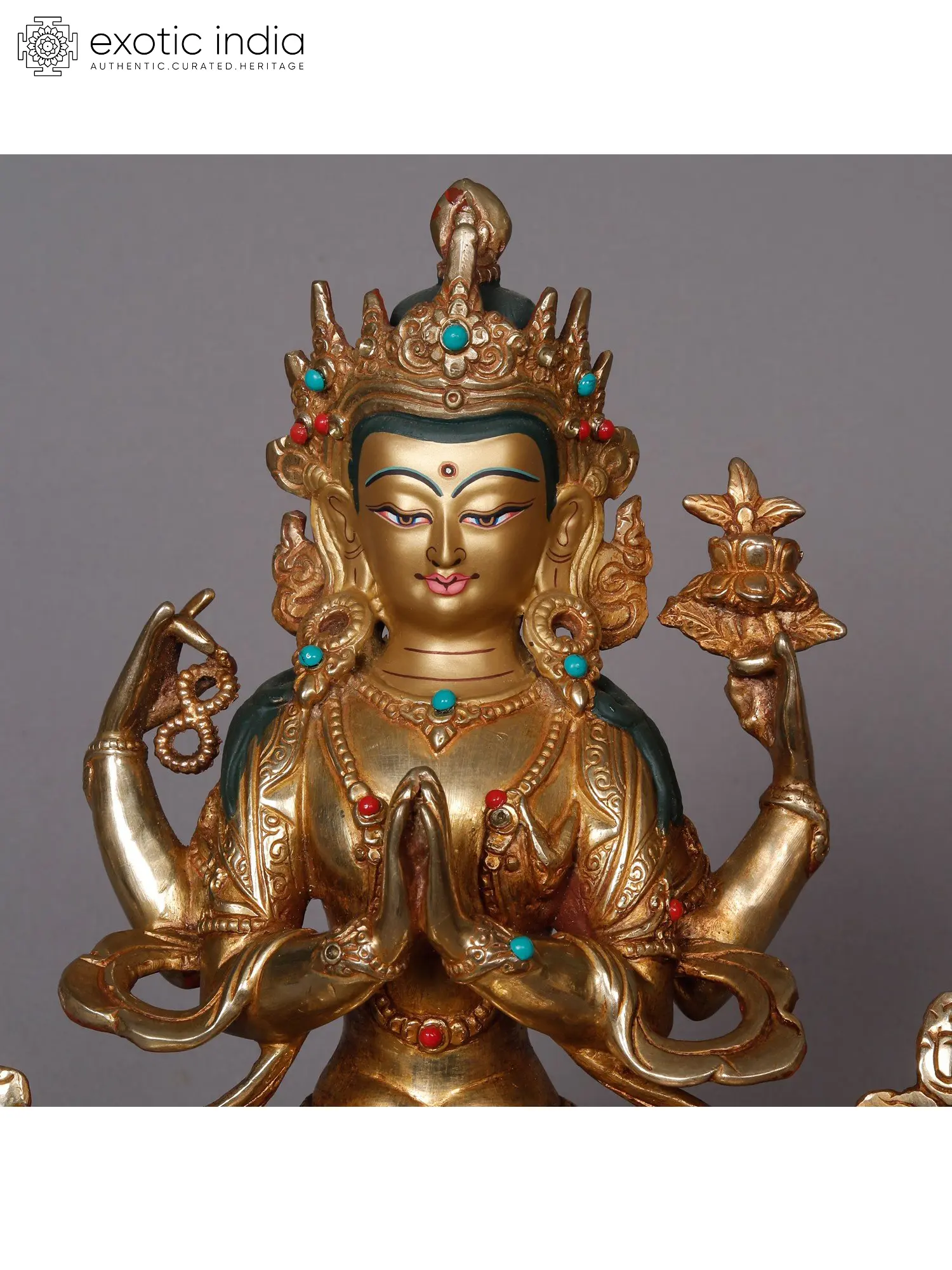
Kharchari is visualized with eleven heads and a thousand arms radiating around
him. His two front hands are joined in a devotional gesture, cradling his
jewel-adorned heart. His upper right-hand holds a crystal akshamala, or rosary,
symbolizing the eternal cycle. In his left hand, he gently holds a white lotus,
a representation of his ability to guide sentient beings from the murky waters
of suffering and hellish states to the purity of enlightenment. Draped in silk
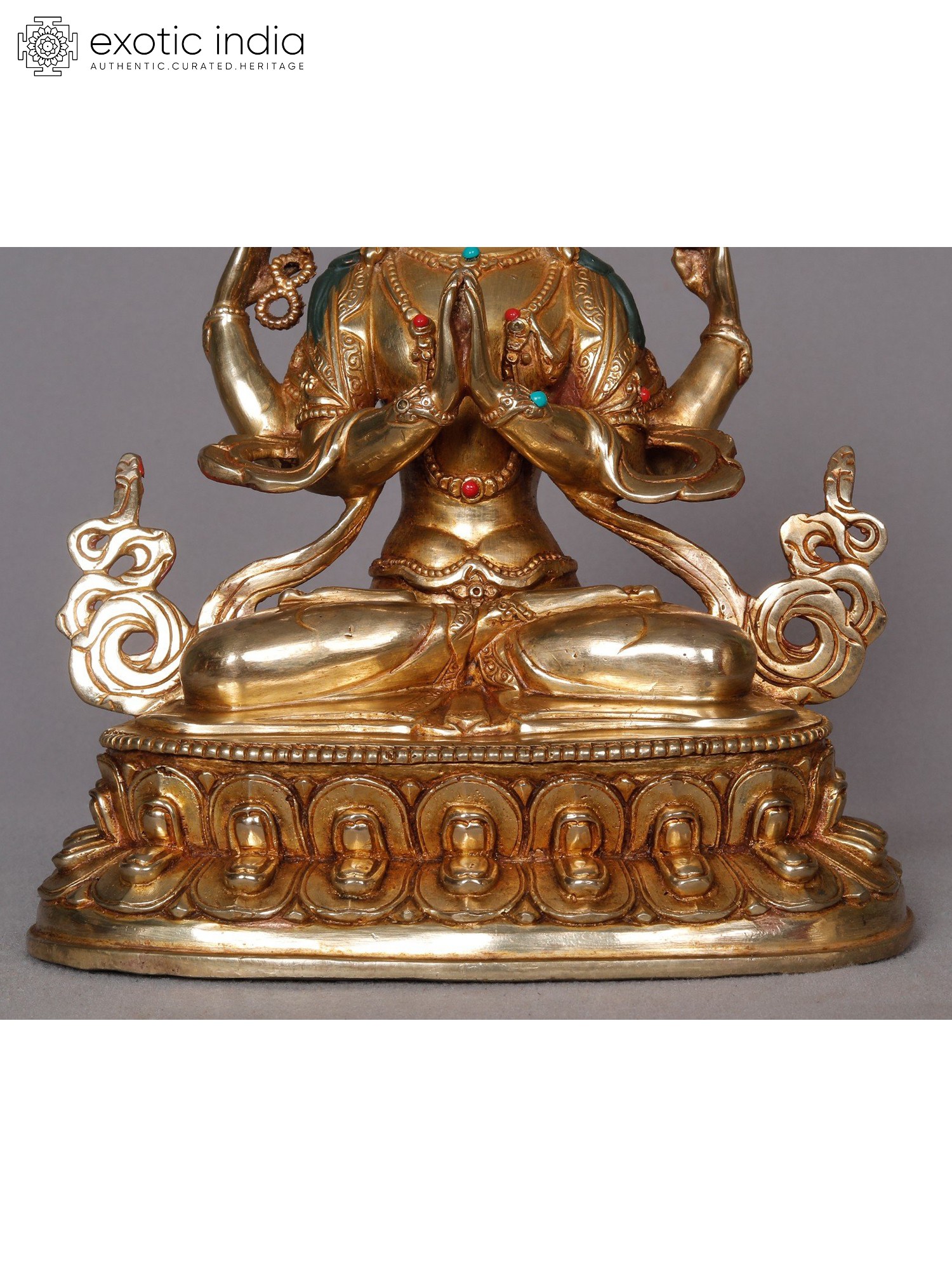
garments, both legs assume the "diamond pose" of meditation, and he
is seated on a cascade of lotus petals.
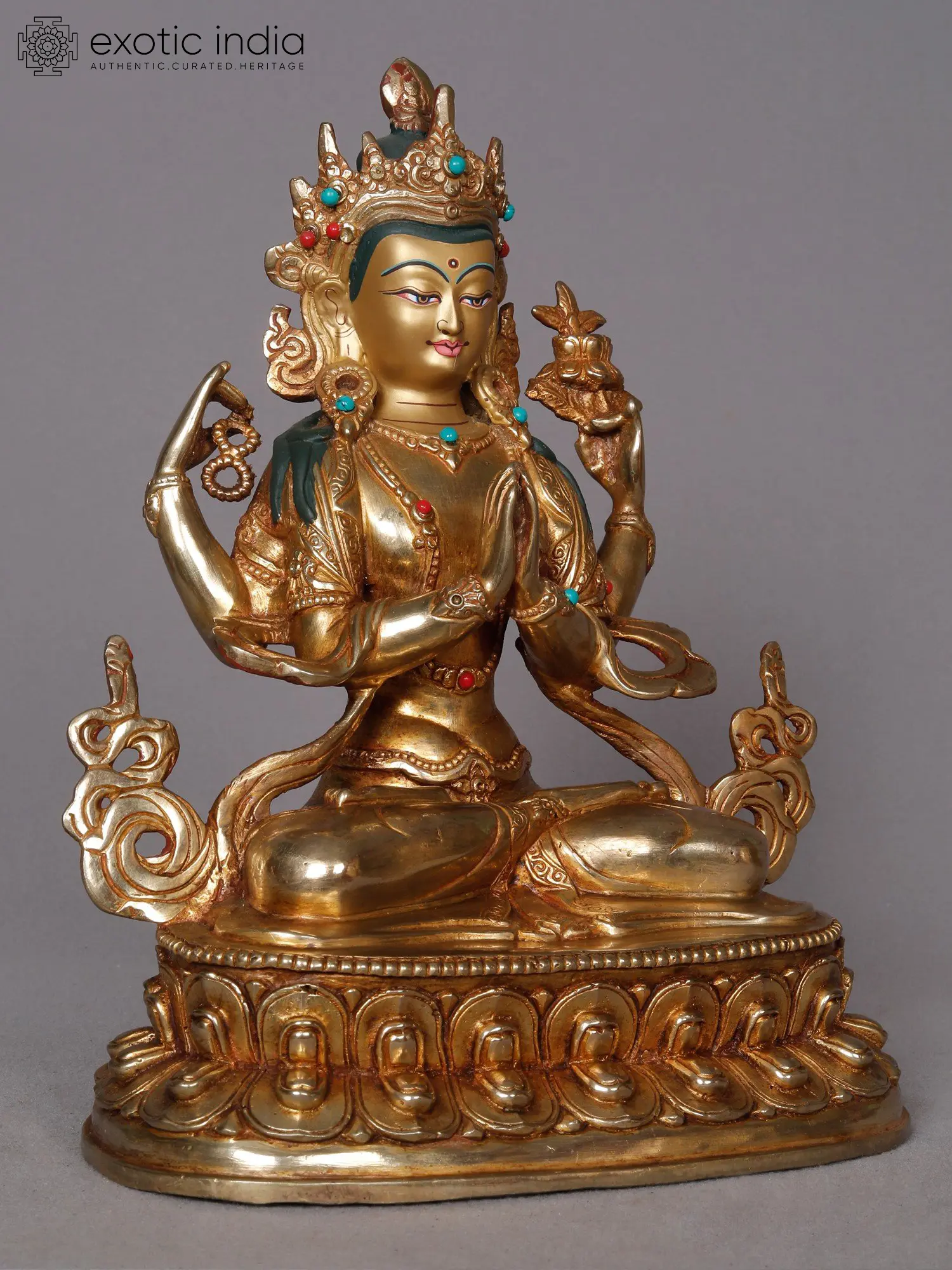
A Manifestation of Compassion and Wisdom
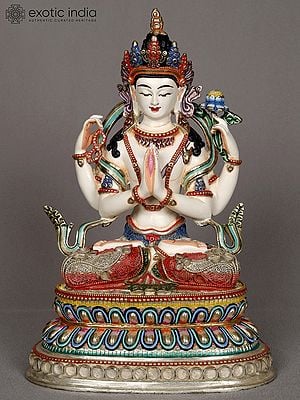
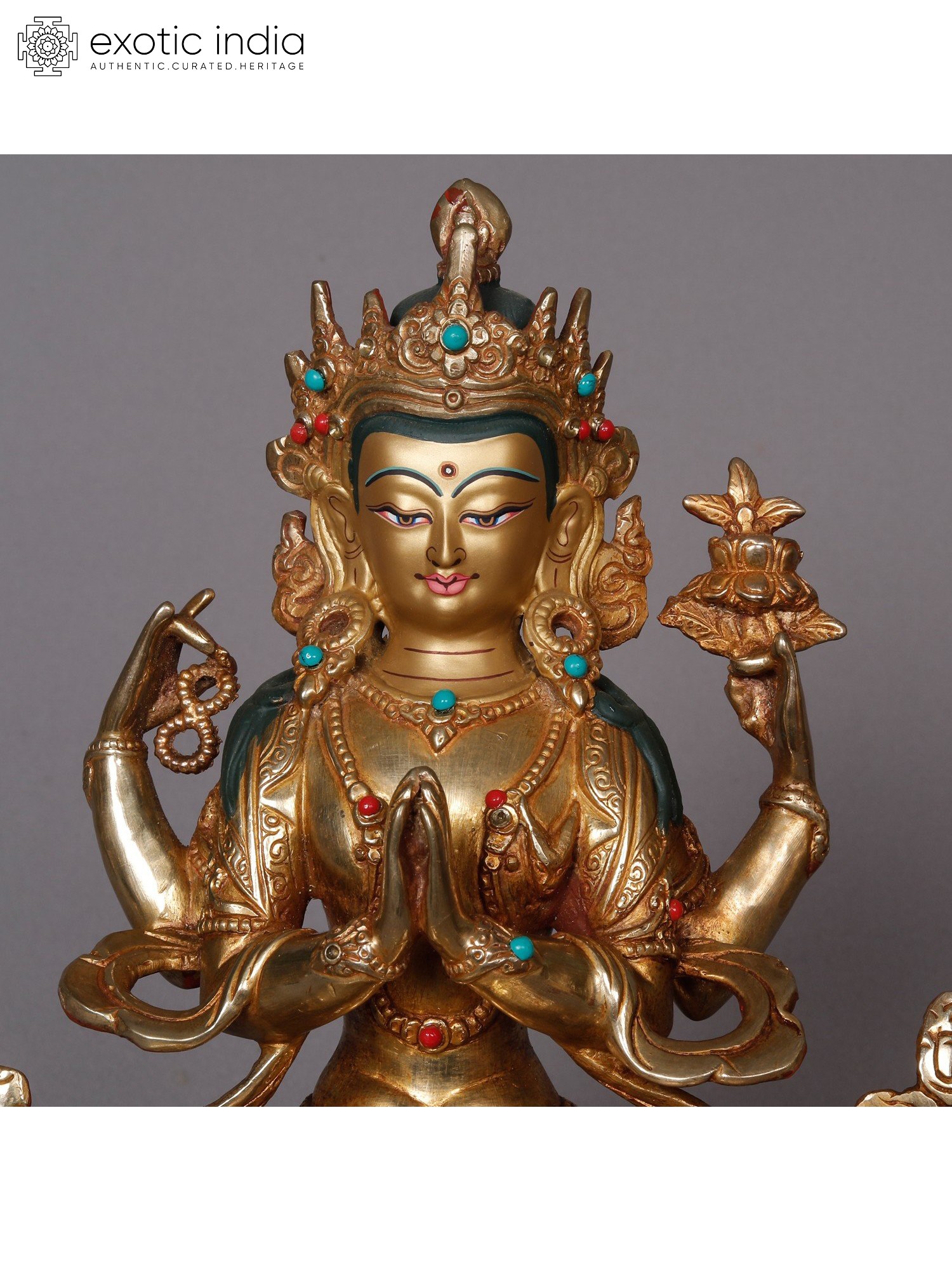
This exquisite statue, crafted from copper and adorned with a rich golden finish, embodies the serene presence of a revered Bodhisattva. With meticulous attention to detail, Nepalese artisans have brought forth a figure radiating spiritual power and profound tranquility. The statue depicts the deity seated in the lotus position, a posture symbolizing spiritual development and enlightenment. Its multiple arms are a common representation in Buddhist iconography, each hand conveying specific meanings and gestures that invite contemplation and devotion. The central hands are held together in the Anjali Mudra, a gesture of prayer and reverence, signifying respect and unity. To the left, one hand is raised, holding what appears to be a precious jewel or a symbol of prosperity, representing the Bodhisattva's ability to bestow blessings and fulfill desires. The corresponding hand on the right cradles a lotus flower, a potent symbol of purity, spiritual awakening, and the unfolding of wisdom. The delicate rendering of the petals and the serene expression of the deity evoke a sense of peace and spiritual grace that transcends the material realm. ––––––––––The Significance of the Form
Bodhisattvas are enlightened beings who have vowed to postpone their own final nirvana in order to help all sentient beings achieve enlightenment. They are seen as embodiments of compassion, wisdom, and skillful means. In this particular form, the deity is often identified with Avalokiteshvara, the Bodhisattva of Compassion, known by many names across Buddhist traditions, including Chenrezig in Tibetan Buddhism. The multi-armed aspect is believed to represent the Bodhisattva’s boundless compassion reaching out to all beings in all directions simultaneously. The serene facial features, with half-closed eyes, suggest deep meditation and inner peace. The elaborate crown and ornate jewelry signify the deity's royal nature and the richness of spiritual knowledge and qualities. The use of precious turquoise and red stones as embellishments adds to the visual splendor and symbolic depth, representing auspiciousness and vitality. ––––––––––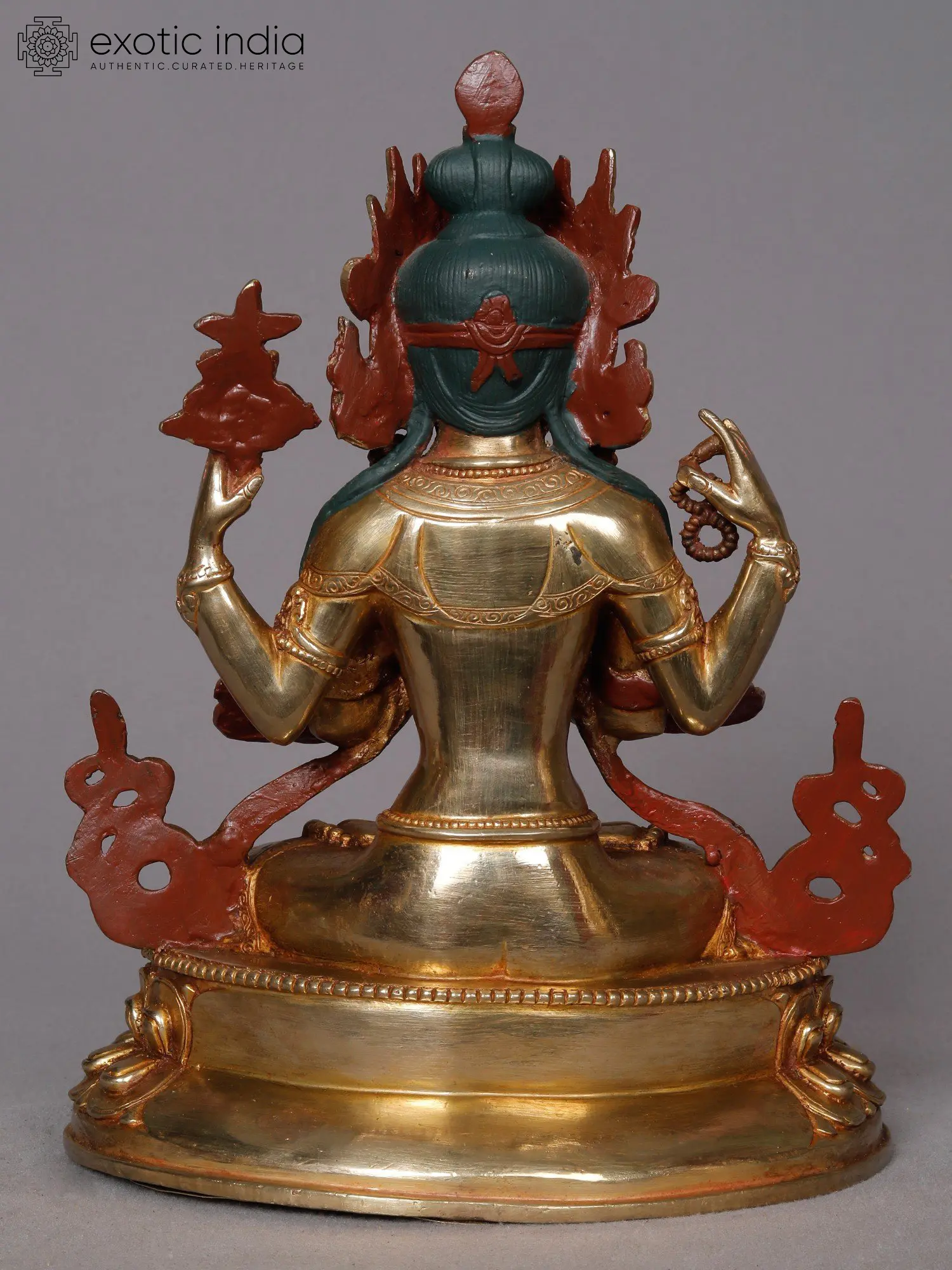
A Testament to Craftsmanship and Spirituality
Originating from Nepal, a land steeped in rich Buddhist traditions and renowned for its masterful metalwork, this statue is more than just an artistic creation; it is a conduit for spiritual connection. The copper base provides a solid foundation for the intricate artistry, while the gleaming gold finish imparts an aura of divinity and sacredness. The entire piece is a testament to the skill and devotion of the craftspeople who have passed down their techniques through generations. Displaying such a statue in one's home or sacred space is believed to invite blessings, promote inner peace, and foster a deeper connection to the path of enlightenment. It serves as a constant reminder of the virtues of compassion and wisdom that the Bodhisattva embodies, inspiring practitioners to cultivate these qualities within themselves. The substantial weight and intricate details speak to the quality and dedication invested in its creation, making it a truly remarkable piece of devotional art.How are Nepalese copper statues made?
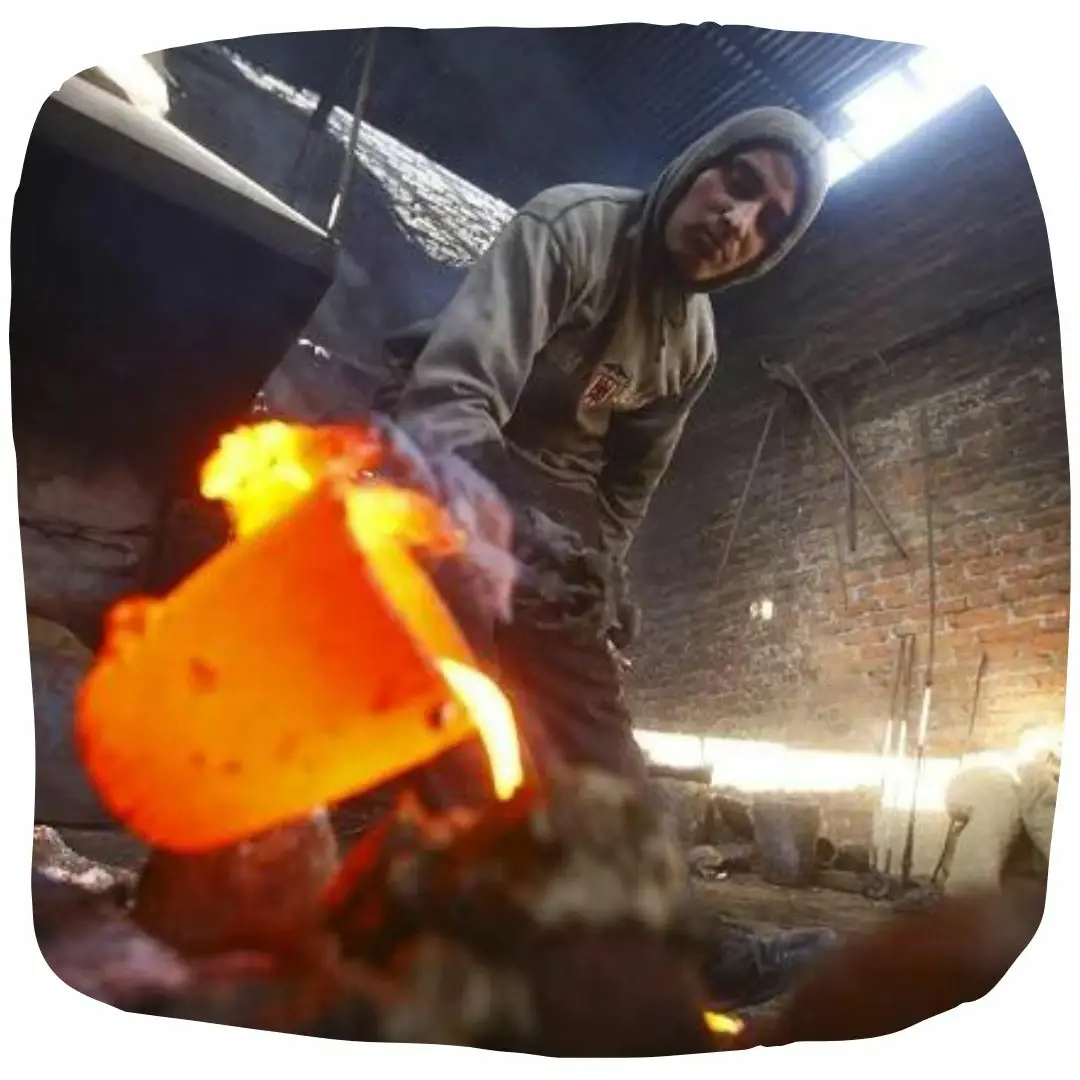
Nepalese statues and sculptures have a high copper content and therefore develop a slightly reddish patina on the surface as they age. However, the most unique feature of Nepalese copper statues is their decorative detailing. The pieces are heavily gilded and sometimes inlaid with semi-precious stones. This embellishment protects them from getting tarnished. The traditional lost-wax method for casting Nepalese copper statues remains the most practiced technique in Nepal for many centuries. This process involves many steps and requires skilled artists.
The first step in lost-wax sculpting is to make a wax replica of the desired Buddhist deity to be cast in copper. This replica is created by hand and therefore needs excellent artistic skills otherwise fine features will be lacking.
Once the wax replica is made, it is then coated with a special mixture of clay with a brush. This layer of clay is hardened when left to dry. A small hole is made on the base of the wax mould so that the wax flows away when it is heated.
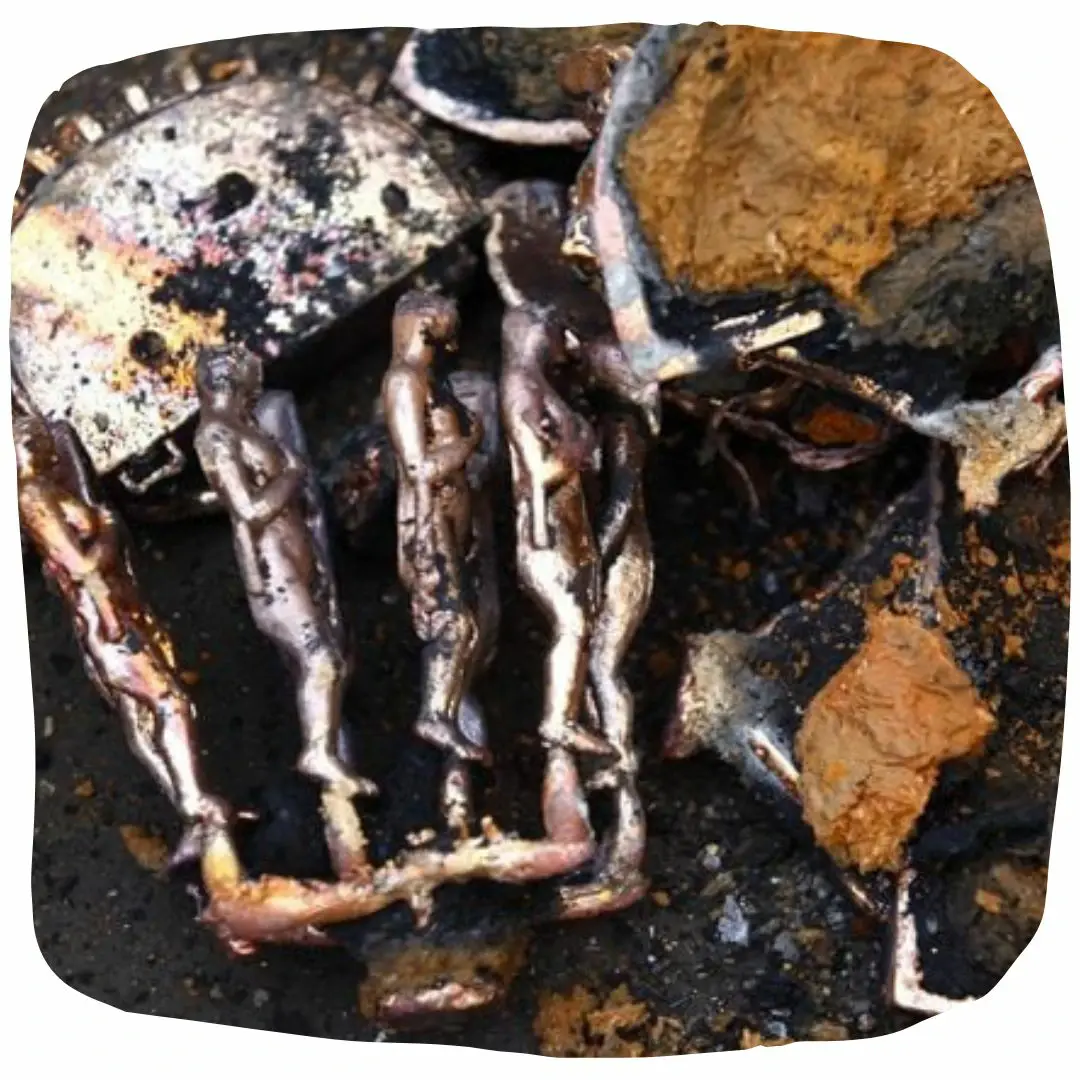
This is the time to pour liquid copper into the hollow mould which is then allowed to cool and harden inside a container of cold water. When the liquid metal has hardened, the mould is removed and the statue within is revealed.
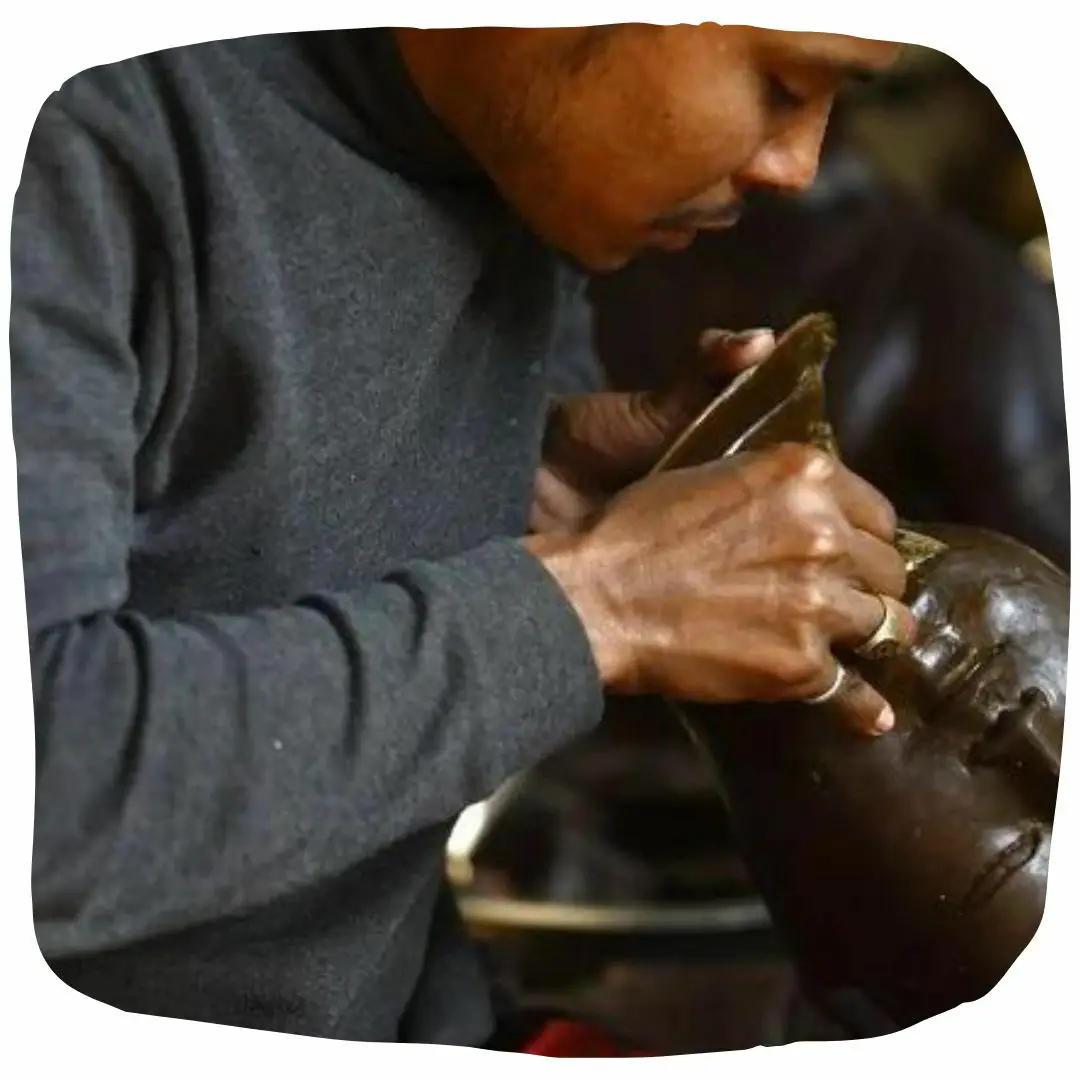
Now comes the most important part of Nepalese art which is gold gilding. This is done by the traditional fire gilding method. A mixture of mercury and 18K gold is applied on the surface of the statue and heat is applied using a flame torch. The result is that mercury evaporates along with impurities, leaving a pure 24K gold finish.
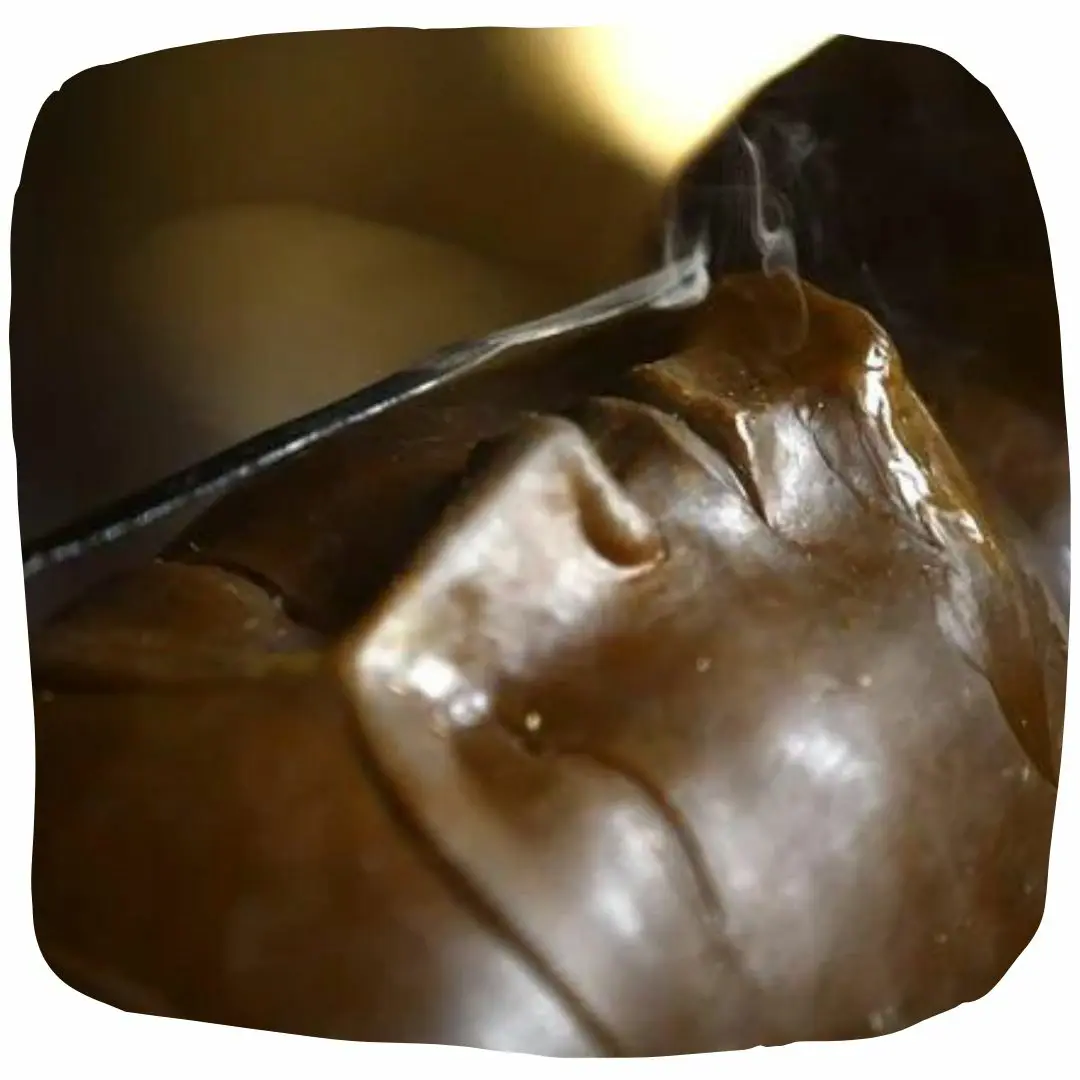
The lost-wax method of sculpting is the most preferred technique
for artists to cast a metallic statue having intricate details. Since Nepalese copper sculptures require extraneous effort for giving a majestic look by adding special embellishments, it takes several weeks to complete one masterpiece. A 24K gold gilded copper sculpture retains its brilliant luster for many years and appears as like before. Nepalese sculptures continue to remain one of the finest specimens of the art of the East that have a strong aesthetic appeal that other sculptures cannot match.