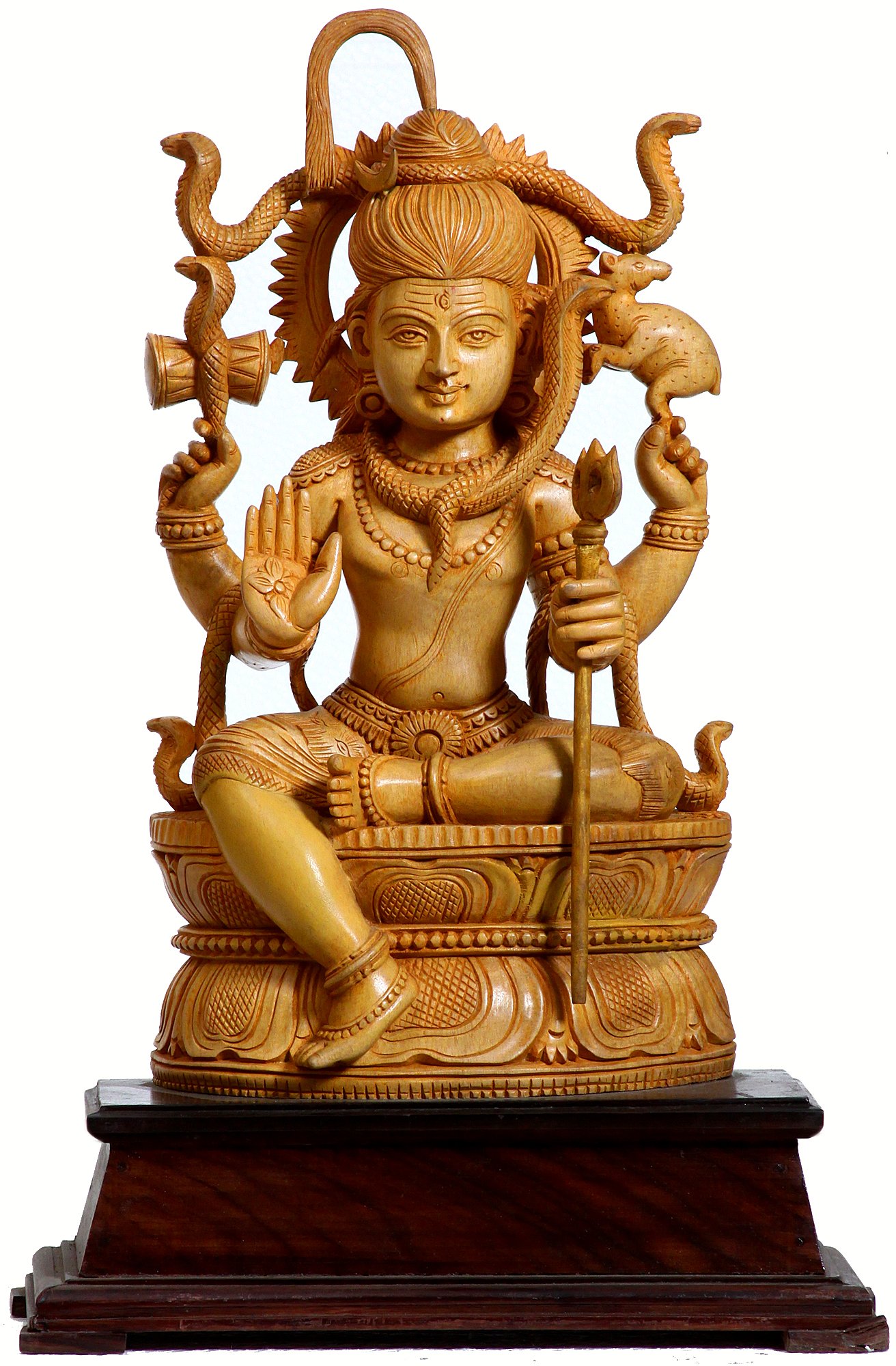
The Divine Herdsman
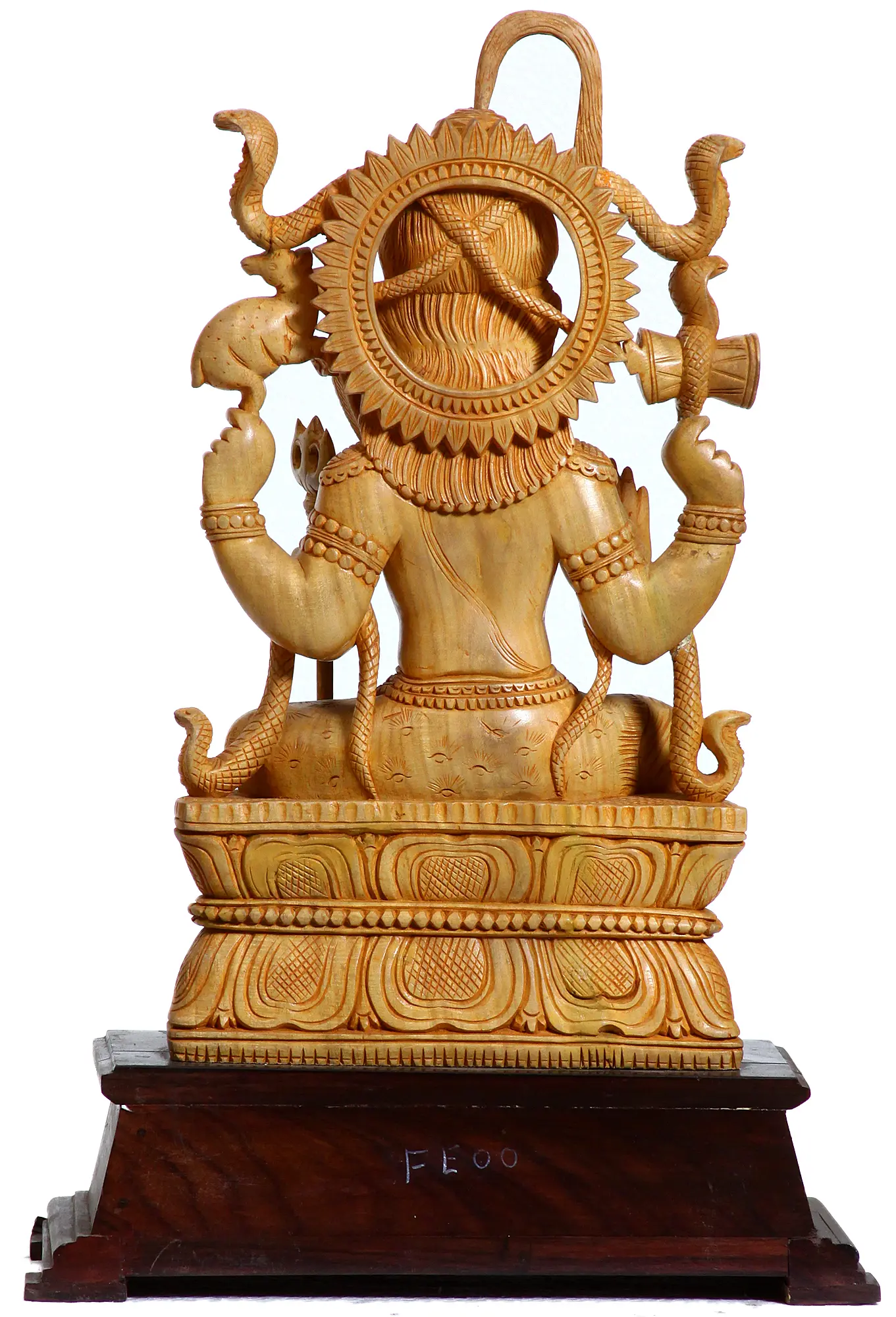
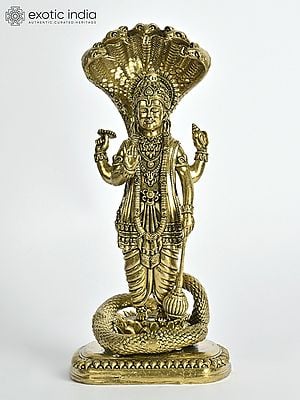
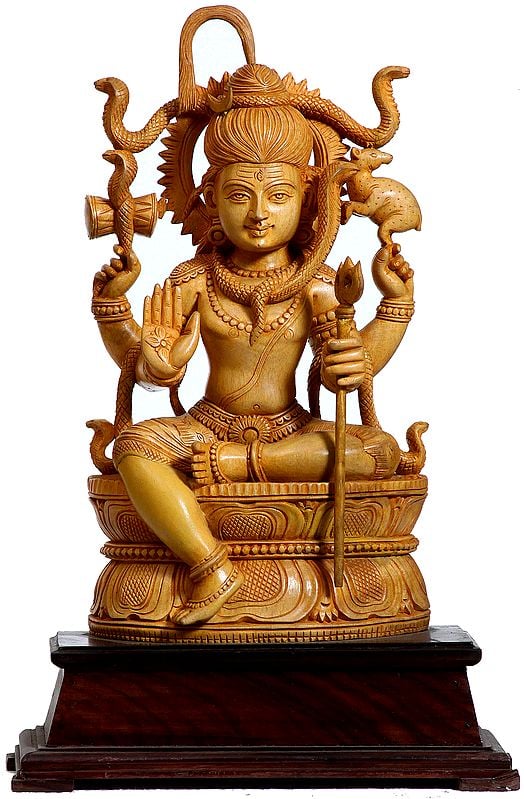
Behold the captivating presence of Shiva, the destroyer and regenerator, rendered in the serene form of Pashupatinath. This meticulously carved statue, fashioned from the fine grain of White Cedar Wood in Trivandrum, embodies the essence of Shiva's role as the protector of all beings, especially the animal kingdom. Pashupati, meaning "Lord of Animals," is a powerful manifestation of Shiva's compassion and his connection to the natural world. Observe the intricately detailed serpents coiled around his form, symbolizing kundalini energy and Shiva's mastery over the primal forces of nature. The gentle expression on his face exudes peace and blessings. Every curve and contour of this sculpture reflects the skilled artistry of generations of woodcarvers from the southern regions of India.Auspicious Symbolism
This representation of Pashupatinath is rich in symbolism. Shiva sits in a meditative pose upon a lotus pedestal, the lotus itself representing purity, enlightenment, and spiritual awakening. The snakes adorning his body are no ordinary reptiles; they are potent symbols of transformation and the cyclical nature of life and death, reflecting Shiva's dominion over time itself. His raised hand displays the Abhaya Mudra, a gesture of reassurance and fearlessness, offering protection to devotees. In his other hand, he holds a trishul, the trident that symbolizes his control over the three aspects of the universe: creation, preservation, and destruction. Further enhancing the divinity of Shiva, the wooden carving on his right hand depicts an animal, possibly a rat. This animal is a reference to the story in which Shiva rides Nandi, which is often symbolized as a rat to emphasize the animal-friendly qualities of the great god. This exquisite carving serves not only as a beautiful work of art but also as a reminder of the profound interconnectedness of all life forms.Crafted in the Heart of Tradition
Trivandrum, a city steeped in cultural heritage, is renowned for its mastery in wood carving. The artisans who create these sculptures inherit a lineage of craftsmanship, passing down techniques and traditions through generations. White Cedar Wood, with its smooth texture and light color, is a favored material for sacred carvings due to its durability and suitability for intricate detail. This statue is a testament to the dedication and skill of these artisans, a tangible representation of their devotion to the divine. Placing this carving in your home will bring an aura of serenity and spiritual connection into the space, reminding one of the vastness and mysteries of the universe and the gentle, loving nature of its guardian, Shiva.Sculpting Serenity: Unveiling the Art of Crafting Wood Statues
Wood has been a preferred material for sculptures and statues since ancient times. It is easy to work with than most metals and stones and therefore requires less effort to shape it into any desired shape or form. The texture of the wood gives an element of realism to the sculpture. The selection of an appropriate wood type is necessary for carving. Woods that are too resinous or coniferous are not considered good for carving as their fiber is very soft and thus lacks strength. On the other hand, wood such as Mahogany, Oakwood, Walnut wood, Weet cherry wood, etc., are preferred by sculptors because their fiber is harder.
A wood sculptor uses various tools such as a pointed chisel in one hand and a mallet in another to bring the wood to the desired measurement and to make intricate details on it. A carving knife is used to cut and smooth the wood. Other tools such as the gouge, V-tool, and coping saw also serve as important tools in wood carving. Although the wood carving technique is not as complex and tough as stone carving or metal sculpting, nonetheless, a wood carver requires a high level of skills and expertise to create a stunning sculpture.
1. Selecting the right wood
The process of wood carving begins with selecting a chunk of wood that is required according to the type and shape of the statue to be created by the sculptor. Both hardwoods and softwoods are used for making artistic pieces, however, hardwoods are preferred more than softer woods because of their durability and longevity. But if heavy detailing is to be done on the statue, wood with fine grain would be needed as it would be difficult to work with hardwood.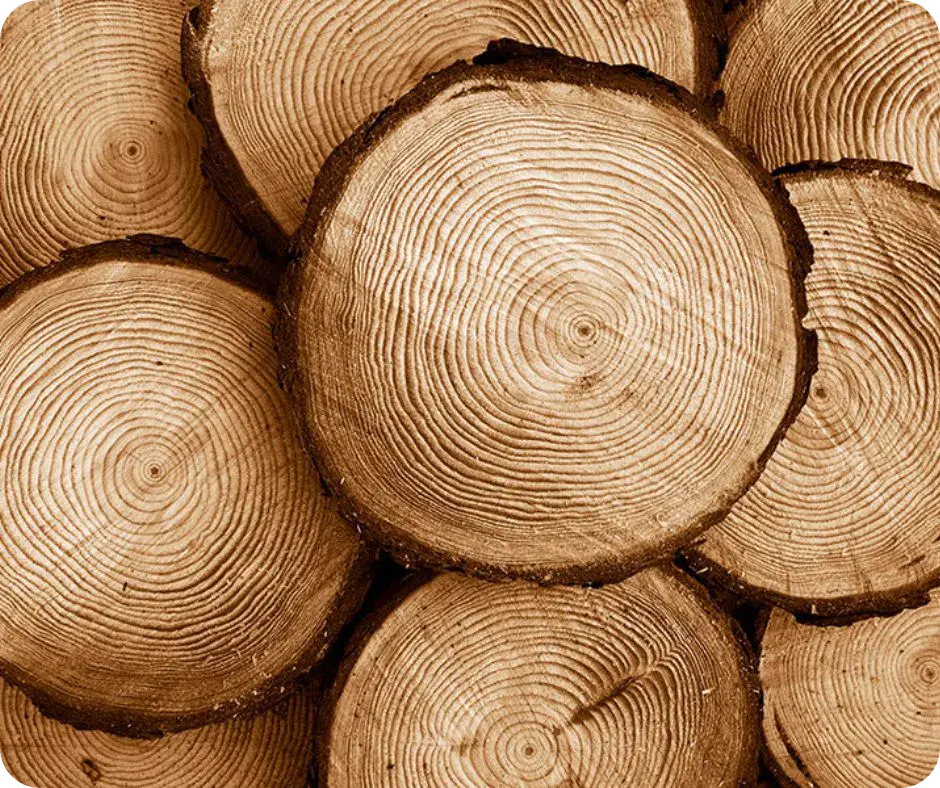
2. Shaping the wood
Once the wood type is selected, the wood carver begins the general shaping process using gouges of various sizes. A gouge is a tool having a curved cutting edge which is useful in removing large unwanted portions of wood easily without splitting the wood. The sculptor always carves the wood across the grain of the wood and not against it.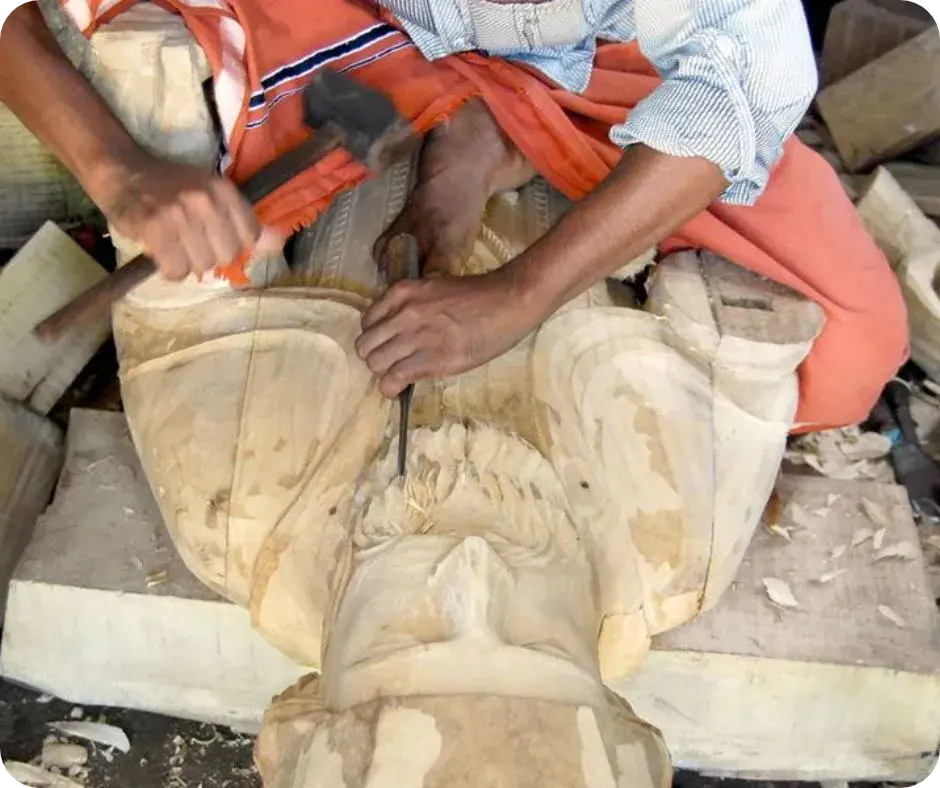
3. Adding detailing
When a refined shape of the statue is obtained, it is time for making details on the statue using different tools. This is achieved by using tools such as a veiner to make and a V-tool to create decorative and sharp cuts.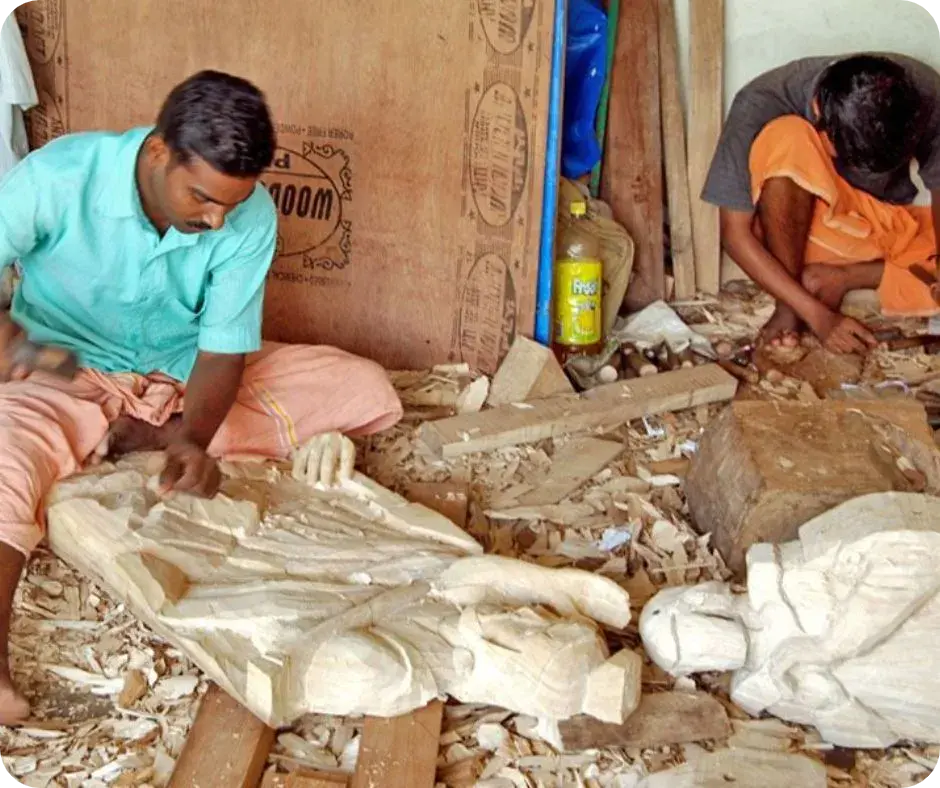
4. Surface finishing
Once finer details have been added, the sculptor is ready to smoothen the surface and give it a perfect finish. Tools such as rasps and rifflers are used to get a smooth surface. The finer polishing is obtained by rubbing the surface with sandpaper. If a textured surface is required, this step is skipped. Finally, to protect the statue from excessive dirt accumulation, the sculptor applies natural oils such as walnut or linseed oil all over it. This also brings a natural sheen to the statue.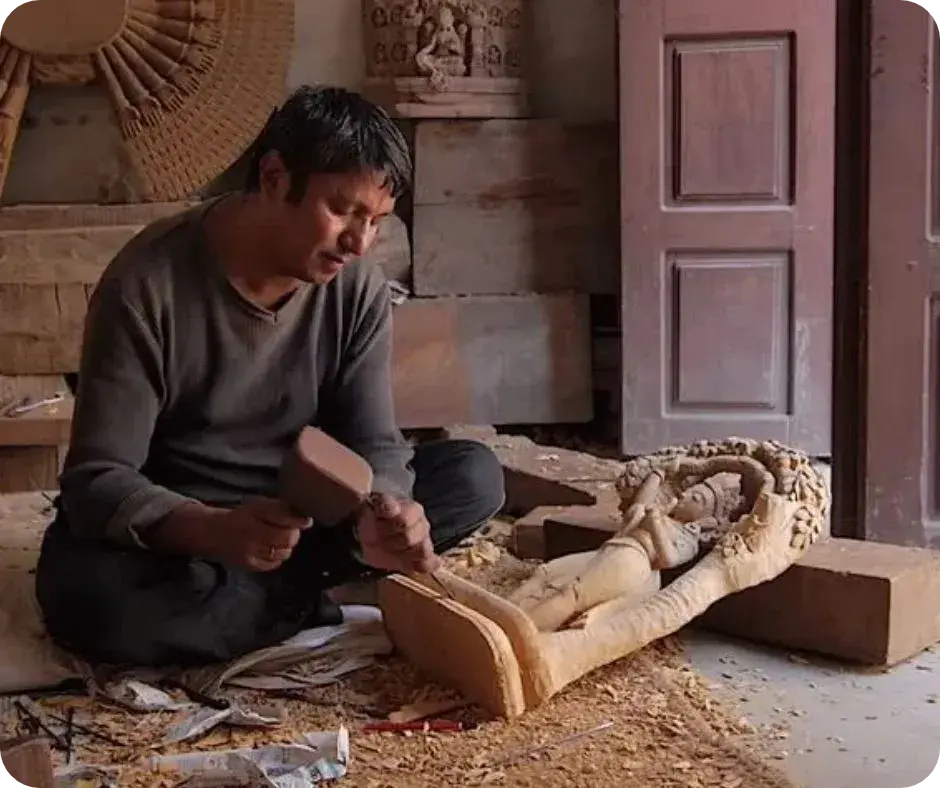
How to care for Wood Statues?
Wood is extensively used in sculpting especially in countries like China, Germany, and Japan. One feature that makes the wood extremely suitable for making statues and sculptures is that it is light and can take very fine detail. It is easier for artists to work with wood than with other materials such as metal or stone. Both hardwoods, as well as softwood, are used for making sculptures. Wood is mainly used for indoor sculptures because it is not as durable as stone. Changes in weather cause wooden sculptures to split or be attacked by insects or fungus. The principal woods for making sculptures and statues are cedar, pine, walnut, oak, and mahogany. The most common technique that sculptors use to make sculptures out of wood is carving with a chisel and a mallet. Since wooden statues are prone to damage, fire, and rot, they require proper care and maintenance.
- Wood tends to expand and contract even after it has been processed, thus it is always recommended to keep the wooden sculptures in rooms with little humidity. Excess moisture can harm your masterpiece.
- Periodical dusting of the finished piece is necessary to maintain its beauty as dust accumulation on the surface takes away the shine of the sculpture. You can use a clean and soft cloth or a hairbrush for this purpose.
- You must avoid applying any chemical-based solutions that may damage the wood from the inside. Instead, you can apply lemon oil or coconut oil using a cotton rag to the sculpture to bring out its natural shine. Lemon oil also helps to clean any stains on the sculpture.
- Applying a layer of beeswax protects the wood from sun damage and hides even the smallest imperfections on the wood.
It is extremely important to preserve and protect wooden sculptures with proper care. A little carelessness and negligence can lead to their decay, resulting in losing all their beauty and strength. Therefore, a regular clean-up of the sculptures is a must to prolong their age and to maintain their shine and luster.















 Upload an Image