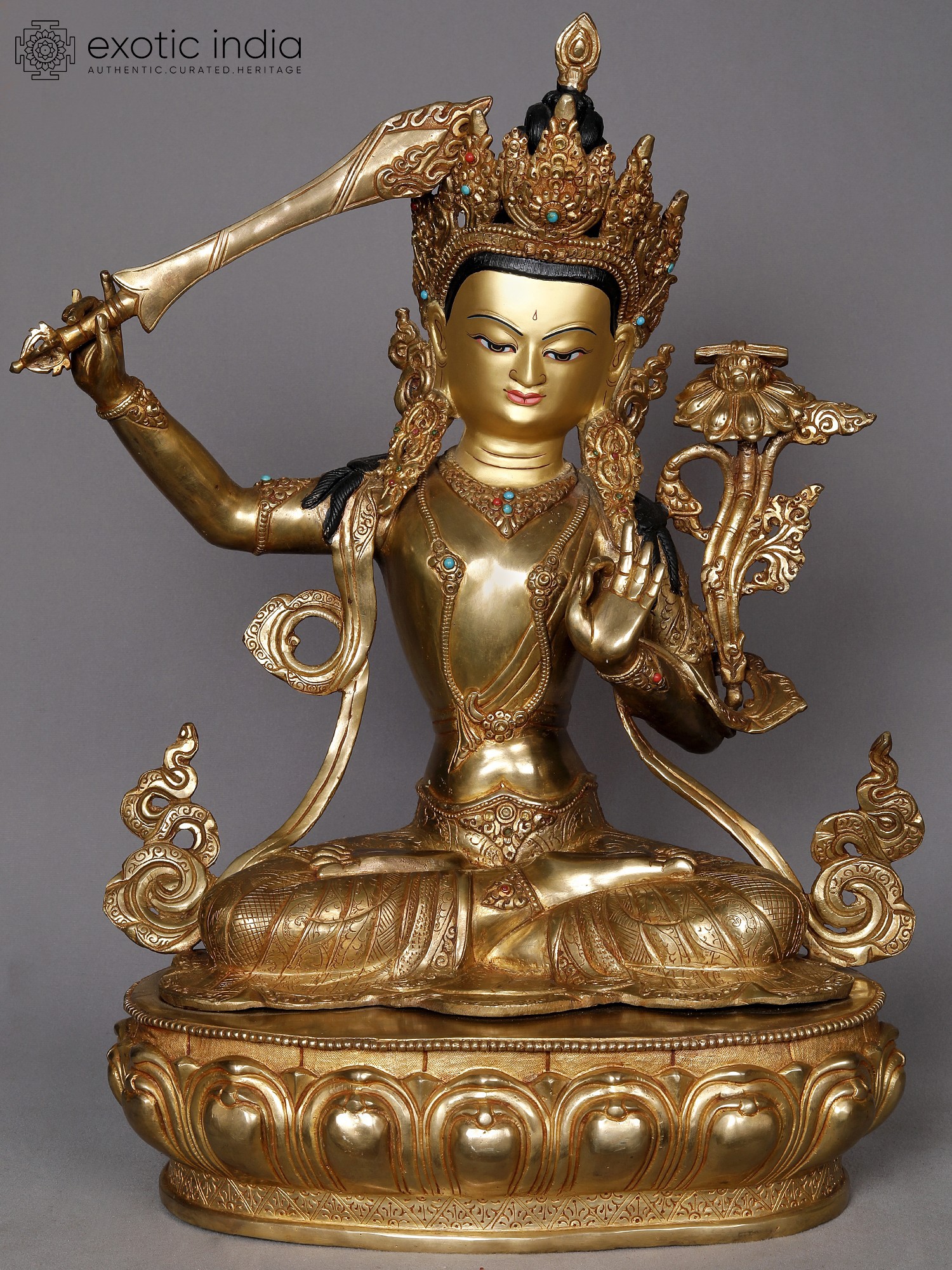
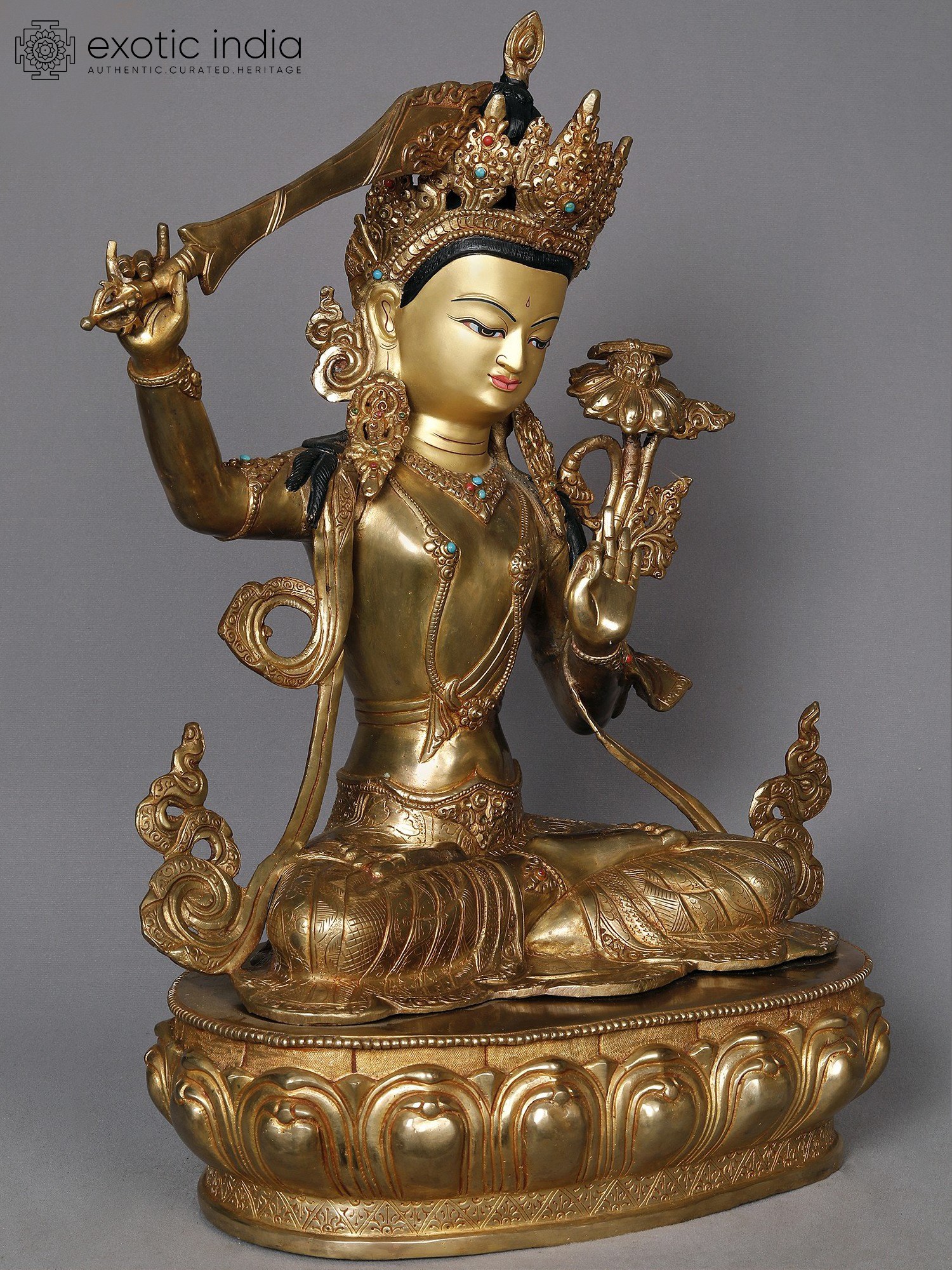
Manjushri Copper Statue: Wisdom Bodhisattva from Nepal

| Specifications |
 |
CAA153 |
 |
Copper With Gold |
 |
Height: 19 inch |
| Width: 12 inch | |
| Depth: 6.5 inch | |
 |
Weight 8.10 kg |
| About the Item |
|
| Delivery and Return Policies |
 |
Usually ships in 6 days |
 |
Returns and Exchanges accepted within 7 days |
 |
Free Delivery |


Manjushri stands
as one of Mahayana Buddhism's oldest and most significant
Bodhisattvas. Also known as Mañjuśrīkumarābhūta, Manjughosa, and Vagisvara, he
personifies wisdom beyond notions and beliefs. Esteemed as the
"Meditational Deity" in Buddhism. Mahayana tradition designates him
as the epitome of knowledge.
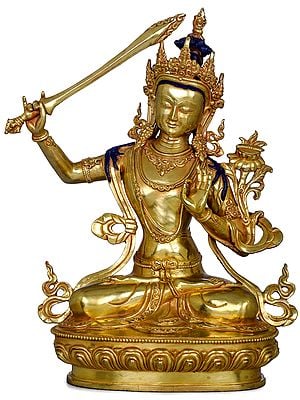
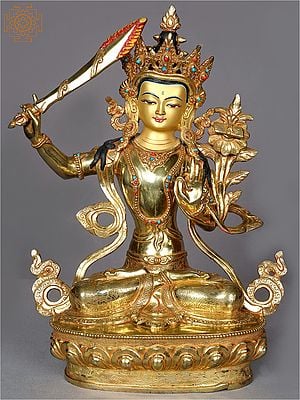
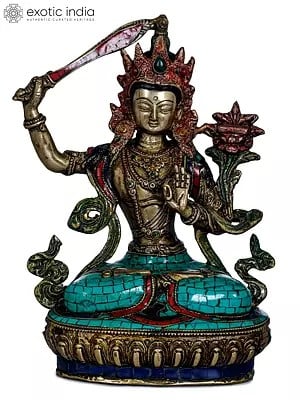
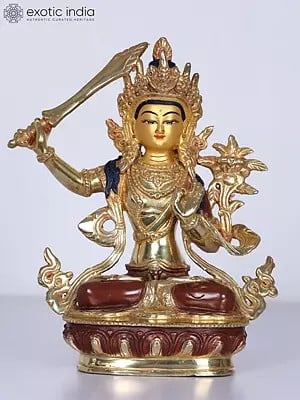
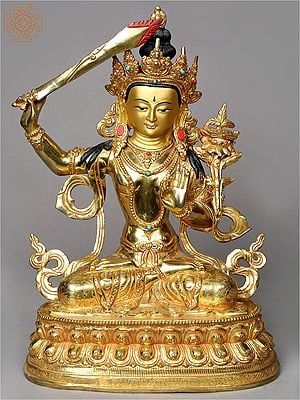
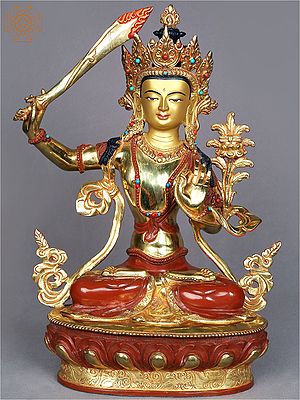
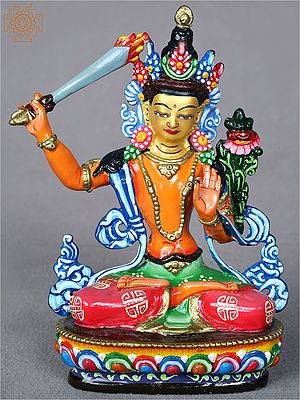
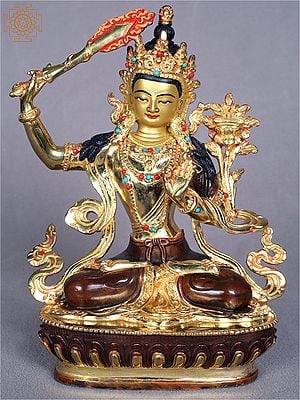
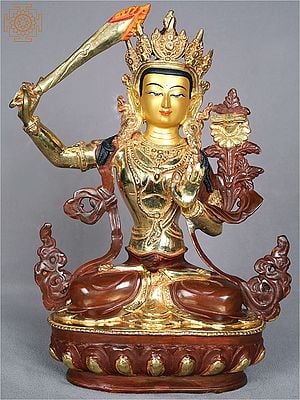
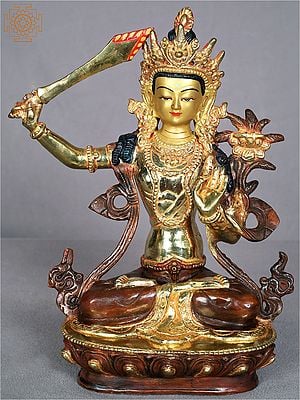
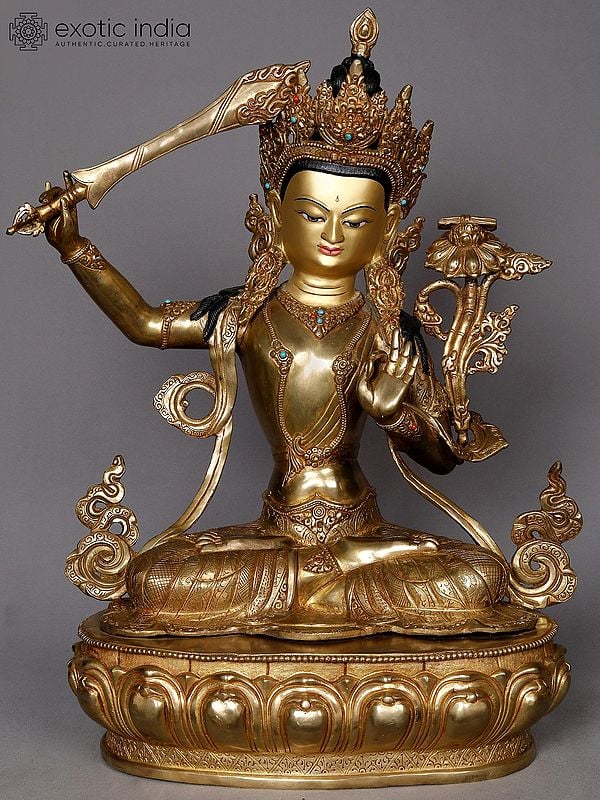
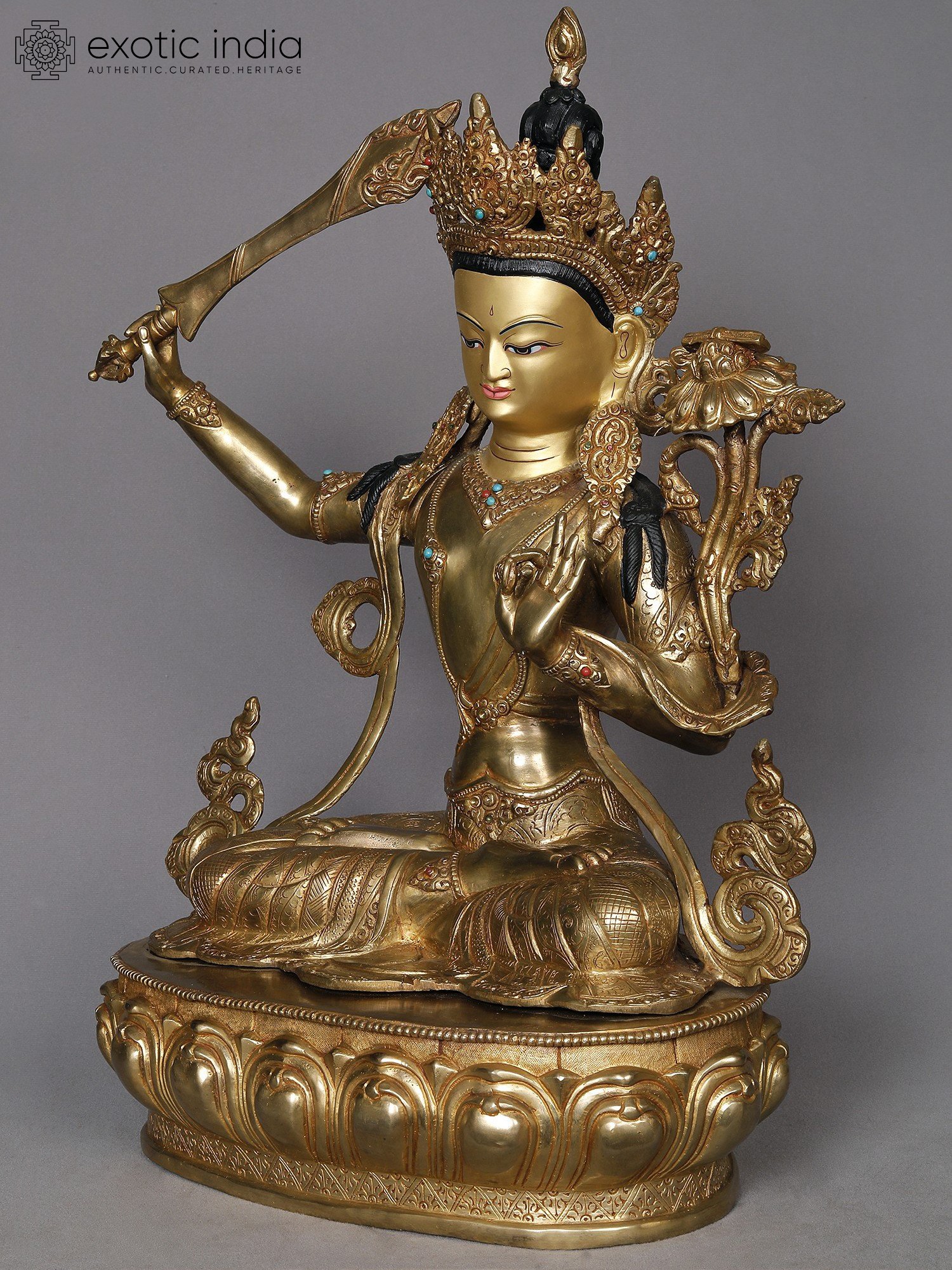
Manjushri is depicted as a male Bodhisattva, his
right hand brandishing the "Vajra Sword of Discriminating Light,"
representing Prajna's sharpness. His left-hand grasps a vivid blue lotus in
full bloom. The "Vajra Sword of Discriminating Light" severs
ignorance and conceptual entanglements, its flames symbolizing transformative
illumination. The magnificent Lotus is believed to cradle the Prajnaparamita
Sutra (Great Wisdom Sutra), encasulating the profound Wisdom of the Buddha.
Embodied Wisdom: A Majestic Representation of Manjushri
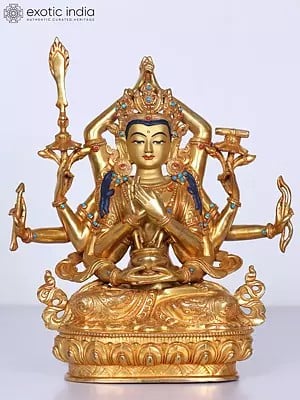
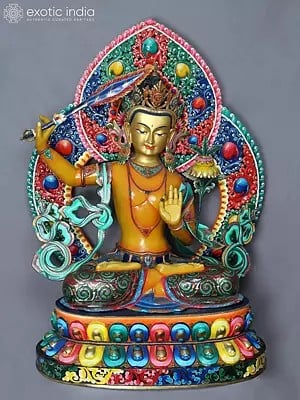
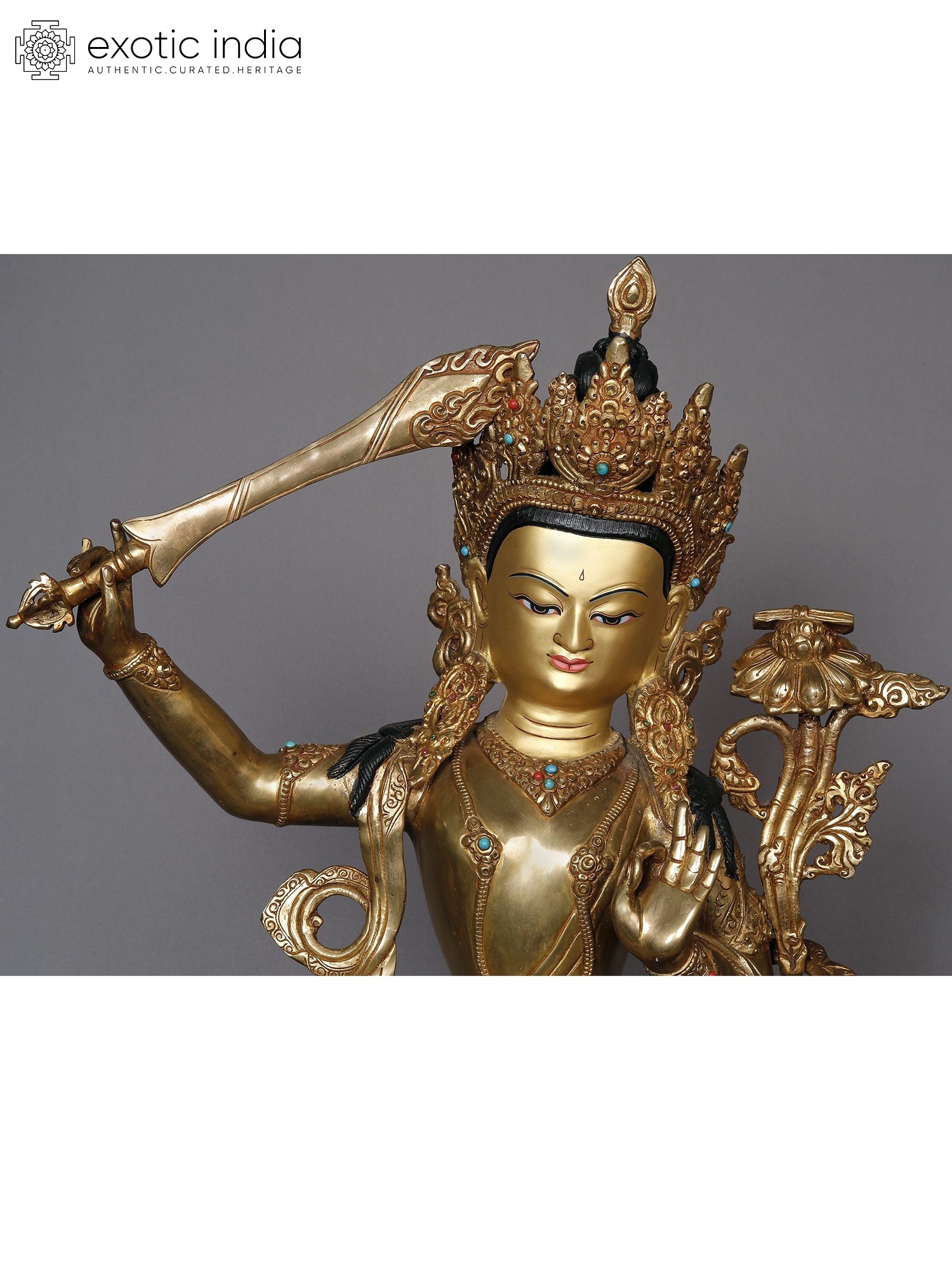
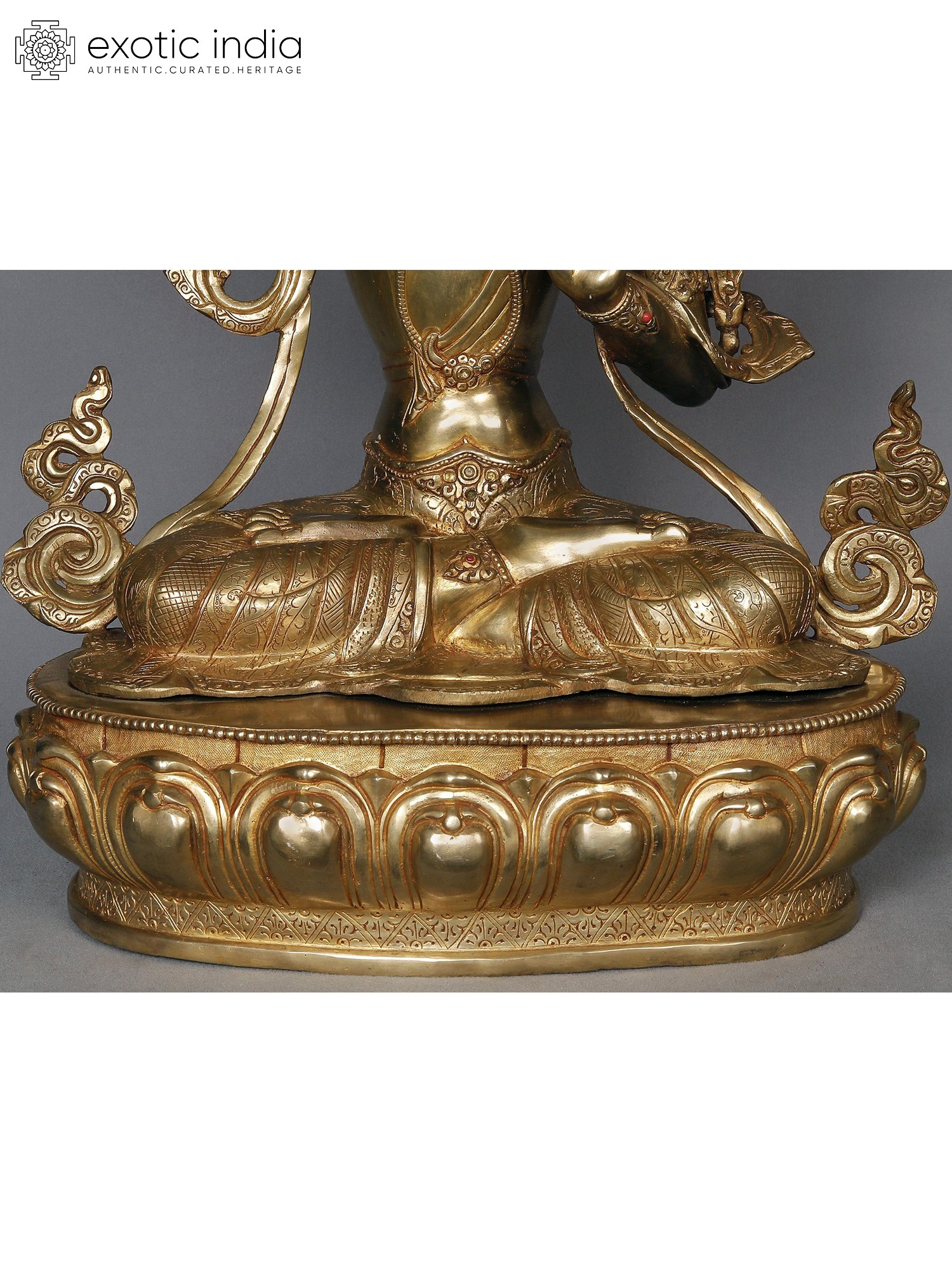
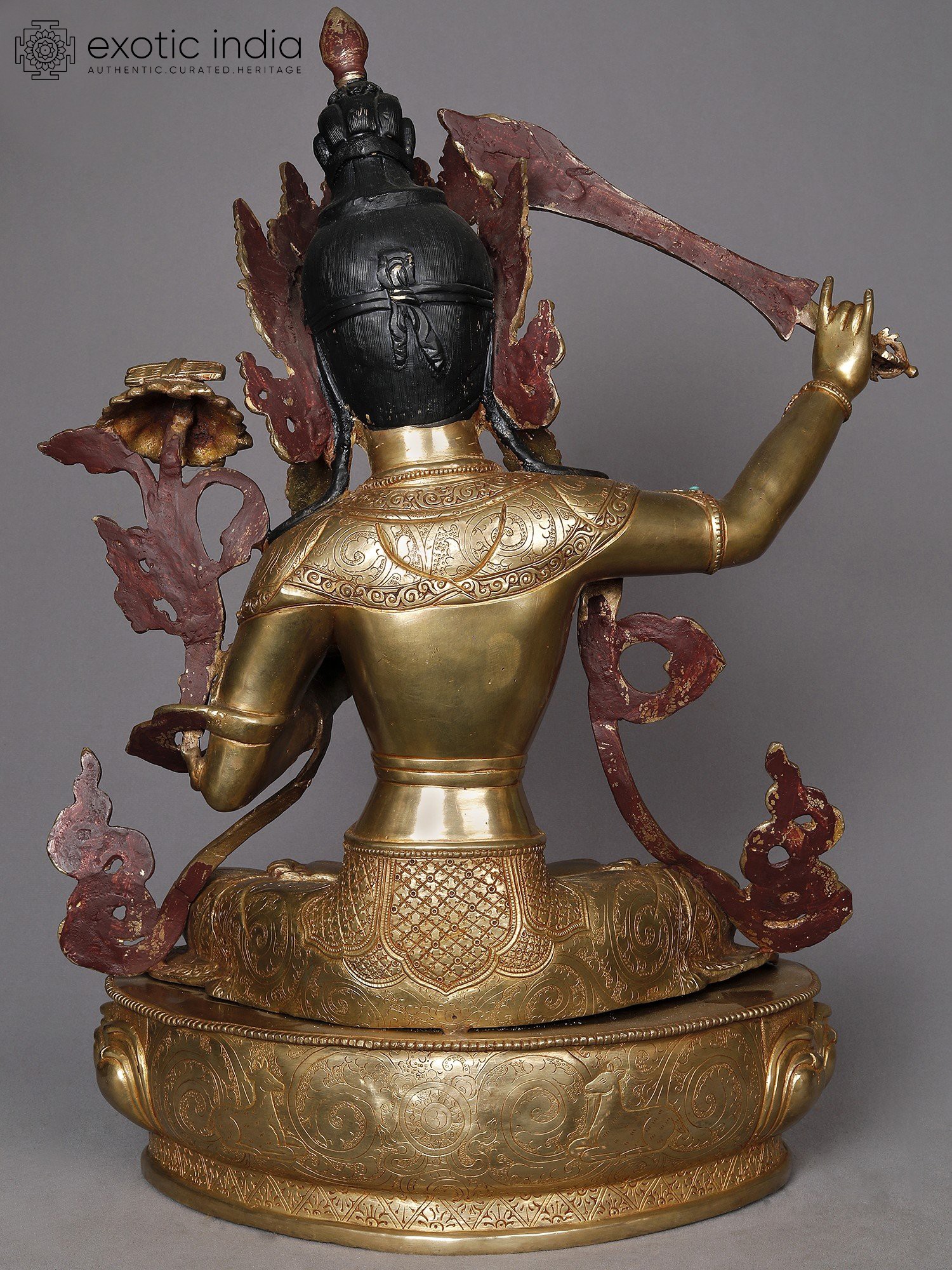
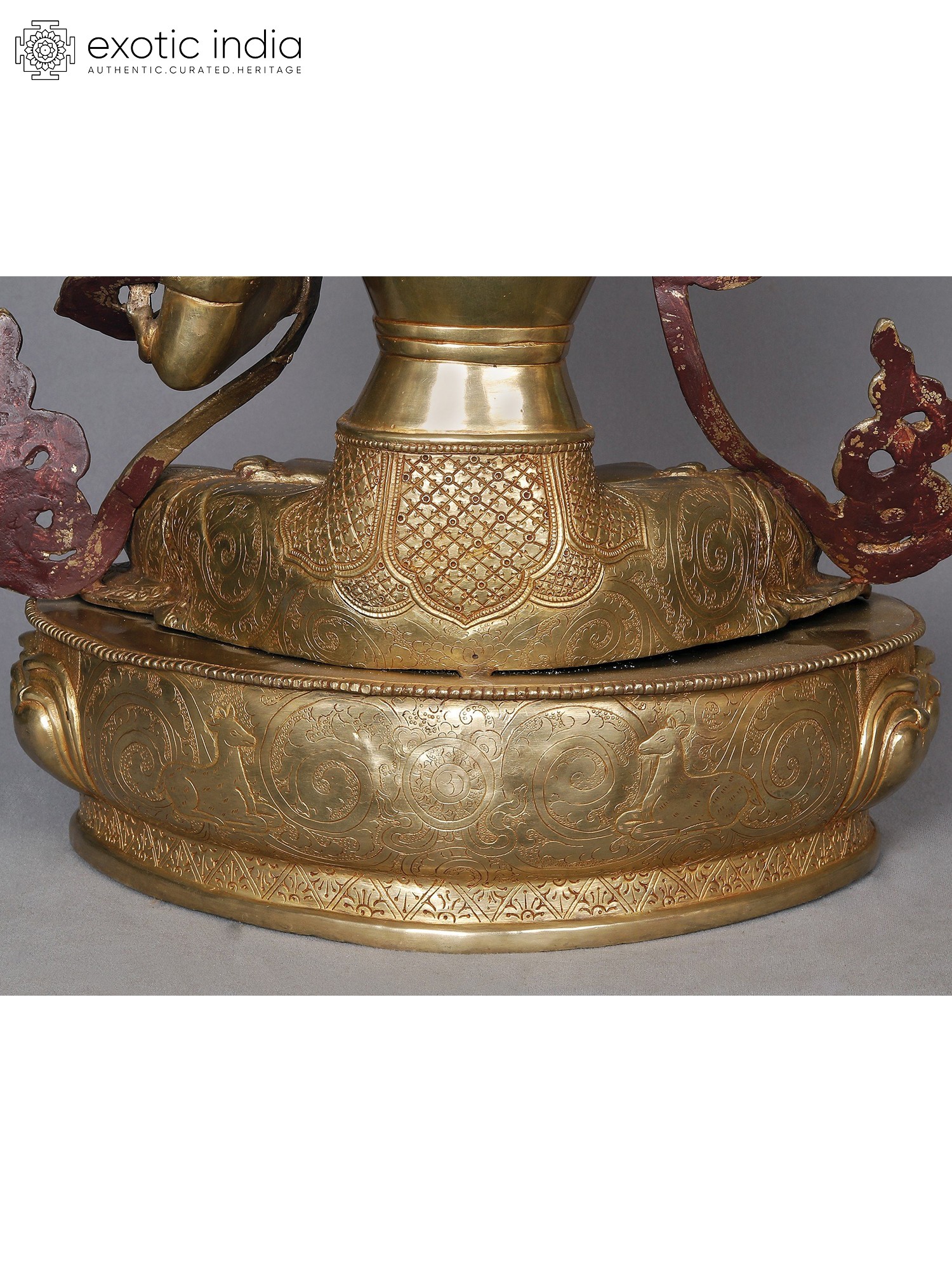
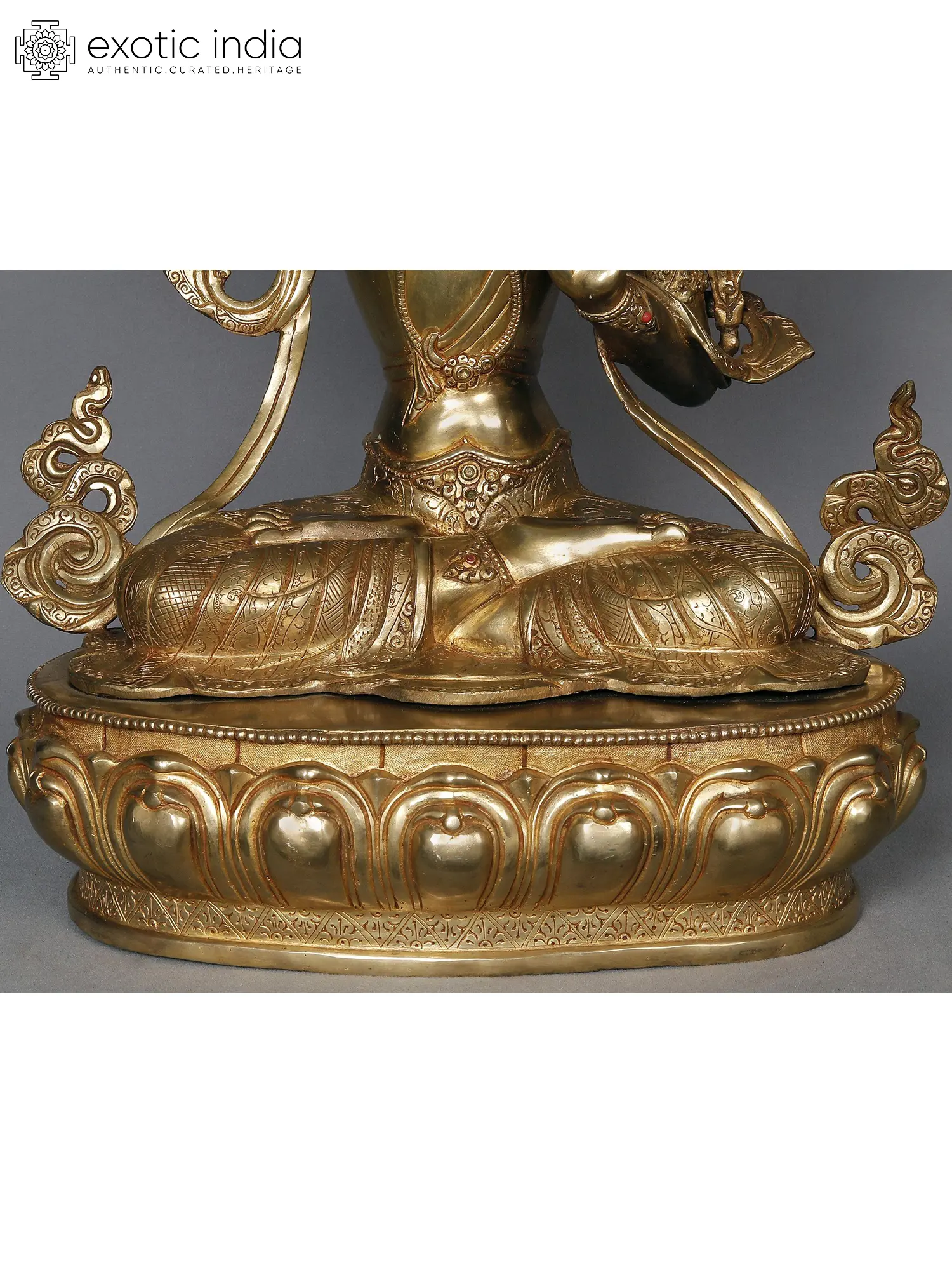
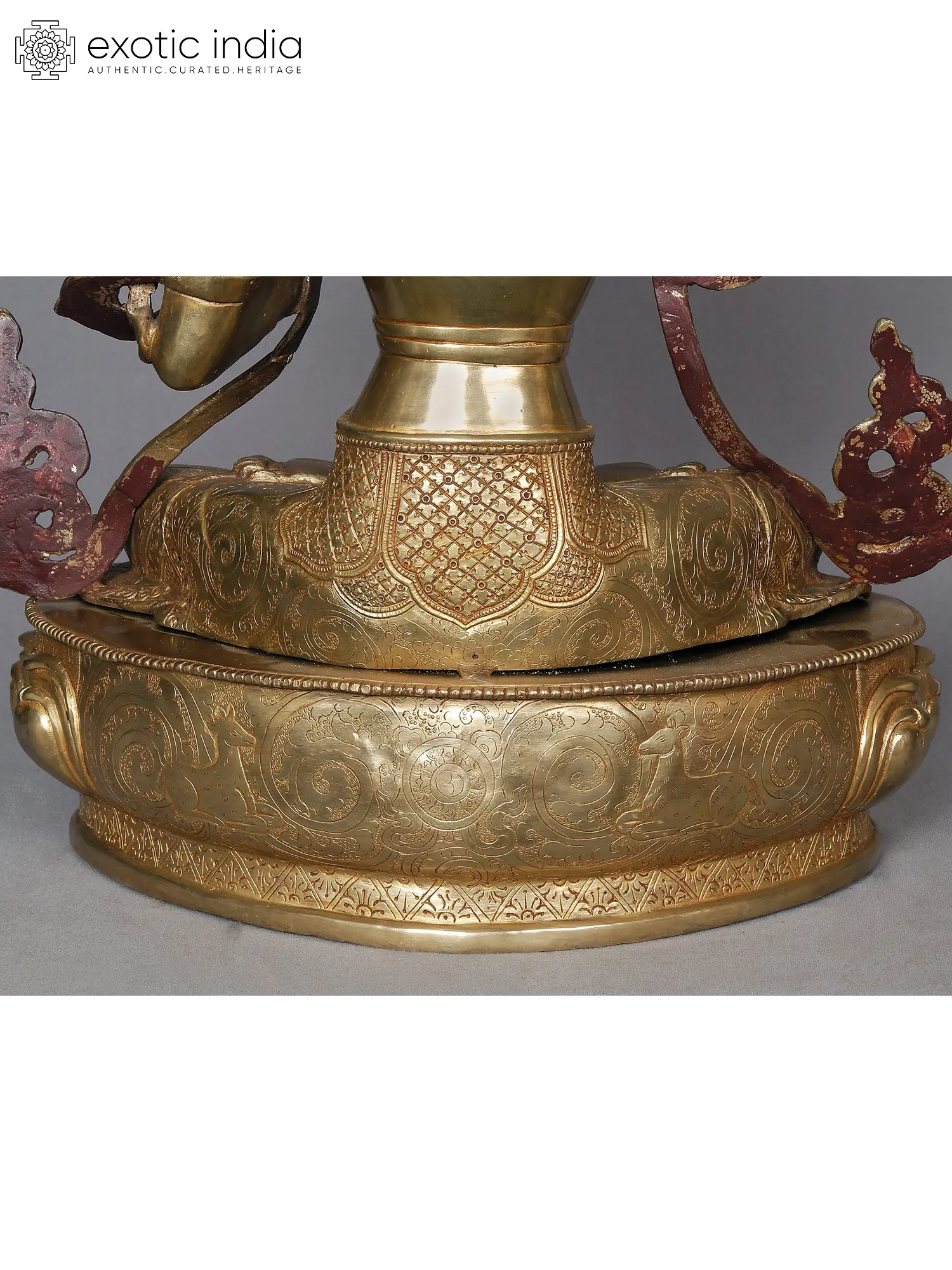
This magnificent copper statue, gilded with pure gold, offers a profound visual representation of Manjushri, the Bodhisattva of Wisdom. Crafted in Nepal, a land steeped in Buddhist tradition and artistry, this sculpture captures the divine essence of Manjushri in a powerful and awe-inspiring posture. The luminous gold finish emanates a celestial glow, reflecting the enlightened nature of this revered deity. Each detail, from the serene expression on Manjushri's face to the intricate adornments, speaks of meticulous craftsmanship and deep spiritual devotion. ––––––––––––––––––The Iconography of Insight
Manjushri, often depicted with a radiant smile, symbolizes the piercing insight that dispels ignorance. In this commanding portrayal, he holds aloft a flaming sword in his right hand, a potent emblem of wisdom that cuts through delusion and confusion. This celestial blade represents the sharpness of intellect and the ability to dissect complex concepts, leading to ultimate understanding. In his left hand, Manjushri gently holds the stem of a lotus flower, which blossoms above his shoulder. The lotus, a timeless symbol in Buddhism, signifies purity and enlightenment, arising unstained from the muddy waters of existence. The serene countenance, framed by an elaborate crown and cascading hair, suggests an inner peace born from profound realization. The rich ornamentation, including precious turquoise and red stones, further accentuates the divine status and opulent beauty of the Bodhisattva. ––––––––––––––––––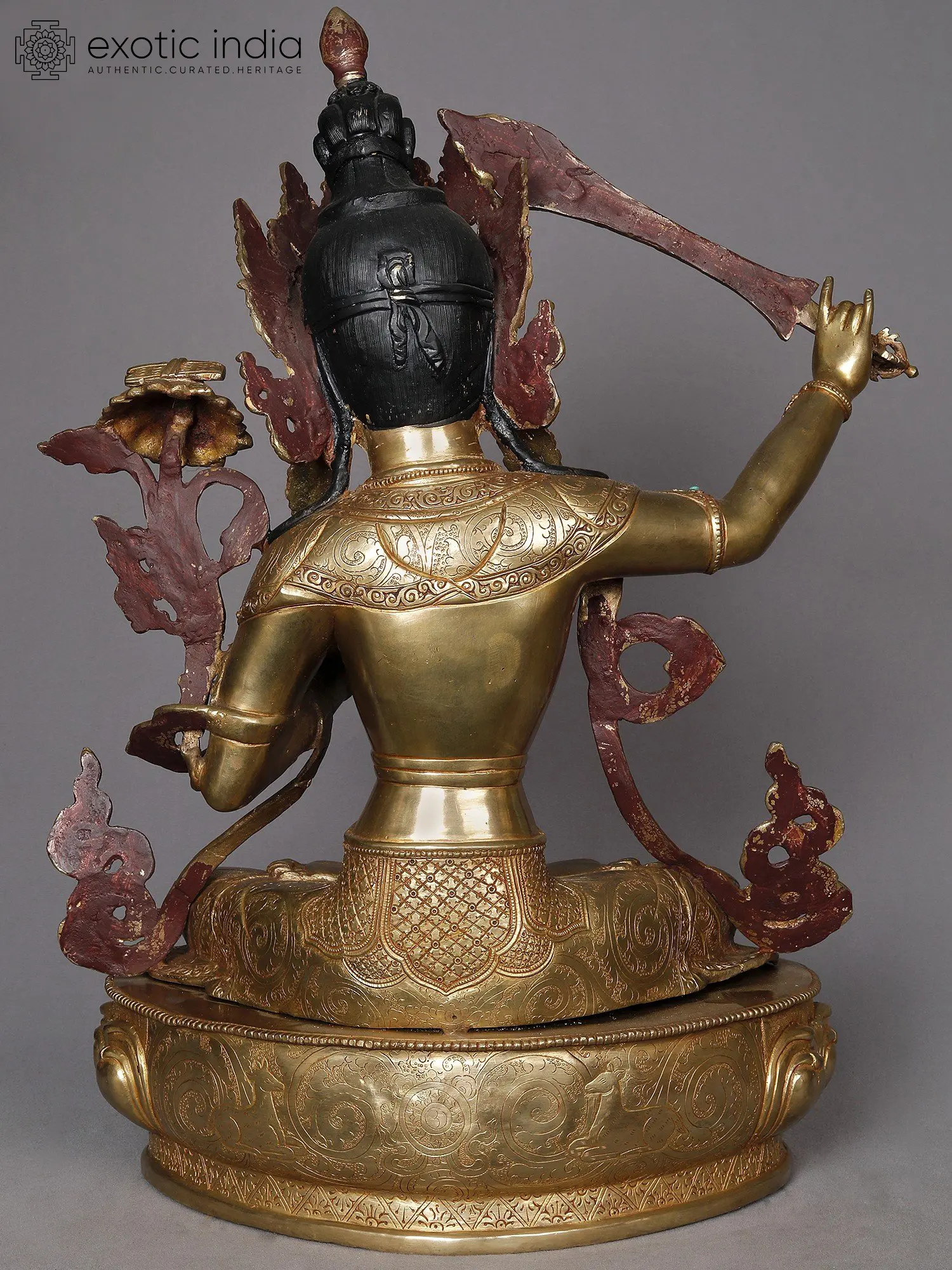
A Legacy of Enlightenment
Manjushri holds a central place in Mahayana Buddhism, revered as the embodiment of all the wisdom of the Buddhas. Tales abound of his compassion and his role in guiding practitioners towards liberation. He is believed to appear in dreams and visions to offer guidance and inspiration. In ancient narratives, Manjushri is often depicted as a prince, embodying the ideal of youthfulness and vigor in the pursuit of spiritual knowledge. His presence is invoked to overcome obstacles related to ignorance, doubt, and intellectual stagnation. This statue, imbued with the spirit of Nepalese artistry, serves not merely as a decorative object but as a powerful focal point for meditation, contemplation, and the cultivation of wisdom. Its substantial presence commands attention, inviting practitioners to connect with the profound teachings that Manjushri represents. The craftsmanship ensures that this piece will be a cherished heirloom, a testament to the enduring legacy of Buddhist art and philosophy for generations to come.How are Nepalese copper statues made?
Nepalese statues and sculptures have a high copper content and therefore develop a slightly reddish patina on the surface as they age. However, the most unique feature of Nepalese copper statues is their decorative detailing. The pieces are heavily gilded and sometimes inlaid with semi-precious stones. This embellishment protects them from getting tarnished. The traditional lost-wax method for casting Nepalese copper statues remains the most practiced technique in Nepal for many centuries. This process involves many steps and requires skilled artists.
The first step in lost-wax sculpting is to make a wax replica of the desired Buddhist deity to be cast in copper. This replica is created by hand and therefore needs excellent artistic skills otherwise fine features will be lacking.
Once the wax replica is made, it is then coated with a special mixture of clay with a brush. This layer of clay is hardened when left to dry. A small hole is made on the base of the wax mould so that the wax flows away when it is heated.
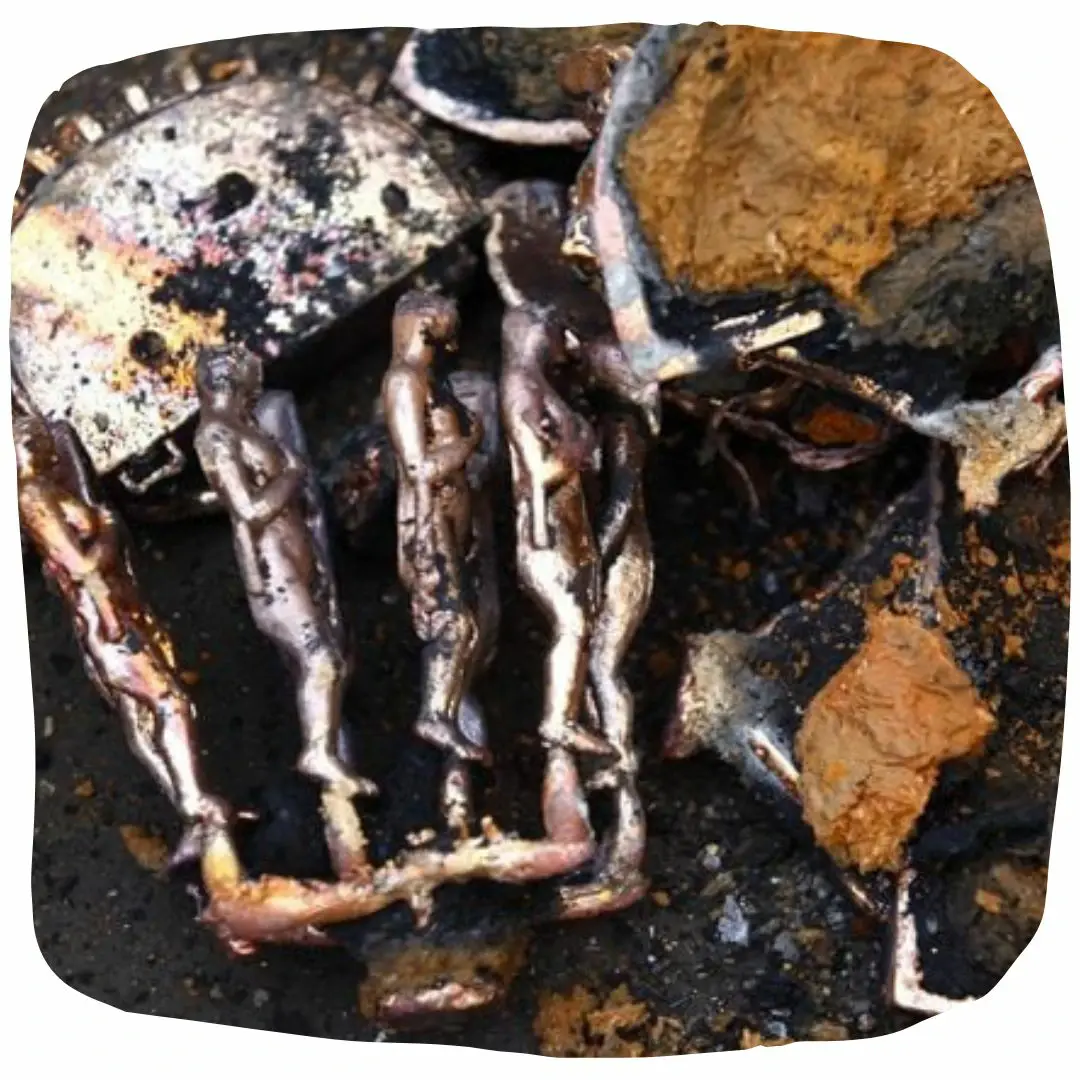
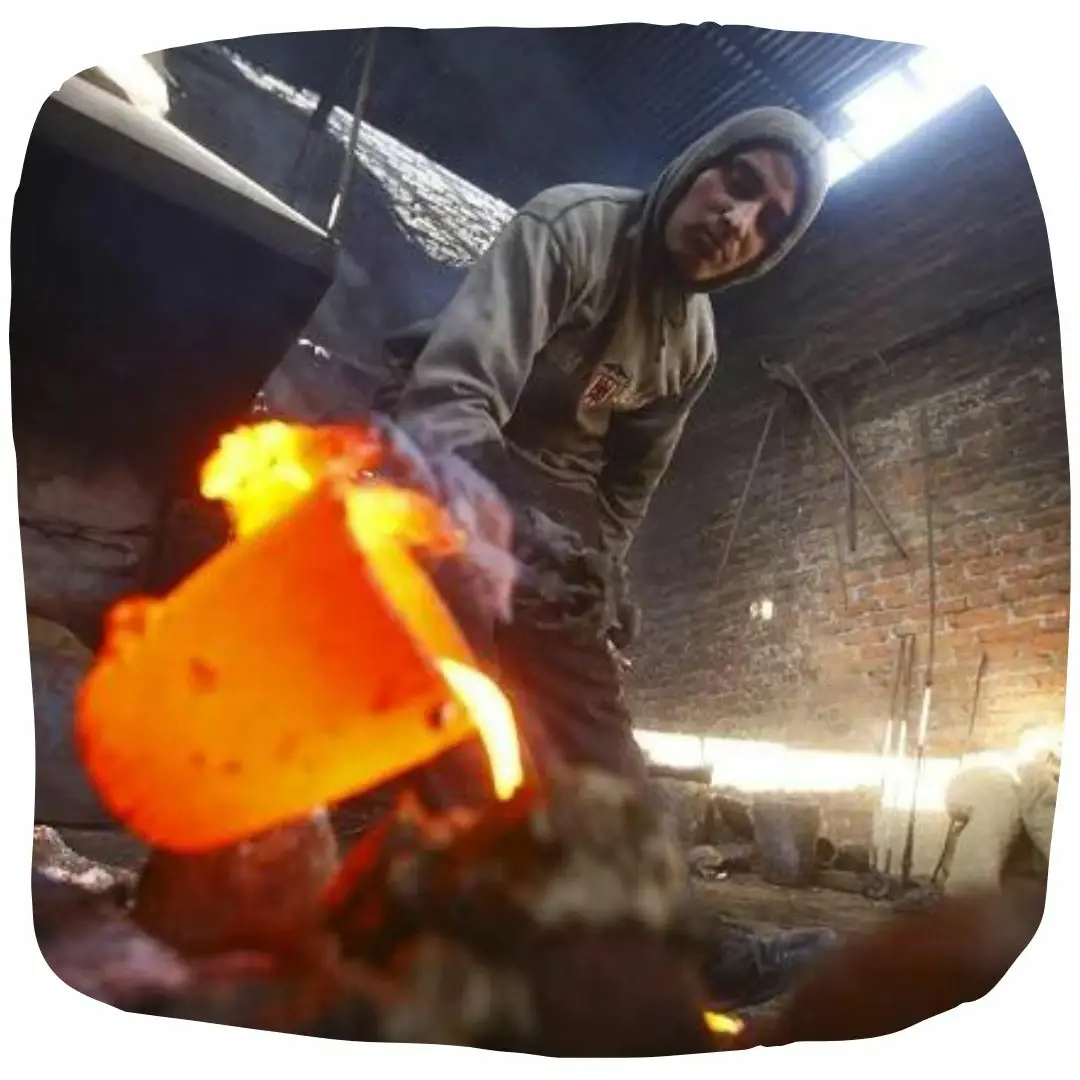
This is the time to pour liquid copper into the hollow mould which is then allowed to cool and harden inside a container of cold water. When the liquid metal has hardened, the mould is removed and the statue within is revealed.
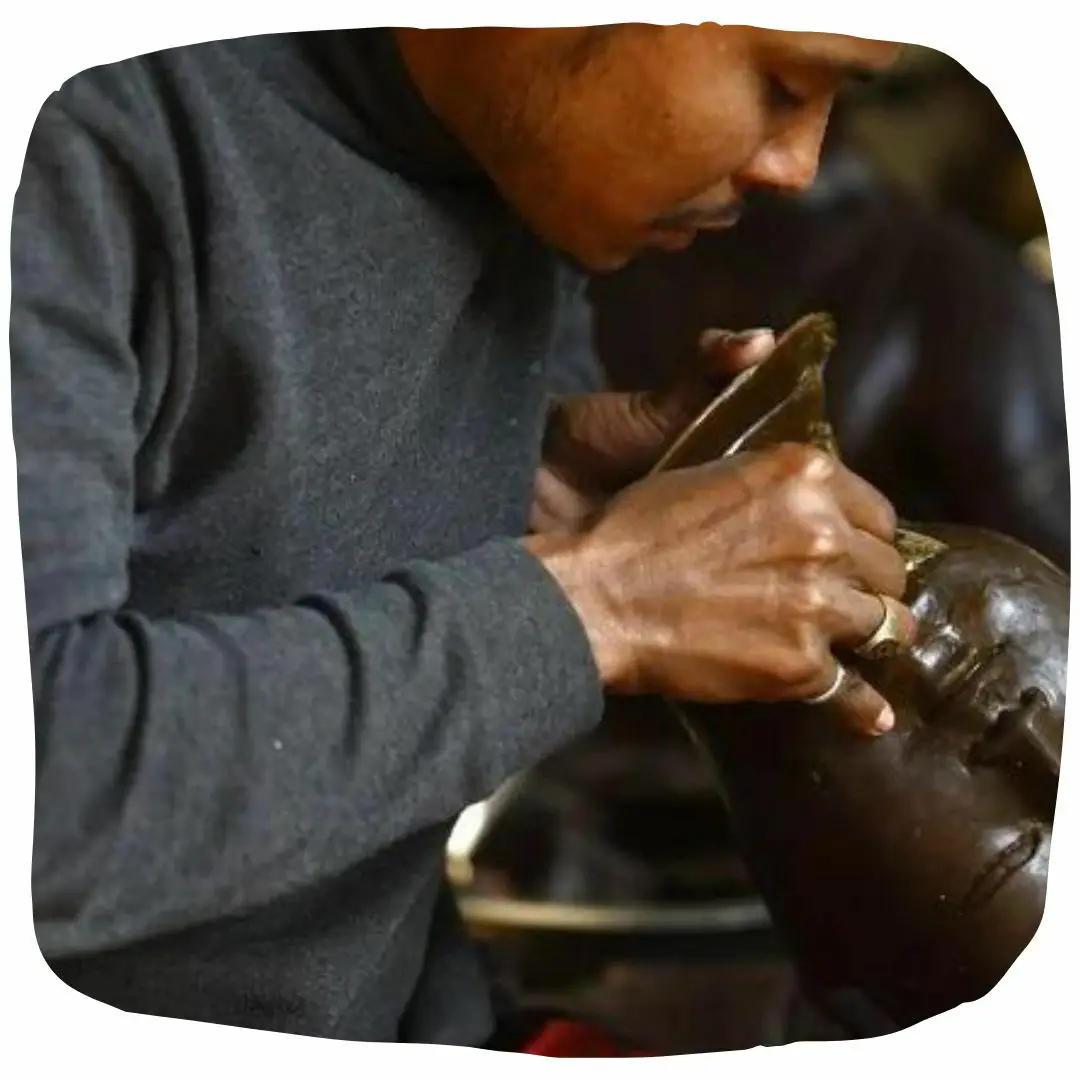
Now comes the most important part of Nepalese art which is gold gilding. This is done by the traditional fire gilding method. A mixture of mercury and 18K gold is applied on the surface of the statue and heat is applied using a flame torch. The result is that mercury evaporates along with impurities, leaving a pure 24K gold finish.
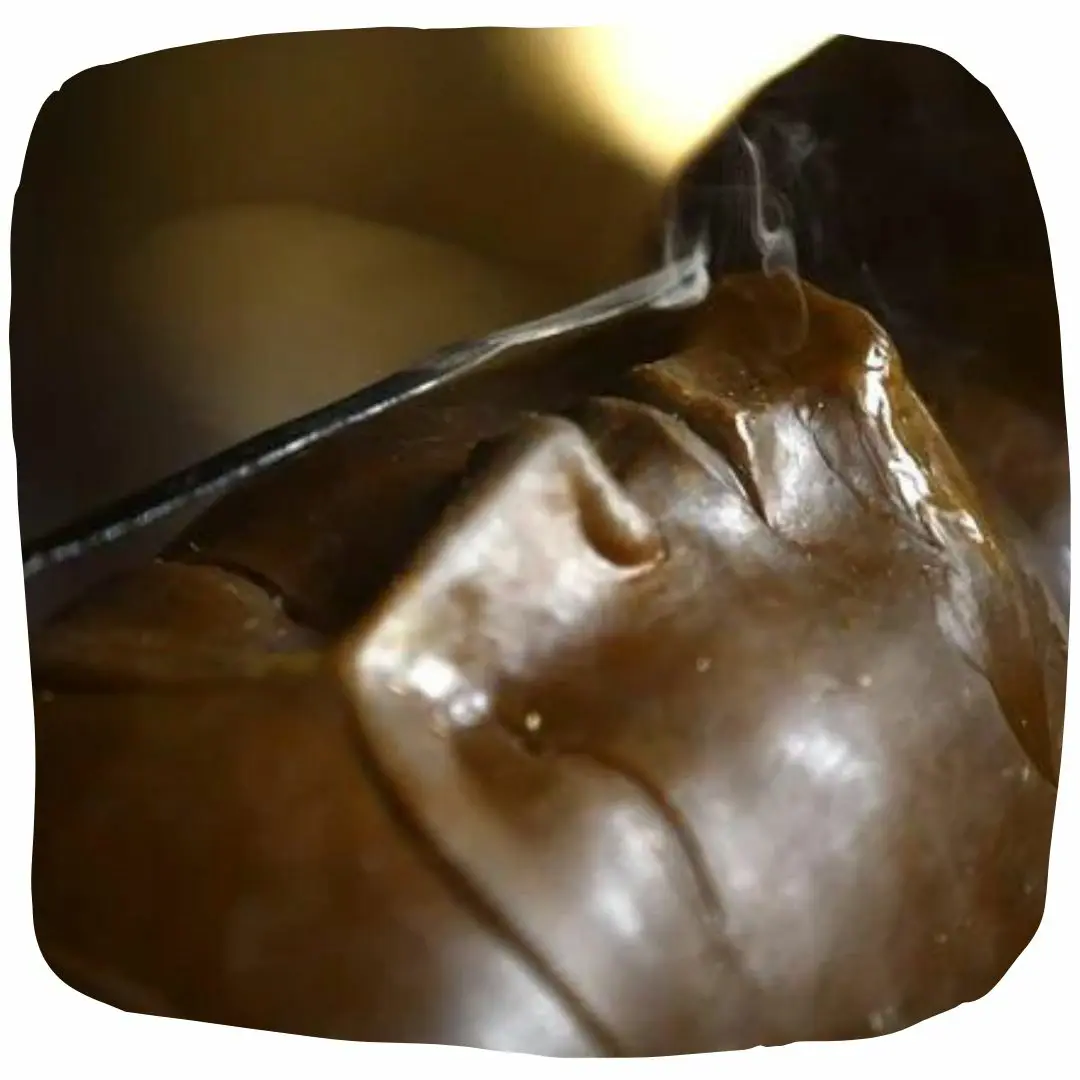
The lost-wax method of sculpting is the most preferred technique
for artists to cast a metallic statue having intricate details. Since Nepalese copper sculptures require extraneous effort for giving a majestic look by adding special embellishments, it takes several weeks to complete one masterpiece. A 24K gold gilded copper sculpture retains its brilliant luster for many years and appears as like before. Nepalese sculptures continue to remain one of the finest specimens of the art of the East that have a strong aesthetic appeal that other sculptures cannot match.