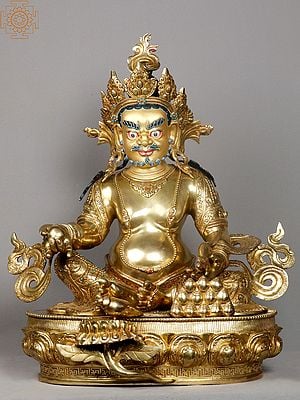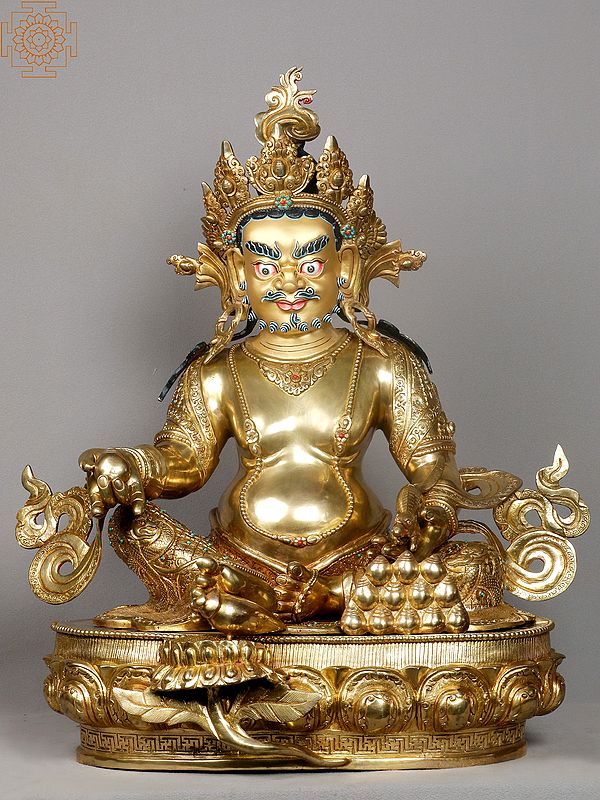





Nepal-Crafted 23" Kubera Deity Sculpture
$6452
Includes any tariffs and taxes

Only 1 available
Notify me when this item is available
| Specifications |
 |
NLH056 |
 |
Copper With Gold |
 |
Height: 23 inch |
| Width: 20 inch | |
| Depth: 9 inch | |
 |
Weight 20 kg |
| About the Item |
|
| Delivery and Return Policies |
 |
Usually ships in 6 days |
 |
Returns and Exchanges accepted within 7 days |
 |
Free Delivery |

Easy Returns

Fully Insured

100% Handmade
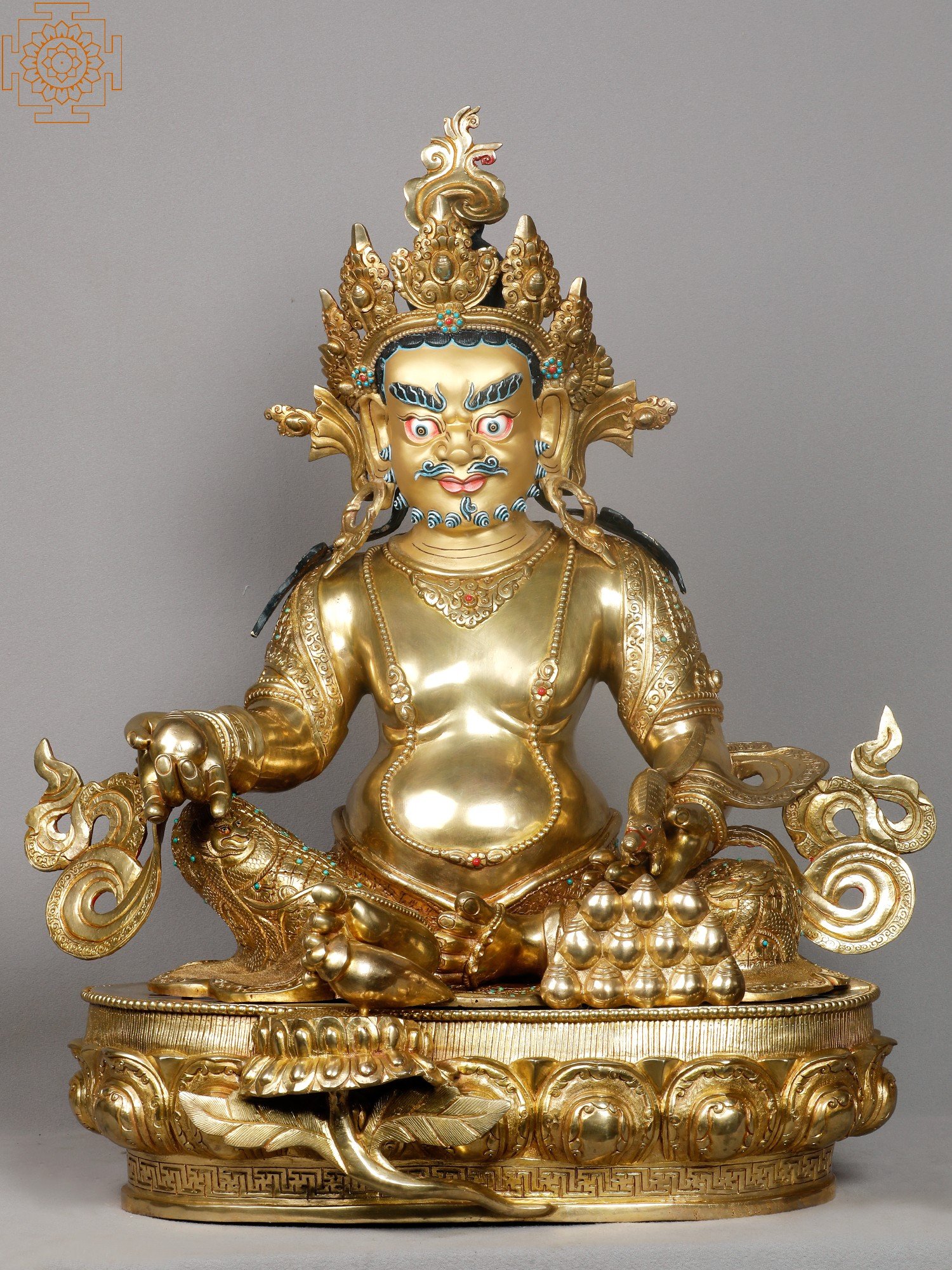
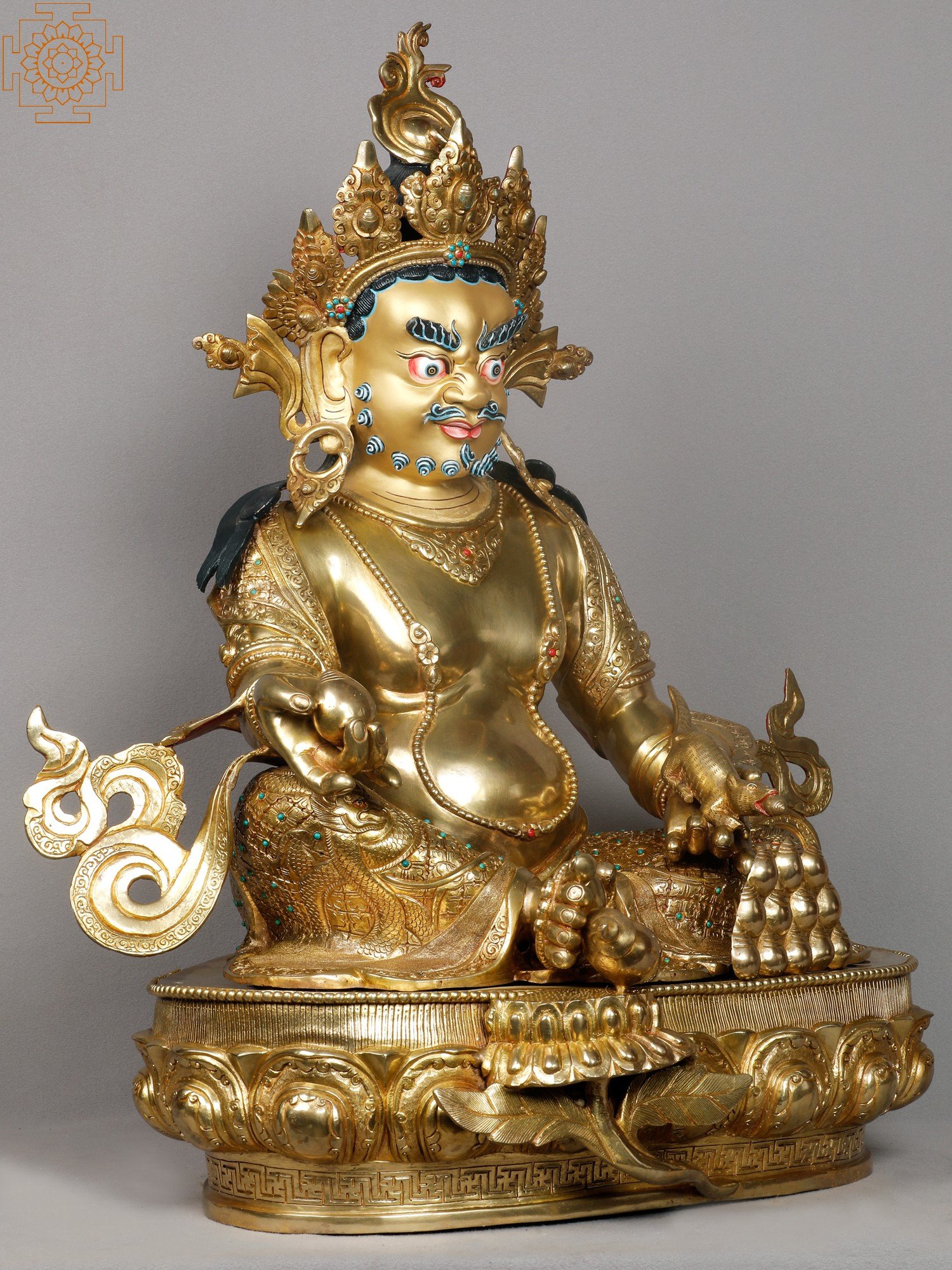
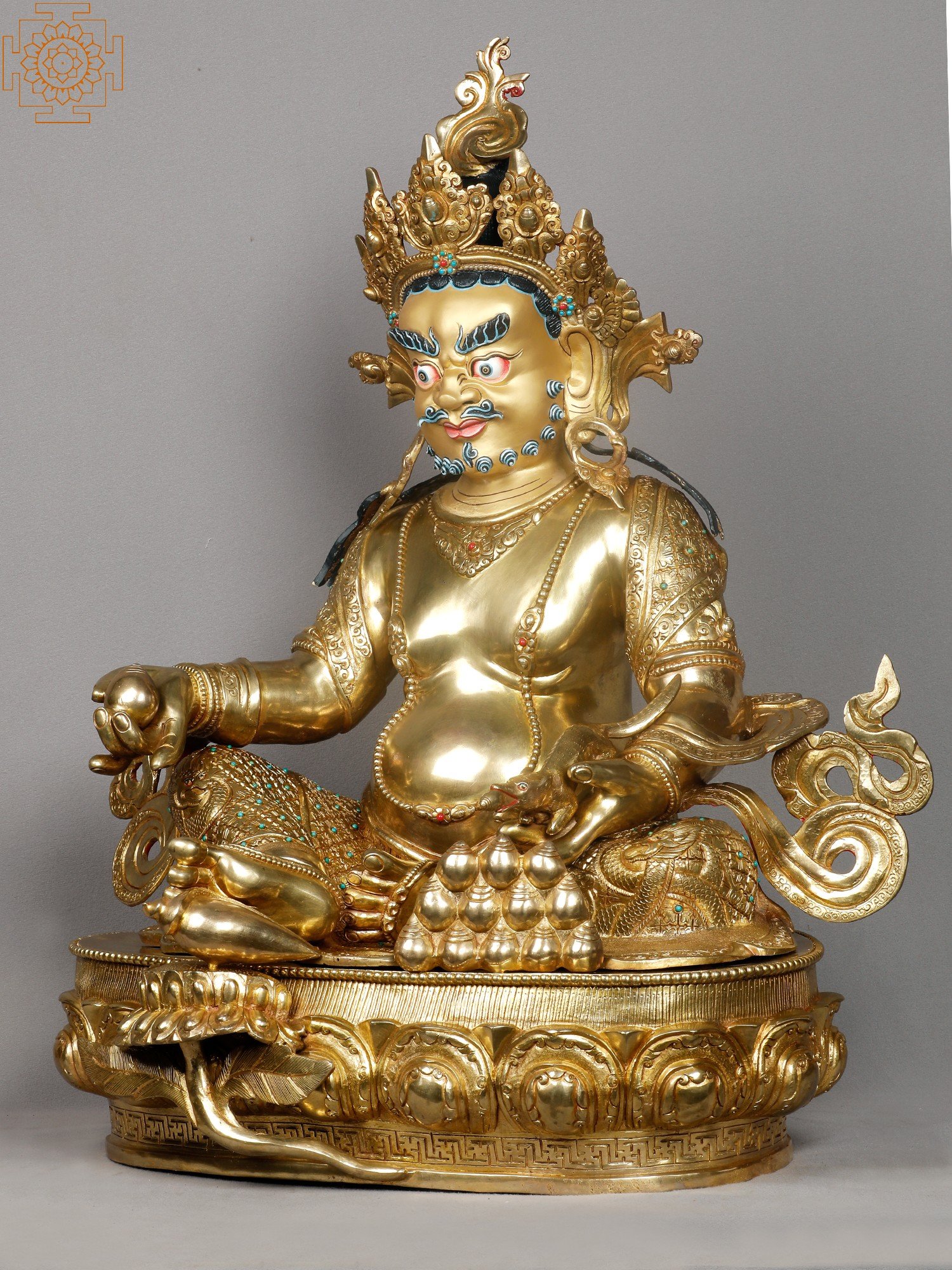
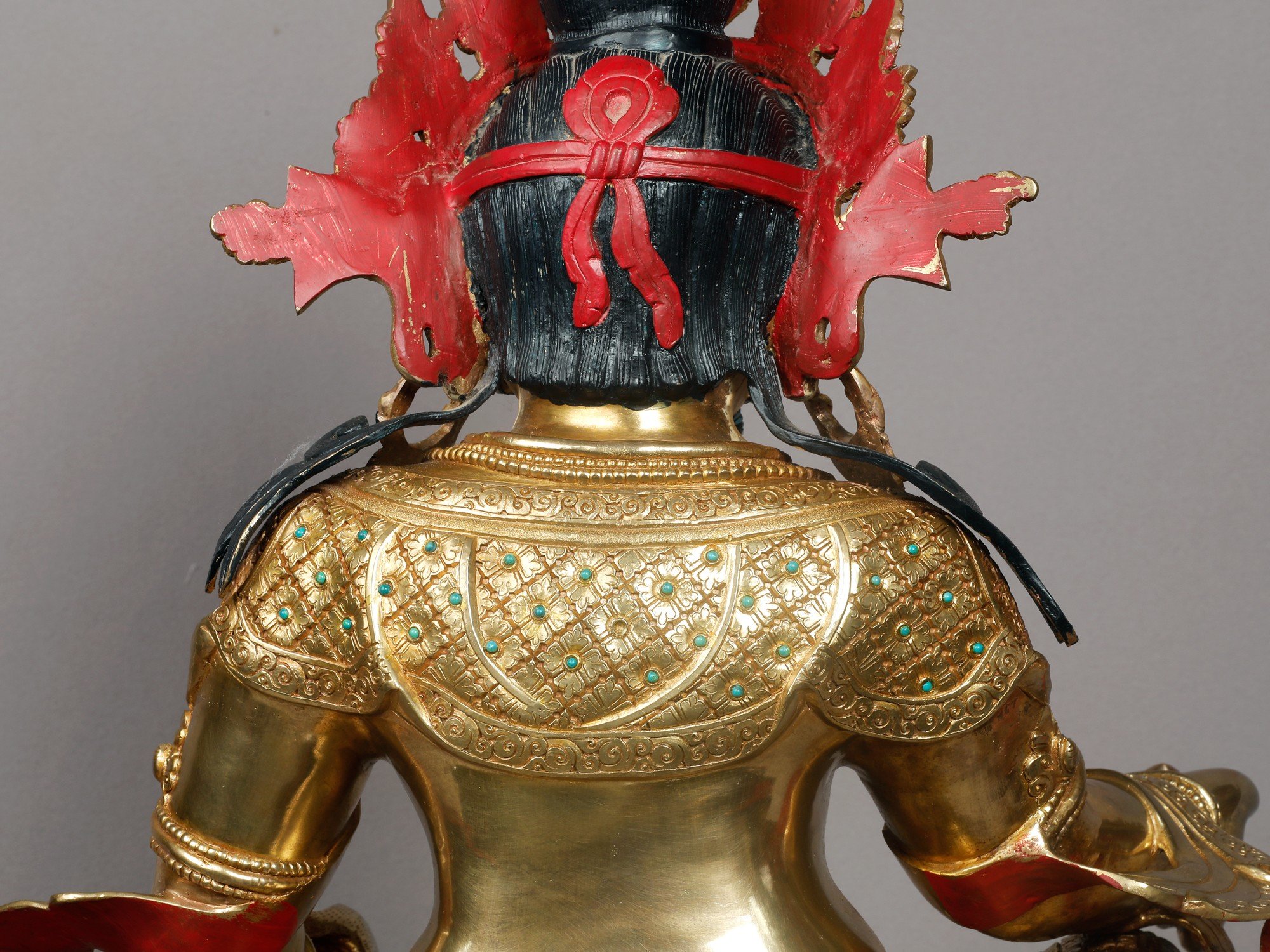
Pot-bellied,
with large, bloodshot eyes that gaze into the eyes of the forces of evil, the
Lord of wealth and guardian of the northern direction, Kubera or Vaishravana in
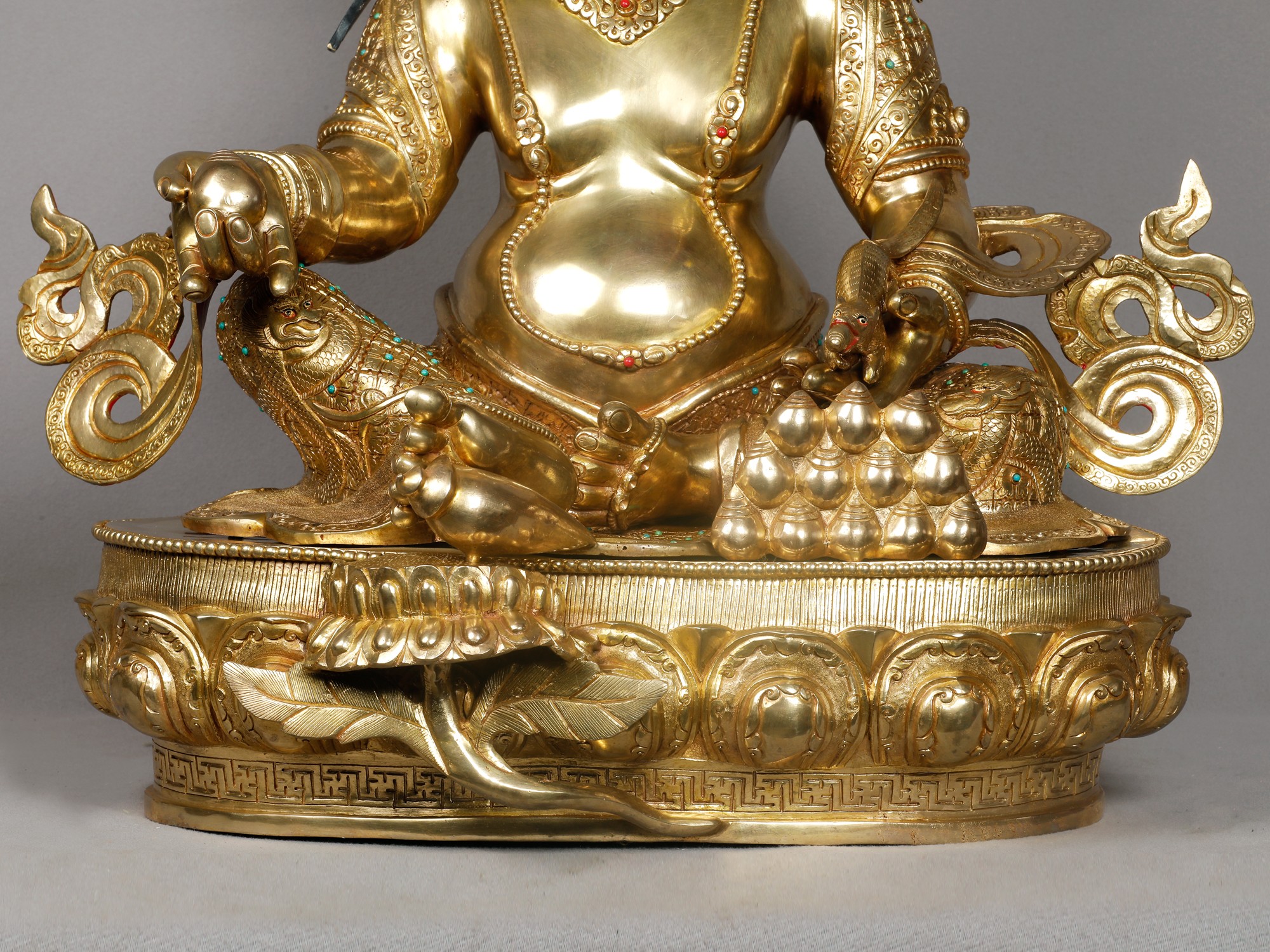
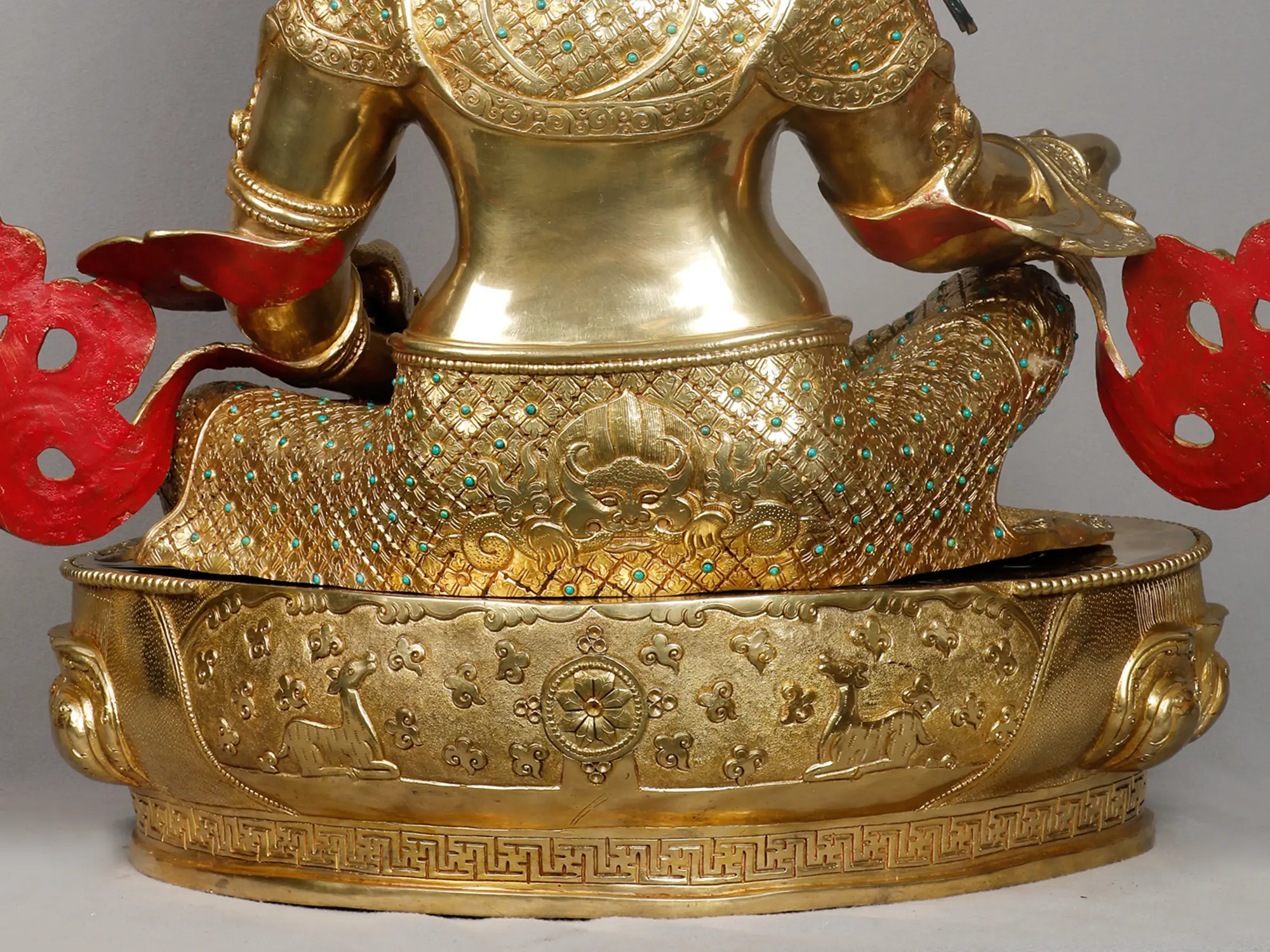
Maharajalilasana appears. This gilded copper Nepalese Kubera statue is adorned
with beautiful ornaments and brocaded dhoti which is decorated with dragons in
the front and Chepu on the reverse- both mythical animals symbolic of divine enlightened
aura. The jewel-spitting mongoose of Kubera has made a heap of golden balls in
front and represents Kubera’s unending benevolence which manifests as abundance.
Embodiment of Abundance and Prosperity
This magnificent Kubera statue, meticulously crafted in Nepal from copper with a resplendent gold finish, is a powerful representation of wealth, fortune, and spiritual abundance. Kubera, revered in Buddhist and Hindu traditions, is the king of the Yakshas and the god of treasure. His presence is believed to usher in prosperity, good luck, and the removal of obstacles. This impressive 23-inch sculpture captures the divine essence of Kubera, making it a striking centerpiece for any sacred space or a treasured addition to a collector's art ensemble. The serene yet powerful visage of Kubera is adorned with a magnificent crown, intricate jewelry, and piercing eyes, conveying both authority and benevolence. His robust form, seated in a contemplative posture, symbolizes stability and groundedness, essential qualities for the enduring flow of wealth. The subtle yet detailed artistry in the ornamentation, from the delicate patterns on his garments to the divine symbols on his person, speaks to the skill of Nepalese artisans who have honed their craft over generations, often imbuing their creations with deep spiritual significance.Mythological Significance and Cultural Resonance
In Buddhist cosmology, Kubera is often depicted as one of the Four Heavenly Kings, guarding the northern direction. He is a protector of hidden treasures and is associated with the earth's wealth, including precious metals and gems. Legends tell of Kubera amassing his vast riches through diligent effort and spiritual merit, serving as an inspiration for devotees to cultivate positive karma and engage in virtuous actions to attain material and spiritual well-being. His association with the mongoose, often seen spitting jewels, further emphasizes his role as a dispenser of fortune. Tibetan Buddhism, with its rich tapestry of iconography and symbolism, places great importance on figures like Kubera, who embody the aspirations for a prosperous and harmonious life. These statues are not merely decorative objects; they are sacred instruments intended to facilitate devotion, meditation, and the invocation of divine blessings. The presence of such a deity in one's home or place of worship is believed to create an auspicious environment, drawing positive energies and dispelling negativity, thereby paving the way for prosperity in all aspects of life, including material wealth, health, and spiritual growth. This particular sculpture, hailing from Nepal, carries the authentic artistic traditions and spiritual fervor of the Himalayan region, where such deities are deeply venerated.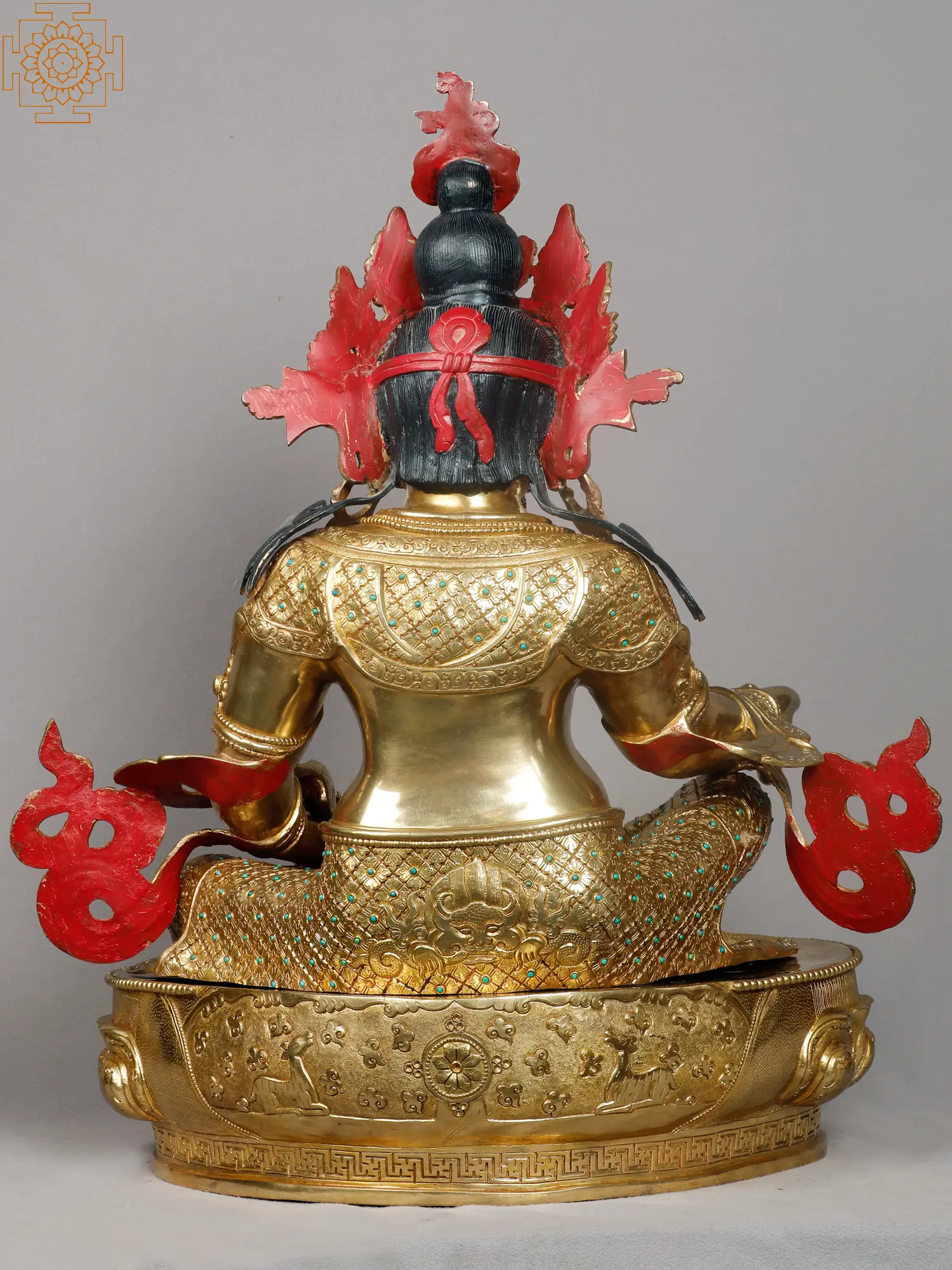
How are Nepalese copper statues made?
Nepalese statues and sculptures are best known for their unique
small religious figures and ritual paraphernalia for over two
thousand years. These are mainly cast in copper alloy. Nepal draws
influences from the artistic styles of Buddhism and Hinduism, and
therefore the sculptors of the country specialize in making the
icons of both these religions. Over the years, Nepalese sculptures
evolved into their own distinctive iconography. Some
characteristic features of these sculptures that differ from other
pieces are exaggerated physical postures, youthful and sensual
features, languid eyes, wider faces having serene expressions, and
ornate flourishes. The Buddhist deity icons of Nepal have
tremendous demand in countries such as China and Tibet for ritual
purposes in their temples and monasteries.
Nepalese statues and sculptures have a high copper content and therefore develop a slightly reddish patina on the surface as they age. However, the most unique feature of Nepalese copper statues is their decorative detailing. The pieces are heavily gilded and sometimes inlaid with semi-precious stones. This embellishment protects them from getting tarnished. The traditional lost-wax method for casting Nepalese copper statues remains the most practiced technique in Nepal for many centuries. This process involves many steps and requires skilled artists.
The first step in lost-wax sculpting is to make a wax replica of the desired Buddhist deity to be cast in copper. This replica is created by hand and therefore needs excellent artistic skills otherwise fine features will be lacking.
Once the wax replica is made, it is then coated with a special mixture of clay with a brush. This layer of clay is hardened when left to dry. A small hole is made on the base of the wax mould so that the wax flows away when it is heated.
Nepalese statues and sculptures have a high copper content and therefore develop a slightly reddish patina on the surface as they age. However, the most unique feature of Nepalese copper statues is their decorative detailing. The pieces are heavily gilded and sometimes inlaid with semi-precious stones. This embellishment protects them from getting tarnished. The traditional lost-wax method for casting Nepalese copper statues remains the most practiced technique in Nepal for many centuries. This process involves many steps and requires skilled artists.
The first step in lost-wax sculpting is to make a wax replica of the desired Buddhist deity to be cast in copper. This replica is created by hand and therefore needs excellent artistic skills otherwise fine features will be lacking.
Once the wax replica is made, it is then coated with a special mixture of clay with a brush. This layer of clay is hardened when left to dry. A small hole is made on the base of the wax mould so that the wax flows away when it is heated.
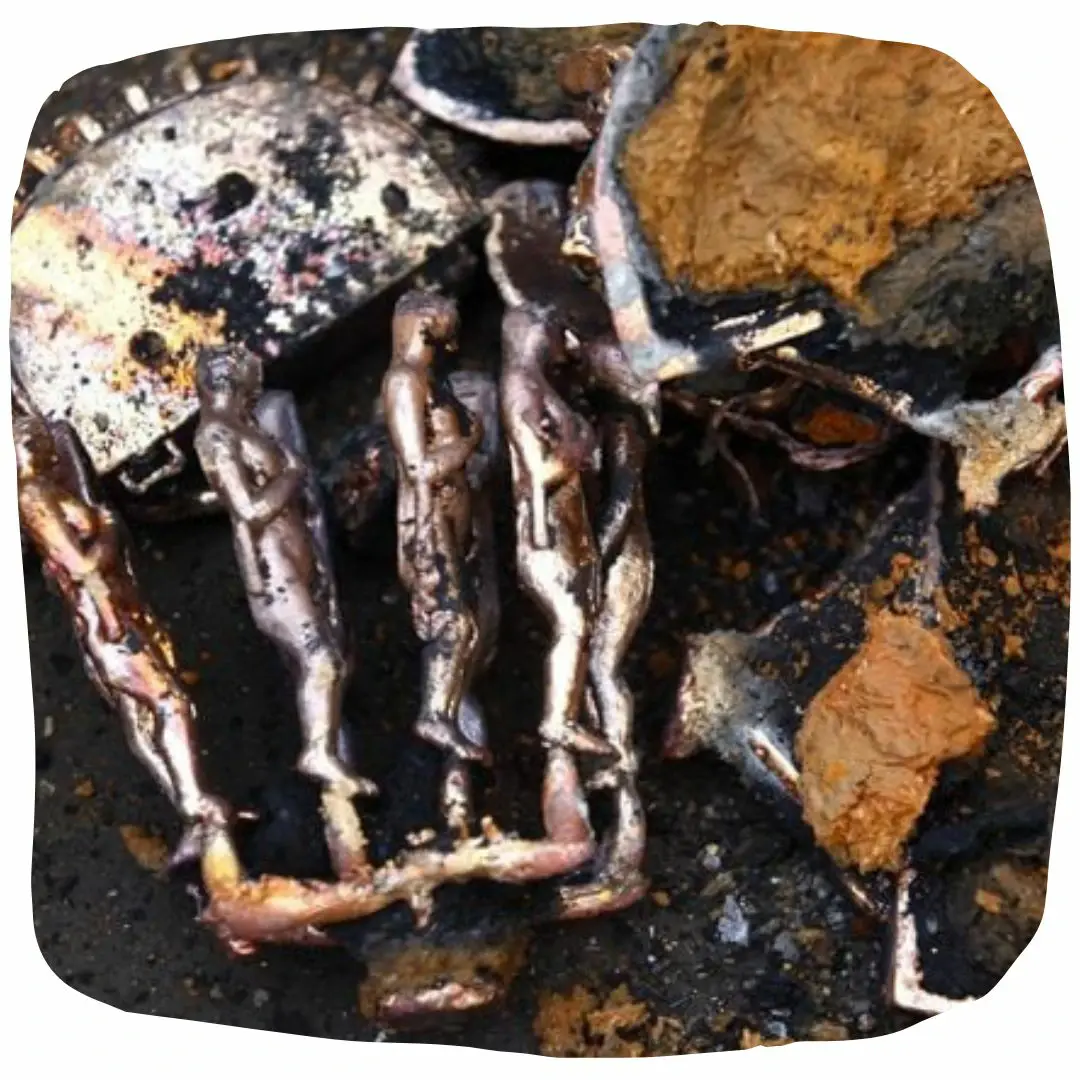
At this stage, a hollow mould in the shape of the deity is
obtained.
This is the time to pour liquid copper into the hollow mould which is then allowed to cool and harden inside a container of cold water. When the liquid metal has hardened, the mould is removed and the statue within is revealed.
This is the time to pour liquid copper into the hollow mould which is then allowed to cool and harden inside a container of cold water. When the liquid metal has hardened, the mould is removed and the statue within is revealed.
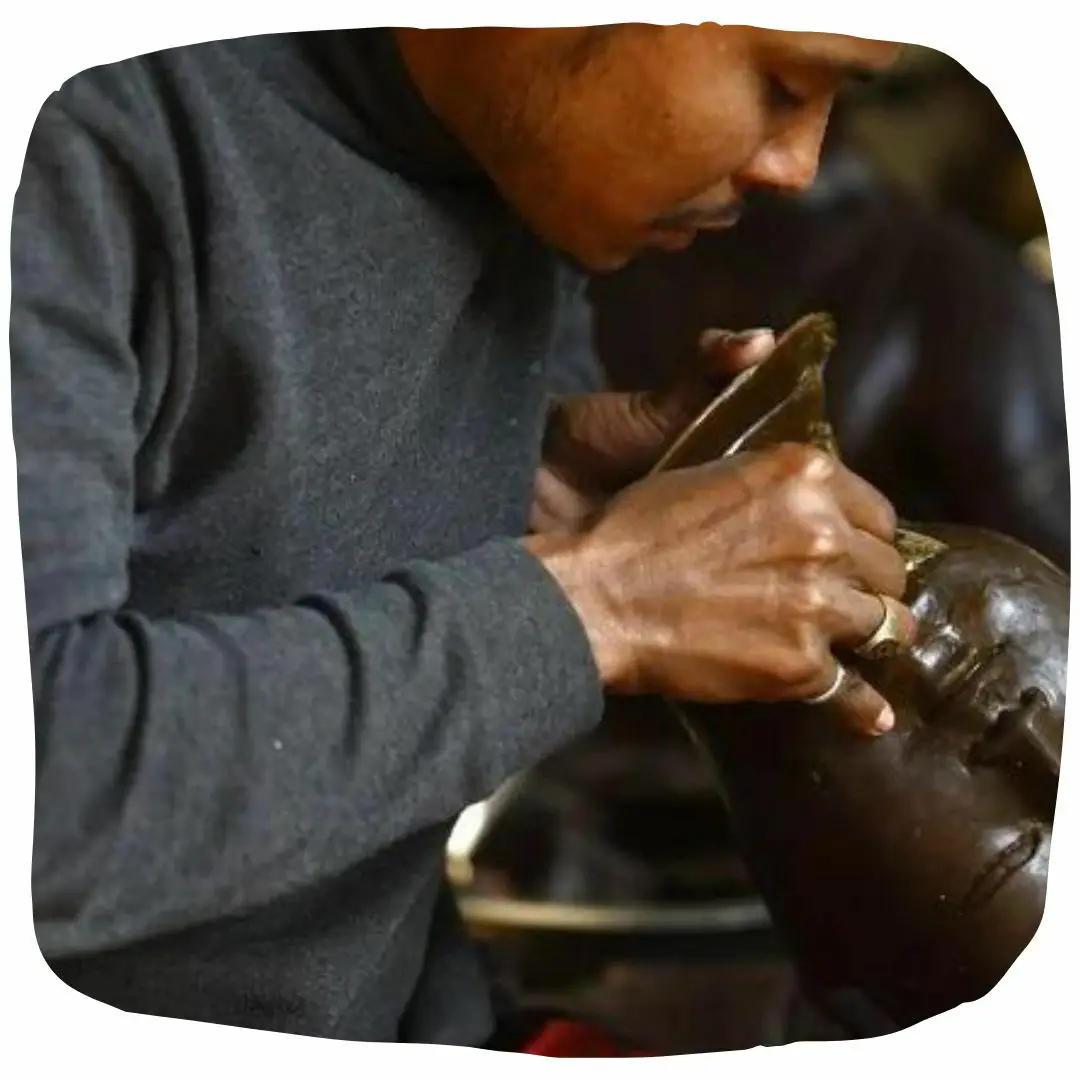
The artist works on the details of the statue using various tools.
It is then polished to get a shiny and lustrous surface.
Now comes the most important part of Nepalese art which is gold gilding. This is done by the traditional fire gilding method. A mixture of mercury and 18K gold is applied on the surface of the statue and heat is applied using a flame torch. The result is that mercury evaporates along with impurities, leaving a pure 24K gold finish.
Now comes the most important part of Nepalese art which is gold gilding. This is done by the traditional fire gilding method. A mixture of mercury and 18K gold is applied on the surface of the statue and heat is applied using a flame torch. The result is that mercury evaporates along with impurities, leaving a pure 24K gold finish.
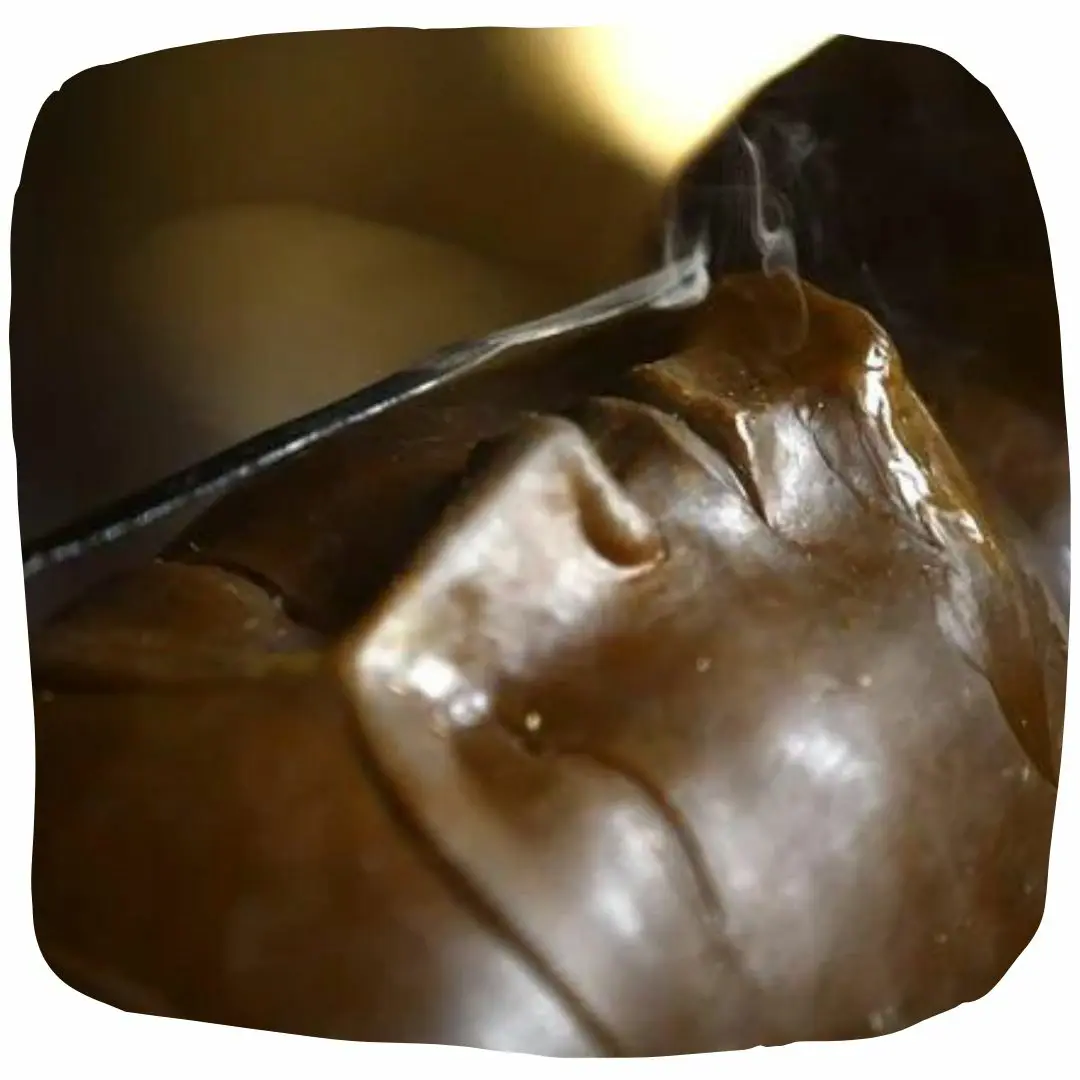
The lost-wax method of sculpting is the most preferred technique
for artists to cast a metallic statue having intricate details. Since Nepalese copper sculptures require extraneous effort for giving a majestic look by adding special embellishments, it takes several weeks to complete one masterpiece. A 24K gold gilded copper sculpture retains its brilliant luster for many years and appears as like before. Nepalese sculptures continue to remain one of the finest specimens of the art of the East that have a strong aesthetic appeal that other sculptures cannot match.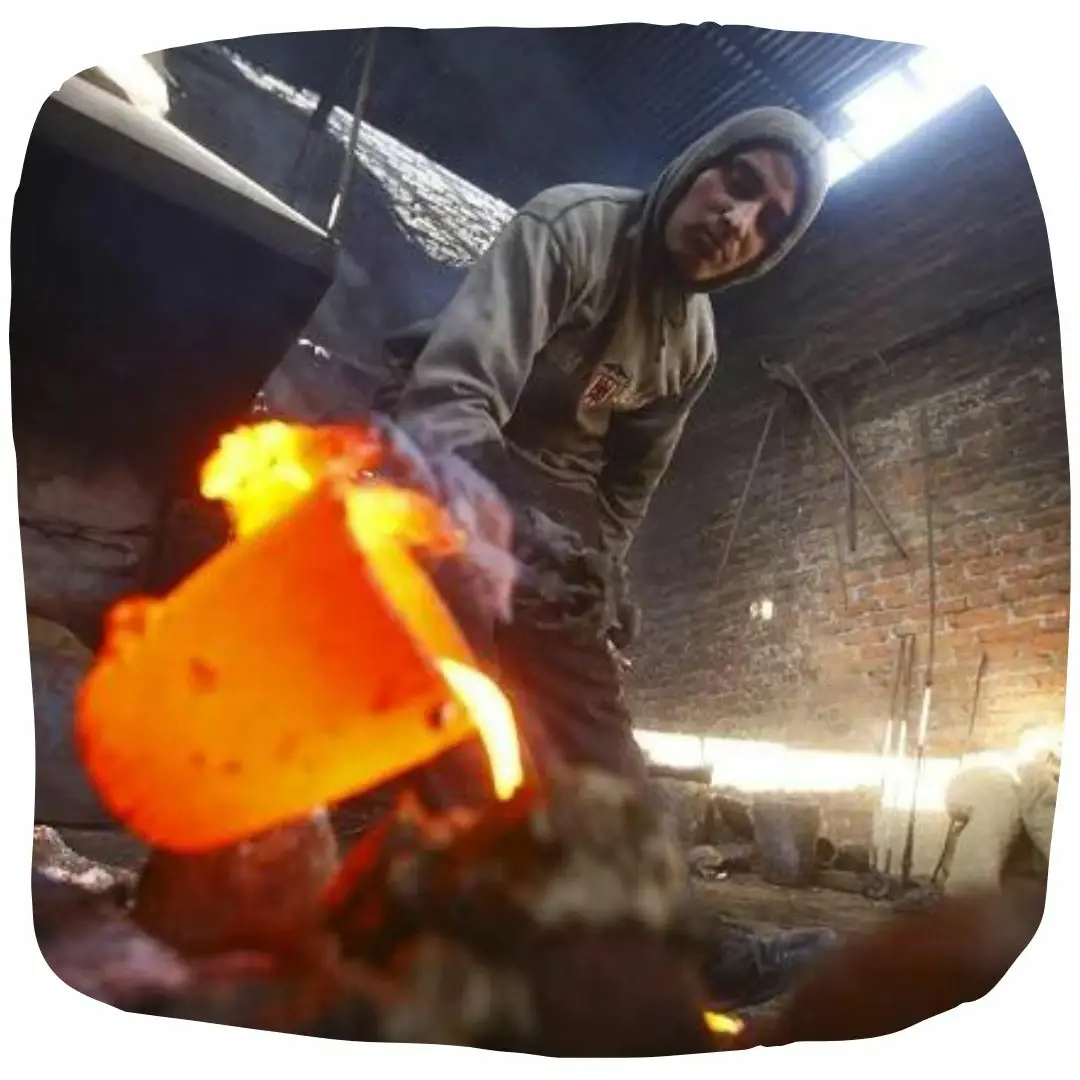
Products related to this item
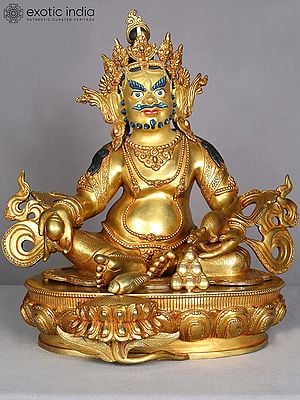
16.00 inch Height X 15.00 inch Width X 11.00 inch Depth
$3651
Includes any tariffs and taxes
10.2 inch Height x 8 inch Width x 4.5 inch Depth
$1898
Express Shipping
Includes any tariffs and taxes
8.70 inch Height x 7.00 inch Width x 4.50 inch Depth
$464.80
Express Shipping
$581 20% off
Includes any tariffs and taxes
9.20 inch Height x 7.20 inch Width x 3.20 inch Depth
$607.20
Express Shipping
$1012 40% off
Includes any tariffs and taxes
8.70 inch Height x 6.00 inch Width x 4.50 inch Depth
$272.40
Express Shipping
$454 40% off
Includes any tariffs and taxes
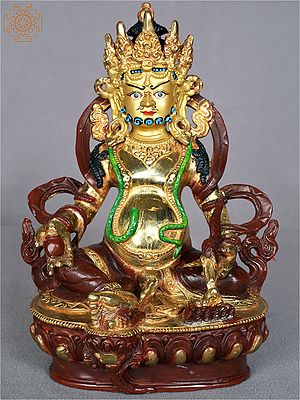
8.50 inch Height X 6.00 inch Width X 4.00 inch Depth
$339
Includes any tariffs and taxes
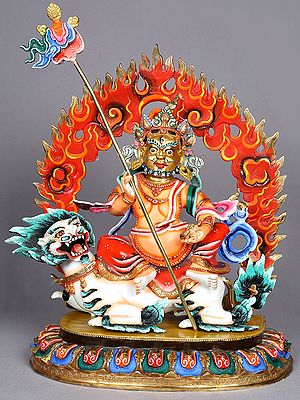
15.00 inch Height X 11.00 inch Width X 6.00 inch Depth
$1351
Includes any tariffs and taxes
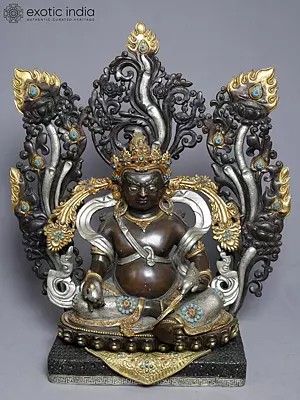
19.5 inch Height X 18 inch Width X 9 inch Length
$6245
Includes any tariffs and taxes
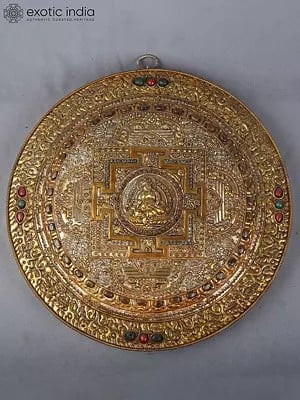
14 inch Height X 14 inch Width X 1.5 inch Length
$782
Includes any tariffs and taxes
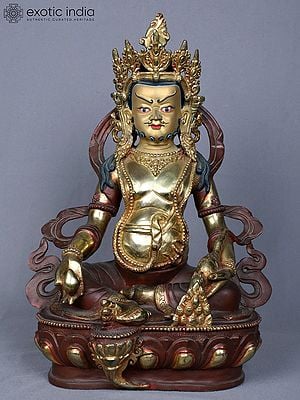
13 inch Height X 10 inch Width X 7 inch Length
$1518
Includes any tariffs and taxes
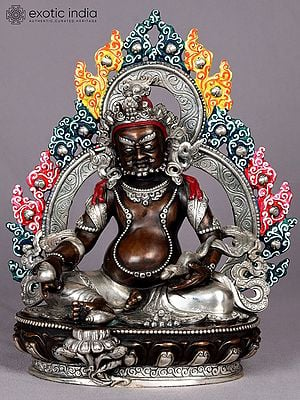
9.50 inch Height X 8.00 inch Width X 5.00 inch Depth
$788
Includes any tariffs and taxes
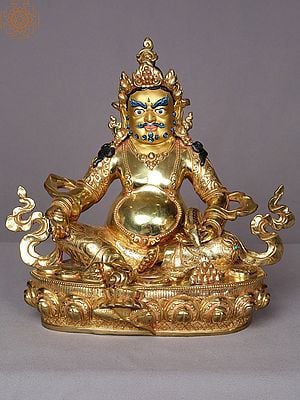
12.00 inch Height X 12.00 inch Width X 7.00 inch Depth
$1823
Includes any tariffs and taxes