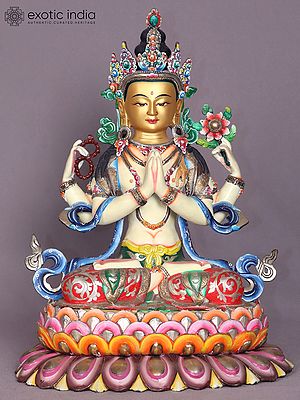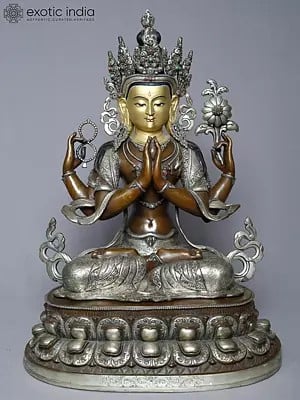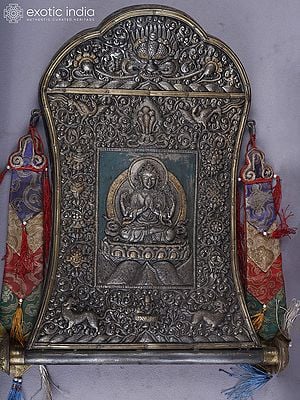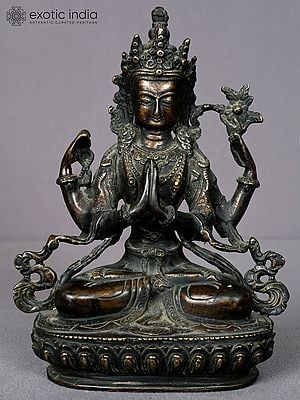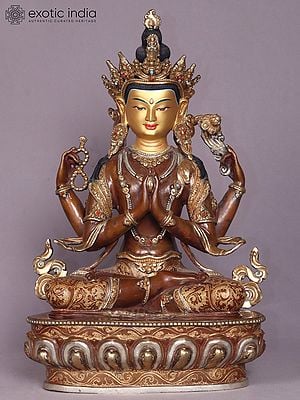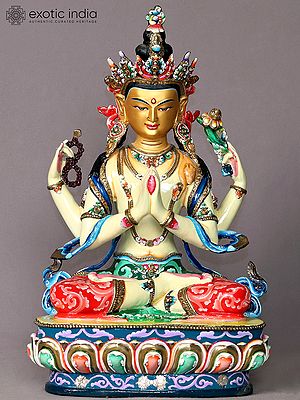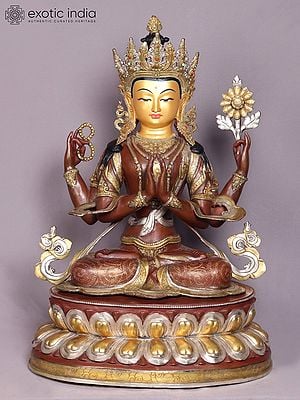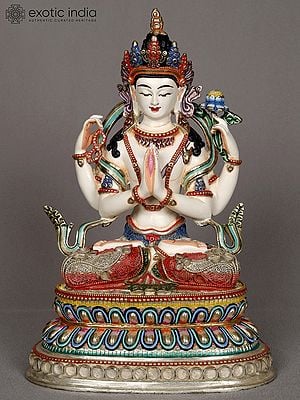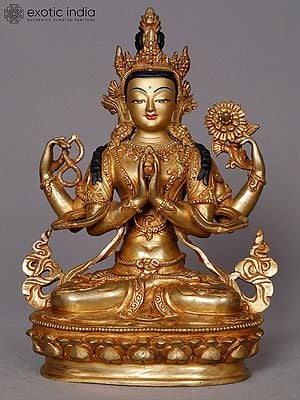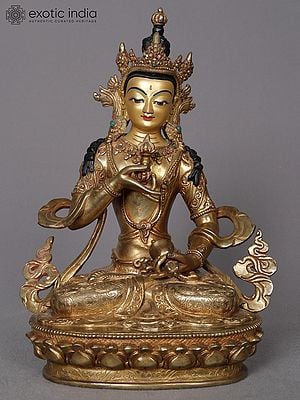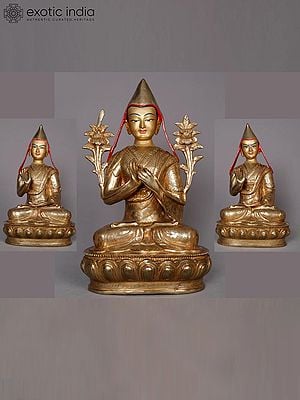

Nepalese Copper Statue of Kharchari

| Specifications |
 |
CAA137 |
 |
Copper With Gold |
 |
Height: 10 inch |
| Width: 7 inch | |
| Depth: 4 inch | |
 |
Weight 2.20 kg |
| About the Item |
|
| Delivery and Return Policies |
 |
Usually ships in 6 days |
 |
Returns and Exchanges accepted within 7 days |
 |
Free Delivery |


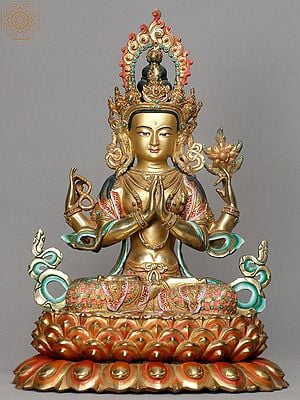
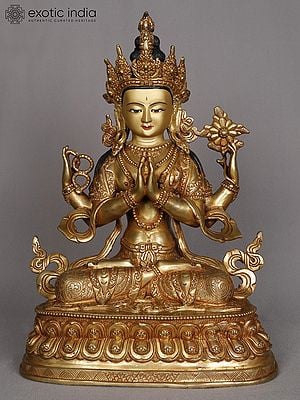
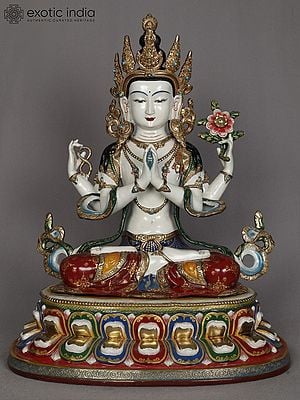
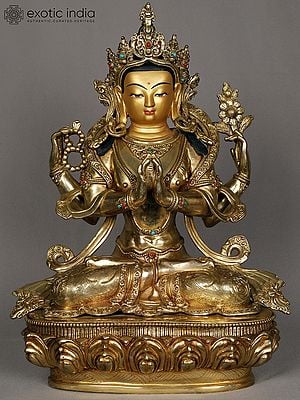
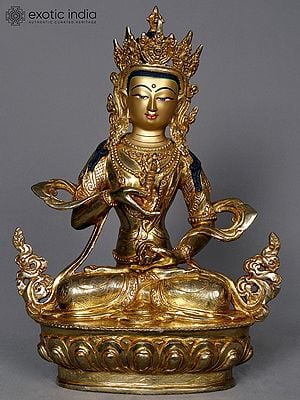
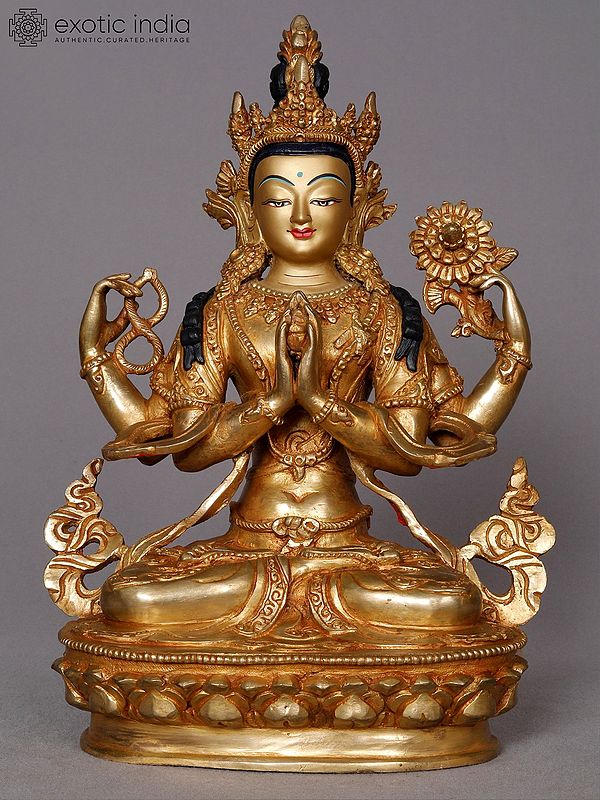
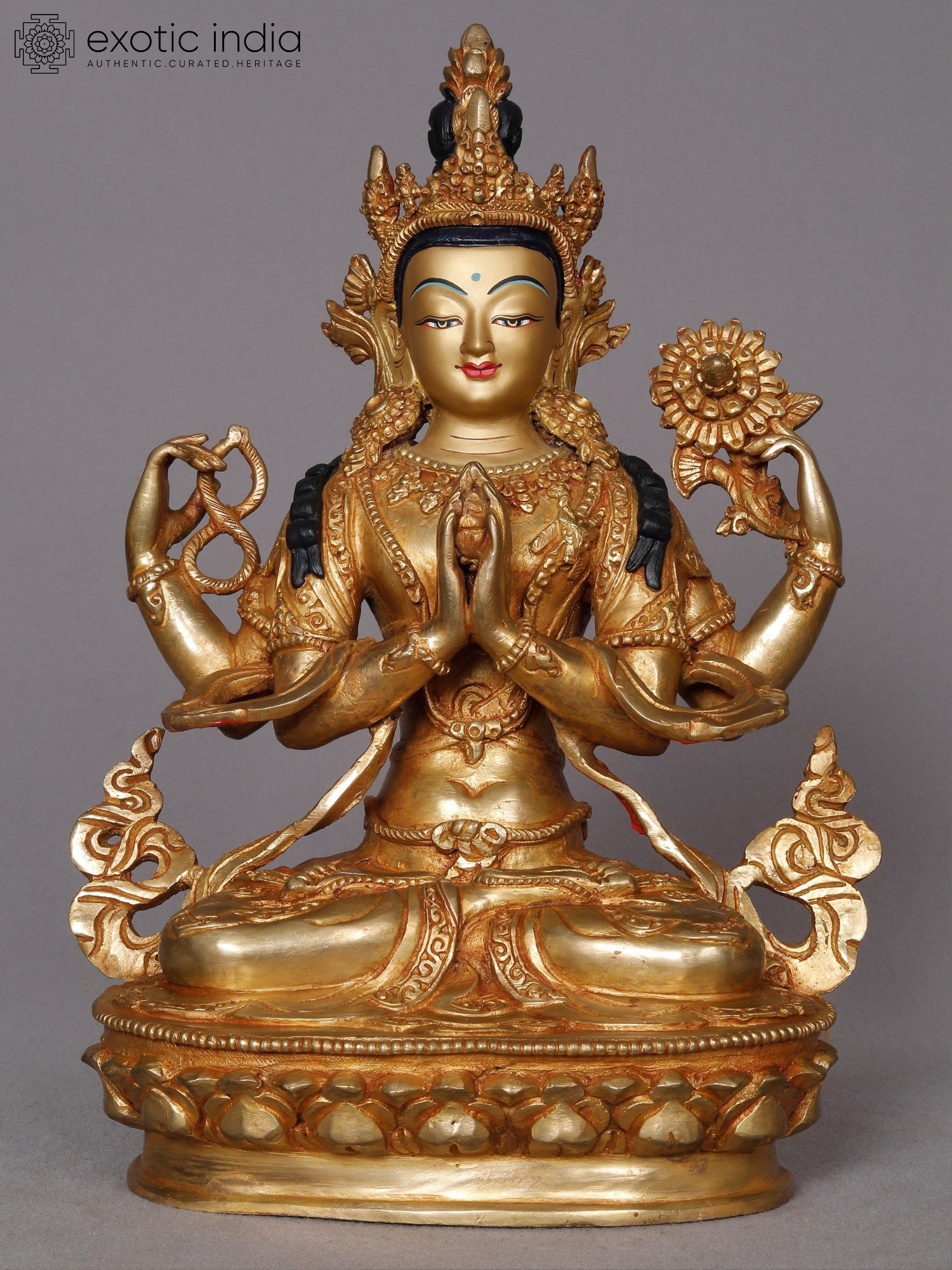
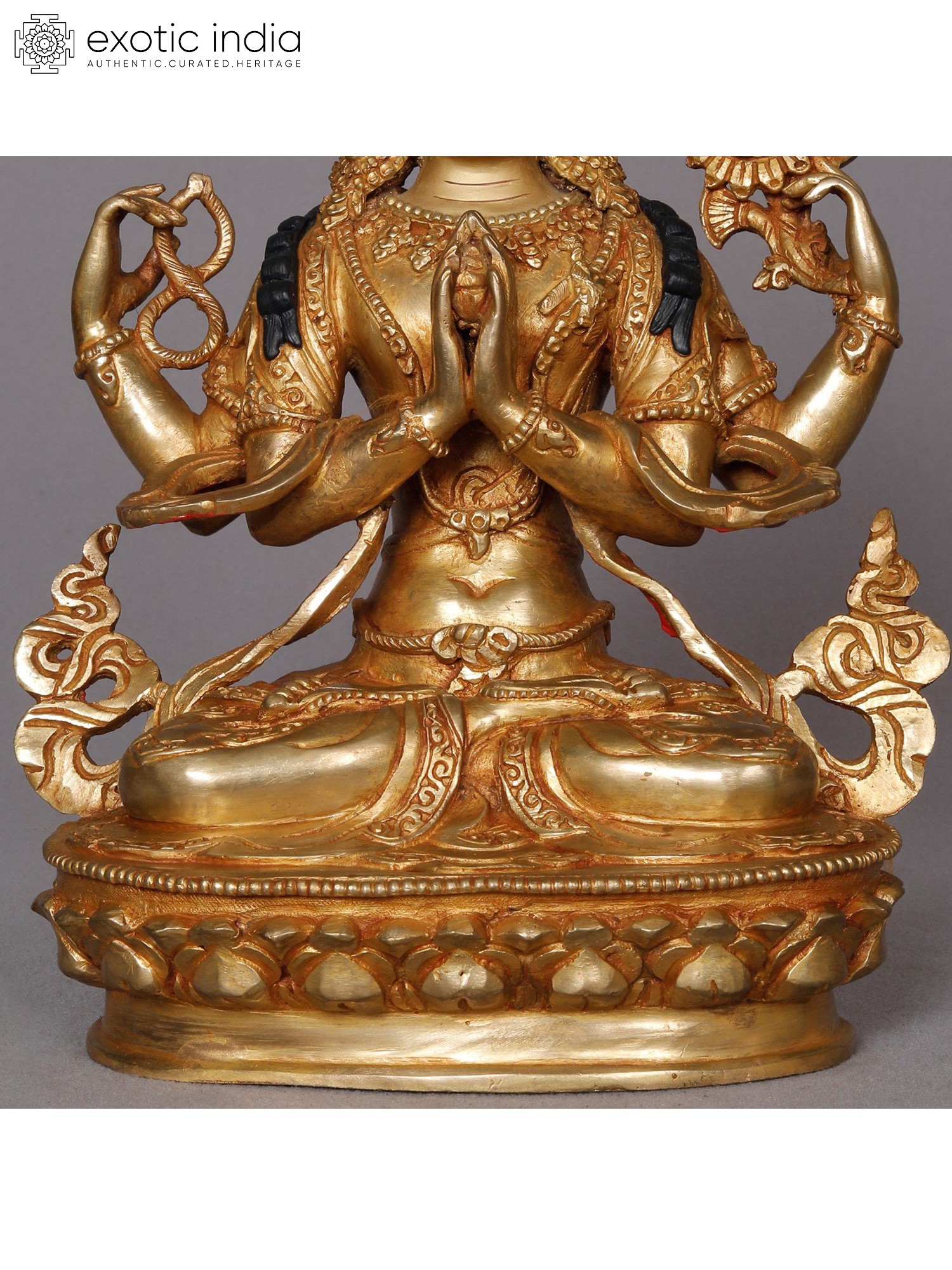
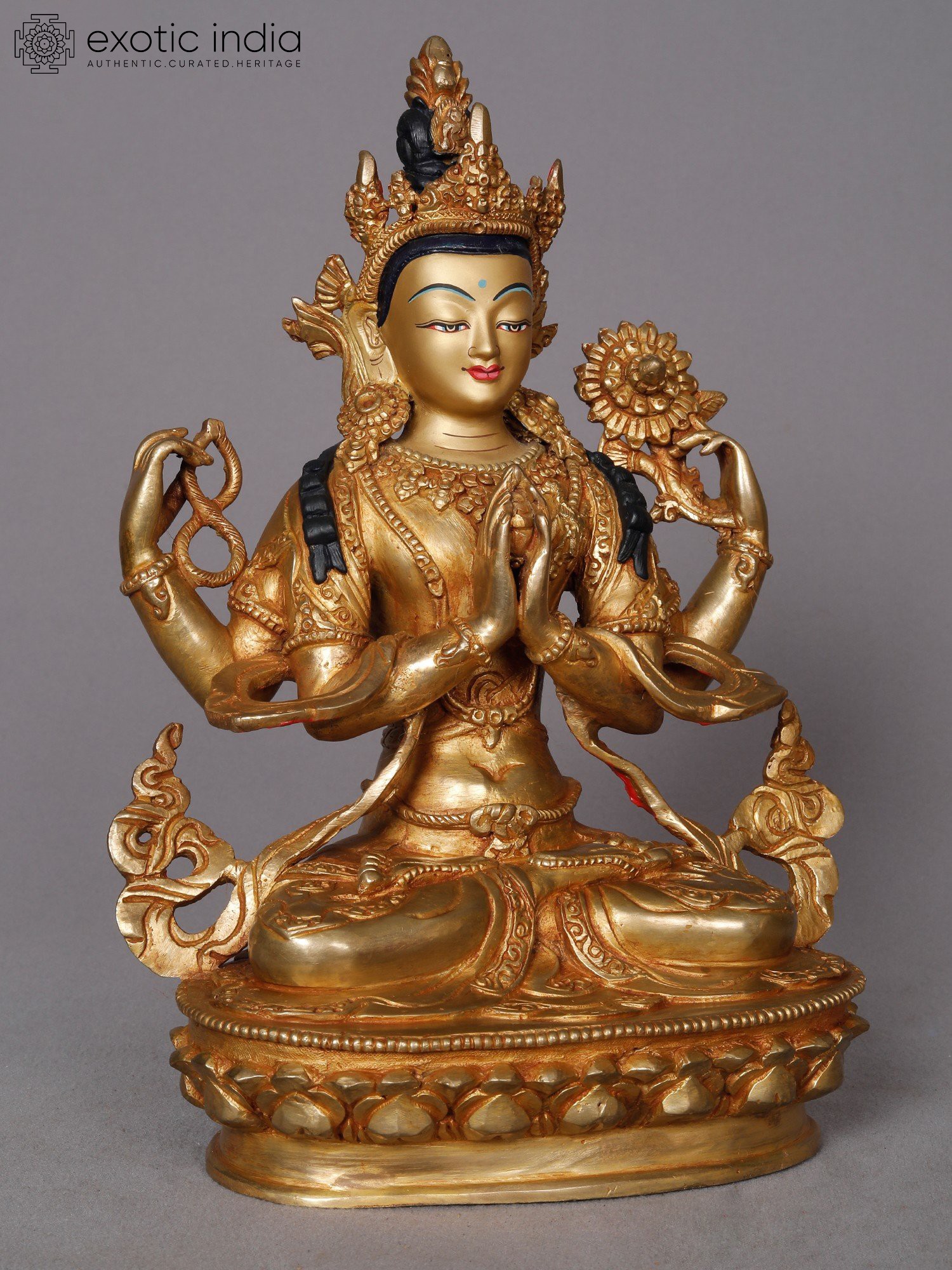
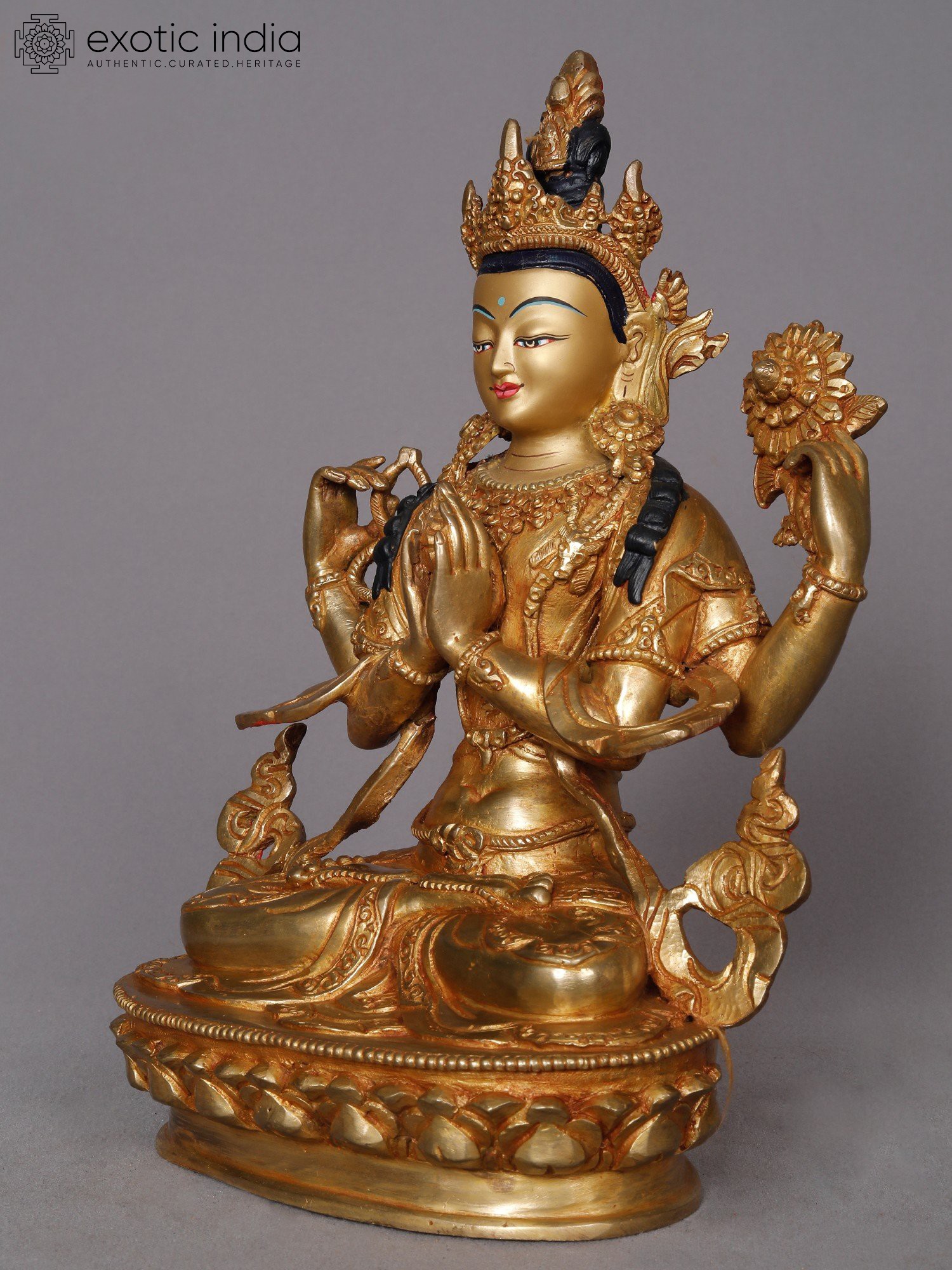
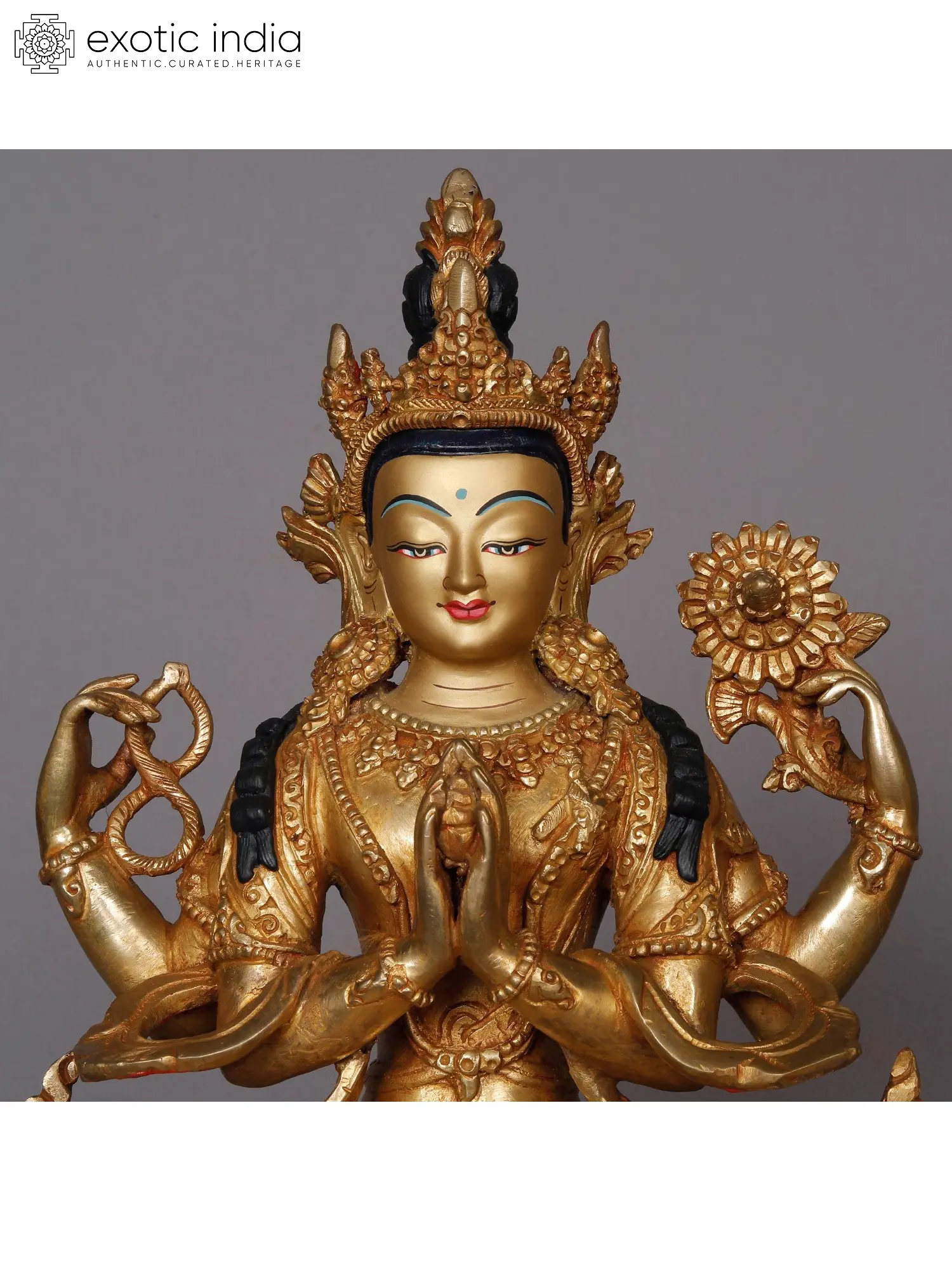
Kharchari makes
an unyielding vow to never cease until he has liberated all sentient beings
from the cycle of samsara, yet despite his earnest endeavors, the magnitude of
this aspiration remains insurmountable. His two foremost hands are united in a
gesture of reverence before his heart adorned with precious jewels. His upper right-hand cradles a crystal akshamala or rosary, an emblem of the eternal
cycle, signifying his unique identity.
In his left hand,
he gently holds a white lotus, symbolizing his capacity to emancipate beings
from the turbid waters of suffering and the depths of infernal realms, guiding
them toward the pristine realms of enlightenment. Concurrently, his right hand
also embraces a white lotus. Cloaked in silk garments, he is seated upon a cascade
of lotus petals. With his legs positioned in adamantine (diamond stance),
Kharchari radiates a profound sense of tranquility and compassion.
A Vision of Compassion and Enlightenment
This exquisite statue, meticulously crafted from copper and adorned with a lustrous gold finish, embodies the profound spiritual artistry of Nepal. It portrays a revered Bodhisattva, a being destined for enlightenment who postpones their own nirvana to aid all sentient beings in their journey towards liberation. The serene countenance, with eyes that seem to gaze into the infinite, reflects a deep well of compassion and wisdom, inviting contemplation and inner peace.Iconography and Symbolism
The iconography of this piece is rich with symbolic meaning. The Bodhisattva is depicted in a seated posture, suggesting stability and rootedness in their spiritual practice. The four arms are a common representation, each holding significant objects that convey specific teachings. In one hand, the Bodhisattva holds a blooming lotus flower, a universal symbol of purity, spiritual awakening, and the unfolding of consciousness, much like the story of Padmasambhava, the Lotus-Born, who emerged from a lotus to bring Buddhism to Tibet. Another hand grasps a coiled serpent, which, in Buddhist symbolism, represents the overcoming of negative mental states and the subjugation of ignorance and attachment, echoing the tales of the Nagas, serpentine beings often associated with hidden wisdom and the earth. The gestures and accoutrements speak volumes, offering a visual narrative of the path to enlightenment and the qualities one cultivates along the way. The intricate crown and adornments further signify the divine nature and regal bearing of this enlightened being.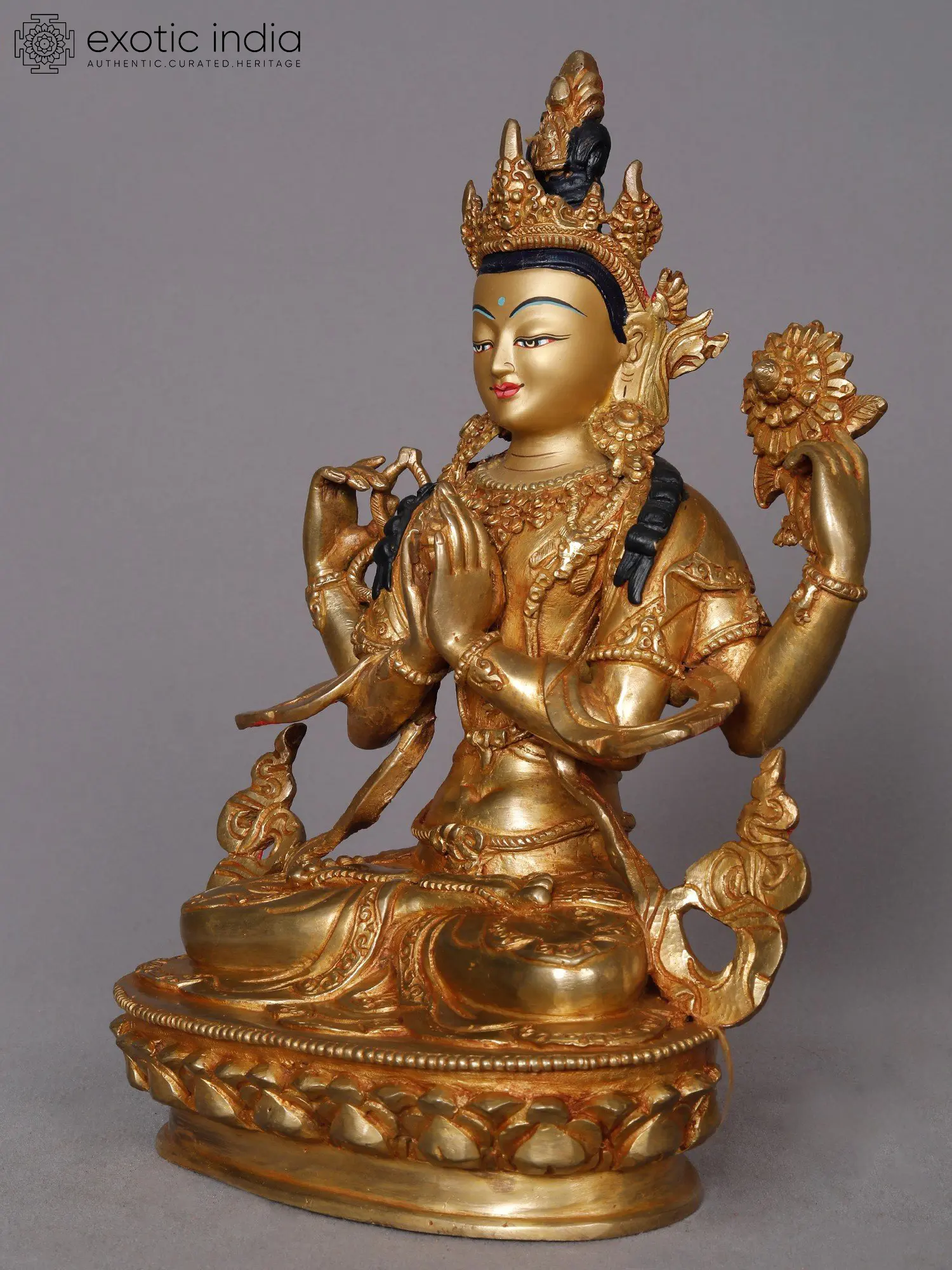
Artistry and Craftsmanship
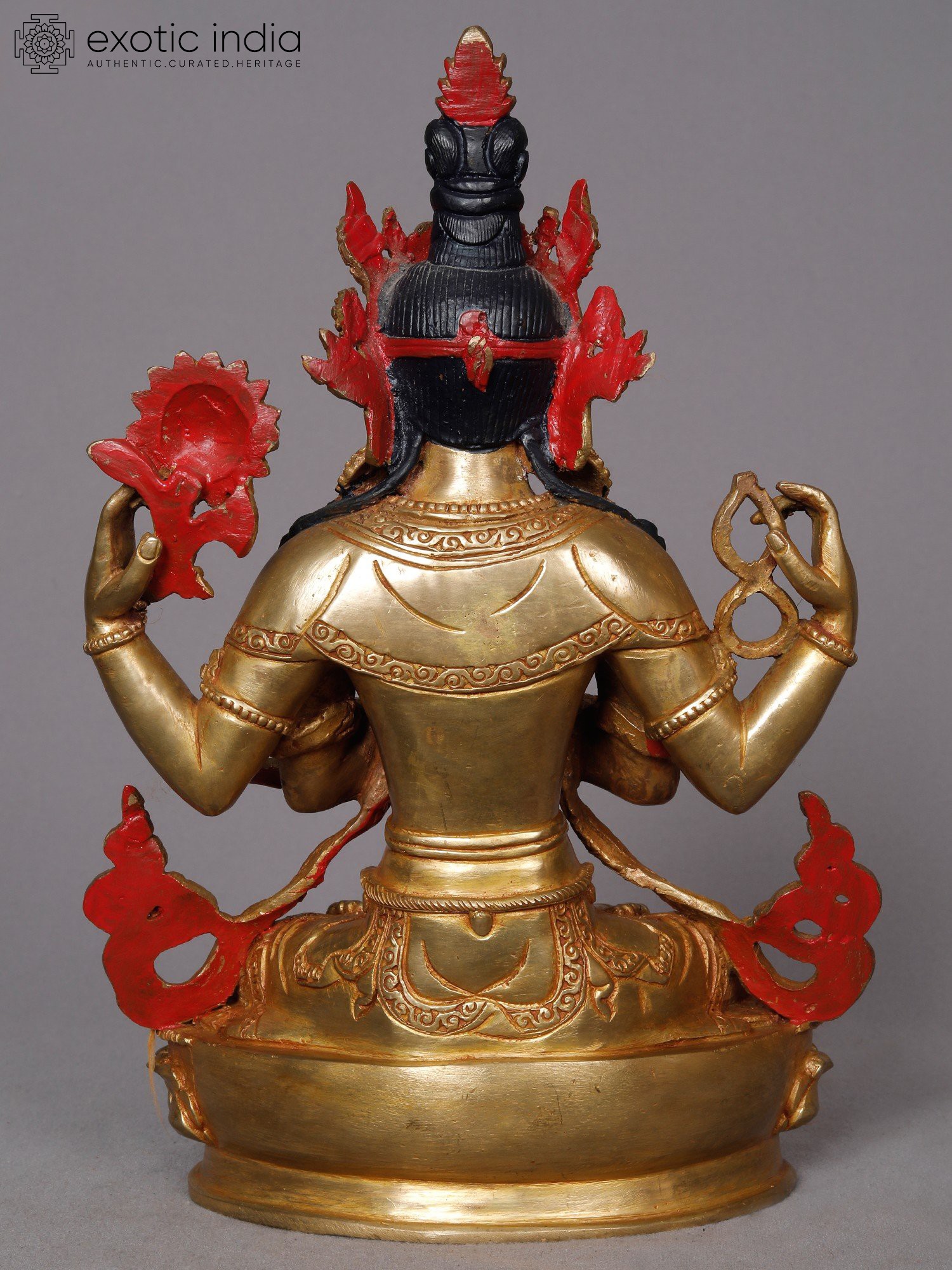
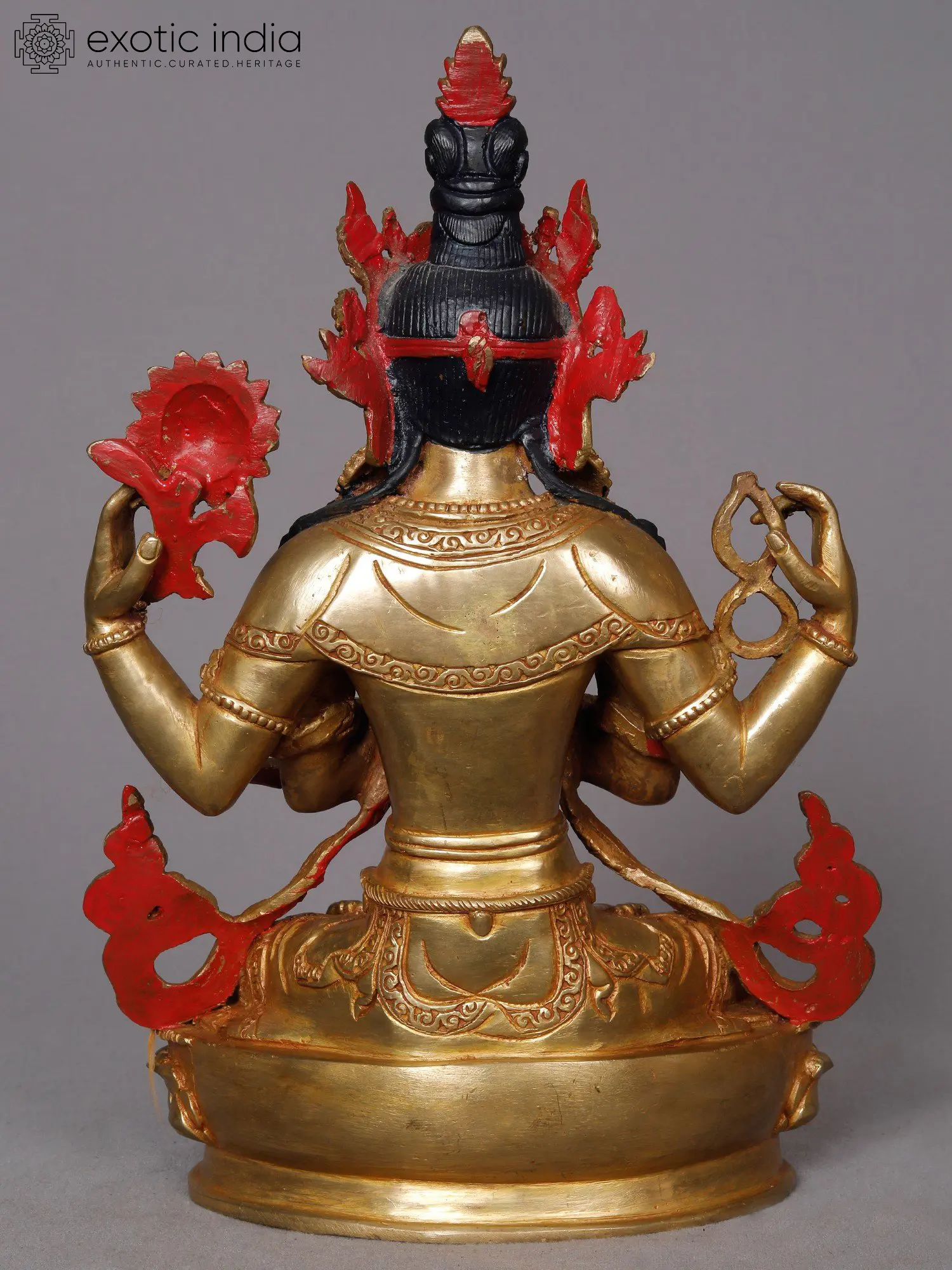
Hailing from Nepal, a land steeped in Buddhist tradition and renowned for its devotional art, this statue is a testament to the skill of Nepalese artisans. The process of creating such a piece involves intricate metalworking, where copper is expertly shaped and then meticulously gilded. The detailed ornamentation, from the flowing robes to the delicate facial features, showcases a mastery passed down through generations. The gold finish not only enhances the visual splendor but also symbolizes purity, illumination, and the preciousness of the spiritual path. This statue is not merely an object of devotion but a work of art that carries the spiritual heritage and cultural narrative of the Himalayan region, inviting its owner to connect with a lineage of profound wisdom and enduring beauty. Its presence can transform a space into a sanctuary of peace and mindfulness.How are Nepalese copper statues made?
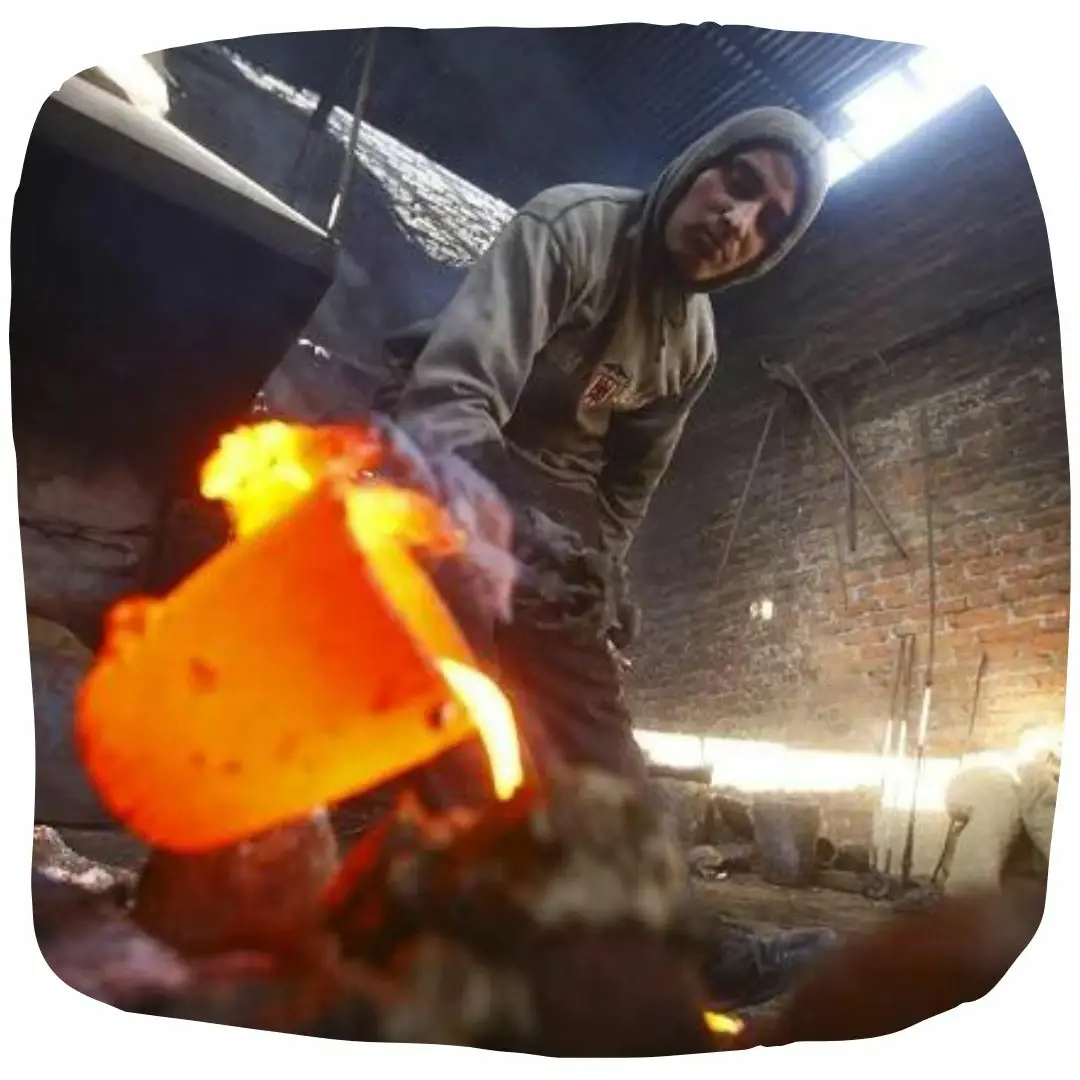
Nepalese statues and sculptures have a high copper content and therefore develop a slightly reddish patina on the surface as they age. However, the most unique feature of Nepalese copper statues is their decorative detailing. The pieces are heavily gilded and sometimes inlaid with semi-precious stones. This embellishment protects them from getting tarnished. The traditional lost-wax method for casting Nepalese copper statues remains the most practiced technique in Nepal for many centuries. This process involves many steps and requires skilled artists.
The first step in lost-wax sculpting is to make a wax replica of the desired Buddhist deity to be cast in copper. This replica is created by hand and therefore needs excellent artistic skills otherwise fine features will be lacking.
Once the wax replica is made, it is then coated with a special mixture of clay with a brush. This layer of clay is hardened when left to dry. A small hole is made on the base of the wax mould so that the wax flows away when it is heated.
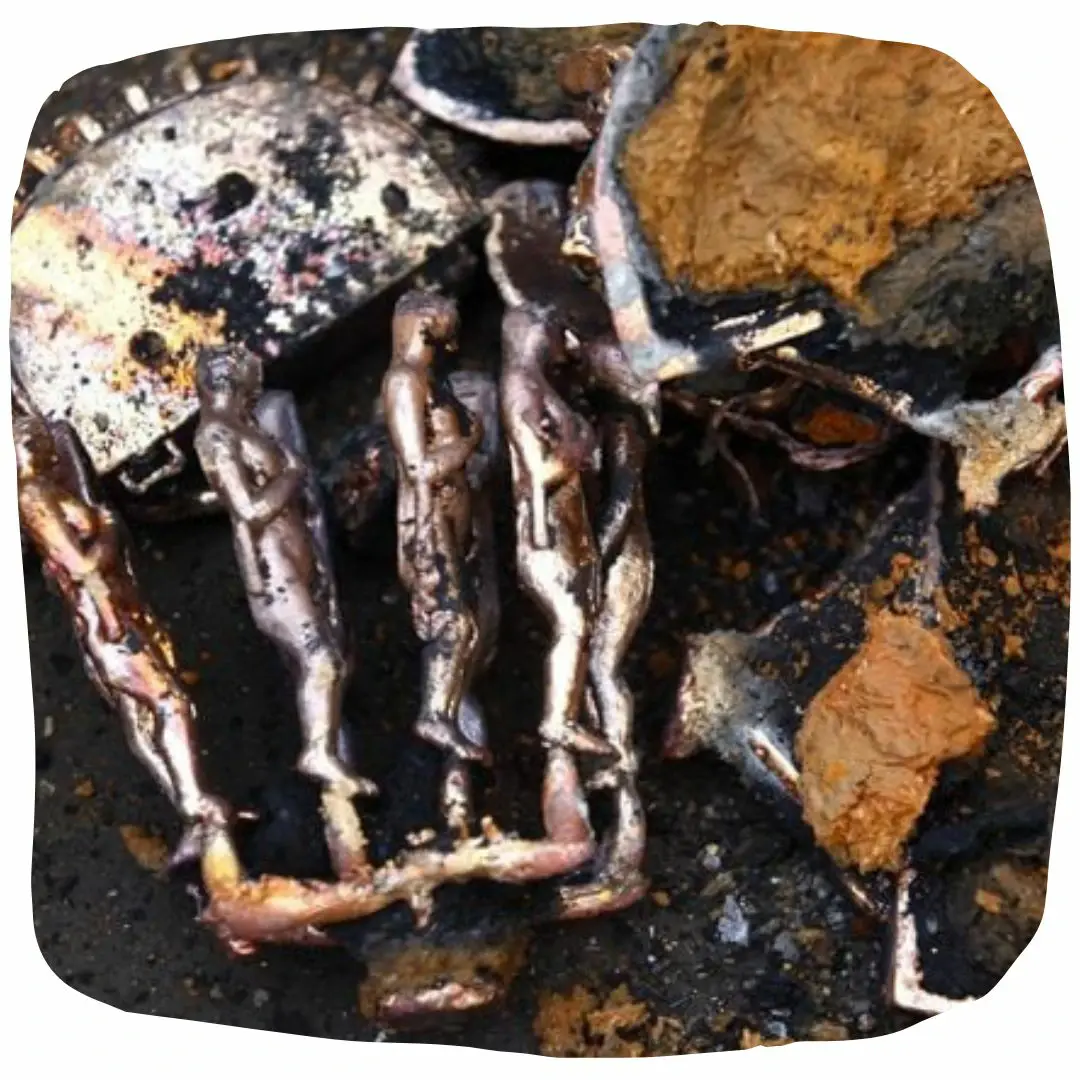
This is the time to pour liquid copper into the hollow mould which is then allowed to cool and harden inside a container of cold water. When the liquid metal has hardened, the mould is removed and the statue within is revealed.
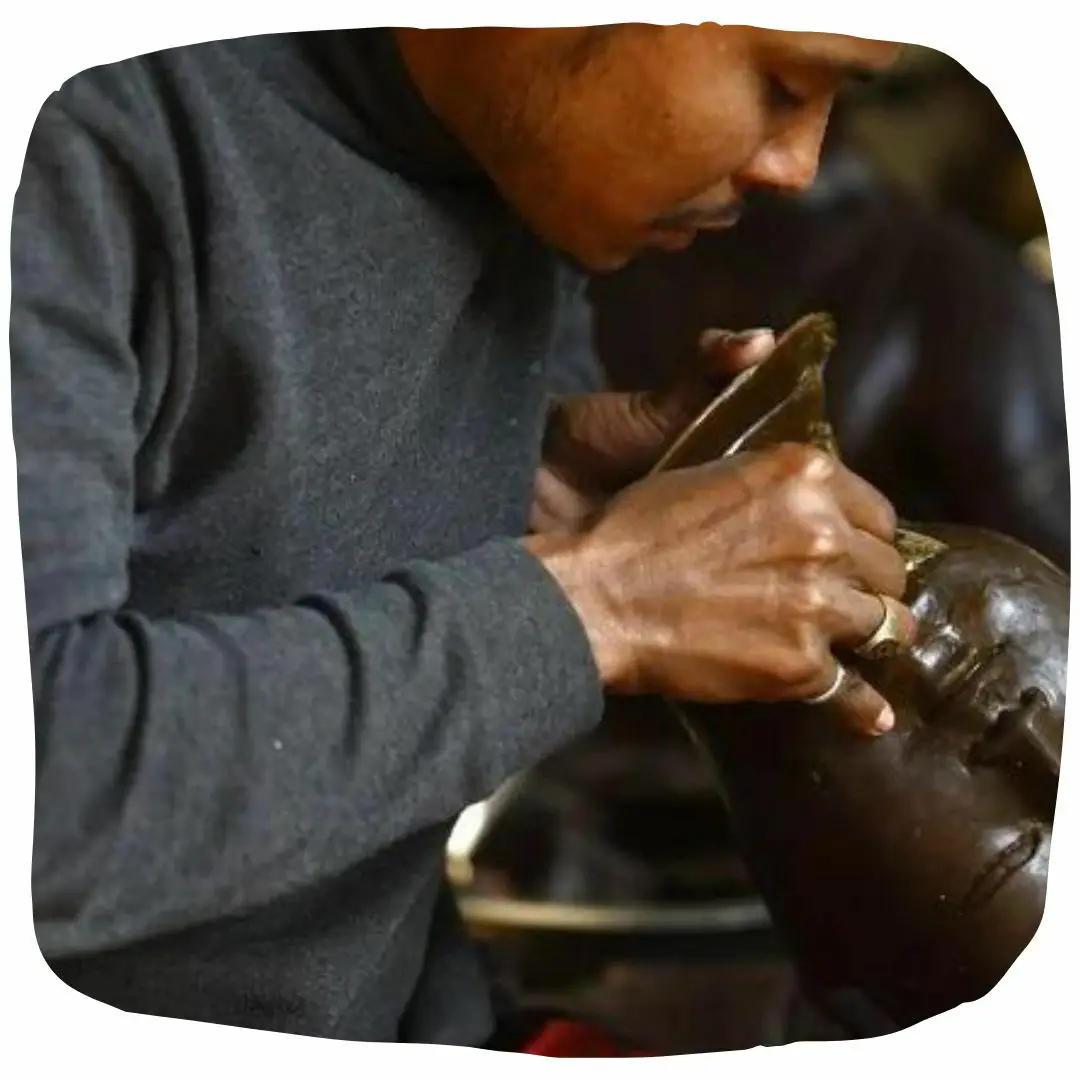
Now comes the most important part of Nepalese art which is gold gilding. This is done by the traditional fire gilding method. A mixture of mercury and 18K gold is applied on the surface of the statue and heat is applied using a flame torch. The result is that mercury evaporates along with impurities, leaving a pure 24K gold finish.
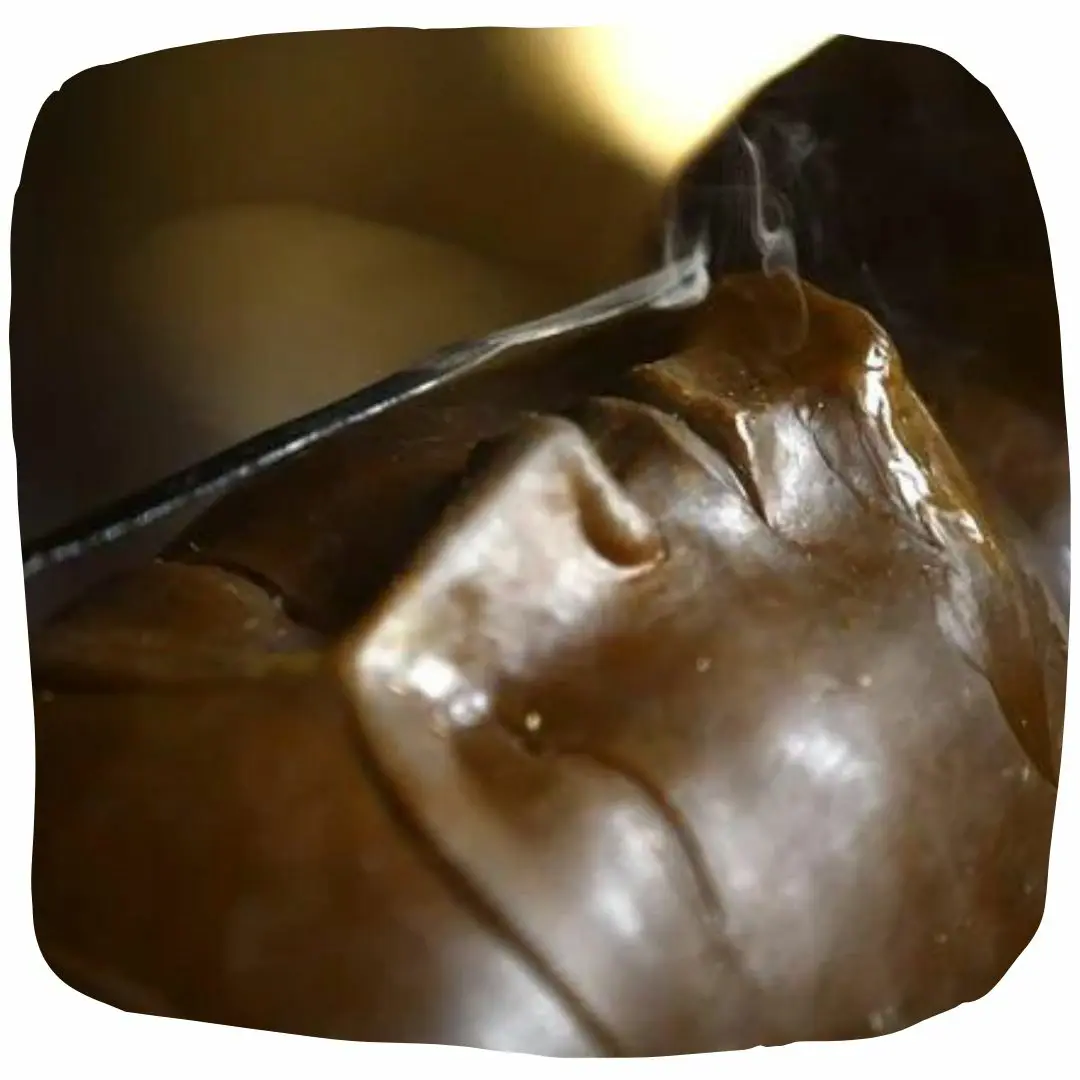
The lost-wax method of sculpting is the most preferred technique
for artists to cast a metallic statue having intricate details. Since Nepalese copper sculptures require extraneous effort for giving a majestic look by adding special embellishments, it takes several weeks to complete one masterpiece. A 24K gold gilded copper sculpture retains its brilliant luster for many years and appears as like before. Nepalese sculptures continue to remain one of the finest specimens of the art of the East that have a strong aesthetic appeal that other sculptures cannot match.