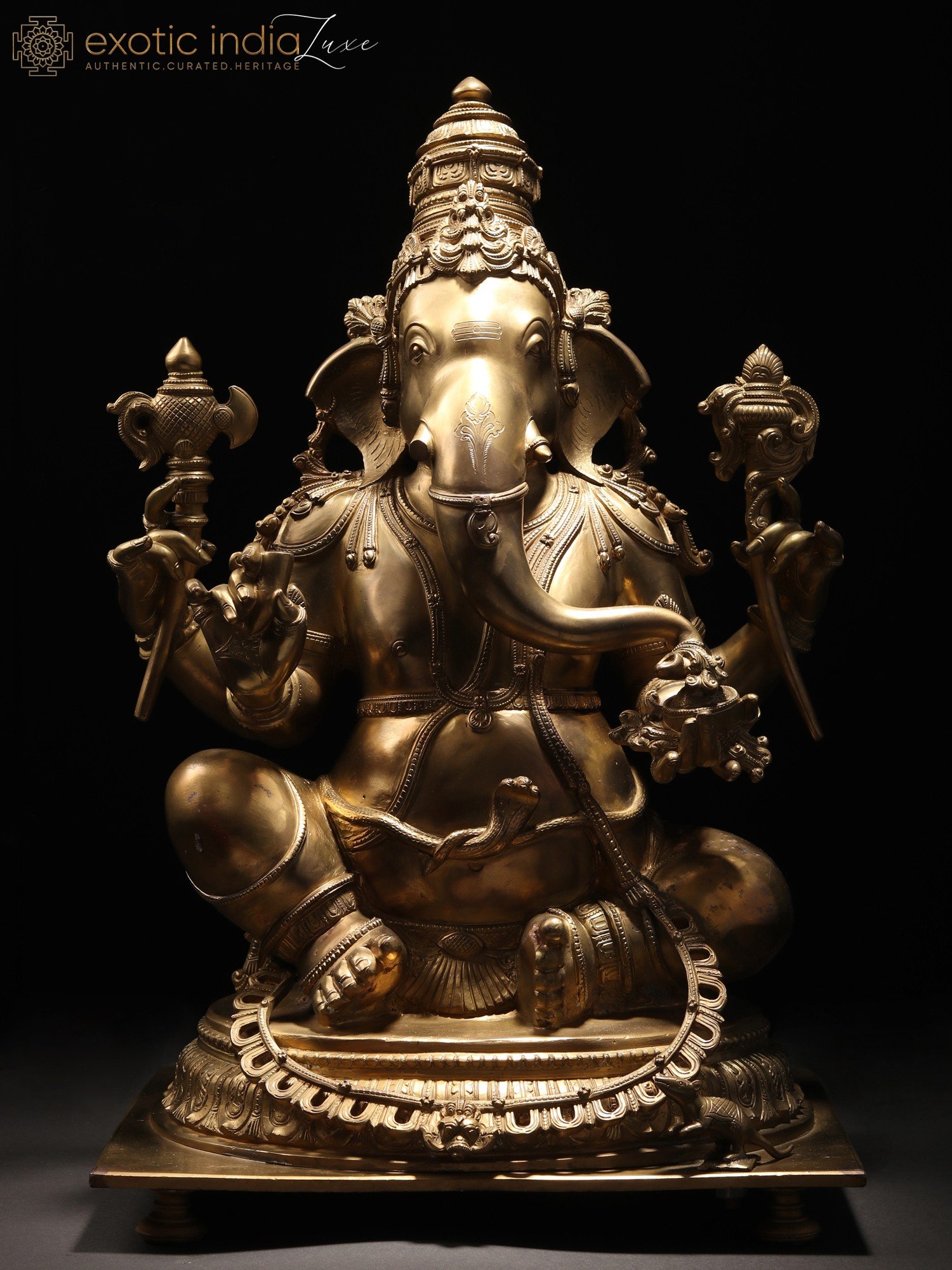
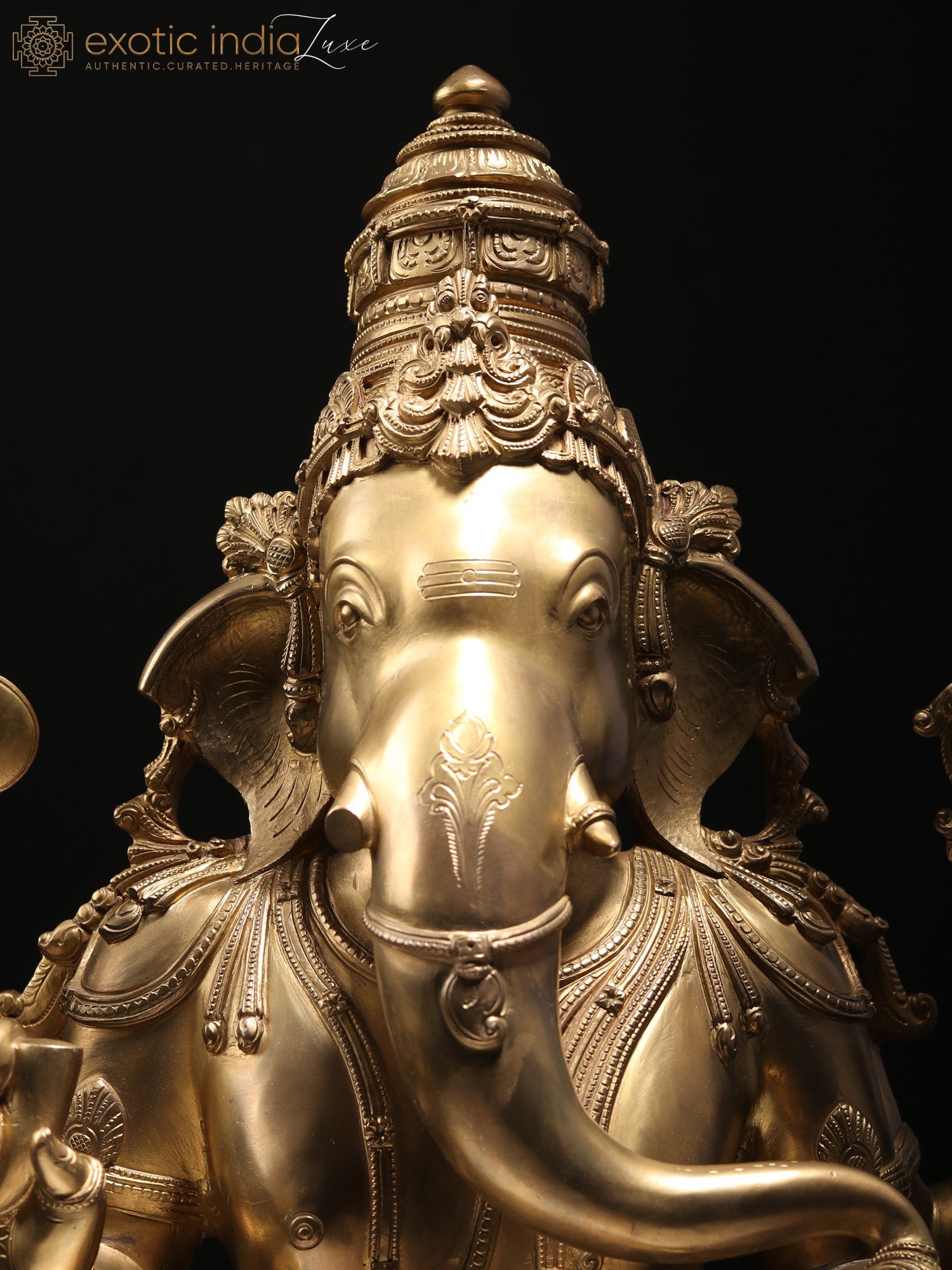
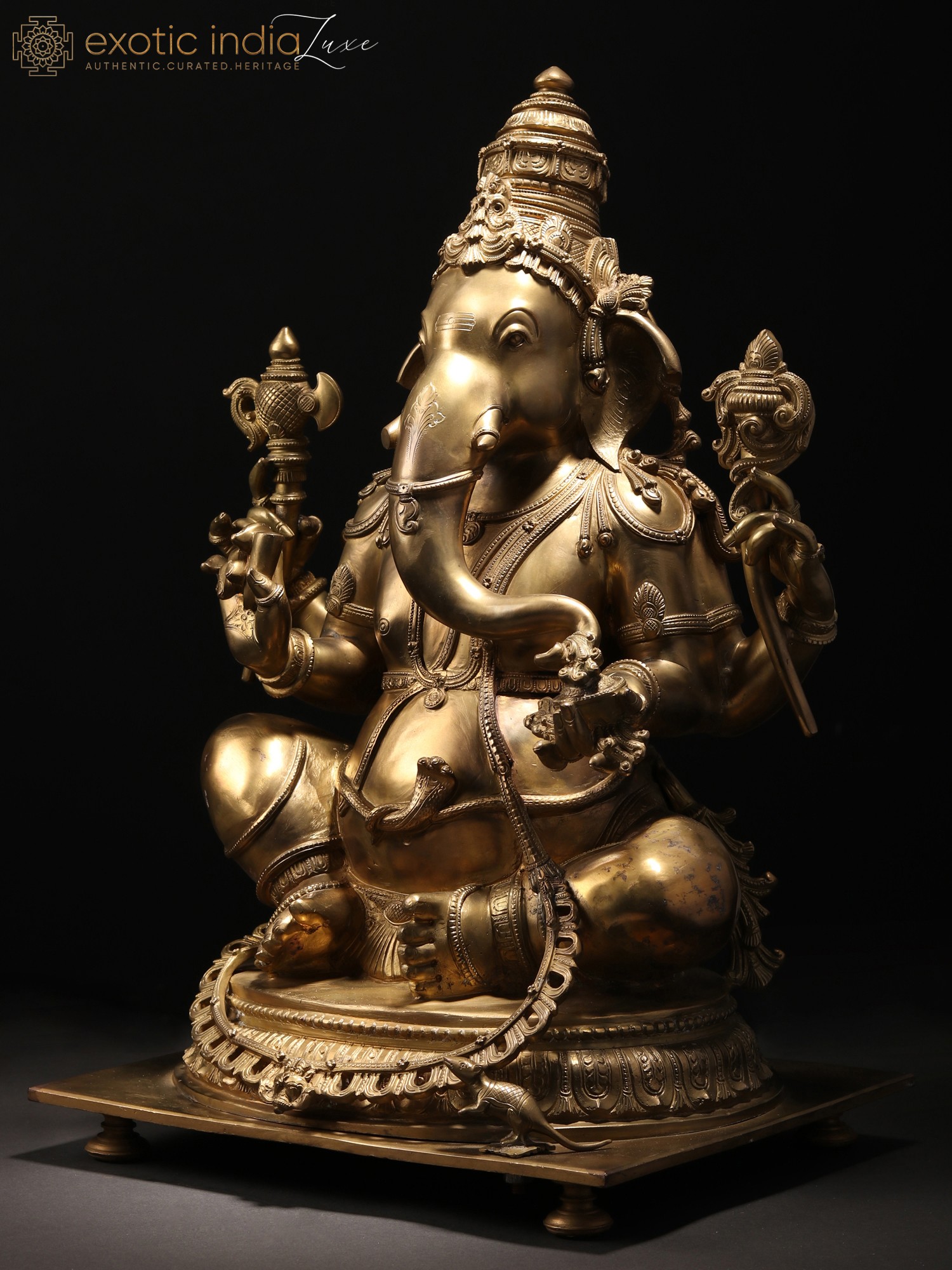
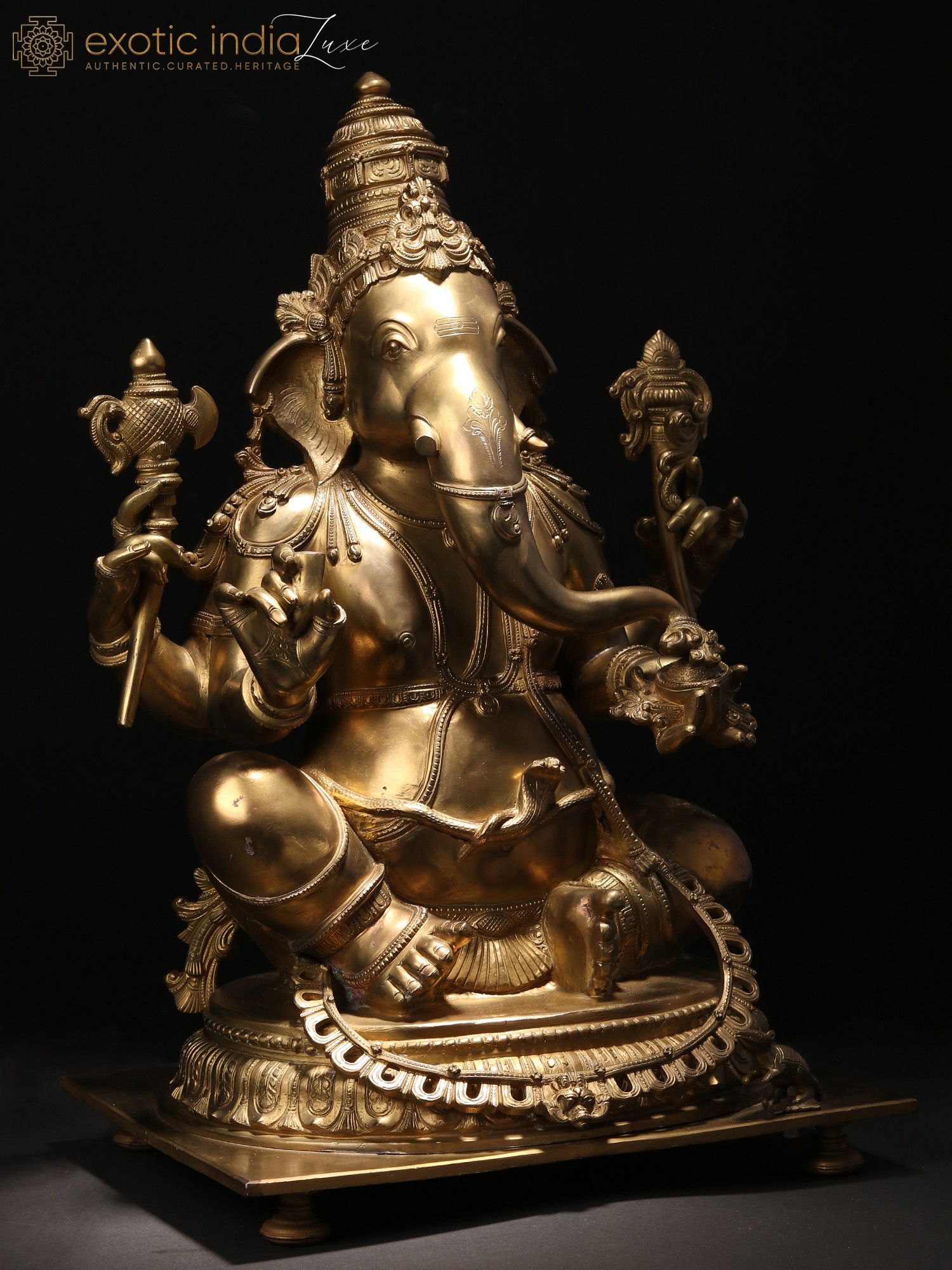
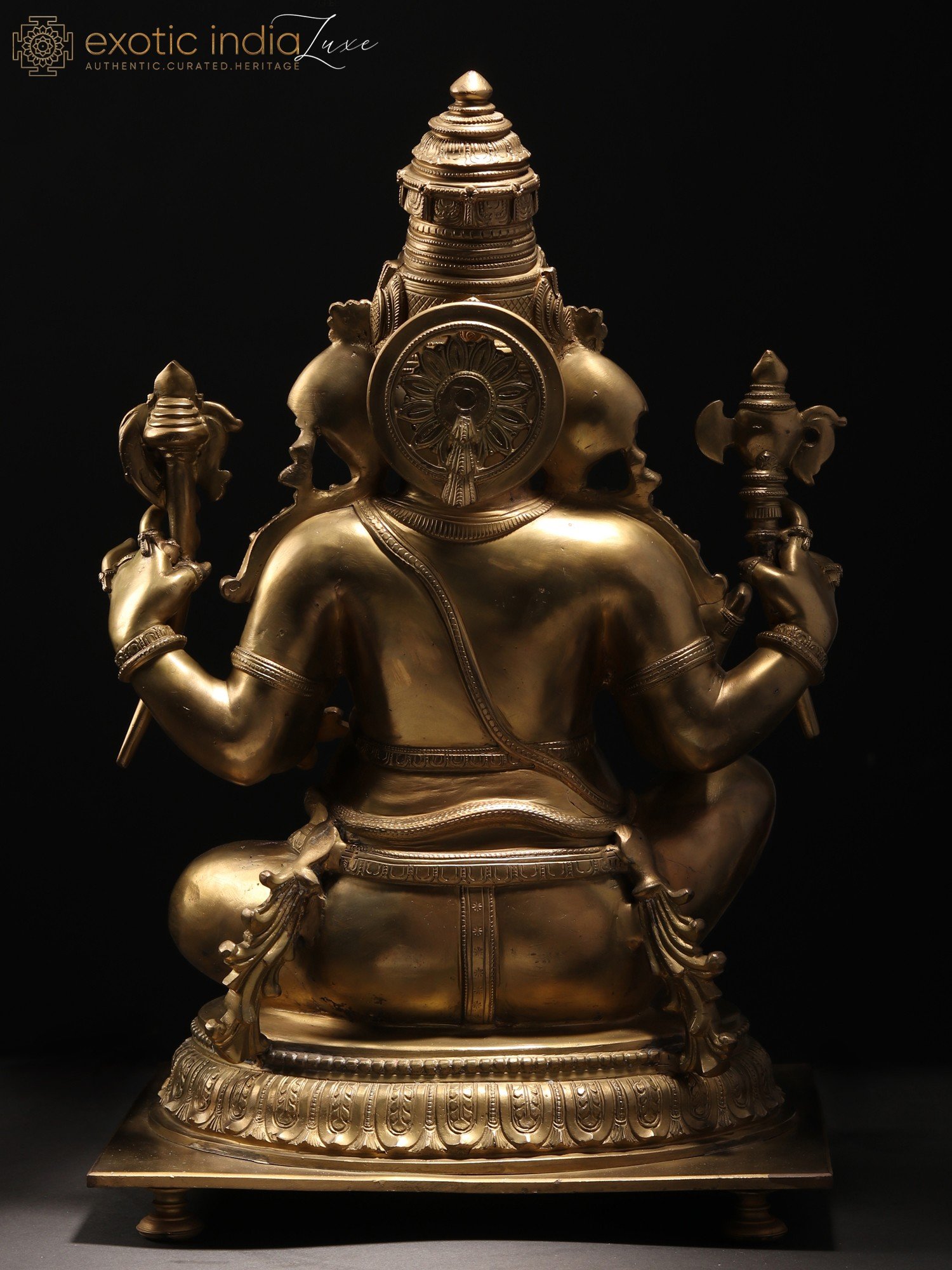
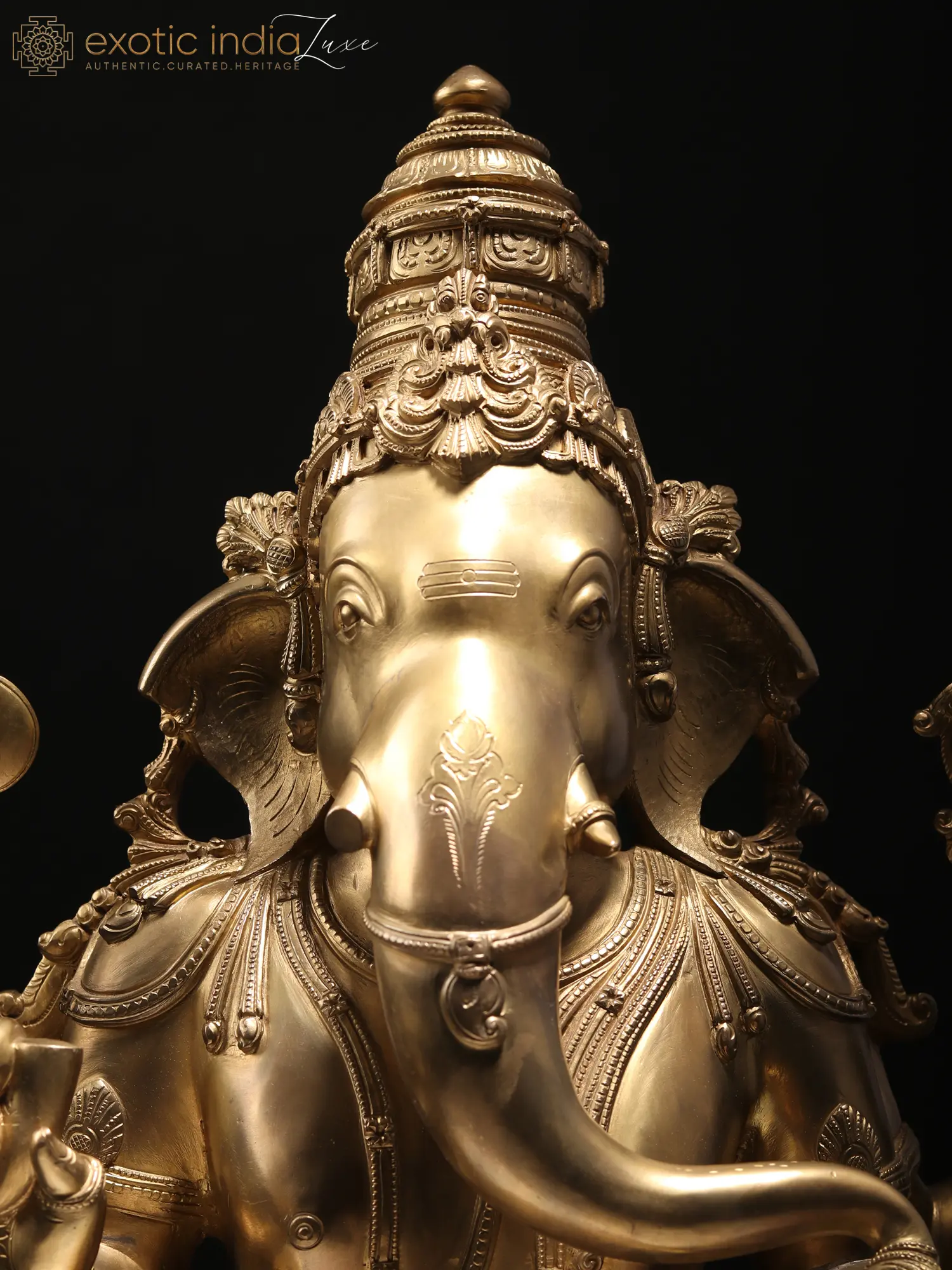
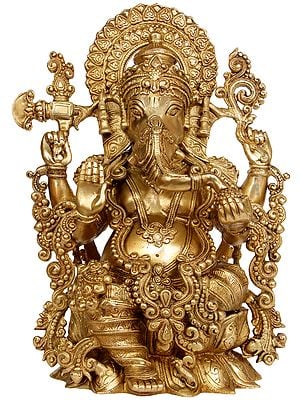
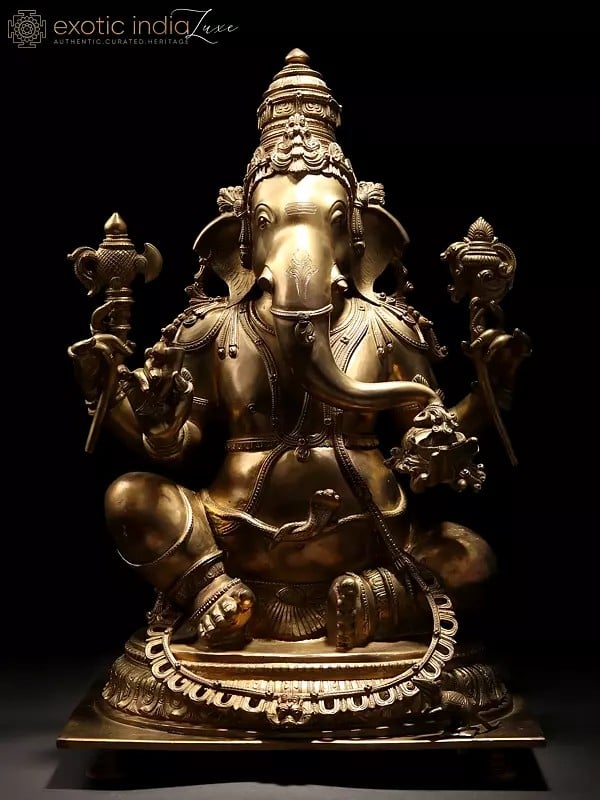
A long, almost slender figure of Lord Ganesha. Seated on a low, single-tiered plinth with lotus petals engraved around the circular edge (note the miniature Kirtimukham down its frontal midline). The pale colour of molten gold with the characteristic metallic sheen that could come only from the purest, most superior bronzes.
Handpicked for the precision of its handiwork and the beauty of its finish, this seated Ganesha composition would be a lifelike addition to the home of any devotee. From the stance of the chaturbhujadhari Lord to the gaze of His expressively carved eyes, such a Ganesha would be the harbinger of spiritual well-being wherever it is installed or consecrated.
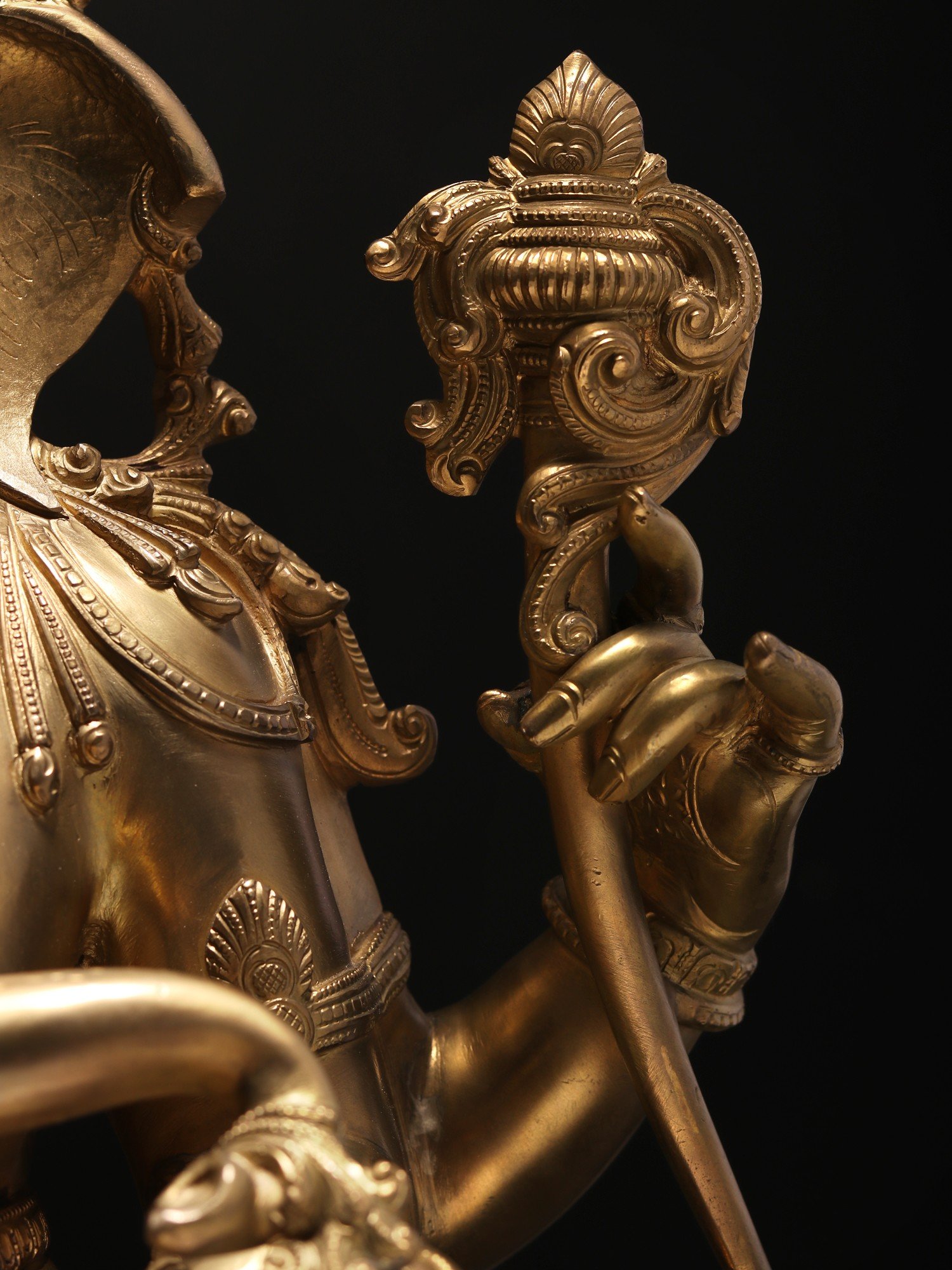
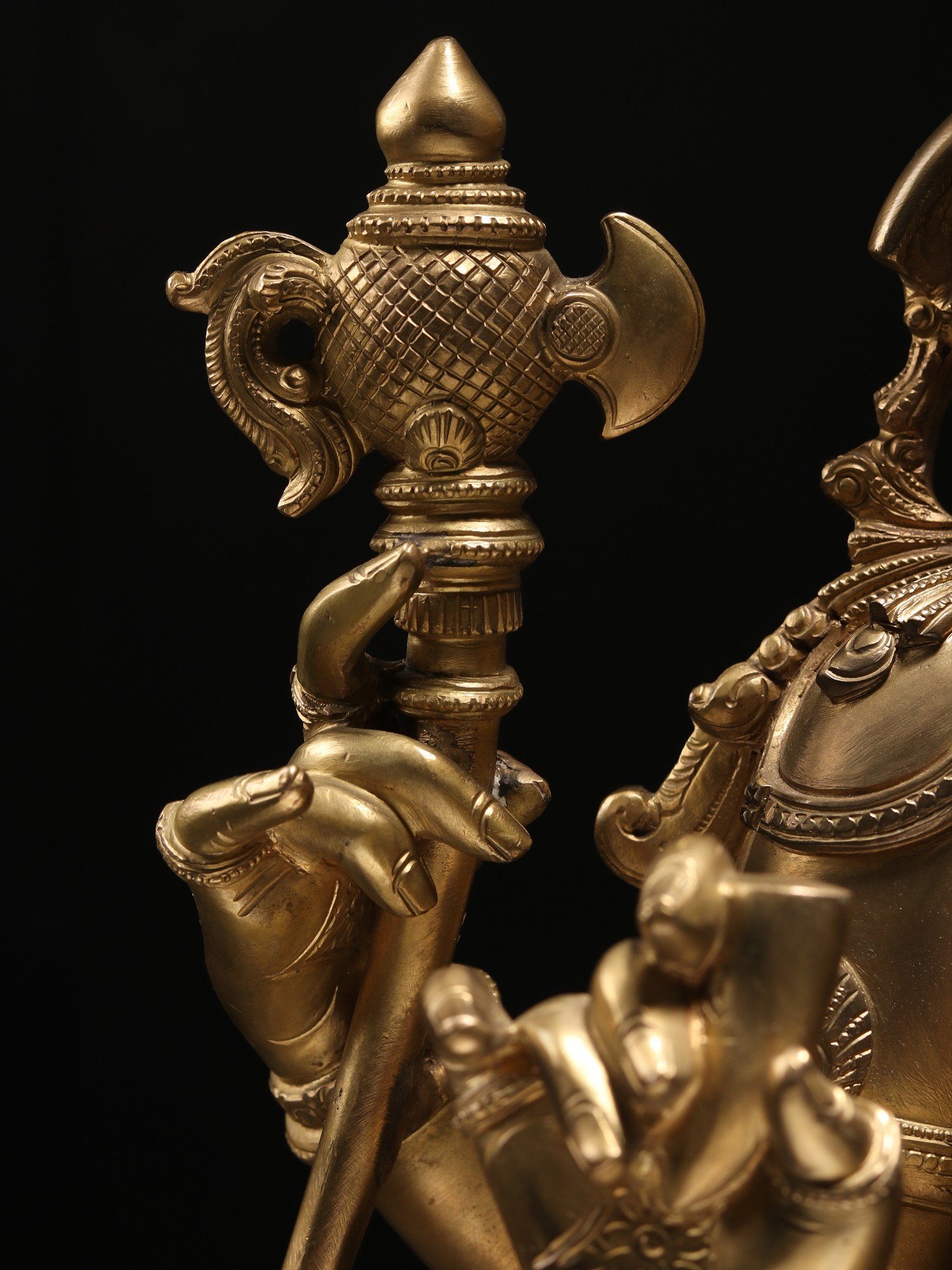
The precision and symmetry of this murti speaks volumes about the artisan’s skill and shraddha: the subtle serrations along the insides of Ganesha’s ears, the necklaces layered down His torso, the distinguished digits of hands and feet, and the smooth curves of His laddoo-cradling trunk. Another Kirtimukham on the front of the crown.
The Significance of Ganpati
Lord Ganesha, the elephant-headed deity, occupies a special place in the Hindu pantheon. He is revered as the remover of obstacles, the patron of arts and sciences, and the deva of intellect and wisdom. Before any significant undertaking, whether it be a journey, a business venture, or even a simple task, devotees invoke Ganesha to ensure success and prevent mishaps. He is often referred to as Vighnaharta, the one who takes away obstacles, and is considered the embodiment of auspiciousness. The Puranas abound with tales of Ganesha's wisdom, strength, and playful nature. His birth story itself is steeped in divine drama, and his various forms and incarnations reflect the multifaceted nature of the divine.
The association of Ganesha with intellect and wisdom is particularly significant. He is considered the scribe of the epic Mahabharata, diligently writing down the verses dictated by the sage Vyasa. This role highlights his sharp intellect and his connection to knowledge and learning. He is also the embodiment of "Om," the primordial sound, and represents the union of the material and the spiritual.The Hoysala Craftsmanship
This exquisite statue is a remarkable example of Hoysala bronze casting, a technique renowned for its intricate detail and artistic finesse. The Hoysala dynasty, which ruled parts of Southern India from the 10th to the 14th centuries, left behind a legacy of architectural and artistic brilliance, with their temples and sculptures standing as testaments to their creative genius. Hoysala bronzes are characterized by their elaborate ornamentation, graceful poses, and meticulous attention to detail. The lost-wax casting process, known as "cire perdue," was employed to create these masterpieces, allowing for the replication of even the most intricate designs. This statue, with its stunning detail and the inherent lustre of bronze, is a tangible link to that glorious era. Its dimensions are 22.0 x 14.0 x 11.0 inches.
Deities and Symbols
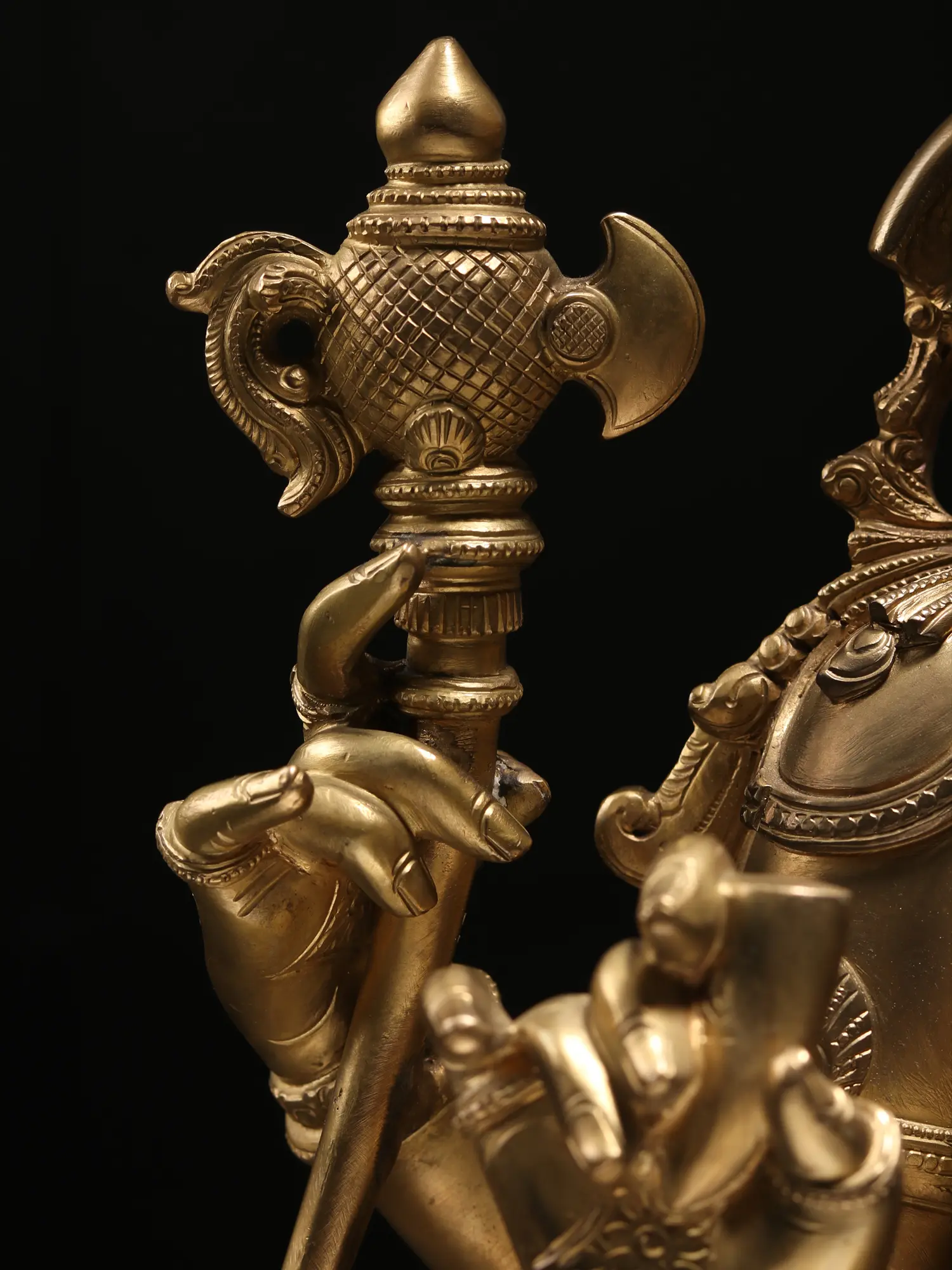
This depiction of Ganesha is especially auspicious, as he is shown in the company of Siddhi and Buddhi. Siddhi, representing spiritual power, and Buddhi, symbolizing intellect, are often considered his consorts or embodiments of his powers. Their presence underscores Ganesha's role as the bestower of both worldly wisdom and spiritual enlightenment. In his hands, Ganesha holds traditional emblems, each carrying its own symbolic weight. The axe signifies the cutting away of worldly attachments, while the modak (sweet dumpling) represents the sweetness of realization. The rosary symbolizes the pursuit of knowledge and the cycle of creation. The presence of a snake coiling around his belly further signifies his control over desires and lower energies. The entire composition serves as a potent reminder of the path to self-realization and the importance of both intellect and spiritual insight.
Place this magnificent piece in your home or sacred space to invite the blessings of Lord Ganesha and to create an atmosphere of wisdom, prosperity, and auspiciousness.










 Upload an Image