All orders are fully insured to ensure peace of mind.
100% Handmade
All products are MADE IN INDIA.
The Auspicious Symbol of Divine Power
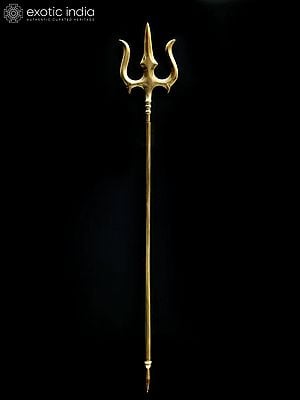
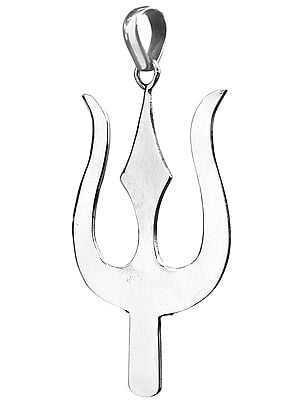
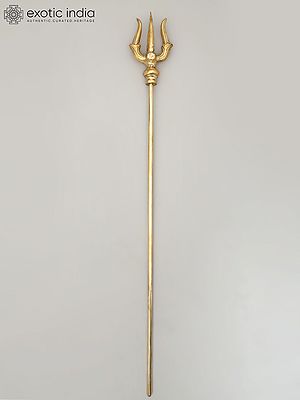
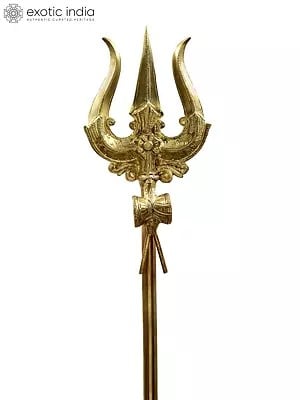
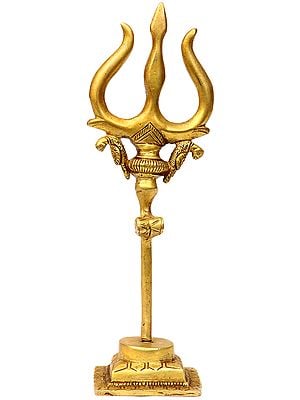
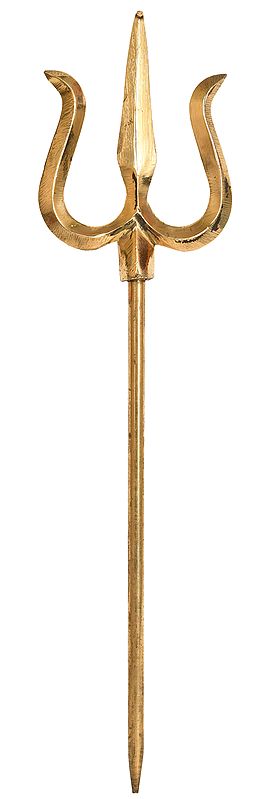
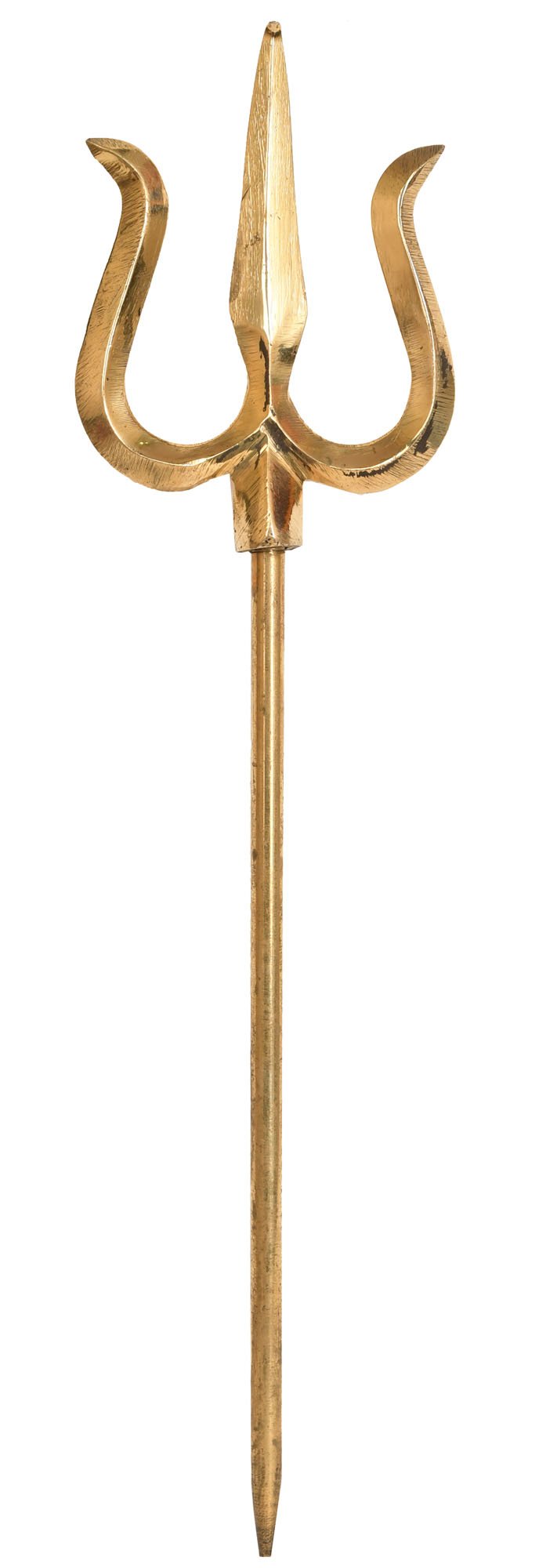
This exquisite brass statue embodies the powerful and multifaceted symbolism of the Trishul, the divine trident. More than just a weapon, the Trishul is a profound emblem in Hindu tradition, representing the three aspects of consciousness: creation, preservation, and destruction. It is most famously associated with Lord Shiva, the destroyer and transformer, who wields it as a symbol of his supreme authority and cosmic energy.
The three prongs of the Trishul are often interpreted to represent past, present, and future, or the three gunas (Sattva, Rajas, and Tamas) that govern the material world. It is believed to penetrate illusion and ignorance, cutting through obstacles and bringing forth truth and spiritual liberation. Ancient tales speak of the Trishul's power to subdue demons, protect the righteous, and maintain cosmic order. It is also a symbol of the threefold divine power of the Trimurti – Brahma, Vishnu, and Shiva.
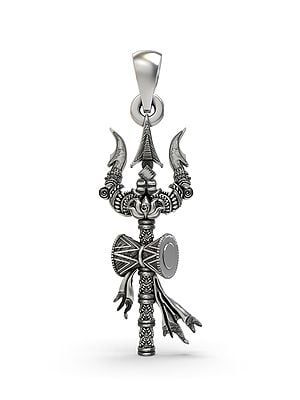
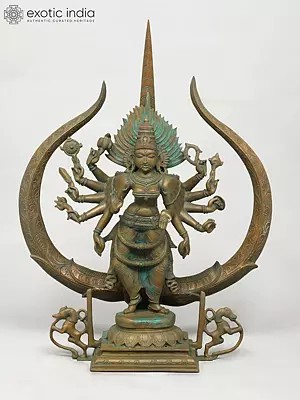
The meticulous craftsmanship of this brass statue captures the essence of this sacred object. The lustrous brass lends a divine glow, reflecting the purity and auspiciousness of the symbol. Its compact size makes it a versatile addition to any sacred space, be it a home altar, a puja room, or a meditation corner. It serves as a constant reminder of the cyclical nature of existence and the divine forces that govern it.
A Symbol of Protection and Auspiciousness
Beyond its profound mythological significance, the Trishul is widely revered as a protective amulet. It is often placed at entrances of homes and temples to ward off negative energies and evil spirits. In various cultural practices, it is used in rituals to invoke blessings and ensure well-being. The energy radiating from this sacred object is believed to create a shield of positive vibrations, fostering an environment of peace and harmony.
This brass representation of the Trishul is not merely an object of devotion but also a testament to the enduring artistic traditions that have preserved these sacred symbols for millennia. Its smooth finish and balanced form make it a tactile and visual delight, inviting contemplation and spiritual connection. Whether used in daily worship, as a decorative accent, or as a thoughtful gift for a loved one, this Trishul statue carries with it a legacy of spiritual power, divine protection, and profound cultural significance. It is an embodiment of faith, a conduit for blessings, and a beautiful piece of art that resonates with deep spiritual meaning.
The Trident as a Metaphor for Transformation: Understanding its
significance in Hindu philosophy
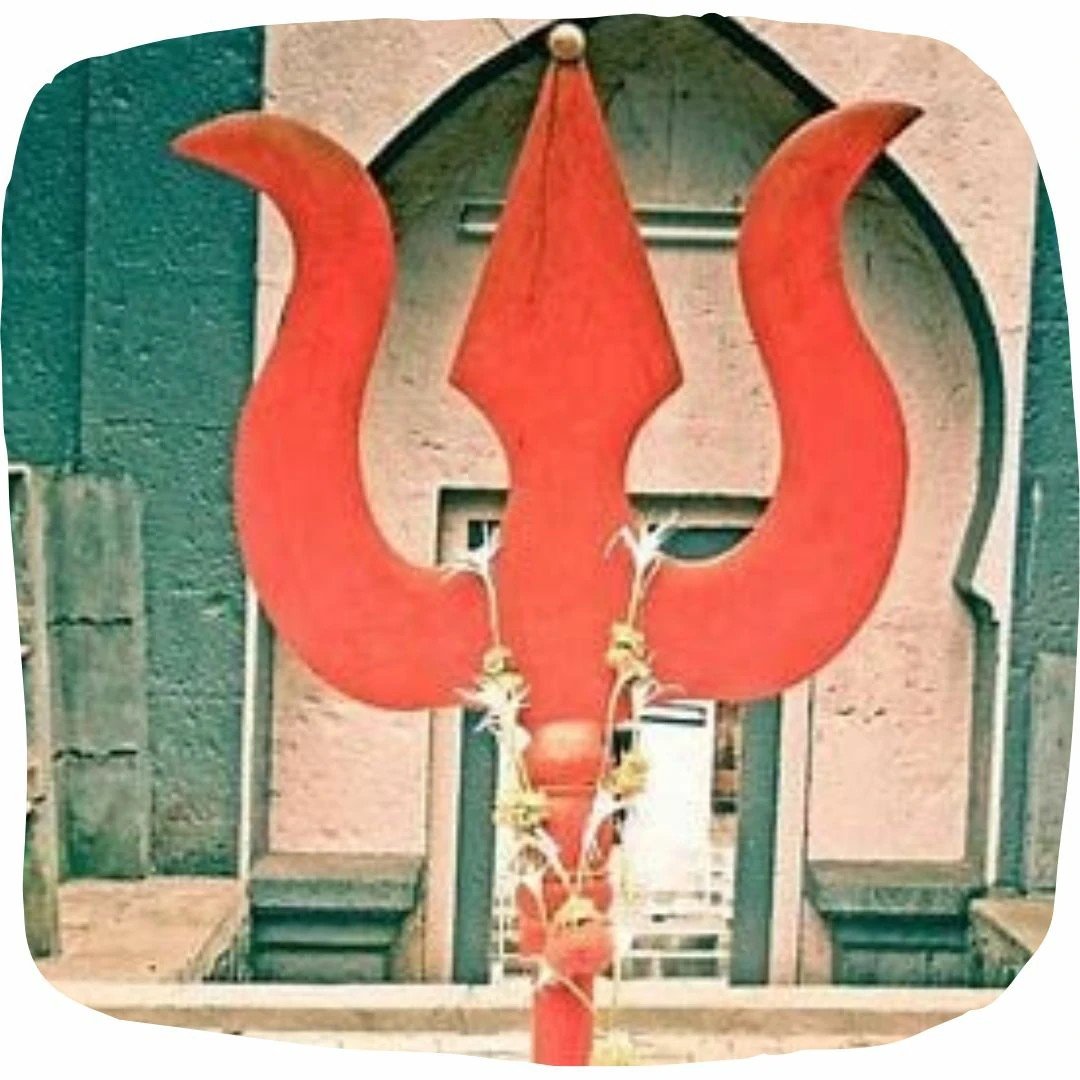
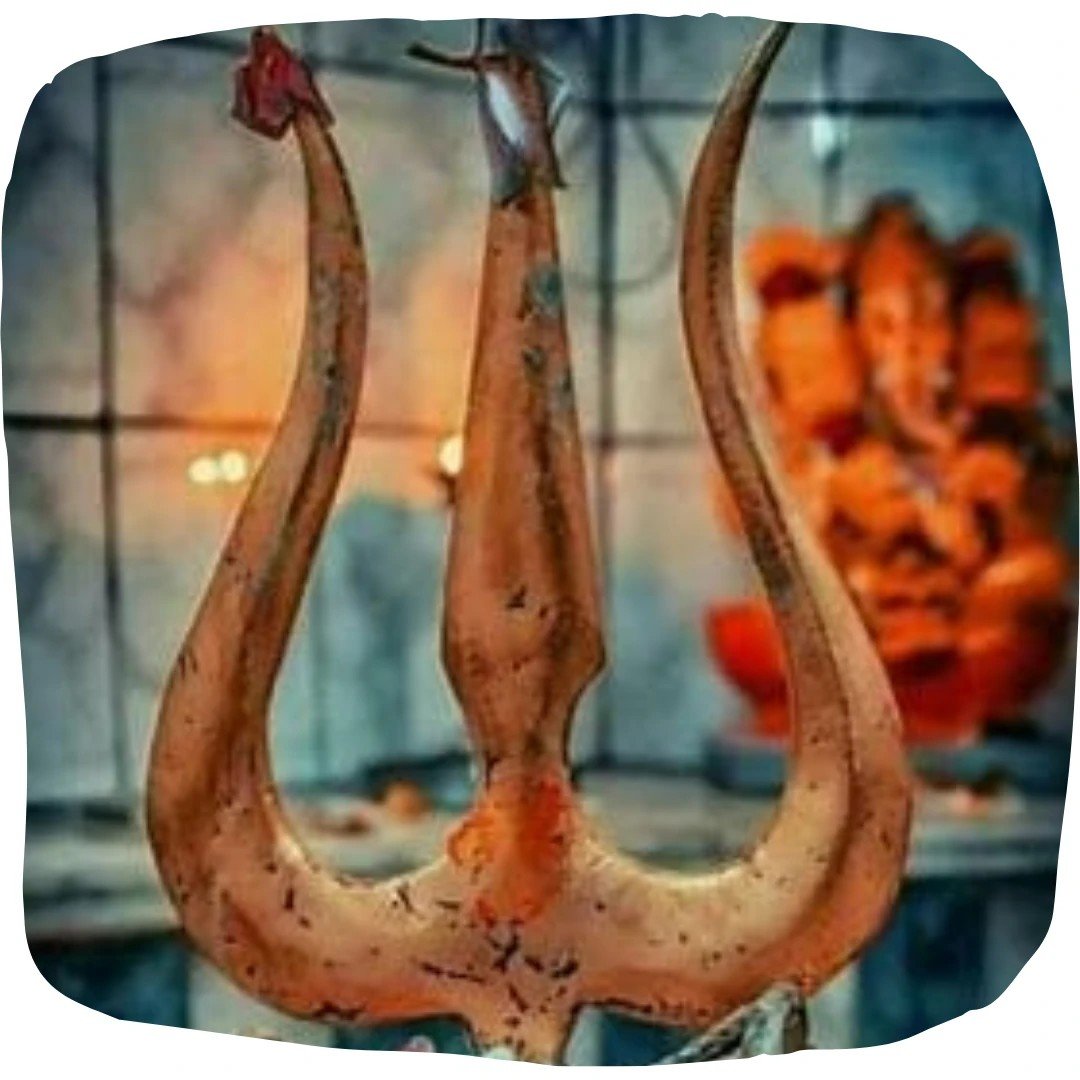
The trident holds great significance in Hinduism. It is a spear
having three prongs and is the principal weapon of Mahadev, Lord
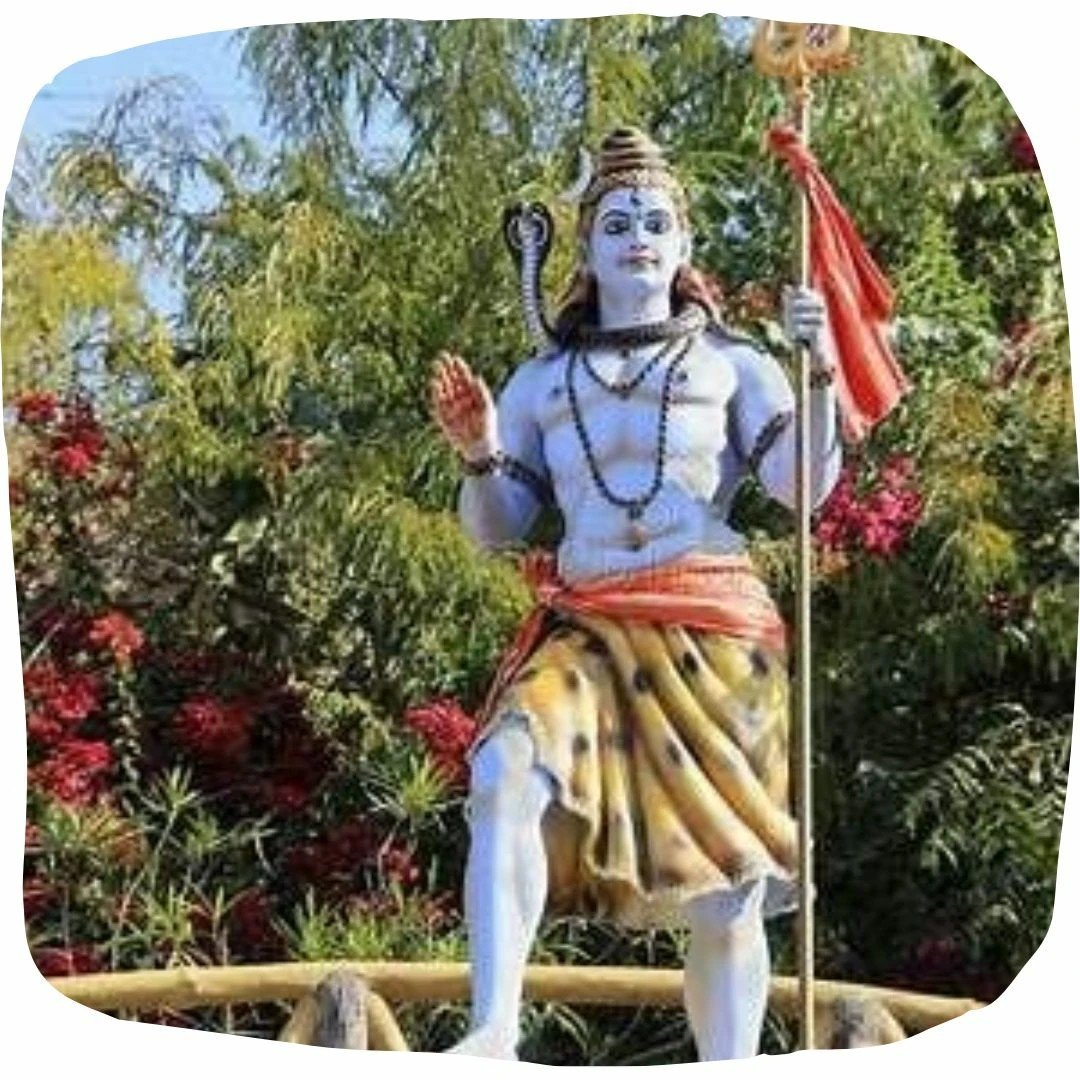
Shiva. He is always depicted holding his Trishul (Trident) in one
of his hands. The Sanskrit word Trishul is the combination of two
words i.e. "Tri" meaning "three" and "Shul" or "Shool" meaning "a
stake". Goddess Durga, the consort of Lord Shiva, is also
sometimes seen holding the trident in her arm as one of her
weapons. She killed the great demon Mahishasura with it. Some
Shaivites (devotees of Lord Shiva) also carry the trident with
them as a means of protection. The Vedic scriptures are so vast
and detailed that they deal with all aspects of knowledge, both
material and spiritual. Anything mentioned in the Vedas is not
imaginary or false, it is scientific and based on the knowledge of
the Absolute Truth. Hinduism is rich in symbolism and Trident is
considered one of the most powerful symbols. Let us know more
about the trident and know its significance.
The symbolic meaning of the Trident
Considering the Trident only as a mere weapon is an incomplete
understanding. There is a profound meaning behind its divine
structure.
- The three prongs of the Trident represent the three modes of
material nature; Sattva Guna (mode of goodness), Rajas Guna
(mode of passion), and Tamas Guna (mode of ignorance), meaning
that everything and everyone in the material world is influenced
by these modes.
- Some also believe that the three prongs represent the three
forces of creation, maintenance, and annihilation. The
scriptures mention that the material universe is temporary
(Ashashvatam) and therefore it is first manifested and again
unmanifested, and this continues till eternity.
- The trident also symbolizes the three planetary systems.
According to the Vedic Puranas, there are three worlds within
the material sphere; the lower world (Bhurloka), the middle
world (Bhuvarloka), and the upper world (Svarloka).
From bondage to salvation
The Trident is seen as a subtle attack on the negative
tendencies or Anarthas such as lust, anger, greed, envy, ego,
and illusion. These Anarthas pollute the mind and intelligence
of the conditioned souls and cover their real identity and
consciousness. As a result, they forget their eternal
relationship with the Supreme Lord and become engrossed in
material existence. The Trident is an awakening for all the
forgetful souls to seek spiritual guidance to know about the
Absolute Truth.
The attack or stroke of the Trident destroys all the Anarthas
within their hearts. When this happens, the person transcends
the modes of material nature and is situated in pure goodness
(Shuddh Sattva). In this state of existence, he neither laments
for the past nor hankers for anything and remains blissful in
his spiritual identity. After leaving the material body, he does
not take birth again in any of the planetary systems, but rather
returns to the eternal abode of the Supreme. Hence, he comes out
of the cycle of repeated birth and death and is not subject to
the creation, maintenance, and destruction of the material
world.
This is achieved when an individual takes the shelter of a Guru
(spiritual master), Shastra (scriptures), and Sadhu (saintly
persons) which are the most important symbolic representation of
the three points of the Trident. Thus he breaks free from the
bondage of the ocean of nescience and becomes liberated.