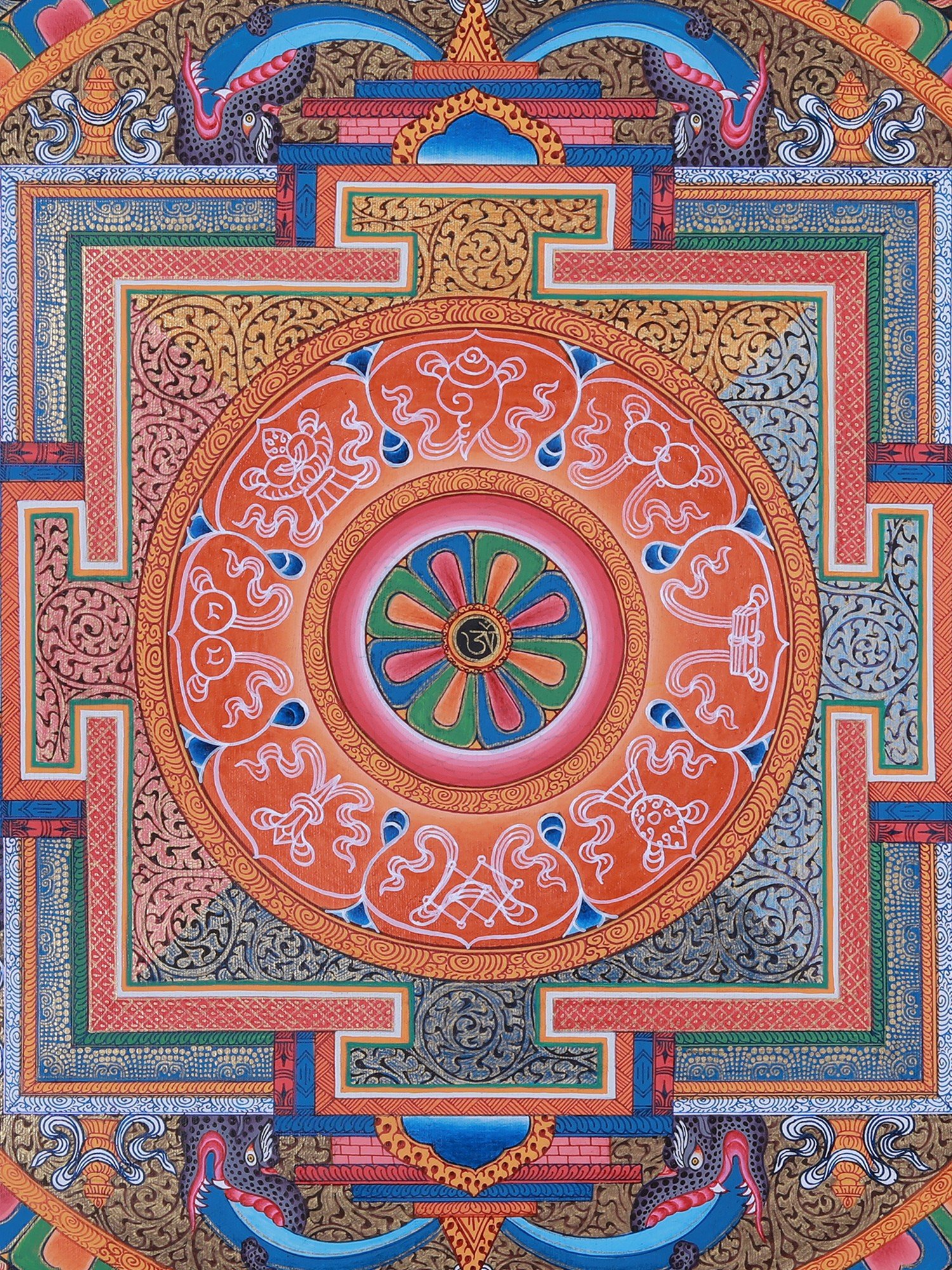
Hand-Painted Tibetan Buddhist Mandala | Brocadeless Thangka Painting
$575
Includes any tariffs and taxes

Only 1 available
Add on Frame
Add on Frame

Get your Painting - Add a Wooden Frame
We offer a wide range in wooden frames. You can choose the one that suits your style.
Notify me when this item is available
| Specifications |
 |
DDO447 |
 |
Tibetan Thangka Painting |
 |
14 inch Height X 14 inch Width |
| Delivery and Return Policies |
 |
Usually ships in 5 days |
 |
Returns and Exchanges accepted within 7 days |
 |
Free Delivery |

Easy Returns

Fully Insured

100% Handmade
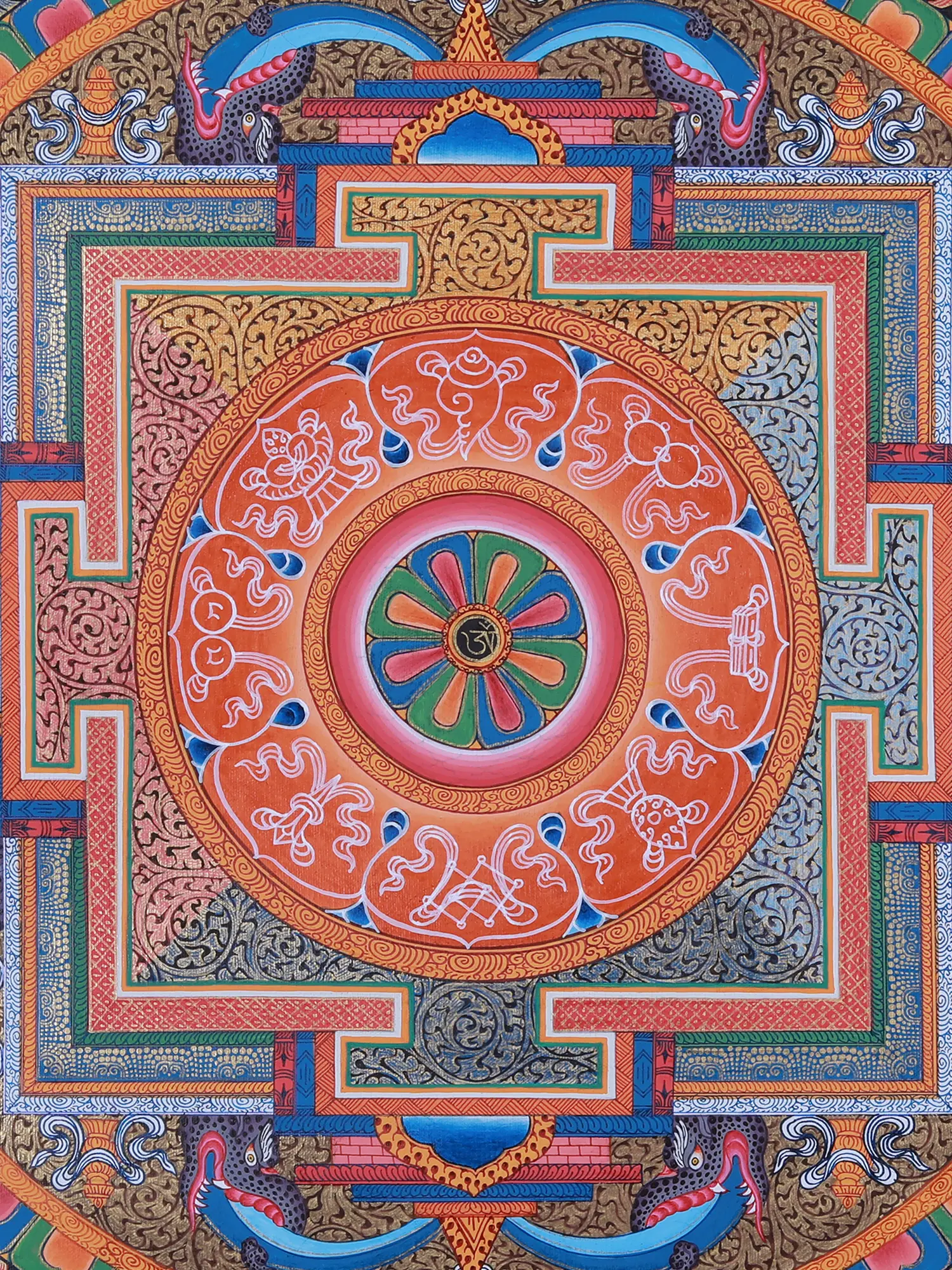
A Window to Enlightenment: Unveiling the Sacred Geometry of the Mandala
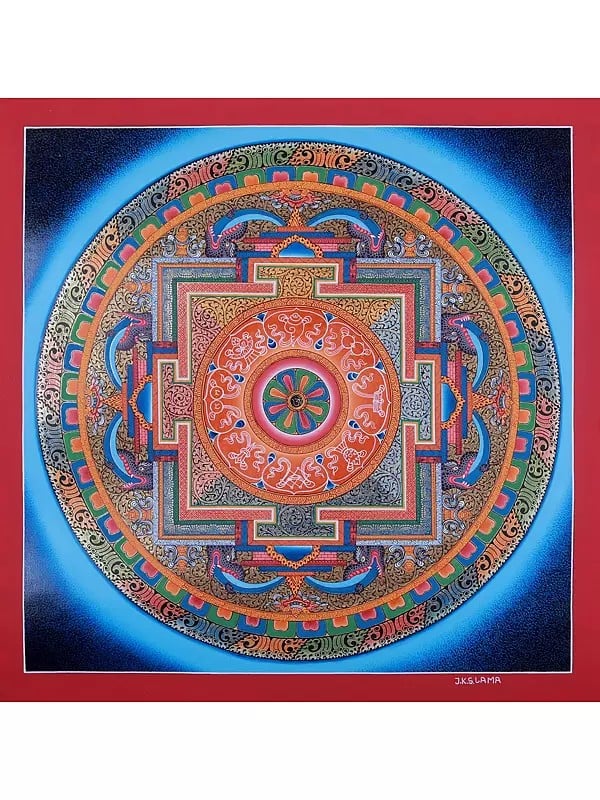
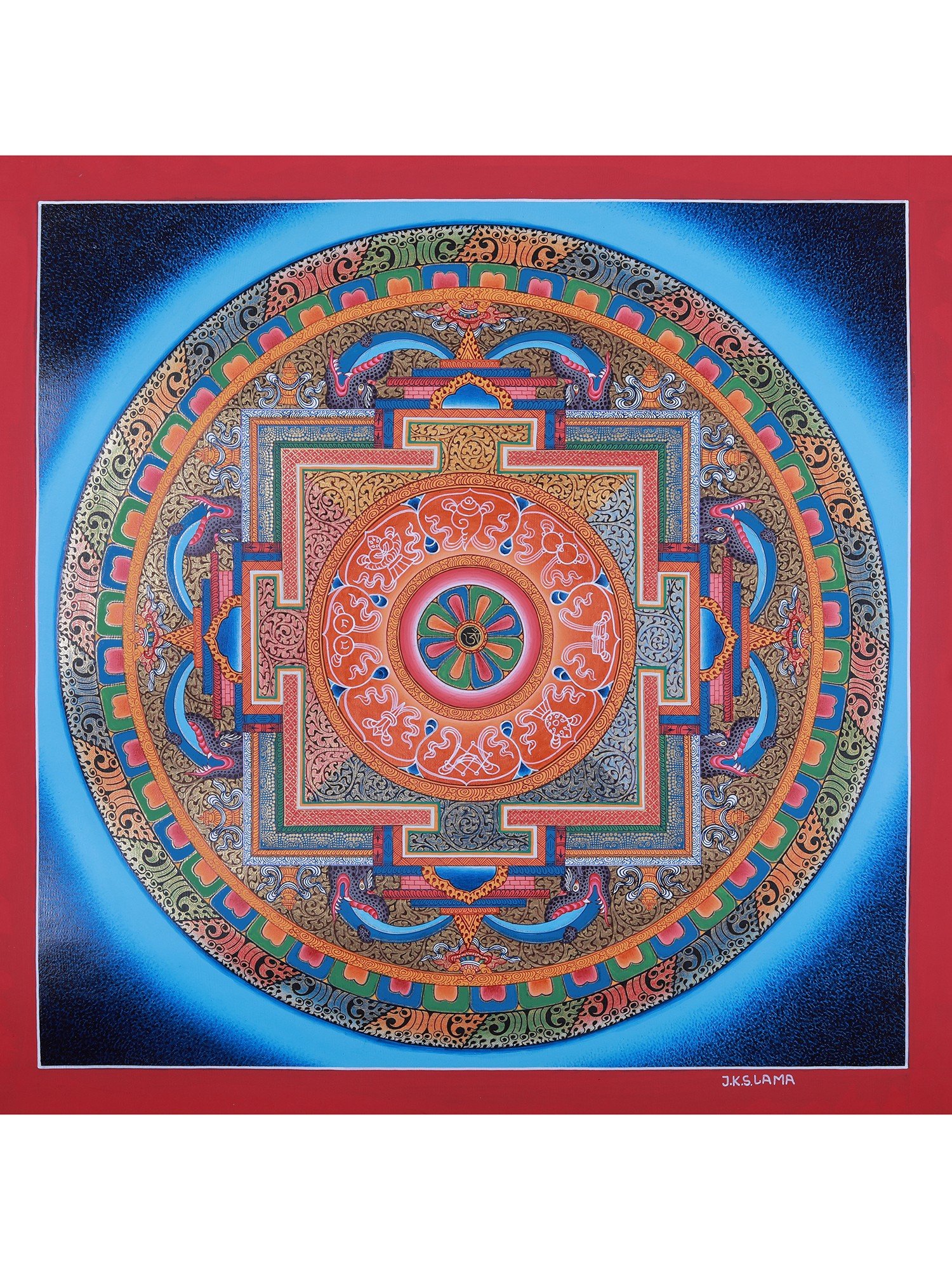
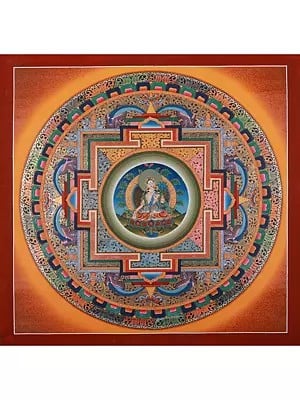
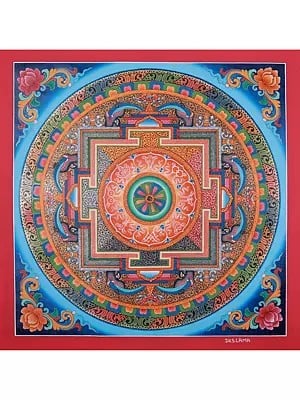
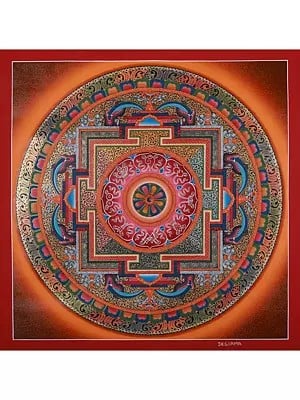
This exquisite hand-painted Tibetan Buddhist Mandala, a 14x14 inch Thangka painting, is more than just a work of art; it's a portal to spiritual understanding and a tangible representation of the cosmos. Mandala, meaning "circle" in Sanskrit, is a complex geometric design symbolizing the universe and its intricate interconnectedness. In Tibetan Buddhism, Mandalas are used as focal points for meditation, aiding practitioners in achieving a state of deep concentration and spiritual insight. The meticulous detail and vibrant colors of this Thangka reflect the profound spiritual significance embedded within its design. The circular form itself symbolizes wholeness, unity, and the boundless nature of reality, mirroring the cyclical nature of life and rebirth in Buddhist philosophy.Decoding the Symbolic Language of the Mandala
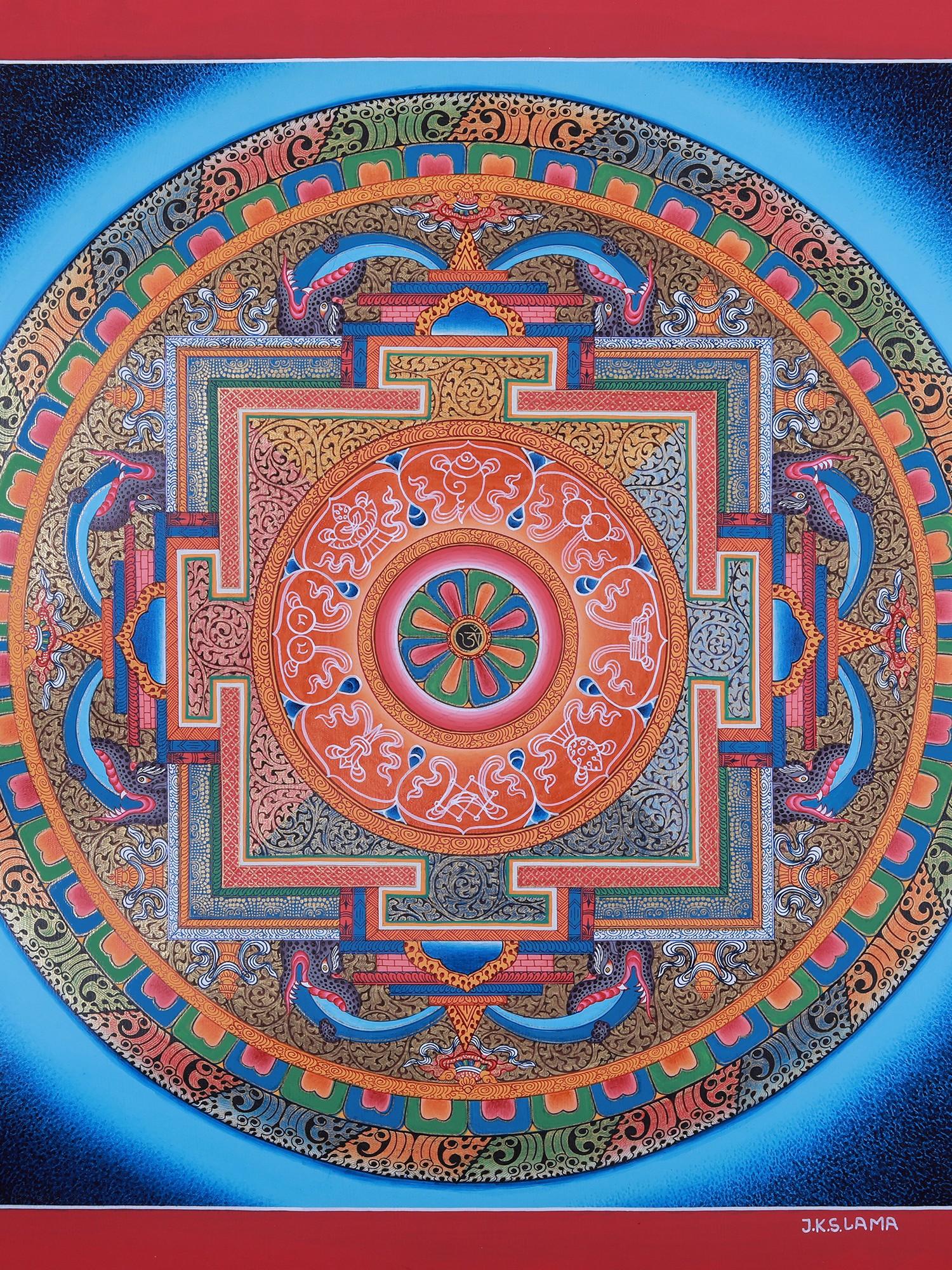
The intricate patterns within the Mandala aren't merely decorative; they are a language of symbols, each element carrying its own weight of meaning. The central motif, often a deity or a yantra, represents the ultimate reality or the enlightened state. Surrounding this core are concentric circles and squares, representing different levels of reality, or the journey towards enlightenment. The vibrant colors themselves are symbolic, each hue evoking specific emotions, energies, and qualities. For instance, gold symbolizes purity and enlightenment, while red represents compassion and energy. These colors, combined with the careful use of line and form, create a harmonious visual representation of the cosmos, inviting contemplation and reflection.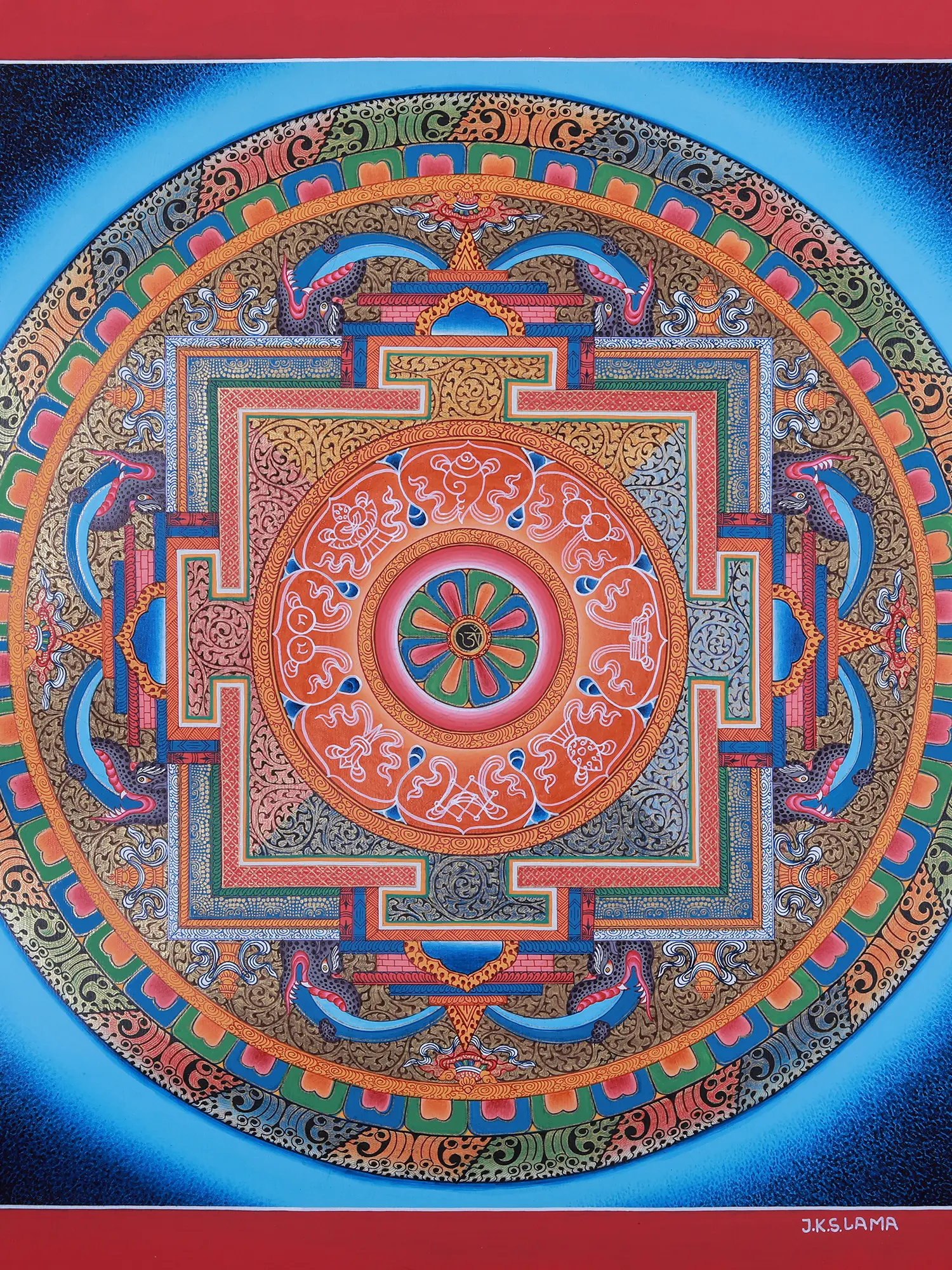
The Artistry of Tibetan Thangka Painting
This Thangka painting is a testament to the rich artistic tradition of Tibet. For centuries, Thangka paintings have been crafted by skilled artisans, often monks, who dedicate their lives to preserving and transmitting this sacred art form. Each brushstroke is imbued with reverence and precision, reflecting a deep understanding of both artistic technique and spiritual principles. The traditional methods, using mineral pigments and natural glues on fine cotton canvas, ensure the longevity and vibrancy of the artwork. The use of gold leaf adds a touch of regal splendor, reflecting the importance of the depicted subject matter. This particular painting, with its intricate details and masterful execution, embodies the highest standards of Tibetan Thangka artistry.More Than Just Decoration: A Spiritual Companion
This Mandala is not merely a decorative piece; it is a powerful tool for meditation and spiritual growth. Gazing upon its intricate details can induce a state of tranquility and focus, aiding in the process of mindfulness and self-reflection. The symbolic language embedded in the painting invites contemplation on the nature of existence, impermanence, and the path towards enlightenment. Whether displayed in a meditation space, a quiet corner of your home, or a place of worship, this Thangka will bring a sense of serenity and peace, serving as a constant reminder of the interconnectedness of all things. The piece functions as a spiritual anchor in your life. It is a constant reminder of the inherent balance and beauty within the universe and the potential for inner peace. The creation of this mandala, a product of skilled hands and heartfelt devotion, is a testament to the ongoing significance of this ancient tradition.Products related to this item
24 inch Height X 24 inch Width
$385
Includes any tariffs and taxes
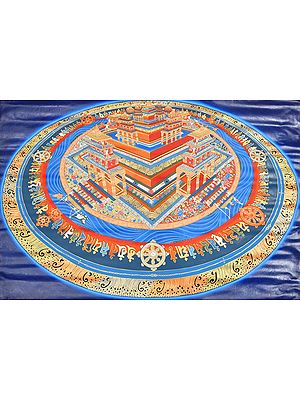
Size of Painted Surface 18.5 inch X 27.5 inchSize with Brocade 40 inch X 42.5 inch
$719
Express Shipping
Includes any tariffs and taxes
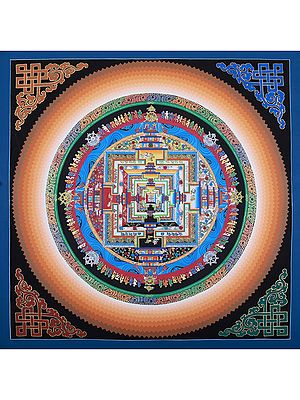
19.5 inch Height X 19.5 inch Width
$196
Express Shipping
Includes any tariffs and taxes
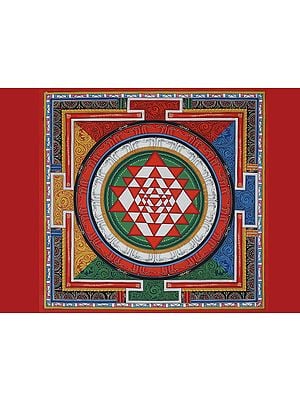
11.80 inch Height X 11.80 inch Width
$138
Express Shipping
Includes any tariffs and taxes
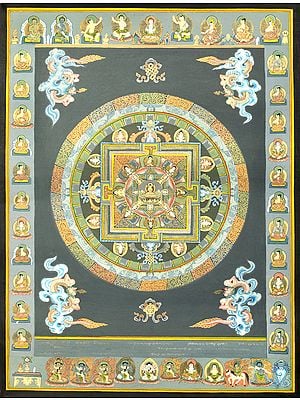
Size - 12.5 inches X 16.7 inches
$216
Express Shipping
$288 25% off
Includes any tariffs and taxes
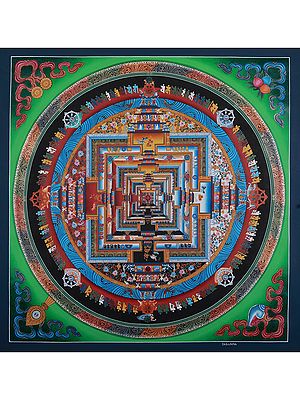
24 Inch Height X 24 Inch Width
$909
Includes any tariffs and taxes
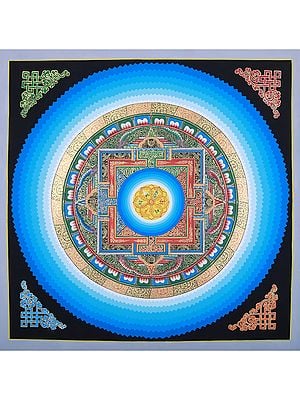
19.5 inch Height X 19.5 inch Width
$196
Includes any tariffs and taxes
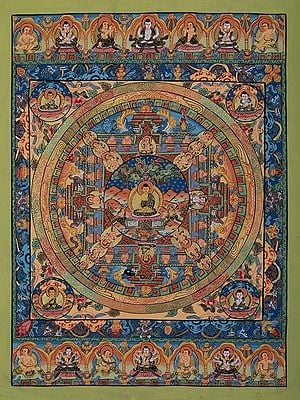
20 Inch Height X 15.5 Inch Width
$173
Includes any tariffs and taxes
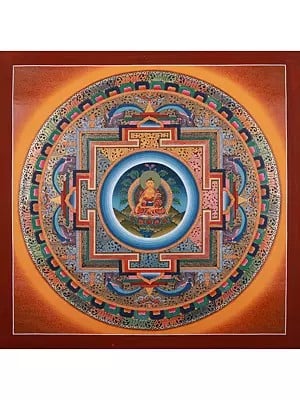
13.5 inch Height X 13.5 inch Width
$575
Includes any tariffs and taxes
13.5 inch Height X 13.5 inch Width
$575
Includes any tariffs and taxes
13.5 inch Height X 13.5 inch Width
$575
Includes any tariffs and taxes
13.5 inch Height X 13.5 inch Width
$575
Includes any tariffs and taxes