In
the Bhakti tradition of Southern India, the union of Sri Krishna
with Devi Rukmini, his Shakti, is a festive occasion for the devotees, who
rejoice in the coming together of the universal father and mother, Vishnu and
Lakshmi, in the mortal realm for the benefit of their children. The theme of
Rukmini-Kalyanam, Devi Rukmini’s marriage with Krishna is thus one of the most
popular themes of Tanjore
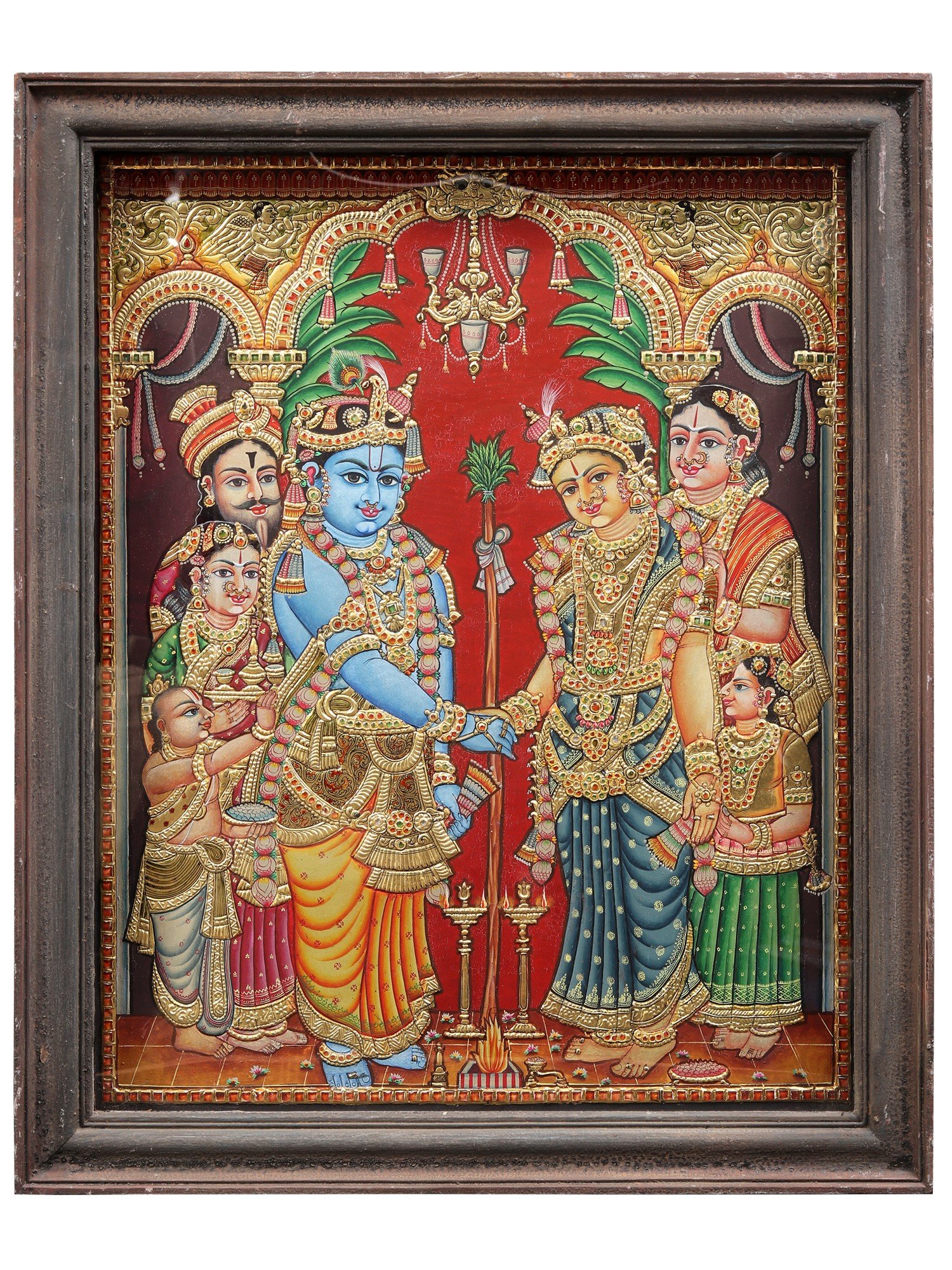
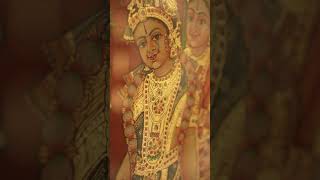
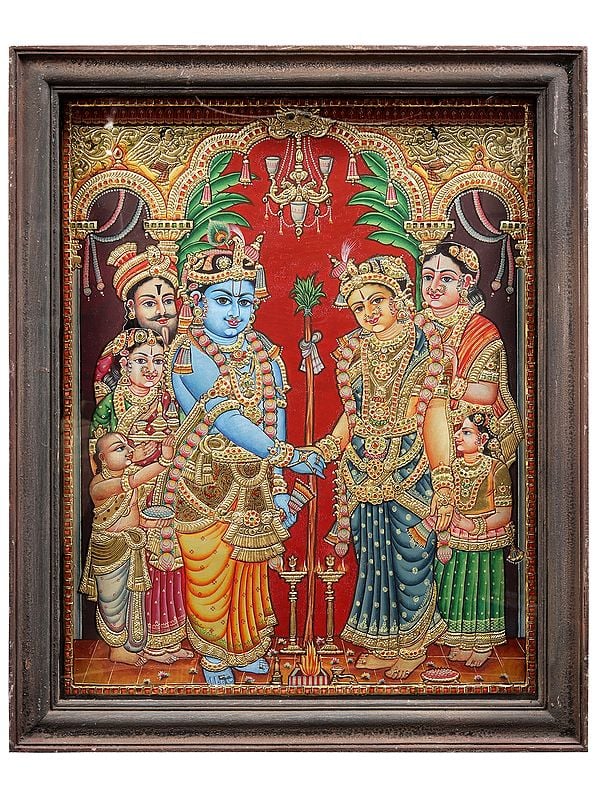
paintings, which are adored by devotees on the walls of their homes. In
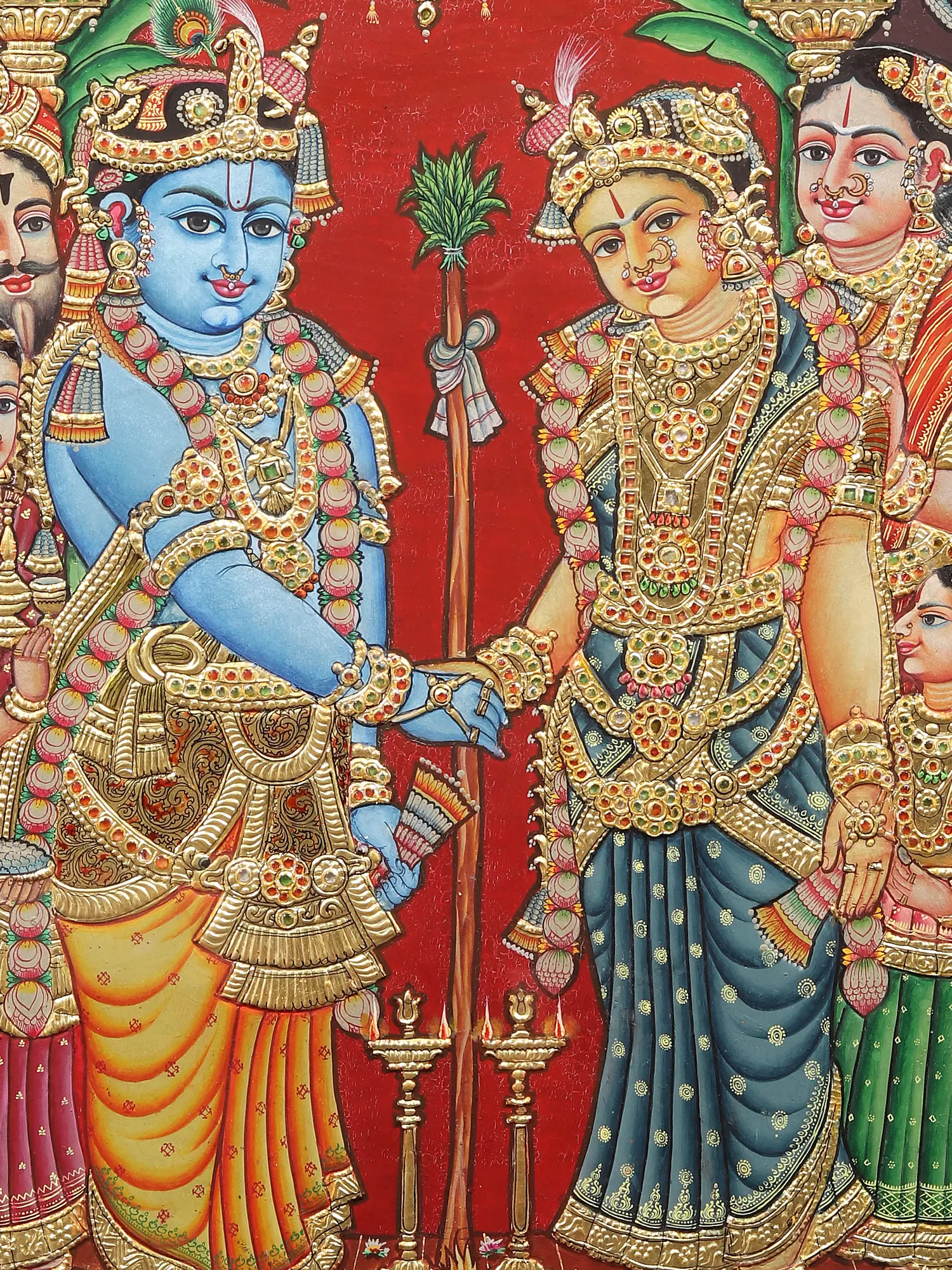
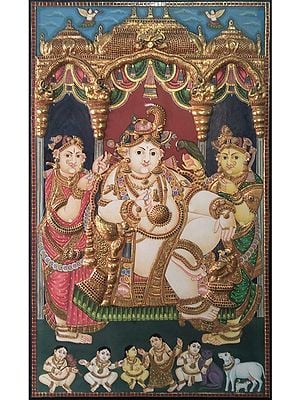
this magnificent Tanjore painting, a stunning golden pillared hall serves as
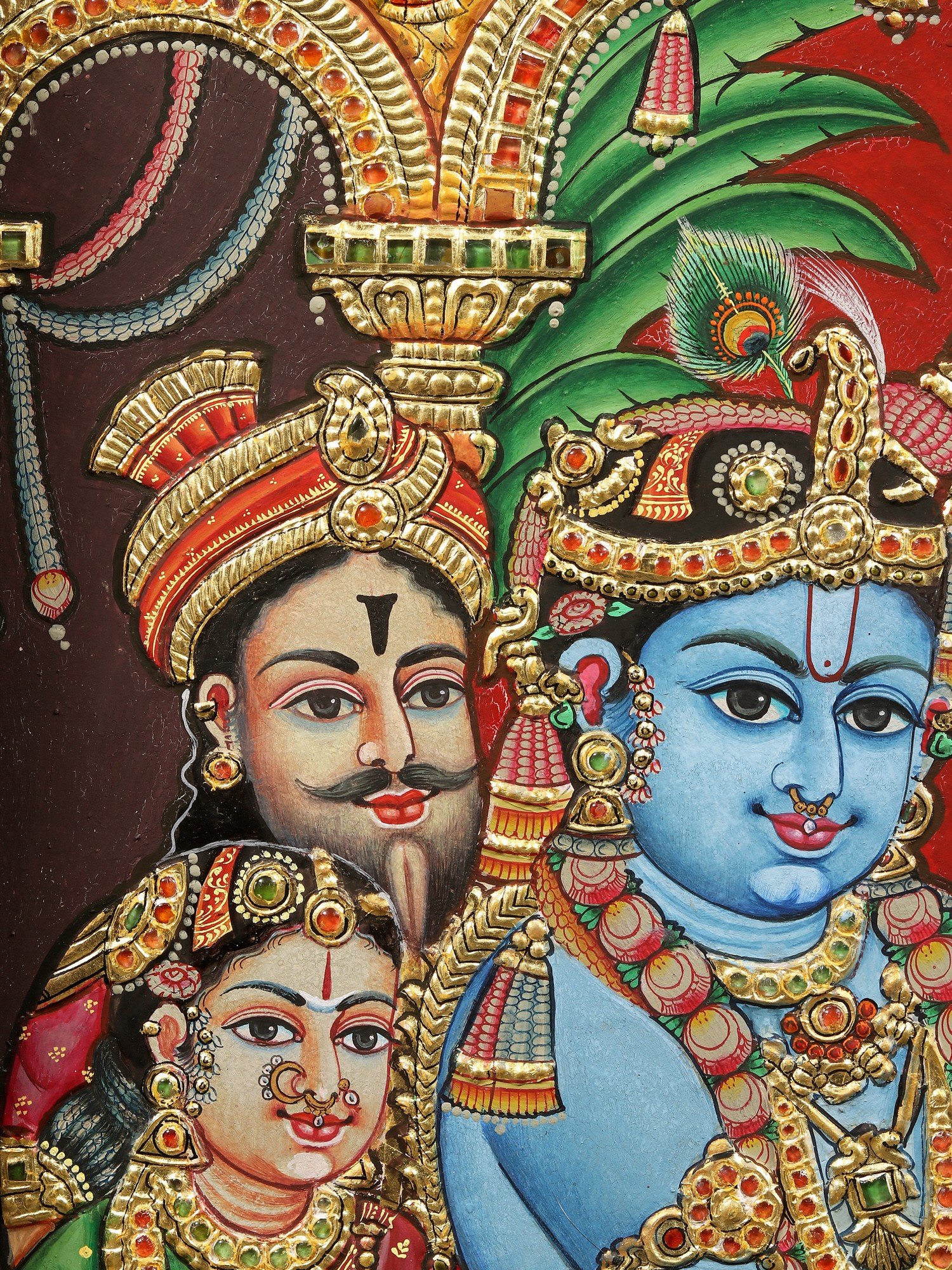
the Mandapam, where the families of Krishna and Rukmini have gathered.
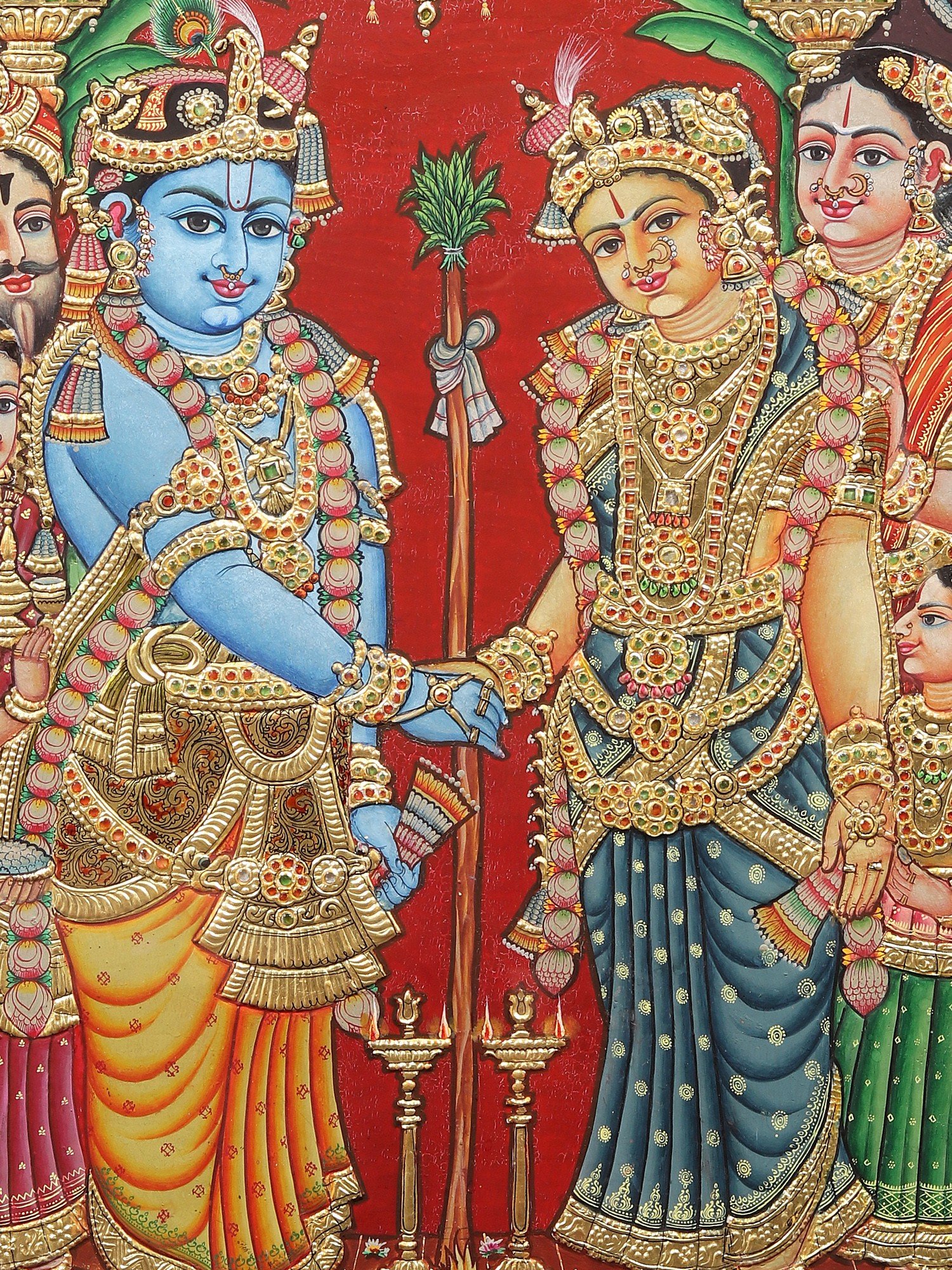
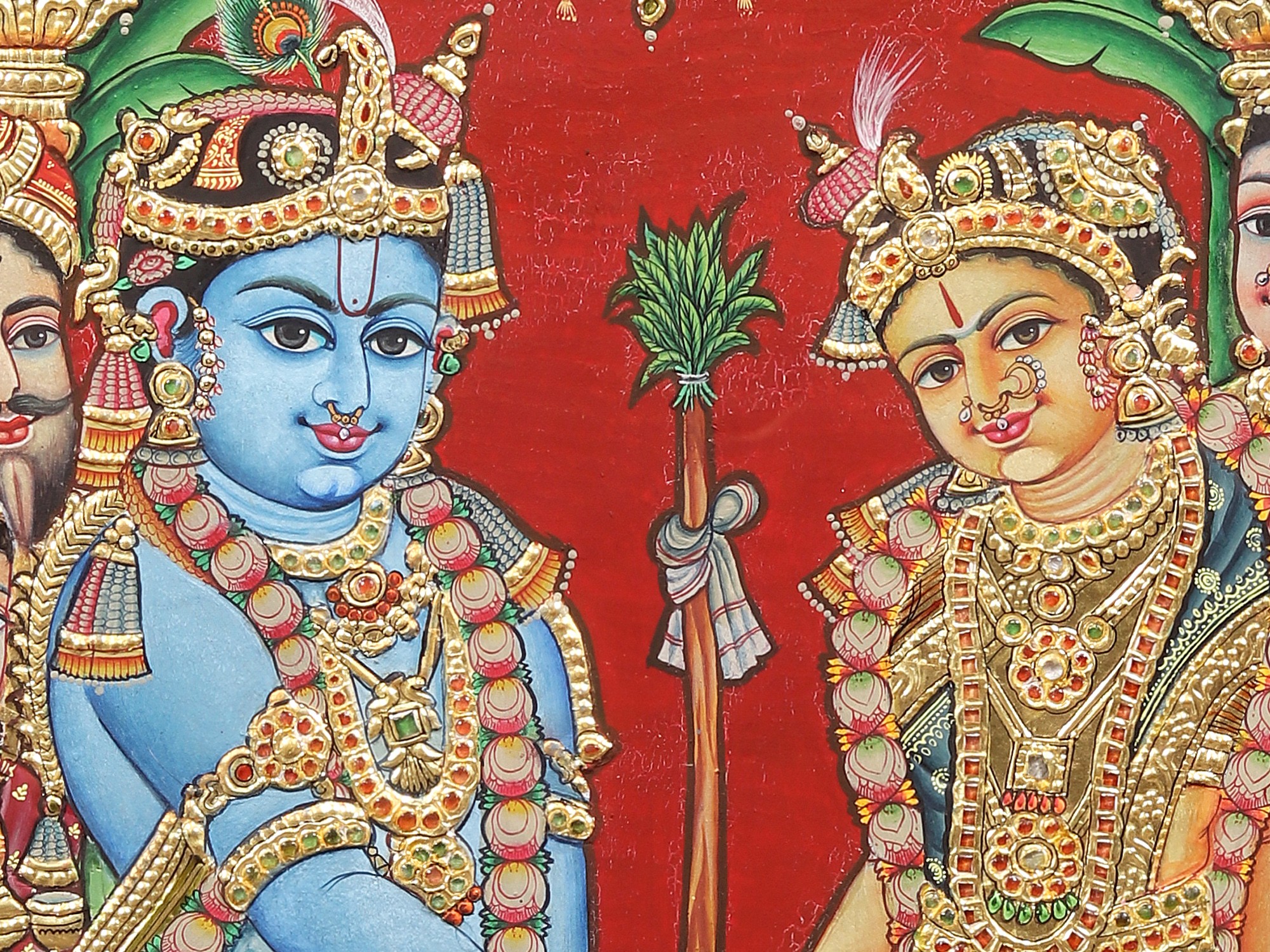
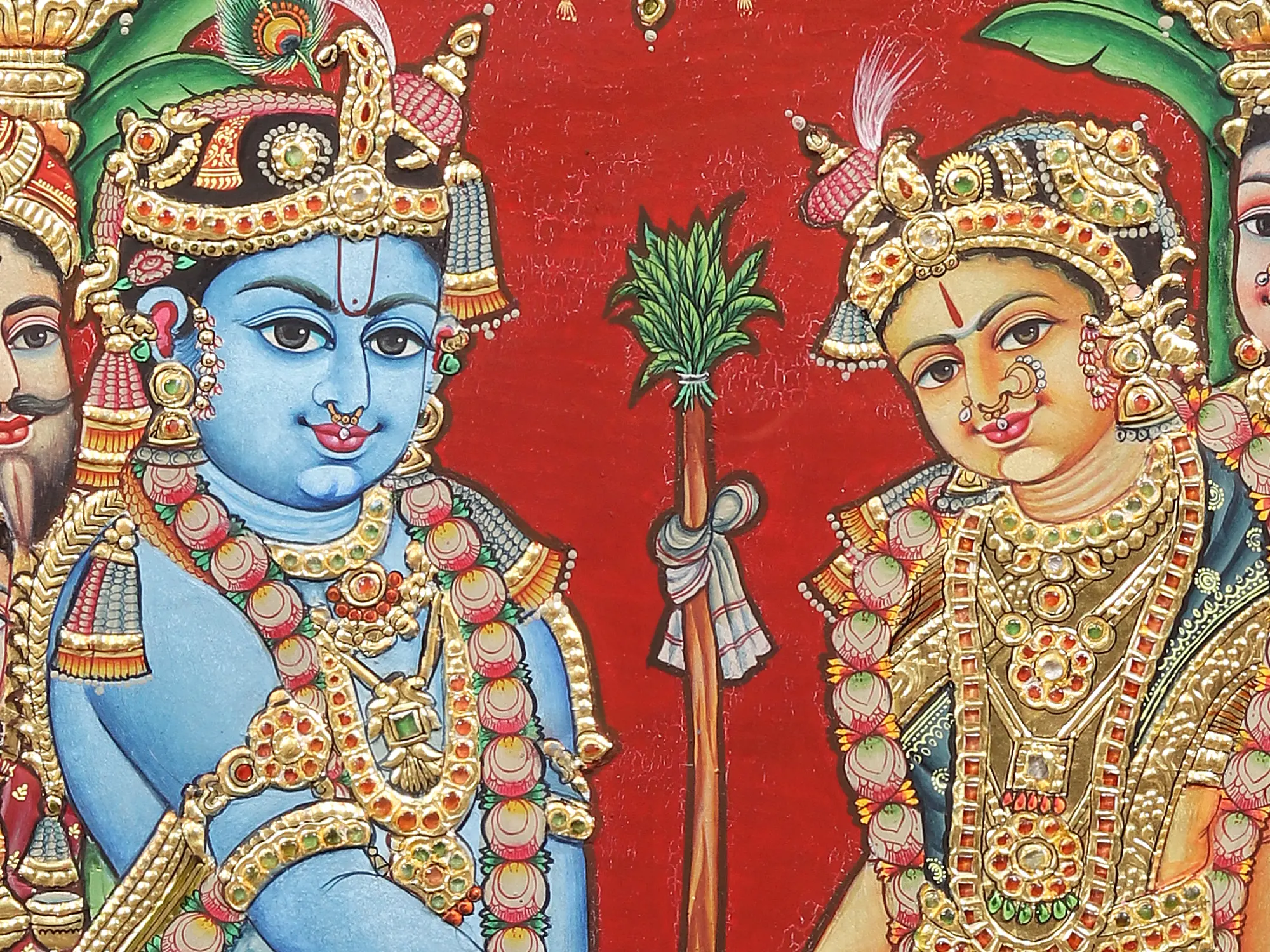
Adorned
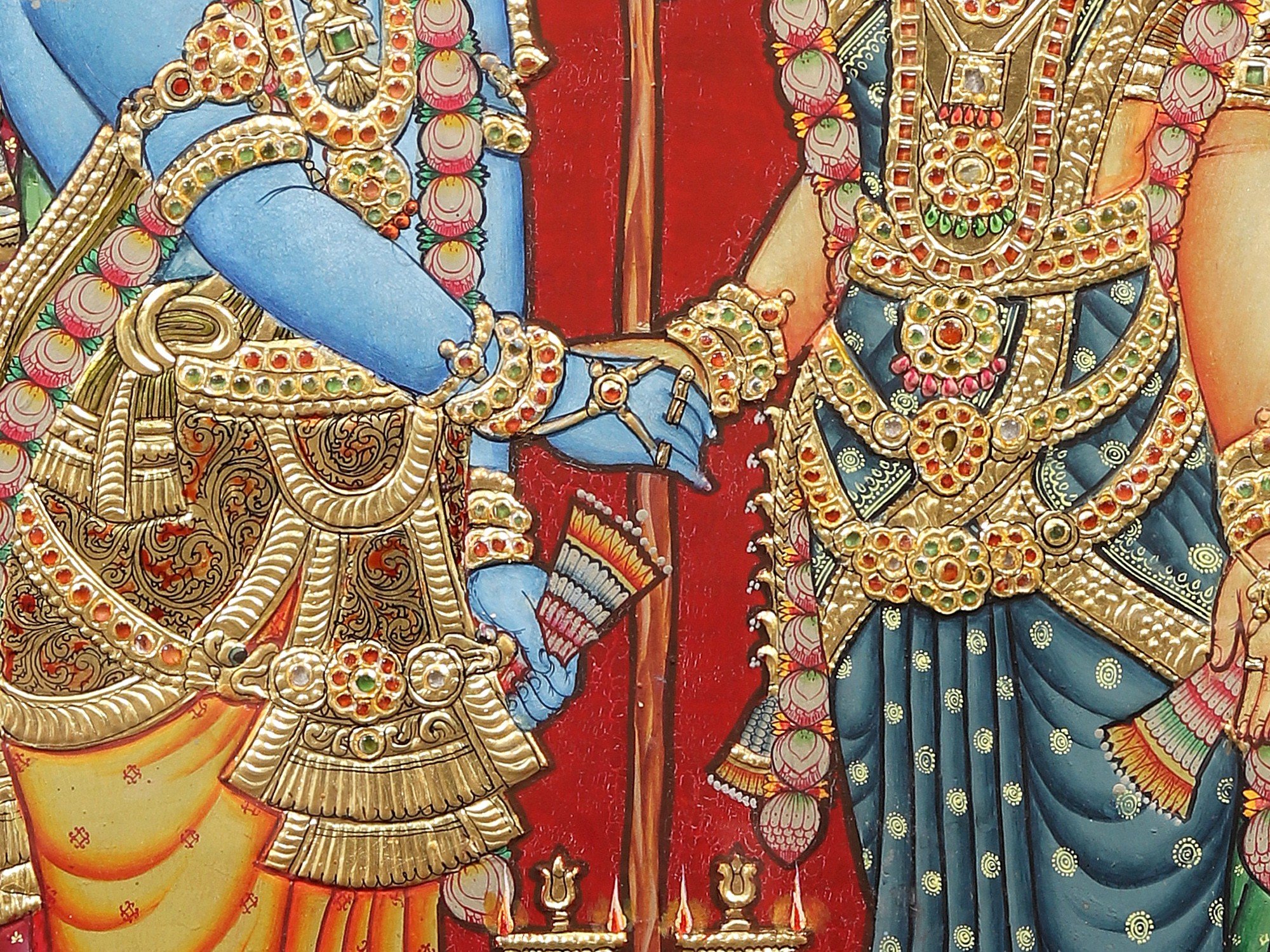
with Pitambara, gold ornaments, and fragrant garland, Krishna appears as a
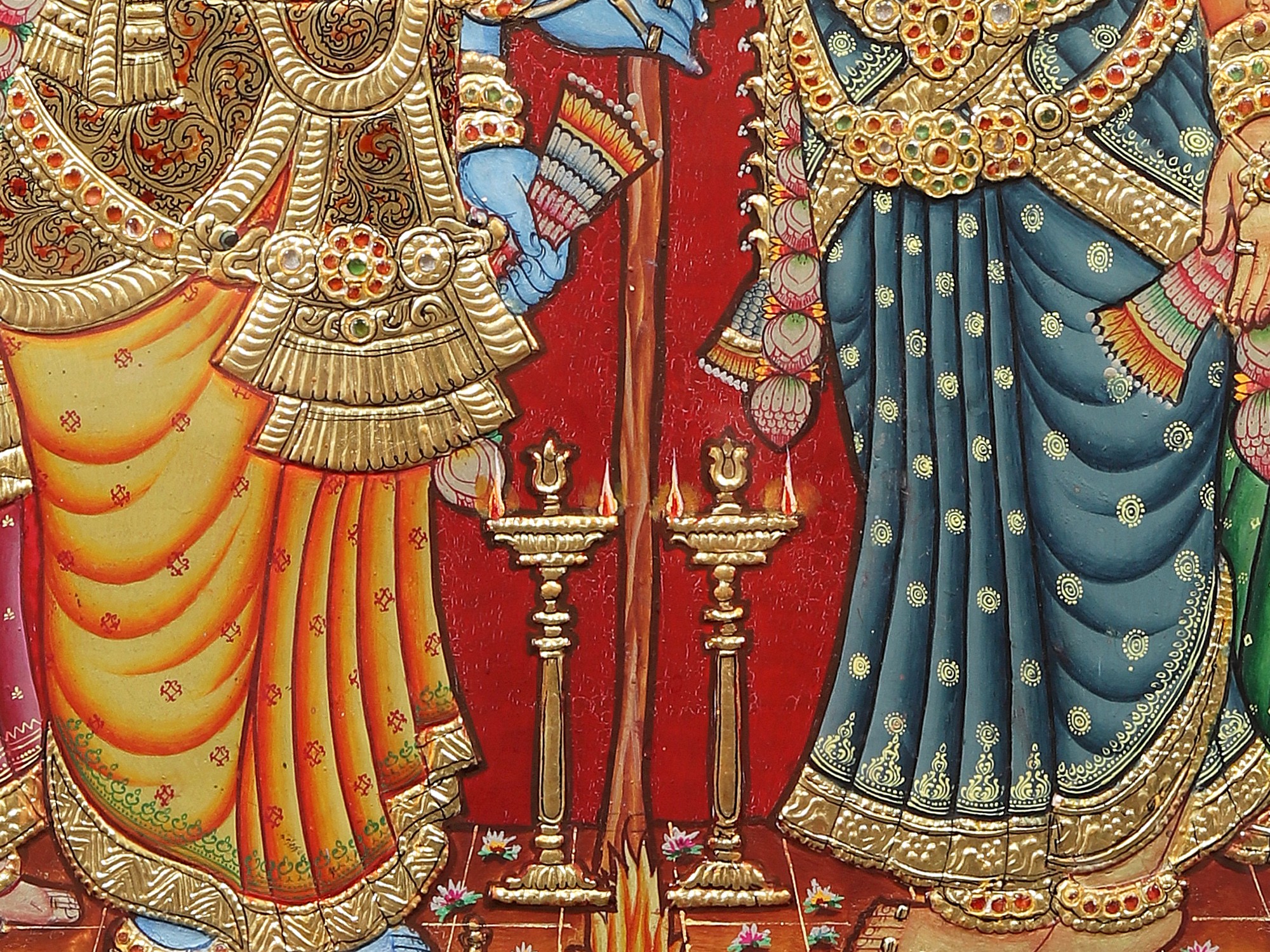
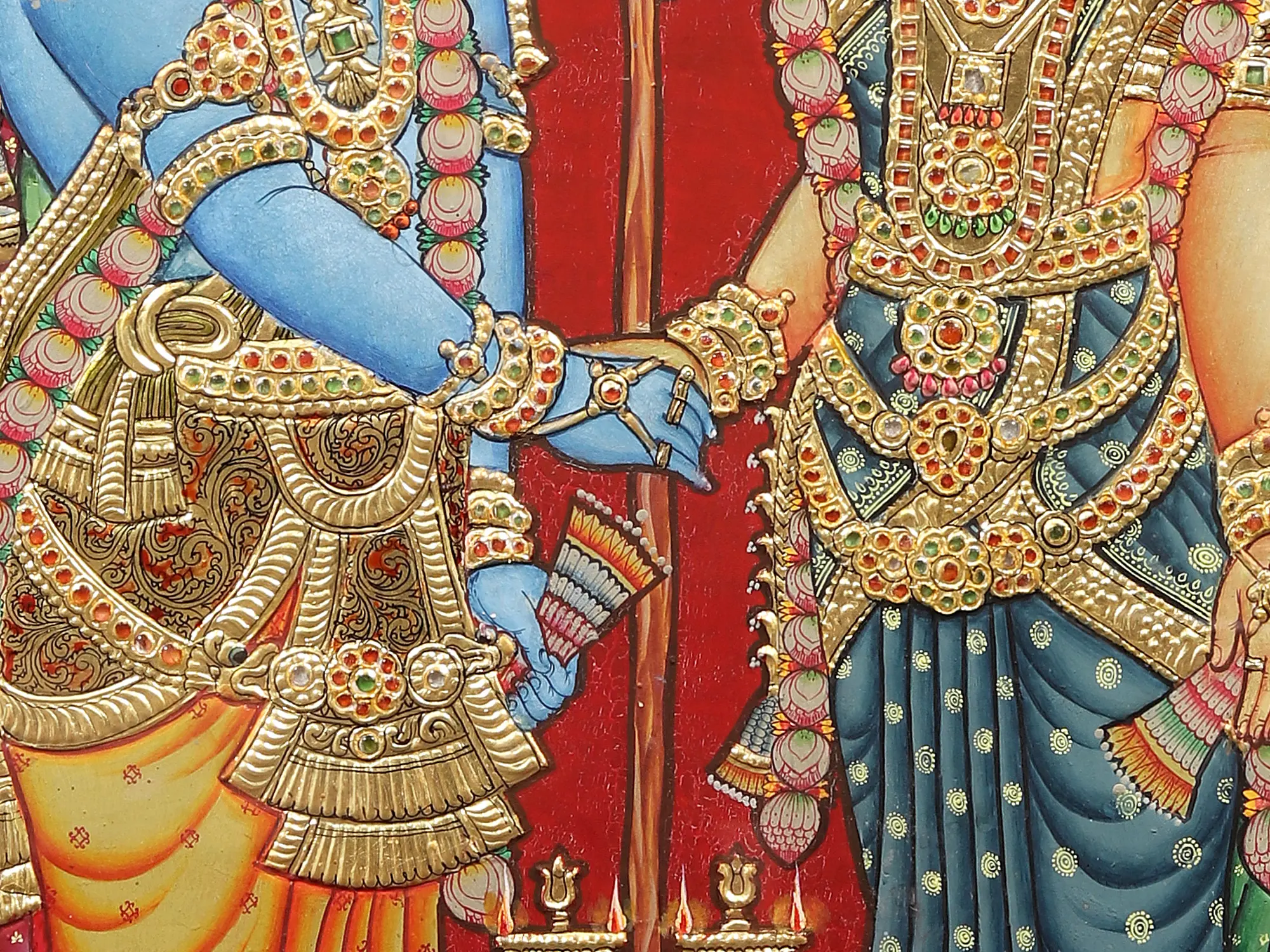
divine groom, pleasingly taking Rukmini’s hand in marriage in the Panigrahana
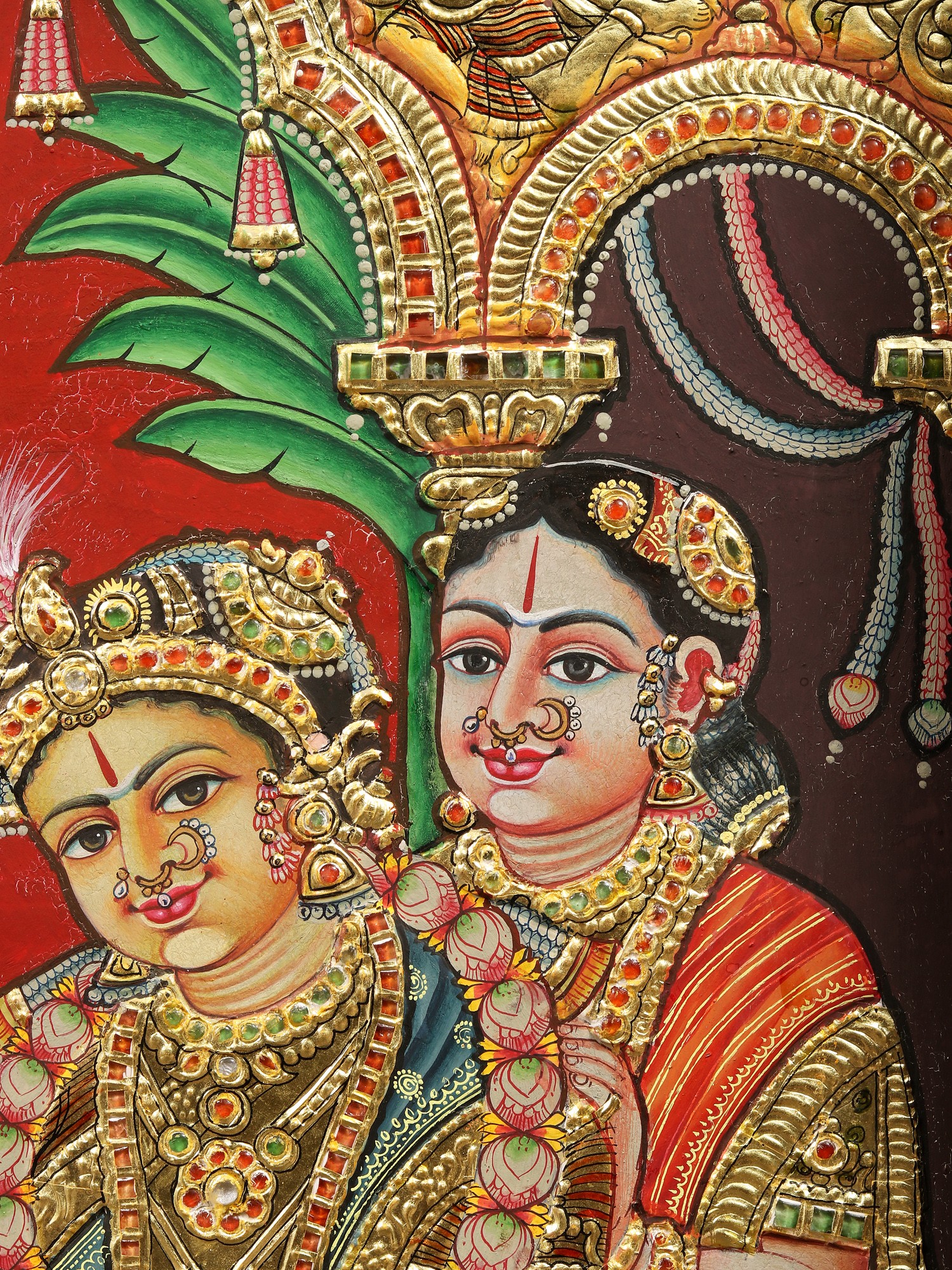
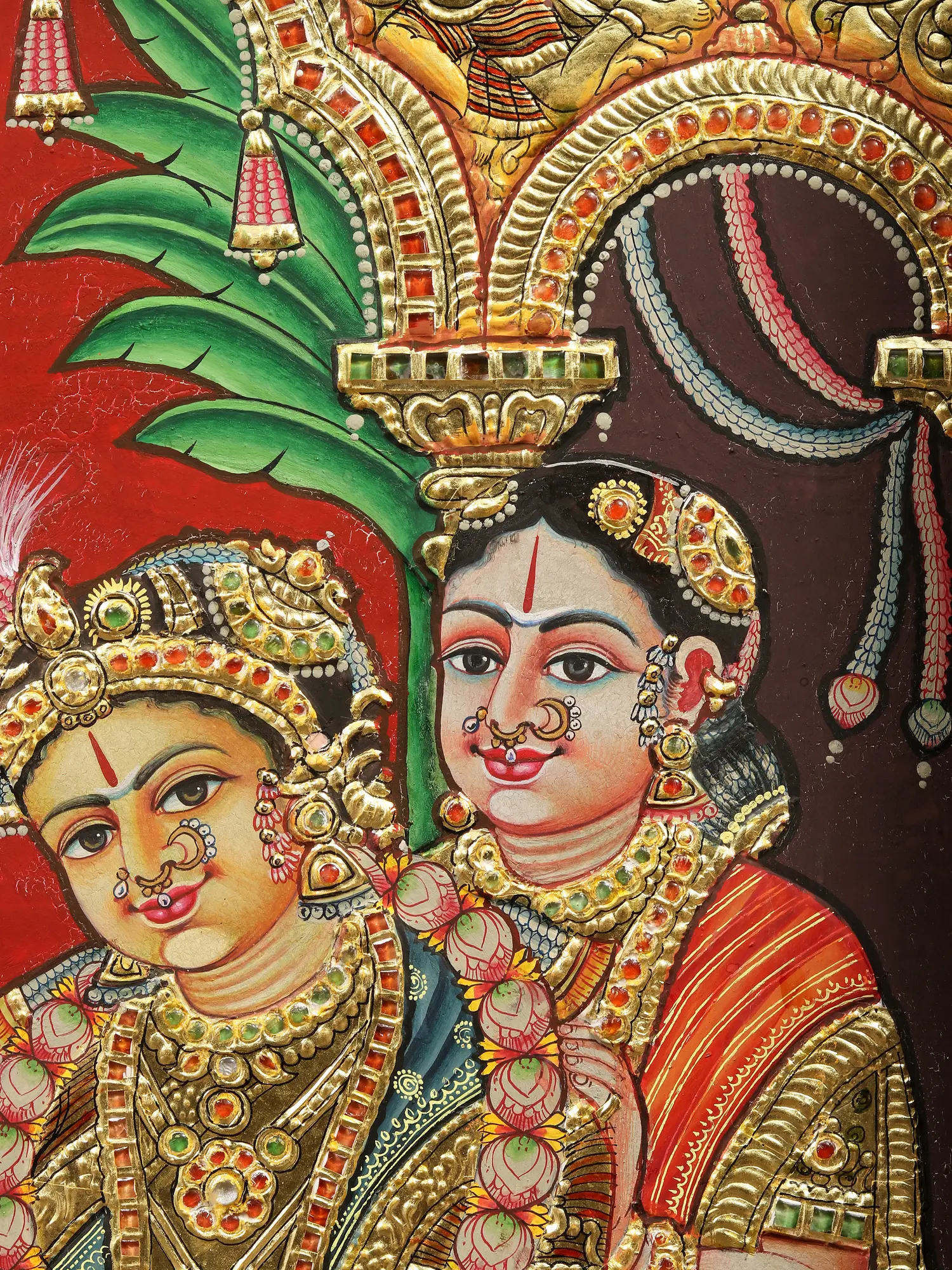
ritual. Accompanied by her mother and a friend, Rukmini is wrapped in a silk
saree of Megha-Shyam (dark grey-blue color of the nimbus cloud, also the color
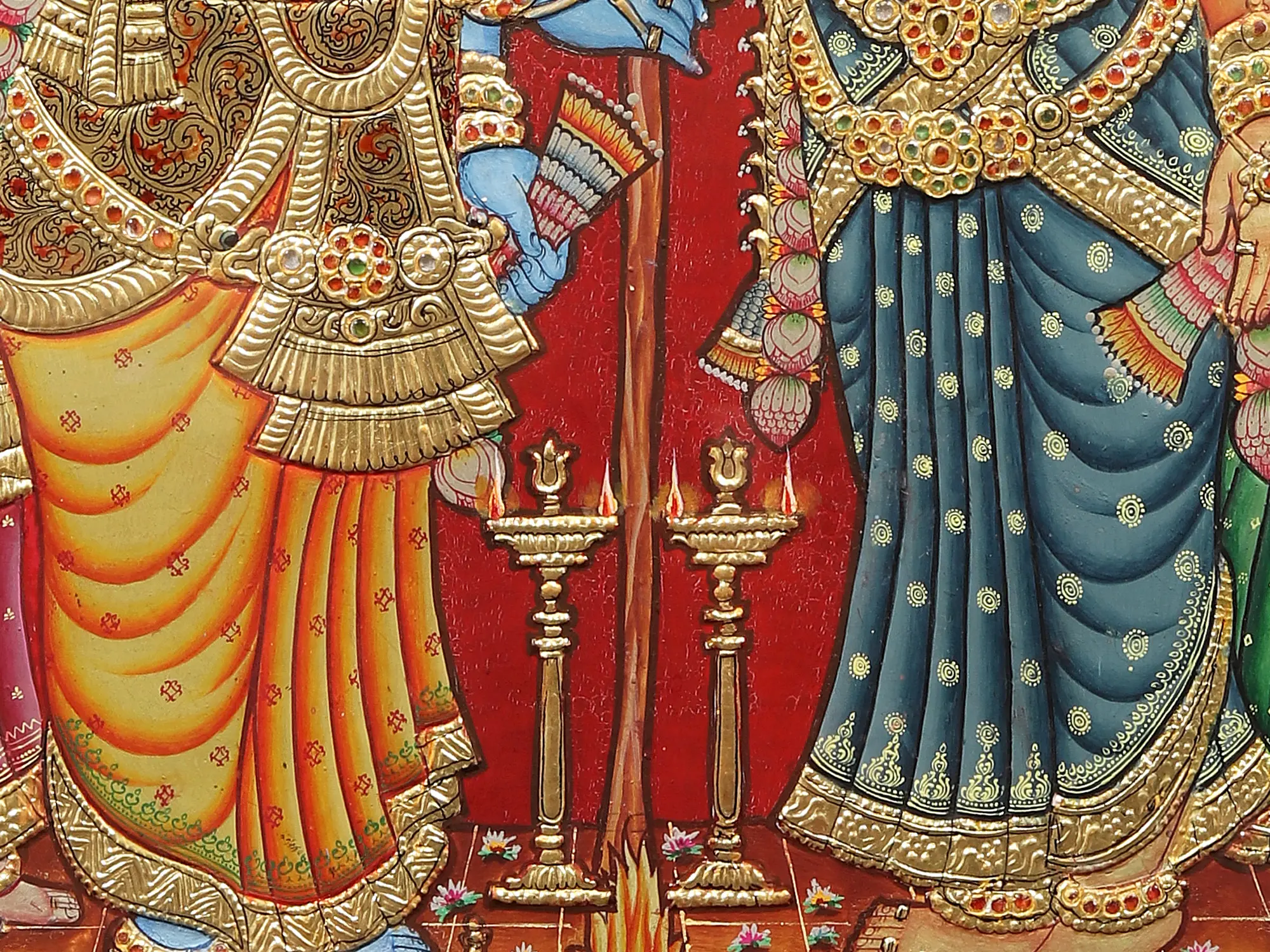
of Krishna), wreathed in gold ornaments and demurely smiling. The sacred fire
of Yajna burns in the foreground, and a vibrant red, the color of conjugal
bliss but also of pure energy that emerges out of the union of Purusha and
Prakriti, is smeared on the backdrop, enhancing the aesthetic profoundness of
the composition.
An Auspicious Union Captured in Gold
Immerse yourself in the divine narrative of a sacred wedding, where tradition and artistry converge to create a masterpiece. This exquisite depiction of a celestial union will imbue your space with an aura of devotion and timeless beauty, serving as a focal point for contemplation and admiration.The Art of Devotion: Tanjore's Golden Legacy
Experience the rich heritage of Tanjore painting, a centuries-old art form revered for its meticulous detail and opulent embellishments. Each stroke of natural color and application of genuine gold leaf is a testament to the artisan's devotion and skill, painstakingly brought to life on a canvas that resonates with spiritual significance. The tactile quality, enhanced by delicate relief work, invites you to appreciate the depth and intricacy of this revered craft.Visual Splendor and Enduring Form
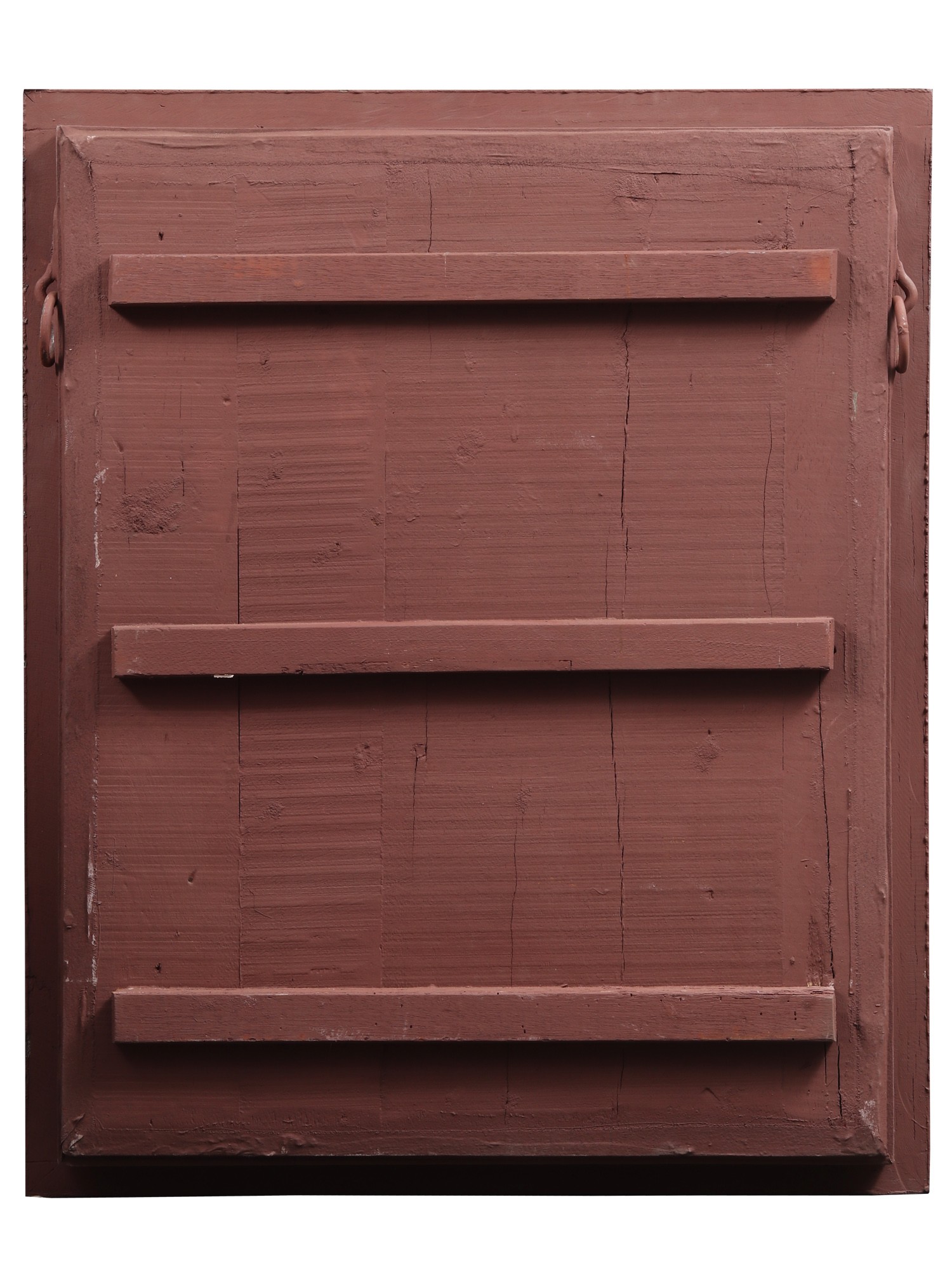
The vibrant palette of natural pigments creates a striking contrast against the lustrous gold work, drawing the eye to the divine figures and their ceremonial attire. Intricate patterns adorn the garments, while detailed facial expressions convey serene grace. The entire composition is framed by a substantial teakwood border, measuring approximately 33.00 inches in height and 27.00 inches in width, with a depth of 3.50 inches, providing a regal enclosure that complements the painting's grandeur. The golden ornamentation extends beyond the figures, adorning archways and architectural elements, further enhancing its luxurious appeal.Echoes of Mythology and Sacred Ritual
This artwork captures the pivotal moment of the Rukmini Kalyanam, a revered event in Hindu mythology, celebrating the marriage of Lord Krishna and his beloved Rukmini. It symbolizes divine love, auspicious beginnings, and the blessings of a harmonious union. The surrounding figures, rendered with careful attention to detail, represent family and divine witnesses, adding layers of cultural and spiritual context to the scene.Elevating Your Sacred Spaces
Imagine this piece gracing your home altar, a prominent display in your living room, or adorning a meditation space, radiating a sense of peace and spiritual connection. It is an ideal addition for those who appreciate the intersection of art, spirituality, and cultural heritage, serving as a constant reminder of divine presence and the beauty of tradition. Its substantial size ensures it commands attention and enriches any setting.Preserving a Timeless Treasure
To ensure the longevity and brilliance of this artisanal creation, we recommend dusting it gently with a soft, dry cloth. Avoid direct sunlight and excessive moisture to preserve the integrity of the natural colors and gold work. By adhering to these simple care instructions, you will maintain its radiant beauty for generations, ensuring its value as a cherished heirloom endures.Gilded Elegance: Unraveling the Artistry of Tanjore Paintings
Tanjore painting is a traditional form of art in the South Indian style and was started by the inhabitants of a small town known as Thanjavur of Tamil Nadu. This gives it another name called “Thanjavur painting”. This painting draws its figures, designs, and inspiration from the time when Vedic culture was prevalent in India. Certain remarkable features of a Tanjore painting distinguish it from other paintings. Some of these are pure gold or gold foil coating on gesso work, the use of rich and vivid colors, and the inlay of cut-glass or semi-precious and precious stones. The subjects of most of the Tanjore paintings are Hindu Gods, Goddesses, and saints. The main devotional figure is portrayed in the central portion of the painting and is usually surrounded by various secondary figures.
The process of making a Tanjore painting
The classic Tanjore paintings are done on wooden planks and hence are also referred to as Palagai Padam in South India (Palagai = Wooden plank, Padam = Picture). Creating a masterpiece is never an easy task but the skilled artists of Thanjavur have been following the tradition of making timeless Tanjore paintings for decades.The making process begins with preparing the wooden board or canvas. The size of the board depends upon the choice of the patron. The next step is to paste cardboard over the wooden board and then a cotton fabric is stretched and pasted upon it using Arabic gum.
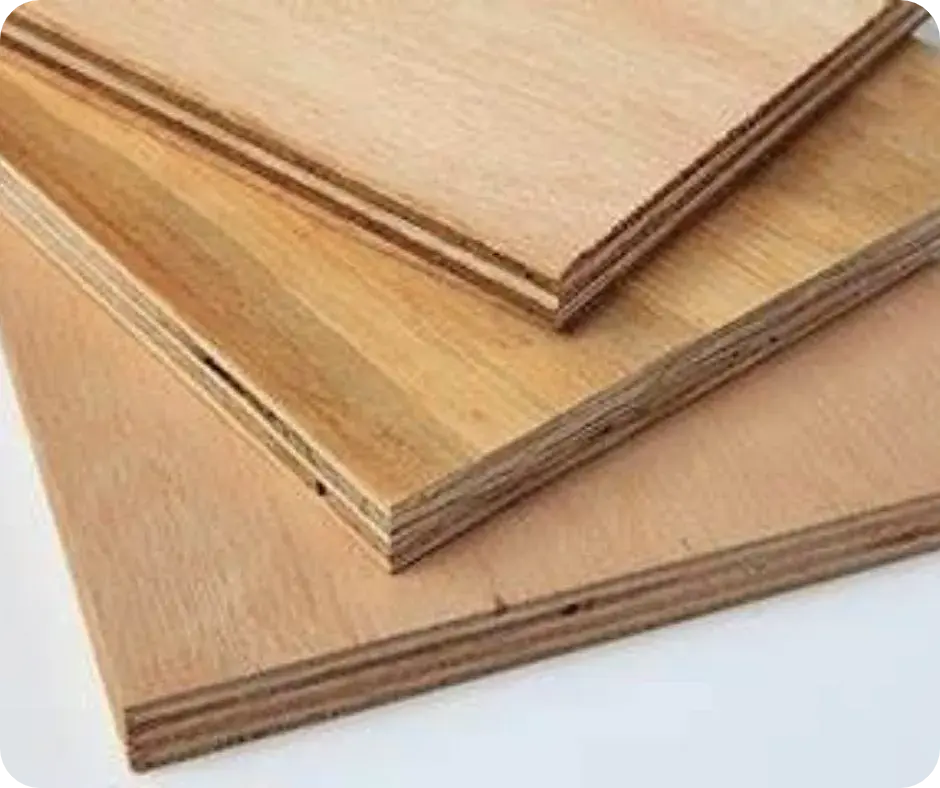
Now that the cloth is attached to the wooden panel, a rough sketch of the motifs and figure is drawn onto the fabric. After this, a paste of chalk powder and water-soluble adhesive is evenly applied over the base and smoothed.
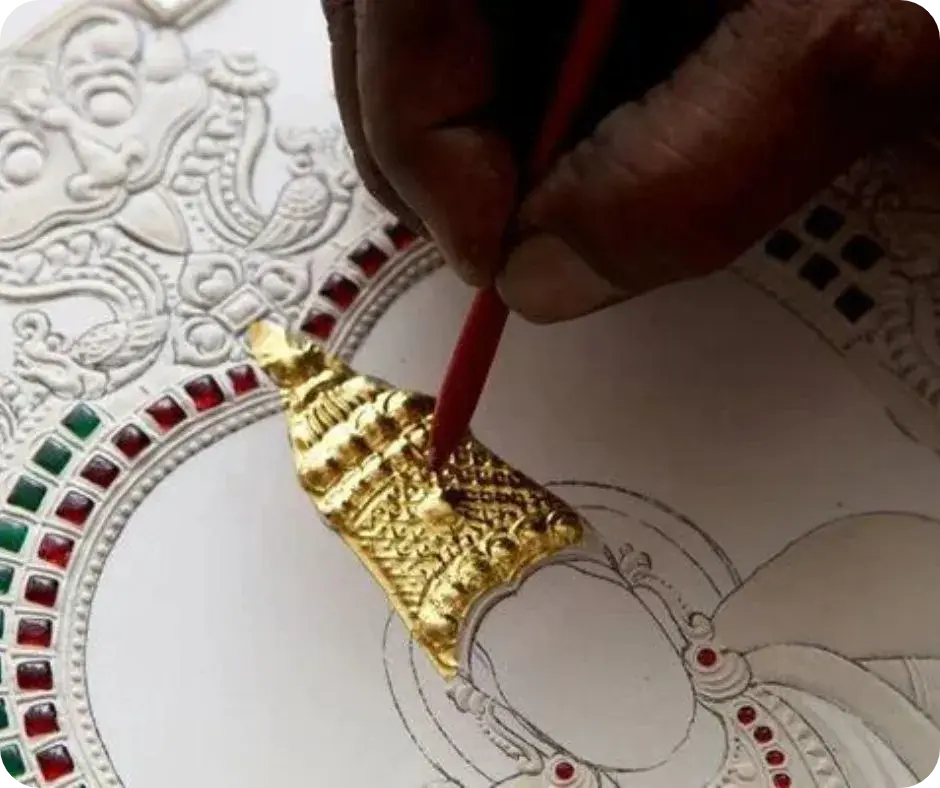
Thereafter, the outlines which were made or traced using a stencil are now ready to be beautified and decked with various add-ons. The usual materials for decoration are cut-glass, pearls, semi-precious and precious gems, gold leaf, and laces. 22 or 18 Karat Gold leaves and gems of varied hues are especially inlaid in areas like pillars, arches, walls, thrones, and dresses.
In the final step, the rest of the painting is filled with rich and striking colors such as shades of red, blue, and green. Formerly, the artists used natural colors like vegetable and mineral dyes instead of chemical paints. The entire painting is then cleaned and refined to give a flawless finished look.
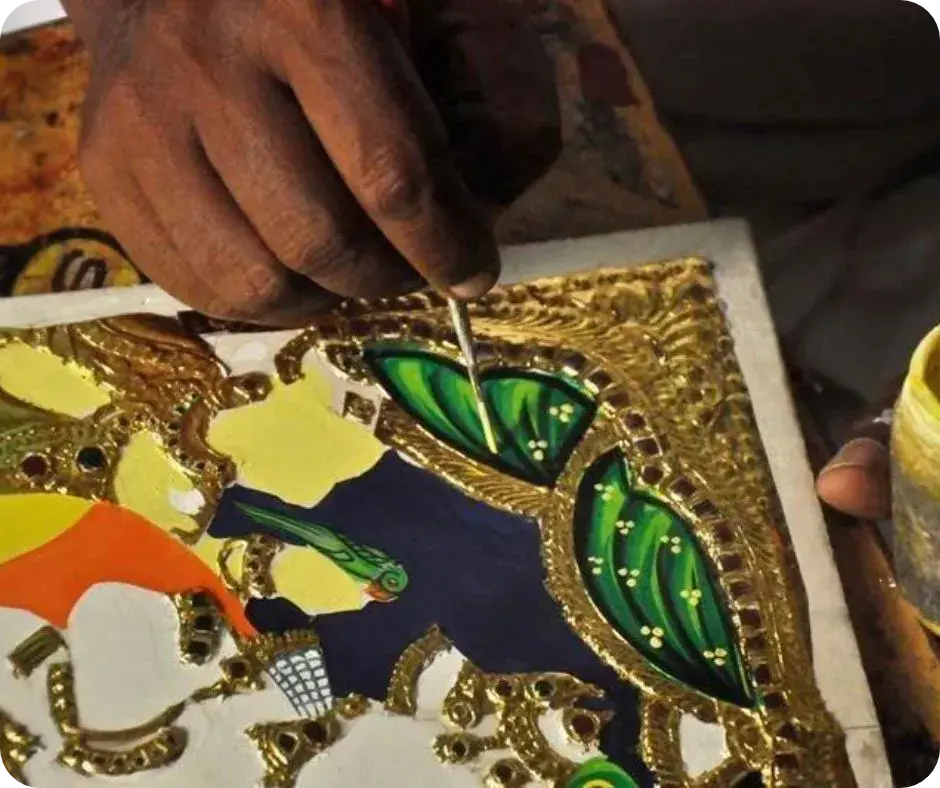
Since the making of a single piece of Tanjore painting requires a complex and elaborate process, the artists usually take at least one or two months to complete it. The use of pure gold foil and gems for beautification is a characteristic of an authentic Tanjore painting. Due to this, Tanjore paintings last for generations without getting tarnished and are much more expensive than general paintings. Though the art form has undergone various changes and technique modifications over the years, it continues to attract the hearts of art lovers.