The Fierce Mother: A Representation of Divine Power
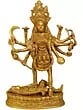
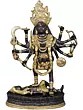
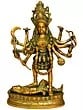
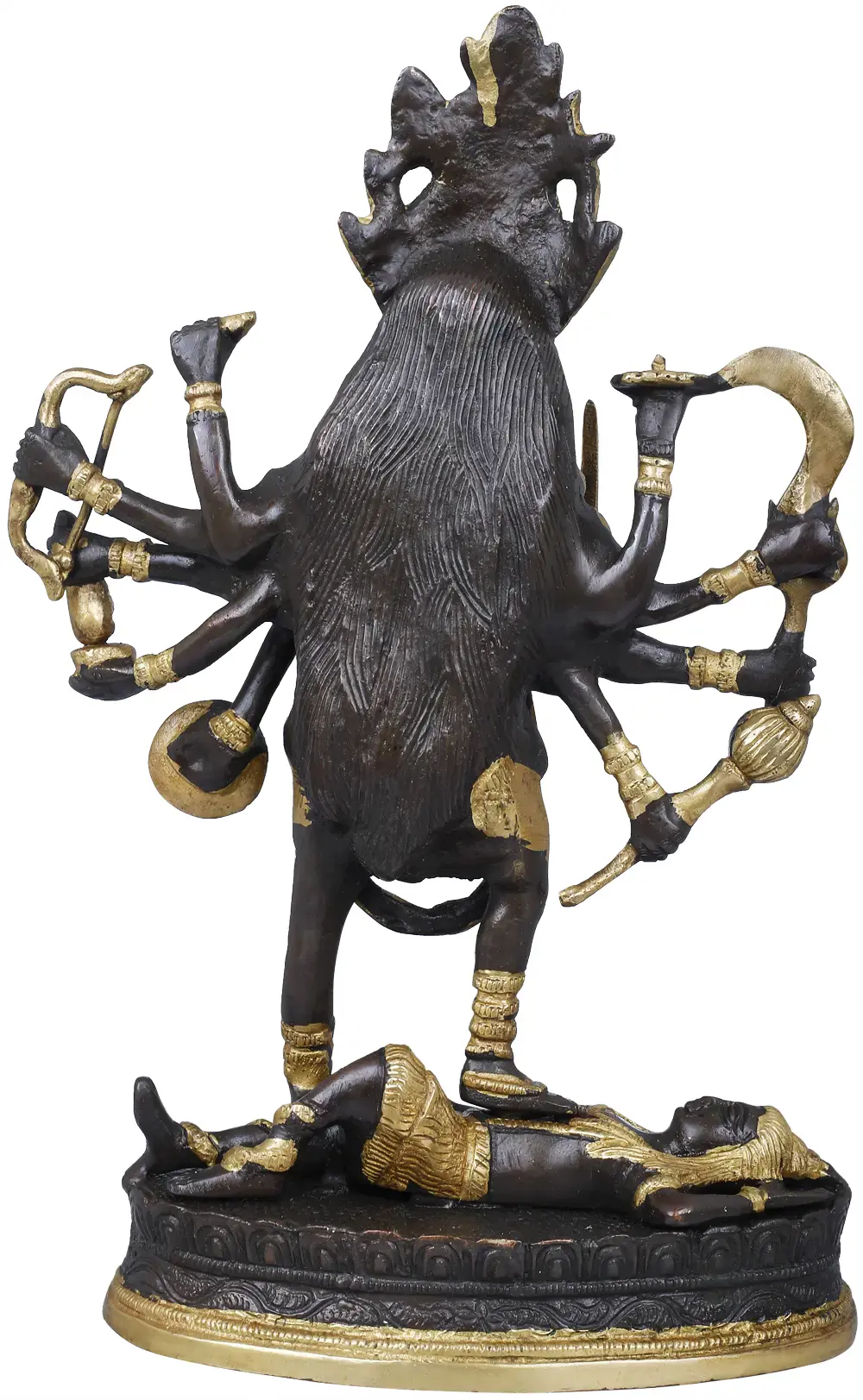
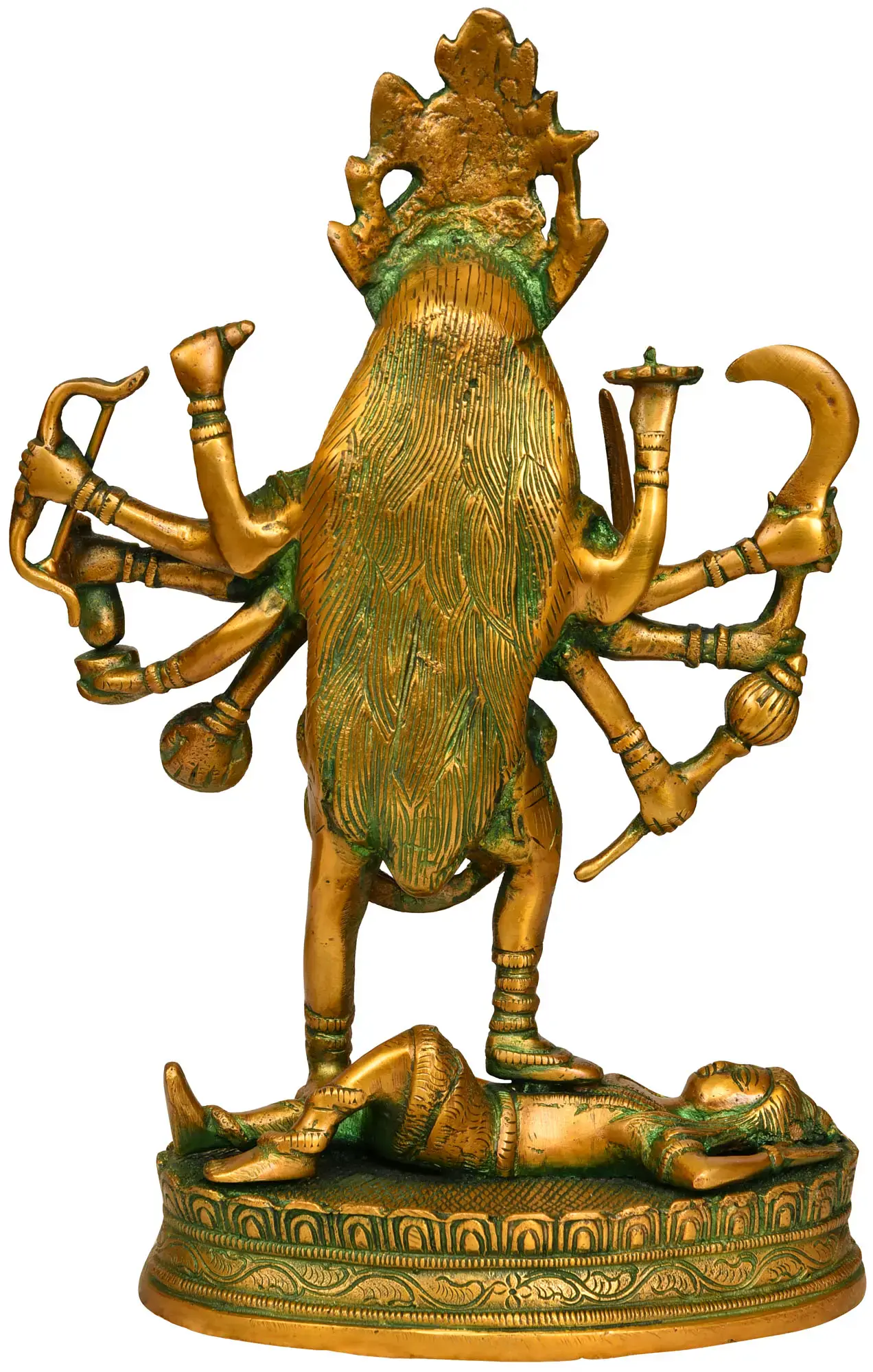
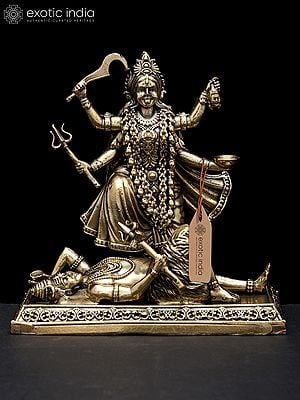
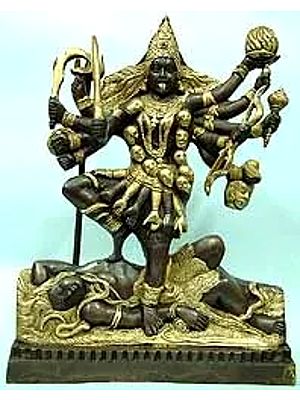
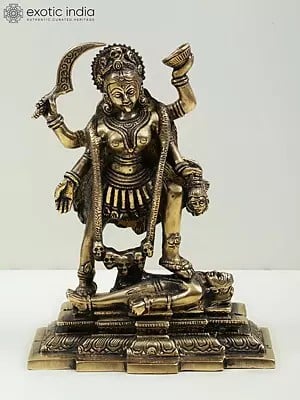
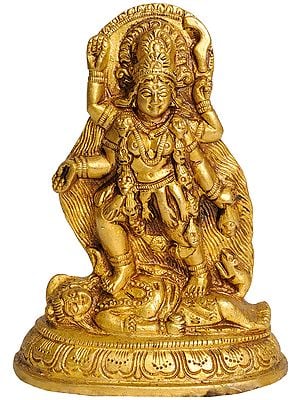
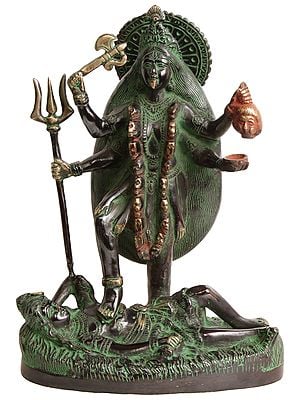
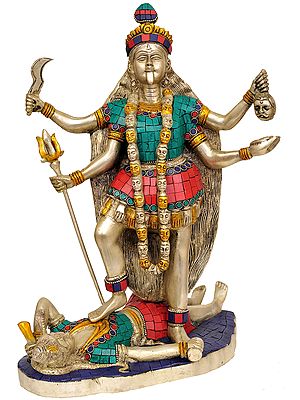
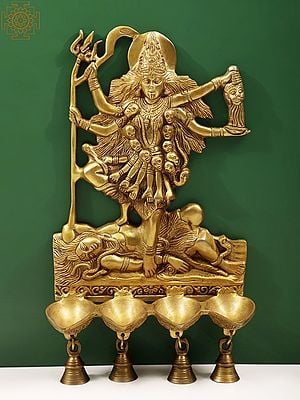
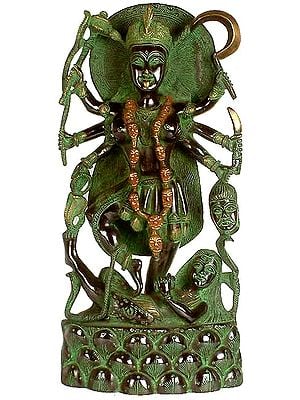
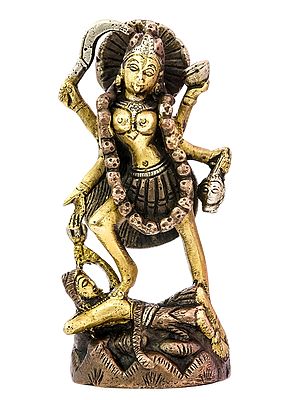
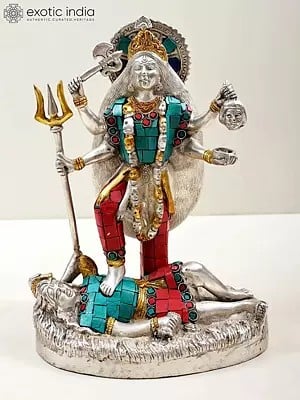
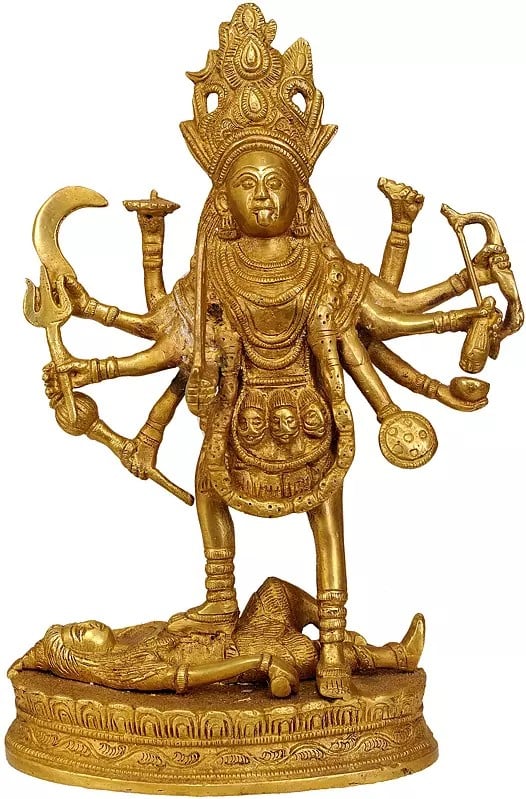
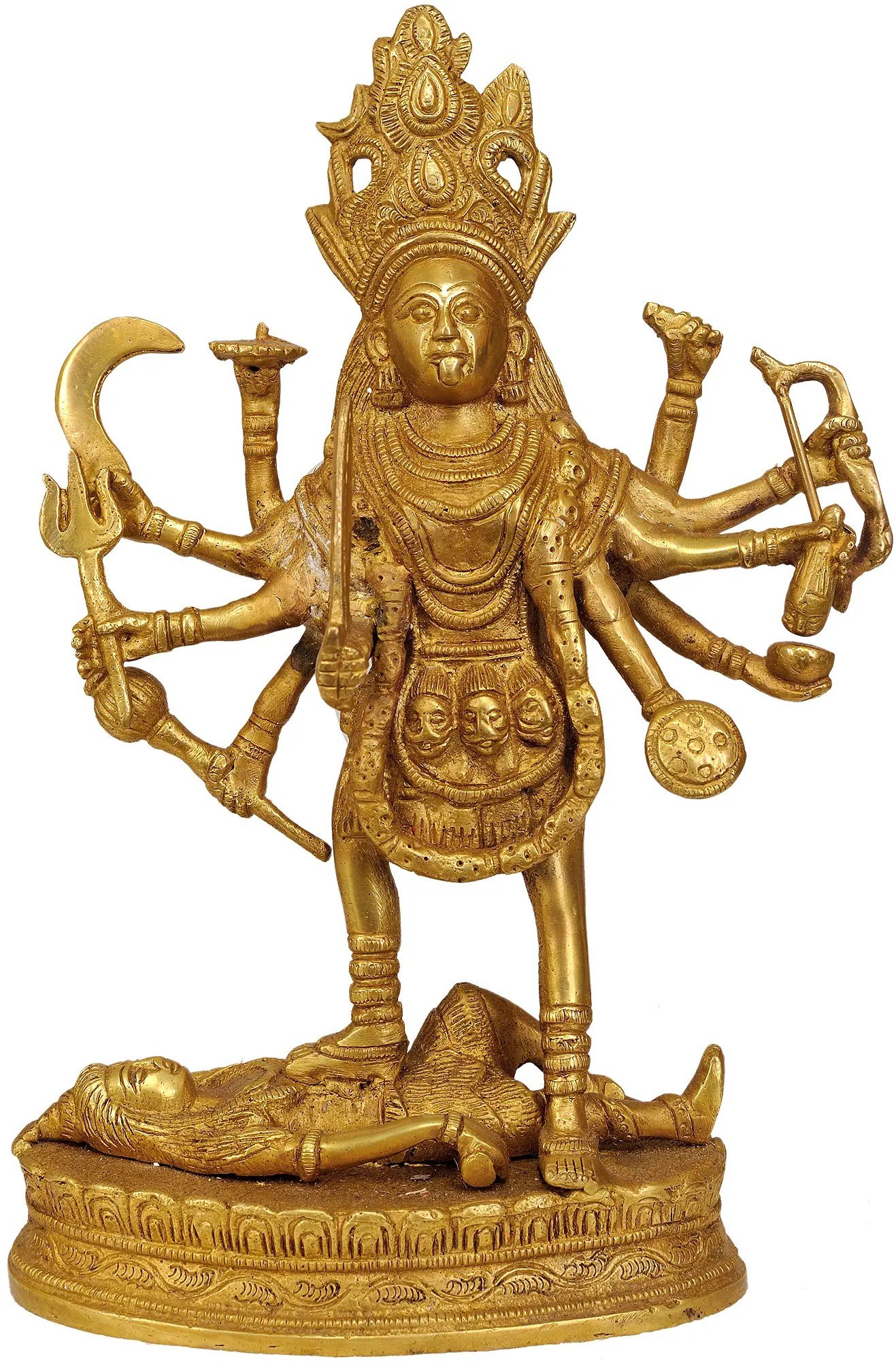
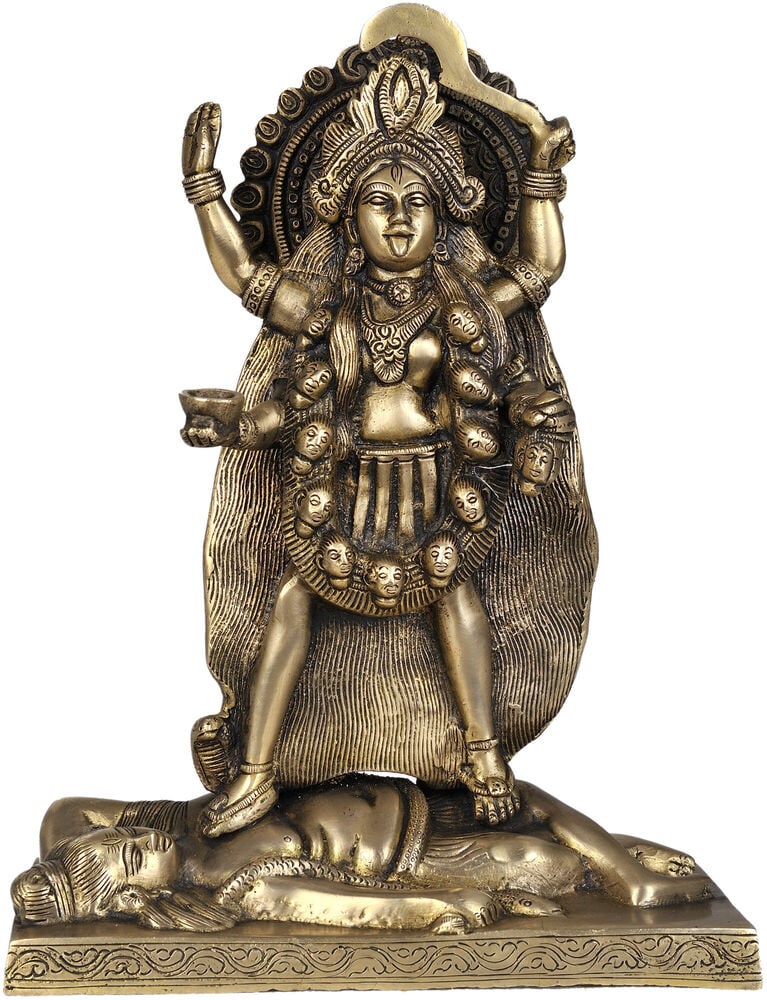
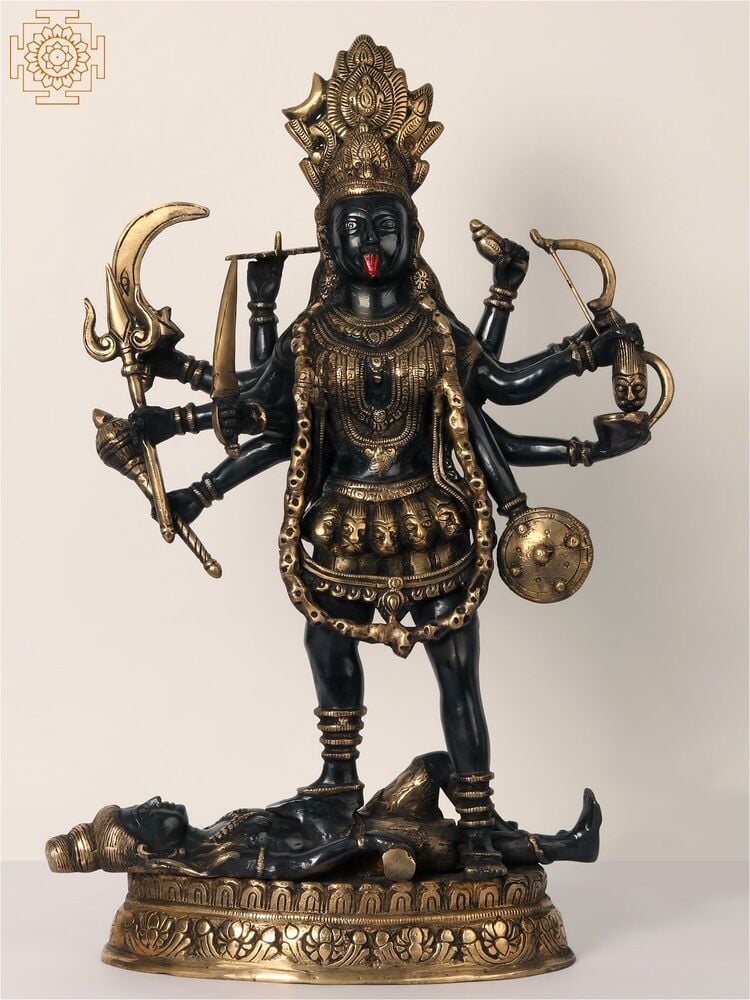
This exquisite brass statue captures the powerful and awe-inspiring form of Maa Kali, the fierce aspect of the Divine Mother in Hindu tradition. Standing as a formidable deity, she embodies the ultimate force of transformation, destruction of evil, and liberation from ignorance. This handcrafted piece, meticulously made in India, is a testament to the rich artistic heritage and deep spiritual significance associated with Tantric iconography.
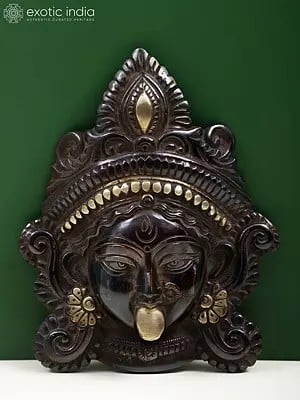
The depiction of Kali is iconic and potent. Her dark complexion signifies her transcendence of all colors and forms, representing the ultimate reality that is beyond human comprehension. The multiple arms symbolize her omnipresence and her ability to engage in various cosmic activities simultaneously. In her hands, she holds a curved sword, a symbol of her power to cut through illusion and ego, and a severed head, representing the conquest of ignorance and the shedding of the ego. Other attributes in her hands further elaborate on her divine functions, often including a trident, a bow and arrow, and a bowl for collecting the blood of demons. She is adorned with a garland of skulls, a stark reminder of the cyclical nature of life and death, and a girdle of severed hands, signifying her victory over worldly attachments and ego. Her protruding tongue, a distinctive feature, is often interpreted as her insatiable desire to consume evil and her fierce compassion for her devotees.
––––––––––––––––––Mythological Context and Spiritual Significance
Kali's mythology is deeply rooted in the battle against demonic forces that threatened the cosmos. The most famous legend recounts her emergence from the brow of Goddess Durga during a fierce battle against the formidable demon Mahishasura and his associates, Raktabija. Raktabija had a boon that with every drop of his blood that fell on the ground, a new demon would spring forth. Overwhelmed, Durga channeled her divine fury into Kali, who then drank Raktabija's blood before it could touch the earth, ultimately leading to his defeat. This act highlights Kali's role as a protector, a destroyer of negativity, and a powerful force of cosmic balance.
In Tantra, Kali is revered as Mahavidya, one of the ten wisdom goddesses, representing an intense and transformative aspect of Shakti, the primordial cosmic energy. Her worship is often associated with liberation, transcendence, and the dissolution of ego. She is seen not just as a destroyer, but also as a nurturing mother who fiercely protects her children, guiding them towards spiritual enlightenment by eradicating internal obstacles. This statue serves as a focal point for devotion, meditation, and the contemplation of divine power and transformation. Its presence can invoke courage, strength, and a deep connection to the primal forces of creation and dissolution.
Embracing the Divine Feminine: Understanding Kali and Her
Significance
Goddess Kali is one of the most powerful and revered deities in
Hinduism and is worshiped by many people across the globe
especially in the eastern part of India. She is considered to be
a ferocious form of Goddess Durga and is regarded as the
ultimate manifestation of Shakti. Goddess Kali also manifests as
the material nature and is regarded as the mother of all living
entities in the material world. Just like a caring mother, she
protects the living entities who follow the principles of Dharma
from demonic persons who always go against the laws of the
Supreme Lord.
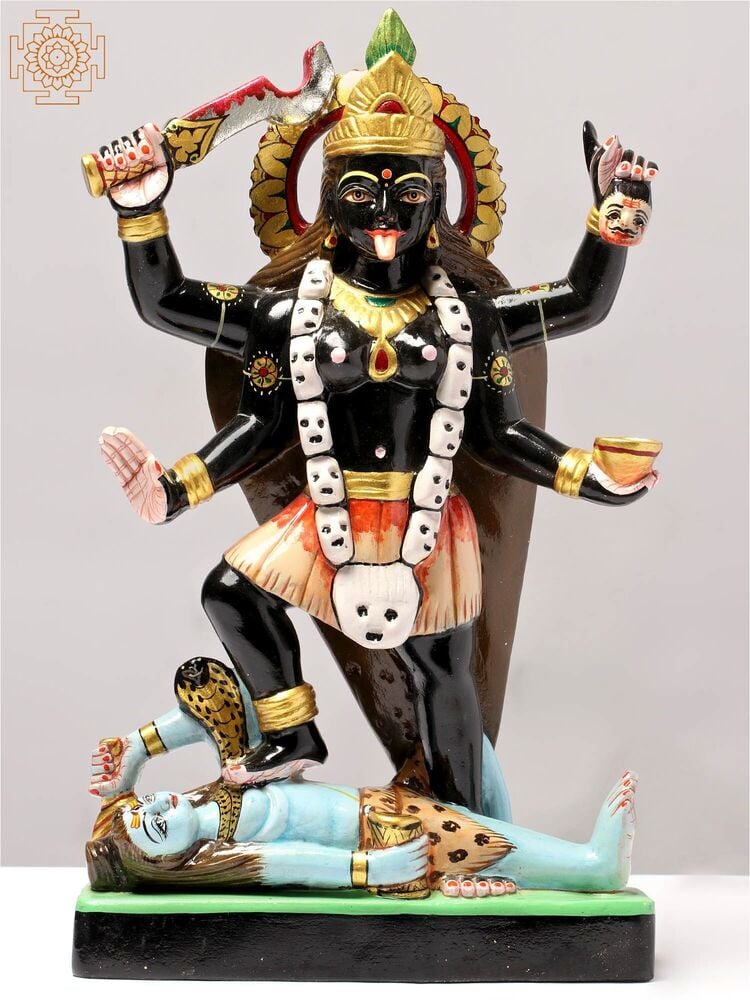
Having a dark complexion, open hair, and bearing multiple arms
holding different weapons, Goddess Kali is often depicted
standing on the chest of Lord Shiva, her consort, as she
displays her rage toward the demon Raktabij. This pastime is
mentioned in various Puranas of Vedic literature in which
Goddess Kali severed the head of the demon who was creating
havoc on earth. This shows the protective nature of the Goddess.
The Vedic scriptures also mention that Goddess Kali is an
obedient devotee of the Supreme Lord Krishna or Vishnu who tests
living entities on their determination and devotion toward the
Lord.
What does Kali symbolize?
Goddess Kali is the manifestation of material nature. She is
like a benevolent mother who protects her children from any kind
of mishaps and misfortune. Mother Kali considers all living
entities her own children and takes care of them. She reforms
the forgetful souls who have turned their faces against the
Supreme Lord Krishna. Thus, she symbolizes mercy, compassion,
and kindness. Although she has a ferocious form, she is actually
carrying out the order of the Supreme Lord by utilizing her
power against those who blaspheme the Lord and do not abide by
His laws.
What is Kali worshiped for?
We can find thousands and lakhs of devotees of Goddess Kali all
over the world. She is especially venerated in the festival of
Kali Puja in the Indian states of West Bengal, Assam, and
Odisha. Being a merciful Goddess, she fulfills the desires of
her devotees. Some people worship Goddess Kali for some material
gains and profits and receive her blessings. However, those who
serve her selflessly and approach her to know about the Absolute
Truth and the real aim of human life, receive the highest
benediction of Goddess Kali. Being a devotee of the Supreme Lord
Krishna, she bestows her blessings upon them and guides them to
the path of devotion toward the Lord.
Where to place Kali statue at home?
Keeping the deity of Goddess Kali at home is very auspicious. If
you worship her regularly with faith and devotion, she will
become pleased and will shower her blessings upon you. Knowing
that she is worthy of our respectful obeisance is important and
therefore, you should not keep or handle her deity with a casual
attitude. You must keep the deity on your home altar.
How to keep a Brass statue well-maintained?
Brass statues are known and appreciated for their exquisite beauty and luster. The brilliant bright gold appearance of Brass makes it appropriate for casting aesthetic statues and sculptures. Brass is a metal alloy composed mainly of copper and zinc. This chemical composition makes brass a highly durable and corrosion-resistant material. Due to these properties, Brass statues and sculptures can be kept both indoors as well as outdoors. They also last for many decades without losing all their natural shine.
Brass statues can withstand even harsh weather conditions very well due to their corrosion-resistance properties. However, maintaining the luster and natural beauty of brass statues is essential if you want to prolong their life and appearance.
- The best and simplest way to maintain a brass statue is to clean it at least twice a week using a soft cloth or cotton rag. This will prevent dust from accumulating on the surface. Dusting is especially important for outdoor statues since it is prone to dust accumulation much more than indoors.
- To give a natural shine and luster to the statue, you may apply coconut or olive oil using cotton on every portion. You can use a toothbrush to get to the small crevices but do not be too harsh. This will make the brass statue appear fresh and new with a polished look.
In case you have a colored brass statue, you may apply mustard oil using a soft brush or clean cloth on the brass portion while for the colored portion of the statue, you may use coconut oil with a cotton cloth.
Brass idols of Hindu Gods and Goddesses are especially known for their intricate and detailed work of art. Nepalese sculptures are famous for small brass idols portraying Buddhist deities. These sculptures are beautified with gold gilding and inlay of precious or semi-precious stones. Religious brass statues can be kept at home altars. You can keep a decorative brass statue in your garden or roof to embellish the area and fill it with divinity.