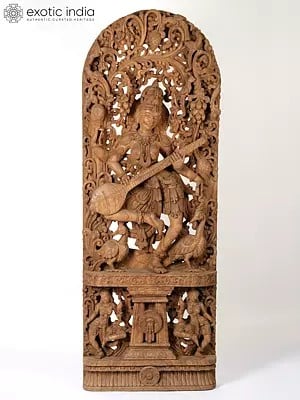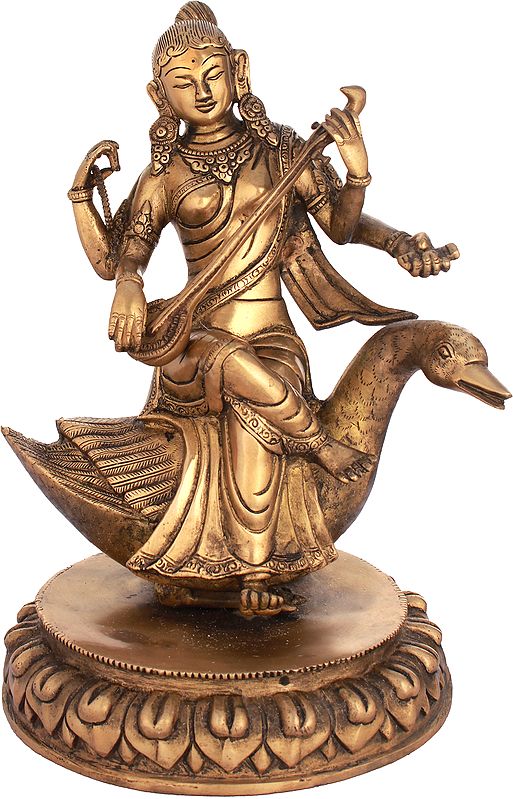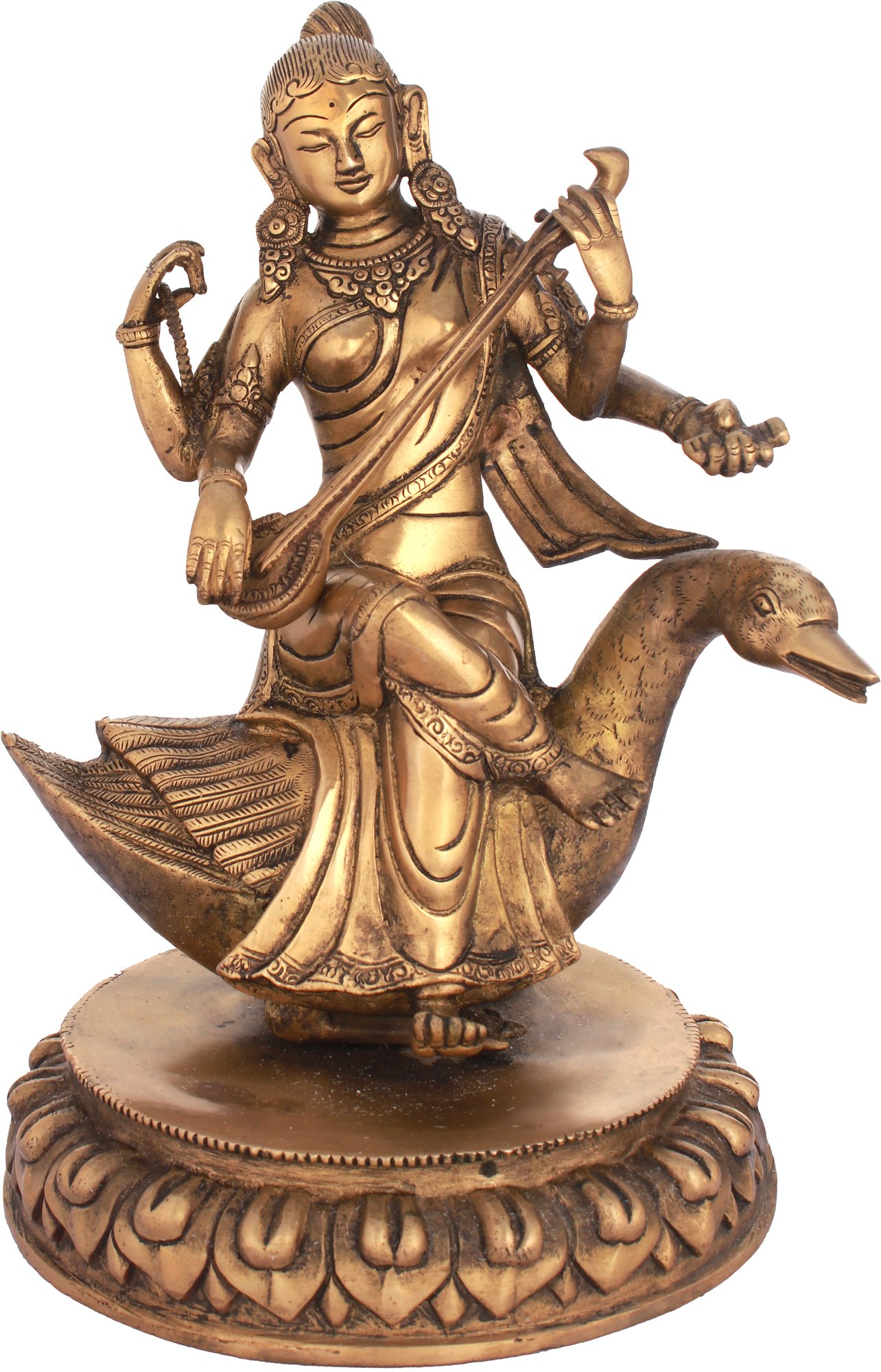

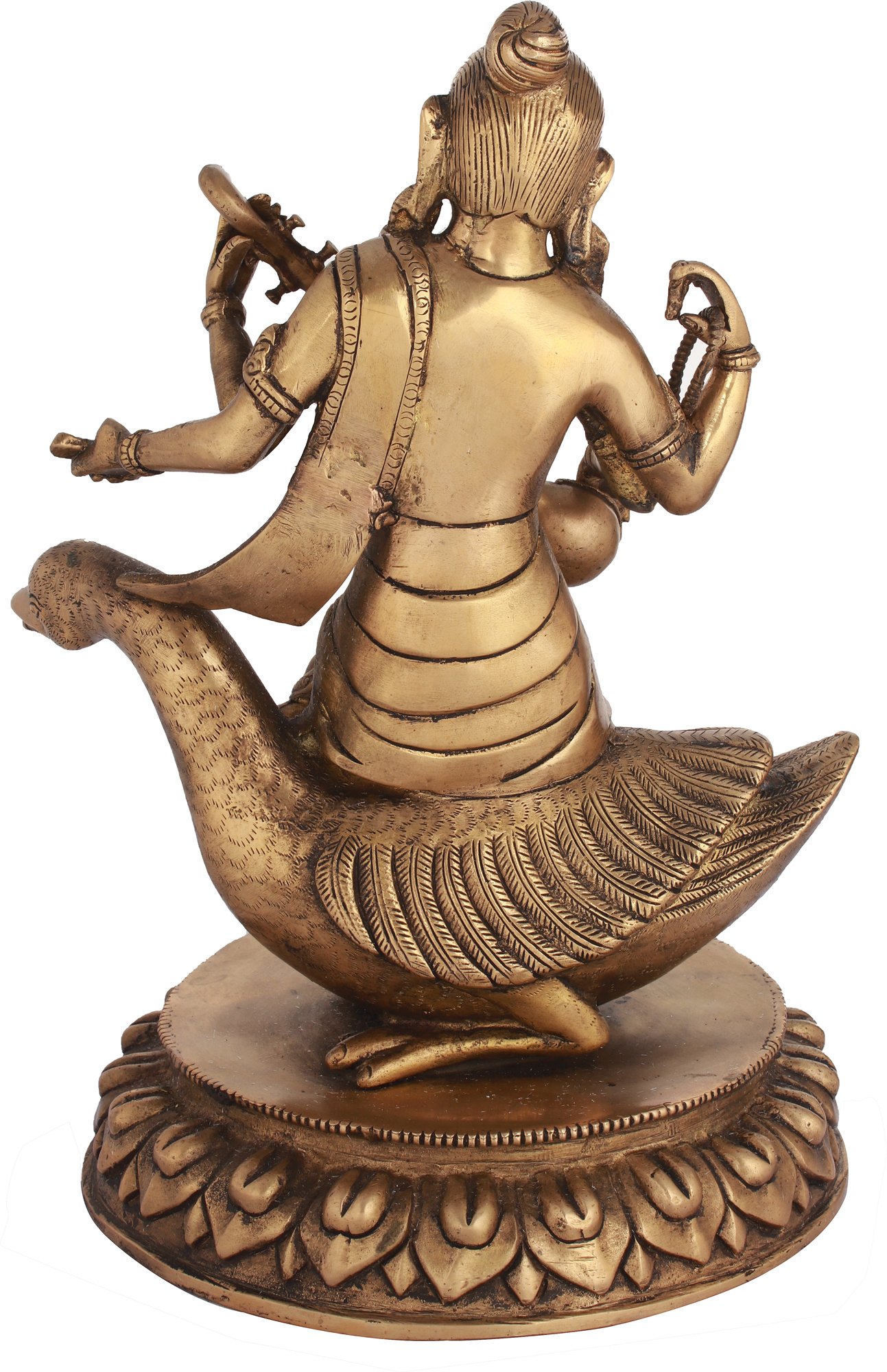
13" Goddess Saraswati Brass Sculpture | Handmade | Made in India


| Specifications |
 |
ZDX39 |
 |
Brass Statue |
 |
Height: 13.5 inch |
| Width: 9.7 inch | |
| Depth: 8.5 inch | |
 |
Weight 7.50 kg |
| Delivery and Return Policies |
 |
Ships in 1-3 days |
 |
Returns and Exchanges accepted within 7 days |
 |
Free Delivery |


Enhance your spiritual and
intellectual pursuits with this exquisite handmade
brass statue of Goddess Saraswati. In Hindu philosophy,
Saraswati is the embodiment of knowledge, art, and music. This beautifully
crafted piece captures the essence of her grace and wisdom, making it a perfect
addition to your study or creative space. Allow her presence to inspire your
quest for knowledge and creativity.
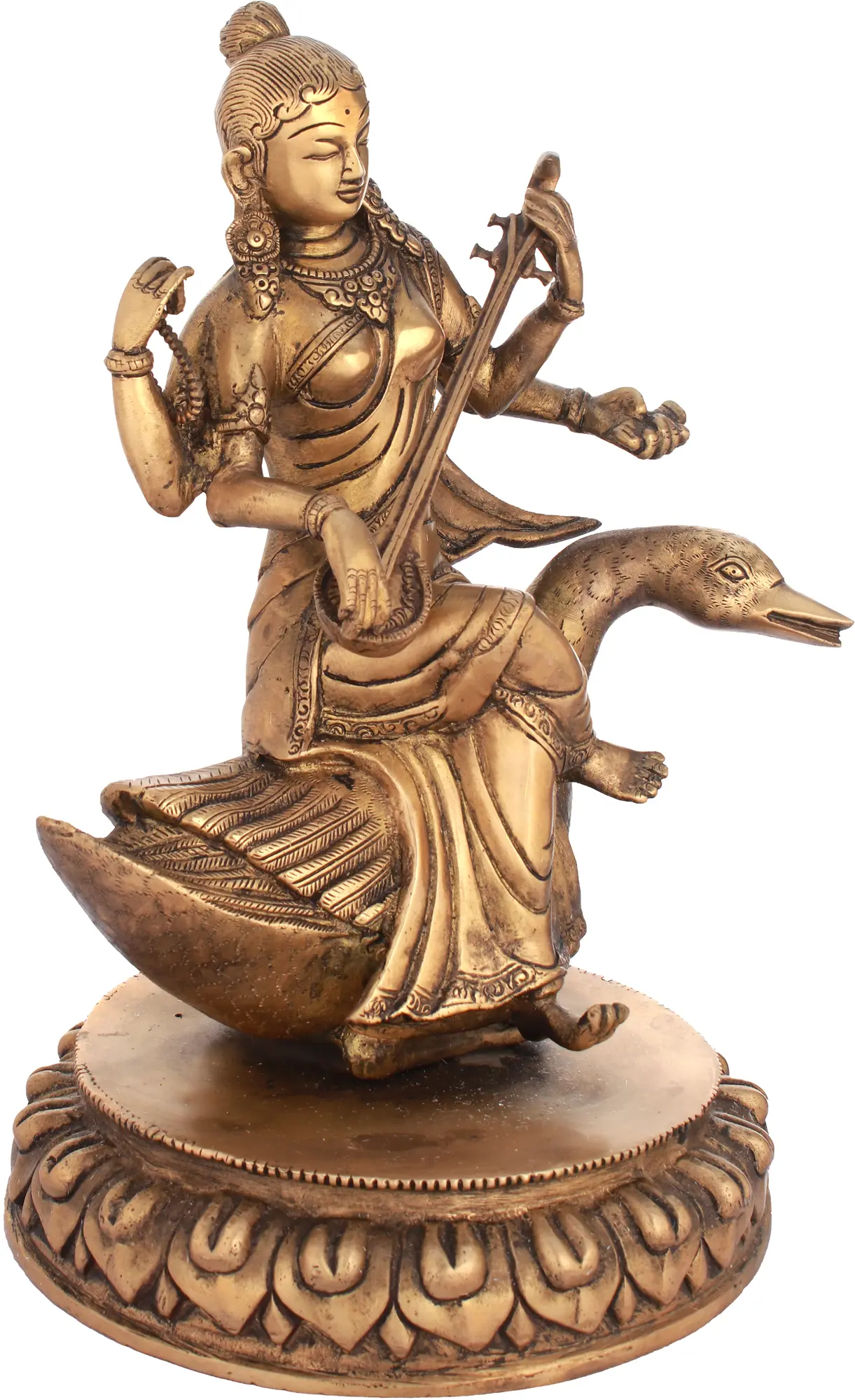
Embodying Wisdom, Art, and Harmony
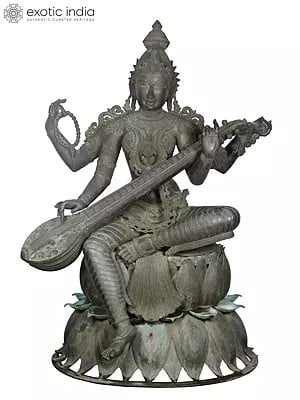
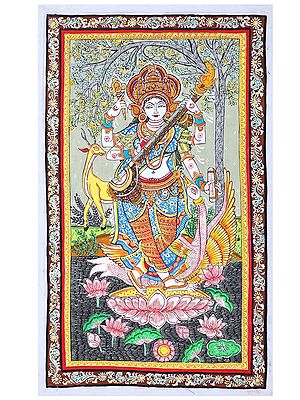
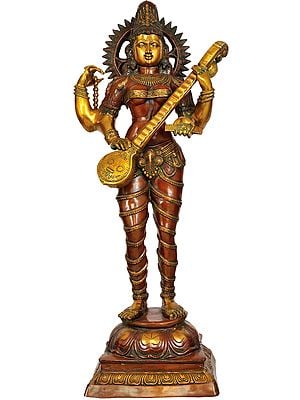
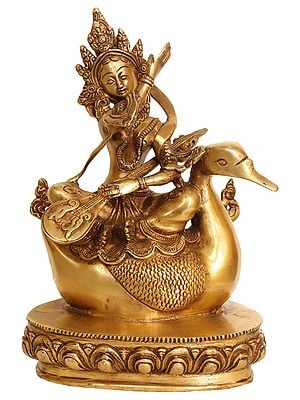
This exquisite brass sculpture captures the serene presence of Goddess Saraswati, the Hindu deity revered as the patroness of knowledge, music, arts, wisdom, and learning. Crafted with exceptional skill in India, this piece is a testament to traditional artistry, where each curve and detail is meticulously rendered by hand. The warm, lustrous patina of the brass lends an aura of timelessness, making this sculpture a captivating focal point for any space dedicated to creativity, contemplation, or spiritual enrichment. The goddess is depicted in her iconic form, seated gracefully upon her vahana, the hamsa or swan. The swan, known for its ability to distinguish between milk and water, symbolizes discernment, purity, and the ability to separate truth from illusion – qualities intimately connected with wisdom itself. Saraswati's posture is one of gentle repose, yet her presence radiates immense power and grace. Her multiple arms, a common iconography, suggest her omnipresence and multifaceted nature, each hand holding symbolic objects that further define her divine attributes. ––––––––––––––––––––A Symphony of Sacred Symbols
In one hand, she delicately holds a string of mala beads, representing spiritual knowledge and the cyclical nature of time. In another, she cradles the veena, the ancient stringed instrument, its form elegantly rendered, poised as if ready to release a celestial melody. The music of Saraswati is said to inspire creation, nurture artistic talent, and bring forth the subtlest truths. The veena itself is a powerful symbol of the harmonious vibrations of the universe. Her other hands are often depicted in the gesture of blessing or holding a book, signifying the divine wisdom and scriptures she bestows. This sculpture masterfully captures this iconography, inviting viewers to connect with the goddess’s profound essence. This representation of Saraswati is more than just a decorative item; it is an invitation to invoke her blessings for academic success, creative breakthroughs, and a deeper understanding of life's complexities. In ancient tales, Saraswati is often credited with gifting language, music, and the arts to humanity, paving the way for civilization and enlightenment. She is the muse of poets, the guide for scholars, and the inspiration for all who strive for intellectual and artistic excellence. ––––––––––––––––––––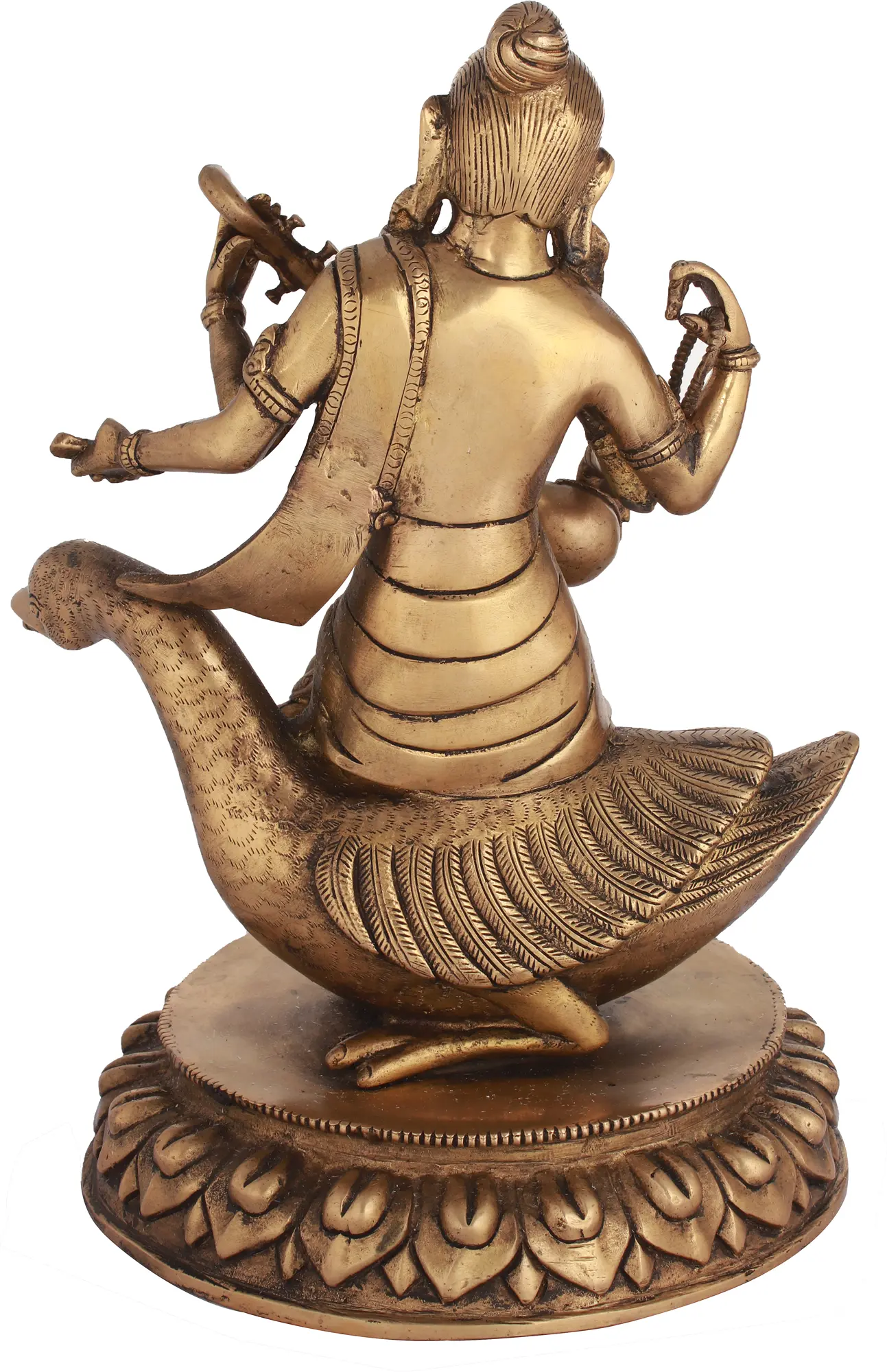
Artistry from the Heart of India
Each sculpture is the result of dedicated craftsmanship, passed down through generations. The artisans meticulously shape and polish the brass, imbuing the piece with a soul and character that mass-produced items can never replicate. The intricate details on her jewelry, the flowing fabric of her attire, and the serene expression on her face all speak to the devotion and skill poured into its creation. This piece is not merely an object but a conduit for divine energy and artistic expression, ready to grace your home, meditation space, or study with its luminous presence and profound symbolism. Its substantial form and detailed finish promise a lasting legacy of beauty and inspiration.Unveiling the Wisdom and Creativity of Saraswati: A Deeper Understanding
She is worshiped by many people across the globe in different forms. She is the Goddess of knowledge, art, music, speech, and learning. People in parts of India celebrate Saraswati Puja in the month of spring in which the elders of the family begin the day by taking the blessings of Mother Saraswati and then teach their children to read and write the letters of the alphabet.
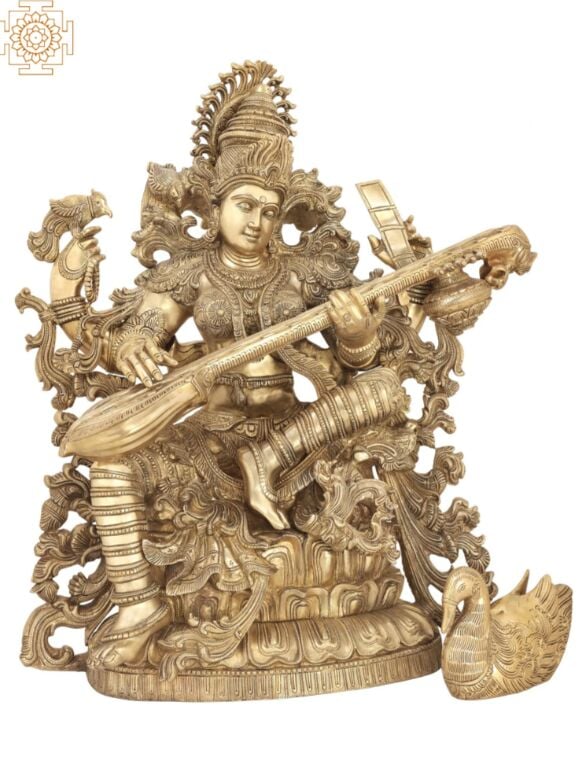
Can Saraswati idol be kept at home?
Goddess Saraswati is the manifestation or expansion of Goddess Lakshmi or Srimati Radharani, the eternal consort of the Supreme Lord. She is very merciful toward all living entities and blesses them with whatever material desires they have. But if one sincerely and genuinely approaches her and serves her to know about the Absolute Truth and the real aim of human life, she bestows all good fortune upon them and inspires them to walk the path toward the Supreme. Thus, if you want to please Mother Saraswati through your selfless service, you can keep her deity at home and worship her with faith and devotion.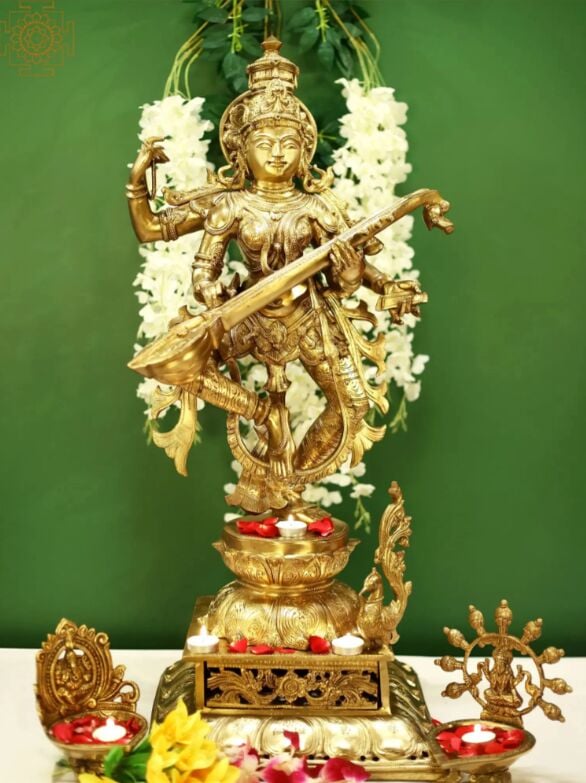
Where should we keep a Saraswati idol at home?
Knowing that Goddess Saraswati is worthy of our respectful obeisance at her lotus feet is important. If you have a deity of Mother Saraswati at home or are planning to buy one, the best place to keep it is the altar. She should be worshiped with the right attitude and mindset. However, if you want to keep the deity in your living room for spiritualizing the space, you should keep it on a clean surface.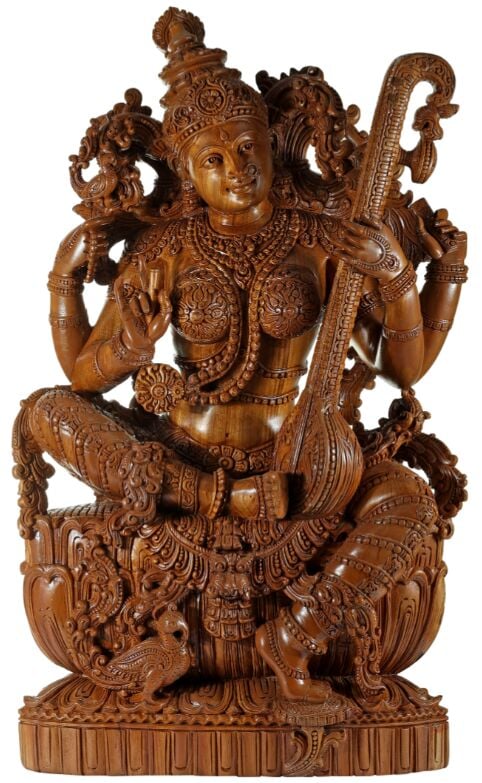
What is the benefit of keeping a Saraswati idol?
Keeping and worshiping the deity of Goddess Saraswati at your home will be highly beneficial for the whole family. As she is the bestower of knowledge, she can bless you with a good memory, intelligence, and artistic skills. If you worship her with full faith and surrender, she will guide you to the path of the Absolute Truth, the way back home, back to Godhead. This is the ultimate fruit of worshiping her.How to keep a Brass statue well-maintained?
Brass statues are known and appreciated for their exquisite beauty and luster. The brilliant bright gold appearance of Brass makes it appropriate for casting aesthetic statues and sculptures. Brass is a metal alloy composed mainly of copper and zinc. This chemical composition makes brass a highly durable and corrosion-resistant material. Due to these properties, Brass statues and sculptures can be kept both indoors as well as outdoors. They also last for many decades without losing all their natural shine.
Brass statues can withstand even harsh weather conditions very well due to their corrosion-resistance properties. However, maintaining the luster and natural beauty of brass statues is essential if you want to prolong their life and appearance.
- The best and simplest way to maintain a brass statue is to clean it at least twice a week using a soft cloth or cotton rag. This will prevent dust from accumulating on the surface. Dusting is especially important for outdoor statues since it is prone to dust accumulation much more than indoors.
- To give a natural shine and luster to the statue, you may apply coconut or olive oil using cotton on every portion. You can use a toothbrush to get to the small crevices but do not be too harsh. This will make the brass statue appear fresh and new with a polished look.
In case you have a colored brass statue, you may apply mustard oil using a soft brush or clean cloth on the brass portion while for the colored portion of the statue, you may use coconut oil with a cotton cloth.
Brass idols of Hindu Gods and Goddesses are especially known for their intricate and detailed work of art. Nepalese sculptures are famous for small brass idols portraying Buddhist deities. These sculptures are beautified with gold gilding and inlay of precious or semi-precious stones. Religious brass statues can be kept at home altars. You can keep a decorative brass statue in your garden or roof to embellish the area and fill it with divinity.
-
Q. Is the statue hollow or solid ?A. Brass statues are made through a process of clay casting, hence are hollow. Whereas, panchaloha bronze statues are made through a process of lost wax casting, hence they are solid.
-
Q. Can I return the statue ?A. Of course you can return a statue. Returns need to be initiated within seven (7) days after delivery. All returned items must be in new and unused condition, with all original tags and labels attached. To know more about our Return Policy, please visit Return Policy.
-
Q. Can you customise the statue for me ?A. For any customisation, kindly email us at help@exoticindia.com.