The mighty and powerful goddess
Saraswati is identified with a river that blesses the earth written
precisely in the Rigveda.
She is known to bless her devotees with fertility, wealth, children, and
nourishment. Saraswati inspires one to learn and educate with every potential
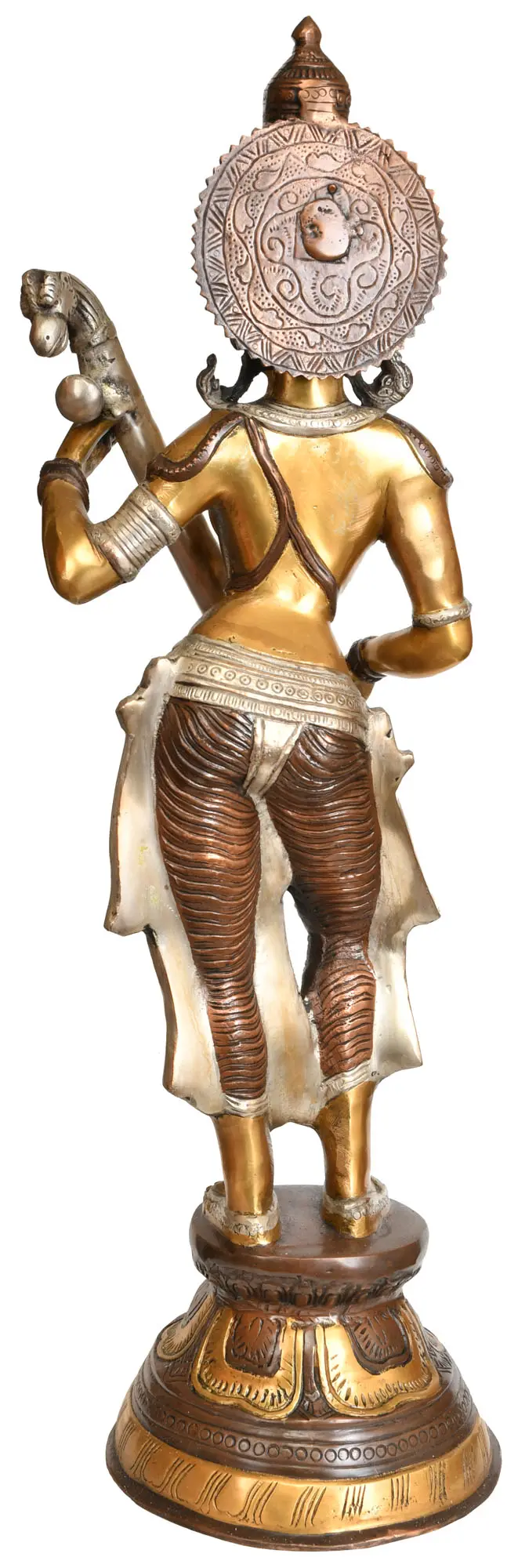
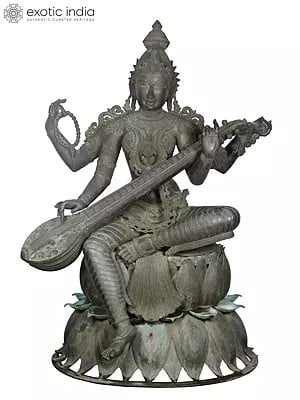
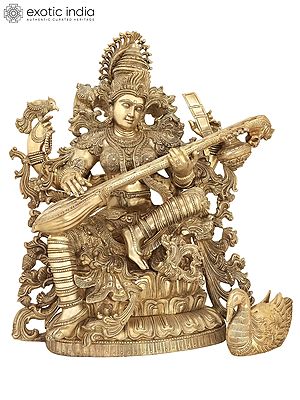
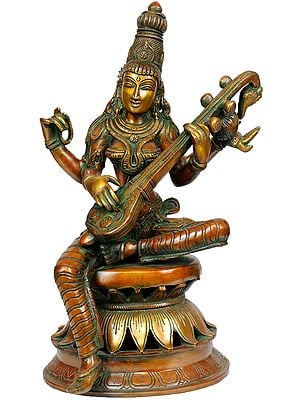
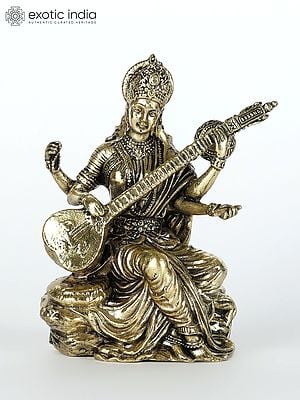
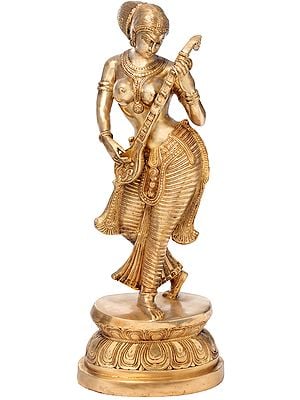
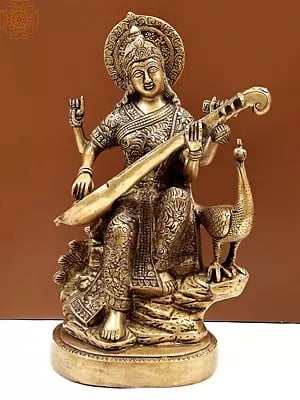
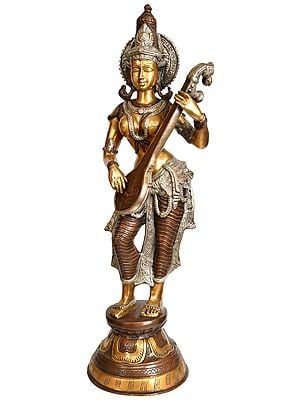
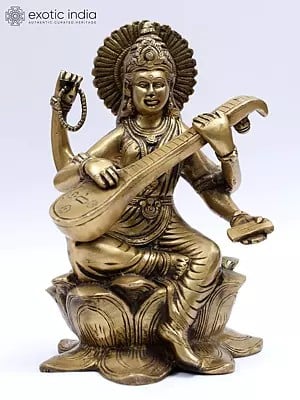
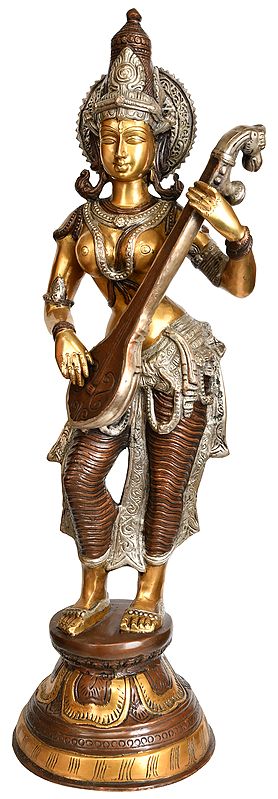
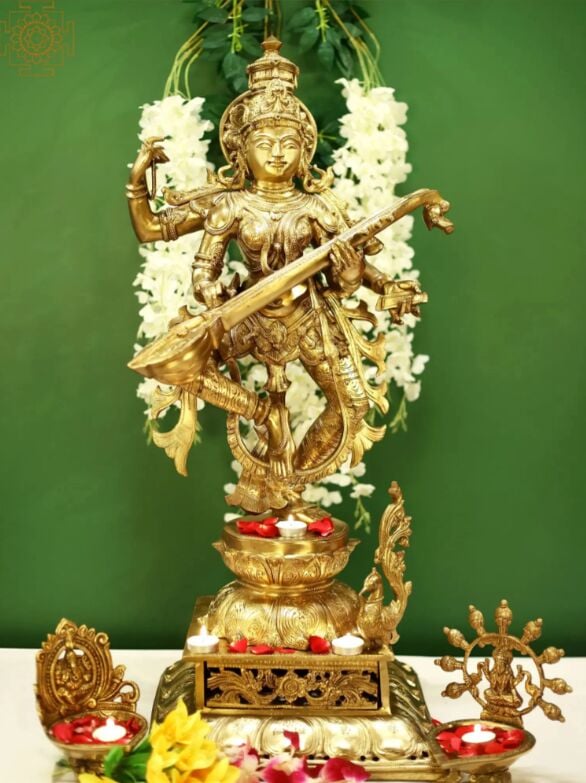
information in the universe. This Handmade, Brass statue of
Heaven-sent Goddess Saraswati stands exquisitely with a veena in her hand on a
Lotus Pedestal. The Veena in Saraswati’s hand represents the Arts and learning,
also popularly known as, The Divine Instrument. Bringing the Brass Statue of
Goddess Saraswati home can elevate plenty of Knowledge, creativity, and music
in life.
Goddess Saraswati: Embodiment of Knowledge and Harmony
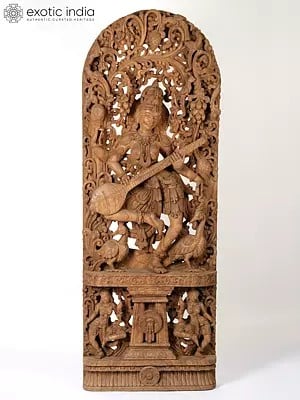
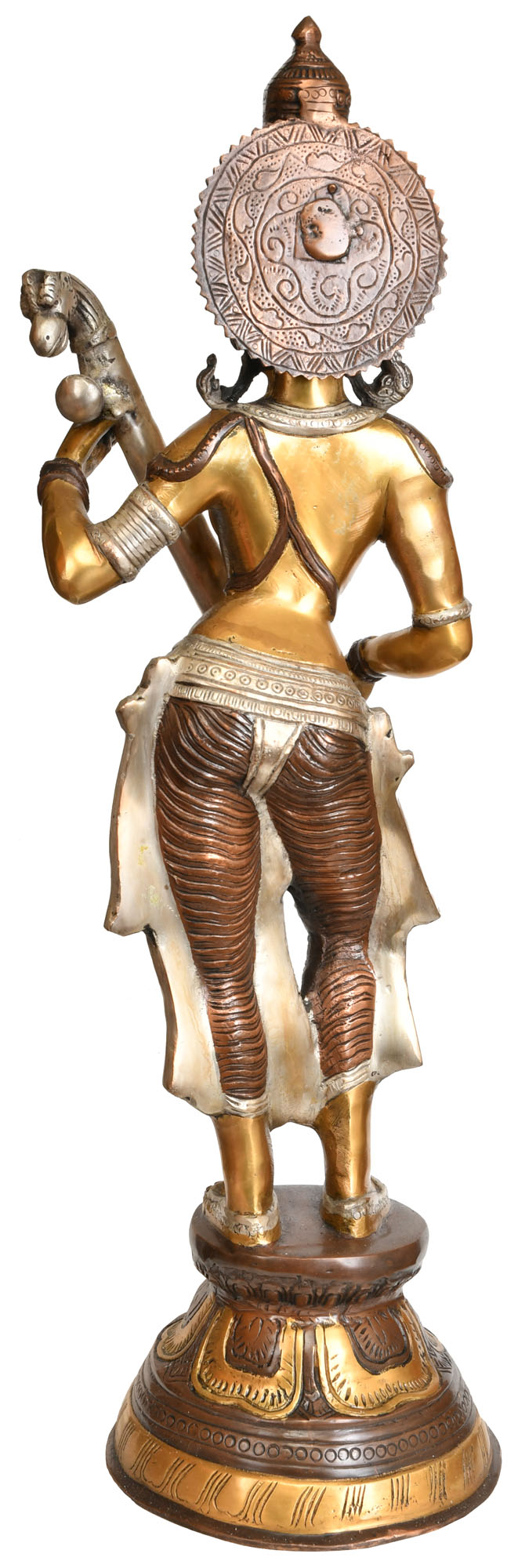
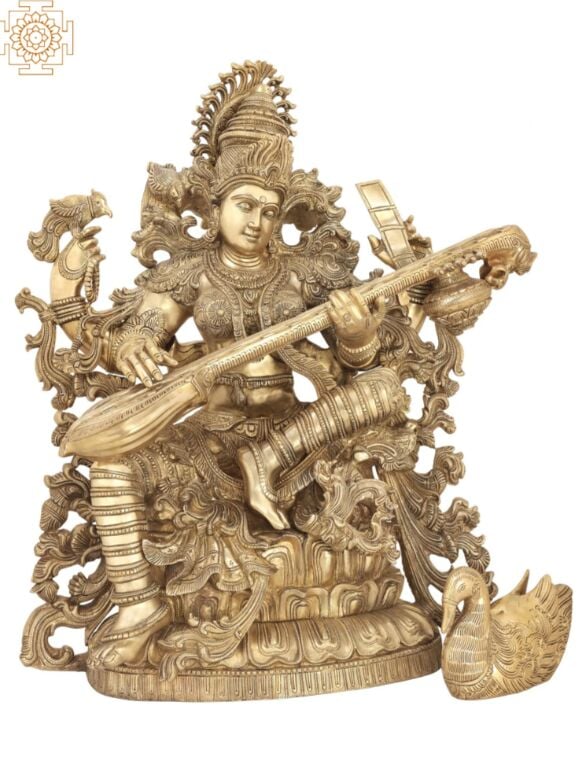
This exquisite brass statue captures the divine essence of Goddess Saraswati, the Hindu deity of knowledge, music, arts, wisdom, and learning. Standing tall and gracefully poised, she is depicted in her iconic form, holding the veena, a stringed musical instrument, and seemingly in the midst of a melodic performance. The intricate craftsmanship of this handmade masterpiece, originating from India, brings forth the profound symbolism associated with this revered goddess.
Saraswati is often visualized as the celestial muse, the source of all creative expression. The veena in her hands is not merely an instrument but a representation of the cosmic sound, Nada Brahma, the fundamental vibration from which the universe originated. It signifies the harmonious interplay of knowledge, art, and music that enriches human life. The goddess's serene countenance and closed eyes suggest deep concentration and a profound connection to the divine melodies that inspire creation and understanding.A Vision of Divine Grace and Artistic Inspiration
The detailed rendering of Saraswati's form is a testament to the skill of the artisans who crafted this piece. Her ornate headdress, a symbol of royalty and divine power, frames a face of serene beauty. The flowing garments are intricately carved, with delicate patterns that suggest the ethereal nature of her presence. The brass medium itself, with its warm, lustrous glow, adds a sacred aura to the statue, making it a captivating centerpiece for any devotional space, study, or art collection.
In Hindu mythology, Saraswati is also associated with the river of the same name, symbolizing the flow of knowledge and wisdom. She is worshipped by students, artists, musicians, and scholars alike, seeking her blessings for clarity of thought, eloquence, and artistic prowess. It is believed that on the day of Vasant Panchami, dedicated to her worship, the goddess bestows her gifts upon her devotees, awakening their intellect and creative spirit. This statue serves as a constant reminder of these blessings, an embodiment of the pursuit of higher learning and aesthetic refinement.Crafted with Devotion, Rooted in Tradition
This statue is a product of India's rich artistic heritage, where the creation of religious iconography is a sacred practice passed down through generations. Each detail, from the delicate fingers poised on the veena strings to the subtle curves of her form, is meticulously rendered by hand, imbuing the piece with a unique soul. The use of brass, a material deeply revered in Indian culture for its durability and sacred associations, ensures that this representation of the Goddess of Wisdom will endure for years to come, serving as a source of inspiration and spiritual connection for all who behold it. It is more than just a decorative item; it is a conduit to the divine, a celebration of knowledge, and a tribute to the enduring power of art and music.
Unveiling the Wisdom and Creativity of Saraswati: A Deeper
Understanding
Mother Saraswati is one of the three principal Goddesses in
Hinduism who are known as “Tridevi”; the other two being Lakshmi
and Parvati. In the Vedic scriptures, she is mentioned as the
consort of Lord Brahma, the creator of the material world, and
thus assists him in his activities. She is often depicted as
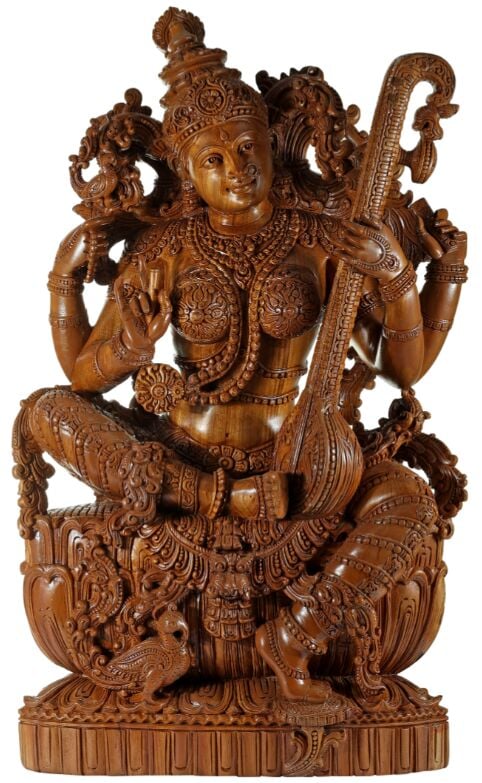
having a beautiful youthful body with four arms holding a book
(represents the Vedas), a rosary (signifying the importance of
chanting the holy names of the Supreme Lord Vishnu), a water
pot, and a musical instrument called Veena. She sits on a white
swan that symbolizes the capacity to discriminate between good
and evil.
She is worshiped by many people across the globe in different
forms. She is the Goddess of knowledge, art, music, speech, and
learning. People in parts of India celebrate Saraswati Puja in
the month of spring in which the elders of the family begin the
day by taking the blessings of Mother Saraswati and then teach
their children to read and write the letters of the alphabet.
Can Saraswati idol be kept at home?
Goddess Saraswati is the manifestation or expansion of Goddess
Lakshmi or Srimati Radharani, the eternal consort of the Supreme
Lord. She is very merciful toward all living entities and
blesses them with whatever material desires they have. But if
one sincerely and genuinely approaches her and serves her to
know about the Absolute Truth and the real aim of human life,
she bestows all good fortune upon them and inspires them to walk
the path toward the Supreme. Thus, if you want to please Mother
Saraswati through your selfless service, you can keep her deity
at home and worship her with faith and devotion.
Where should we keep a Saraswati idol at home?
Knowing that Goddess Saraswati is worthy of our respectful
obeisance at her lotus feet is important. If you have a deity of
Mother Saraswati at home or are planning to buy one, the best
place to keep it is the altar. She should be worshiped with the
right attitude and mindset. However, if you want to keep the
deity in your living room for spiritualizing the space, you
should keep it on a clean surface.
What is the benefit of keeping a Saraswati idol?
Keeping and worshiping the deity of Goddess Saraswati at your
home will be highly beneficial for the whole family. As she is
the bestower of knowledge, she can bless you with a good memory,
intelligence, and artistic skills. If you worship her with full
faith and surrender, she will guide you to the path of the
Absolute Truth, the way back home, back to Godhead. This is the
ultimate fruit of worshiping her.
How to keep a Brass statue well-maintained?
Brass statues are known and appreciated for their exquisite beauty and luster. The brilliant bright gold appearance of Brass makes it appropriate for casting aesthetic statues and sculptures. Brass is a metal alloy composed mainly of copper and zinc. This chemical composition makes brass a highly durable and corrosion-resistant material. Due to these properties, Brass statues and sculptures can be kept both indoors as well as outdoors. They also last for many decades without losing all their natural shine.
Brass statues can withstand even harsh weather conditions very well due to their corrosion-resistance properties. However, maintaining the luster and natural beauty of brass statues is essential if you want to prolong their life and appearance.
- The best and simplest way to maintain a brass statue is to clean it at least twice a week using a soft cloth or cotton rag. This will prevent dust from accumulating on the surface. Dusting is especially important for outdoor statues since it is prone to dust accumulation much more than indoors.
- To give a natural shine and luster to the statue, you may apply coconut or olive oil using cotton on every portion. You can use a toothbrush to get to the small crevices but do not be too harsh. This will make the brass statue appear fresh and new with a polished look.
In case you have a colored brass statue, you may apply mustard oil using a soft brush or clean cloth on the brass portion while for the colored portion of the statue, you may use coconut oil with a cotton cloth.
Brass idols of Hindu Gods and Goddesses are especially known for their intricate and detailed work of art. Nepalese sculptures are famous for small brass idols portraying Buddhist deities. These sculptures are beautified with gold gilding and inlay of precious or semi-precious stones. Religious brass statues can be kept at home altars. You can keep a decorative brass statue in your garden or roof to embellish the area and fill it with divinity.