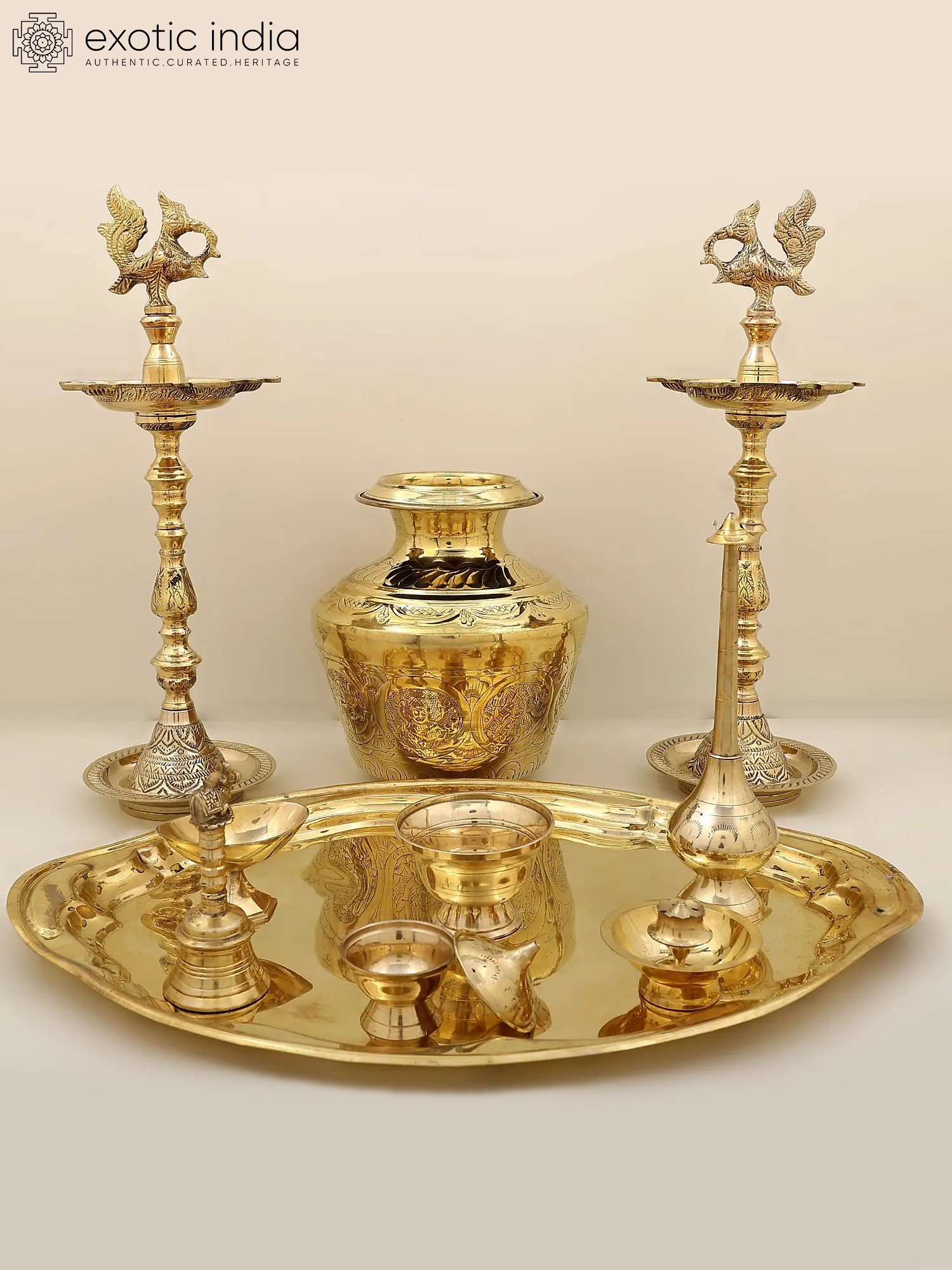
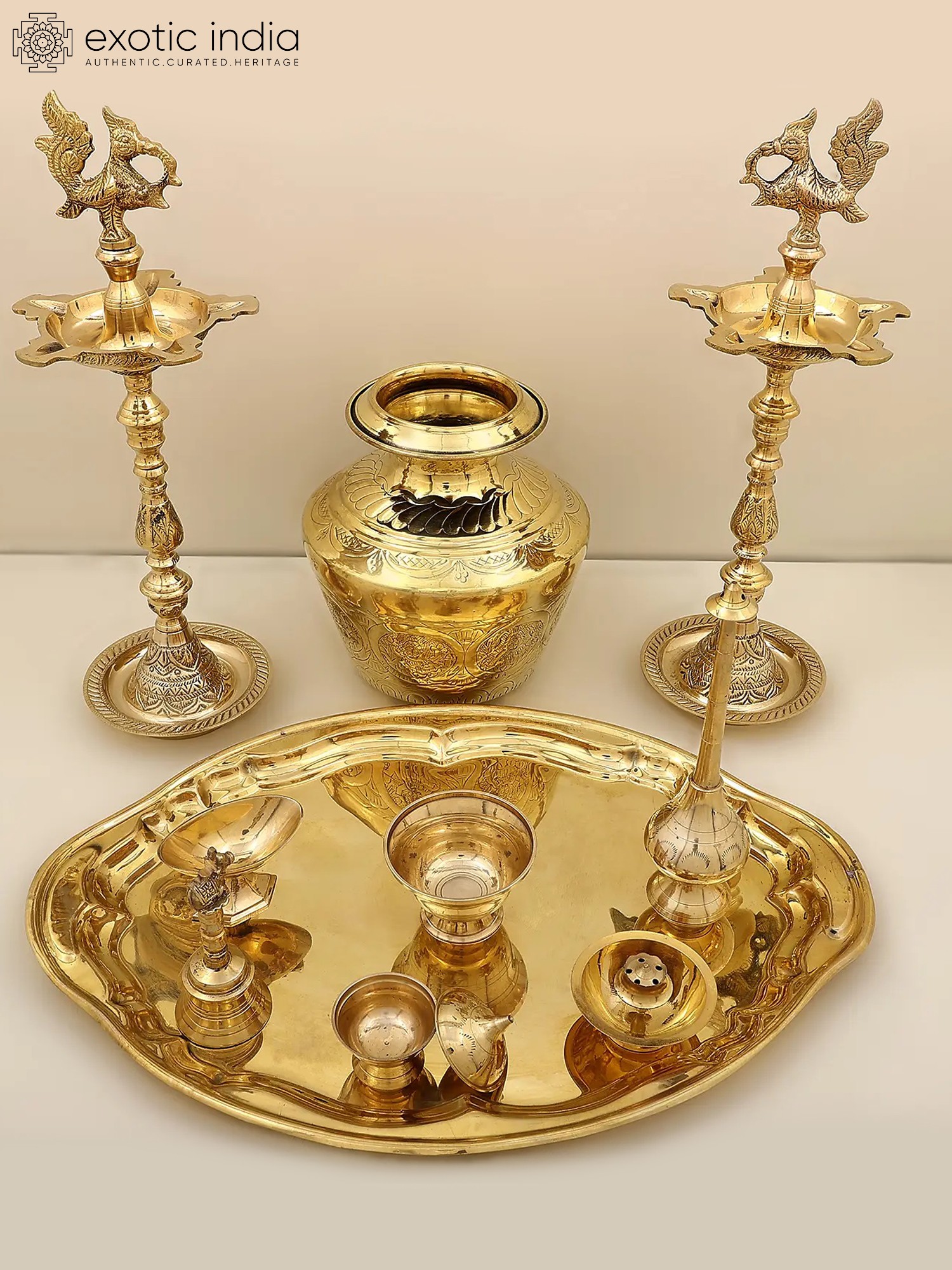
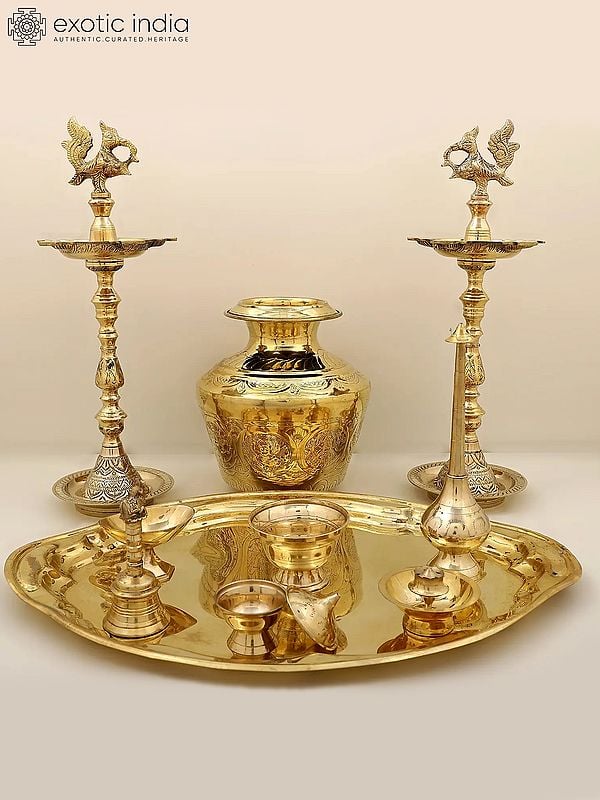
Nirai Kudam is a
collection of ritual things that must be put on the entrance of a ceremonial
dwelling. This entire set is made of brass. Every object serves a purpose and
is meticulously arranged following its ceremonial function. A banana leaf is
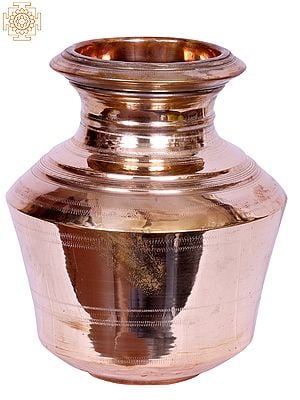
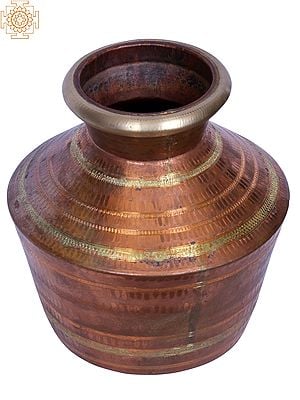
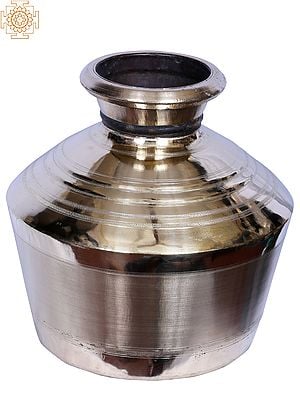
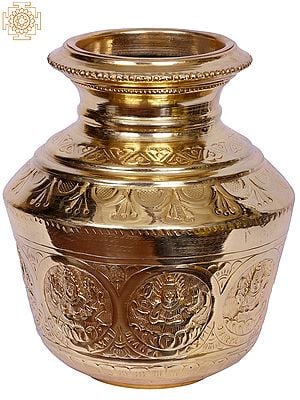
put first, followed by paddy or raw rice. The Ashtalakshmi Kalash is put in the
center, with the pitcher's mouth covered in mango leaves and a coconut atop.
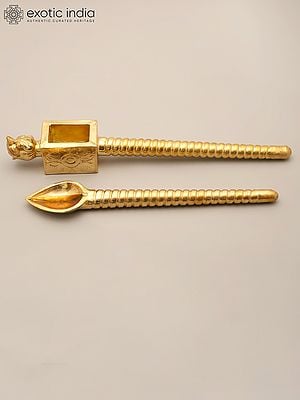
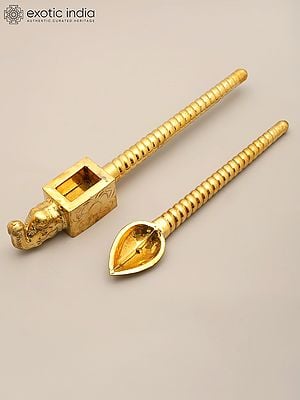
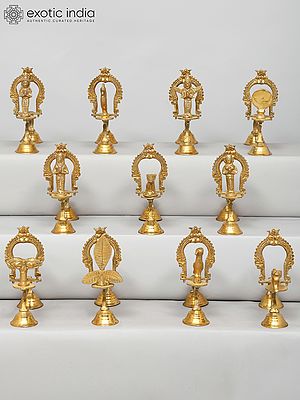
Two Kuthu Vilakkus with a peacock design are put and lighted on either side of
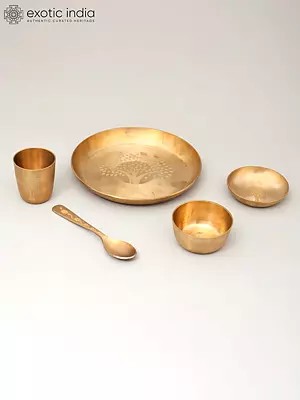
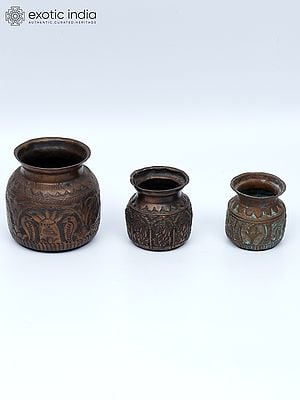
the Kalash. The tray with the Kumkum, Vibhooti, and Prasadam containers is put
in front of the entire arrangement.
The incense stand is
filled with lighted incense sticks. Finally, the Gulab dan Rose water dispenser
is installed. Some bananas are placed on a betel leaf in the front to complete
the arrangement. This arrangement is thought to invite the blessings
of Goddess Lakshmi and provide wealth to a home.
An Emblem of Auspicious Beginnings: The Brass Nirai Kudam Set
This exquisite Brass Nirai Kudam Set is a testament to the rich cultural heritage and devotional practices prevalent in India. More than just a collection of ritualistic items, it embodies the spirit of auspicious beginnings and the welcoming of prosperity into the home. The term "Nirai Kudam" itself signifies a pot filled to the brim, a symbol deeply rooted in Hindu traditions, representing abundance, fertility, and good fortune. It is an integral part of numerous ceremonies, from housewarmings and weddings to religious festivals and daily puja.Symbolism and Sacred Significance
The act of filling a pot, or "kudam," with water, rice, or other auspicious materials, and often adorned with a coconut and mango leaves, is believed to invoke the blessings of the divine. The Nirai Kudam is often placed at the entrance of a home or temple to ward off negativity and invite positive energies. The presence of lamps within this set further enhances its sacred aura. The diyas, with their flickering flames, represent knowledge overcoming ignorance, light dispelling darkness, and the inner spark of divinity within every being. In mythology, the lamp is often associated with Goddess Lakshmi, the bestower of wealth and prosperity, and with Goddess Saraswati, the embodiment of knowledge and wisdom.Artistry and Craftsmanship
Crafted from high-quality brass, this set radiates a warm, golden luster that speaks of enduring beauty and spiritual sanctity. The metal itself holds significance, believed to possess purifying properties and to be a conduit for divine energies. The intricate detailing on each piece showcases the skill and dedication of the artisans. From the majestic peacock motifs adorning the lamps, often seen as symbols of beauty, royalty, and immortality, to the finely etched patterns on the vase and the accompanying puja items, every element is a work of art. The smooth finish and robust construction ensure that this set will be a cherished part of your spiritual practice for generations to come.A Complete Ensemble for Devotion
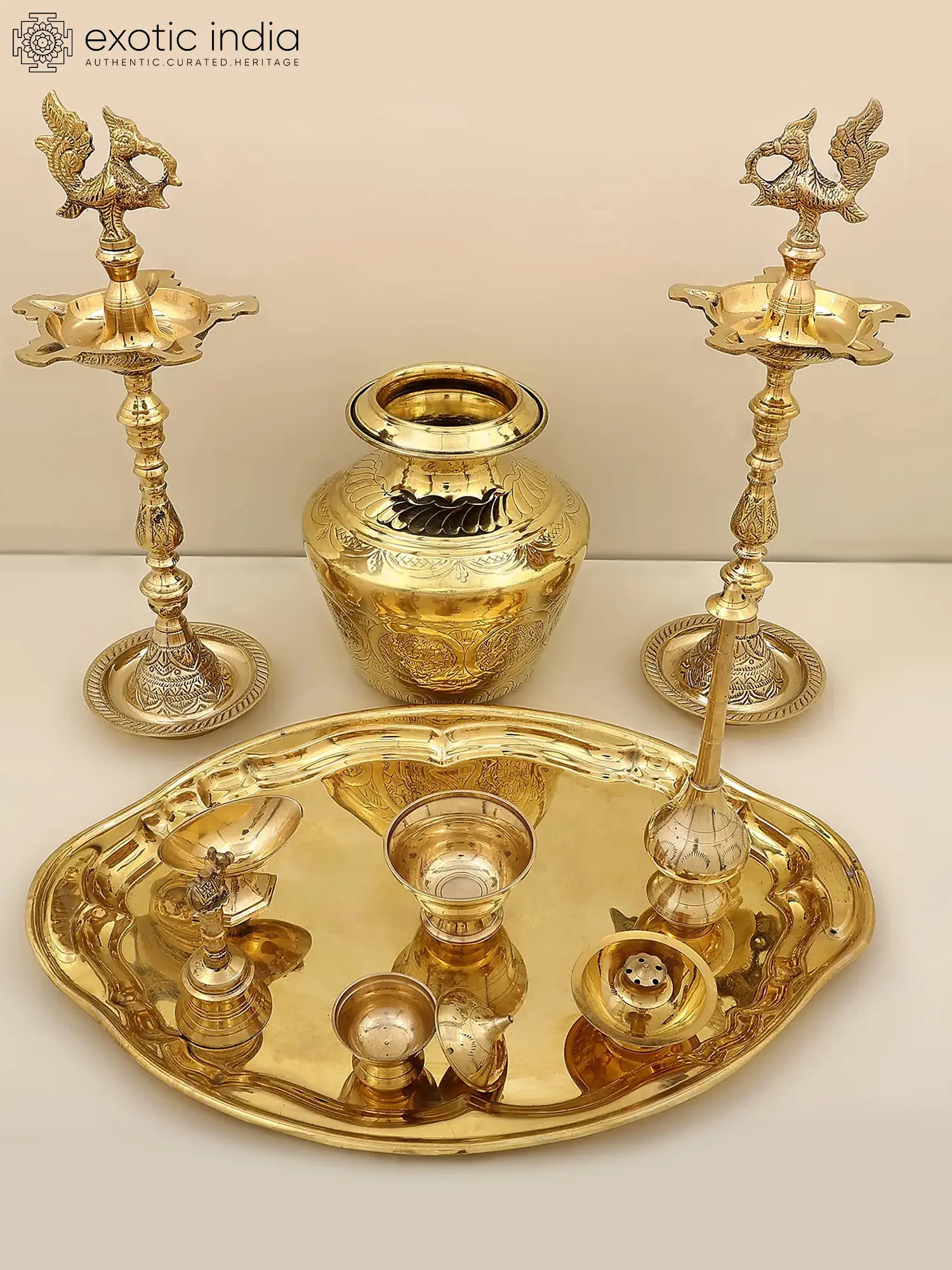
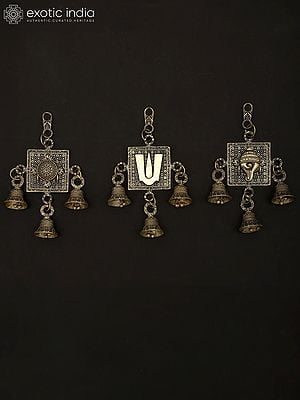
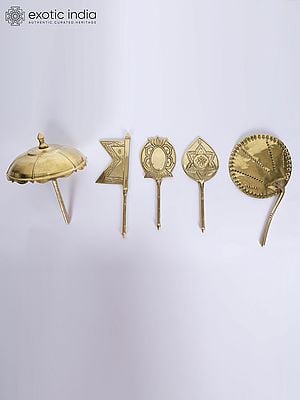
This comprehensive set includes all the essential elements for a fulfilling puja or ritual. The prominent Nirai Kudam, a symbol of fullness and divine blessings, stands as the centerpiece. Flanking it are two elegantly designed Deepa Stambham (lamp stands), each crowned with a magnificent diya, ready to illuminate your prayers. The accompanying tray, intricately shaped, holds smaller ritualistic vessels, perfect for holding offerings, incense, or sacred water. The presence of a small bell, often used to announce the commencement of prayers and to awaken deities, adds another layer of devotional completeness. This ensemble is not merely decorative; it is a functional and spiritually charged collection designed to elevate your devotional experience.The Power of Light: Understanding the Role of Oil Lamps in
Hinduism
Hinduism is a boon to human society for it guides everyone to
follow their Dharma and rise above the material concept of life.
Hinduism is also known as “Sanatan Dharma”. These are Sanskrit
terms in which Sanatan means “eternal” and Dharma means “Intrinsic
nature or occupation”. Thus it deals with the intrinsic nature or
the real identity of the living entities; that which can never be
taken away from them. The principles of Hinduism are given in the
Vedic literature or scriptures that are considered “Apaurusheya”;
they have not been written by any ordinary person but have been
compiled by Vyasadev, the literary incarnation of the Supreme Lord
Krishna. The word “Veda” means complete knowledge, both material
and spiritual. The knowledge in Vedic literature is so vast and
precise that if one looks carefully, he will notice that nothing
is sentimental or imaginary but is based on facts and truth. There
is a clear description and information about the identity of all
living beings, the nature of the Absolute Truth, the reason for
the existence of this world, the information about the world
beyond this universe, and the relationship between us and God, the
Absolute Truth.
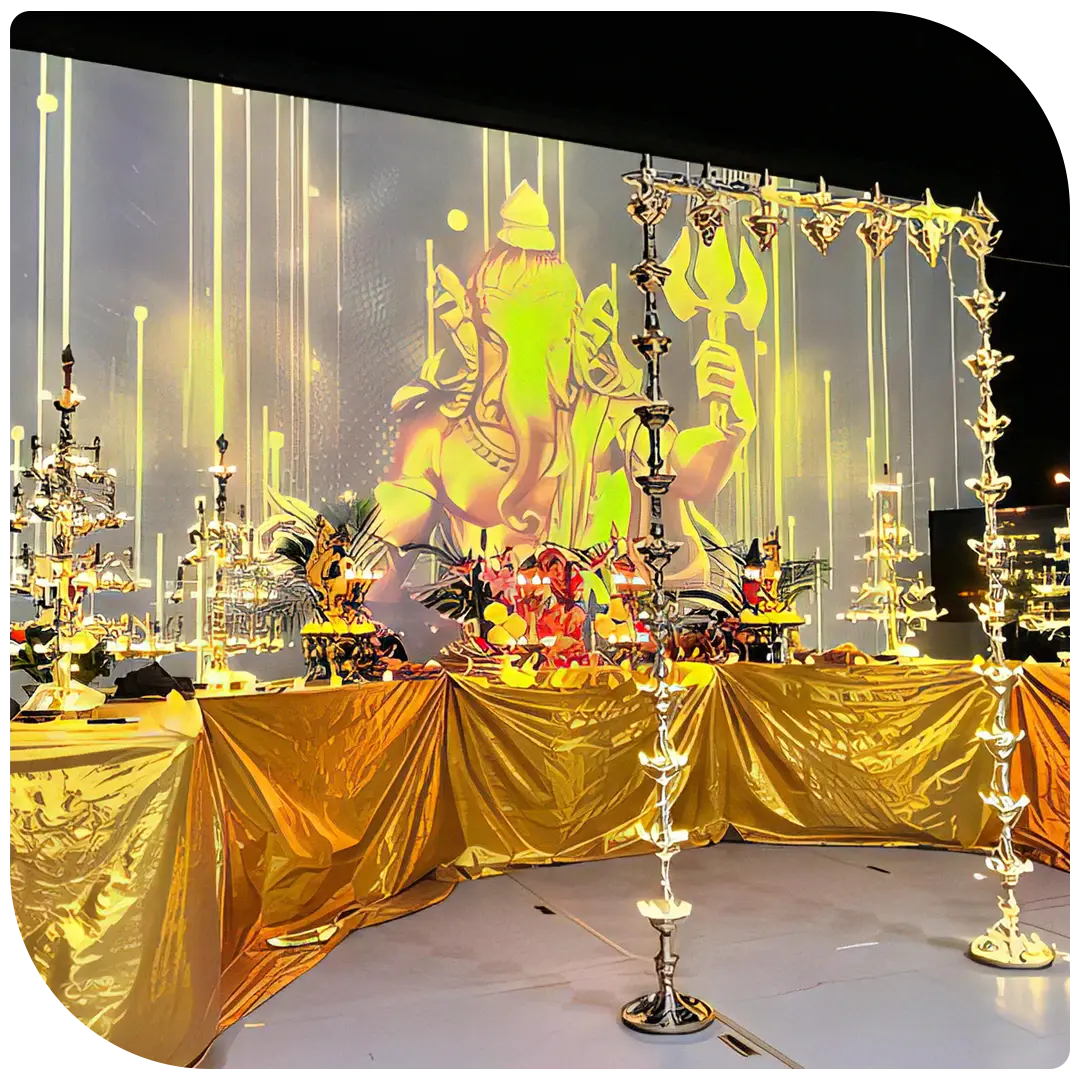
Why do we light a lamp?
There are many rituals recommended in the Vedas for engaging our
body and mind in the service of God. One of them is the lighting
of ghee or oil lamps before the deity. According to the Vedic
injunctions, all auspicious functions begin with lighting a
lamp. It has a great spiritual significance. It is believed that
the light of the lamp symbolizes “knowledge”, the wick
symbolizes the false ego of the living entity, and ghee
(clarified butter) or oil symbolizes all the negative tendencies
(Anarthas) accumulated in the heart such as greed, lust, anger,
and envy. When the lamp is lit by spiritual knowledge, all the
Anarthas are exhausted, and the false ego, which is the root
cause of conditional life, is also burnt. Therefore, the lamp is
lit before the Lord as a sacrifice of our false ego in His
service. Just as the light of the lamp dissipates all darkness,
similarly, the light of knowledge dissipates ignorance of the
Jivas and enables us to realize our real identity and purpose of
life.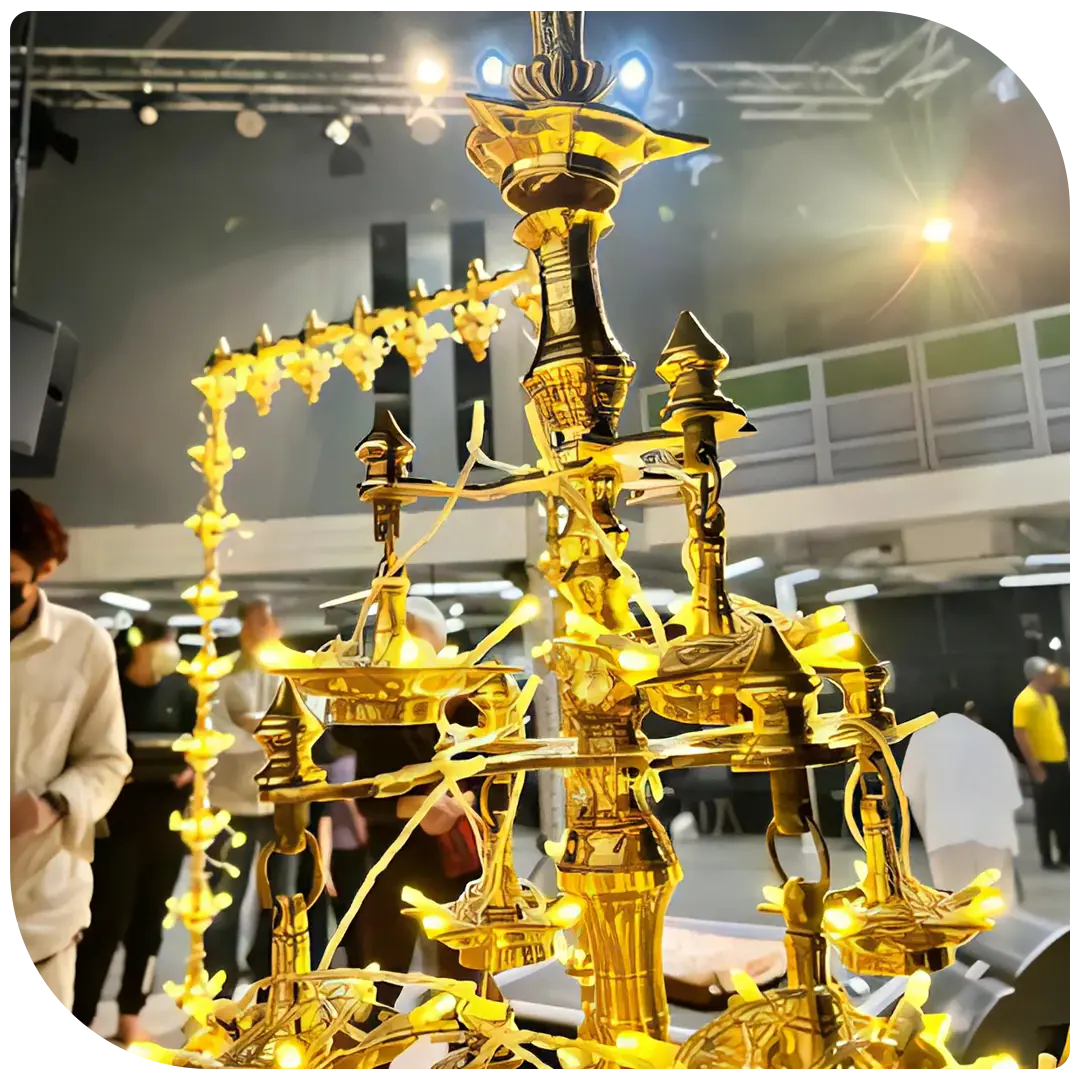
Why only an oil or ghee lamp?
One may question why only an oil lamp is lit before the Lord and
why not an artificial light source. This may sound logical but
lighting a lamp has a further spiritual significance. The flame
of the light in a lamp always burns upwards indicating that by
cultivating spiritual knowledge, one achieves the highest
perfection of life and is always victorious. Also, a traditional
lamp is the purest form of offering.
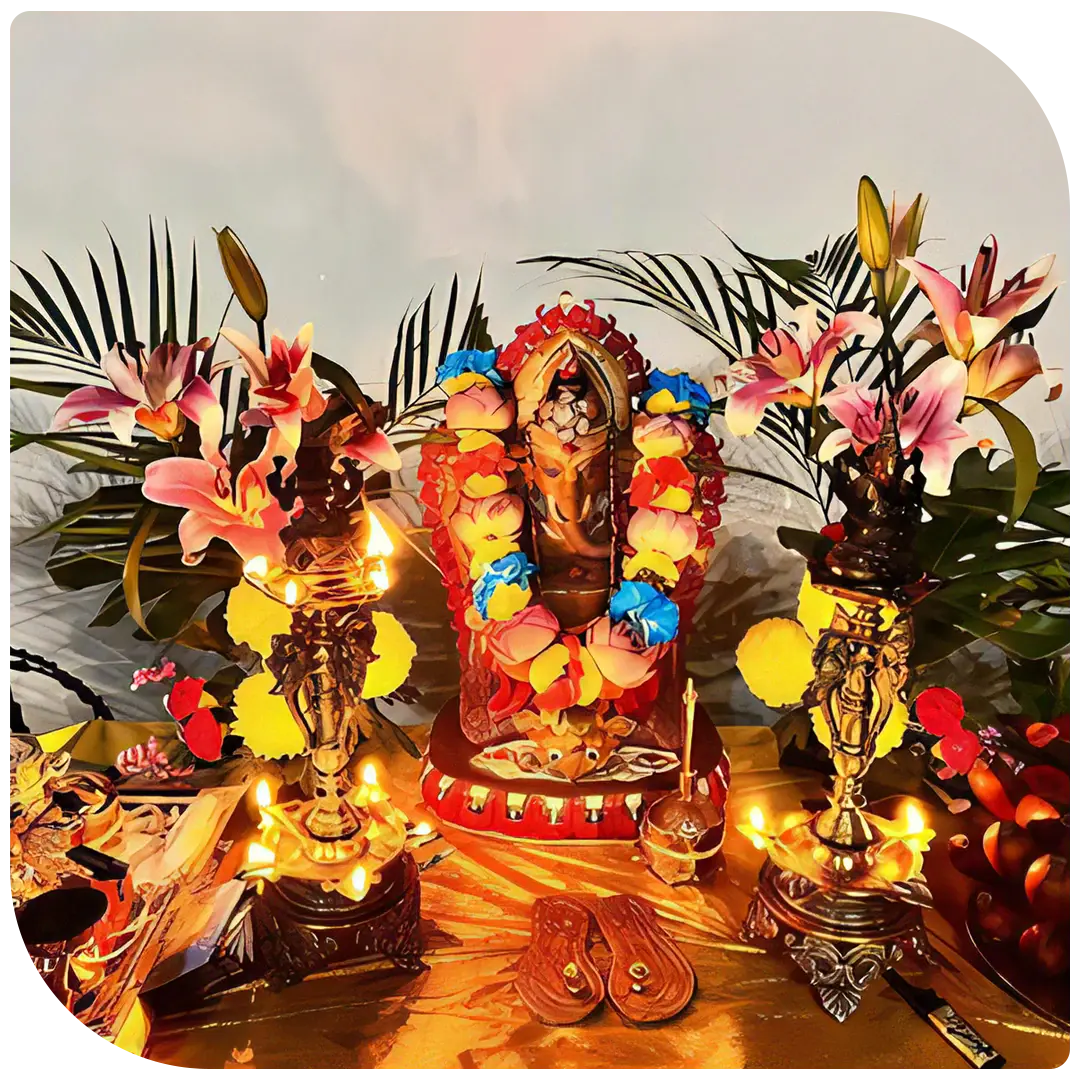
In almost every house of a follower of Sanatan Dharma, an oil or
ghee lamp is lit before the altar of the Lord or before the Tulsi
plant. Some people light it at dawn, some at dusk, and some people
prefer to light it at dawn and dusk. Either ghee or sesame oil can
be used to burn the wick. Vaishnavas (devotees of Lord Vishnu or
Krishna) especially light a ghee lamp every day in the month of
Kartik to offer their love and devotion to the Lord.