
| Specifications |
 |
EF88 |
 |
South Indian Temple Wood Carving |
 |
Height: 5 ft |
| Width: 1.2 ft | |
| Depth: 0.3 ft | |
 |
Weight 21.30 kg |
| Delivery and Return Policies |
 |
Usually ships in 40 days |
 |
Returns and Exchanges accepted within 7 days |
 |
Free Delivery |


Some scholars speculate that the idea of a fluting Krishna derives from that of the lonely shepherd who plays his bamboo flute (venu) while tending his flock. While other cowherders of Braj hold a shepherd's staff, Krishna's staff is also his flute. He, however, does not play upon it to please the cows, but to charm the gopis or the cowherdesses. Metaphorically, he is, of course, the supreme being, the great soul (param-atma), into which the individual soul (atma) represented by the gopis, will merge, drawn by the enchanting music of his flute. He is thus the great ocean into which all rivers must eventually lose their identities.
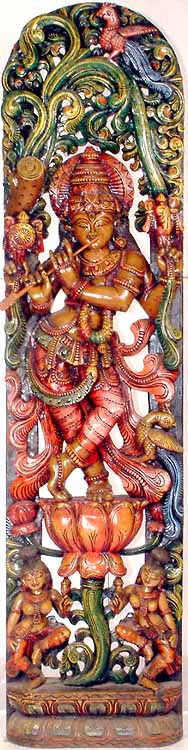
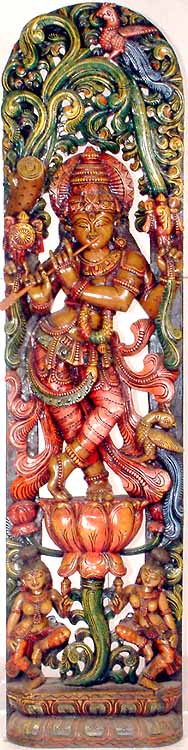
In this wood sculpture from a temple workshop in the Salem district of Tamil Nadu, the god is shown standing in his characteristic pose on a central lotus, with his right hip thrust out. He has four arms. While the two principal ones hold the flute to his lips, coaxing divine melodies out of it, the upper arms support a wheel (chakra) on the right and the sacred conch on the left. These are of course the classic attributes of Lord Vishnu and hence this image makes Krishna's identification with Vishnu unambiguous.
Beneath the central larger figure of Krishna are carved out two smaller females, representing his two wives - Rukmani and Satyabhama, both of whom dance to his tune. The contrast between the figure of Krishna and his two consorts identifies him as a person of cosmic proportions. The highly decorated tree, cut through to create a bejewelled lacy design, and whose intertwined leafy and flowering branches form a canopy above his head, further expresses his cosmic nature.
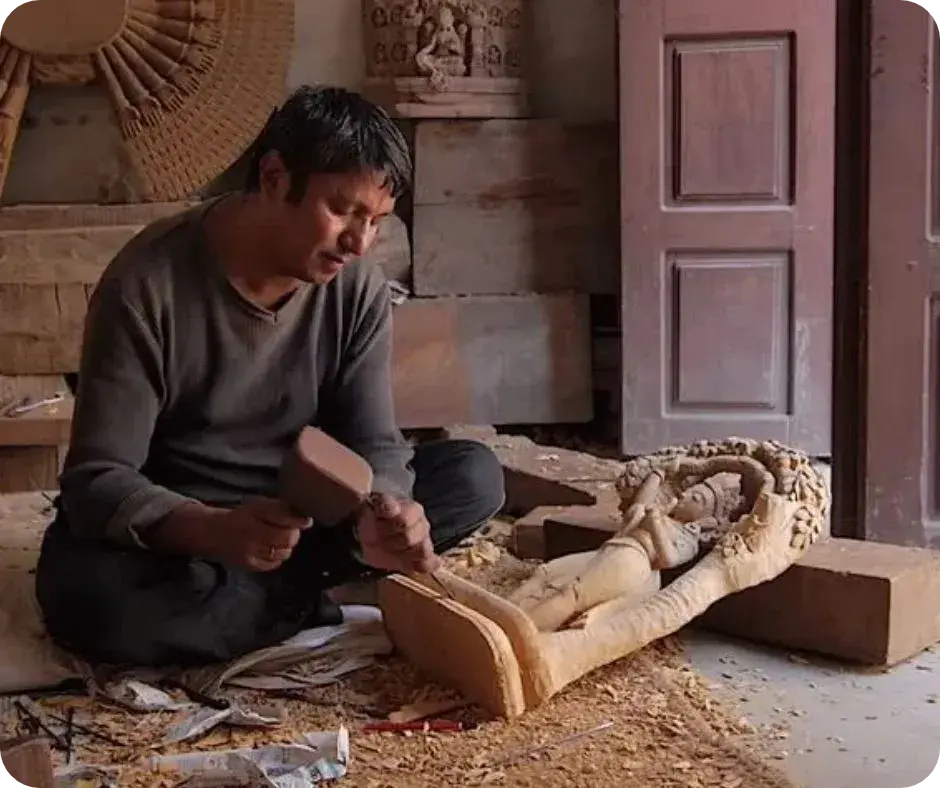
How to care for Wood Statues?
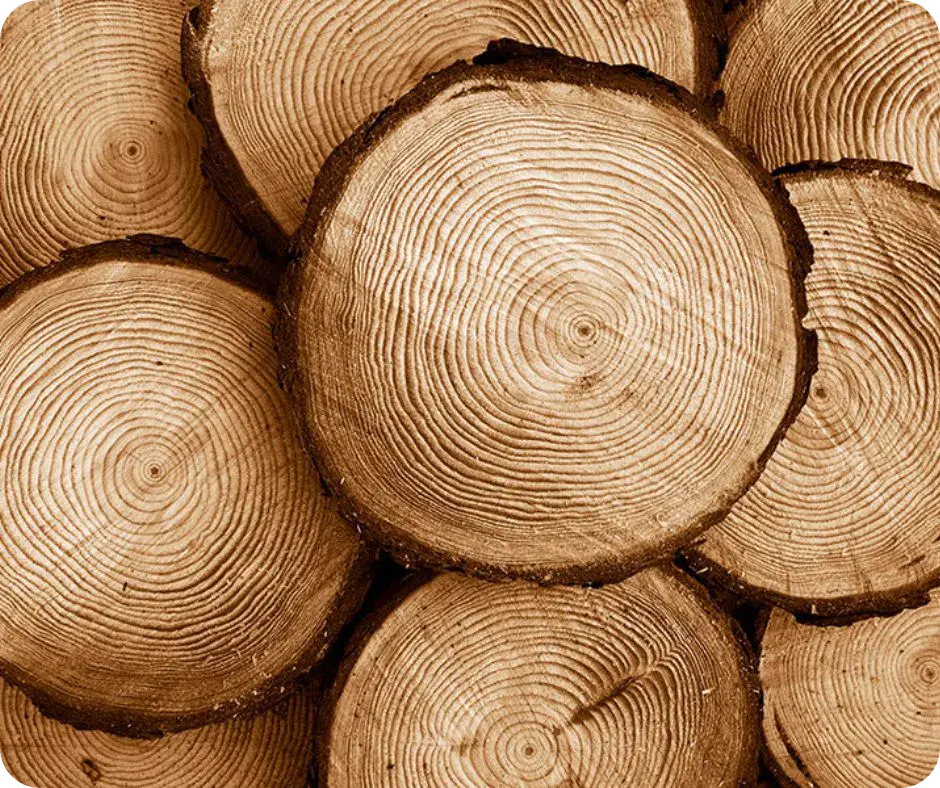
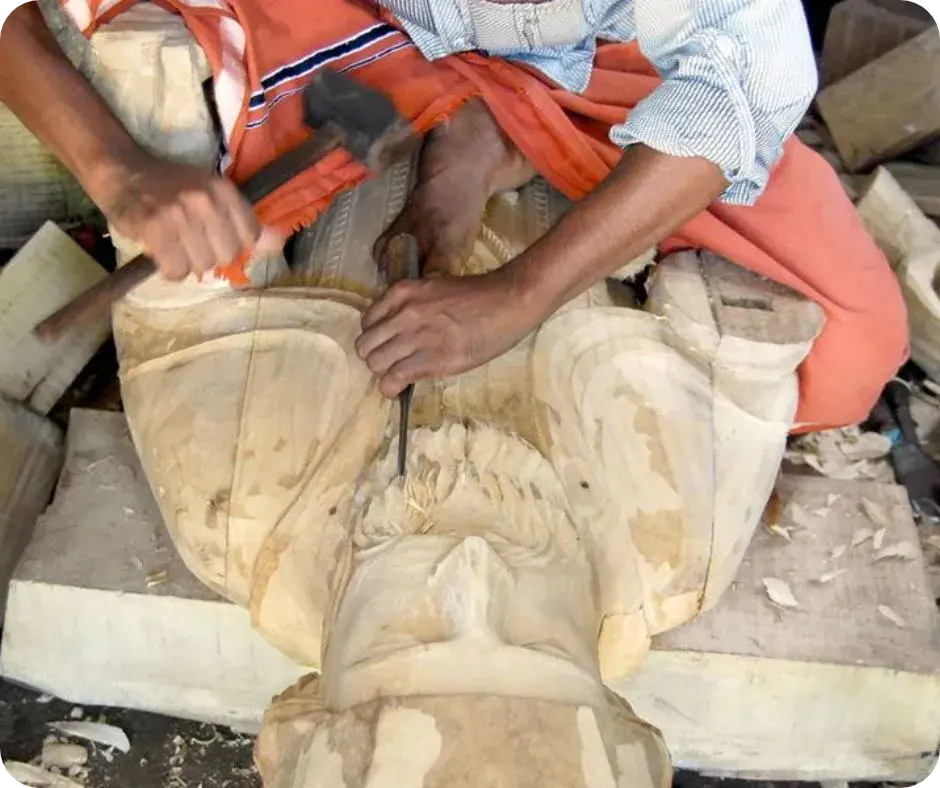
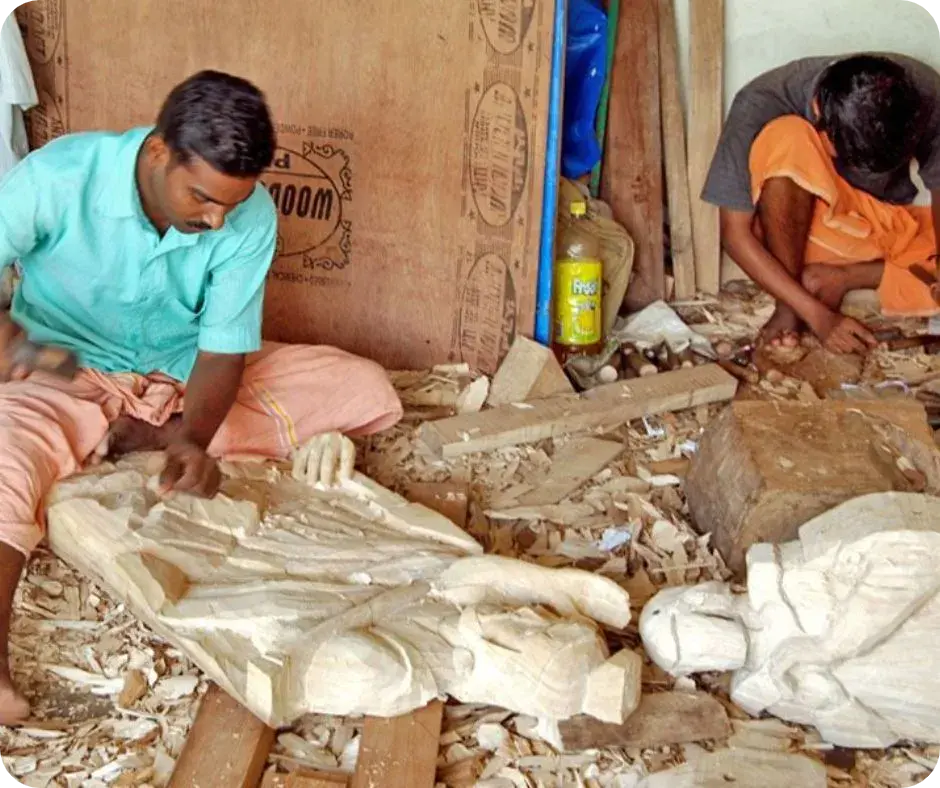
Wood is extensively used in sculpting especially in countries like China, Germany, and Japan. One feature that makes the wood extremely suitable for making statues and sculptures is that it is light and can take very fine detail. It is easier for artists to work with wood than with other materials such as metal or stone. Both hardwoods, as well as softwood, are used for making sculptures. Wood is mainly used for indoor sculptures because it is not as durable as stone. Changes in weather cause wooden sculptures to split or be attacked by insects or fungus. The principal woods for making sculptures and statues are cedar, pine, walnut, oak, and mahogany. The most common technique that sculptors use to make sculptures out of wood is carving with a chisel and a mallet. Since wooden statues are prone to damage, fire, and rot, they require proper care and maintenance.
It is extremely important to preserve and protect wooden sculptures with proper care. A little carelessness and negligence can lead to their decay, resulting in losing all their beauty and strength. Therefore, a regular clean-up of the sculptures is a must to prolong their age and to maintain their shine and luster.






![श्रीमद्रविषेणाचार्य प्रणीत पद्मपुराण [ पद्मचरित ] द्वितीय भाग: Shrimadravishenaacharya Pranit Padmpuran [ Padmacharit ] Dvitiya Bhag](https://cdn.exoticindia.com/images/products/thumbnails/t400x300/book-10-2025/hbx580.jpg "श्रीमद्रविषेणाचार्य प्रणीत पद्मपुराण [ पद्मचरित ] द्वितीय भाग: Shrimadravishenaacharya Pranit Padmpuran [ Padmacharit ] Dvitiya Bhag")
Send as free online greeting card



Visual Search
 Upload an Image