See It In Your Home
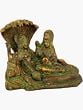
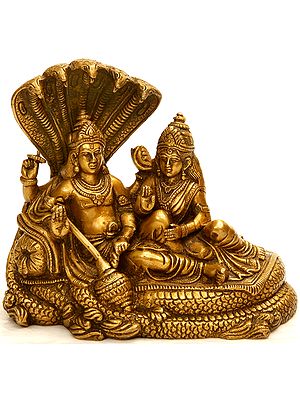
In the
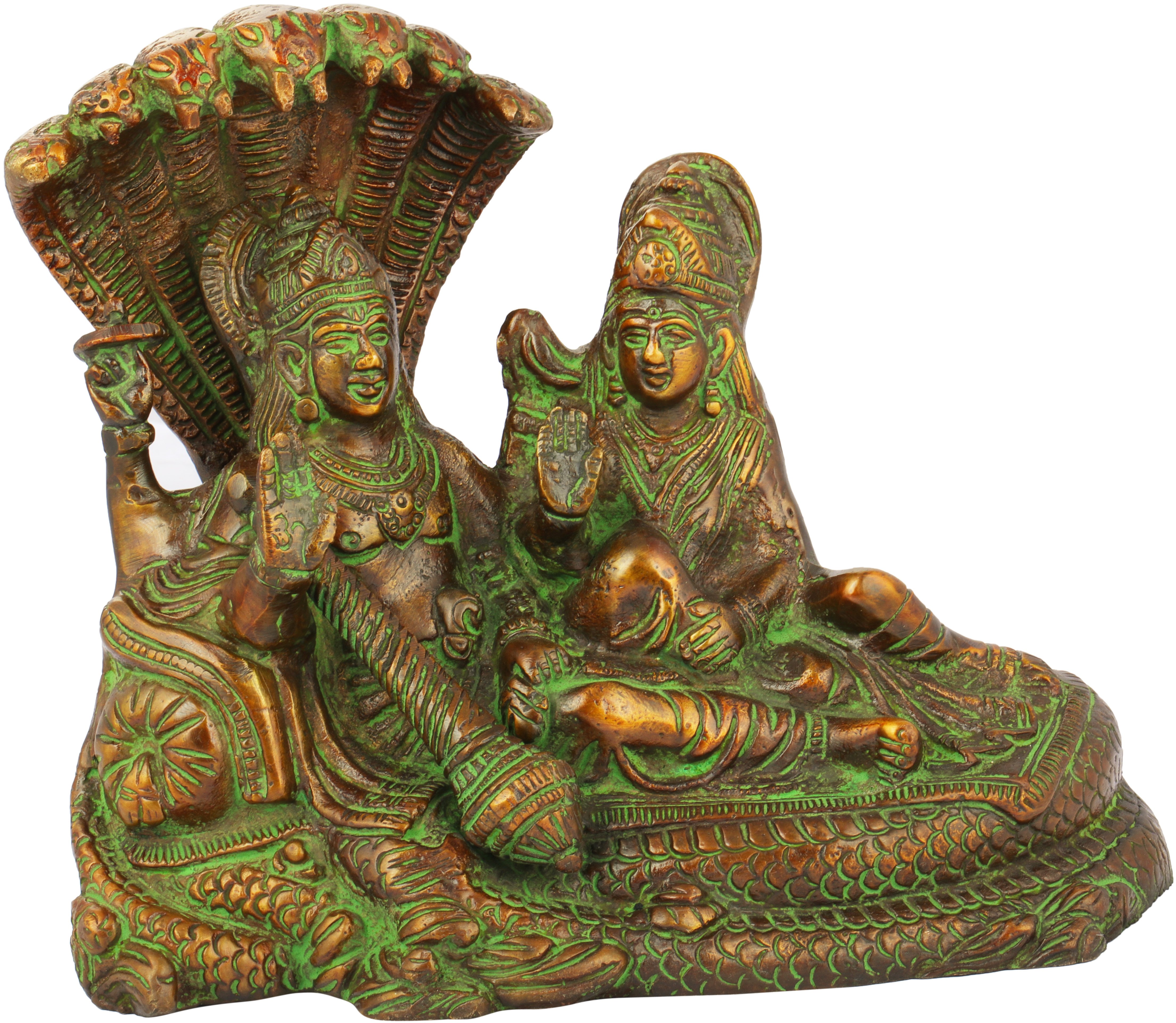
Kshirsagar or Thirupaarakadal (the ocean of milk), resting on the bed formed by
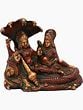
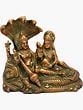
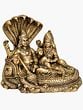
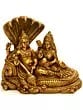
innumerable coils of the body of Adi shehsha, resides Lord Vishnu. The imagery
of Vishnu on shesha, accompanied by his consort Lakshmi has been created and
worshipped since the time of the early Vaishnava shrines.
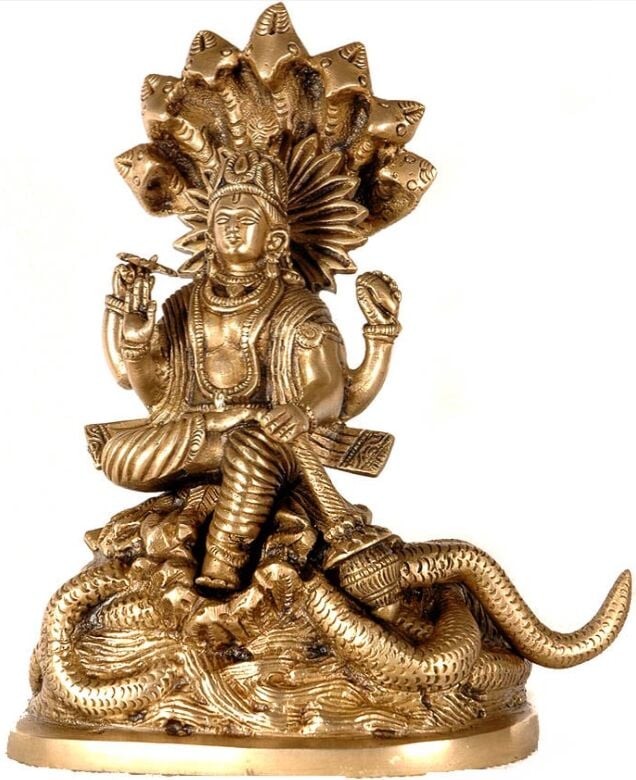
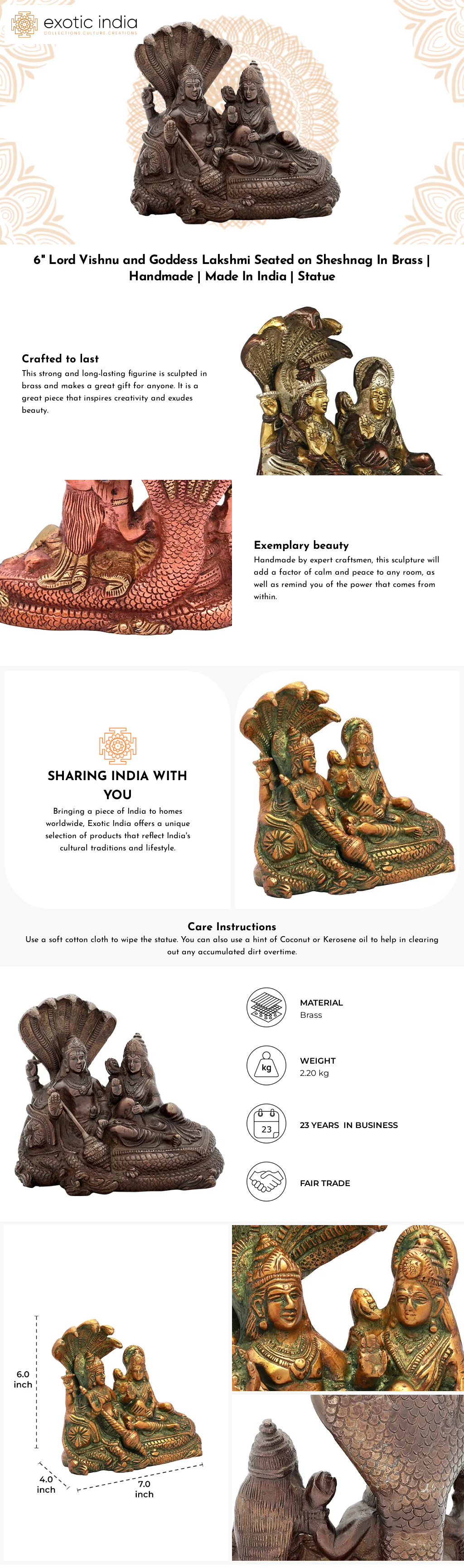
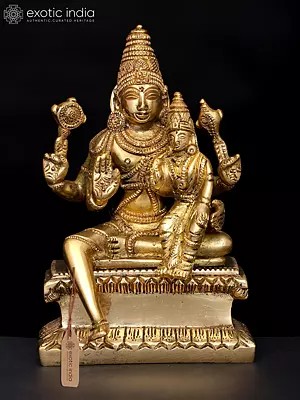
This piece is a work in brass, similar to the famous Anantshayi Vishnu of the Gupta period temple at Deoghar, with some alterations. While the Deoghar mural has Vishnu surrounded by numerous celestial beings and in a sleeping position, this one shows Vishnu as Asanamurti, in a seated posture, attentive and directly inspecting each event of the human plane. He has his three primary attributes, conch shell, lotus flower, and chakra in his hands with the mace resting on the couch of Adi shesha.
The divine couple has their right hand raised in the Abhaya mudra. Besides the mukuta (crown) and a few ornaments, the artist has avoided any heavy jewels, highlighting the natural roundness of their faces, which look quite humane. Compared to her earlier portrayals as a submissive, secondary figure in the compositions, Lakshmi in this brass work appears as an equal to her husband.
Attention to
the details is clearly visible in the statue, which meticulously shows the
waves of Kshirsagar splashing at the base of Adi shesha’s lower coils. This
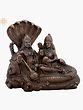
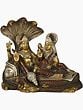
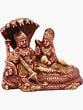
compact brass piece is available in 8 different tones for you to choose from
before you bring Lord Narayan home.
Unveiling the Divine: Exploring the Symbolism and Significance
of Lakshmi
Lakshmi Devi is one of the principal Goddesses in Hinduism. In
the Vaishnava tradition, especially the Sri Vaishnava
Sampradaya, Vishnu and Lakshmi are considered the Supreme or
Absolute Truth. Mother Lakshmi is known as the Goddess of
fortune who blesses the living entities in the material world
with material wealth and prosperity. Our Vedic scriptures
mention that Lakshmi Ji is the eternal consort of Lord Vishnu
who is the Supreme Personality of Godhead. He maintains and
controls everything in the material and spiritual world. Goddess
Lakshmi is also His internal potency and is thus always engaged
in the loving devotional service of the Lord in His spiritual
abode Vaikuntha, a place where there is no misery.
The transcendental form of Mother Lakshmi is extremely
beautiful. She is the emblem of beauty and mercy. She sees every
individual soul as her own child and whoever approaches her with
faith and devotion, certainly gets the mercy of Lakshmi Devi.
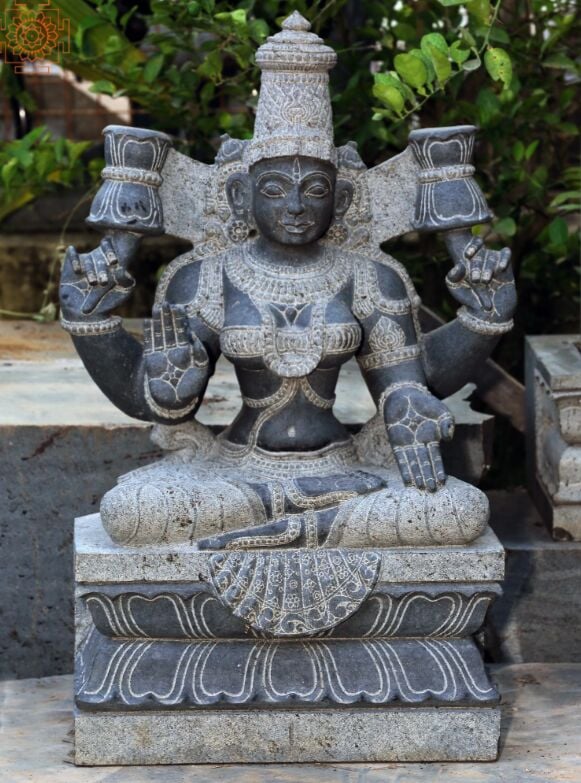
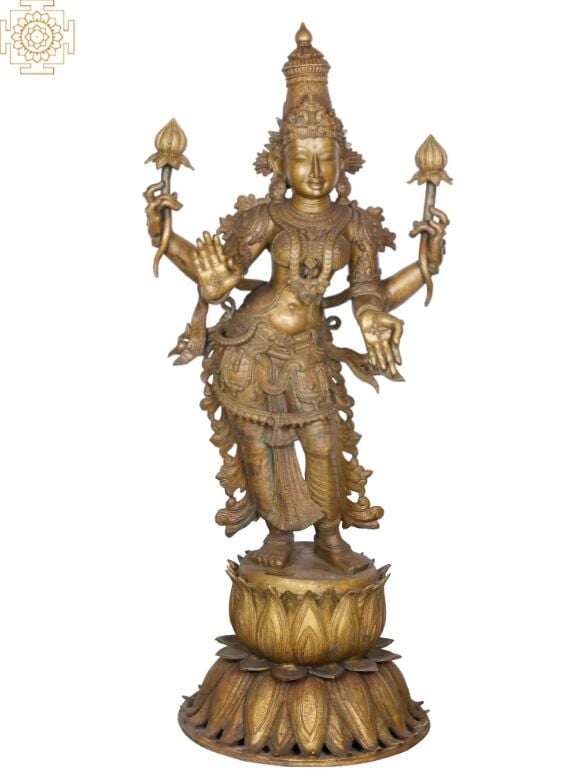
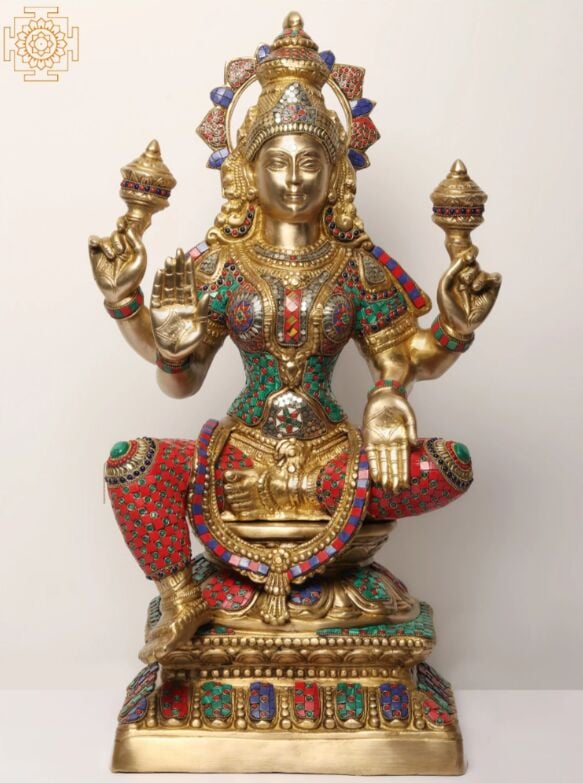
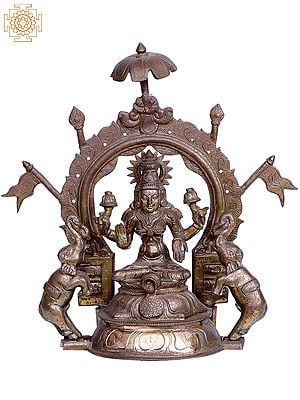
She is often depicted wearing a red saree and holding different
items in her four arms. She holds a lotus flower in each of her
two upper arms. With one of her lower hands, she holds a pot
full of gold coins (representing wealth) while the other hand
stays in a mudra that signifies charity.
Can we keep a Lakshmi statue at home?
As stated earlier, Lakshmi Ji bestows good fortune upon her
devotees and takes care of them. She is full of compassion and
therefore accepts anyone who comes to her even with ulterior
motives. However, she not only gives material wealth to her
devotees but those who approach her to know the real goal of
human life or to know about the Absolute Truth, she blesses them
with spiritual wealth (wisdom and mercy) by which they can come
to a higher platform and consciousness. Thus, it is only by the
mercy of Goddess Lakshmi that a living entity starts its
spiritual journey toward Lord Vishnu.
If you want to attract this special mercy, you can keep the
deity of Goddess Lakshmi at your home and worship her every day
with an attitude of surrender. By doing so, you will develop a
personal relationship with her and you will be able to
experience transcendental happiness.
Which Lakshmi idol is good for home?
Lakshmi Devi expands herself into eight major forms (Ashta
Lakshmi) that are Dhana Lakshmi, Dhanya Lakshmi, Gaja Lakshmi,
Sanatana Lakshmi, Dhairya Lakshmi, Vijaya Lakshmi, Vidya
Lakshmi, and Aishwarya Lakshmi. You can keep any of the forms of
Lakshmi in your home to bring material and spiritual
auspiciousness. However, if you want her ultimate mercy, you may
keep the deity of Goddess Lakshmi along with her master, Lord
Vishnu.
Which material is good for Lakshmi idol?
The idol or deity of Goddess Lakshmi comes in various materials
such as brass, wood, marble, copper, bronze, etc. If you are
planning to keep a deity of Lakshmi Devi at your home, the best
material would be either brass or marble. Brass is known for its
exquisite appearance resembling gold and is also a strong
material. Marble is preferred by most people because it lasts
longer than any other material.
Sheshnag: The Divine Vehicle of Lord Vishnu and its Symbolic
Significance
According to the Vedic scriptural injunctions, Lord Vishnu is
the Supreme Lord, the protector of all living entities, and the
cause of all causes. Just like the pastimes and names of Lord
Vishnu are transcendental, His form is also transcendental,
above and beyond the three modes of material nature. He bears
four hands that carry a lotus flower, a conch shell, a discus
(the Sudarshan Chakra, and a club. Although Lord Vishnu is above
the effects of the three modes of material nature, He is the
predominating deity of the mode of goodness (Sattva Guna) and
thus maintains the entire material world.
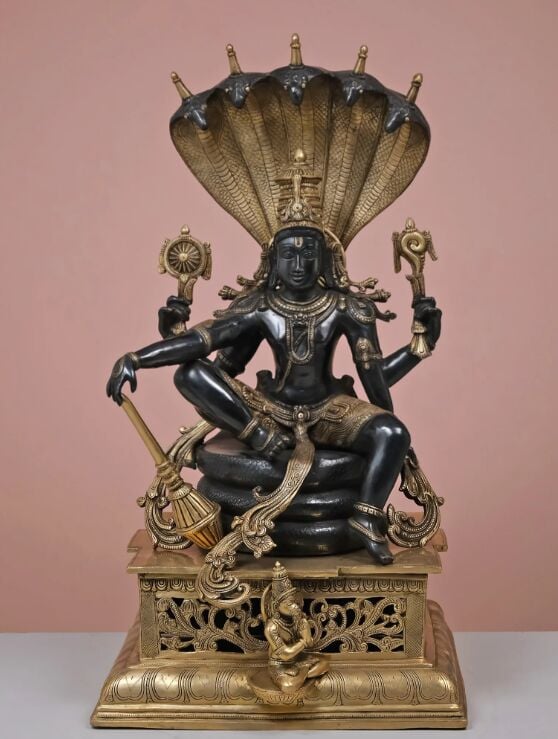
Which snake does Lord Vishnu sleep on?
You may have seen the beautiful images, deities, and paintings
of Lord Vishnu portrayed as reclined on a coil of the body of a
big snake in the middle of the ocean of milk (Ksheer Sagar). It
has multiple hoods spread across the entire body of the Lord,
giving Him all protection. This snake is not an ordinary one but
is the eternal servitor of the Lord and is called Sheshanag or
Anantashesha. Whenever and wherever there is a decline in
religious activities and a predominant increase in
irreligiosity, the Lord appears to re-establish the principles
of Dharma. But He does not come alone. He comes with His eternal
associates that serve Him in different forms of loving exchanges
in Vaikuntha. For example, when Lord Krishna, the Supreme
Personality of Godhead, appeared on the earth in Dwapar Yuga,
Sheshanag came in the form of Lord Balaram with him.
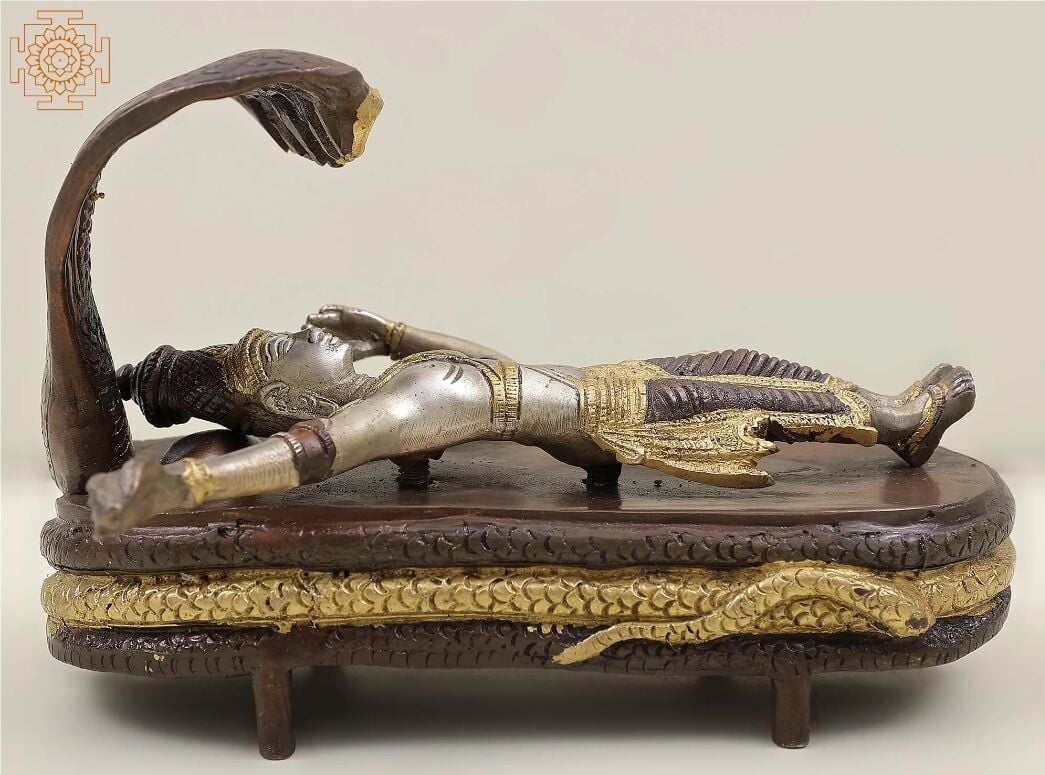
What does Vishnu sculpture symbolize?
As stated by Lord Krishna in the Bhagavad Gita, He appears in
the material world to protect His devotees and to kill the
miscreants. The Lord is very merciful to every living entity but
those who have taken His shelter and engage in His loving
devotional service are especially taken care of by Him. The
devotees worship and serve the deity of the Lord with all their
hearts. In this way, they develop genuine affection and love for
the Lord. The Lord being situated in the hearts of all living
entities as Supersoul (Paramatma), also reciprocates with His
devotees and gives them the highest form of bliss. The deity of
the all-powerful and all-merciful Lord Vishnu is the symbol of
purity and love. It is not just a piece of stone, metal, or
wood, but is the Lord Himself.
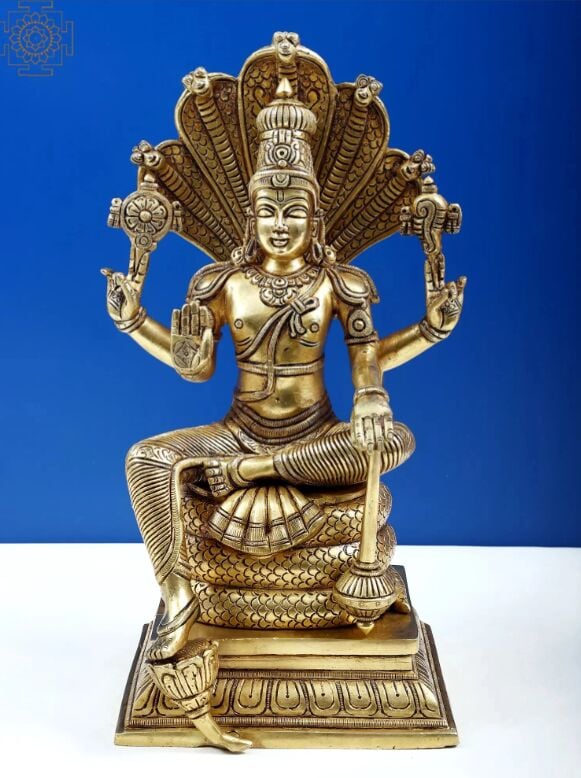
What is the power of Sheshnag?
The Vedic scriptures mention that Sheshnag is the immediate
expansion of Lord Vishnu who serves Him with pure devotion. The
Acharyas in the path of Bhakti also explain that Sheshnag
represents the Guru Tattva. Without the mercy of Guru, the
living entity cannot attain the lotus feet of the Supreme Lord.
Sheshnag comes in the form of Balaram or Lakshman in the
pastimes of Lord Krishna and Lord Ram respectively. Without
pleasing Balaram, one cannot understand the nature of Lord
Krishna, or without pleasing Lakshman, one cannot know Lord Ram.
Similarly, if one wants to serve Lord Vishnu, the mercy of
Sheshnag is needed. When it is achieved, Lord Vishnu, without
any delay, accepts even a fallen soul and gives Him liberation
from all kinds of suffering. Such is the power of Sheshnag.
















 Upload an Image