Easy Returns
Easy Returns
Return within 7 days of
order delivery.See T&Cs
Fully Insured
Fully Insured
All orders are fully insured
to ensure peace of mind.
100% Handmade
100% Handmade
All products are
MADE IN INDIA.

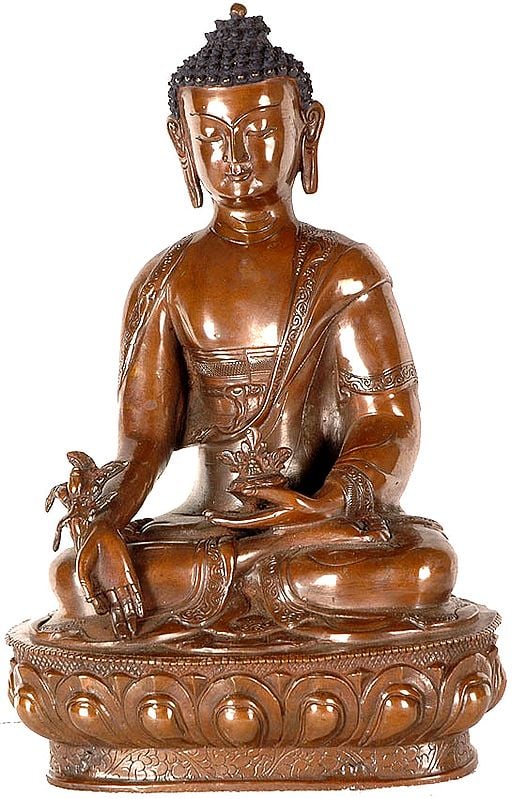
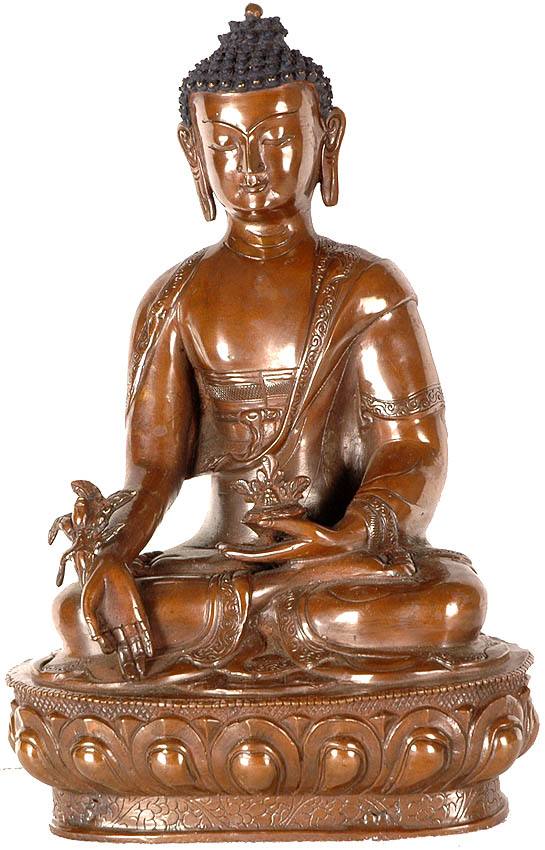
Medicine Buddha with Bowl of Medicines and Herbs

$441
$588
25% off
Includes any tariffs and taxes
Specifications
RE41
Copper Sculpture
Height: 12 inch
Width: 9 inch
Depth: 6 inch
Weight 4.04 kg
Delivery and Return Policies
Returns and Exchanges accepted within 7 days
Free Delivery
Easy Returns
Easy Returns
Return within 7 days of
order delivery.See T&Cs
Fully Insured
Fully Insured
All orders are fully insured
to ensure peace of mind.
100% Handmade
100% Handmade
All products are
MADE IN INDIA.

The Healing Touch

This meticulously crafted copper sculpture brings to life the revered Medicine Buddha, also known as Bhaisajyaguru, a figure of profound significance in Tibetan Buddhism and beyond. His image serves as a potent reminder of the potential for healing and the alleviation of suffering, both physical and spiritual. Seated in the meditative lotus posture upon an intricately detailed lotus base, a symbol of purity and enlightenment, the Medicine Buddha emanates an aura of tranquility and compassion. His serene expression, downcast eyes, and gentle smile inspire a sense of peace and well-being in the viewer. He is adorned in the simple robes of a monk, emphasizing his detachment from worldly possessions and his focus on the path to enlightenment.

A Celestial Healer

Bhaisajyaguru is believed to have made twelve vows upon attaining enlightenment, each dedicated to the well-being of sentient beings. These vows encompass providing for basic needs, relieving physical and mental afflictions, guiding beings towards the right path, and ultimately leading them to enlightenment. Legend says that by reciting his mantra and visualizing his radiant form, one can overcome illness, purify negative karma, and attain both physical and spiritual healing. The color associated with the Medicine Buddha is lapis lazuli, a deep, vibrant blue that represents purity and healing energy.

Symbolism and Artistry

The right hand is lowered in the Varada mudra, the gesture of generosity or bestowing blessings, signifying his willingness to grant aid and compassion to all who seek it. In the palm rests myrobalan fruit or herbs, potent symbols of healing remedies. The left hand holds a bowl filled with curative medicines and herbs, representing the countless remedies available to alleviate suffering. The attention to detail in this copper sculpture is remarkable. The intricate carving of the lotus petals, the flowing lines of his robes, and the delicate features of his face all contribute to a work of art that is both aesthetically pleasing and spiritually powerful. This sculpture, with its dimensions of 12.0 x 9.0 x 6.0 inches, can serve as a beautiful and meaningful addition to any sacred space, meditation room, or home, radiating the healing energy of the Medicine Buddha.

How are Nepalese copper statues made?

Nepalese statues and sculptures are best known for their unique small religious figures and ritual paraphernalia for over two thousand years. These are mainly cast in copper alloy. Nepal draws influences from the artistic styles of Buddhism and Hinduism, and therefore the sculptors of the country specialize in making the icons of both these religions. Over the years, Nepalese sculptures evolved into their own distinctive iconography. Some characteristic features of these sculptures that differ from other pieces are exaggerated physical postures, youthful and sensual features, languid eyes, wider faces having serene expressions, and ornate flourishes. The Buddhist deity icons of Nepal have tremendous demand in countries such as China and Tibet for ritual purposes in their temples and monasteries.

Nepalese statues and sculptures have a high copper content and therefore develop a slightly reddish patina on the surface as they age. However, the most unique feature of Nepalese copper statues is their decorative detailing. The pieces are heavily gilded and sometimes inlaid with semi-precious stones. This embellishment protects them from getting tarnished. The traditional lost-wax method for casting Nepalese copper statues remains the most practiced technique in Nepal for many centuries. This process involves many steps and requires skilled artists.

The first step in lost-wax sculpting is to make a wax replica of the desired Buddhist deity to be cast in copper. This replica is created by hand and therefore needs excellent artistic skills otherwise fine features will be lacking.

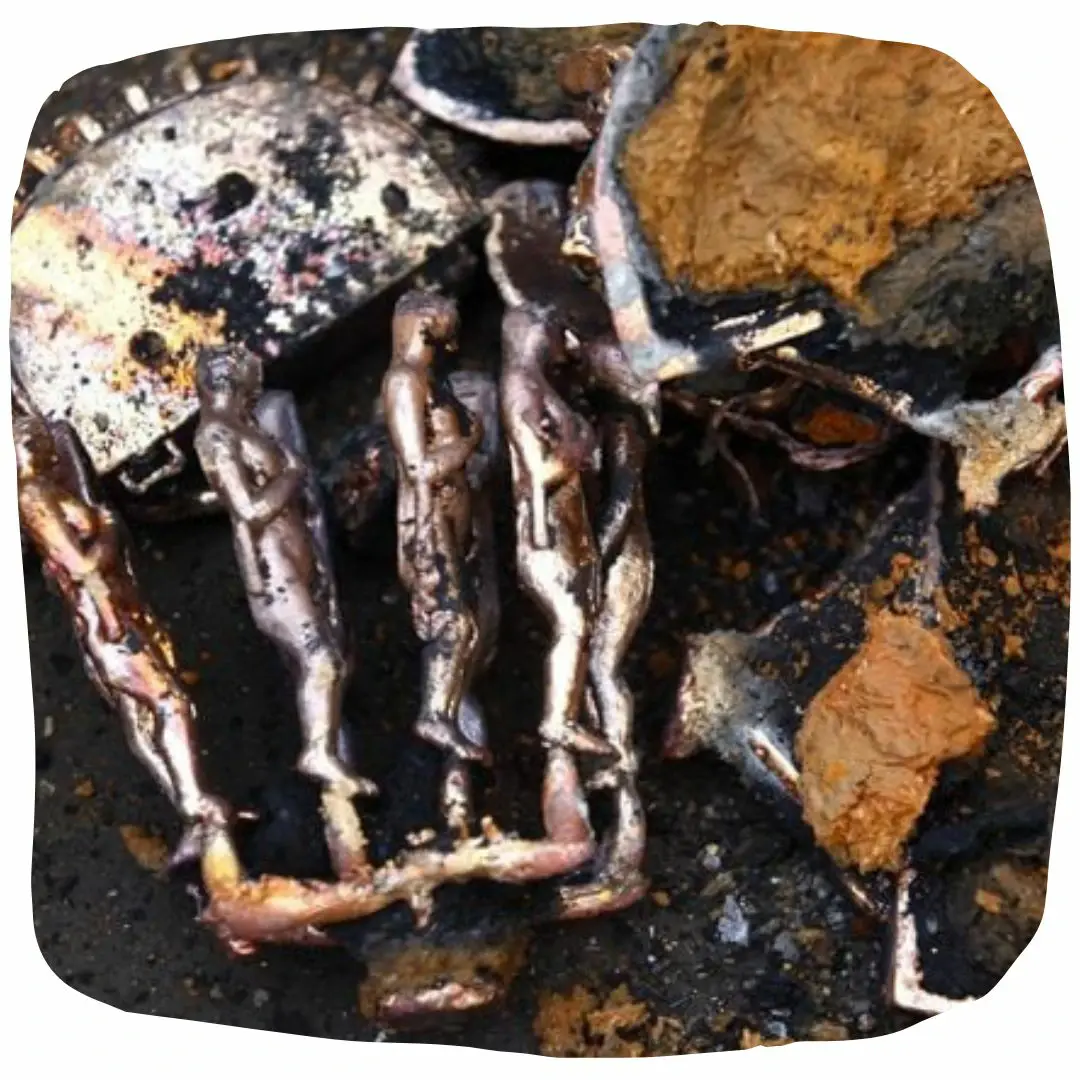
Once the wax replica is made, it is then coated with a special mixture of clay with a brush. This layer of clay is hardened when left to dry. A small hole is made on the base of the wax mould so that the wax flows away when it is heated.
Image
At this stage, a hollow mould in the shape of the deity is obtained.

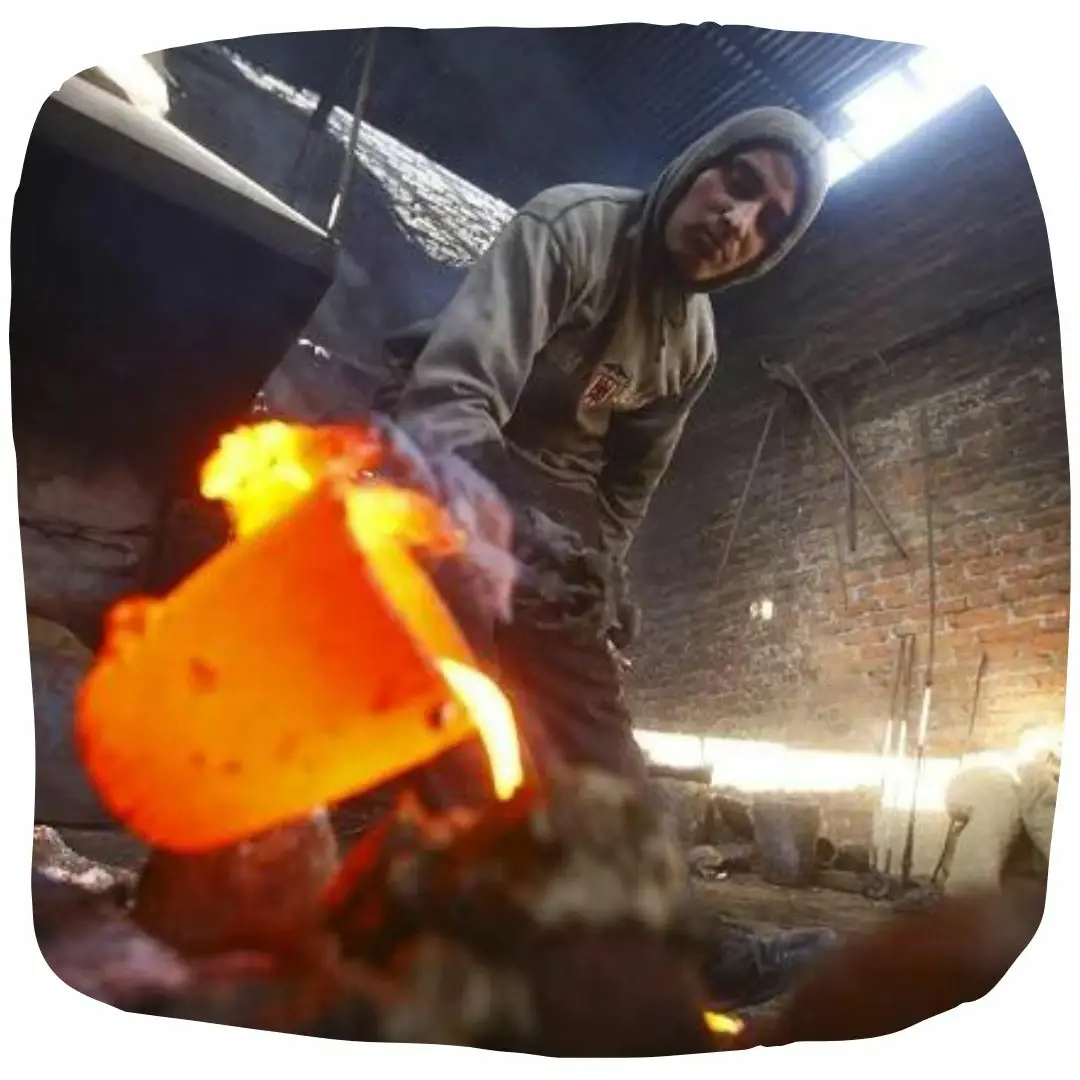
This is the time to pour liquid copper into the hollow mould which is then allowed to cool and harden inside a container of cold water. When the liquid metal has hardened, the mould is removed and the statue within is revealed.
Image
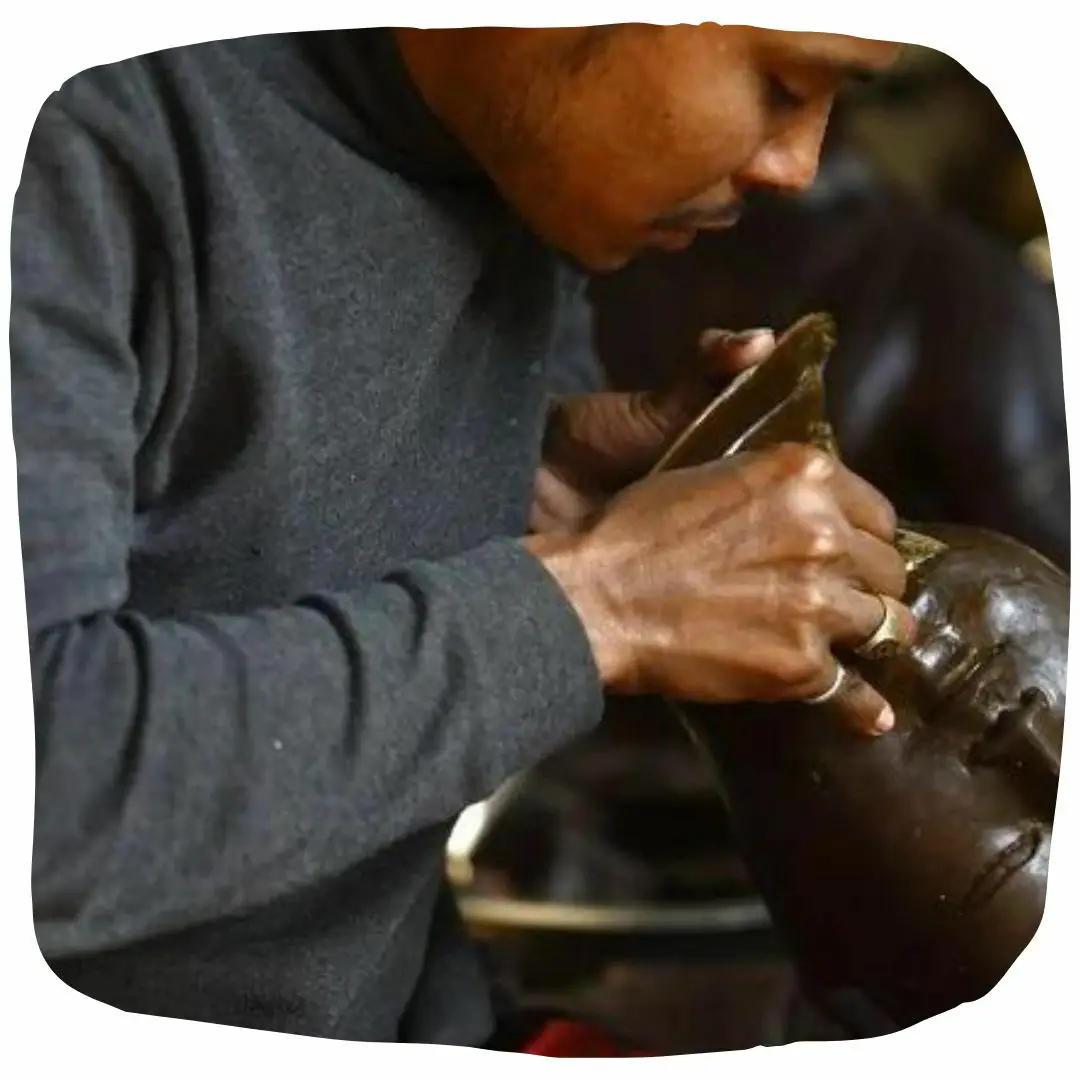
The artist works on the details of the statue using various tools. It is then polished to get a shiny and lustrous surface.

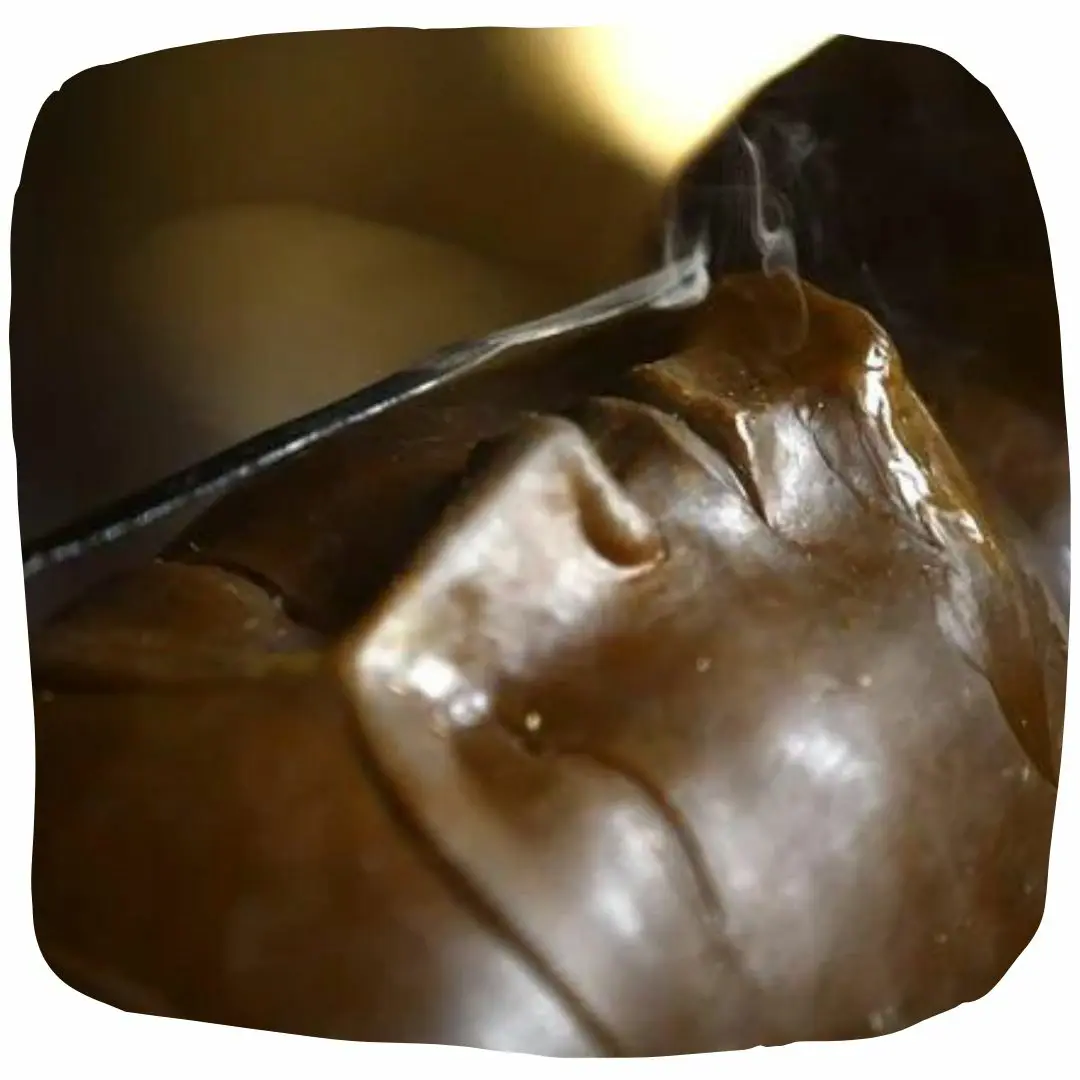
Now comes the most important part of Nepalese art which is gold gilding. This is done by the traditional fire gilding method. A mixture of mercury and 18K gold is applied on the surface of the statue and heat is applied using a flame torch. The result is that mercury evaporates along with impurities, leaving a pure 24K gold finish.
Image

The lost-wax method of sculpting is the most preferred technique

for artists to cast a metallic statue having intricate details. Since Nepalese copper sculptures require extraneous effort for giving a majestic look by adding special embellishments, it takes several weeks to complete one masterpiece. A 24K gold gilded copper sculpture retains its brilliant luster for many years and appears as like before. Nepalese sculptures continue to remain one of the finest specimens of the art of the East that have a strong aesthetic appeal that other sculptures cannot match.
Image
Add a review
Have A Question
By continuing, I agree to the Terms of Use and Privacy Policy