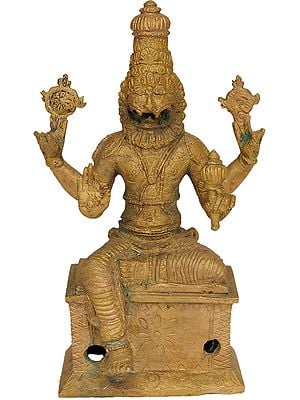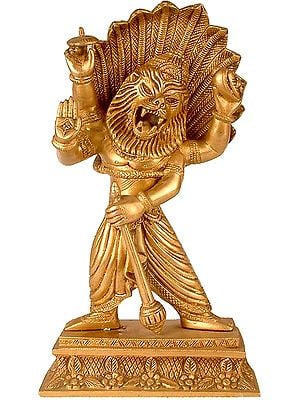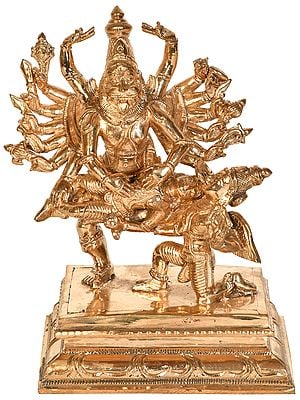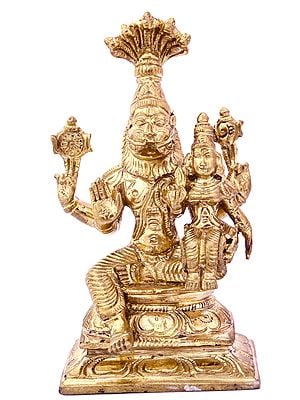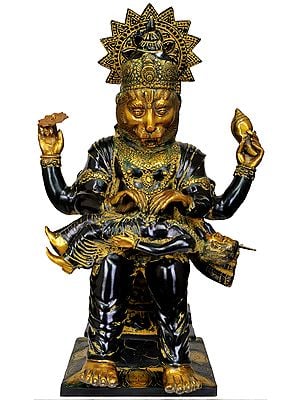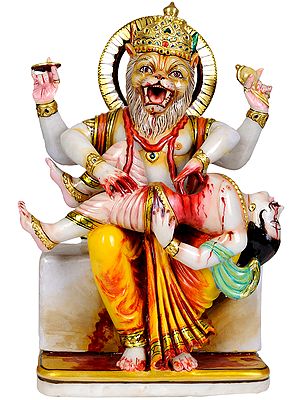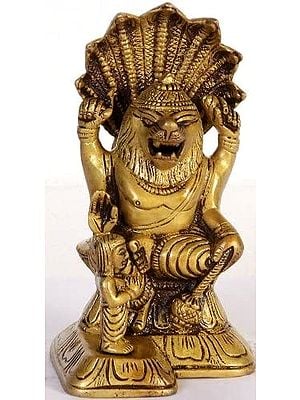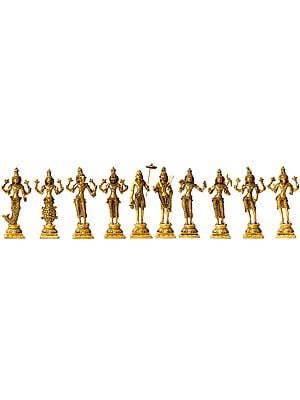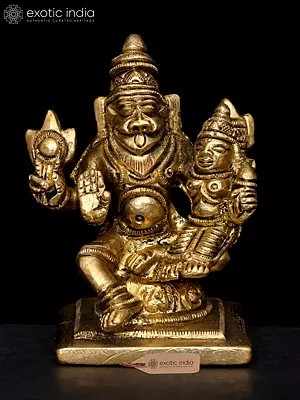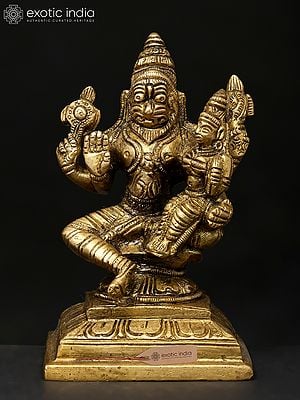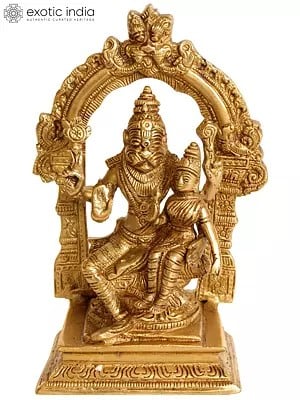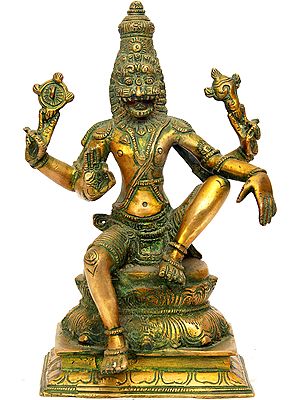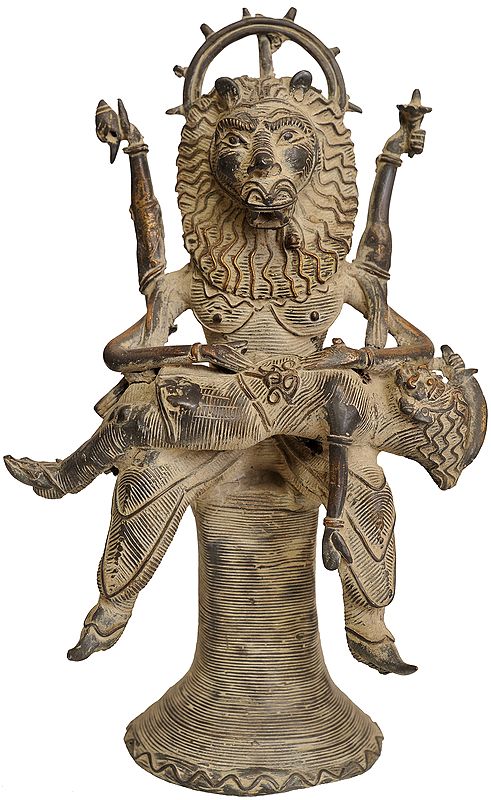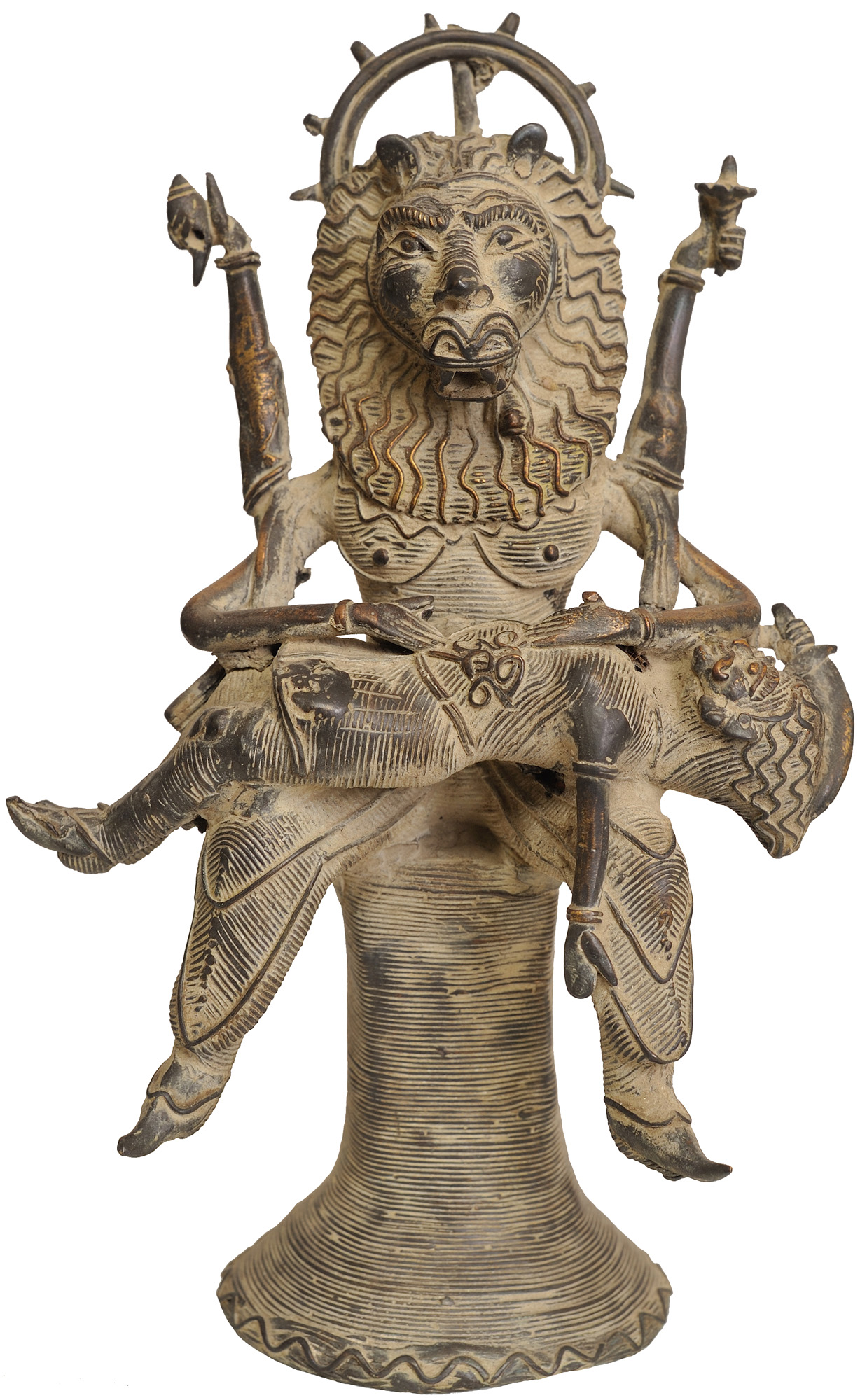
Narasimha Killing the Demon Hiranyakashipu (Tribal Statue from Bastar)
| Specifications |
 |
ZBT47 |
 |
Brass Statue |
 |
Height: 9 inch |
| Width: 5.5 inch | |
| Depth: 3.5 inch | |
 |
Weight 1.22 kg |
| Delivery and Return Policies |
 |
Returns and Exchanges accepted within 7 days |
 |
Free Delivery |


The Divine Fury of Narasimha
This striking brass statue captures a pivotal moment in Hindu mythology: the divine intervention of Narasimha, the half-man, half-lion avatar of Lord Vishnu, as he vanquishes the demon Hiranyakashipu. The craftsmanship, originating from the culturally rich region of Bastar, imbues this powerful depiction with raw energy and profound symbolism. The fierce visage of Narasimha, with its leonine mane and piercing eyes, emanates an aura of righteous anger, a divine fury unleashed to restore cosmic order. The dual nature of the deity is masterfully portrayed, showcasing the strength of the human form intertwined with the ferocity of the animal kingdom.A Tale of Devotion and Divine Retribution
The legend of Hiranyakashipu is a testament to the ultimate power of unwavering devotion. Hiranyakashipu, a powerful demon king, had attained near-invincibility through boons that protected him from man, beast, day, night, inside, or outside any dwelling. Consumed by ego and a hatred for Lord Vishnu, he demanded worship from all his subjects. However, his own son, Prahlada, remained a steadfast devotee of Vishnu, refusing to acknowledge his father as supreme. In his rage, Hiranyakashipu subjected Prahlada to numerous torments, none of which could break the boy's faith. It was then that Vishnu, in his most terrifying form as Narasimha, emerged from a pillar to save his devotee and destroy the arrogant demon, thus proving that no earthly power or boon can stand against divine will and the protection of the faithful. This statue serves as a potent reminder of this eternal truth.Artistry from the Heart of India
Crafted using traditional lost-wax casting techniques, a method honed over centuries by the tribal artisans of Bastar, this statue is a unique piece of art. The metal possesses a character that speaks of its artisanal origin, with subtle variations that make each piece a one-of-a-kind treasure. The intricate details, from the textured mane of Narasimha to the writhing form of the defeated demon, showcase the skill and dedication of the artisans. The patina that adorns the brass adds to its authenticity and gives it a timeless quality, as if it has emerged from an ancient lineage of sacred objects. This piece is more than just a decorative item; it is a conduit to ancient stories and a celebration of enduring artistic traditions.Unleashing the Power of Narasimha: The Divine Avatar of Lord Vishnu
What does Narasimha symbolize?
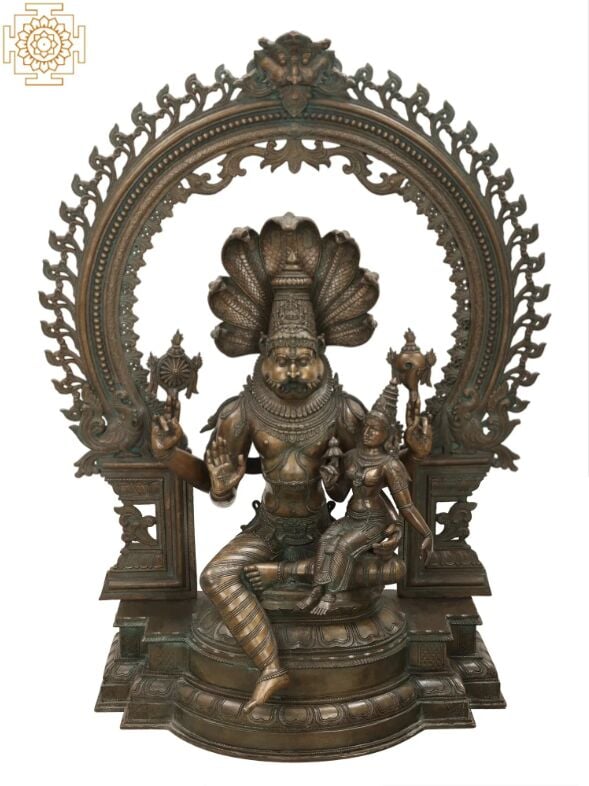
Although the form of Lord Narasimha appears fierce to the general people, it appears as beautiful and sweet as the lotus flower to His devotees. His ferocious yet transcendental form signifies His rage towards the demoniac persons who try to harm or blaspheme His devotees who are very dear to Him. The devotees always worship and remember Lord Narasimha in their minds because He is the source of all bliss and fortune and is also the cause of all causes. The Vaishnav Acharyas explain that the Lord"s killing of Hiranyakashipu symbolizes the killing of Anarthas such as lust, anger, greed, illusion, attachment, and false ego residing in our hearts. One who has taken the shelter of the lotus feet of Lord Narasimha is at once purified of all contamination which is a barrier in Bhakti.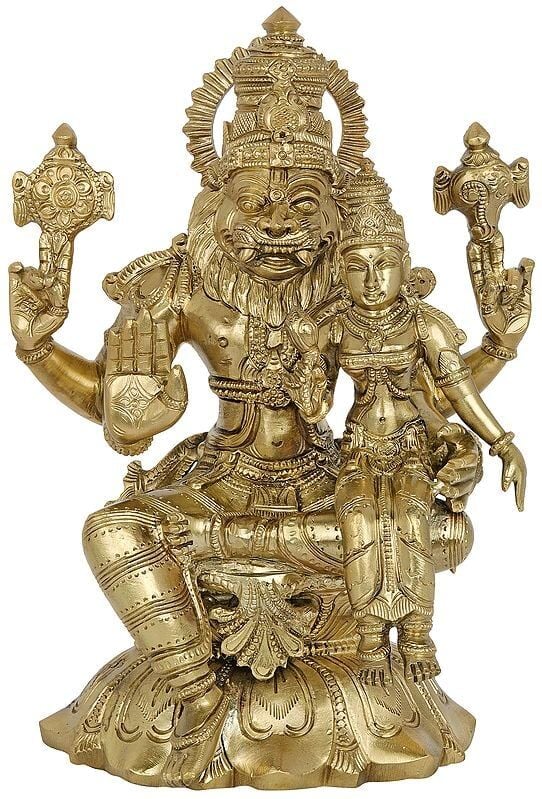
Which day is for Lord Narasimha?
Since Lord Narasimha is Vishnu Tattva, the Vaishnavas worship Him and observe fasting from grains on Ekadashi which comes on every 11th day in the Hindu or Vedic calendar. On this day, the devotees either completely refrain from eating and drinking anything (Nirjala) or only take grain-free Prasad for satisfying their hunger. They chant the Lord"s holy names, visit temple, and read His pastimes mentioned in the Vedic scriptures. Being completely absorbed in the thoughts of the Lord, the devotees peacefully observe the fast and remain blissful. Another very important day dedicated to Lord Narasimha Dev is “Narasimha Chaturdashi” which comes once a year. It is celebrated as the appearance (His advent on this planet) day of the Lord. On this day, the Vaishnavas congregate in the temples and chant His unending glories and beg for His causeless mercy so that they may eternally be engaged in His devotional service.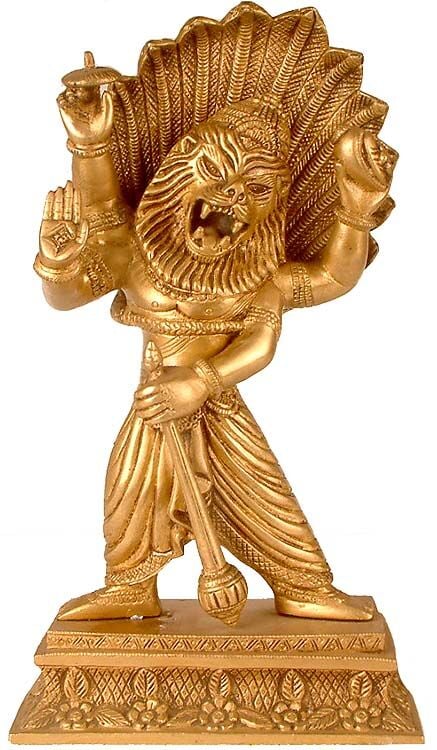
Where is Narasimha Swamy statue?
You can find many statues or deities of Lord Narasimha in different states of India such as Karnataka, Andhra Pradesh, Uttar Pradesh, etc. The most revered place for the Vaishnava community is Ahobilam situated in the state of Andhra Pradesh. This is the holy site where Lord Narasimha chose to appear from a stone pillar indicating that He is present everywhere. The Narasimha Swamy temple in Ahobilam is where all the nine forms of Narasimha Dev are situated; Prahlad Varada Narasimha, Chatravata Narasimha, Yogananda Narasimha, Ugra Narasimha, Kroda Narasimha, Malola Narasimha, Jwala Narasimha, and Pavana Narasimha. Thousands of people from across the globe visit this temple to take the divine blessings of the Lord.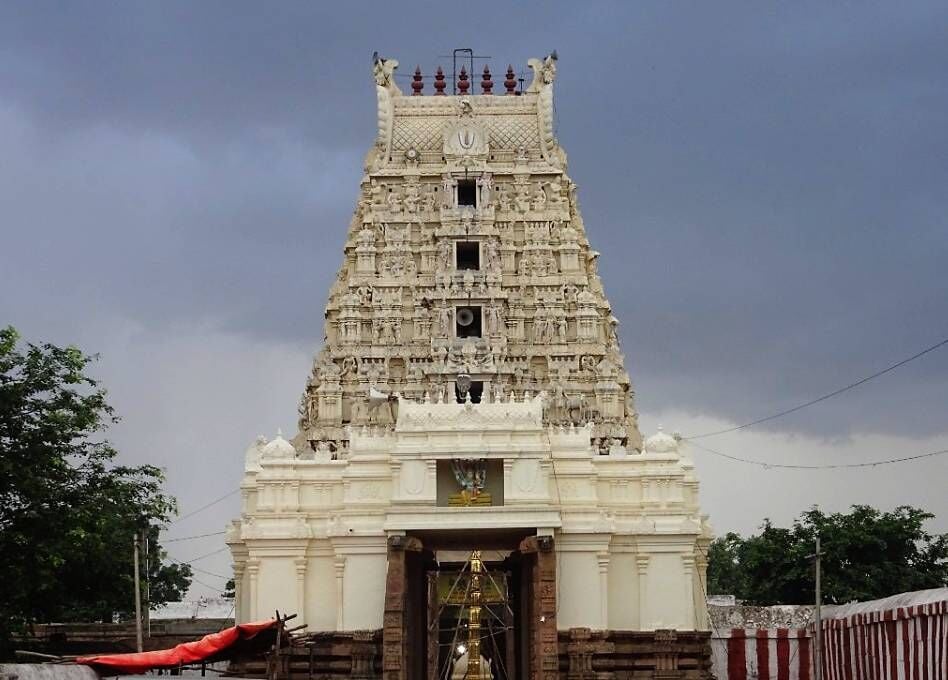
How to keep a Brass statue well-maintained?
Brass statues are known and appreciated for their exquisite beauty and luster. The brilliant bright gold appearance of Brass makes it appropriate for casting aesthetic statues and sculptures. Brass is a metal alloy composed mainly of copper and zinc. This chemical composition makes brass a highly durable and corrosion-resistant material. Due to these properties, Brass statues and sculptures can be kept both indoors as well as outdoors. They also last for many decades without losing all their natural shine.
Brass statues can withstand even harsh weather conditions very well due to their corrosion-resistance properties. However, maintaining the luster and natural beauty of brass statues is essential if you want to prolong their life and appearance.
- The best and simplest way to maintain a brass statue is to clean it at least twice a week using a soft cloth or cotton rag. This will prevent dust from accumulating on the surface. Dusting is especially important for outdoor statues since it is prone to dust accumulation much more than indoors.
- To give a natural shine and luster to the statue, you may apply coconut or olive oil using cotton on every portion. You can use a toothbrush to get to the small crevices but do not be too harsh. This will make the brass statue appear fresh and new with a polished look.
In case you have a colored brass statue, you may apply mustard oil using a soft brush or clean cloth on the brass portion while for the colored portion of the statue, you may use coconut oil with a cotton cloth.
Brass idols of Hindu Gods and Goddesses are especially known for their intricate and detailed work of art. Nepalese sculptures are famous for small brass idols portraying Buddhist deities. These sculptures are beautified with gold gilding and inlay of precious or semi-precious stones. Religious brass statues can be kept at home altars. You can keep a decorative brass statue in your garden or roof to embellish the area and fill it with divinity.
-
Q. Is the statue hollow or solid ?A. Brass statues are made through a process of clay casting, hence are hollow. Whereas, panchaloha bronze statues are made through a process of lost wax casting, hence they are solid.
-
Q. Can I return the statue ?A. Of course you can return a statue. Returns need to be initiated within seven (7) days after delivery. All returned items must be in new and unused condition, with all original tags and labels attached. To know more about our Return Policy, please visit Return Policy.
-
Q. Can you customise the statue for me ?A. For any customisation, kindly email us at help@exoticindia.com.