All orders are fully insured to ensure peace of mind.
100% Handmade
All products are MADE IN INDIA.
A Timeless Emblem of Kashmiri Craftsmanship
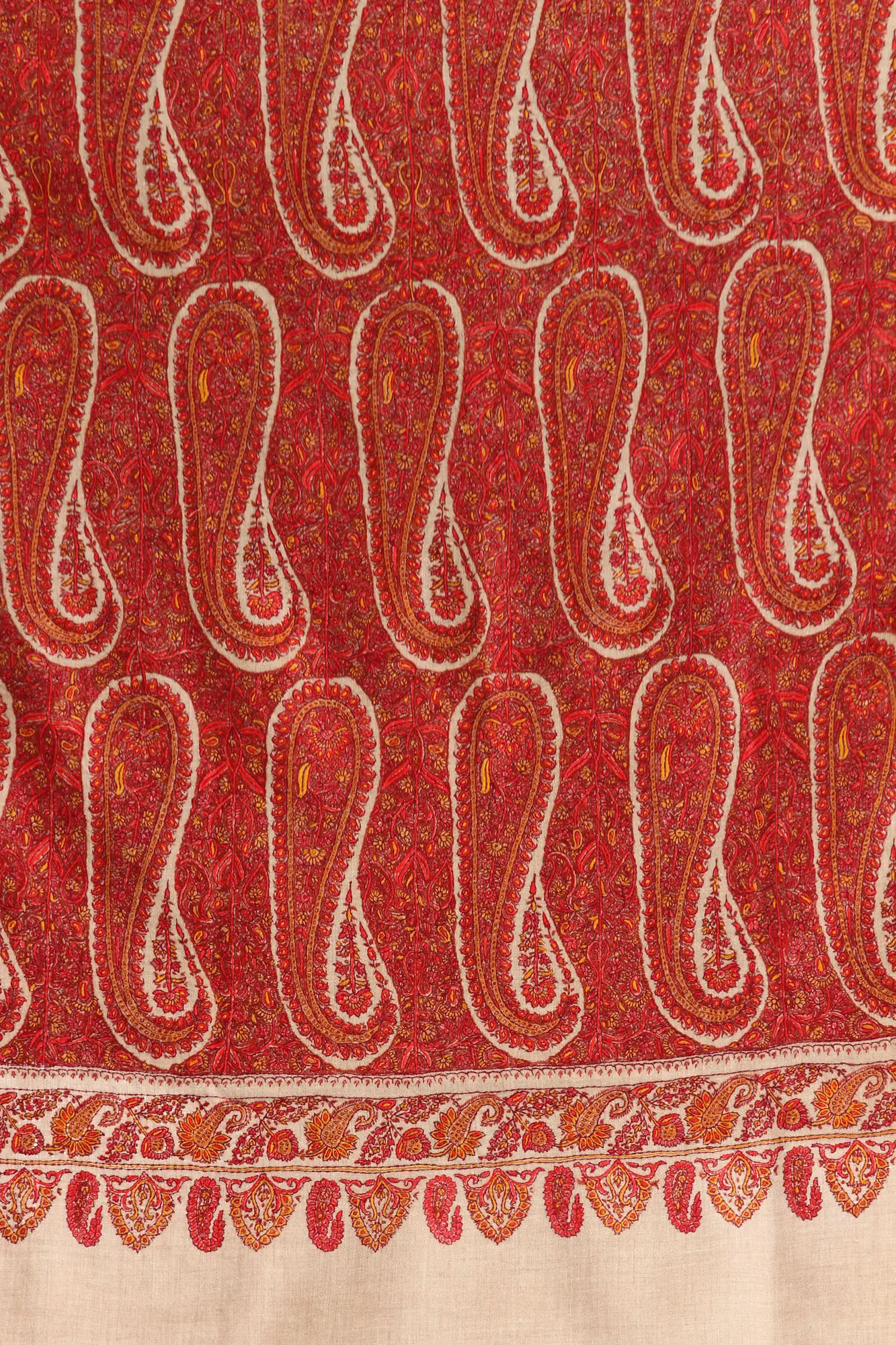
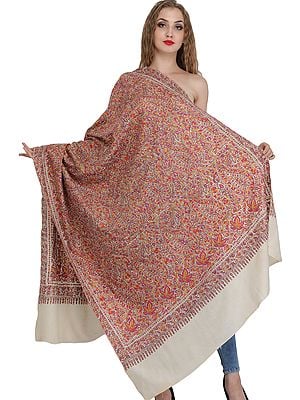
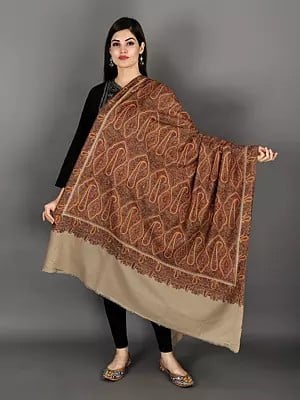
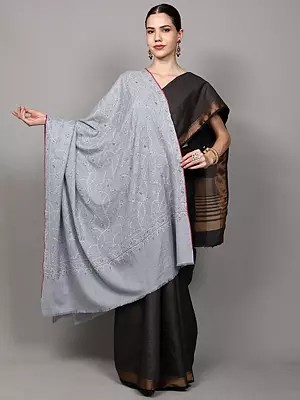
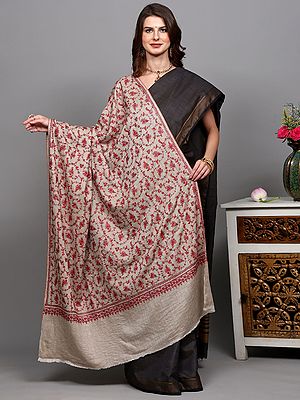
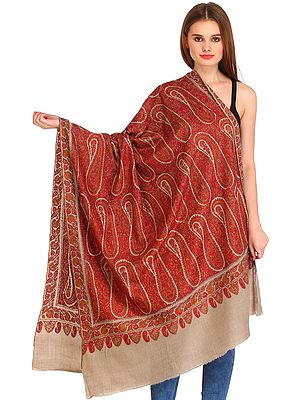
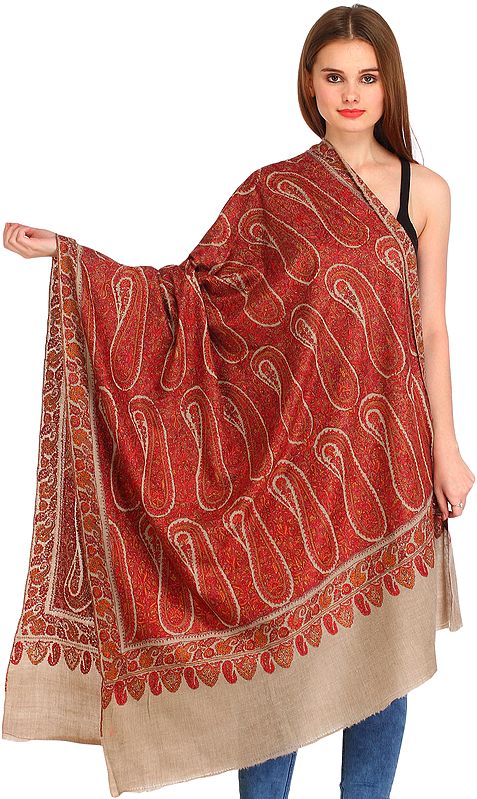
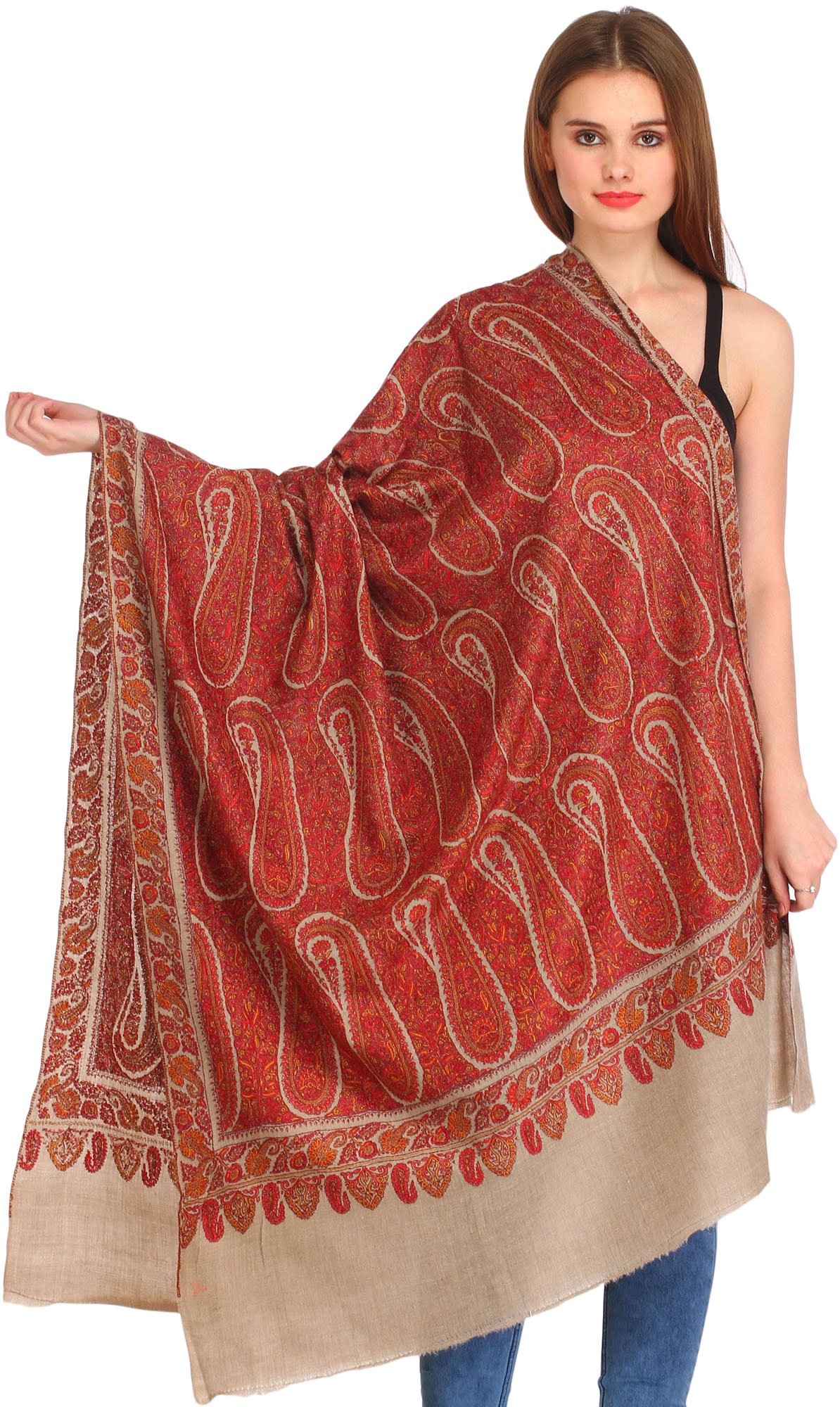
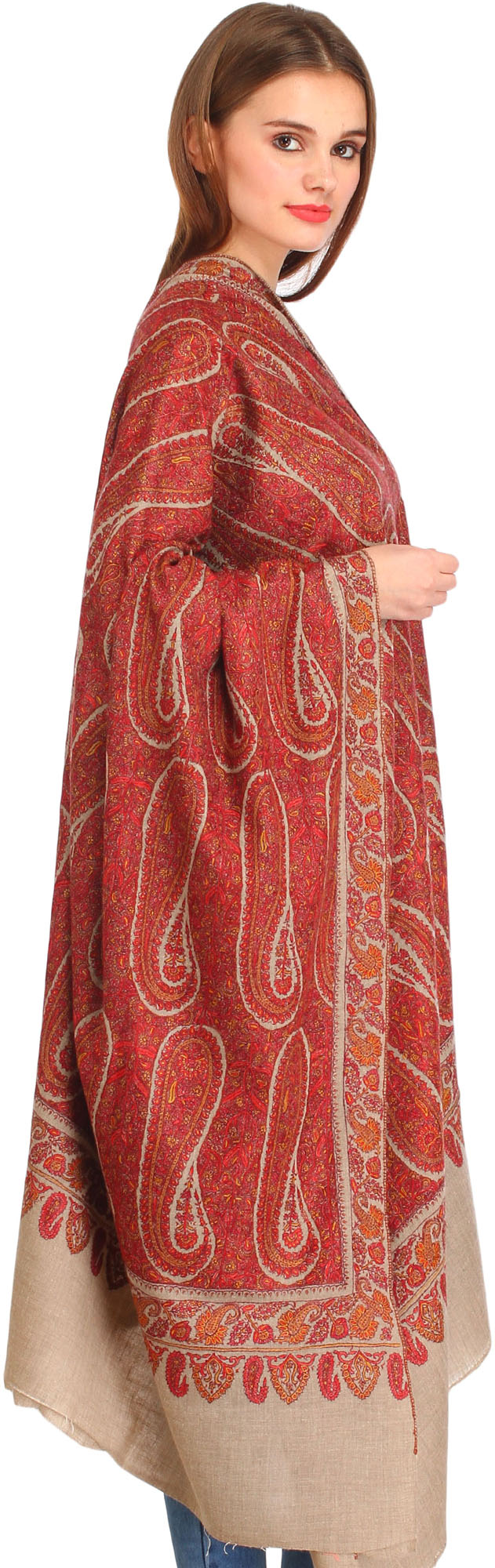
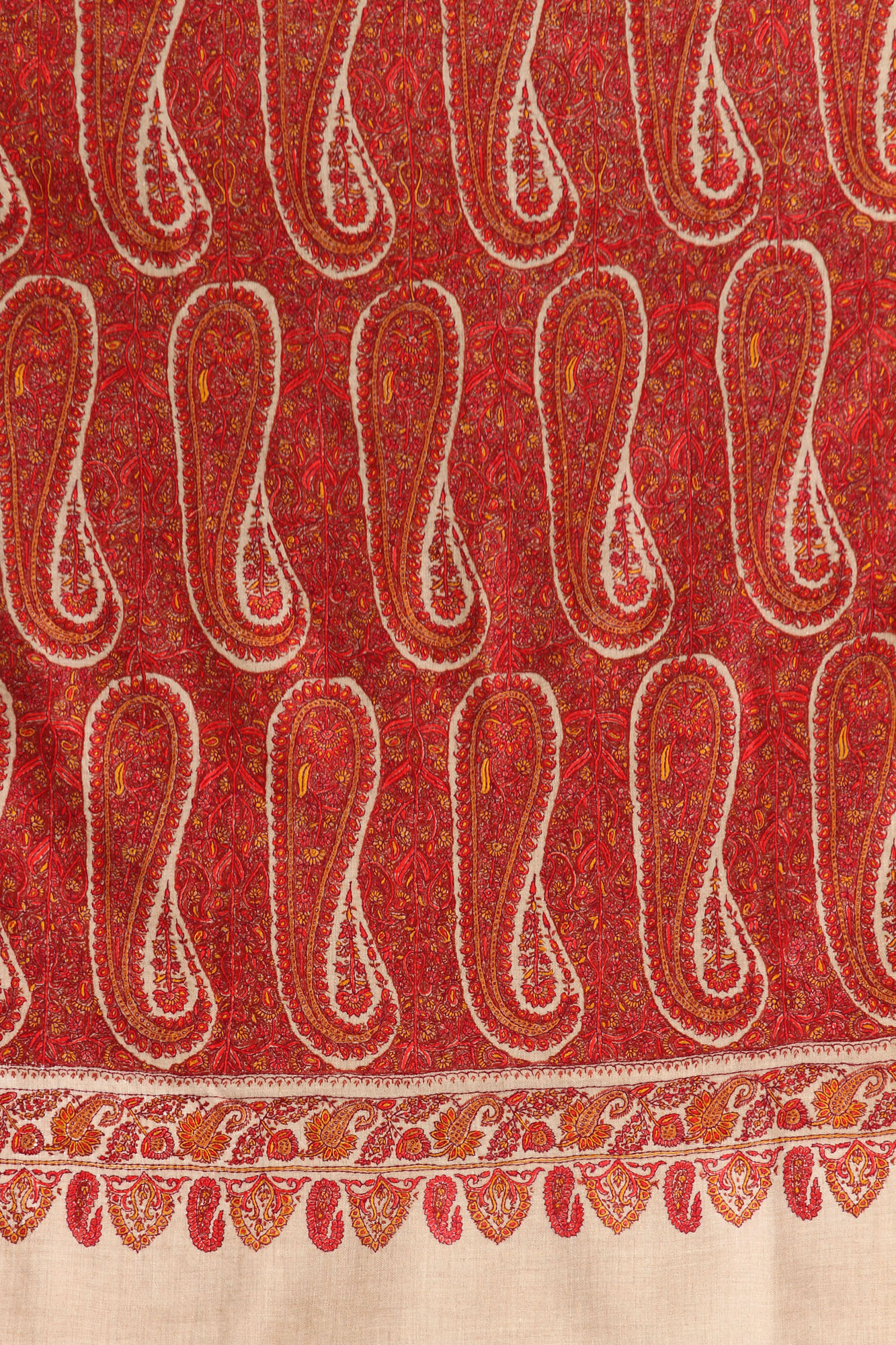
Experience the unparalleled luxury and exquisite artistry of this hand-embroidered Kashmiri Pashmina shawl. Crafted from the finest, ethically sourced pure Pashmina wool, this piece embodies centuries of traditional weaving and embroidery techniques passed down through generations of skilled artisans. The feather-gray base provides a sophisticated and versatile canvas, allowing the intricate embroidery to truly shine.
The Allure of the Paisley Motif
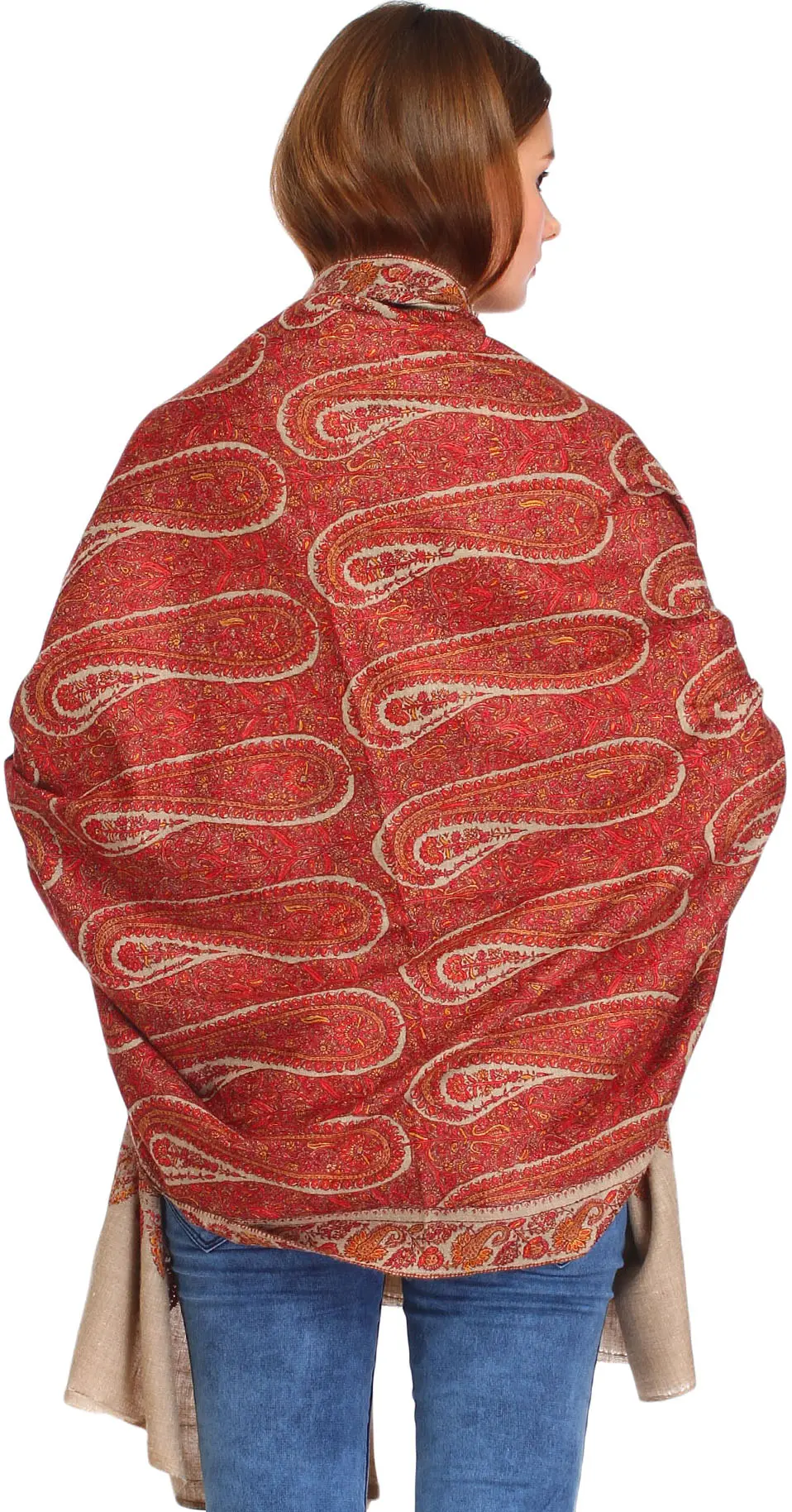
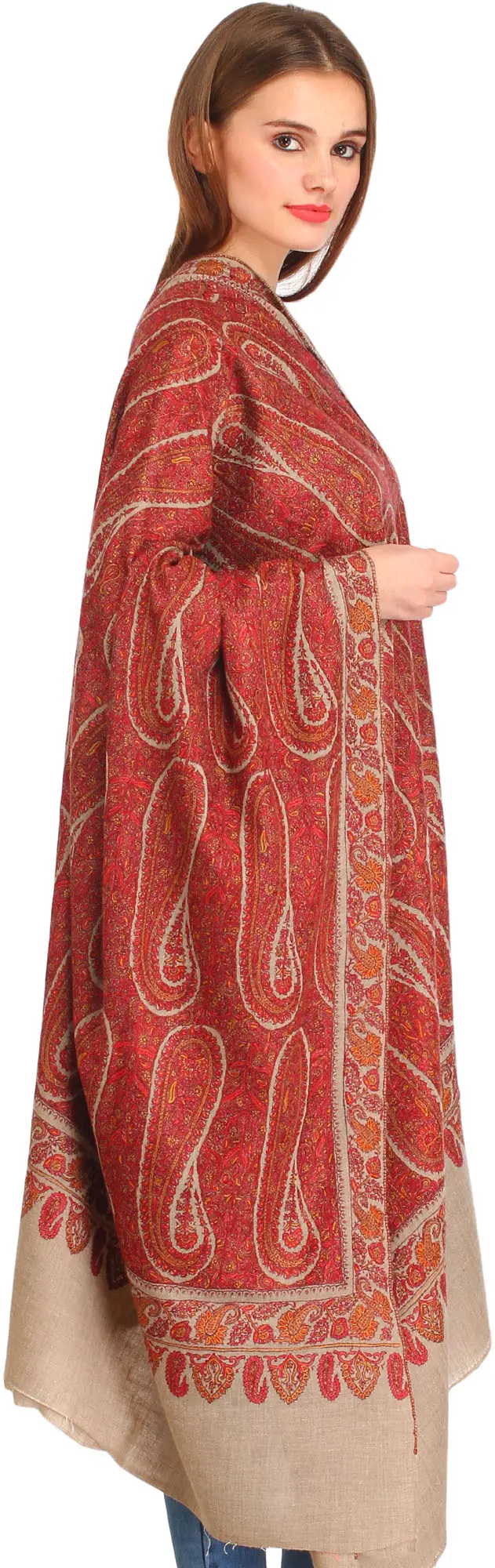
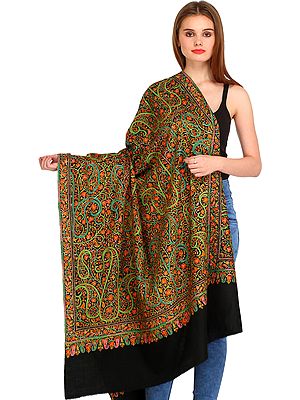
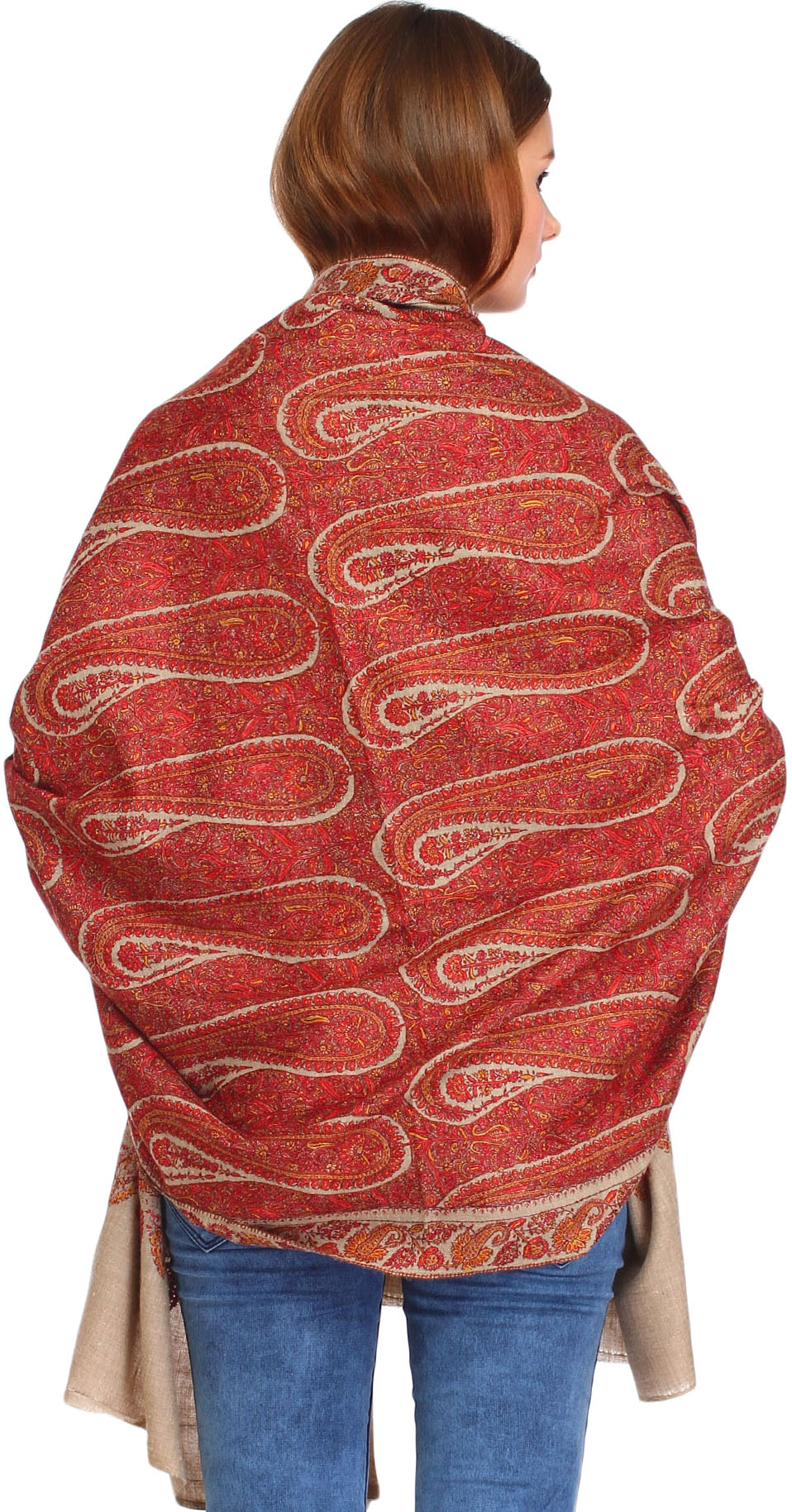
The design is adorned with a captivating arrangement of paisleys, a motif deeply rooted in Persian and Indian art, symbolizing life, vitality, and fertility. Each paisley is meticulously rendered with vibrant threads, creating a rich tapestry of color against the subtle gray backdrop. The detailed work showcases the incredible skill and patience of the embroiderers, who bring this classic pattern to life with every stitch. The rich red and warm orange hues woven into the paisley designs add a touch of warmth and elegance, making this shawl a statement piece that transcends fleeting trends.
––––––––––––––––––
Versatile Elegance for Every Occasion
This generously sized shawl offers exceptional versatility. Drape it elegantly over your shoulders for a formal evening event, adding a touch of sophisticated warmth and a pop of rich color to your ensemble. Alternatively, wrap it around yourself on a crisp autumn day for a cozy yet chic look, perfect for casual outings or leisurely strolls. The pure Pashmina wool provides remarkable warmth without unnecessary bulk, making it a practical and luxurious addition to any wardrobe. Its soft texture against the skin offers a comforting embrace, ensuring you feel as good as you look. This shawl is more than just an accessory; it's an heirloom, a wearable piece of art that speaks volumes about quality and timeless style. It makes for an unforgettable gift for a loved one or a cherished indulgence for yourself.
Protecting Your Pashminas: Instructions For Wash And Care
The warm and familiar snuggle of a pure Kashmiri Pashmina is too well known among its lovers.The Indian shawl has a delicate texture that comes from fine wool yarn and natural colors used in its make, which demands special and careful upkeep. We are here with a collection of tried and tested, expert-approved ways with which maintaining and washing your favorite Pashmina will be as smooth as its touch against your skin.
Washing A Pashmina
It is advisable to always go with dry cleaning when it comes to Pashmina. It allows deeper cleansing of the fabric without compromising the safety of its lean threads and colors.
You can flaunt the beauty of a Pashmina shawl for a whole season without washing or cleaning it, the elegant apparel does not lose its sheen. In case you need to wash your shawl and scarf at home, use cold water and soft cleaning agents such as baby shampoo. Gently wash the Pashmina article, remove any excess water and let it dry in shade.
Storing A Pashmina
Once your warm shawls are cleaned and ready to rest till the next winter, mindfully place them in a cool, dry, and clean place. Fold the shawl and wrap it in a fine cloth such as muslin to ensure that its seamless feel lasts for a long. You can also use zip-lock bags to keep moths and dampness out.
Do not put naphthalene balls with your Pashminas, because they can mess with its unique appearance and leave back a seething smell. Instead, you can use lavender or lilac placed in pouches to protect the shawls from bugs.
If you see a thread rip running across your Pashmina, just follow its trail by gently putting your fingernail on it, in the manner of scratching. Do not apply too much pressure since the weave of Pashmina is subtle and this could mess with its fine threads.
Make sure that the stored Pashmina is taken out from its resting place and allowed some fresh air to keep the moths away from your shawls and scarves.
Protect your Pashminas from extreme heat and direct sunlight because it is not good for the fabric's texture. Similarly, hanging a Pashmina can cause the yarns to lose their snugness, thus it is always advised to fold your shawls.
Brush your shawls after wearing them to remove small amounts of dust collected in the Pashmina fabric. If you observe any dampness or dust patch on the Pashmina, visit your dry cleaner to get it removed.
A Pashmina in a household can be passed from one generation to the next as an heirloom. Its exquisite designs and intricate weaving, when protected carefully with these suggestions, will remain in your family, warming you up with the love and beauty of this traditional Indian apparel.
Luxury in Every Thread: The Art and Technique of Pashmina Weaving
Pashmina shawls are a fine variant of shawls woven from Cashmere wool of the Changthangi cashmere goat. In the Kashmiri language, the word "Pashm" refers to the unspun wool of the Changthangi goat (also known as Pashmina goat), a native to the cold hills of Ladakh. Sometimes Pashmina can also be a blend of Cashmere wool and silk in a 70:30 ratio. The traditional weaving culture of Kashmir has gained popularity throughout the world and these shawls have become a fashion icon, particularly among women. Known for their soft texture, and sophisticated and opulent appearance, Pashmina shawls have positively retained their value in the International market. The local artisans of Kashmir are highly skilled and are appreciated for their artistry.
The process of making a world-class Pashmina shawl is both extensive and complex
It involves many steps that are mentioned below:
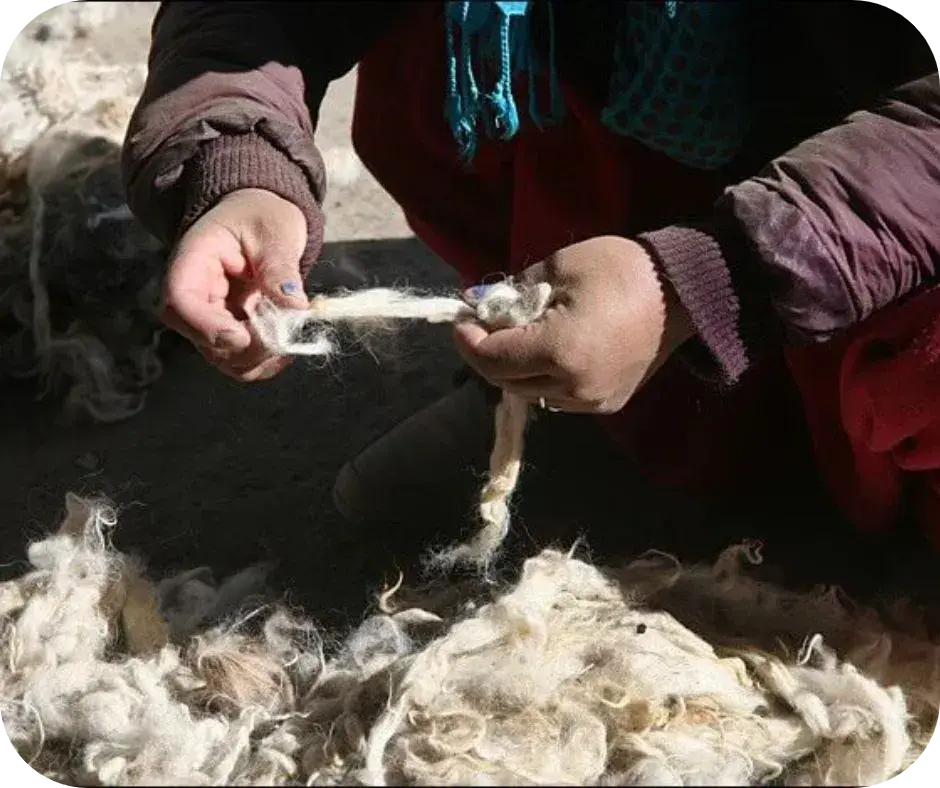
The making process of Pashmina shawls starts by selecting the finest hair of the Changthangi goats. Buddhist nomadic herders rear these goats and collect the soft hair by carefully combing them. They are not sheared because there is a high probability of breakage of the delicate fiber. Maintaining and preserving its natural beauty and strength is essential during the process.
After getting the fiber, it is sent to Kashmir where the local artisans, especially the womenfolk, begin its processing.
Process of Pashmina Shawl Production
The raw Pashmina fiber is first cleaned and all the unwanted particles attached to it are removed by hand. It is then placed in a container having fine rice powder for at least two days to bring more luster to it. The fiber is not exposed to any machinery processing for it may lose its distinctive characteristics.
When the fiber is removed from the container and cleaned thoroughly, it is now sent to skilled artisans who begin to spin it on a wooden spinning wheel which is known as “Yinder” in the local language.
Mastering the Art: Skilled Artisans of Kashmir
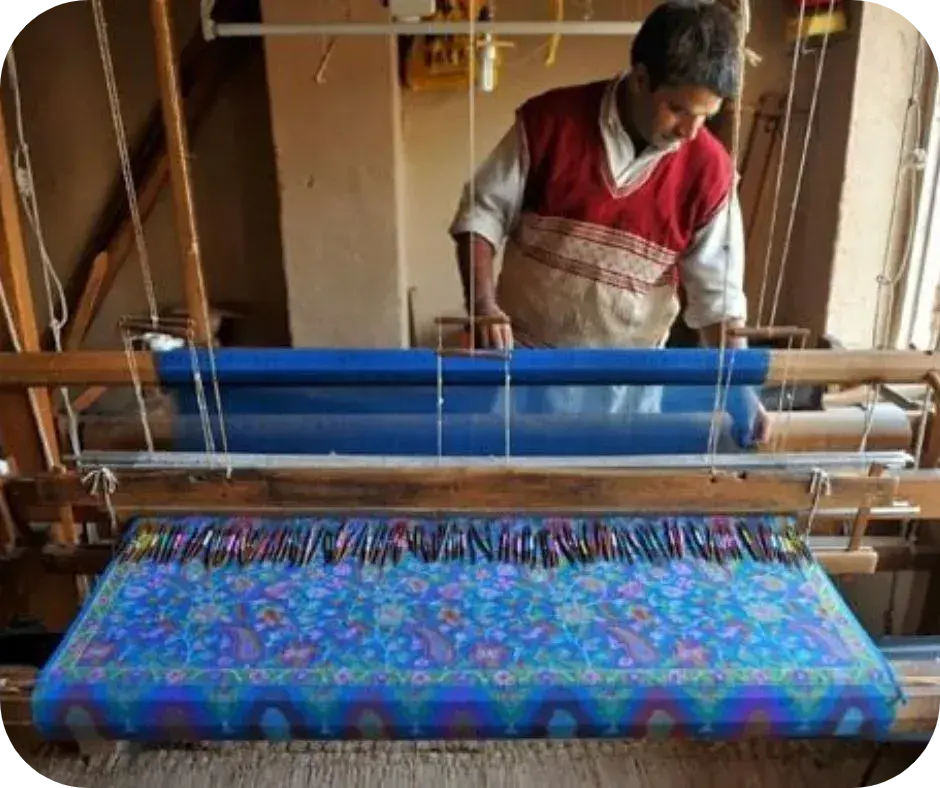
The spinning wheel does wonders by transforming the thick fiber into fine threads. These yarns are then handed over to handloom workers who transform them into a solid fabric.
Embroidery Mastery: Transformation of Pashmina Shawl Designs
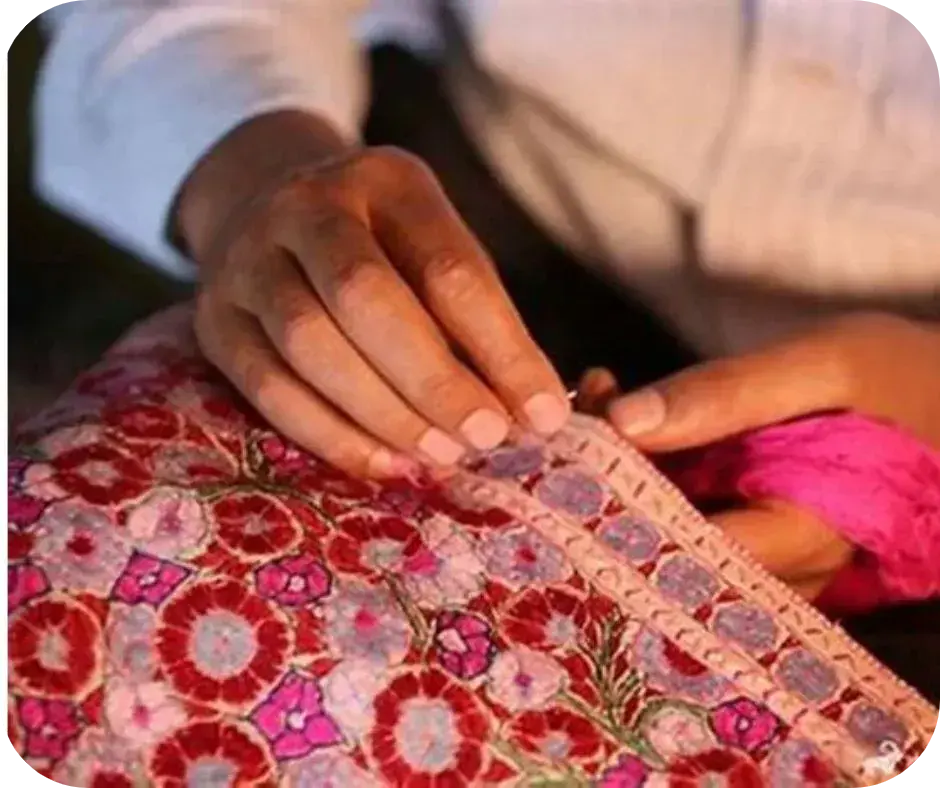
This is now the time to carry out the embroidery work on the fabric to turn it into luxurious Pashmina shawls.
There are generally three types of embroidery patterns in Pashmina; fine thread and needle embroidery is called Sozni, embroidery with thick thread and needle is called Papier Mache, and metallic thread embroidery is called Tilla. The most common motifs seen on Pashmina shawls are Buta, Lahariya, Bel, Ambi, Zanjeer, etc. Due to the extreme fragility of the Cashmere fiber, the Kashmiri artisans prefer to use their hands while processing and handling it. Manual processing results in soft and warm Pashmina shawls. Hand-spinning techniques and hand embroidery impart unique textures and patterns on them and therefore, no two Pashmina shawls will ever be the exact copy of each other. Depending upon the intricacy of the design, it may sometimes take several months or years to complete one Pashmina shawl. The hard labor that goes into the making process of these shawls makes them more appreciable and therefore pure Pashmina shawls are always more expensive than ordinary ones.