You are viewing the Indian version of the website.
To be able to order, please click here for your region.
Easy Returns
Easy Returns
Return within 7 days of
order delivery.See T&Cs
1M+ Customers
1M+ Customers
Serving more than a
million customers worldwide.
25+ Years in Business
A trustworthy name in Indian
art, fashion and literature.

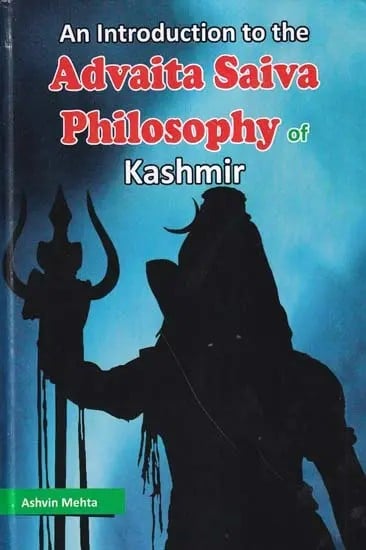
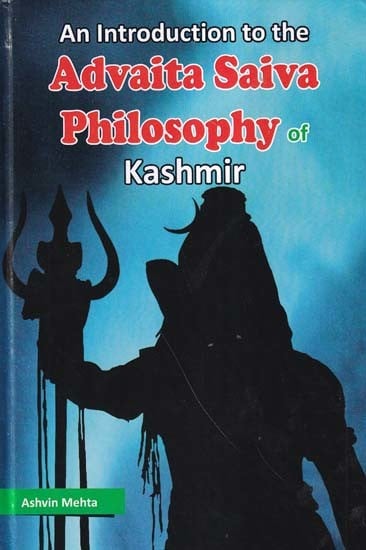
An Introduction to the Advaita Saiva Philosophy of Kashmir

Rs.1600
Rs.2000
20% off
MRP
Inclusive of All Taxes
Specifications
Publisher: Edukeen Publisher
Author Ashvin Mehta
Language: English
Pages: 297 (B/W Illustrations)
Cover: HARDCOVER
24 cm x 16.5 cm (9.5x6.5 inch)
Weight 620 gm
Edition: 2024
ISBN: 9789395626675
HBC137
Statutory Information
Delivery and Return Policies
at  43215
Returns and Exchanges accepted within 7 days
Free Delivery
Delivery from: India
Easy Returns
Easy Returns
Return within 7 days of
order delivery.See T&Cs
1M+ Customers
1M+ Customers
Serving more than a
million customers worldwide.
25+ Years in Business
A trustworthy name in Indian
art, fashion and literature.
Book Description
About the Book
The Kashmir Shaivism tradition, also called Trika Shaivism, is a non-dualist branch of Shaiva-Shakta Tantra Hinduism that originated in Kashmir after 850 CE. In its place of origin in Kashmir, this tradition is commonly referred to as "Kashmiri Shaivism." It later spread beyond Kashmir, with its great scholar Abhinavagupta calling it "Trika" (meaning "the Trinity"). It particularly flourished in the states of Odisha and Maharashtra. Advaita Vedanta and Kashmir Shaivism (Trika) are both non-dualistic or monistic philosophies, that are very much similar to each other. Being a Vedantavadi I would start with summarizing the basics of the Advaita Vedanta first, and then I'll eventually move on to the Trika Shaivism. The Ultimate Reality in Trika is Paramashiva, and Just like Advaita Vedanta, the nature of Ultimate Reality is Sacchidananda as well. What's unique is that Shiva in Trika system has three additional features- Iccha, Gyana & Kriya Shaktis, and is always endowed with Swarantrya. In other words, Trika philosophy has the same premise as Advaita Vedanta, but gives a bit more detailed explanation of the Ultimate Reality. This book offers a unique introduction to Kashmir Saivism for general readers.

About The Author
Ashvin Mehta is a distinguished scholar of Advaita Saiva philosophy and Kashmiri Shaivism. His publications on Kashmiri philosophical traditions and mystical practices provide critical insights into spiritual doctrines and metaphysical concepts, enriching scholarly discourse on Indian philosophy. Mehta's work bridges ancient wisdom with contemporary philosophical inquiries, fostering deeper insights into Indian spiritual traditions and their relevance in modern contexts.

Preface
The Kashmir Shaivism tradition, also called Trika Shaivism, is a non-dualist branch of Shaiva-Shakta Tantra Hinduism that originated in Kashmir after 850 CE. In its place of origin in Kashmir, this tradition is commonly referred to as "Kashmiri Shaivism." It later spread beyond Kashmir, with its great scholar Abhinavagupta calling it "Trika" (meaning "the Trinity"). It particularly flourished in the states of Odisha and Maharashtra. Defining features of the Trika tradition are its idealistic and monistic Pratyabhijna ("Recognition") philosophical system, propounded by Utpaladeva (c. 925-975 CE) and Abhinavagupta (c. 975-1025 CE), and the centrality of the three goddesses Para, Parapara, and Apara. While Trika draws from numerous Shaiva texts, such as the Shaiva Agamas and the Shaiva and Shakta Tantras, its major scriptural authorities are the Målinîvijayottara Tantra, the Siddhayogeuvarimata and the Anamaka-tantra. Its main exegetical works are those of Abhinavagupta, such as the Tantraloka, Maliniulokavarttika, and Tantrasåra which are formally an exegesis of the Malinivijayottara Tantra, although they also drew heavily on the Kali-based Krama subcategory of the Kulamarga. Another important text of this tradition is the Vijñana-bhairava-tantra, which focuses on outlining numerous yogic practices. Kashmir Shaivism shares many parallel points of agreement with the lesser known monistic school of Shaiva Siddhanta as expressed in the Tirumantiram of Tirumular. While also sharing this branch's disagreements with the dualistic Shaiva Siddhanta school of Meykandar, which scholars consider to be normative tantric Shaivism. The doctrines of Kashmir Shaivism were very influential on the Shri Vidya tradition of Shaktism.

Frequently Asked Questions
  • Q. Do you offer express shipping?
    A. Yes, we do have a chargeable 1-2 day delivery facility available for Indian pin codes. For express shipping, please reach out through help@exoticindia.com
  • Q. What locations do you deliver to?
    A. Exotic India delivers orders to all Indian pin codes and countries having diplomatic relations with India.
  • Q. Can I return the book?
    A. All returns must be postmarked within seven (7) days of the delivery date. All returned items must be in new and unused condition, with all original tags and labels attached. To know more please view our return policy.
  • Q. What is Handling & delivery charge?
    A. Handling and delivery charge is the sum of acquiring the book from the remote publisher to your doorstep.
  • Q. I accidentally entered wrong delivery address, can I change the address?
    A. Delivery addresses can only be changed only incase the order has not been shipped yet. In case of an address change, you can reach us at help@exoticindia.com
  • Q. How do I track my order?
    A. You can track your orders simply entering your order number through here or through your past orders if you are signed in on the website.
  • Q. How can I cancel an order?
    A. An order can only be cancelled if it has not been shipped. To cancel an order, kindly reach out to us through help@exoticindia.com.
Add a review
Have A Question
By continuing, I agree to the Terms of Use and Privacy Policy
Book Categories