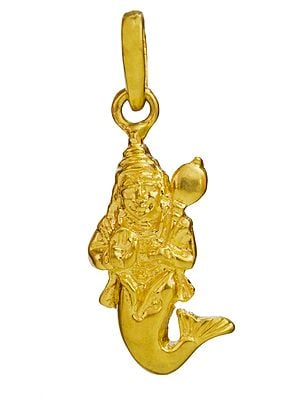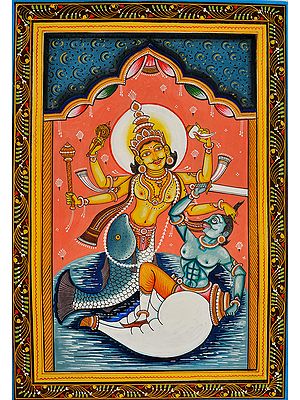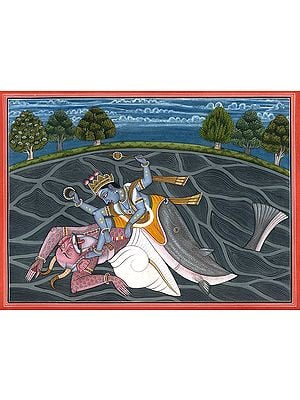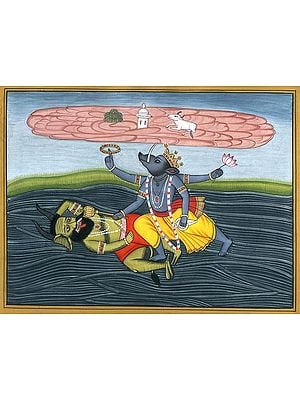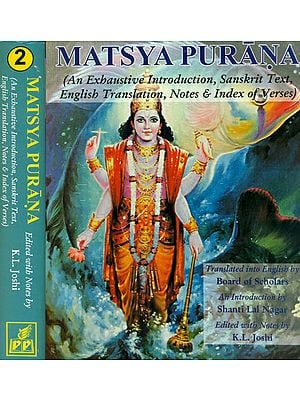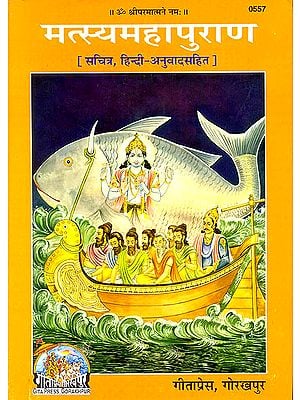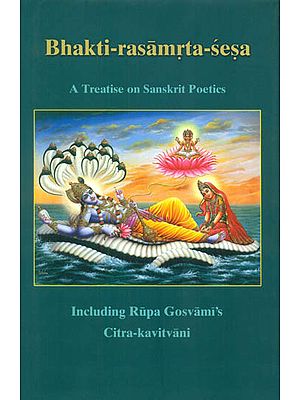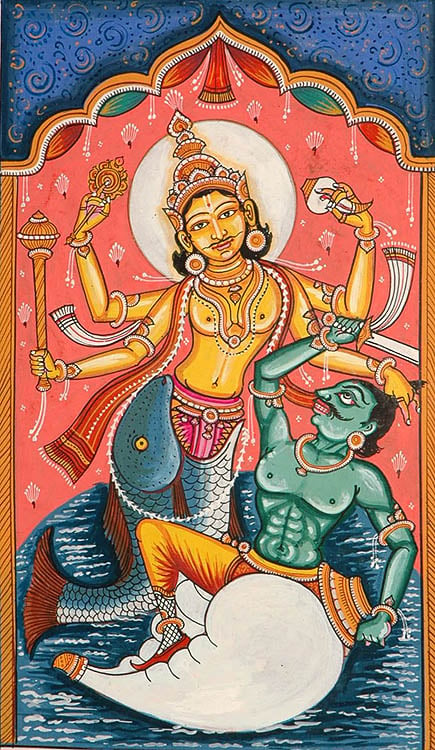

Matsyavatara has two accounts in texts, one relates to protecting Manu, progenitor of mankind, Vivasvana's son and fifth in the line of Brahma, and the other, to recovering Brahma's
Vedas. Manu is more often known as Vaivasvata Manu after his father. It is said that once when Brahma was fully absorbed in reciting Vedas, Hayagriva, a demon, slipped into his chamber and stole away the Vedas. With the Holy Scriptures the demon entered into waters and hid him there. For recovering the Vedas
Vishnu incarnated as Matsya, entered the waters, killed Hayagriva and brought back the sacred texts. The myth is seen as symbolizing the restoration of true knowledge when ignorance sought to enshroud it under the cover of darkness.
The other myth has wider acceptance from the Vedic texts to the twentieth century's Hindi epic Kamayani of Jai Shankara Prasad, of which main theme is the Great Deluge and Manu's escape from it. As the myth has it, while bathing in river Kritamala in course of penance, a tiny fish appeared before Manu and prayed him to protect it from larger fishes as it was afraid of them. Manu lifted it on his palm and brought it to his palace and put it into a pot. In two-three days it grew larger to the pot's size. Manu transferred it to a larger pot but in next two-three days that pot too failed to contain it. Manu now put it into a tank but in another few days it grew to a size larger than the tank. Now, Manu shifted it to the Ganges but as before Ganges too fell short to its size. Finally, the fish revealed to Manu that within seven days the world would have a great flood. Hence, he should make a large boat, board it along with Sapta-rishis - seven sages, Brahma's spiritual sons, and their wives and escape. The fish promised him to help. As advised by the fish, Manu made a boat and when the Great Deluge began enveloping the world boarded it along with Sapta-rishis and their wives and with the help of the fish paddled it to safety. In the Mahabharata the Himalayan peak where Manu's boat moored has been named as Naubandhana, while in other texts, as Navaprabhanshana, one meaning 'where the boat was moored', and other, 'which rescued the boat'. The Matsya Purana alludes to Manu as the ruler of Dravinda, and the mount where his boat reached as Malaya, not Himalayas.
Significantly, world literature, to include Greek, Latin, European, Babylonian, and South Asian among others, abounds in tales of Great Flood with someone like Manu escaping it under Divine commandment. The Holy Bible (Genesis, Chapters 6, 7 and 8) in Noah's episode seems to recount an identical flood and emergence of God instructing Noah to make an ark with given length, breadth and height to protect him his wife, sons, wives of his sons, males and females of different species of animals and birds, creepers, and vegetables - seeds of life in all its shades and kinds for He was going to flood the world to destroy it along with all flesh which was dirtied by so much of violence. Noah acted as commanded and was instrumental in protecting the seed of life and recreating its all forms. Except a different name of the place where the boat lands and such details of species which Noah is commanded to take with him, this Biblical story is repeated almost verbatim in the Holy Koran (11.3, 25-49). In Matsyavatara, Vishnu, God manifest, acts as fish, from swelling His body-size for causing the flood to securing re-emergence of life; in the Holy Bible, God Himself, not through an incarnated form, does it.
Free Shipping. Delivered by
to all international destinations within 3 to 5 days, fully insured.
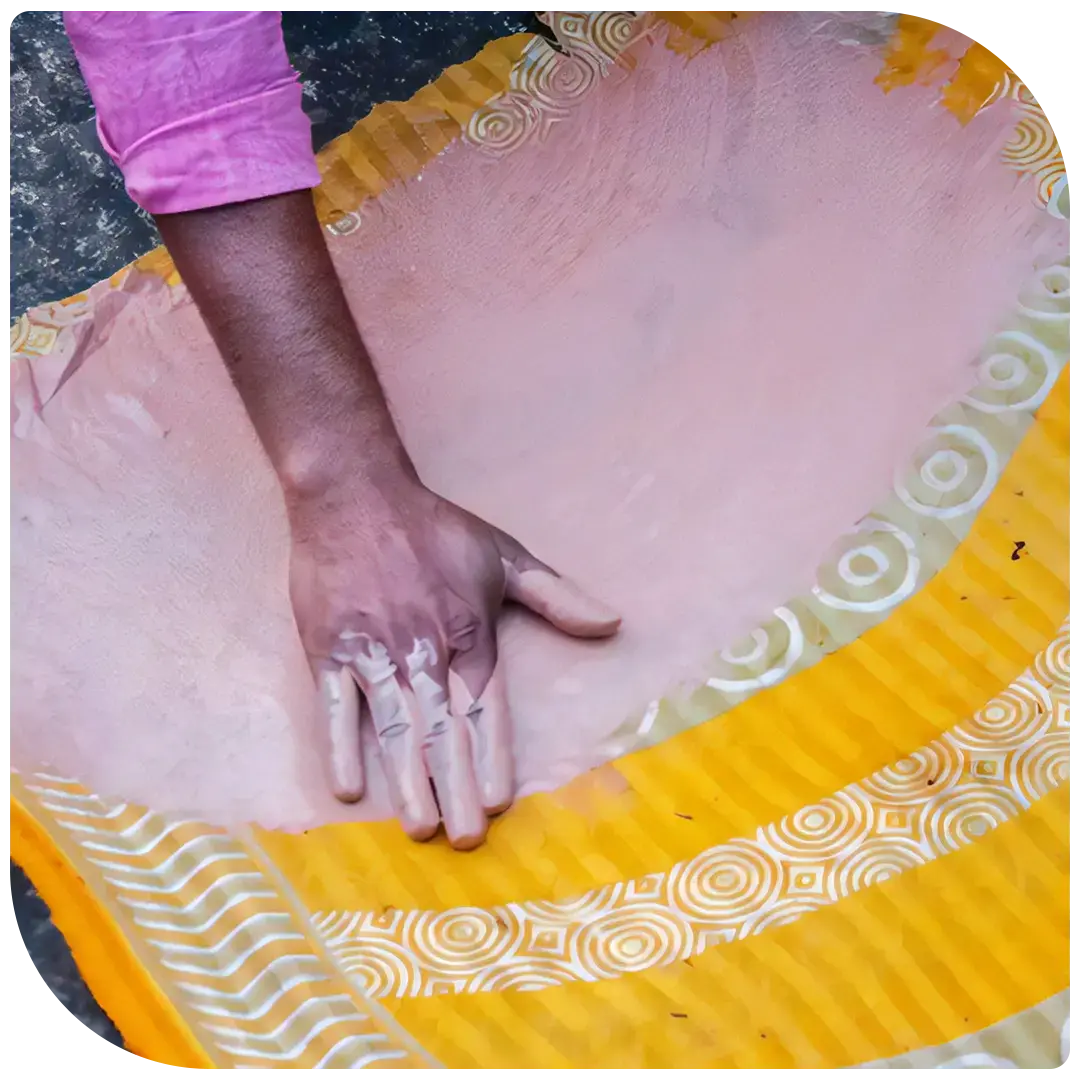
Mastering the Ancient Technique: Exploring the Meticulous Creation of Pattachitra Paintings
The traditional Pattachitra is a scroll painting that is done on
cloth. This is revealed in the name; Pattachitra is a Sanskrit
term made from two words i.e. Patta meaning cloth and Chitra
meaning picture. The main subject of this painting is portraying
Hindu mythological narratives, scenes from religious texts, and
folktales. Pattachitra paintings are especially practiced in
eastern Indian states such as West Bengal and Odisha, and also in
some parts of Bangladesh. This art form is closely related to Shri
Jagannath and the tradition of the Vaishnava sect. It is believed
that Pattachitra art originated in the 11th century and the people
of Odisha practice it even today without any discrepancy. Bengalis
use these scroll paintings for ritual purposes (as a visual
device) during the performance of a song or Aarti.
Pattachitra paintings are characterized by creative and
traditional motifs/designs, decorative borders, and bright
colorful applications. The outline of the figure and motifs are
bold and sharp. Some common shapes and motifs seen in these
paintings are trees, flowers, leaves, elephants, and other
creatures. The artists of Odisha and Bengal still use the
traditional method of painting which gives a unique look to it
altogether.
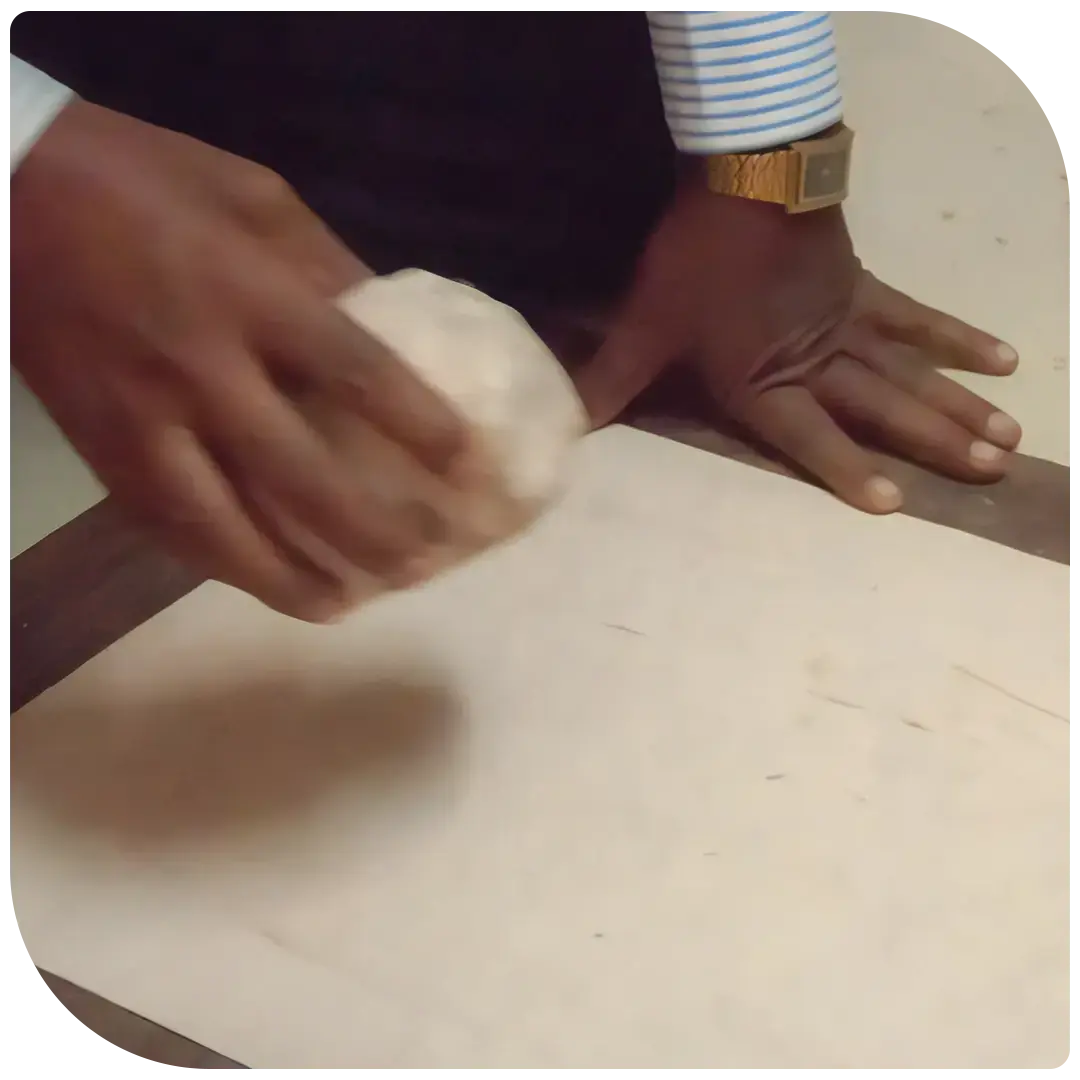
1. Canvas is prepared
The process of painting a Pattachitra begins by preparing the
canvas (patta). Generally, cotton cloth is used for making the
canvas. The local artists dip the cotton cloth in a mixture of
tamarind seeds and water for a few days. The cloth is then taken
out and dried in the sun. Now natural gum is applied over it to
stick another layer of cotton cloth on it. Thus a thick layer of
cotton cloth is formed. This layered cotton is sun-dried and a
paste of chalk powder, tamarind, and gum is applied on both
sides. The surface of the cloth is then rubbed with two
different stones for smoothening and it is again dried. This
process gives the cloth a leathery finish and it is now ready to
be painted.
2. Natural colors are made using traditional method
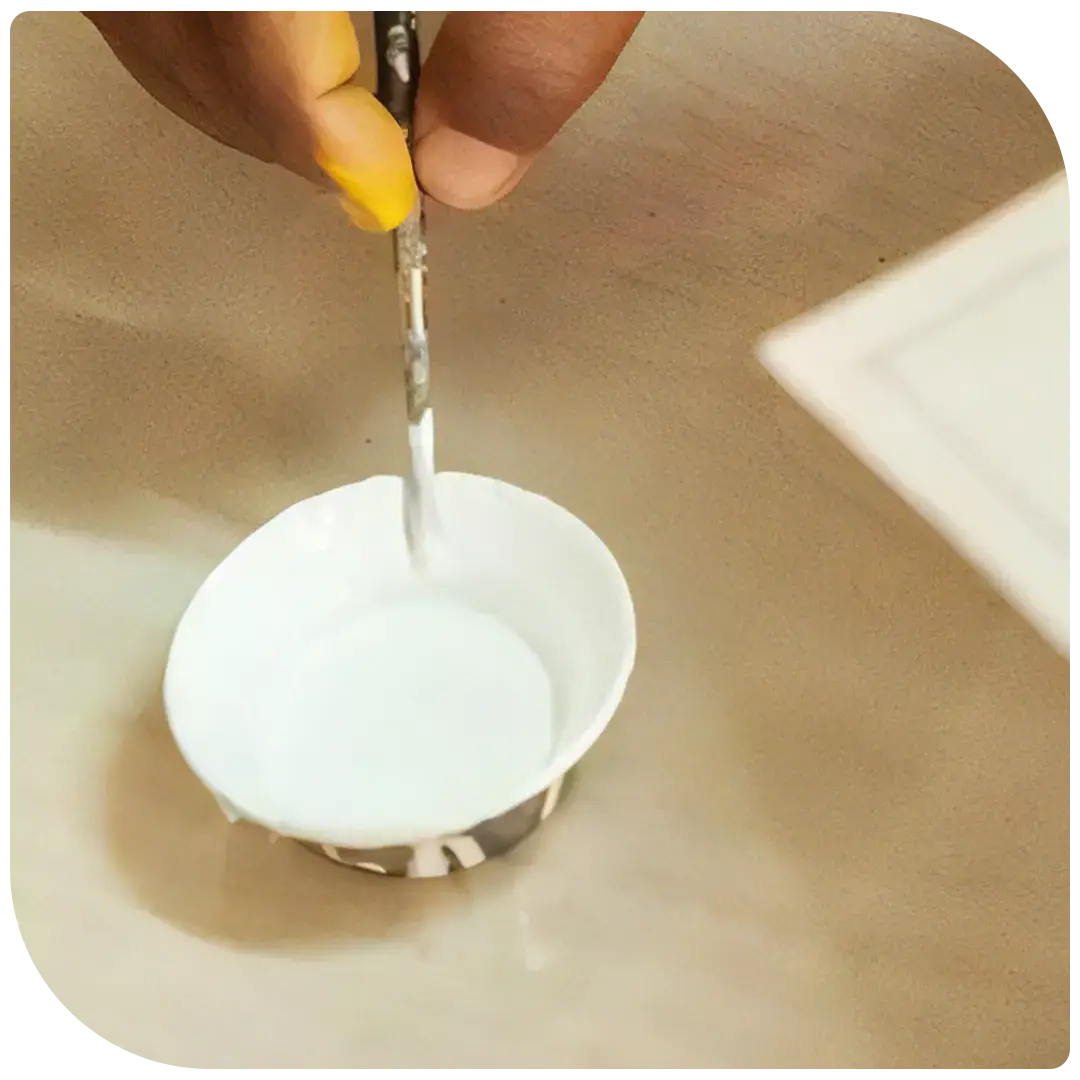
The painters prepare and use vegetable and mineral colors for
application in the painting. White color is made from conch
shells, black is made by burning coconut shells, Hingula is used
for red color, Ramaraja for blue, and Haritala for yellow.
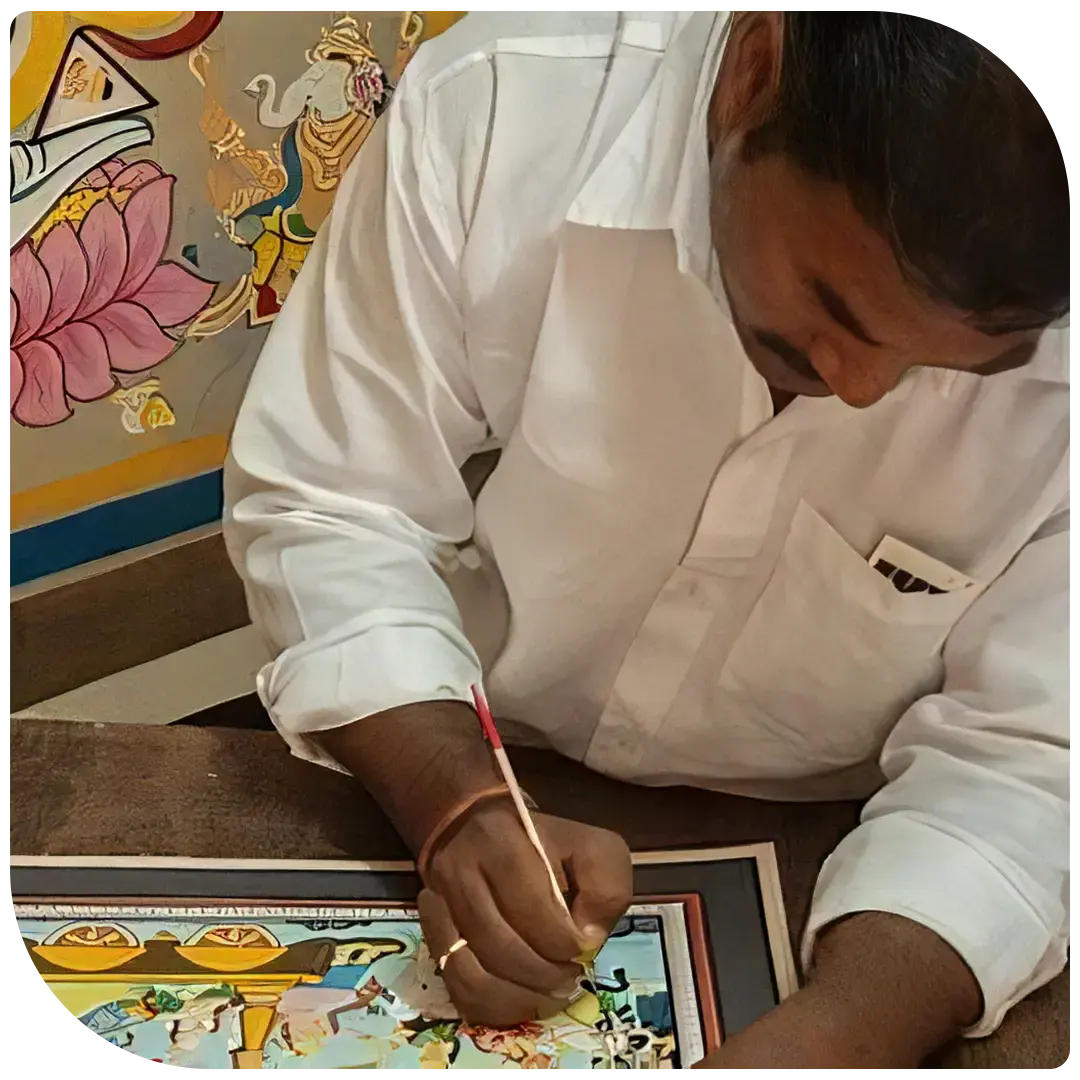
3. Colors are filled in
The artist now makes a double-lined border on all four sides of
the canvas. The local artists are so expert in painting that
they do not draw figures and motifs with pencil but directly
draw them with a brush. The paint brushes that the painters use
are made of the hair of domestic animals, a bunch of which is
tied to the end of a bamboo stick. The figures are now painted
with natural colors using the indigenous brushes. The outline is
thickened with black color.
4. Painting is given a finishing
Finally, the painting is varnished/glazed to protect it from any
damage and to get a glossy shine on the surface.
The making of a Pattachitra is laborious work and therefore, one
painting may sometimes take over a month to complete. Due to their
classical look, these paintings are admired by people from all
over the world. The artistic skills used in Pattachitra are passed
down from one generation to another and thus are preserved to
date.