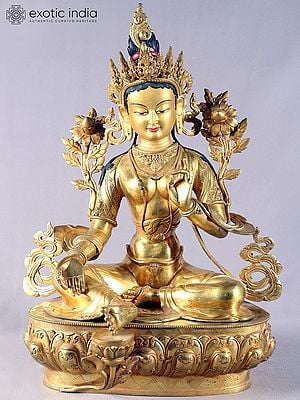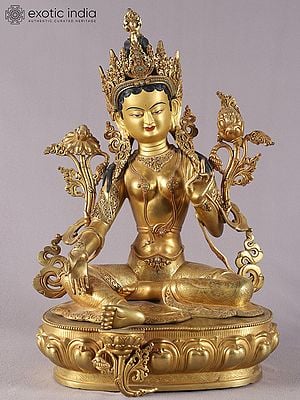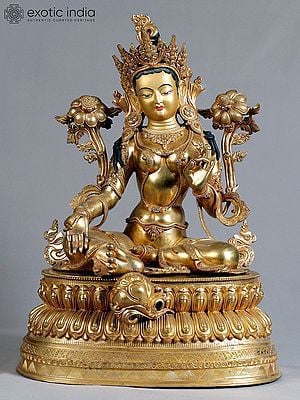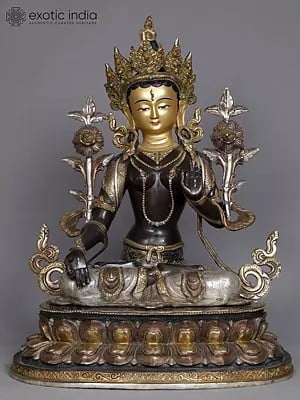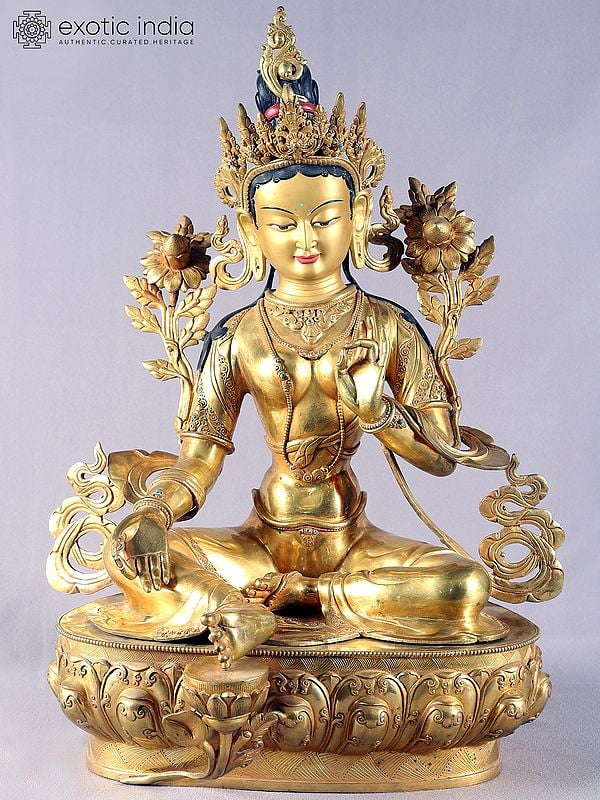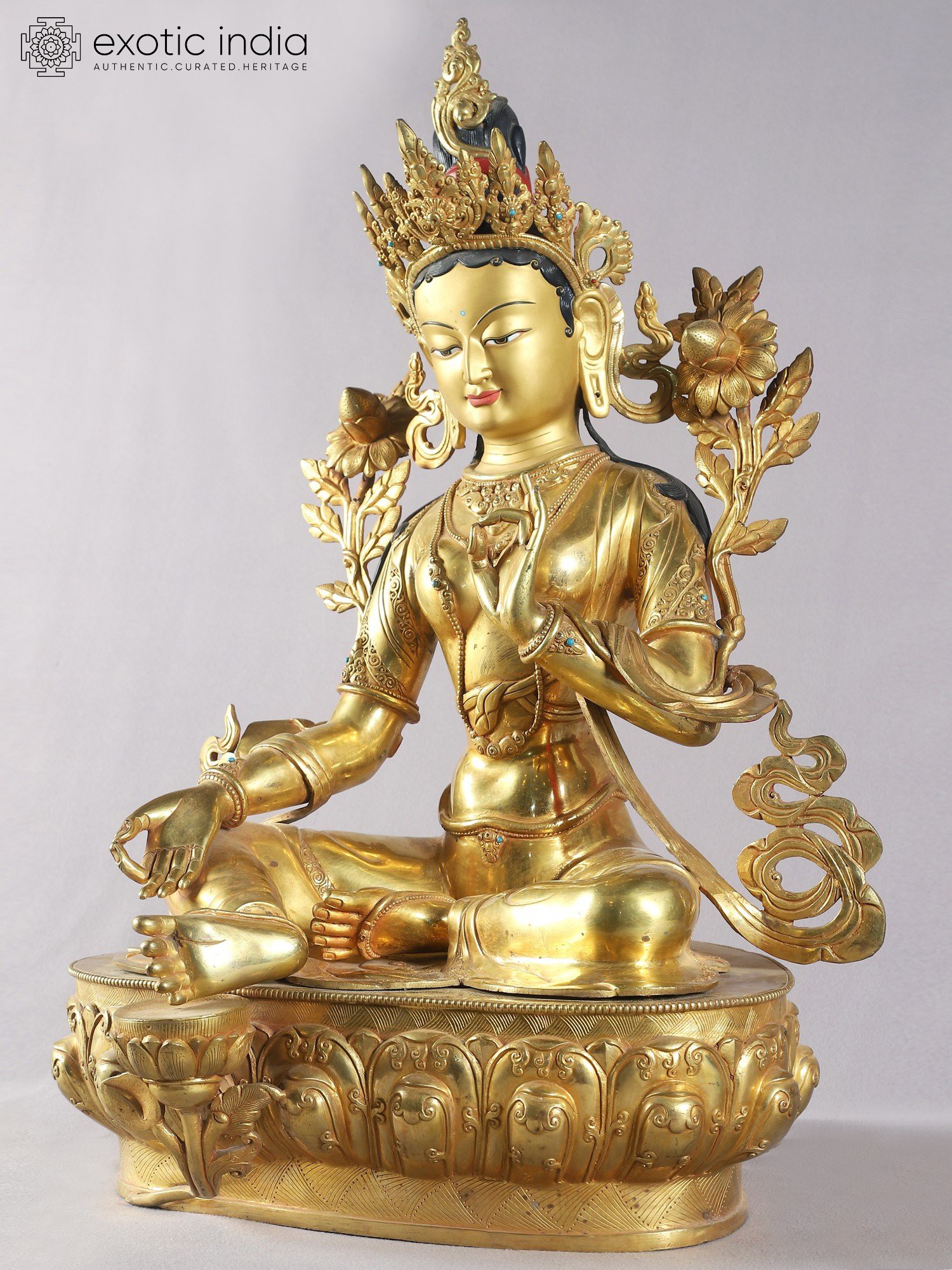

25" Green Tara Goddess Statue from Nepal
$5417
Includes any tariffs and taxes

Only 1 available
Notify me when this item is available
| Specifications |
 |
CAA077 |
 |
Copper With Gold |
 |
Height: 25 inch |
| Width: 20 inch | |
| Depth: 14 inch | |
 |
Weight 18.30 kg |
| About the Item |
|
| Delivery and Return Policies |
 |
Usually ships in 6 days |
 |
Returns and Exchanges accepted within 7 days |
 |
Free Delivery |

Easy Returns

Fully Insured

100% Handmade
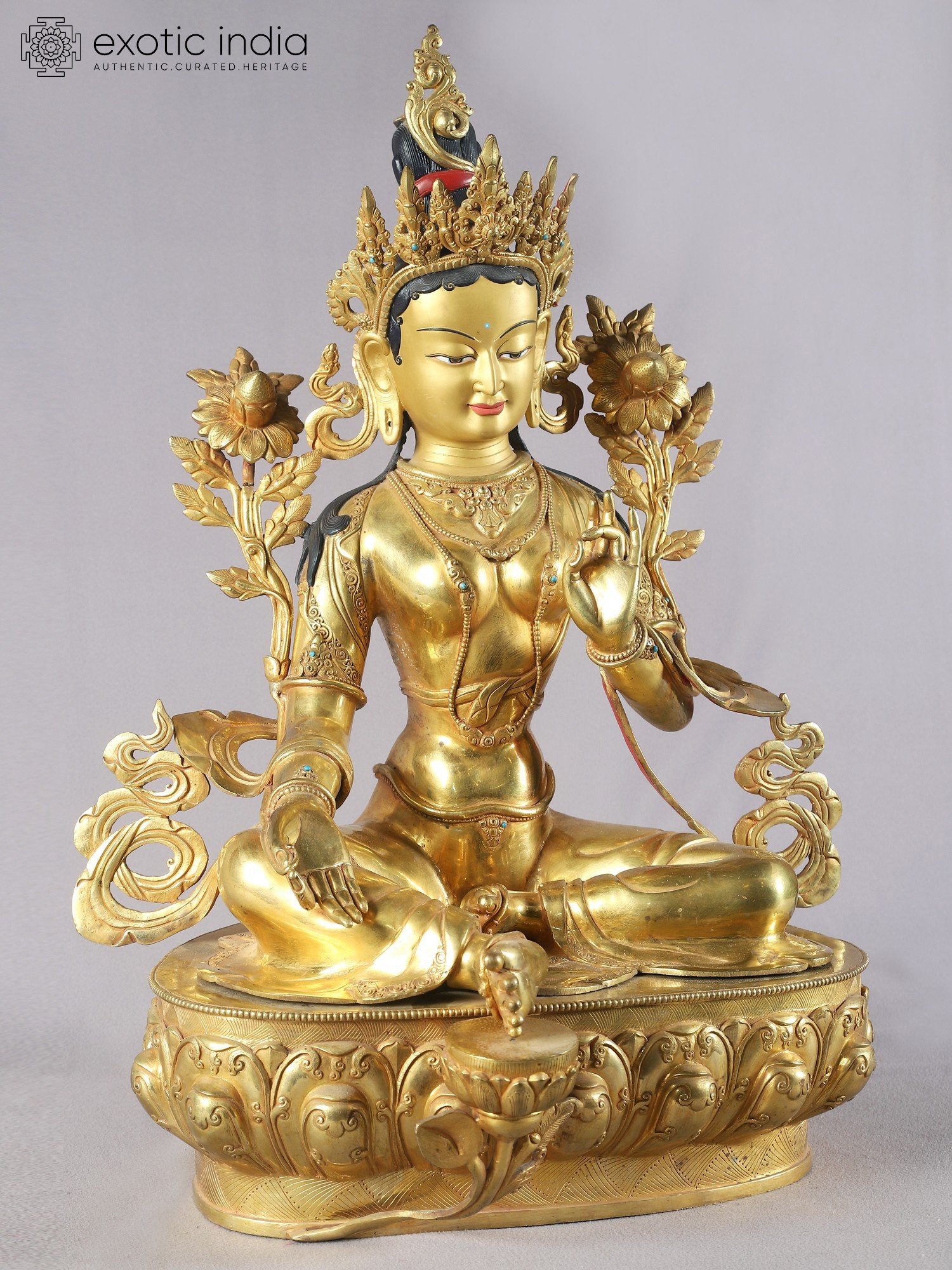
An enchanting
Nepalese gilded copper statue of Green Tara, the artwork you see here is a
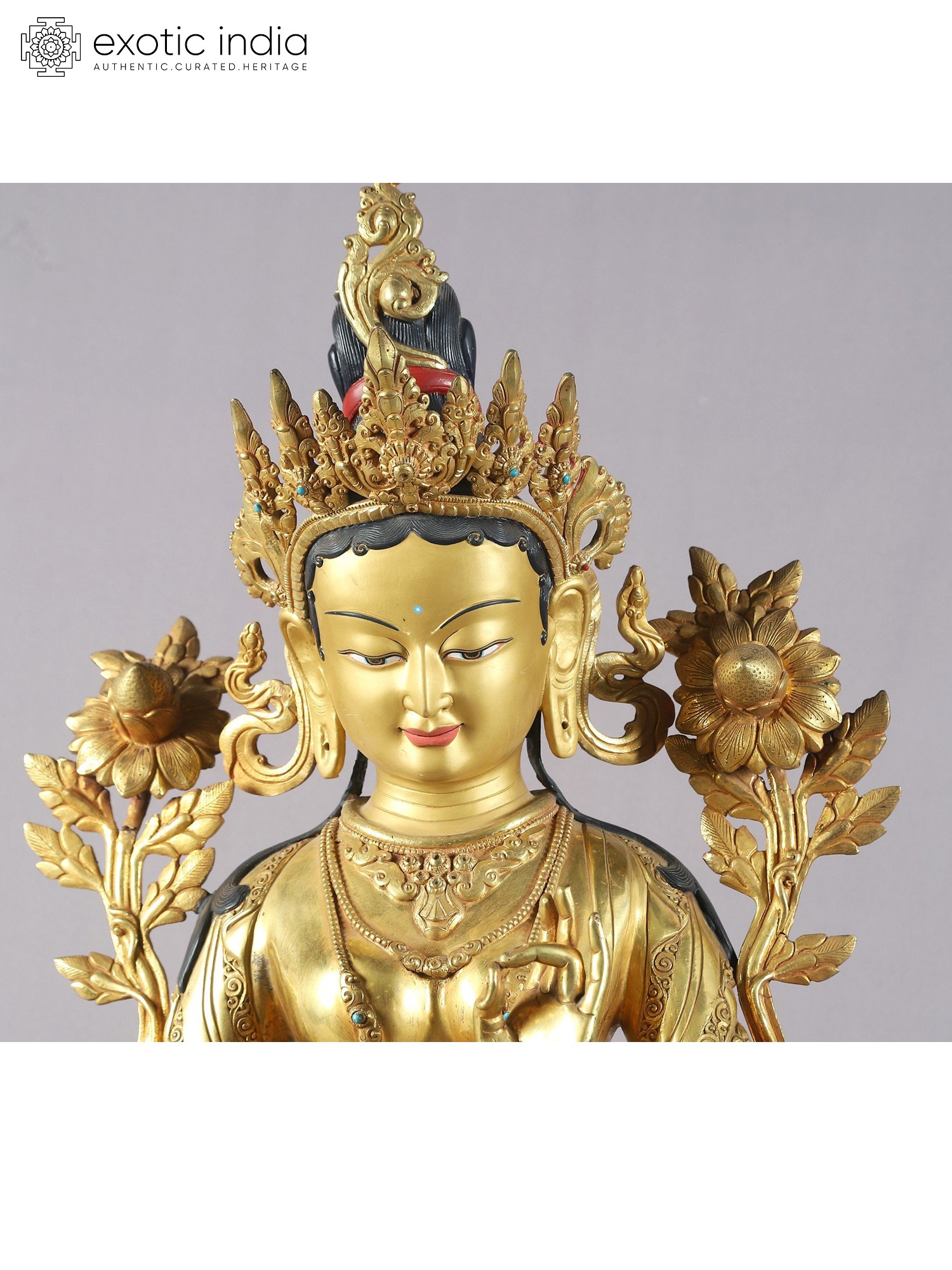
masterpiece in every manner. The tresses of Tara are arranged tastefully,
framing her face along with the five-pronged Buddhist crown whose tassels form
beautiful waves. Thin eyebrows, tranquil eyes, a sharp nose, and a mouth as
soft as a petal infuse the statue of Tara with a divine animation. Her silken
attire is delineated with a masterful perfection, clinging and flowing around
her lithesome form.

The Radiant Embodiment of Compassion: Green Tara
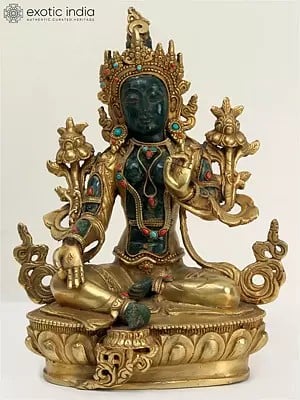
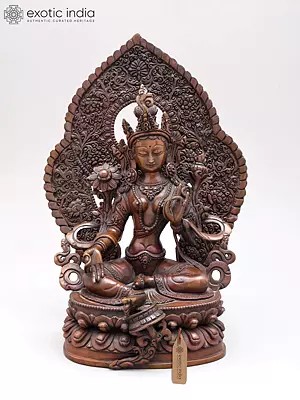
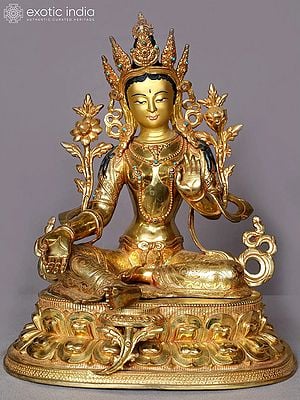
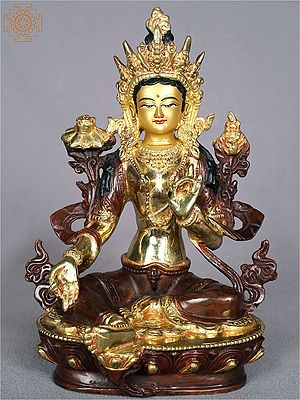
Gaze upon this magnificent creation, a resplendent depiction of the Green Tara, a revered goddess in Tibetan Buddhism. Crafted from rich copper and adorned with a lustrous gold finish, this statue emanates an aura of divine serenity and profound compassion. The artistry evident in every detail speaks to the skilled hands of Nepalese artisans, who have captured the essence of this enlightened being with remarkable fidelity. The flowing robes, the delicate ornamentation, and the serene facial features all contribute to a sense of ethereal grace.Mythological Significance and Iconography
The Green Tara is celebrated as the embodiment of enlightened activity, swift in her response to the pleas of those in need. Legend tells that she arose from a tear shed by Avalokiteshvara, the Bodhisattva of Compassion, as he witnessed the suffering of the world. Her green complexion signifies her active, dynamic nature, her ability to overcome obstacles and bring forth abundance. She is often depicted seated in a relaxed posture, with her right leg extended, symbolizing her readiness to descend and offer assistance. In her left hand, she typically holds the stem of a lotus flower, representing purity and her ability to bloom even amidst the mire of worldly attachments. The gesture of her right hand, often shown in the *varada mudra* (boon-granting gesture) or the *abhaya mudra* (fear-allaying gesture), further emphasizes her protective and benevolent nature. This particular sculpture masterfully conveys these attributes, inviting contemplation and spiritual connection.

A Testament to Craftsmanship and Devotion
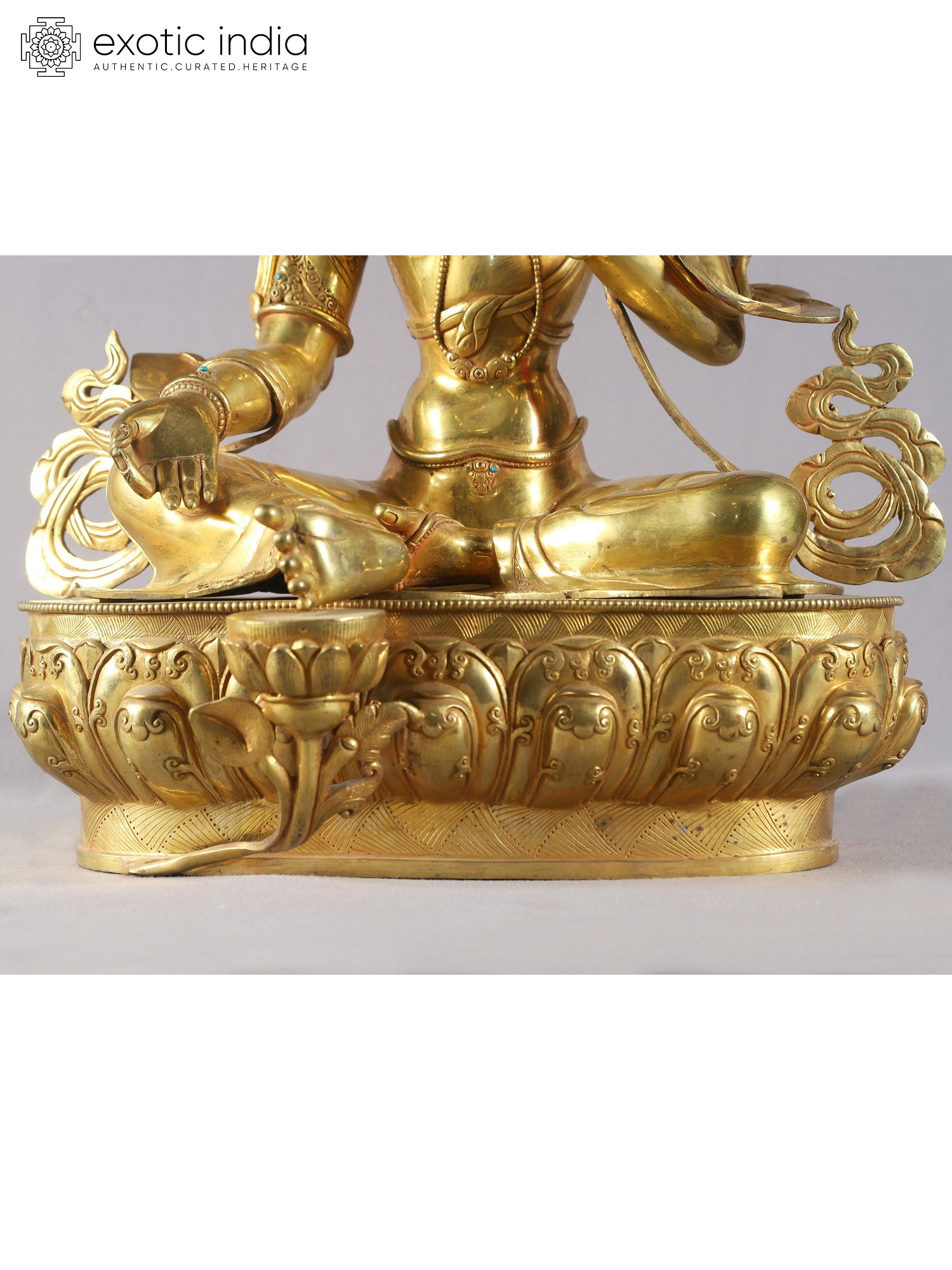
The inherent beauty of this statue lies not only in its divine subject matter but also in the exquisite craftsmanship. The use of copper provides a sturdy and enduring foundation, while the application of gold imbues the sculpture with a sacred glow, reflecting light and drawing the viewer's spiritual attention. The intricate carving on the lotus base, the delicate floral motifs adorning her clothing, and the elaborate headdress, adorned with precious stones, showcase the dedication and skill passed down through generations of Nepalese metalworkers. Each element is meticulously rendered, creating a visual narrative of peace, protection, and spiritual awakening. This piece is more than just an object; it is a conduit for devotion, a source of inspiration, and a timeless representation of compassion's boundless power. It stands as a testament to the enduring artistic traditions of Nepal and the profound spiritual heritage it preserves.How are Nepalese copper statues made?
Nepalese statues and sculptures are best known for their unique
small religious figures and ritual paraphernalia for over two
thousand years. These are mainly cast in copper alloy. Nepal draws
influences from the artistic styles of Buddhism and Hinduism, and
therefore the sculptors of the country specialize in making the
icons of both these religions. Over the years, Nepalese sculptures
evolved into their own distinctive iconography. Some
characteristic features of these sculptures that differ from other
pieces are exaggerated physical postures, youthful and sensual
features, languid eyes, wider faces having serene expressions, and
ornate flourishes. The Buddhist deity icons of Nepal have
tremendous demand in countries such as China and Tibet for ritual
purposes in their temples and monasteries.
Nepalese statues and sculptures have a high copper content and therefore develop a slightly reddish patina on the surface as they age. However, the most unique feature of Nepalese copper statues is their decorative detailing. The pieces are heavily gilded and sometimes inlaid with semi-precious stones. This embellishment protects them from getting tarnished. The traditional lost-wax method for casting Nepalese copper statues remains the most practiced technique in Nepal for many centuries. This process involves many steps and requires skilled artists.
The first step in lost-wax sculpting is to make a wax replica of the desired Buddhist deity to be cast in copper. This replica is created by hand and therefore needs excellent artistic skills otherwise fine features will be lacking.
Once the wax replica is made, it is then coated with a special mixture of clay with a brush. This layer of clay is hardened when left to dry. A small hole is made on the base of the wax mould so that the wax flows away when it is heated.
Nepalese statues and sculptures have a high copper content and therefore develop a slightly reddish patina on the surface as they age. However, the most unique feature of Nepalese copper statues is their decorative detailing. The pieces are heavily gilded and sometimes inlaid with semi-precious stones. This embellishment protects them from getting tarnished. The traditional lost-wax method for casting Nepalese copper statues remains the most practiced technique in Nepal for many centuries. This process involves many steps and requires skilled artists.
The first step in lost-wax sculpting is to make a wax replica of the desired Buddhist deity to be cast in copper. This replica is created by hand and therefore needs excellent artistic skills otherwise fine features will be lacking.
Once the wax replica is made, it is then coated with a special mixture of clay with a brush. This layer of clay is hardened when left to dry. A small hole is made on the base of the wax mould so that the wax flows away when it is heated.
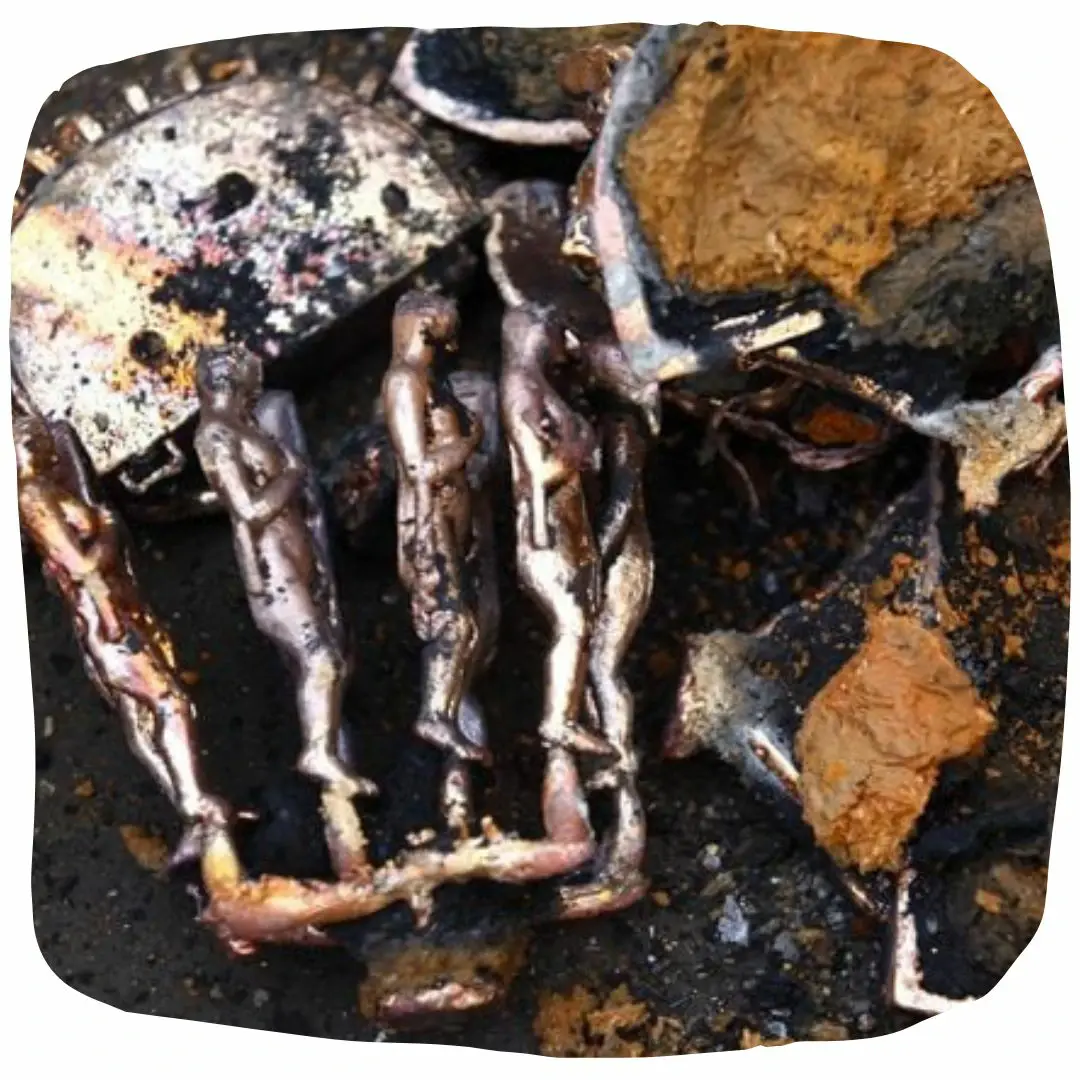
At this stage, a hollow mould in the shape of the deity is
obtained.
This is the time to pour liquid copper into the hollow mould which is then allowed to cool and harden inside a container of cold water. When the liquid metal has hardened, the mould is removed and the statue within is revealed.
This is the time to pour liquid copper into the hollow mould which is then allowed to cool and harden inside a container of cold water. When the liquid metal has hardened, the mould is removed and the statue within is revealed.
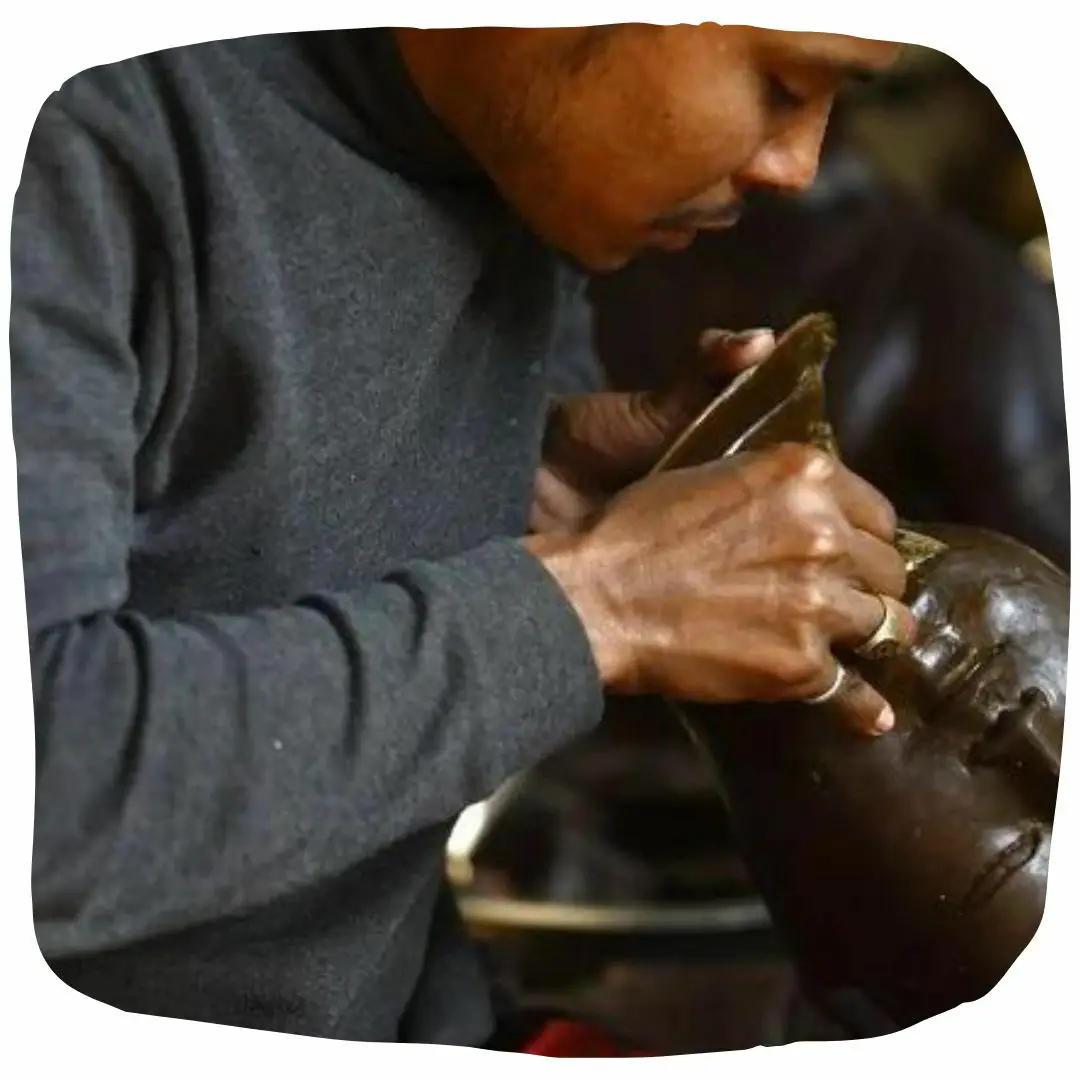
The artist works on the details of the statue using various tools.
It is then polished to get a shiny and lustrous surface.
Now comes the most important part of Nepalese art which is gold gilding. This is done by the traditional fire gilding method. A mixture of mercury and 18K gold is applied on the surface of the statue and heat is applied using a flame torch. The result is that mercury evaporates along with impurities, leaving a pure 24K gold finish.
Now comes the most important part of Nepalese art which is gold gilding. This is done by the traditional fire gilding method. A mixture of mercury and 18K gold is applied on the surface of the statue and heat is applied using a flame torch. The result is that mercury evaporates along with impurities, leaving a pure 24K gold finish.
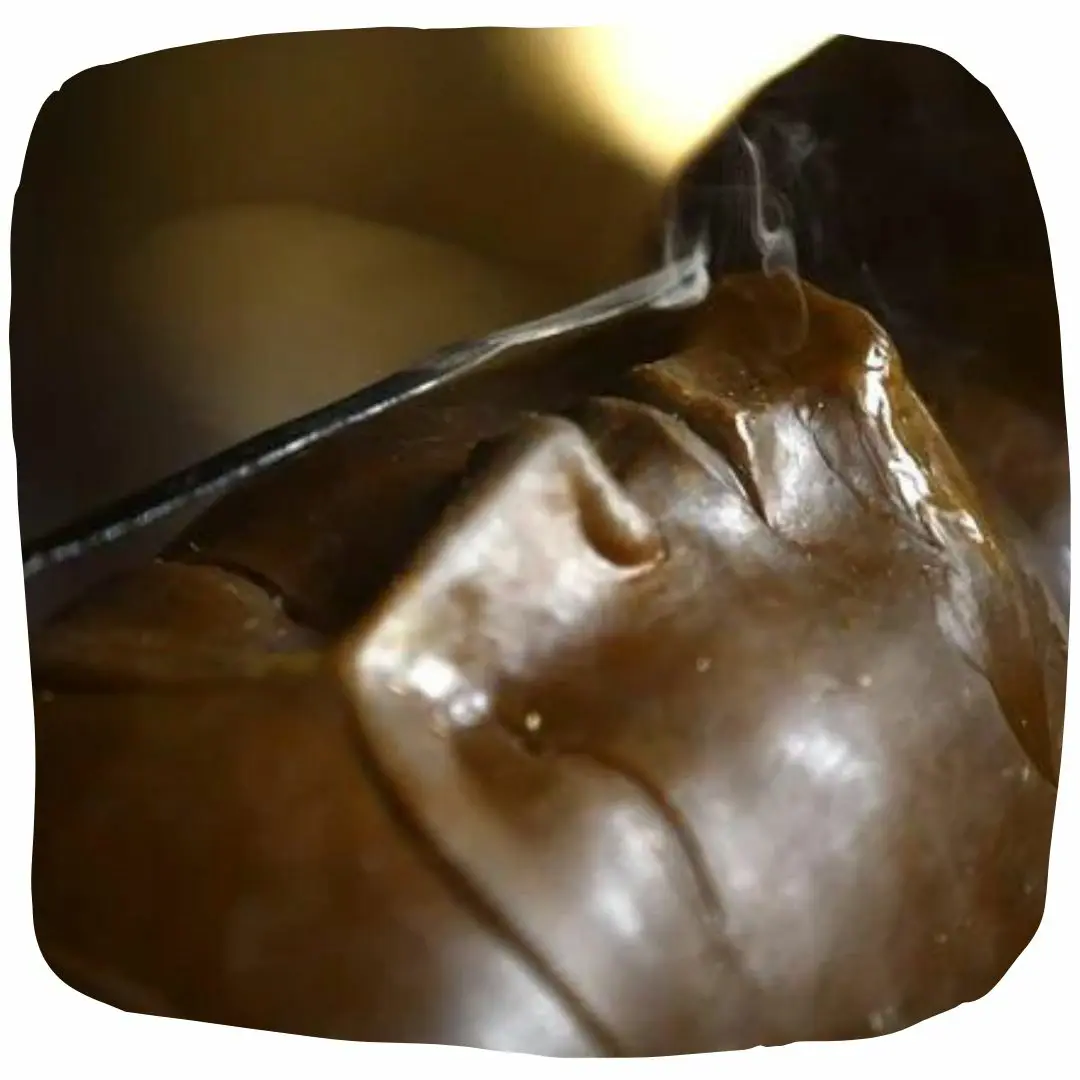
The lost-wax method of sculpting is the most preferred technique
for artists to cast a metallic statue having intricate details. Since Nepalese copper sculptures require extraneous effort for giving a majestic look by adding special embellishments, it takes several weeks to complete one masterpiece. A 24K gold gilded copper sculpture retains its brilliant luster for many years and appears as like before. Nepalese sculptures continue to remain one of the finest specimens of the art of the East that have a strong aesthetic appeal that other sculptures cannot match.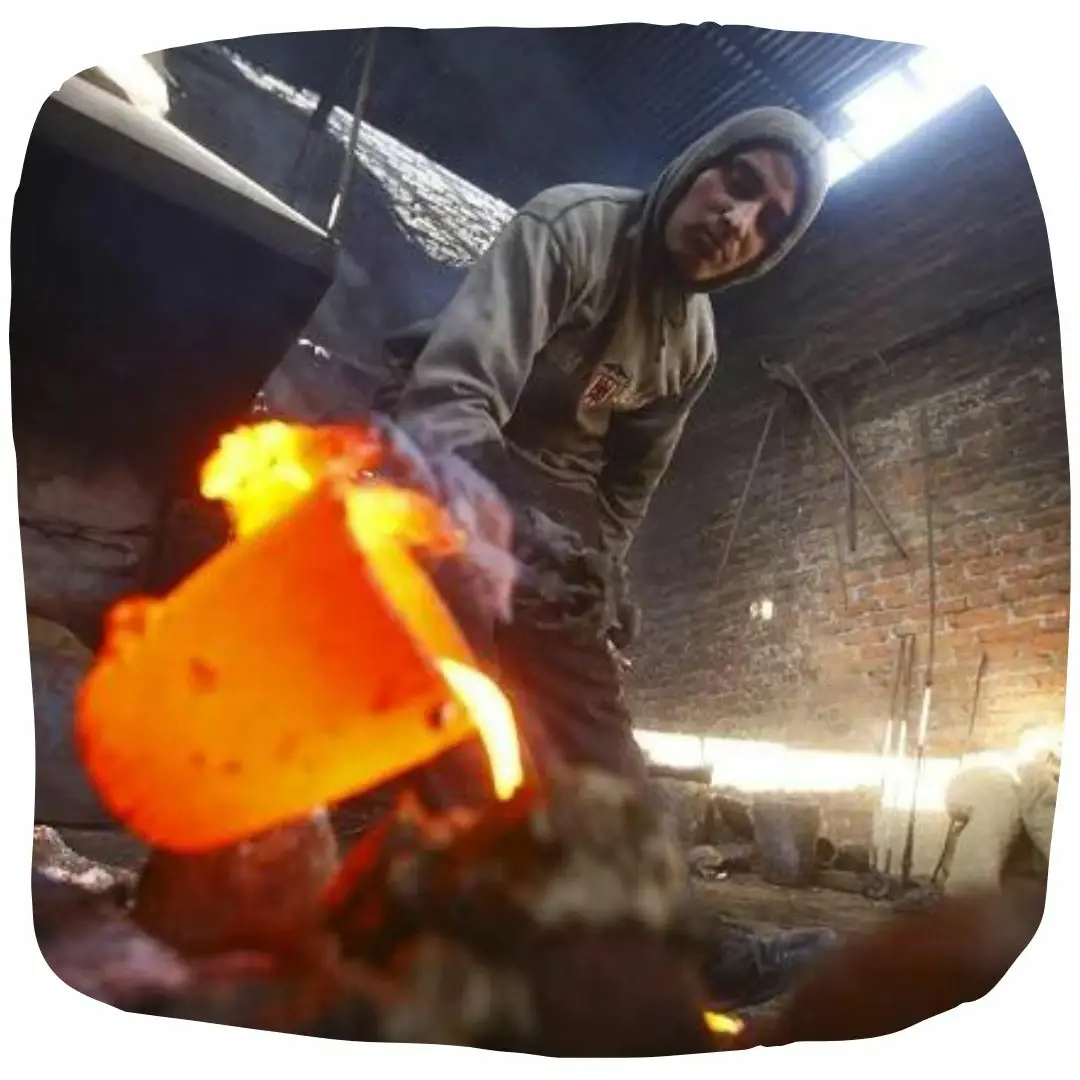
Products related to this item
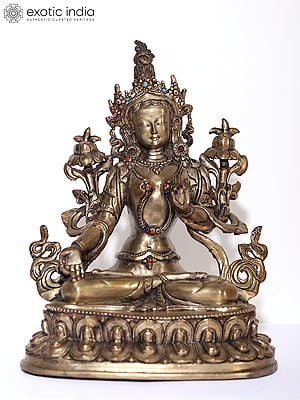
9.0 inch Height X 7.0 inch width X 4.5 inch depth
$759
Express Shipping
Includes any tariffs and taxes
9.00 inch Height X 7.00 inch Width X 4.50 inch Depth
$696
Express Shipping
$1392 50% off
Includes any tariffs and taxes
11.00 inch Height x 7.50 inch Width x 4.50 inch Depth
$528
Express Shipping
$960 45% off
Includes any tariffs and taxes
15.00 inch Height X 12.50 inch Width X 10.00 inch Depth
$3053
Includes any tariffs and taxes
9.00 inch Height X 6.00 inch Width X 4.00 inch Depth
$339
Includes any tariffs and taxes
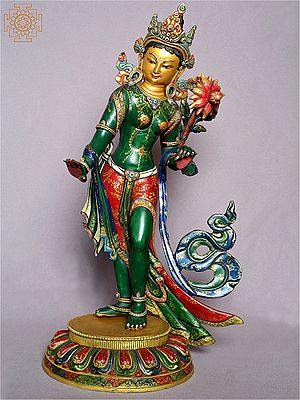
16.00 inch Height X 9.00 inch Width X 6.00 inch Depth
$1863
Includes any tariffs and taxes
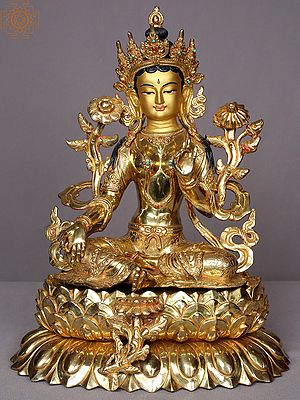
13.00 inch Height X 10.50 inch Width X 8.50 inch Depth
$2519
Includes any tariffs and taxes
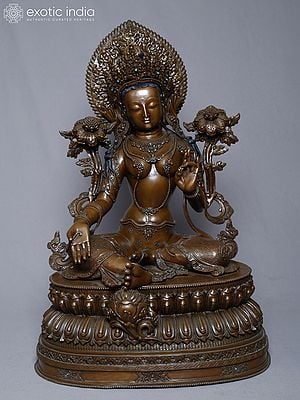
21 inch Height X 14 inch Width X 10 inch Length
$7648
Includes any tariffs and taxes
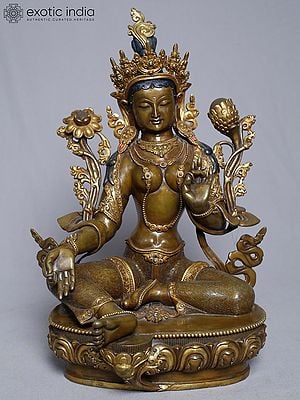
14.5 inch Height X 10 inch Width X 8 inch Length
$2674
Includes any tariffs and taxes
14 inch Height X 11 inch Width X 8 inch Length
$3467
Includes any tariffs and taxes
19.5 inch Height X 13 inch Width X 9 inch Length
$3600
Includes any tariffs and taxes
9 inch Height X 7 inch Width X 5 inch Length
$1438
Includes any tariffs and taxes