| Specifications |
 |
Publisher: Indological Research Centre, Varanasi |
| Author: K. Narain | |
| Language: English | |
| Pages: 320 | |
| Cover: Hardcover | |
 |
8.8" X 5.8" |
| Edition: 2003 | |
| ISBN: 8188260002 | |
 |
IDE487 |
| Delivery and Return Policies |
 |
|
 |
Returns and Exchanges accepted within 7 days |
 |
Free Delivery |


From the Jacket:
This book is a reliable compendium covering the whole gamut of philosophical problems and metaphysical issues concerning the system of Sri Samkaracarya's Advaita Vedanta. Besides referring to the philosophical conceptions and arguments as available in Samkara's works, it also attempts the exposition of the arguments and ideas of the eminent Post Samkarite philosophers to give a logically satisfactory exposition to Samkara's system of Advaita Vedanta. This work is through exposition, based on original Samkrta sources, of the fundamentals of Advaita Vedanta, as a whole, distributing the book in Chapters related to different philosophical topics. The author also refers to some of the modern criticism against Advaita Vedanta by the protagonists of Dvaita Vedanta and Buddhism.
About the Author:
K. Narain, born and brought up at Faizabad in Uttar Pradesh, obtained degree of Doctor of Philosophy from Allahabad University in 1959. he has contributed several articles in national and international journals of Philosophy and Indology. His An Outline of Madhva Philosophy, A Critique of Madhva Refutation of the Samkara School of Vedanta, Madhva Darsan (Hindi) and The Philosophy of the Vallabha School of Vedanta are also pioneering works.
| I. | INTRODUCTION | 1 | |||||
| 1 | Samkara School and its Literature | 4 | |||||
| 2 |
Resume of Advaita Vedanta Philosophy
|
9 | |||||
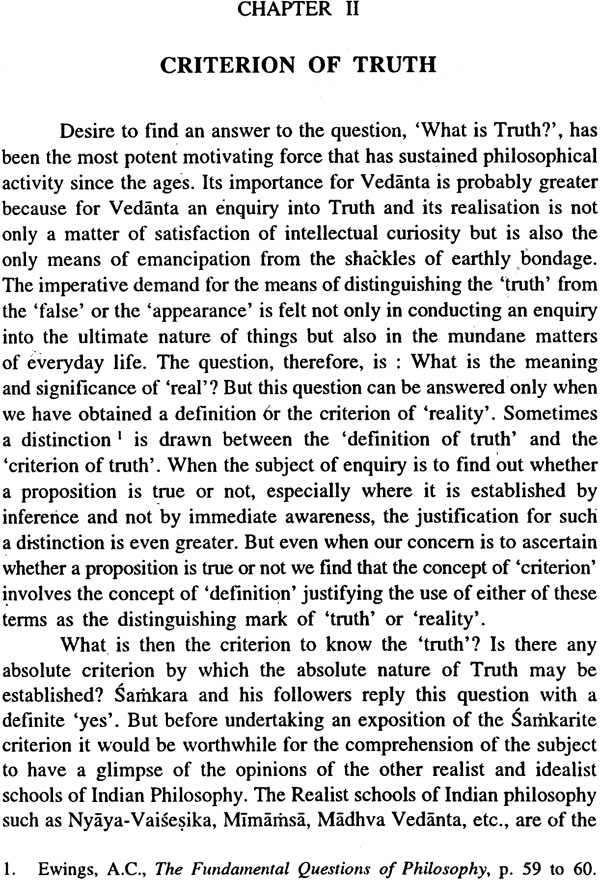
| II. |
CRITERION OF TRUTH
|
13 | |||||
| III. | NATURE AND ORDERS OF REALITY | 20 | |||||
| 1 | Nature of Reality | 20 | |||||
| 1.1 | Buddhist Anti-Substantialism | 22 | |||||
| 1.2 | The Substantialist Reaction | 24 | |||||
| 1.3 | Samkara's Refutation of Buddhism | 26 | |||||
| 1.4 | Samkara's Refutation of Jaina Relativism | 34 | |||||
| 1.5 | Re-assertion of Absolutism | 37 | |||||
| 2 |
Orders of Reality
|
38 | |||||
| IV. | THE NATURE OF FALSEHOOD | 46 | |||||
| 1 | First Definition | 47 | |||||
| 2 | Second Definition | 52 | |||||
| 3 | Third Definition | 57 | |||||
| 4 | Fourth Definition | 60 | |||||
| 5 |
Fifth Definition
|
61 | |||||
| V. | EPISTEMOLOGY | 65 | |||||
| 1 | The Idea of Knowledge | 65 | |||||
| 1.1 | The Doctrine of Self | 65 | |||||
| 1.2 | Nature of Knowledge | 68 | |||||
| 1.2.1 | Nature of Consciousness | 68 | |||||
| 1.2.2 | Knowledge-object-relation | 82 | |||||
| 1.2.3 | Knowledge-self-relation | 85 | |||||
| 1.3 | The Nature of Ego | 88 | |||||
| 1.4 | Self-luminosity of Atman and Knowledge | 90 | |||||
| 2 | States and Forms of Knowledge | 94 | |||||
| 2.1 | States of Consciousness | 95 | |||||
| 2.1.1 | The Waking State | 95 | |||||
| 2.1.2 | The Dream State | 96 | |||||
| 2.1.3 | The Deep-sleep-state | 98 | |||||
| 2.2 | Forms of Knowledge | 101 | |||||
| 2.3 | Transcendental Formless Consciousness | 102 | |||||
| 2.4 | Other Supra-rational Forms of Knowledge | 103 | |||||
| 3 | Means of Knowledge | 104 | |||||
| 3.1 | Meaning and Statues of Pramana | 104 | |||||
| 3.2 | Number of Pramanas in Advaita Vedanta | 106 | |||||
| 3.3 | Theory of Emergence of Antahkarana in Perception | 107 | |||||
| 3.4 | Perception (Pratyaksa) | 111 | |||||
| 3.4.1 | Internal Perception | 112 | |||||
| 3.4.2 | External Perception | 113 | |||||
| 3.4.3 | Indeterminate and Determinate Perception | 115 | |||||
| 3.5 | Inference (Anumana) | 118 | |||||
| 3.5.1 | Definition of Inference | 118 | |||||
| 3.5.2 | The Meaning and Origin of Vyapti | 119 | |||||
| 3.5.3 | Types of Inference | 120 | |||||
| 3.5.4 | The Advaita Syllogism | 121 | |||||
| 3.6 | Comparison (Upamana) | 123 | |||||
| 3.7 | Presumption (Arthapatti) | 124 | |||||
| 3.7.1 | Types of Arthapatti | 126 | |||||
| 3.8 | Non-apprehension (Anupalabdhi) | 127 | |||||
| 3.8.1 | Testimony (Sabda) | 129 | |||||
| 3.8.1.1 | Nature of Aptatva | 130 | |||||
| 3.8.1.1.1 | Pauruseya | 130 | |||||
| 3.8.1.1.2 | Apauruseya | 131 | |||||
| 3.8.1.1.3 | Validity of Smrti | 133 | |||||
| 3.8.1.2 | Vedanta Semantics | 134 | |||||
| 3.8.1.2.1 | Conditions of Valid Knowledge | 135 | |||||
| 3.8.1.2.2 | Primary and Implied Meaning | 137 | |||||
| 4 | Relation between Experience, Reason and Authority | 140 | |||||
| 4.1 | Experience Vis-à-vis Reasoning and Authority | 140 | |||||
| 4.2 | Reasoning Vis-à-vis Scriptural Testimony | 142 | |||||
| 5 | Validity of Knowledge | 145 | |||||
| 5.1 | Paratah-pramanya Theory of Nyaya | 145 | |||||
| 5.2 | Advaita Vedanta Conception of Self-validity | 147 | |||||
| 6 | False Knowledge (Avidya) | 149 | |||||
| 6.1 | Introductory | 149 | |||||
| 6.2 | The Doctrine of Illusion | 150 | |||||
| 6.2.1 | Mimamsa Theories of Prabhakara and Kumarila | 151 | |||||
| 6.2.2 | Nyaya Anyathakhyativada | 154 | |||||
| 6.2.3 | Sadasadkhyati of Samkhya | 156 | |||||
| 6.2.4 | Sat-khyati of Ramanuja | 156 | |||||
| 6.2.5 | Asatkhyati of Madhyamika Buddhists | 157 | |||||
| 6.2.6 | Atmakhyati of Yogacara Buddhism | 158 | |||||
| 6.2.7 | Anirvacaniya-khyati of Advaita Vedanta | 159 | |||||
| 6.3 | The Process of Illusion | 161 | |||||
| 6.4 | Avidya, the material-cause of Adhyasa | 163 | |||||
| 6.4.1 | Nature of Avidya | 164 | |||||
| 6.4.2 | Definition of Avidya | 164 | |||||
| 6.4.3 |
Logical Proofs of Nescience
|
167 | |||||
| VI. | REFUTATION OF DIFFERENCE | 170 | |||||
| 1 | Nature and Meaning of Difference | 170 | |||||
| 2 | Advaita Refutation of Difference and Formulation of Identity | 172 | |||||
| 2.1 | Criticism of Svarupavada | 172 | |||||
| 2.2 | Criticism of Attributive Theory | 175 | |||||
| 2.3 |
Refutation of Bhedabheda
|
179 | |||||
| VII. | THEORY OF CAUSALITY | 182 | |||||
| 1 | Gaudapada's Doctrine of Non-origination | 182 | |||||
| 2 | Parinamavada and Vivarttavada | 190 | |||||
| 3 |
Brahman as the world-cause
|
195 | |||||
| VIII. |
THE CONCEPTION OF MAYA
|
203 | |||||
| IX. |
THE CONCEPT OF GOD (ISVARA)
|
212 | |||||
| X. | PHILOSOPHY OF INDIVIDUAL SOUL | 223 | |||||
| 1 | Nature of Individual Soul (Jivatman) | 223 | |||||
| 1.1 | The Limitation Theory | 224 | |||||
| 1.2 | The Reflaction Theory | 226 | |||||
| 1.2.1 | The Vivarana View | 228 | |||||
| 1.2.2 | The Samksepasariraka View | 229 | |||||
| 1.2.3 | The Prakatartha View | 231 | |||||
| 1.2.4 | Vidyaranya's Exposition | 231 | |||||
| 1.3 | The Condition Theory | 232 | |||||
| 2 | Numbers of Souls | 233 | |||||
| 2.1 | Doctrine of One-Soul (Ekajivavada) | 233 | |||||
| 2.2 | Doctrine of Plurality of Souls (Anekajivavada) | 234 | |||||
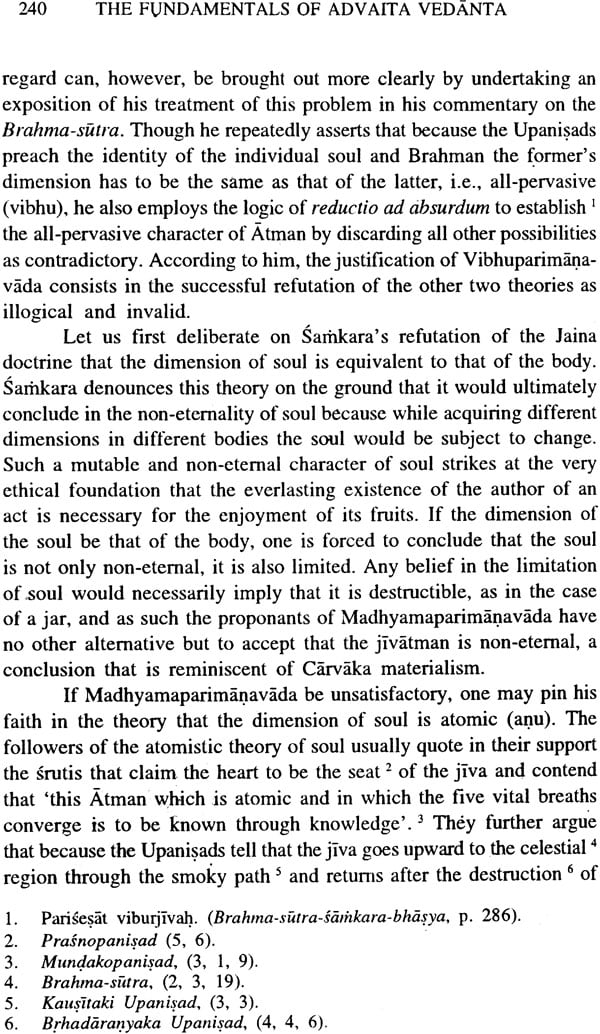
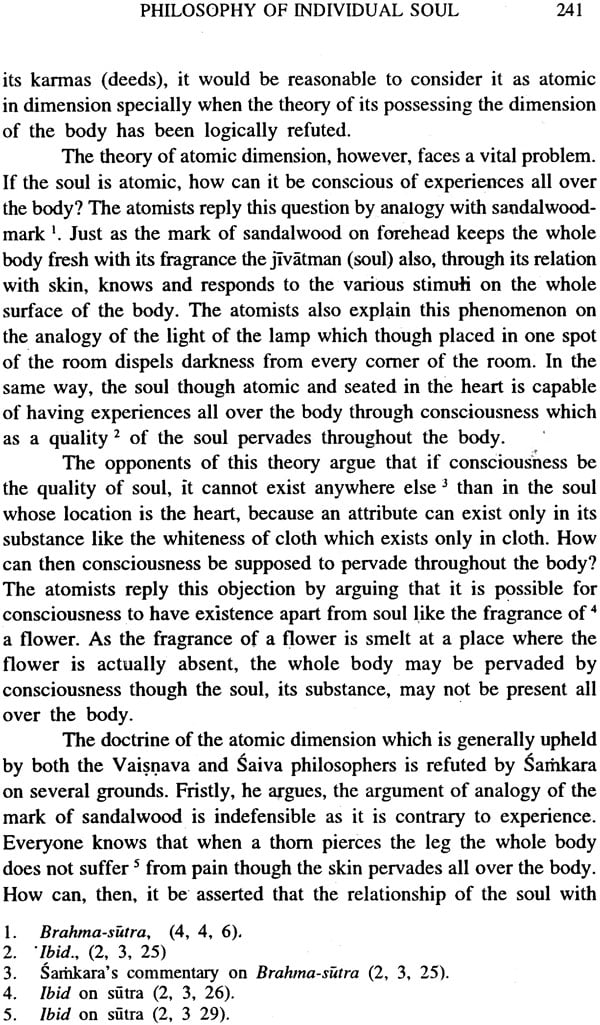
| 3 | Dimensions of Soul | 239 | |||||
| 4 | Denial of Agency of Atman | 243 | |||||
| 5 |
Relation between Jiva and Brahman
|
243 | |||||
| XI. | PHILOSOPHY OF WORLD | 246 | |||||
| 1 | Nature of World | 246 | |||||
| 2 | Inference proving Falsity of World | 250 | |||||
| 2.1 | Perceptibility as Reason | 250 | |||||
| 2.2 | Jadatva as Reason | 253 | |||||
| 2.3 | Finitude as Reason | 253 | |||||
| 2.4 | Amsatva as Reason | 254 | |||||
| 3 | The Doctrine of Creation | 255 | |||||
| 3.1 | The Process of Creation | 256 | |||||
| 3.2 | Pancikarana Process | 257 | |||||
| 3.3 | Creation of Subtle Bodies | 258 | |||||
| 3.4 |
The Process of Dissolution
|
259 | |||||
| XII. | THE SUMMUM BONUM AND THE MEANS | 260 | |||||
| 1 | Introductory | 260 | |||||
| 2 | The Nature of Moksa | 261 | |||||
| 3 | Pathways to Attainment of Liberation | 267 | |||||
| 3.1 | Path of the Realization of Nirguna-Brahman | 268 | |||||
| 3.2 | Path of Realization through meditation on Qualified Brahman | 272 | |||||
| 4 | Doctrine of Jivanmukti | 273 | |||||
| 5 | Knowledge as means to Liberation | 278 | |||||
| 6 | Utility of Karma as means to Knowledge | 280 | |||||
| 7 | Bhakti as means to Knowledge | 282 | |||||
| 8 |
Eschatology
|
284 | |||||
| XIII. |
CONCLUDING REMARKS
|
286 | |||||
|
BIBLIOGRAPHY
|
291 | ||||||
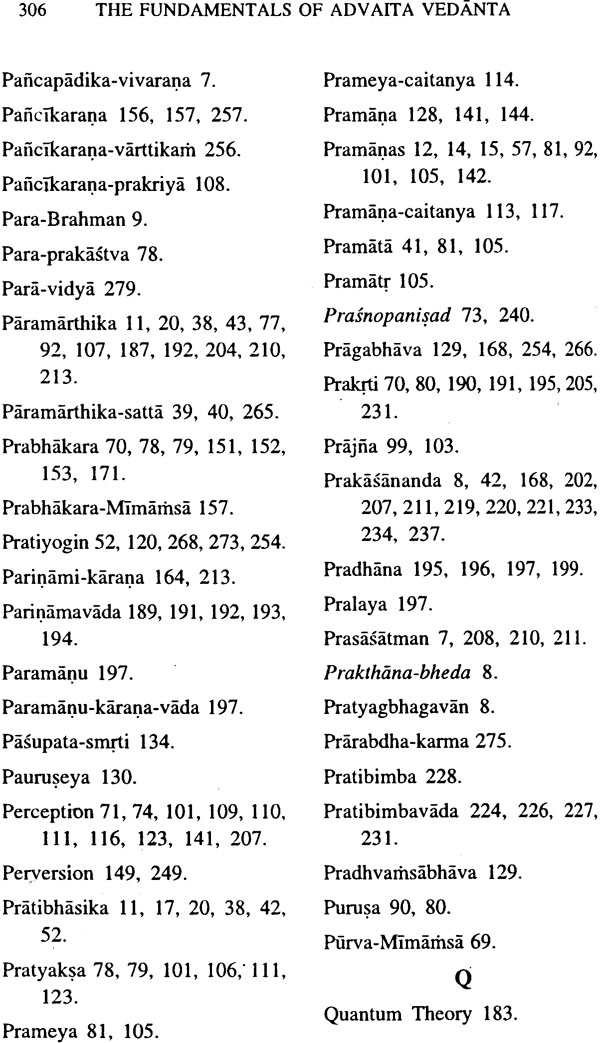
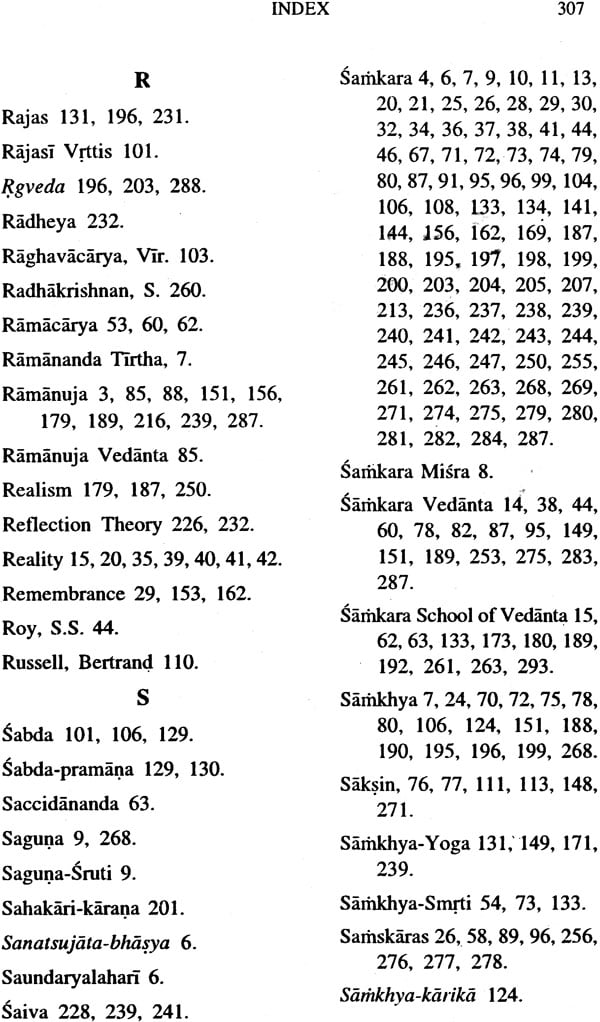
| INDEX | 299 | ||||||





Send as free online greeting card