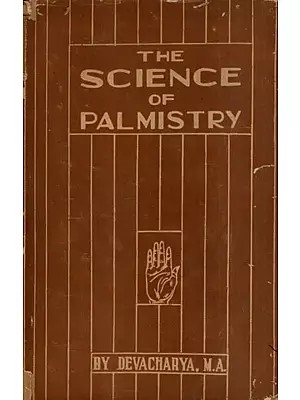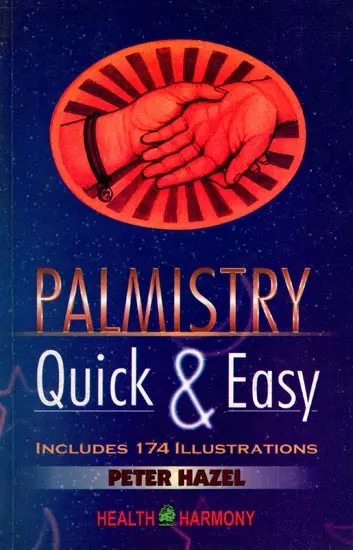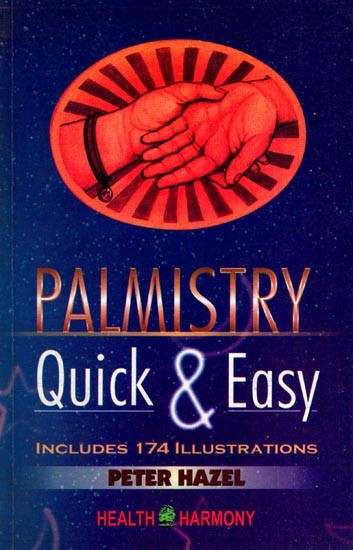
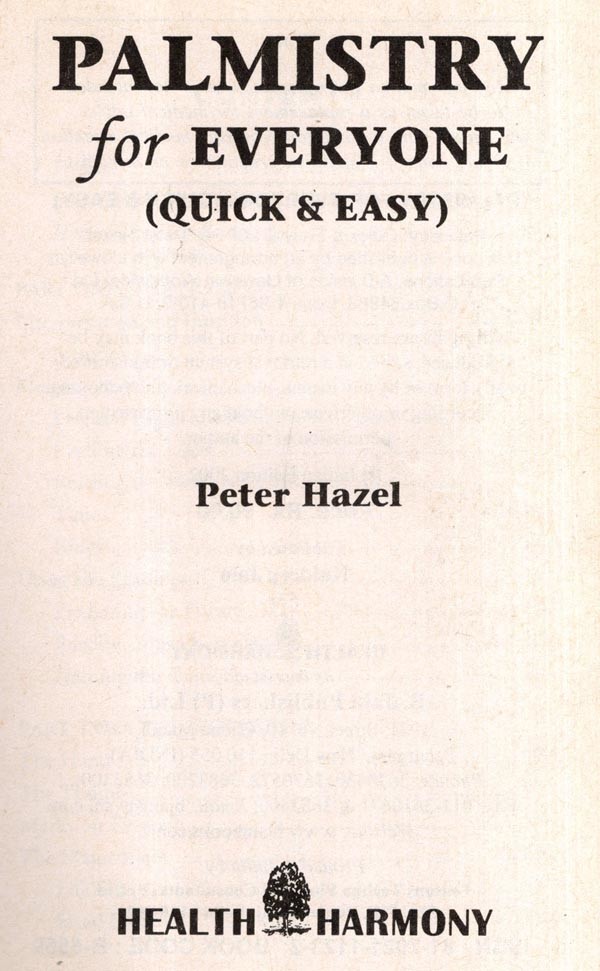
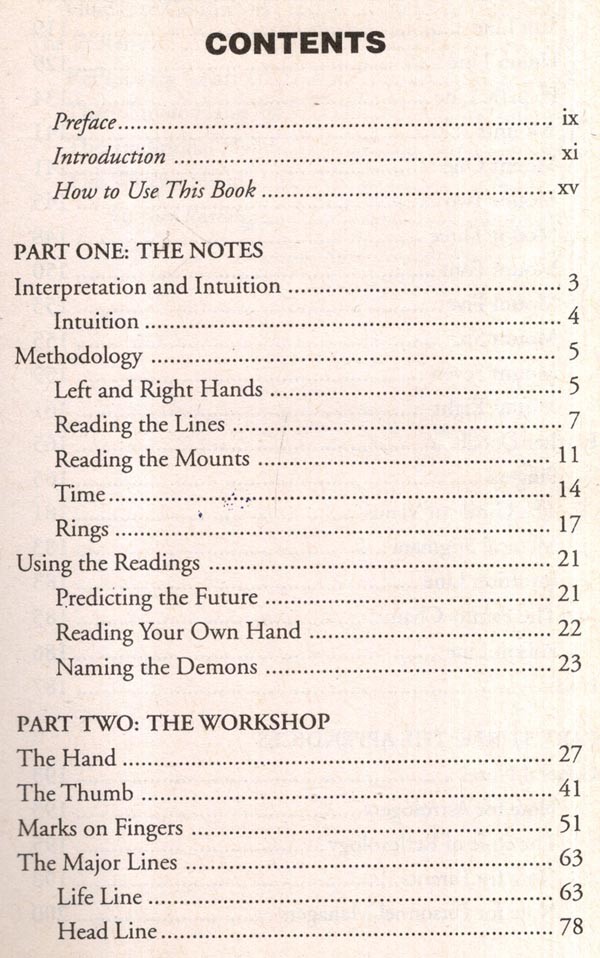
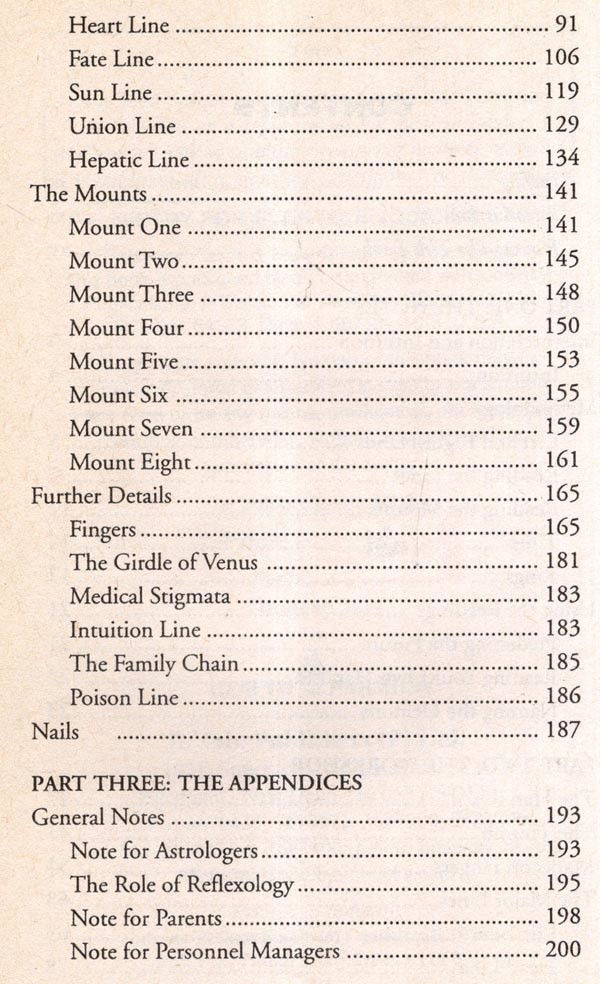
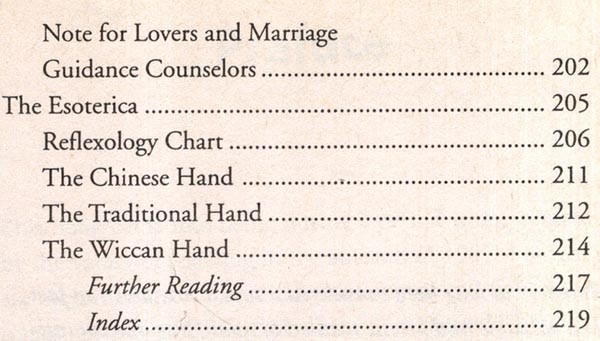
Palmistry for Everyone (Quick & Easy with Includes 174 Illustrations) (An Old and Rare Book)
| Specifications |
 |
Publisher: B. Jain Publishers (P) Ltd |
| Author Peter Hazel | |
| Language: English | |
| Pages: 240 | |
| Cover: PAPERBACK | |
 |
9x6 inch |
 |
Weight 300 gm |
| Edition: 2002 | |
| ISBN: 81702111232 | |
 |
HBU762 |
| Delivery and Return Policies |
 |
Returns and Exchanges accepted within 7 days |
 |
Free Delivery |


This book came into being during a period when, tempted by the vanity of teaching in the autumn of 1987, I taught a six-month course in medical palmistry at the South Australian College of Botanic Medicine and Natural Therapies.
There was a class of twelve, several of whom were fourth-year students of naturopathy, the remainder were interested adults. They were a formidably bright group, hungry for knowledge and good information.
The main problem for as a teacher was to supply the students with a suitable text. I wanted to present them with an organized body of knowledge in some easily accessible form. This proved impossible to find.
My own knowledge was acquired slowly. Having no teacher, I relied on books, beginning with Katherine St. Hill and Cheiro, both famous palmists around the turn of the century. These writers were very keen on gloomy, moralistic interpretations. They had a good grasp of the traditional stream of palmistry, but this was colored by the particular social mores and crude psychological knowledge of their day. It takes a keen student to wade through all the Victorian prose and the jumbled, poorly organized mass of detail.
The Victorians took good, robust, medieval folk palmistry and gave it a good, hearty tweak. They overlaid the basic principles of traditional palmistry with their own worldview. For some odd reason, many natural human at-tributes, especially sexuality, were regarded negatively. A strict religious atmosphere may also have had an influence. Some readings from old texts are extremely sexist and racist and rather disapproving in tone. So, signs of exceptional vitality in an individual were seen as problems. This has been overcome; unfortunately, many modern books are simply rewrites of the many Victorian texts published. (Incidentally, the way to tell whether or not a palmistry book in your col-lection is a genuine piece of modern telling or a Victorian re-hash is to look at the chapter on mounts. We have three mounts directly beneath the fingers; if your book asserts there are four, it's Victorian palmistry warmed up!)
Adhering strictly to traditional nomenclature, I sorted Victorian value judgements from the data, and proceeded to create New Age views (1 think of the New Age as the cur-rent evolutionary stage of humankind, of sentience, during which we are becoming more motivated by spiritual concerns rather than by political, mercenary, and other ideologies; the "new" age is often a rediscovery of old knowledge. but psychology and other arts made great advances in the last century). Some definitions were arrived at only after lengthy discussion with students and other practitioners. The result is the book you now hold in your hands. Palmistry: Quick & Easy is a technical manual designed for ease of use, which will provide instant access to an ancient art for both the experienced palmist and the novice.
Palmistry is based on the belief that each part of the body reflects the state, both physical and mental, of the entire organism. When one is ill, there are many obvious physical signals. Your hair, skin, and coloring are all affected. Your body is an ecosystem, and everything in it is related and connected to everything else. The palm and the iris, in particular, are special in that they reflect the state of the entire organism.
Consider your hand; with its twenty-seven fine bones and intricate network of sinew and muscle, it is the most complex biological tool ever evolved. Its versatility is astonishing. It can lay bricks, sew, make love, kill, and wriggle in all directions at once. Just imagine life without your hands-how difficult it would be to get along without them. We use them to communicate when we speak and when we are silent; we use them to carry guns and to change diapers. Aristotle called the hand "the organ of organs, the active agent of the passive powers of the entire system."
It would be hard to imagine how human civilization could have developed without hands to build it. The hand is so full of information that even a handshake will tell you a great deal about a person. The hands also form one pole of our intricate nervous system (the feet are the other pole). Between them, the feet and hands contain more than one third of the body's surface nerve receptors, and both are rich in reflex points.
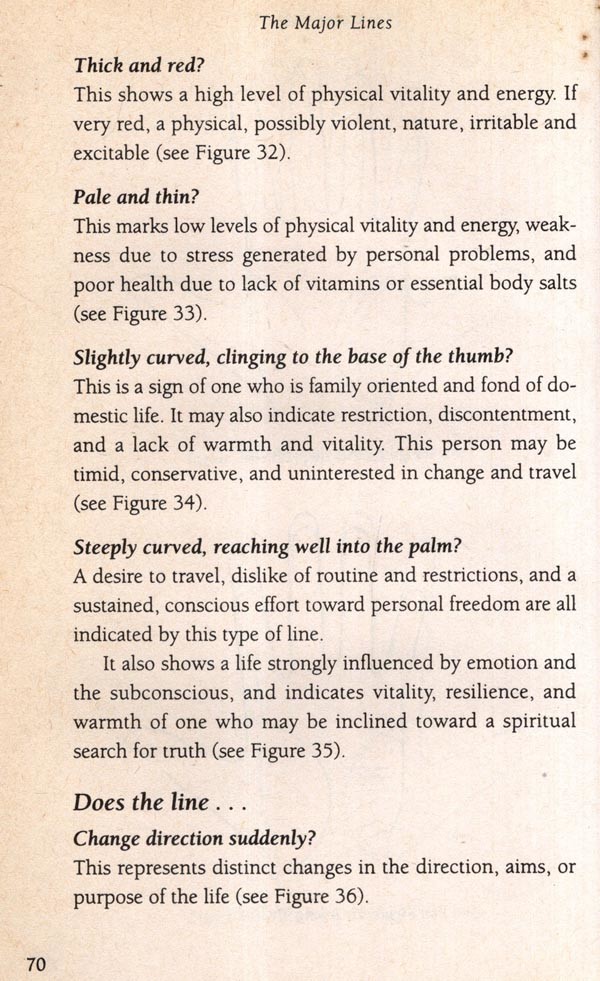
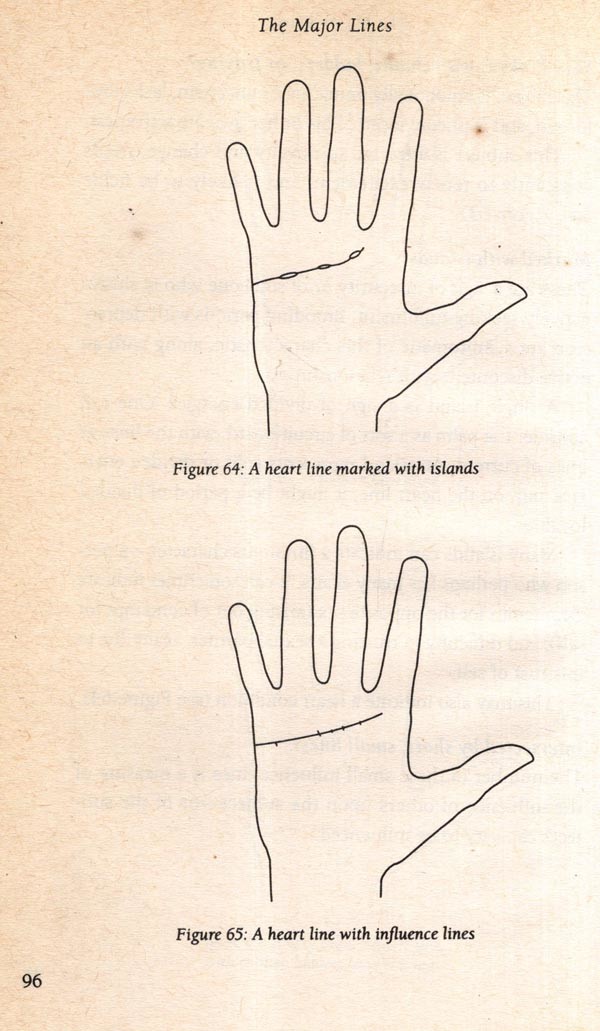
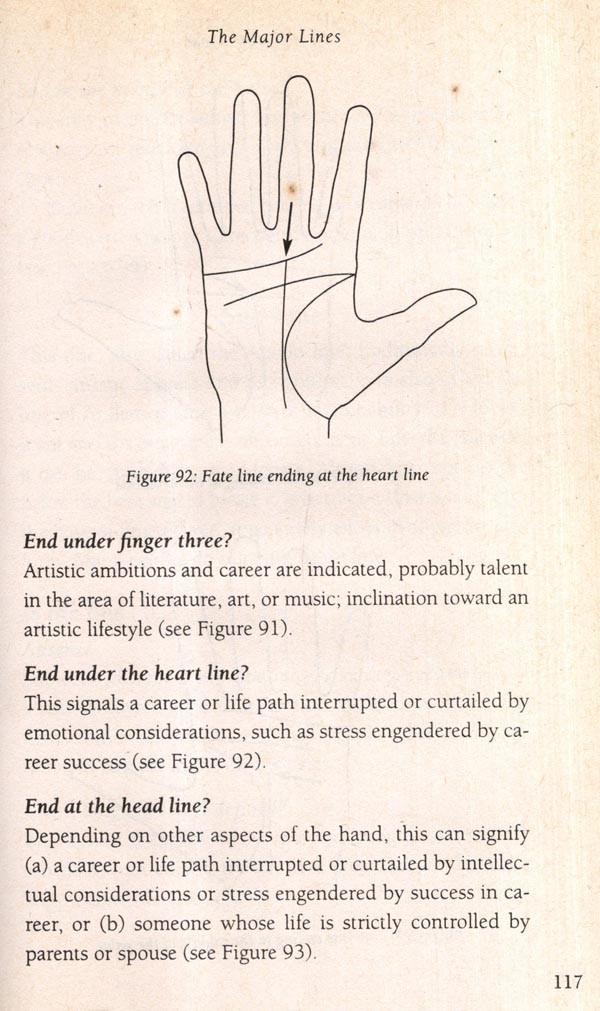
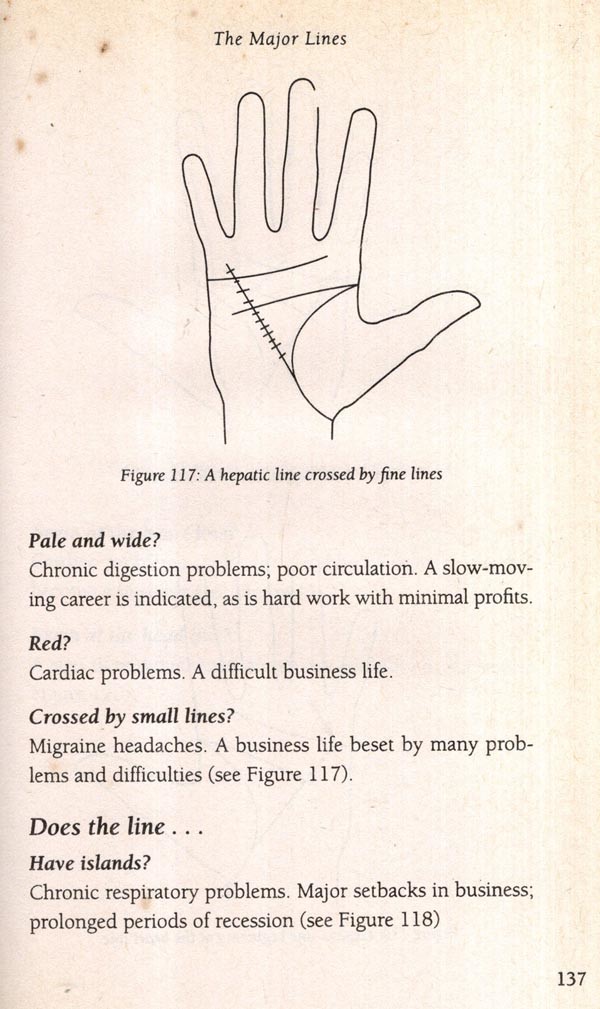
The palm is crisscrossed with lines: three major lines-the life, head, and heart lines-plus a variety of minor lines that appear on the hands of all normal people. However, variations in length, thickness, color, and regularity are infinite. Each of us has a unique hand, different to anybody else's. This is due to the fact that the lines are caused by the differences and experiences that make us individual.
It would be impossible to estimate the age of palmistry.
There exist fragments of literature on palmistry from the Aryan age, some 6,000 years ago. Ancient Vedic literature from India contains many volumes on the subject. So, it would appear that palmistry has existed as an established art for a very long time. It probably took many generations of careful observation, passed down verbally, to bone palmistry to its current precise form. Folk knowledge, in which we can include herbalism, shamanism in all its varieties, and even astronomy, is highly refined, legitimate, and useful information. This knowledge was hard-won: we know some mushrooms are deadly probably because long ago someone died after eating them. Folk knowledge is not rigid, however. it is added to and expanded by succeeding generations as social values change, and information no longer relevant is discarded.





-
Q. What locations do you deliver to ?A. Exotic India delivers orders to all countries having diplomatic relations with India.
-
Q. Do you offer free shipping ?A. Exotic India offers free shipping on all orders of value of $30 USD or more.
-
Q. Can I return the book?A. All returns must be postmarked within seven (7) days of the delivery date. All returned items must be in new and unused condition, with all original tags and labels attached. To know more please view our return policy
-
Q. Do you offer express shipping ?A. Yes, we do have a chargeable express shipping facility available. You can select express shipping while checking out on the website.
-
Q. I accidentally entered wrong delivery address, can I change the address ?A. Delivery addresses can only be changed only incase the order has not been shipped yet. Incase of an address change, you can reach us at help@exoticindia.com
-
Q. How do I track my order ?A. You can track your orders simply entering your order number through here or through your past orders if you are signed in on the website.
-
Q. How can I cancel an order ?A. An order can only be cancelled if it has not been shipped. To cancel an order, kindly reach out to us through help@exoticindia.com.