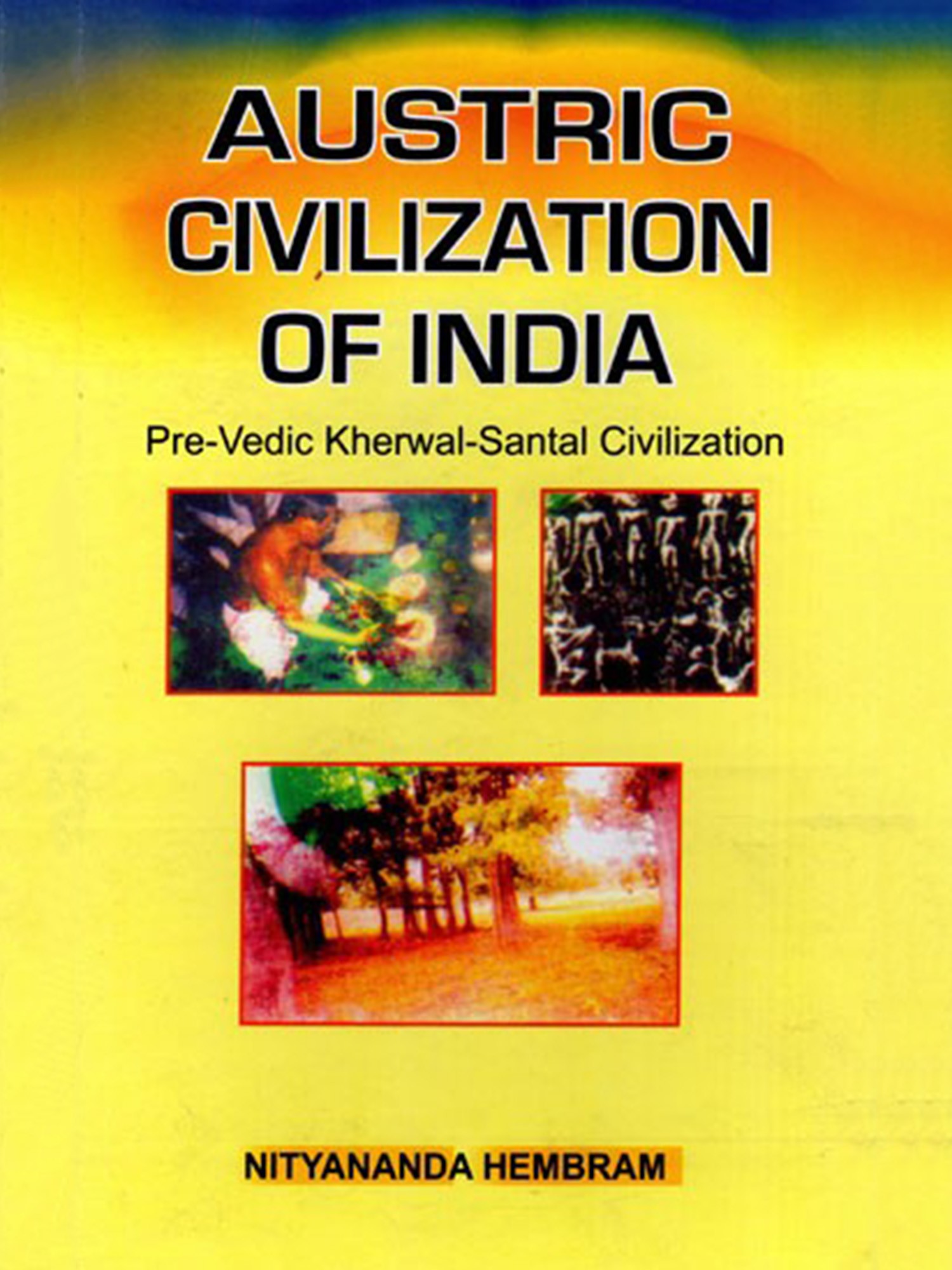
An Interpretation and analysis of Pre-Vedic History of India through Austric Culture and on the basis of Austric Language.
I am very glad for having gone through the book Austric Civilization of India written by Shri Nityananda Hembram. Prevedic India is hardly recorded and as such, the world was ignorant about prehistoric India till the discovery of Indus valley city civilization. After a careful study by various scholars, it has been considered that this glorious culture developed before the Aryan migration to India. Many books have been published on this city civilization and Shri Hembram's work is yet another addition to it. But Shri Hembram's presentation is unique in a sense that the author has attempted to establish a cultural link between prevedic India and the present one. He has analysed the historical development of folk culture and its transformation to modern one with careful investigation and comparative statement thereof. As a result number of questions have arisen on the established thoughts for which the author has furnished rich and convincing arguments In cases the theme of the author is controversial and opposite to our traditional established thoughts, I believe this will initiate a constructive discussion in the field of prevedic culture of India With the help of existing philosophy of the Kherwals of India the author has enlightened the conception and origin of Hindu religion thereby he has given a deeply deserving importance to Adibasi Culture.
In the opinion of the author the present Indian classical culture has originated and developed to its present form only from the original prehistoric culture which was highly developed at that time. The scientific analysis of the evolution of mankind and the revolution of earth is apt and well presented. Though the said civilization is destroyed by unknown historical conflicts, the remnants of this glorious culture have been preserved in the language and culture of the Austric people of India.
Preface
The Kherwal civilization has been rehatched and compiled from the very scarce and limited resources available from our Vedic literatures, Archaclogical findings and from the oral narration that has been descending down from generation to generation in the form of 'Binties amongst the Austric Tribes of India in general and amongst the Santals in particular. Contents of Binties, were available in written literature at some earlier time, covering the very core of the social, cultural, economical, emotional and religious aspects of the Kherwals. There must also had existed lucid descriptions of the ecological settings of the tribes. These compilations were made by the learned people of pre-vedic era, the learned gurus of those generation. Before this actual compilation, these theories were put to test time and again in their social, cultural, economical and religious activities and only on confirmation, they ultimately called them as Sari-the Truth. Then and only then, the theories were ripe enough for inclusion in the compilation of the Sari. They termed this process of acquiring experience, as "Sari-Panja"- the expedition to Truth.
Introduction
In Indian History, the excavation of Mohenjodaro and Harappa opens up golden pages of past glory and culture. An Archaeological team led by Sir John Marshall and Dr.
Rakhaldas Banerjee made an elaborate excavation at Mohenjodaro in the Larkana district of Sind and Harappa in the district of Punjab in 1922-23. It is Sir John Marshall, in 1924, as the Director of the Indian Archaeological Department declared to the world and brought to light that an Indian civilization flourished between 3500 B.C. to 2000 B.C. Before this discovery, the Western scholars tried to prove that the Aryans coming from outside, pioneered the civilization in India, and vedic culture was the oldest in Indian soil. Of course, there had been enough reasons to believe so, as we could not produce before these scholars a sufficiently strong evidence otherwise. However, the relics found at Mohenjodaro, Harappa and other places proved their assumption to be absolutely wrong. From these findings, people did get convinced that India had one of the oldest but most advanced civilizations in the world.










 Upload an Image