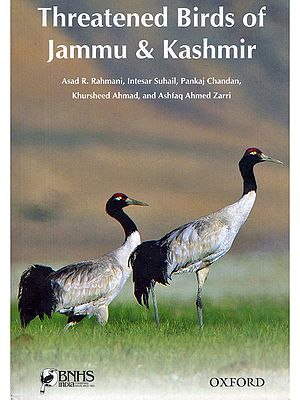
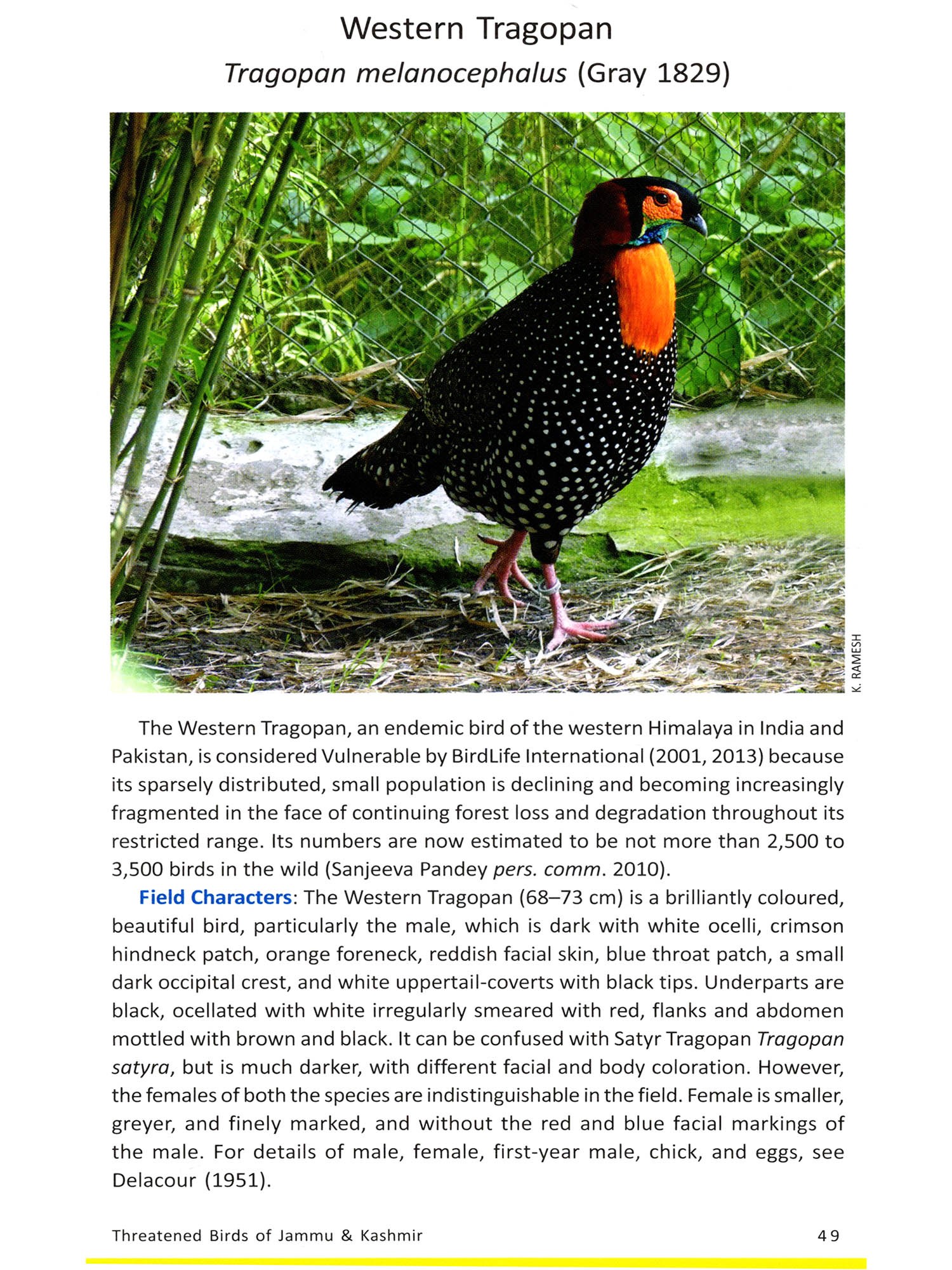
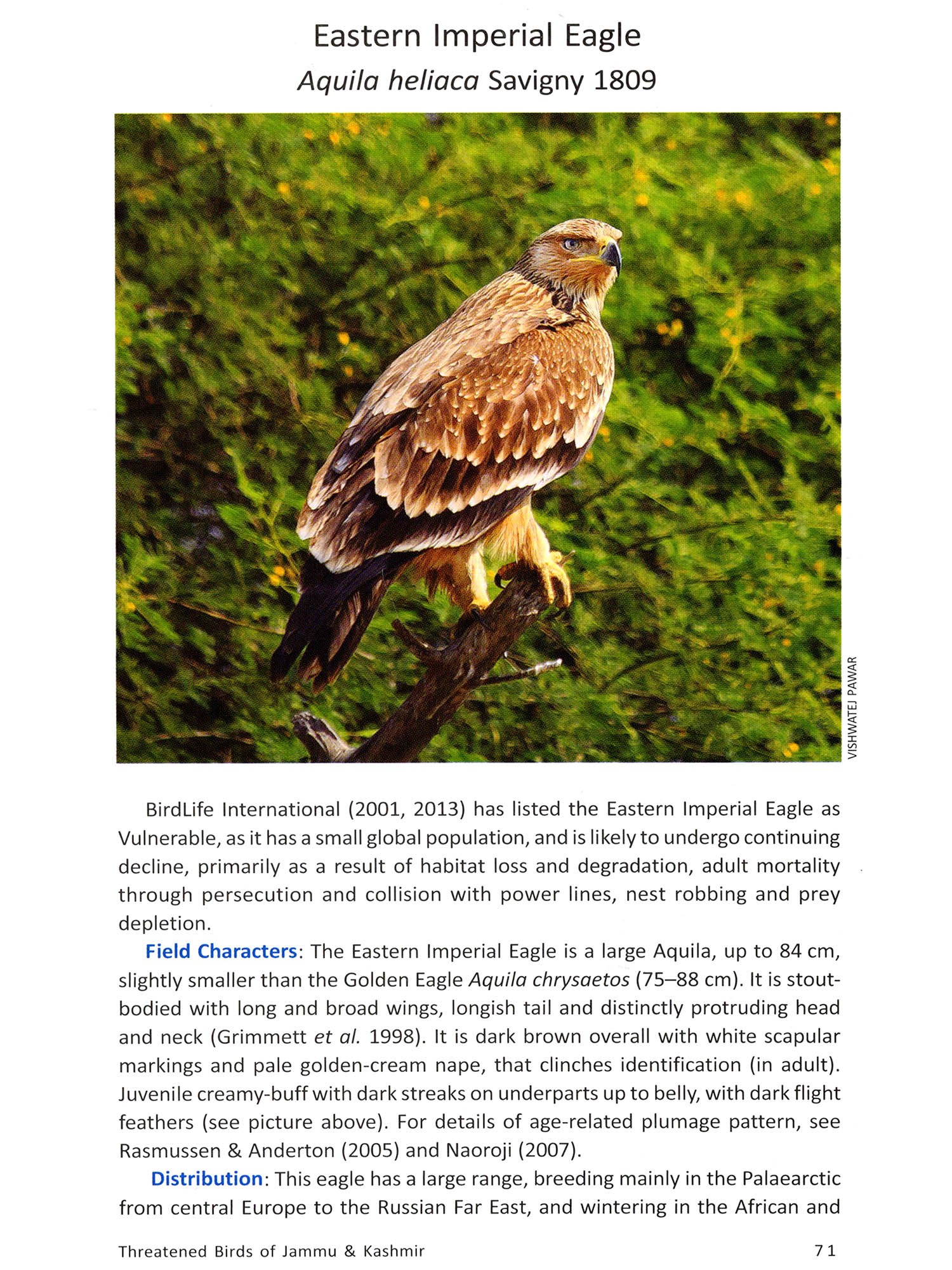
Threatened Birds of Jammu & Kashmir (Glossy Paper Book)


| Specifications |
 |
Publisher: Oxford University Press |
| Author: Various Author | |
| Language: English | |
| Pages: 164 (With Color Illustrations) | |
| Cover: PAPERBACK | |
 |
8.5x5.5 inch |
 |
Weight 270 gm |
| Edition: 2014 | |
| ISBN: 9780199452699 | |
 |
HCF539 |
| Delivery and Return Policies |
 |
Ships in 1-3 days |
 |
Returns and Exchanges accepted within 7 days |
 |
Free Delivery |


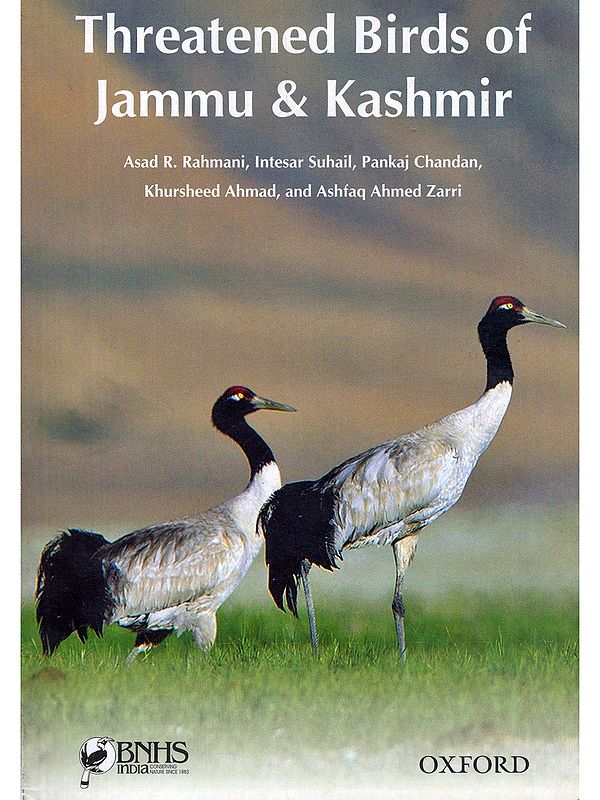
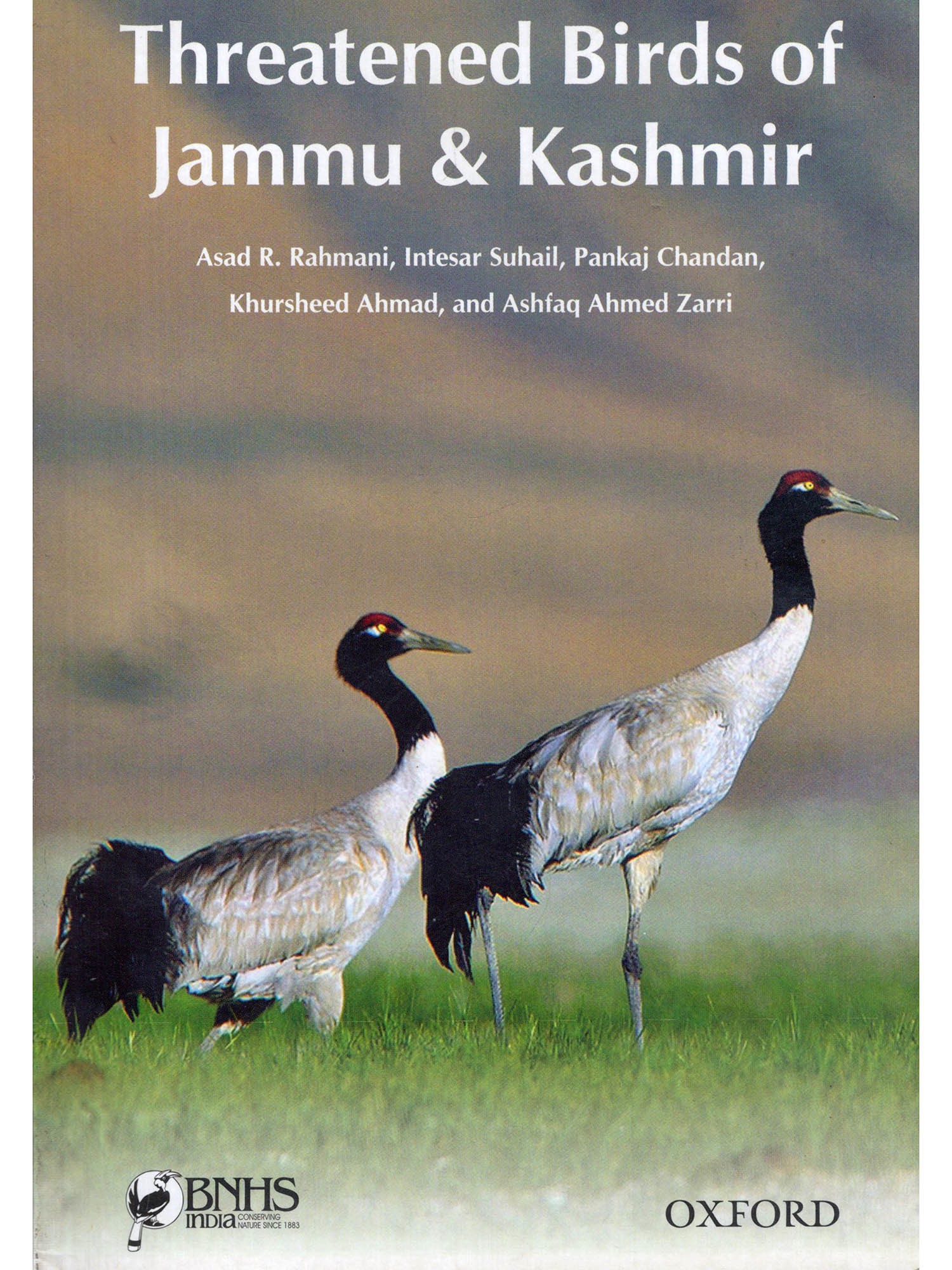
THREATENED BIRDS OF JAMMU & KASHMIR brings you information about the globally threatened bird species that are presently reported from the state of Jammu & Kashmir. This book is based on Threatened Birds of India, published in 2012 by BNHS, particularly for historical records, but the contents have been updated to include new and unpublished data, to supplement the information available on the BirdLife International website. This new information will help to assess the present status and distribution of bird species in J&K that have been listed as globally threatened by IUCN and BirdLife International. It is intended to be a handy reference for interested readers as well as decision makers at the state level, where conservation actions need to be taken.
AIthough wildlife protection is on the concurrent list of the Government of India, most of the conservation action takes place at the state level. The role of state forest and wildlife departments, general public, local communities, national and local NGOs, and lay citizens is immense.
The first author of this book brought out a major tome in 2012 titled Threatened Birds of India which was a supplement to the work of BirdLife International at the global level. Soon, a need was felt for state-wise smaller books which would be more useful, as most of the conservation action is decided and implemented at state level. The first book in this series was Threatened Birds of Assam (2012), which was soon sold out. In 2013, the second book in this series Threatened Birds of Uttarakhand came out, soon to be followed by Threatened Birds of Maharashtra. This is the fourth book in this series.
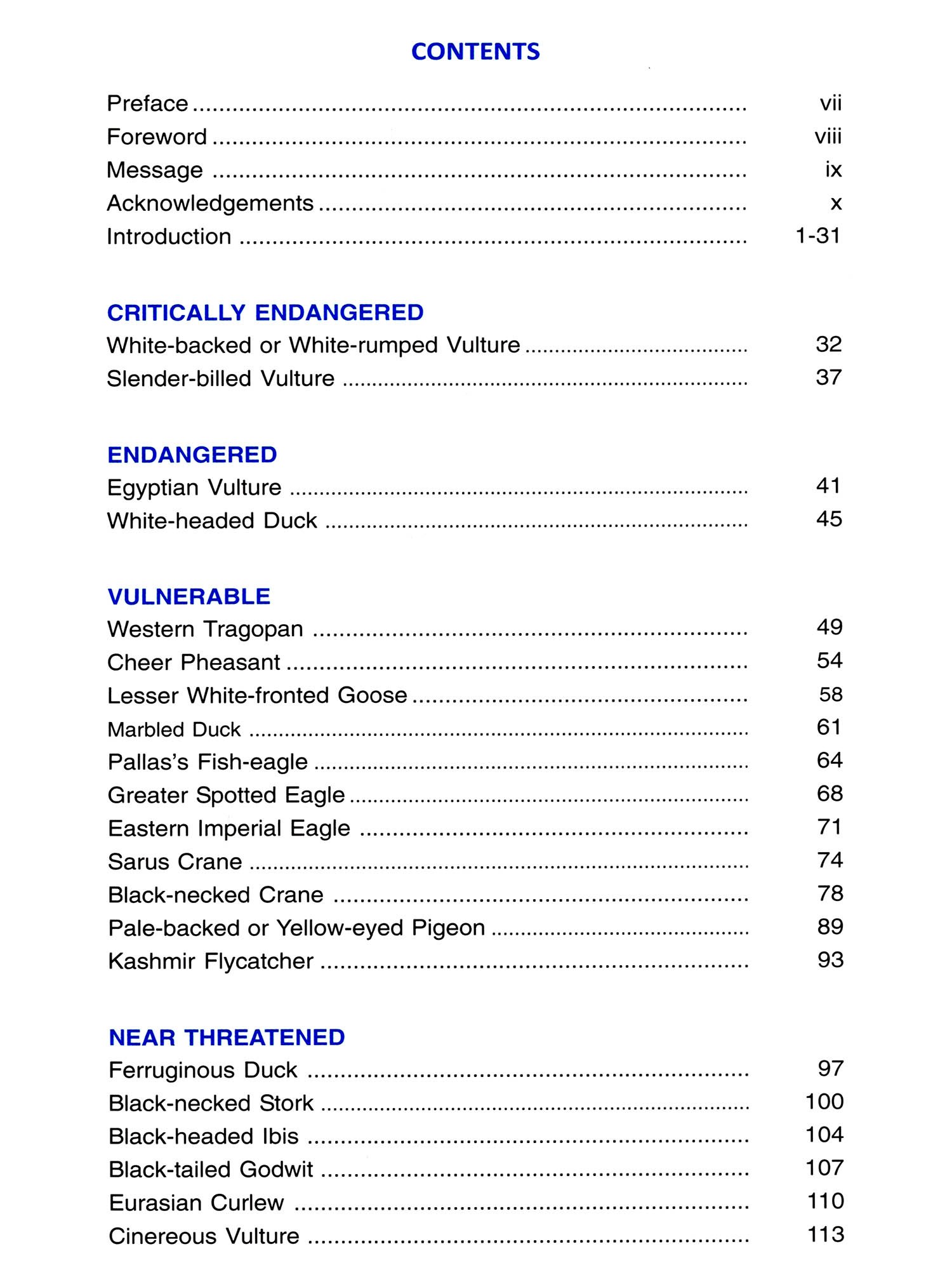
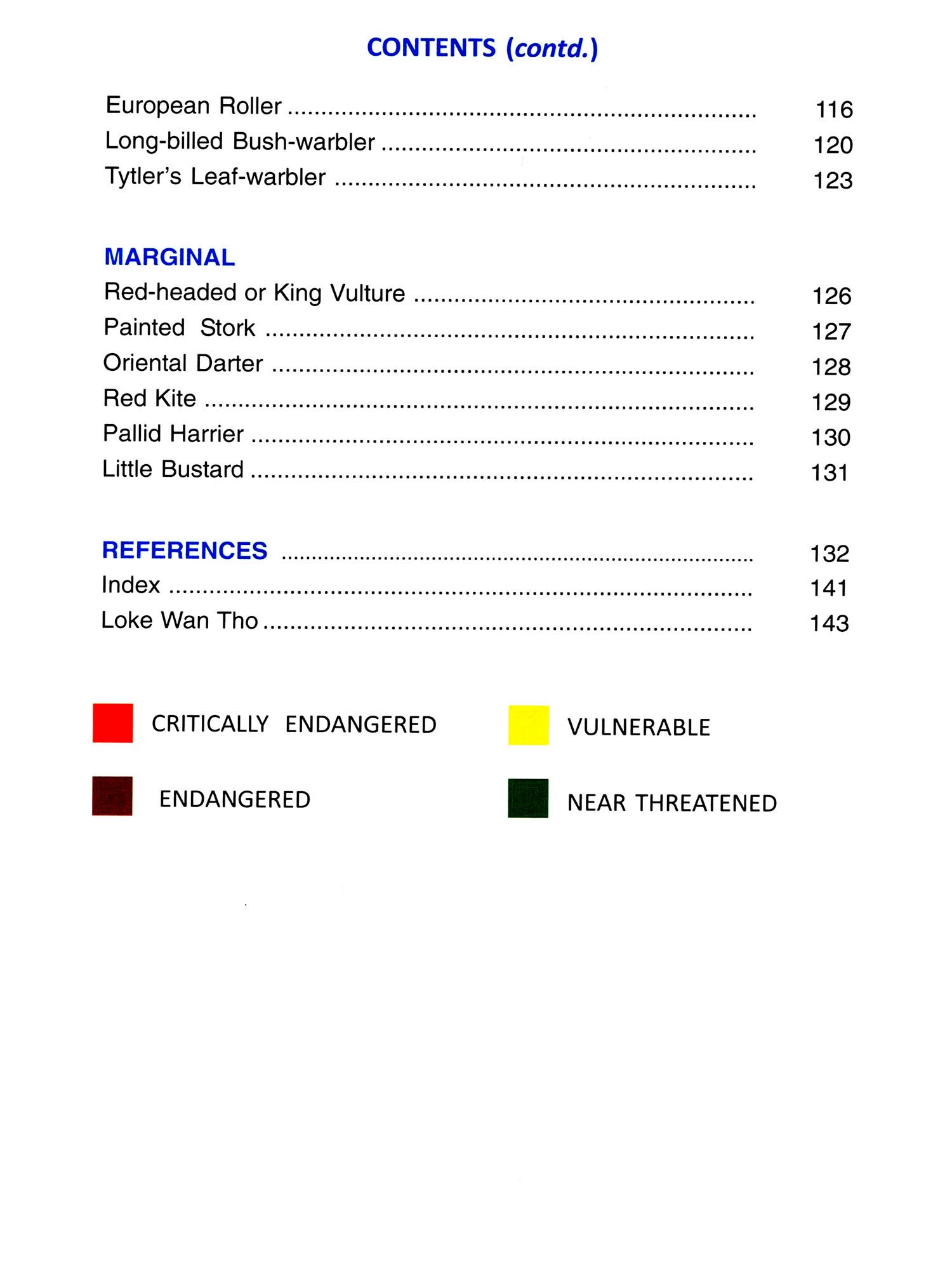
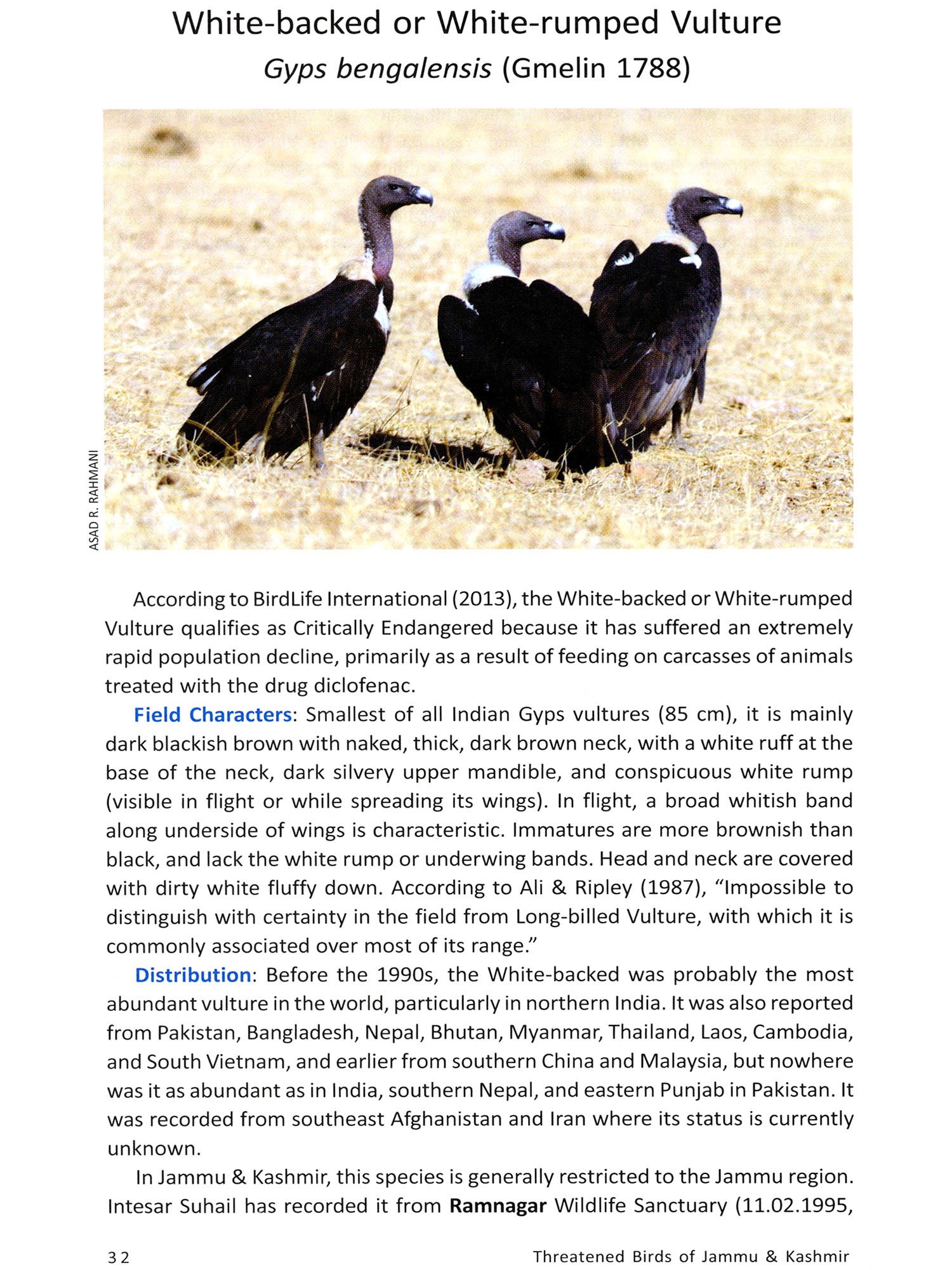
The present book follows the list of globally threatened and near threatened bird species published by BirdLife International in 2013. BirdLife regularly updates the list for International Union for Conservation of Nature (IUCN). Thus, this book provides comprehensive information about two Critically Endangered species, two Endangered species, 11 Vulnerable species, and nine Near Threatened species which have been reported from Jammu & Kashmir. Some marginal species of various categories have also been described in brief.
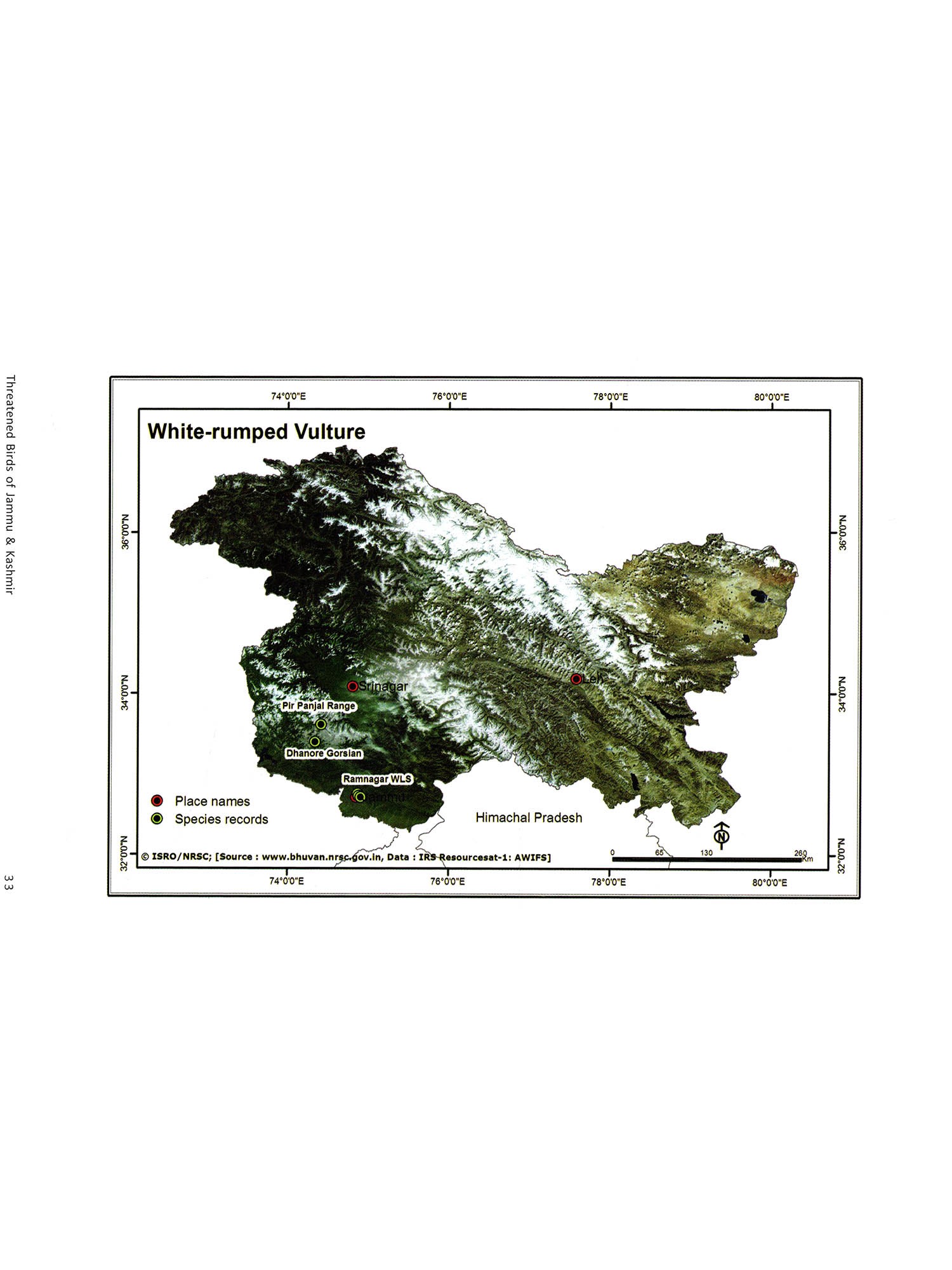
Besides the specific recommendations for the conservation of each threatened species found in Jammu & Kashmir, we have also given general recommendations for protection of all bird species and their research needs. The book provides distribution maps of the important threatened species. The book will be useful to government agencies like the Forest Department, Wildlife Department, conservationists, researchers, and birdwatchers alike.
By protecting threatened birds, we will be able to save their habitats as well.
The habitats of birds are home to innumerable other species of flora and fauna, which will also derive the benefit of our conservation initiatives.
I am delighted to know that the Bombay Natural History Society (BNHS) is bringing out a book Threatened Birds of Jammu & Kashmir. The book is published in collaboration with Bird Life International and the Royal Society for the Protection of Birds, both based in United Kingdom. It will be distributed by Oxford University Press.
Jammu & Kashmir has rich biodiversity spread over all the state, but particularly in the Kashmir Valley and Ladakh.
It is important to know that Jammu & Kashmir has three out of 15 Critically Endangered bird species of India. Apart from this, there are 11 Vulnerable and 20 Near Threatened species. Specific recommendations given in the book will help in protecting these birds. We need to take effective measures so that all these species and even our common species are protected.
Jammu & Kashmir has 25 Important Bird Areas (IBAs) and seven more have been recognised recently. These IBAs are extremely important for the protection of threatened birds.
The Bombay Natural History Society and especially Dr. Asad R. Rahmani, the Director, has been very considerate with the state of Jammu & Kashmir, helping the state with regard to research in birds and helping us in various aspects of their conservation. The recent efforts by him in collaboration with WWF-India and WII in ringing, collaring, and fixing of PTT on Bar-headed Goose, Black-necked Crane in Ladakh during autumn of 2013 and such an exercise in Gharana Wetland during February 2014 in Jammu, are examples of his personal efforts and involvement. It will enrich our understanding of bird migration in the state and the use of habitats by birds to a large extent.
I congratulate the authors of the book, Dr. Rahmani and others, for bringing out such a valuable resource on the birds of the State of Jammu & Kashmir. With support from organizations like WWF, BNHS, WII, and WTI, I am sure that we will be able to protect various species listed in this book.
I hope the book will be used by decision makers, researchers, NGOs, conservationists, and members of civil society. We need more such books on different taxa to appreciate and protect the rich biodiversity that our state possesses.
India is one of the twelve mega diversity countries in the world, divided into 10 biogeographical regions based on the landmass and species distribution. The state of Jammu & Kashmir lies within the Western Himalayan and Trans-Himalayan biogeographical regions, and is placed at the junction of the temperate Palaearctic and tropical Oriental biogeographic regions of the world. More specifically, Jammu & Kashmir (32° 17' to 37° 05' N; 72° 31' to 80° 20' E) is situated in the western Himalaya, and represents the extreme west of the Himalaya in India. The state is bounded on the north by China (Karakoram Range), on the east by Tibet, to the west by Pakistan and Afghanistan, and to the south by Himachal Pradesh and Punjab. With its borders touching Pakistan, Afghanistan, Tibet, and China, the state occupies a biologically strategic spot for India. Owing to its location bordering diverse biogeographic regions of Palaearctic, Oriental, and Subtropical Punjab plains, with enormous diversity of habitat types, great mountainous heights, besides wetlands and water bodies, and diverse climatic conditions, Jammu & Kashmir is home to a vast and varied diversity of species, including some endemic and near-endemic ones.
This hilly state is divided into three geographical regions, namely, the temperate valley and mountains of Kashmir, the cold desert of Ladakh, and the subtropical plains of Jammu. The higher regions comprise Pir Panjal, Karakoram, and the Inner Himalayan ranges. The average annual rainfall and temperature of the state has been cited as ranging from 600 to 800 mm and 15 °C to 17.5 °C respectively, but due to the varying habitats these figures are somewhat misleading. Climatic conditions vary from warm subtropical in the Jammu region to cold and arid in Ladakh. The state has a geographical area of 22.22 million ha (6.8% of India's geographical area). The total human population has increased from 10.07 million in 2001 to 12.54 million in 2010, a significant increase of about 23% in 10 years (Population Census 2010). Excluding Ladakh, which is a cold desert, the state has a forest cover of 20,230 sq. km which accounts for 20% of its total geographical area.
For administrative purposes, Jammu & Kashmir is divided into three different regions, namely Jammu, Kashmir, and Ladakh, all three of which also differ in having unique and distinctive topography, apart from their own distinctive languages, customs, and ceremonies. Thus the state of Jammu & Kashmir offers a rich diversity of landscapes, wildlife, people, and culture. There are 22 districts, 71 tehsils, 141 blocks, 2,690 panchayats, and 6,652 villages. At the local level, the panchayats (village councils) are the main democratically elected administrative institutions. Contrary to other states of India, Jammu & Kashmir has two capital cities. Srinagar is the summer capital, while in winter, the state machinery moves to Jammu city, the winter capital.
Climatically, the state may be divided into three distinct zones: the cold arid desert of Ladakh, the temperate Kashmir Valley, and the humid subtropical region of Jammu. From the alpine (Ladakh region) to the subtropical (Jammu region), the extremes of weather and climate in Jammu & Kashmir result from its location and topographical variations.
To the south around Jammu, the climate is typically monsoonal, though the region is sufficiently far west to average 40 to 50 mm of rain per month between January and March. In the hot season, maximum temperature in Jammu city can touch 40 °C, while in July and August, very heavy though erratic rainfall occurs, with a monthly maximum up to 650 mm. In September, rainfall declines, and by October conditions are warm and extremely dry, with minimal rainfall and temperatures of around 29 "С.
From the southwest monsoon, Srinagar receives as much as 635 mm rain, the wettest months being March to May, with around 85 mm per month.
The climate of Leh, Kargil, and Zanskar districts of Ladakh is extremely dry and cold. Precipitation by rainfall is only around 100 mm per year and humidity is very low. This region, almost entirely over 3,000 msl, experiences harsh winters.
-
Q. What locations do you deliver to ?A. Exotic India delivers orders to all countries having diplomatic relations with India.
-
Q. Do you offer free shipping ?A. Exotic India offers free shipping on all orders of value of $30 USD or more.
-
Q. Can I return the book?A. All returns must be postmarked within seven (7) days of the delivery date. All returned items must be in new and unused condition, with all original tags and labels attached. To know more please view our return policy
-
Q. Do you offer express shipping ?A. Yes, we do have a chargeable express shipping facility available. You can select express shipping while checking out on the website.
-
Q. I accidentally entered wrong delivery address, can I change the address ?A. Delivery addresses can only be changed only incase the order has not been shipped yet. Incase of an address change, you can reach us at help@exoticindia.com
-
Q. How do I track my order ?A. You can track your orders simply entering your order number through here or through your past orders if you are signed in on the website.
-
Q. How can I cancel an order ?A. An order can only be cancelled if it has not been shipped. To cancel an order, kindly reach out to us through help@exoticindia.com.