Summary
The Vishnu Purana is one of Hinduism’s eighteen Mahapuranas, narrated by Sage Parashara to Maitreya. Divided into six parts, it explains the creation of the universe, cycles of time, and the Dashavatara (ten avatars) of Lord Vishnu. It also covers dynasties, cosmology, legends, and teachings on dharma and devotion. Revered as a cornerstone of Vaishnavism, it offers guidance for living in Kaliyuga through faith and righteousness.
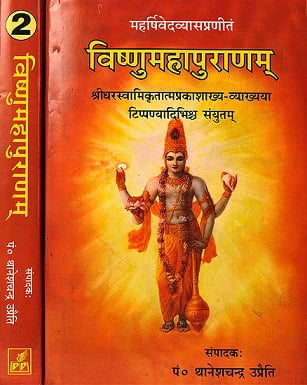
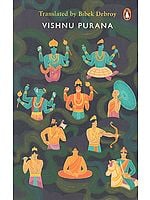
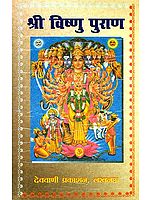
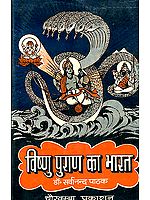
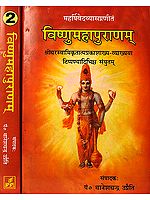
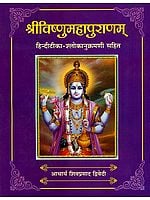
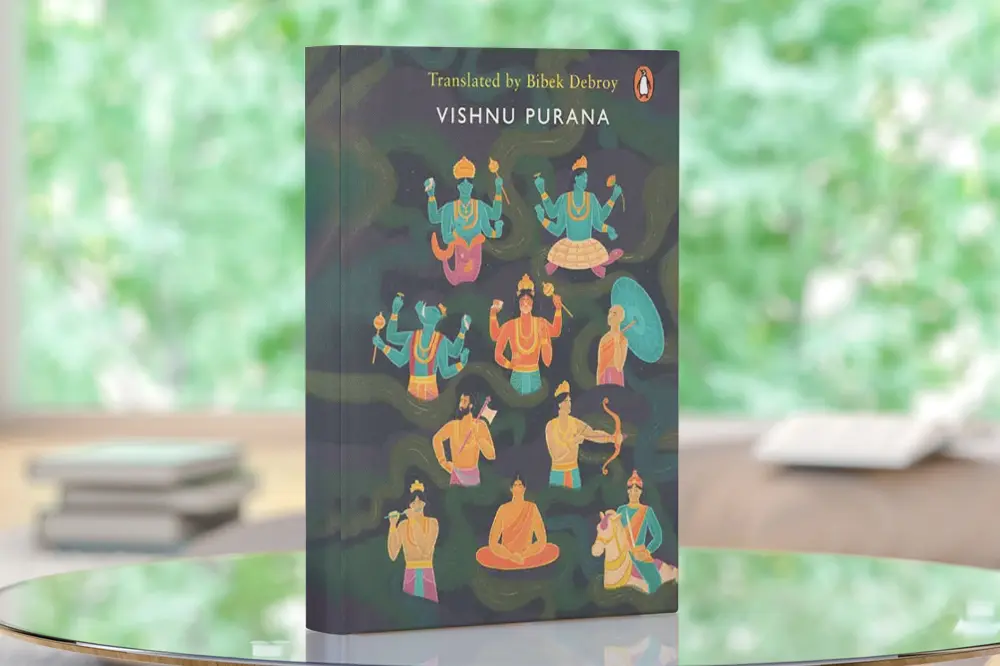
विष्णुमहापुराणम्: Vishnu Purana with the Commentary of Shridhara Swami (Set of 2 Volumes)
What is the Vishnu Purana?
The Vishnu Purana (Sanskrit: विष्णुपुराण) is one of the eighteen Mahapuranas, an ancient Vaishnavism texts in Hinduism. Sage Parashar, the exponent of Vishnu Purana had narrated this grand treatise to Maitreya. Rishi Parashar has been the grandson of Maharishi Vasishta and the father of Ved Vyasa Ji.
🔆Shree Ved Vyasa Ji is the writer of eighteen Puranas during the first phase of Satyug.
🔆The number of shlokas in Vishnu Purana is 7,000.
🔆However, as per other Puranas, the number of slokas in Vishnu Purana is stated to be not less than 23,000 contained in six parts (ansh).
- Vishnu Purana describes
🔆The geography, astrology, rituals, dynasty, the life, and character of Lord Vishnu,
🔆Vishnu Puran glorifies Lord Vishnu as the creator as well as the sustainer of this Brahmand.
🔆Water is a tangible form of Lord Vishnu.
🔆Even the earth was born out of water.
🔆Stars, all three worlds, forests, vegetation, mountains, directions, rivers, sea, and entire nature is the form of Lord Vishnu.
This vivid nature thus shows the omnipresent character of Lord Vishnu.Structure of the Vishnu Purana
The Purana is divided into six parts (Amsas):
🔆Cosmic Creation – Origins of the universe, elements, and the role of Vishnu in sustaining life.
🔆Earth & Geography – Description of the world, Jambudvipa, Lokas (worlds), and Patalas (underworlds).
🔆Time & Yugas – Cycles of four ages (Satya, Treta, Dvapara, Kali) and cosmic dissolutions (Pralayas).
🔆Dynasties of Kings – Genealogies of the Solar and Lunar dynasties, linking mythology with history.
🔆Legends & Avatars – Stories of Lord Vishnu’s incarnations to restore balance.
🔆Teachings for Salvation – Dharma, devotion, and liberation as the path in Kaliyuga.
The Dashavatara: Ten Avatars of Vishnu
Scriptures have mentioned that there have been 23 avatars (incarnations) till now, 24th is yet to incarnate (Kalki). A central highlight of the text is the Dashavatara, Vishnu’s ten incarnations:
1. Matsya (Fish) avatar – Rescued Manu during the great flood.
2. Kurma (Turtle) avatar – Supported Mount Mandara during the churning of the ocean.
3. Varaha (Boar) avatar – Raised the Earth from cosmic waters.
4. Narasimha (Man-Lion) avatar – Destroyed demon Hiranyakashipu.
5. Vamana (Dwarf) avatar – Subdued King Bali with three steps.
6. Parashurama (Warrior) avatar – Restored dharma by defeating corrupt rulers.
7. Rama (Prince of Ayodhya) avatar – Defeated Ravana in the Ramayana.
8. Krishna avatar – Central to the Mahabharata and Bhagavad Gita.
9. Buddha avatar – Brought compassion and reform.
10. Kalki (Future Avatar) – Yet to come, will end Kaliyuga and renew creation.
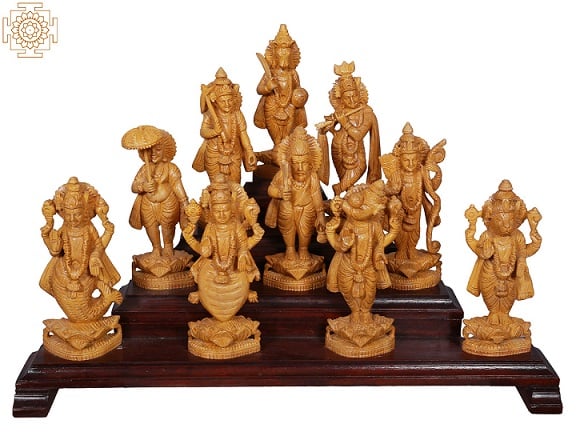
Dashavatara Of Vishnu | Wooden Statue
Other Avatars of Vishnu:
🔆Narad, Nar-Narayan, Kapil Muni, Guru Dattatreya
🔆Yagya, Rishabhdev, Aadiraja Prithu, Dhanwantri (God of Medicine), Mohini (Lord Vishnu’s Female form),
🔆Haigreev, Shree Hari, Rishi Vedvyas, Hans, and Shri Sankadik Muni
- Kalki Avatar
🔆Lord Vishnu’s last avatar expected is ‘Kalki Avtar’ by the end of Kalyug and the onset of SatyaYuga again.
🔆According to holy Puranas, Lord Kalki will be born as a son of a Spartan Brahmin named Vishnuisha in a place called Sambhal in the Moradabad district of Uttar Pradesh.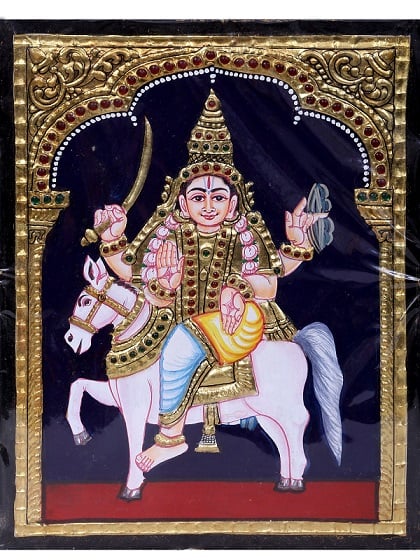
Kalki Avatara of Lord Vishnu | Traditional Colors with 24 Karat Gold | With Frame
Shree Shukradev Ji tells King Parikshit - ‘The time is very powerful.🔆As Kalyug will approach the progressive religion, truth, Holiness, forgiveness, mercy, age, vigor and memory will be abolished.
🔆By the end of Kalyug, the age of people will reduce.
🔆Human’s ultimate age will be much reduced.
🔆A five-year-old girl child will be able to produce children.
🔆The weather condition will be worst. Rains won’t happen.
🔆Fierce storms will blow. Earthquakes will be there and many more unpleasant & unfavorable events to happen.
Vishnu Purana has six (6) Parts as follows:
Part 1: Creation, Dynasties, and Early Legends
Creation of the Universe
🔆This whole universe originated from Lord Vishnu.
🔆It is existing within Him and will extinguish within Him eventually.
🔆When the universe comes into existence, Lord Vishnu fosters it till the end of Kalpa.
🔆At the end of Kalpa, Lord Vishnu Himself consumes the entire physical elements in Rudra's appearance.
Birth of Gods and Demons
🔆The first few creations had resulted from the thoughts of the Lord.
🔆For the creation of the gods, the demons, Pitraganas, human beings, and water, the Lord decided to use His body.
🔆Thus, the demons were the first to emerge from His thighs.
🔆Then from His mouth, the Lord produced the gods who had Sattvic virtues.
🔆Then from more bodies, the Lord produced Pitraganas, thereafter produced human beings.
Birth of Brahma and the Varna System
Lord Brahma was created and entrusted with shaping the world. From Brahma’s body arose the four social groups (Varnas):
🔆Brahmins from the mouth.
🔆Kshatriyas from the chest.
🔆Vaishyas from the thighs.
🔆Shudras from the feet.
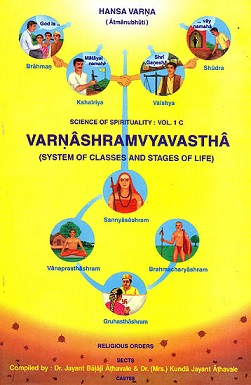
Varnashrama Vyavastha : System of Classes And Stages of Life
Pralaya (Cosmic Dissolution)
The omnipresent God created this world in the form of Manus, protects it, and ultimately destroys it.
The four kinds of Pralaya are:
1. Naimittika – occasional.
2. Prakritika – natural.
3. Aatyantika – spiritual liberation.
4. Nitya – daily dissolution.
Creation of Rudra and Churning of the Ocean
🔆From Lord Vishnu emanated Rudra, a form of cosmic energy.
🔆During the Samudra Manthan (churning of the ocean), Goddess Lakshmi appeared from the Kshira Sagara (ocean of milk), holding lotuses in her hands.
🔆She bathed in divine waters and took her eternal seat in Lord Vishnu’s heart.
🔆Hence, whenever Lord Vishnu takes an incarnation, Lakshmi accompanies Him.

Tales of the devotee Dhruva:
🔆The sages advised Dhruva to worship and concentrate on that omnipotent Lord Vishnu
🔆He meditated with the mantra: “Om Namo Bhagavate Vasudevaya (ॐ नमो भगवते वासुदेवाय)”
🔆Thus receiving a boon from Lord Vishnu, Dhruva became the Dhruva Tara (Pole Star) in the northern sky.
🔆His fixed position remains central even as the Saptarishis revolve around him.
🔆That pivotal position of Dhruv would continue even in the ages to come.
Tale of King Vena and Prithu
🔆When the sages were churning the arms of King Vena, it led to the birth of a kid named ‘Prithu’.
🔆The lotus mark on Prithu’s right hand revealed him as an incarnation of Vishnu.
🔆King Prithu came to be known as the father of earth.
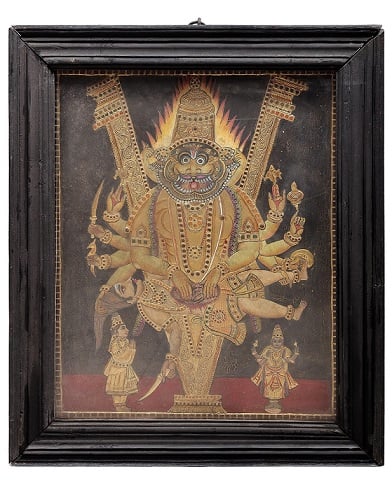
Killing of Hiranyakashipu - Tale of Prahlada and Narasimha
🔆The demon king Hiranyakashipu, empowered by Brahma’s boon, ruled the three worlds and expelled the gods.
🔆His son Prahlada, however, was a steadfast devotee of Vishnu.
🔆Prahlada praised the Lord as eternal, without beginning or end, beyond birth and decay.
🔆Despite attempts to kill Prahlada, Vishnu appeared as Narasimha (Man-Lion) and slew Hiranyakashipu, restoring cosmic order.
Part 2: Geography, Dynasties, and Cosmic Worlds
Priyavrata’s Lineage
🔆Priyavrata, son of Swayambhu Manu, continued the sacred lineage that upheld dharma and governance on earth.
Geography of Jambudweep and the Seven Islands
🔆The earth is divided into seven great islands (dweepas): Jambu, Plaksha, Shaalmali, Kusha, Kroncha, Shaaka, and Pushkar.
🔆Situated at the center of Jambudweep is the golden Sumeru Mountain (Himalayas),
🔸South: Himavaan, Hemkut, Nishad ranges.
🔸North: Neel and Shringi mountains.
🔆Because of an abundance of Jambu trees, this island came to be known as Jambudweep.
Bharat Varsha and the Bharat Dynasty
🔆Towards the south of Sumeru Mountain, the landmass that is present between the Himalayas and the ocean is known as Bharat.
🔆It has an expansion of 9,000 Yojans. It is populated by the descendants of Bharat.
🔆Bharatvarsha has nine divisions, surrounded by the sea.
🔆Social order is maintained by Brahmins, Kshatriyas, Vaishyas, and Shudras, who pass their lives engaged in works ascribed to their respective class.
🔆Bharat Varsha is blessed with the cycle of the four Yugas, Satya, Treta, Dwapara, and Kali.
🔆In Jambudweep, Lord Vishnu is worshipped in Yagyas.
🔆Even the gods envy those people who take birth in Bharatvarsha. They dedicate their whole action to Lord Vishnu and ultimately mingle with Him.
Description of the Seven Dweepas
🔆Each dweepa is encircled by oceans of ghee, milk, sweet water, wine, whey, grass, and fruits.
🔆In different regions, Lord Vishnu is worshipped in His many forms: Surya (Sun), Varaha (Boar), Matsya (fish), Kurma (turtle), Hayagriva (human figure with a horse head), and others.
🔆This highlights His omnipresence across creation.
Nether Worlds (Patala and Beyond)
🔆In Earth’s depth, are situated seven nether worlds with a depth of 10,000 Yojans each respectively.
🔆Names of these seven nether worlds are Atal, Vital, Nital, Gamastimaan, Mahaatal, Sutal, and Paatal.
🔆These nether worlds have lands that are white, black, red, and yellow with gravel, rocky, and golden soil.
🔆Scores of races including Daanav, Daitya, Yaksha, and Naagas live there.
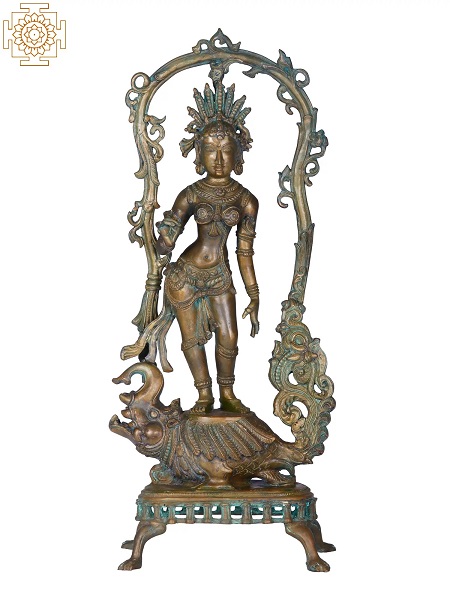
🔆Sheshnaag: At the base lies Sheshnaag (Ananta), a divine form of Vishnu with countless jeweled hoods. Bearing the flow of the Ganges, He stays like the Kailash Mountain. At the end of the Kalp, poison emanates from His thousands of hoods and destroys all three worlds taking the form of Rudra named Shankar. He is known as Anant.
Origin of the Ganges
🔆The sacred Ganges which is the destroyer of every sin also rises from the abode of Lord Vishnu.
🔆Dhruv bears the Ganges on his head.
🔆Flowing through the sphere of the Moon, the Ganges falls on Mount Meru and flows in every direction to sanctify the entire world.
Description of Hells
🔆Beneath earth and water lie the hells (Narakas) such as Raurava, ruled by Yamaraja (god of death).
🔆Here sinners undergo many torments.
🔆Yet, those who recite the name of Vasudeva escape hell, as His remembrance burns away sins.
Celestial Worlds and Planets:
Parashar says-
🔆Above the earth rise the spheres of the Sun, Moon, stars, and 9 planets (Navagraha).
🔆The Navagrahas (nine planets) include Surya (Sun), Chandra (Moon), Mangala (Mars), Budha (Mercury), Brihaspati (Jupiter), Shukra (Venus), Shani (Saturn), Rahu, and Ketu.
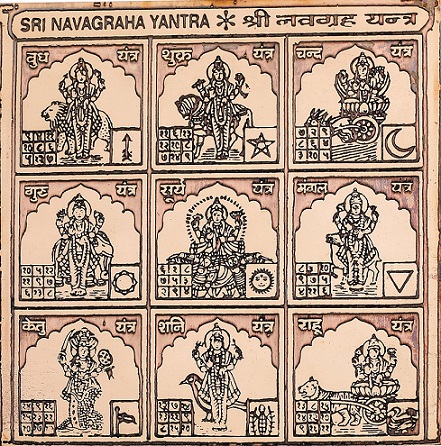
श्री नवग्रह यन्त्र: Sri Navagraha Yantra
Order of the Sun, the Stars, and other Constellations:
The Sun determines the night and the day. With the rising and setting of the Sun, one can know the directions.
🔆Towards the northern side of Mount Sumeru, one part of the land experiences the day while
🔆Another part experiences the night all the time.
🔆Supremely brilliant Dhruv stays in the abode of Vishnu.
🔆All the Nakshatras also depend on Dhruv.
🔆On Nakshatras depend the clouds and on the clouds depends the rain and
🔆On the rains depend the nourishment of the entire world.
🔆Thus, all the other things depend upon Dhruv.
🔆Chariots of all nine planets are tied to Dhruv. Thus, all of them traverse the same path again and again.
Surya Shakti and Vaishnava Shakti
The Trinity reflects through the Vedas:
🔆Brahma as Rigveda (creation)
🔆Vishnu as Yajurveda (sustenance)
🔆Rudra as Samaveda (dissolution)
🔆Their combined energies dwell within the Sun, source of light and life.
🔆The Sun draws water from earth and returns it as rain, sustaining crops and humanity.
Part 3: Manvantaras, Vedas, and Dharma
Description of the Manvantaras
Birth of Savarni Manu and the future cycles of Manvantaras are described.
Lord Vishnu’s role across the four Yugas:
🔆Satya Yuga – Preaches about the theoretical knowledge in Kapil’s incarnation.
🔆Treta Yuga – Destroys the evil doers and protects the world.
🔆Dwapara Yuga – Divides the Vedas into four parts.
🔆Kali Yuga – Lord will take Kali's incarnation and inspires corrupt people to a religious path.
Through all Yugas, Lord Vishnu sustains creation, preserves order, and dissolves the universe at the destined time.
Vedavyasa and the Wisdom of Brahma-Gyana
Parashar says- During each Dwaparyug, in every Kalpa, Lord Vishnu takes incarnation as Vedavyasa and effects the division of Vedas for the benefit of human beings.
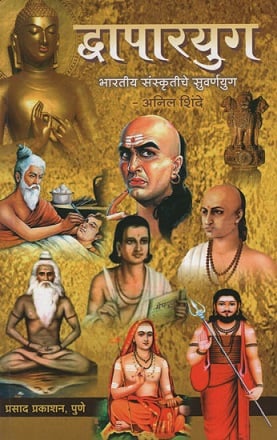
द्वापारयुग - Dwapara Yuga (Marathi)
The role of Vedavyasa across early cycles:
1st Dwapara – Brahma divided the Vedas.
2nd Dwapara – Prajapati was Vedavyasa.
3rd Dwapara – Shukracharya was Vedavyasa.
4th Dwapara – Brihaspati acted as Vedavyasa.
Branches of the Vedas and the Puranas:
Vedavyasa structured the Vedas for ritual duties:
1. Rigveda – Hota (reciter),
2. Yajurveda – Adhvaryu (performer),
3. Samaveda – Udgata (chanter),
4. Atharvaveda – Brahma (supervisor).
To preserve dharma, he also composed the Purana Samhita and taught it to Suta.
The 18 Puranas are:
🔆Brahma, Padma, Vaishnava, Shaiva, Bhagavata
🔆Narada, Markandeya, Agneya, Bhavishya
🔆Brahmavaivarta, Linga, Varaha, Skanda
🔆Vamana, Kurma, Matsya, Garuda, Brahmanda.
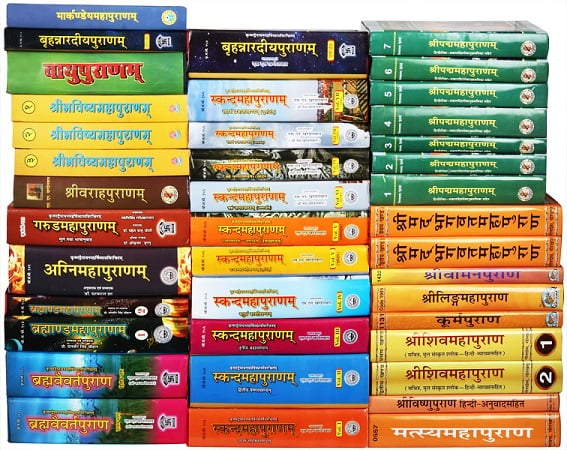
The Complete 18 Puranas in Set of 40 Books (Sanskrit Text With Hindi Translation)
Yama Gita: Teachings on Death
🔆At death, all beings come under Yamaraja’s rule, except Vaishnavas who are protected by Vishnu.
🔆Yama, Yamadoot, Yamapaash, Yamagana, and even the tortures of Yama are unable to hurt them.
🔆Constant remembrance of the Lord assures liberation.
Duties of the Four Classes (Varnas)
🔆Brahmin – perform Yagyas, study scriptures, and live non-violently.
🔆Kshatriya – protect society, give charity, study scriptures, and conduct rituals.
🔆Vaishya – engage in agriculture, trade, and cattle rearing while also supporting Yagyas and charity.
🔆Shudra – earn through service and craftsmanship, and may give donations and oblations.
In the time of emergency
🔆Brahmin may shift to the occupations meant for Kshatriya and Vaishya.
🔆Kshatriyas may adopt Vaishya duties.
🔆None of them should ever take to the occupation of Shudra.
The Four Ashrams (Stages of Life)
From birth to death, human life passes through four stages (Ashramas):
1. Brahmacharya – student life, devoted to learning and discipline.
2. Grihastha – householder stage, fulfilling family and social duties.
3. Vanaprastha – withdrawal into forest life for penance and simplicity.
4. Sannyasa – renunciation, complete devotion to God, and liberation.
Other Teachings in Part 3
🔆Righteousness (Dharma) - guidelines for living a just and moral life.🔆Sanctification rituals - purification after birth and death.
🔆Oblations (Shraddha) - duties towards ancestors.
🔆Battle of Gods and Demons - cosmic struggle between divine and demonic forces.
🔆Origin of Buddhism - mention of its rise in the flow of dharmic traditions.
Part 4: Royal Lineages and Divine Incarnations
Lineage of Vaivasvat Manu
🔆The lineage begins with Brahma.
🔆From Brahma’s right thumb appeared Daksha Prajapati, who produced Aditi.
🔆Aditi gave birth to Vivasvan, whose son was Manu.
Lineages of Great Dynasties
🔆Kusha Dynasty
🔆Nimi Dynasty
🔆Somavansh (Lunar Lineage)
🔆Kashyavansh (Descendants of Kashyapa)
🔆Ikshvaku Dynasty – origin and growth of the Suryavansh.
🔆Kukutstha and Narayana Dynasties
Birth of Pururava
🔆The tale of Pururava’s origin and role in continuing the lineage.
Marriage of Balarama and Revati
🔆Revati was of immense stature due to her origin in earlier times.
🔆Balarama pressed her with his plough, reducing her form to normal human size before their marriage.
Rise of the Suryavansh
Birth of Ikshvaku – the founder of the Solar dynasty.
Trishanku – his attempt and eventual ascent to heaven.
King Sagar and the Ashwamedha Yajna:
🔆Sagar, with 60,000 sons, performed the great sacrifice.
🔆Sage Kapila’s blessing enabled his grandson Anshuman to retrieve the sacrificial horse.
Anshuman → Dileep → Bhagirath
🔆Bhagirath’s penance brought Ganga down to earth.
🔆For this, the sacred river is also called Bhagirathi.
Lord Rama and the Ikshvaku Lineage
- Birth of Rama – King Dasharatha’s queens bore four sons: Rama, Lakshmana, Bharata, and Shatrughna.
- Incarnation of Vishnu – Rama as the embodiment of dharma.
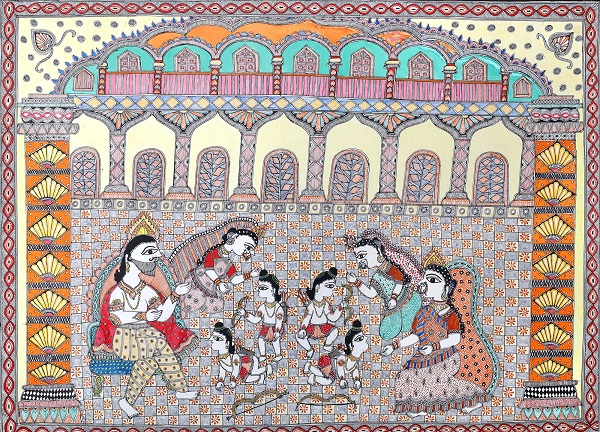
Rama,Lakshmana,Bharat and Shatrughna Playing in The Courtyard of The Castle
- Yajna of Vishwamitra – Rama and Lakshmana protected the sage’s rituals from demons.
- Marriage to Sita – Rama broke Shiva’s bow and won her hand.
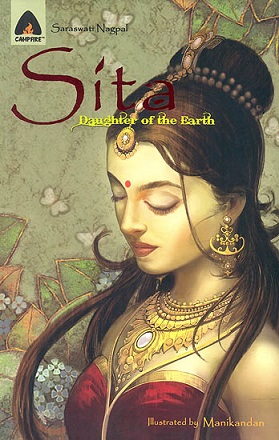
Sita: Daughter of The Earth (Comic)
Exile and Battle with Ravana:
🔆Exile of Rama for fourteen years
🔆Demon king Ravan deceitfully abducted Sita.
🔆Rama meets with Hanumana and Sugreev,
🔆Hanuman’s leap to Lanka and discovery of Sita.
🔆Building the bridge to Lanka.
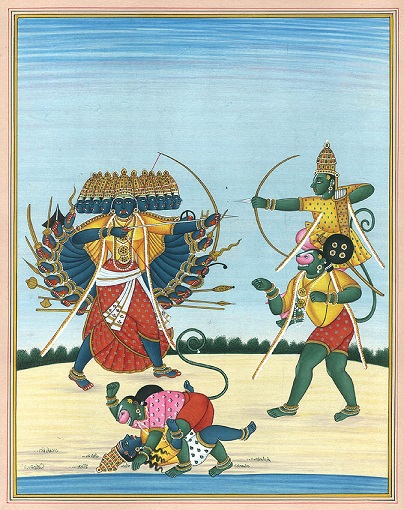
🔆Fierce battle – Ravana slain by Rama.
🔆Rama’s triumphant return to Ayodhya and long reign.
Lunar Lineages (Chandra Vamsha)
🔆Tales of the Chandra dynasty.🔆Birth of Dhanvantari and his descendants.
🔆Clan of Nahush.
Tale of King Yayati
🔆Yayati, cursed with old age, asked his sons to exchange their youth.
🔆All refused except Puru, who gladly accepted.
🔆Later, Yayati restored Puru’s youth and embraced old age again.
🔆Puru was crowned king while Yayati retired to the forest.
Yadu Dynasty and Krishna
🔆Stories of the Yadu lineage.
🔆Birth of Krishna and his marriages with Jambavati and Satyabhama.
🔆Salvation of Shishupala at Krishna’s hands.
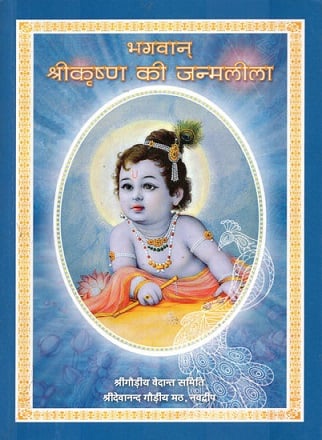
भगवान् श्री कृष्ण की जन्मलीला - Birth of Lord Shri Krishna
Other Dynasties and Legends
🔆Birth of Karna and his adoption by Adhiratha.
🔆Janamejaya dynasty and the origin of Bharata.
🔆Clans of Jahnu and Pandu.
🔆Clan of Parikshit.
🔆Future royal dynasties:
🔆Ikshvaku Dynasty,
🔆Brihad Dynasty,
🔆Pradyot Dynasty,
🔆Kingdom of Nanda.
Advent of Kali Yuga
The text closes with the arrival of Kali Yuga and a description of the dynasties that will rule during this age.
Part 5: Puruvansh, Kuruvansh, and Lord Krishna
Lineage of Puruvansh
King Dushyant and Shakuntala:🔆Dushyant fell in love with Shakuntala, daughter of Sage Vishwamitra.
🔆King Dushyant gives Sakuntala his ring as a memento
🔆The ring was swallowed by a fish, and Dushyant later refused to identify her.
Recognition of Bharat:
🔆Dushyant later saw the child Bharat fearlessly counting the teeth of a lion.
Lineage of Kuruvansh
King Kuru established the sacred land of Kurukshetra, which became a central place of dharma and great events. His descendants formed the Kuru dynasty, from which many legendary figures arose.
Historical Krishna (Set of 3 Volumes)
The Life of Lord Krishna
Birth and Early Life
🔆Marriage of Vasudeva and Devaki.
🔆Prophecy of Kansa’s death and imprisonment of Vasudeva and Devaki.
🔆Birth of Krishna and his secret transfer to Gokul.
🔆Dialogue of Mahamaya with Kansa.
🔆Release of Vasudeva and Devaki.
Childhood Miracles of Krishna
🔆The killing of Putana and the Salvation of other Demons
🔆Playful acts of Krishna’s childhood in Gokul.
🔆Stealing of cattle and butter with the cowherds.
🔆Subduing of Kaliya Naag.
🔆Swallowing of the forest fire (Davanala).
🔆Chira-haran – stealing the clothes of the Gopis.
🔆Lifting of Govardhan hill, replacing Indra’s worship with Govardhan Puja.
🔆Indra’s indignation and later reconciliation.
🔆The Maha-Raas Lila with the Gopis.
Youthful Deeds and Battles
🔆Grace bestowed upon Kubja.
🔆Slaying of Keshi demon.
🔆Krishna’s arrival in the amphitheatre and the slaying of Kansa.
🔆Coronation of Ugrasena
🔆Defeats of Jarasandha, Kalayavan, and Shishupala.
Marriages and Family
🔆Abduction of Rukmini and their marriage.
🔆Krishna accepts 16,000 queens.
🔆Marriage with Satyabhama.
Conflicts and Victories
🔆Battle with Indra, who later begged forgiveness.
🔆Migration to Dwarka
🔆Bow battle and abduction of Aniruddha.
🔆Fierce battle with Lord Shiva.
🔆Bana’s arms severed by Krishna.
🔆Killing of Kashiraj Paundraka.
🔆Abduction of Lakshmana
Tests, Leelas, and Friendships
🔆Prank with Samb disguised as an expecting mother before the sages.
🔆Test of the Trinity (Brahma, Vishnu, Mahesh).
🔆Revival of the Brahmin’s dead children.
🔆Preaching of Arjun by Vyasa
🔆Coronation of Parikshit
🔆Friendship with Sudama, his visit and Krishna’s grace.
🔆Yagya organized by Vasudeva.
🔆Reunion of Devaki with her six lost sons.
🔆Marriage of Subhadra and Arjuna.
Decline of the Yadavas
🔆The sages cursed the Yaduvansh, leading to its destruction.
🔆Ascendence of Lord Krishna to heaven.
🔆Beginning of Kali Yuga after Krishna’s departure.
Part 6: Kali Yuga, Dynasties, and Teachings of Vishnu Purana

View of Human Life (The Wheel of Time and Kali Yug)
The Nature of Kali Yuga
🔆Loss of religious values: Scriptures will be known only for show, and talkativeness will be mistaken for knowledge.
🔆Decline of respect: Parents will be disregarded; respect will shift to in-laws only.
Moral corruption:
🔆No true holiness.
🔆Cows will grow weak and thin.
🔆Marriages will ignore caste traditions.
🔆Greed, selfishness, and lust will dominate family life.
🔆In hardships, spouses will desert each other.
🔆Duty, responsibility, and conduct will vanish.
Dynasties of Kali Yuga
🔆The Nand dynasty: Eventually destroyed by Chanakya, who installed Chandragupta Maurya as king.
🔆Maurya dynasty: Rise of the great emperor Ashoka (Ashokavardhan).
🔆Foreign rulers: Yavans (Muslims) will rule for 640 years.
🔆Fair-complexioned foreigners will govern for 160 years.
Afterwards:
🔆No fixed kings or subjects.
🔆Rule will be determined by majority votes.
The Virtue of Vishnu’s Names
The Thousand Names of Vishnu: With Roman and Meaning of Each Name
Parashar says: Despite being the age of flaws, Kali Yuga holds one great virtue:
🔆Simply chanting the names of Lord Vishnu grants divine liberation.
🔆Yet, people in Kali Yuga will lack faith in His name, a misfortune of the age.
🔆The Thousand Names of Vishnu are revered, each with meaning and spiritual power.
Knowledge and Spiritual Descriptions
🔆Teachings about Shudras and women by Vyasa.
🔆Description of Kalpa and a day of Brahma.
🔆Brahma’s position in Pralaya (dissolution).
🔆Natural disasters and different kinds of sorrows.
🔆Descriptions of hells and punishments.
🔆Preachings on Yoga, salvation, and queries.
Tale of Keshidhwaja and Khandikya:
🔆Counsel between them, leading to salvation.
🔆Decline of religion and protection of the sacred cow.
🔆Mockery of false spiritualism.
🔆The glory of Brahmajnana (Vedic wisdom).
🔆The excellence of the Vishnu Purana as a scripture.
The sixth section of Vishnu Purana contains the description of Kaliyug, Mahapralay, and the sermon of Divine Knowledge (Brahmagyan) by Keshidhwaj to Khandikya.
Practical Teachings of Vishnu Purana
Conduct in Relationships
🔆Do not ask guests about their wealth or education, it may cause discomfort.
🔆Avoid marrying a woman associated with corrupt men.
🔆Women should speak sweetly, as Goddess Saraswati resides in their words. Harsh speech brings unrest.
🔆Never marry within the same Gotra, it may lead to genetic disorders.
Morality in Trade
🔆Do not sell essential commodities like fruits, vegetables, salt, or medicines to the poor for profit.
🔆Donating such items brings merit, while exploiting need is sinful.
🔆Selling jaggery or white sesame for greed is condemned.
🔆Selling drugs to a needy or helpless person for earning money is a crime. However, getting its cost is not a crime.
🔆Daily Discipline and Health
Bathing:
🔆Bathe daily for health and beauty.
🔆Bathing before sunrise brings Lakshmi’s grace, intellect, and radiance.
🔆Taking a bath for a long time causes damage to health.
Sleep:
🔆Sleep 7–9 hours daily.
🔆Wake up early; sleeping late invites disease.
🔆Should wake up early in the morning and sleep early at night.
🔆Only the sick may sleep during the day; for others, it is forbidden.
Conclusion
Rishi Parashar says: "The trinity of Brahma, Vishnu, and Mahesh is also known as the creator, the preserver, and the destroyer. All of them soothe the devotees. All of them have equal importance. Still, the preserver, who fosters and protects all living beings is far more significant.
It is also mentioned in Vishnu Puran that those who attain human life, are more blessed and fortunate than Deities since salvation and attainment of God is possible only in human birth. Even the gods envy those people who take birth in Bharatvarsha.
Vishnu Purana occupies a very prominent place in the scriptures of Hinduism. It tells us about Lord Vishnu, a deity around whom (along with his two incarnations Rama and Krishna) much of the Bhakti cult is centered. Indeed, Vishnu Purana forms the hearts of the two major pillars of Hinduism - Vaishnavism and Shaivism.