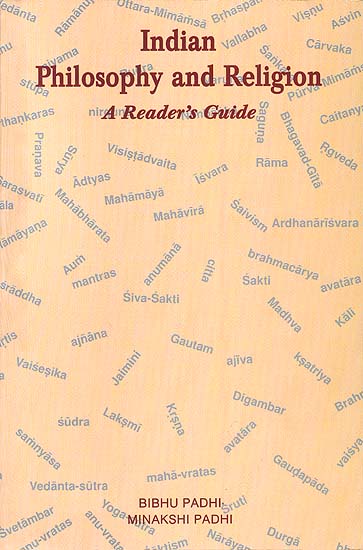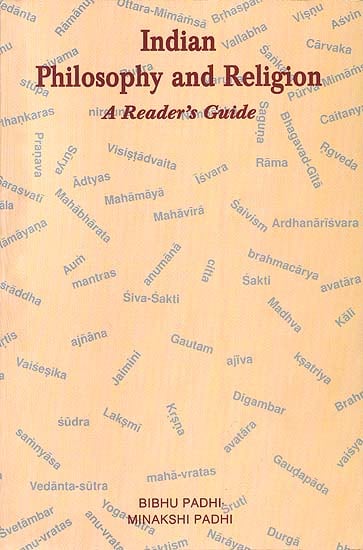
Indian Philosophy and Religion: A Reader's Guide

| Specifications |
 |
Publisher: D. K. Printworld Pvt. Ltd. |
 |
21 cm X 14 cm |
 |
Weight 610 gm |
 |
IDD186 |
 |
Statutory Information |
| Delivery and Return Policies |
 |
at 43215 |
 |
Returns and Exchanges accepted within 7 days |
 |
Free Delivery |
 |
Delivery from: India |


From the Jacket:
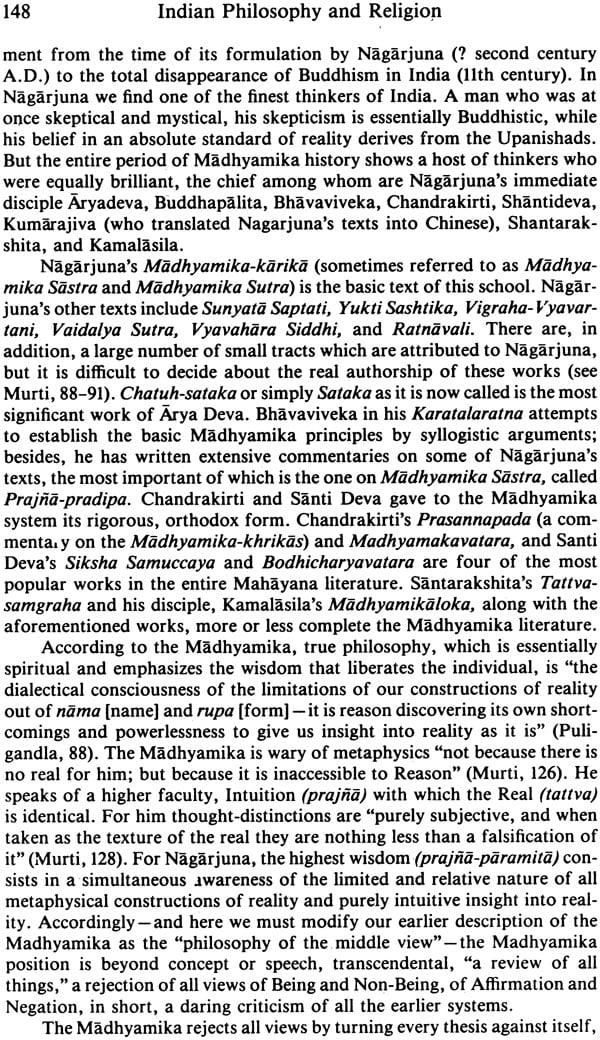
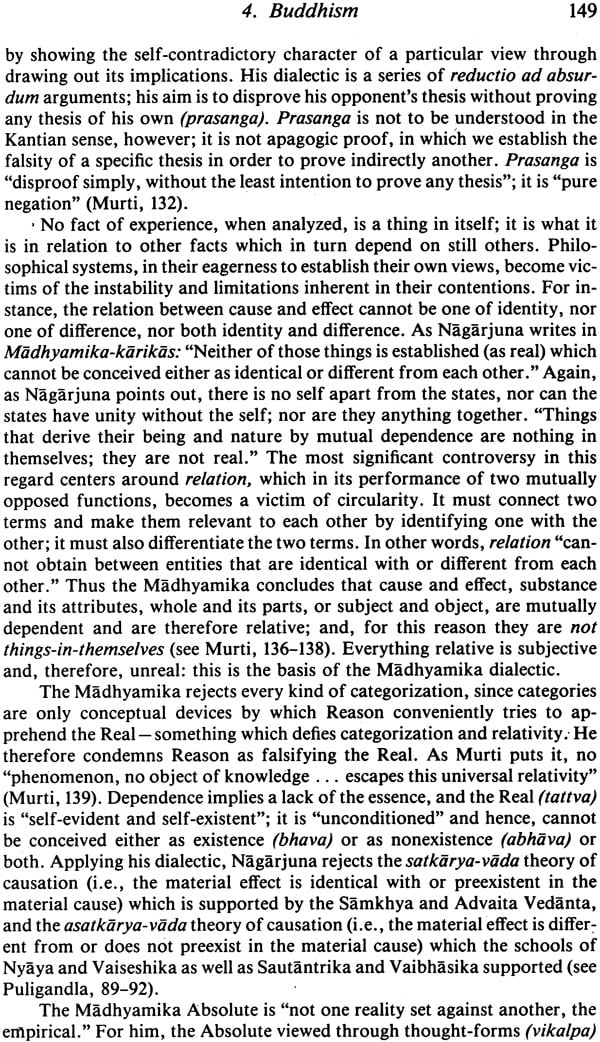
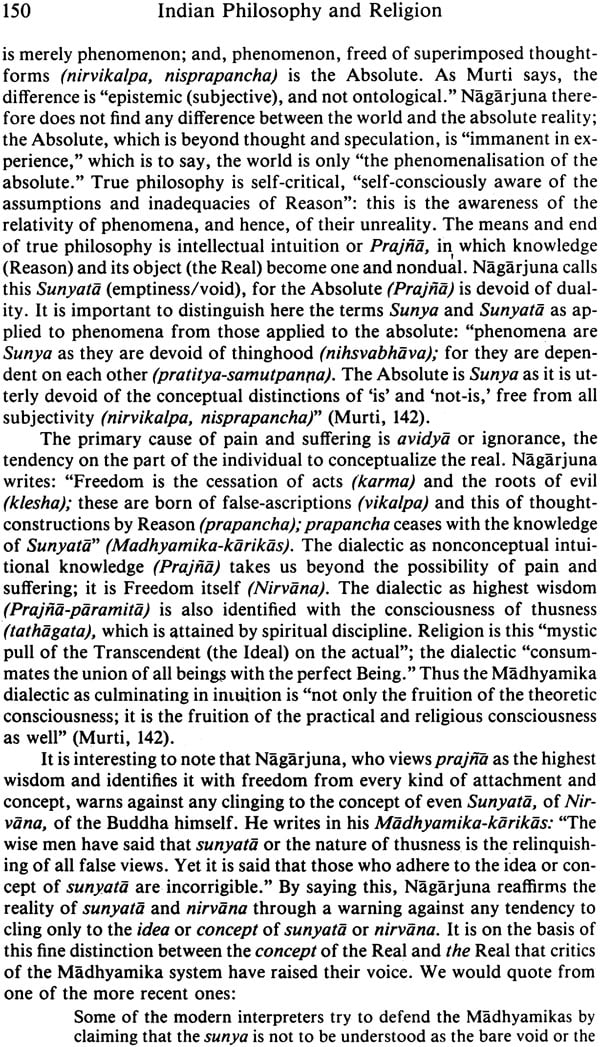
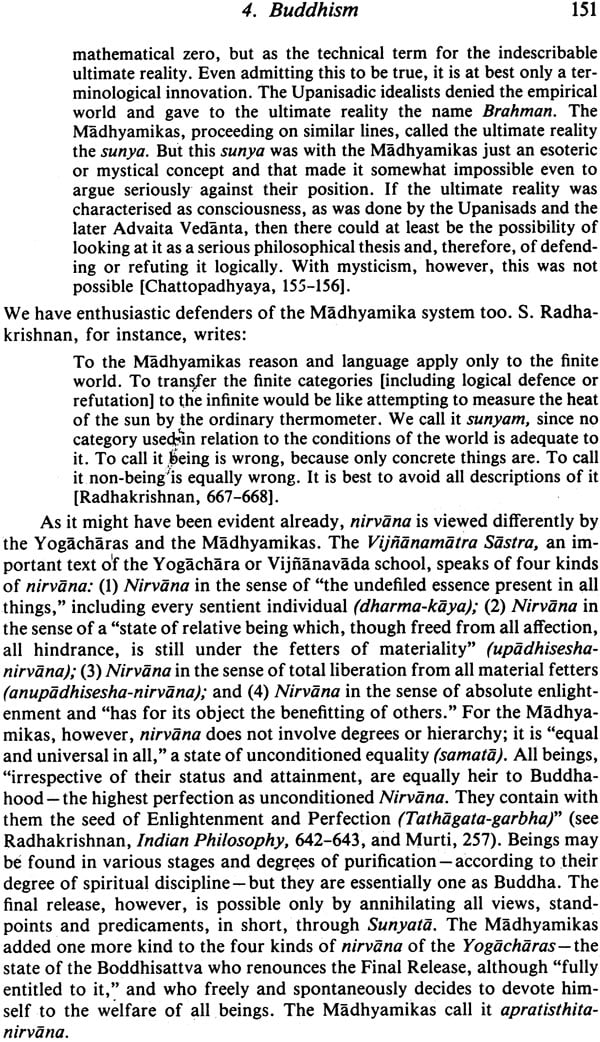
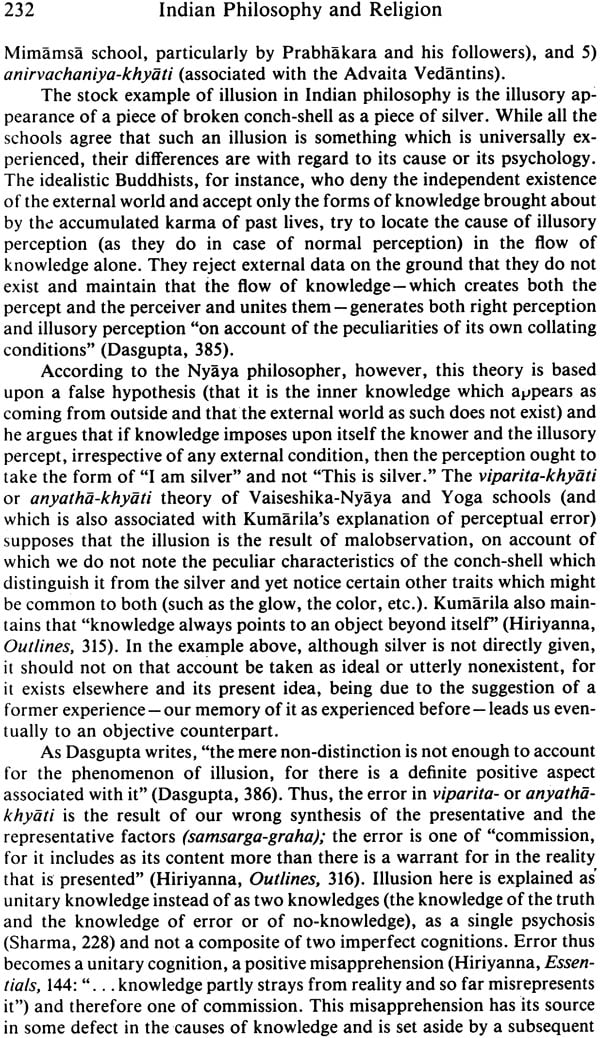
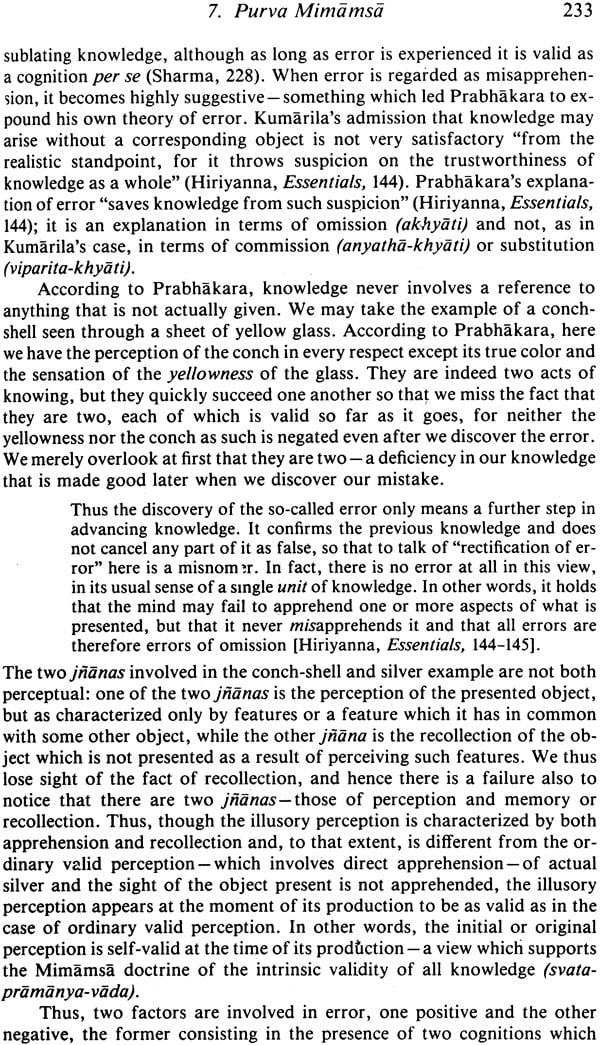
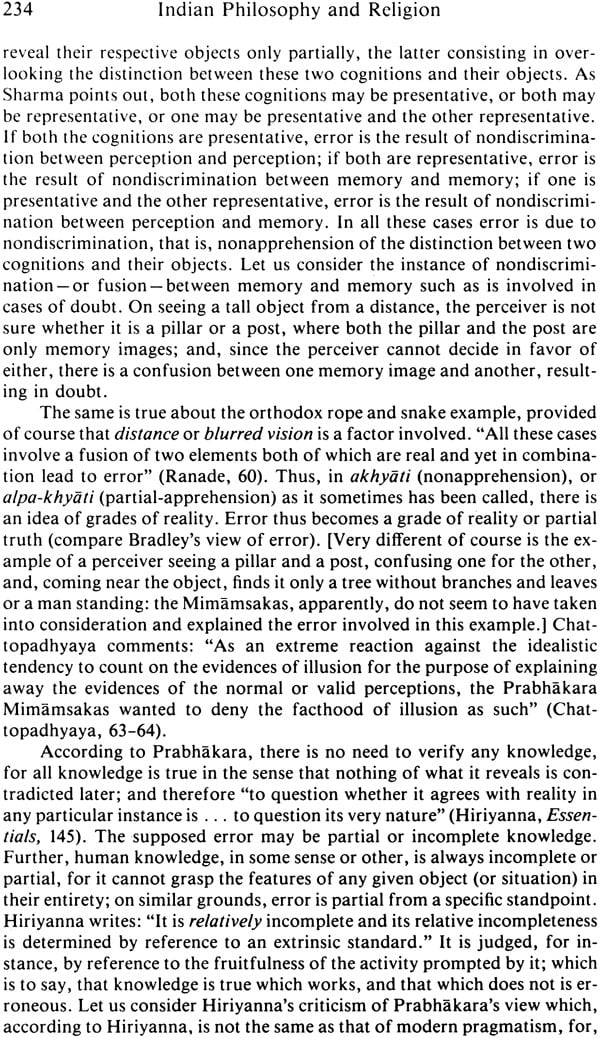
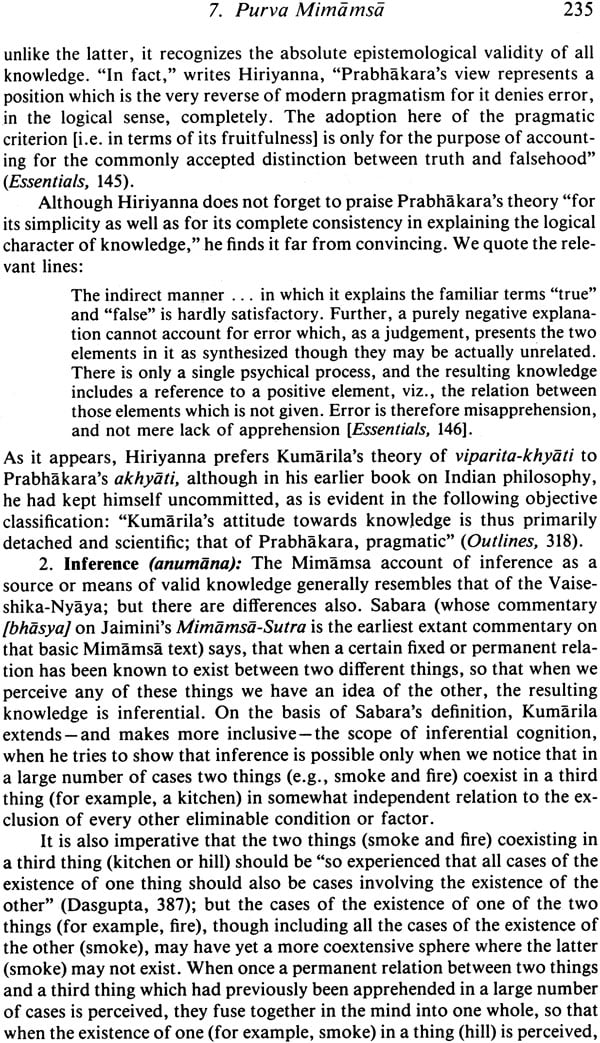
In India, philosophy and religion are linked intimately, inseparably. Barring the Carvaka's materialistic school, every other school has concentrated not just on "the spiritual way of life in the here-and-now", but on the "eventual spiritual salvation of man in relation to the universe". However, notwithstanding the centrality of its spiritual concerns, Indian philosophy has not altogether glossed over materialism; rather "it has known it, overcome it, and has accepted idealism as the only tenable view" - whatever specific form that idealism might take: mythological, popular or technical.
Offering a brilliant prefatory discussion on the nature and thematic importance of the Vedas, the Upanisads, and the Bhagavad Gita, Padhis' book tries to capture India's fabulous philosophic genius, with comprehensive, at once objective account of all the six classical systems: the Nyaya, the Vaisesika, the Samkhya, the Yoga, the Purva Mimamsa, and the Vedanta; and, in addition, of the Carvakas: the crass materialists. And of their numerous texts and their exponents: classical, medieval, and modern. Also unfolding a panorama of the Hindu pantheonic divinities, the author present Jainism and Buddhism: both as religious and philosophies - with focus on their world-Views of ethics, major doctrines and significant metaphysical theories, among other aspects.
Uninfluenced either by the idealistic/eulogistic studies of certain Indian scholars, or by the damaging critiques of their Western counterparts, the authors aim to achieve utmost objectivity in their presentation. Which, together with extensive bibliographic references and glossary of Sanskrit terms, makes the book an authentic guide for the discerning readers of Indian philosophy, religion and mythology.
About the Author:
Bidhu Padhi teaches English at SCS College at Puri-on-Sea, Orissa. His poems and scholarly articles have appeared in magazines and journals of international repute. His fourth book of poems, Painting the House, is in press. He has also written a book-lenght study of D.H. Lawrence.
Minakshi Padhi teaches philosophy at SCS College. Her interests include philosophy of religion and contemporary Indian philosophers.
This is not a textbook on Indian philosophy and religion inasmuch as it is intended to raise as many questions as it seeks to answer. A typical text- book, on the other hand, almost always remains satisfied with the noncontroversial and the minimal. It is not a highly specialized treatise on its subject, for we never meant it to be one. We feel that that need has been more than amply fulfilled by S. Radhakrishnan's two-volume Indian Philosophy and Surendra Nath Dasgupta's monumental five-volume History of Indian Philosophy (besides of course the ongoing multivolume project on Indian philosophy under the editorship of Karl H. Potter, called Encyclopedia of Indian Philosophies). The present book, as its subtitle indicates, is a comprehensive reference guide to its subject for the uninitiated, but inquisitive, reader of Indian philosophy and religion.
Most of the critical studies of Indian philosophy have been written with some bias or other. If the Indian interpreters have been overly idealistic (even eulogistic), their Western counterparts, barring a very few, have been overly critical (at times even damaging). We have tried to be objective and clear without neglecting to show the limitations and weaknesses that are', or so we feel, peculiar to matters Indian. We feel that the book could be profitably used by advance undergraduates and graduate students, as well as by the general reader interested in the subject. It is particularly intended for those institutions who are introducing an Indian content into a required core curriculum and do not possess a faculty trained in Indian thought and culture. We sincerely believe that the chapters on religion (Buddhism, Jainism, and Hindu gods and goddesses) will prove especially useful to students taking courses in comparative religion or working toward a degree in religious studies.
We are of course aware of our great debt to the excellent writings of Theos Bernard, Surendra Nath Dasgupta, Erich Frauwallner, Mysore Hiriyanna, Karl H. Potter, S. Radhakrishnan, and Chandradhar Sharma. We must also confess that on certain occasions we have tended to depend on particular books-vas, for instance, on Alfonso Verdu's well-researched Early Buddhist Philosophy for our chapter on Buddhism, and on Haridas Bhattacharyya's excellent but-now out-of-print Foundations of Living Faiths for our chapter on the Hindu gods and goddesses. We have three reasons for this: first, because of the consistently high quality of these books; second, because of their inaccessibility, especially for the non-Indian reader; and third, because they spontaneously catered to our very human temptation to exploit things we loved and admired.
We take this opportunity to thank our friend Paki, and our children (and dedicatees of this book) Buddhaditya and Siladitya, without whose emotional support this book could never have been written.
|
Preface
|
ix | |
| 1. | Introduction: The Vedas, the Upanishads, the Bhagavad-Gita | 1 |
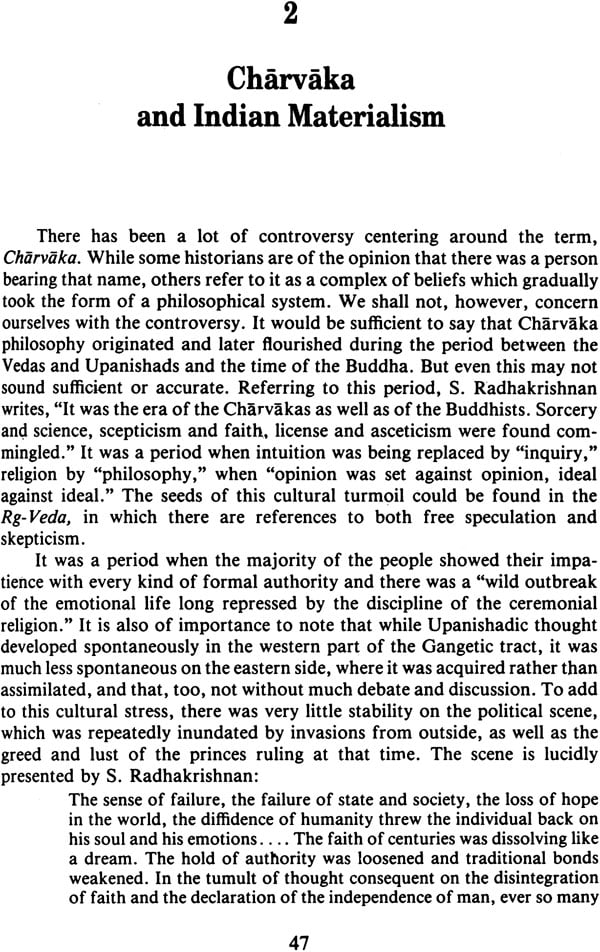
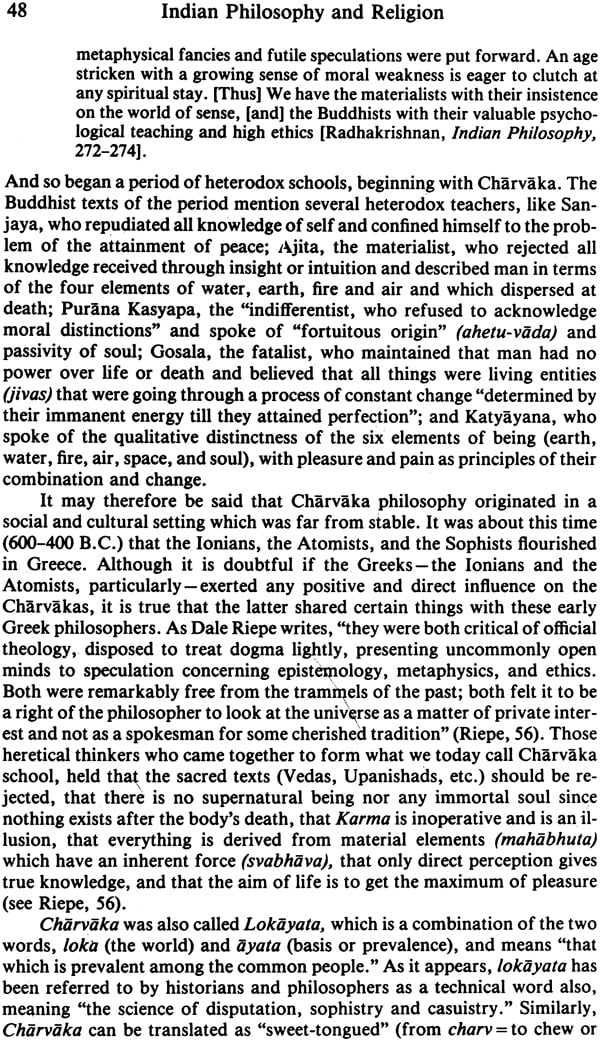
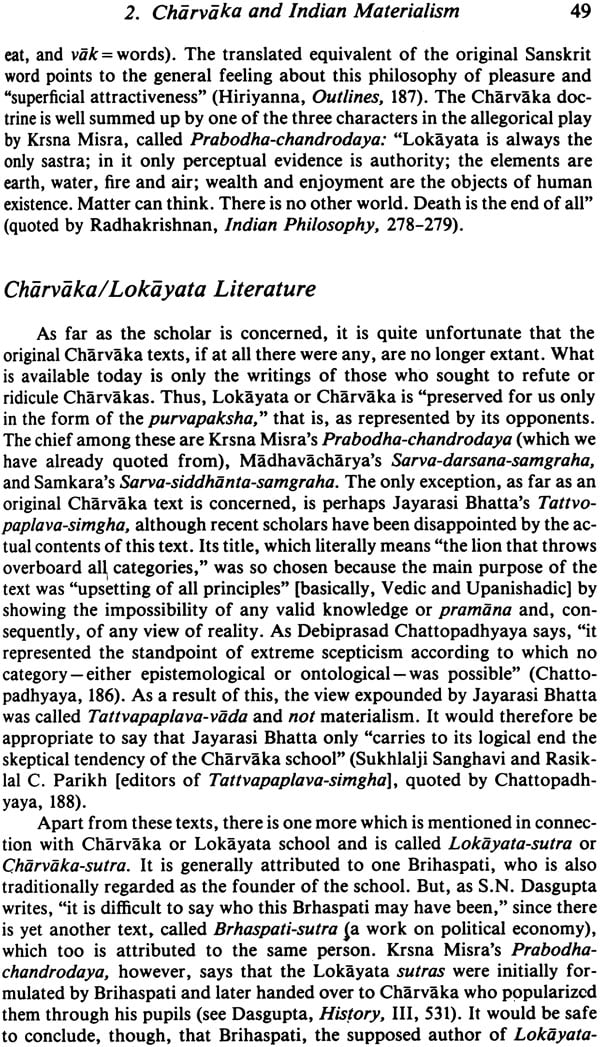
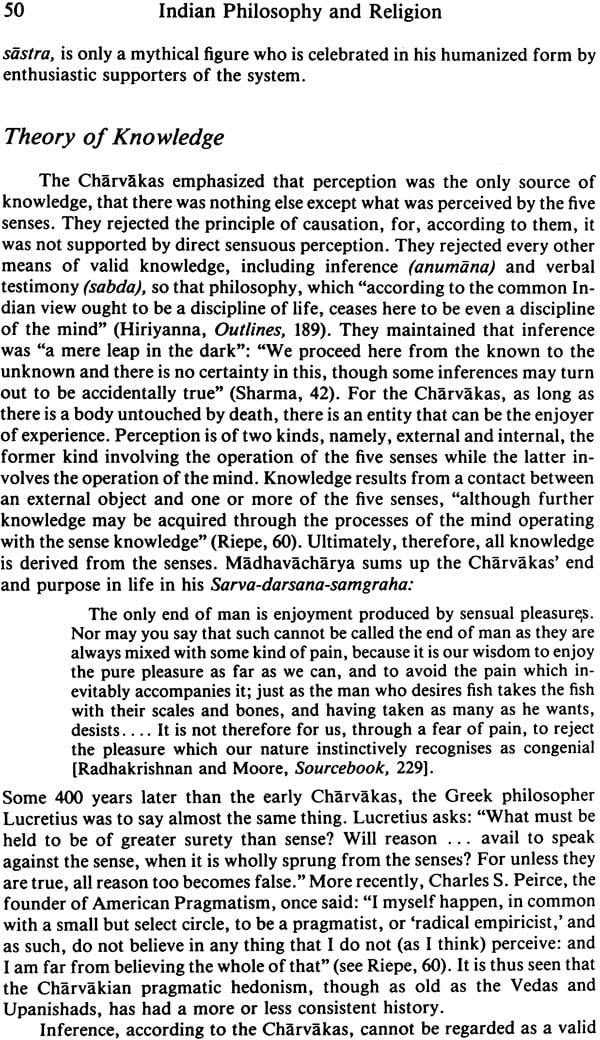
| 2. | Charvaka and Indian Materialism | 47 |
| 3. | Jainism | 63 |
| 4. | Buddhism | 96 |
| 5. | Vaisesika-Nyaya | 166 |
| 6. | Samkhya-Yoga | 193 |
| 7. | Purva Mimamsa | 219 |
| 8. | Vedanta (Uttara-Mimamsa) | 261 |
| 9. |
Hindu Gods and Goddesses
|
347 |
| Glossary of Major Terms | 391 | |
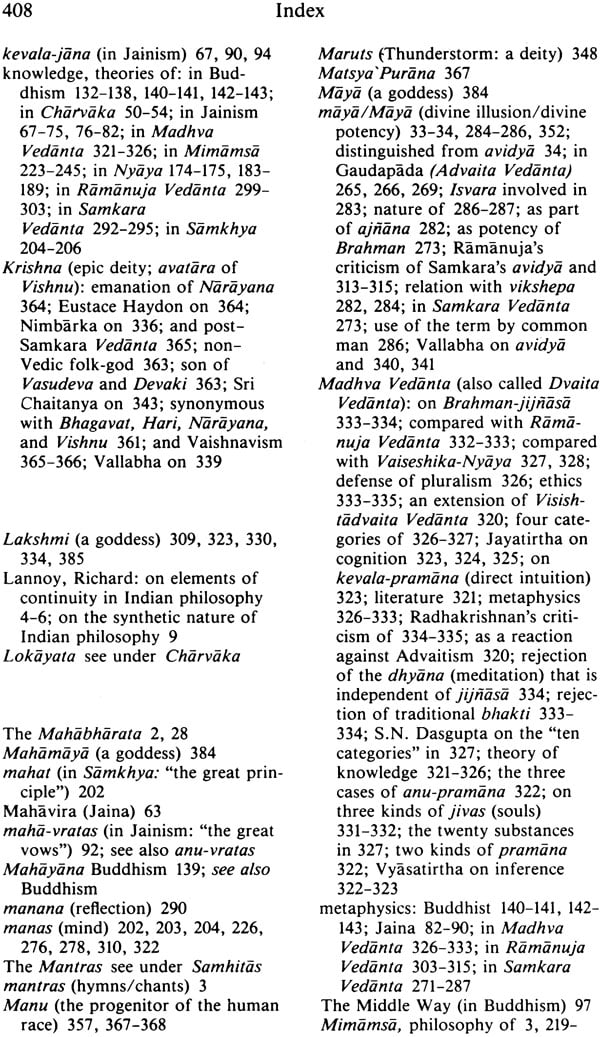
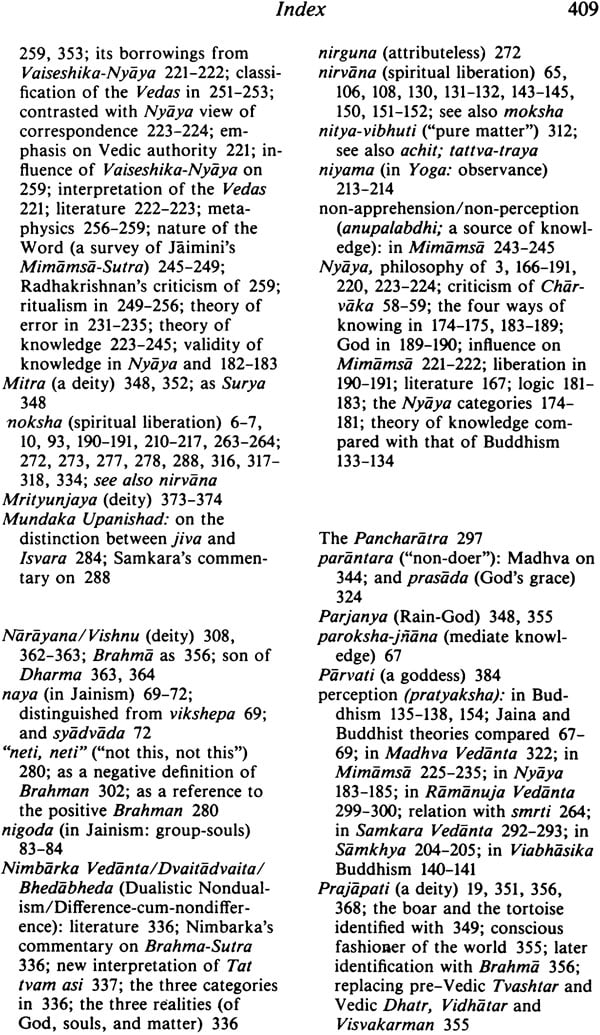
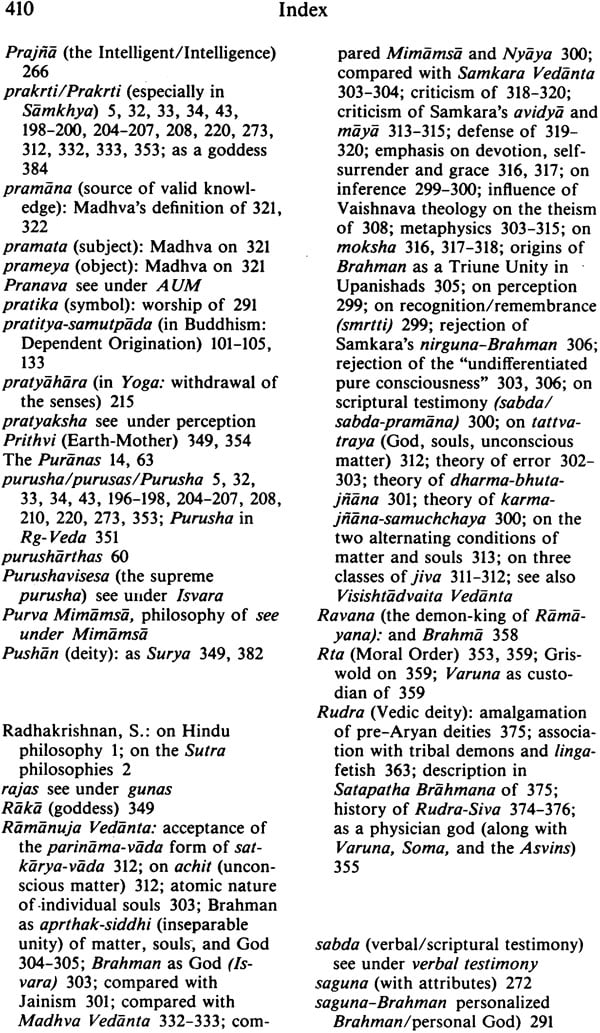
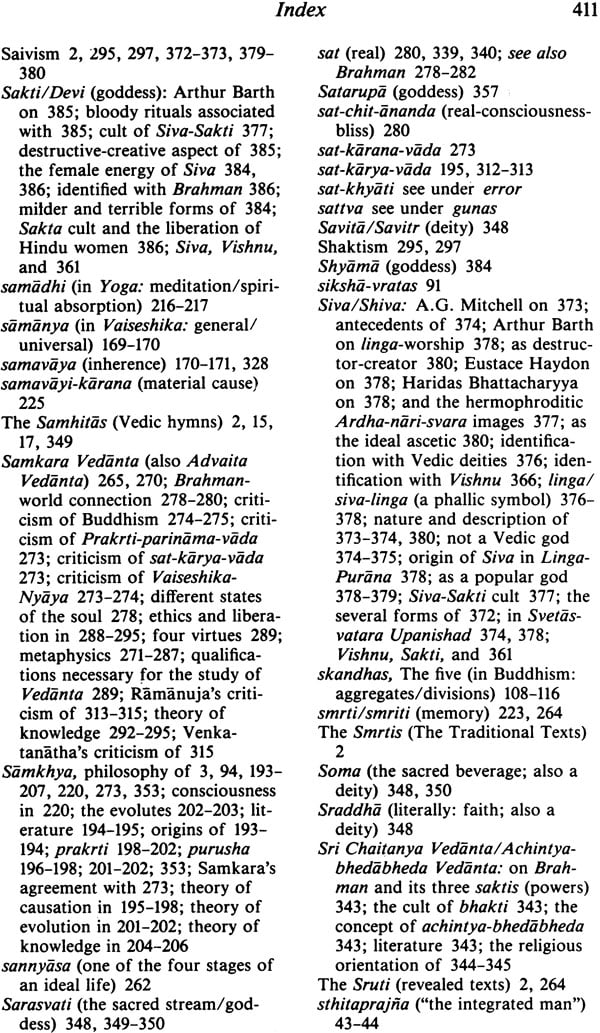
| Index | 403 |
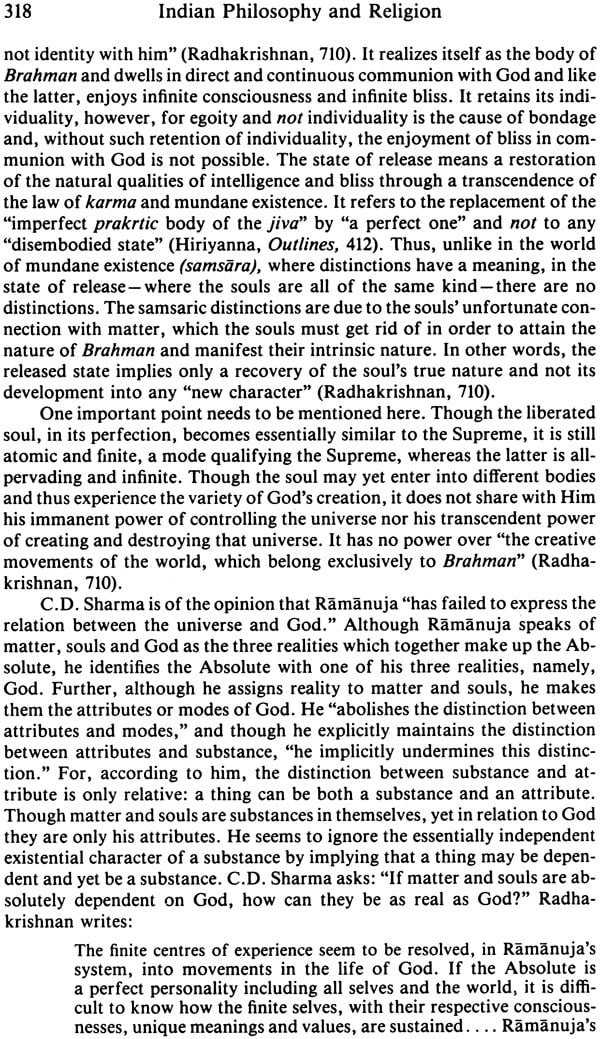
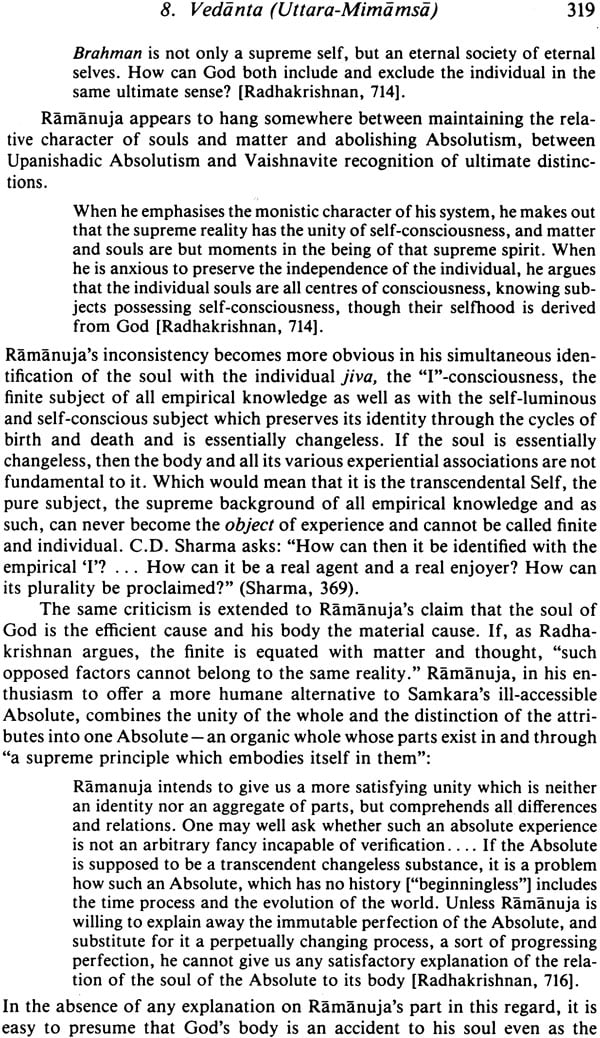
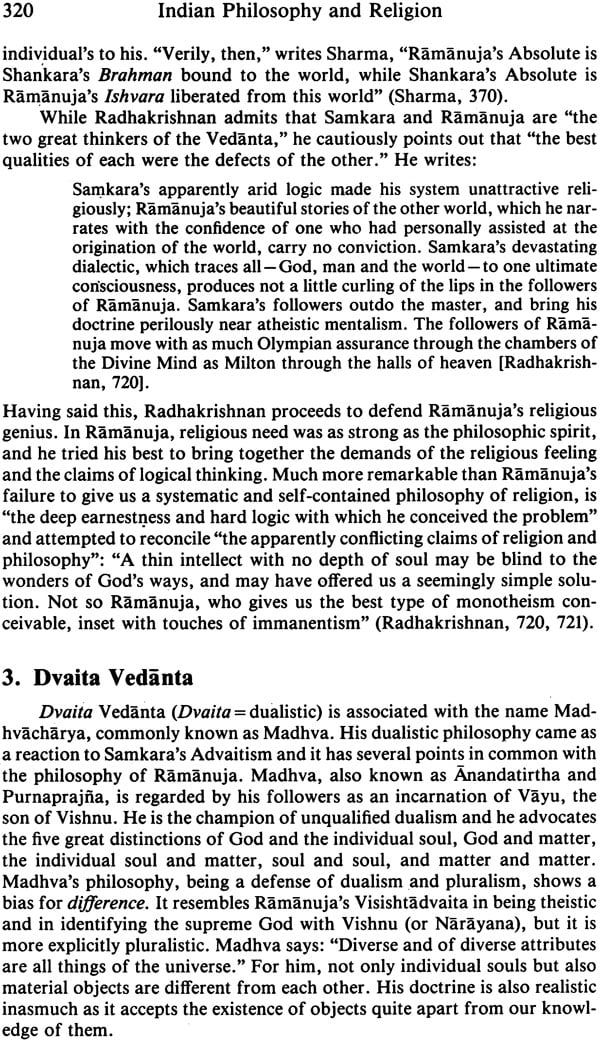
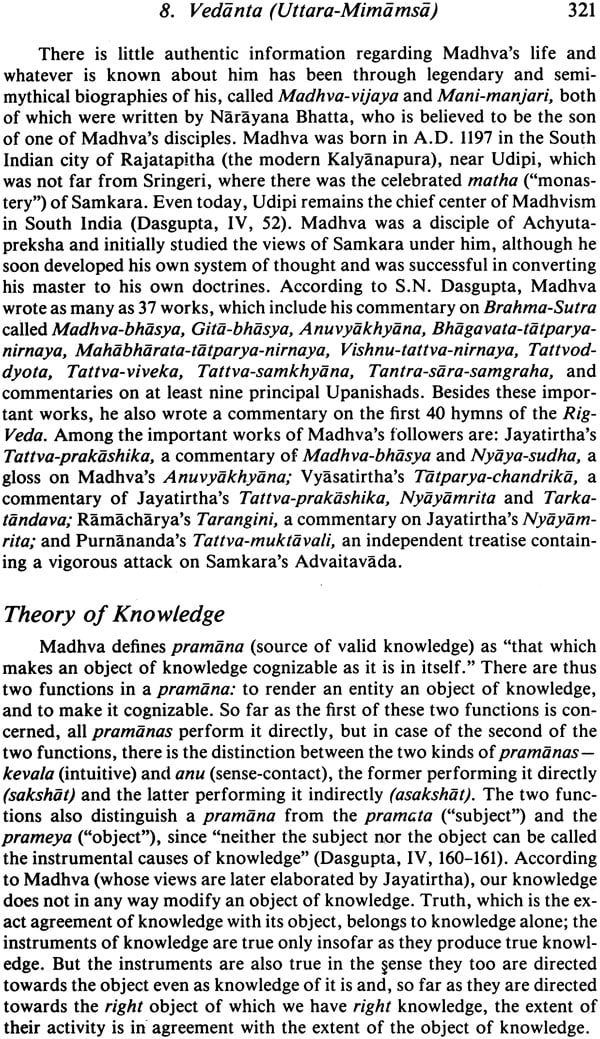







-
Q. Do you offer express shipping?A. Yes, we do have a chargeable 1-2 day delivery facility available for Indian pin codes. For express shipping, please reach out through help@exoticindia.com
-
Q. What locations do you deliver to?A. Exotic India delivers orders to all Indian pin codes and countries having diplomatic relations with India.
-
Q. Can I return the book?A. All returns must be postmarked within seven (7) days of the delivery date. All returned items must be in new and unused condition, with all original tags and labels attached. To know more please view our return policy.
-
Q. What is Handling & delivery charge?A. Handling and delivery charge is the sum of acquiring the book from the remote publisher to your doorstep.
-
Q. I accidentally entered wrong delivery address, can I change the address?A. Delivery addresses can only be changed only incase the order has not been shipped yet. In case of an address change, you can reach us at help@exoticindia.com
-
Q. How do I track my order?A. You can track your orders simply entering your order number through here or through your past orders if you are signed in on the website.
-
Q. How can I cancel an order?A. An order can only be cancelled if it has not been shipped. To cancel an order, kindly reach out to us through help@exoticindia.com.