






Filter
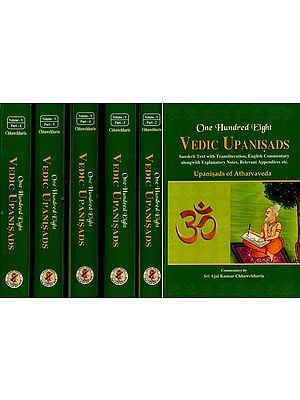
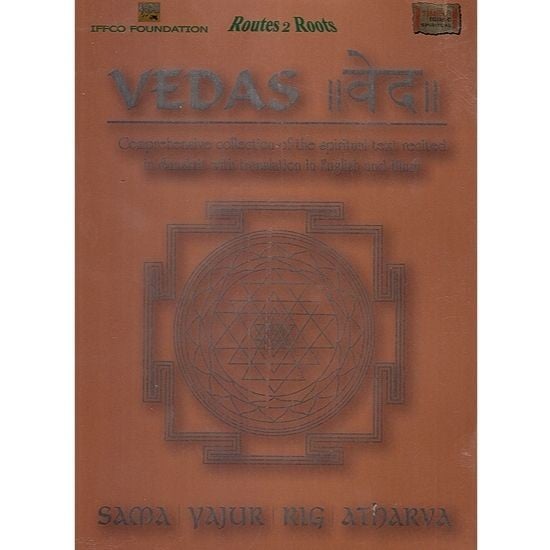
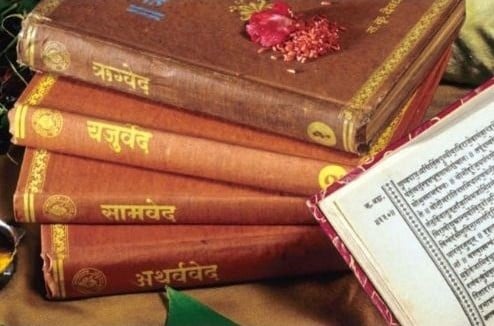
The Vedas, four in number, form the roots of Indian Civilization. They have been handed down to the posterity by oral tradition. Hence the name Sruti, 'what is heard'. And, they have been utilized in the performance of yajnas and Yagas (sacrifices), which were the most common form of Indian religion. Such utilization of the Vedas in the sacrificial processes naturally led to its division based upon the convenience of the chief priests conducting the sacrifices.
A compilation of all the hymns used by the hota-priest to invite the various deities to the sacrifice became the Rgveda. All the Liturgical parts of the Vedas, useful to the adhvaryu-priest, the chief executor of the sacrificial rites, brought together, formed the Yajurveda. Collection of all the musical chants, especially those associated with the Soma group of sacrifices, and to be sung by the udgatr-priest, the singer, was named as Samaveda.
The rest, a sort of miscellaneous appendix and addenda, became the Atharvaveda and was assigned to the brahma-priest, considered as the supervisor over the whole sacrificial process. The great sage Krishna Dvaipayana Vyasa effected this division by collecting all the mantras extant during his time, and editing them into four groups: Rk, Yajus, Saman and Atharvan.
He taught them to his four chief disciples: Paila (Rgveda), Vaisampayana (Yajurveda), Jaimini (Samaveda) and Sumantu (Atharvaveda). This is how these four Vedas took shape. The Vedas are divided in another way too: Mantra and Brahmana. Samhita is the name given to the collection of the Mantras. The Brahmana includes in itself two more sections, the Aranyaka and the Upanishad.
If the Mantras comprise the hymns, the Brahmanas contains liturgies in prose. The Aranyakas teach about meditations based on symbolical interpretations of the liturgical rites. The Upanisads may roughly be defined as philosophical treatises dealing with the ultimate problems of life. Conventionally speaking, it is the Samhita that is indicated by the word Veda.
For instance, Rgveda means only the Rksamhita or the Rgveda Samhita. The Brahmanas, the Aranyakas and the Upanisads of the Rgveda have different and independent names and are considered more like its appendages. These Samhitas, in course of time, branched off, leading to the formation of sakhas or recensions.
The origin of these sakhas probably lies in the fact that each of the principal sages like Paila or Vaisampayana had several disciples. These disciples or their successors might have done some editing and readjustment of the Vedic mantras to suit the needs of the rites which they had to perform and upon which local culture too might have exerted its influence.
Each Veda is a collection of 1,028 Vedic Sanskrit hymns and 10,600 Mantras, divided into ten volumes called Mandalas, which are found in the Rigveda Samhita. Anuvakas, several sections, make up each Mandala. Each Veda is a collection of hymns by several priest families. The first and 10th Mandalas are the youngest and the longest books. The second to Seventh Mandalas are the oldest parts of Rig-Veda but the shortest books.
Each
of the four Vedas has four subdivisions – Samhitas (mantras and
benedictions), Aranyakas (text on rituals, ceremonies, sacrifices, and
symbolic-sacrifices), Brahmanas
(commentaries on rituals, ceremonies, and sacrifices), and Upanishads
(texts discussing meditation, philosophy and spiritual knowledge). Some
scholars add a fifth category – the Upasana's (worship).
Yes, everybody can learn and read it. However, it's better to learn from a guru for getting a more logical explanation of its hymns. There are various translations of Vedas. For Vedas one needs a lot of patience and diligence to do own research to understand the actual meaning or the message. Must read Vedas with full faith that whatever is written in it would have some teaching or moral learning or some message to lead a better life.
The
problem with Vedas is that the hymns are not given in the sequential form (it's
not like a straight story where all events come one after the other). All of
the hymns are arranged without order (cluttered) hence they are confusing.
Rigveda: The Rigveda or
Rig Veda is an ancient Indian collection of Vedic Sanskrit hymns (sūktas).
Only one Shakha of the many survives today, namely the Śakalya
Shakha.
Yajurveda: The Yajurveda
is the Veda primarily of prose mantras for worship rituals. it is a compilation
of ritual-offering formulas that were said by a priest while an individual
performed ritual actions such as those before the yajna fire.
Samaveda: The Samaveda,
is the Veda of melodies and chants. it is a liturgical text which consists of
1,875 verses. All but 75 verses have been taken from the Rigveda.
Atharvaveda: or Atharvana
Veda is the "knowledge storehouse of atharvāṇas, the procedures for everyday life".
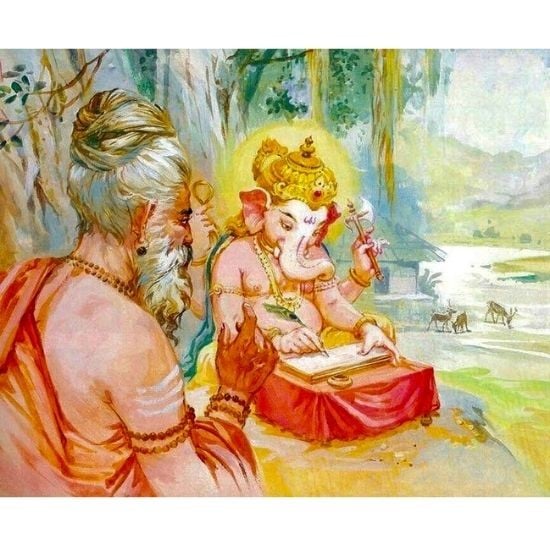
According to tradition, Vyasa is the compiler of the Vedas, who arranged the four kinds of mantras into four Samhitas (Collections). Hindus consider the Vedas to be apauruṣeya, meaning "not of a man, superhuman" and "impersonal, authorless." The Vedas, for orthodox Indian theologians, are considered revelations seen by ancient sages after intense meditation, and texts, carefully preserved since ancient times.
In the Hindu Epic Mahabharata, the creation of Vedas is credited to Brahma. The Vedic hymns themselves assert that they were skillfully created by Rishis (sages), after inspired creativity, just as a carpenter builds a chariot. Vedas are also called śruti ("what is heard") literature, distinguishing them from other religious texts, which are called smṛti ("what is remembered").
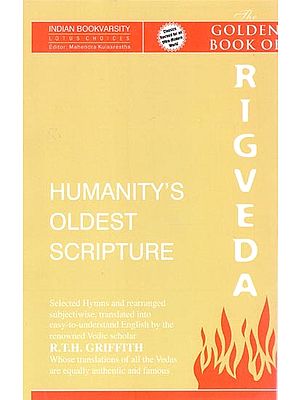
Rig Veda is the oldest of the Vedas, the sacred texts of Hinduism. It means “The Knowledge of Verses”. Written in Sanskrit around 1500 BC, Rig Veda consists of 1028 poems arranged into 10 circles or Mandalas.
The oldest part of the Rig
Veda Samhita was orally composed in north-western India (Punjab) between c.
1500 and 1200 BCE, while book 10 of the Rig Veda and the other Samhitas were composed
between 1200 and 900 BCE, between the Yamuna and the Ganges rivers, the
heartland of Aryavarta and the Kuru Kingdom. The "circum-Vedic"
texts, as well as the redaction of the Samhitas, date to c. 1000–500 BCE.



Visual Search
 Upload an Image