BOOKS ON VAISHNAVISM
Explore Essential Vaishnavism Books for Devotees





Filter
Books on Vaishnavism
Vaisnavism and Its Literature
The Narayaniya section of the epic Mahabharata (vide Santiparva, Chapters 334-351) seems to be the earliest systematisation of Vaisnavism. Other sources are: Bhagavad Gita, Visnu purana, Bhagavata, Pancharatra and Vaikhanasa Agamas and Bhaktisutras of Narada and Sandilya.
Various Schools of Vaisnavism
The basic structure of Vaisnavism as revealed in some of the earliest sources like the Narayana advocated the supremacy of Visnu-Narayana as God and bhakti or devotion to him as the chief means of moksa or liberation. However, different ways of expounding it by the various acaryas (religious teachers) gave rise, in course of time to different sects and subsects of Vaisnavism.
The Alvars
They were the earliest Vaisnava teachers known to history. They belonged to Tamil Nadu and lived probably during the period 2nd to the 8th century A. D. Among them were saints from all castes and included a woman (Godadevi) also. Alvars taught that Visnu-Narayana was the Supreme God and bhakti or devotion to him was the means of liberation.
They accepted the avatars (incarnations) of Vishnu such as Rama and Krishna and advocated the importance of arca or ritualistic worship with the strong faith that God descends into the icon in a subtle form during the worship.
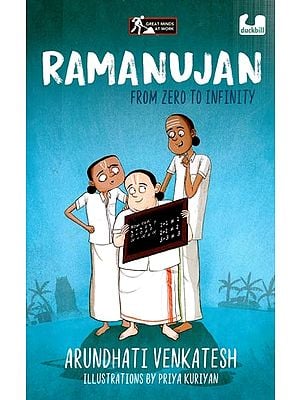
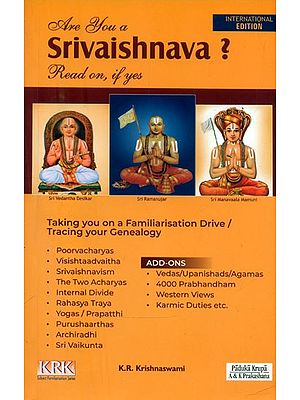
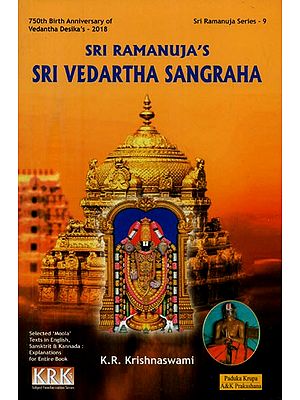
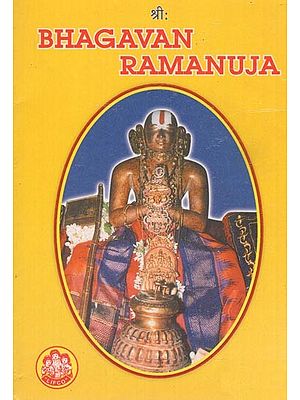
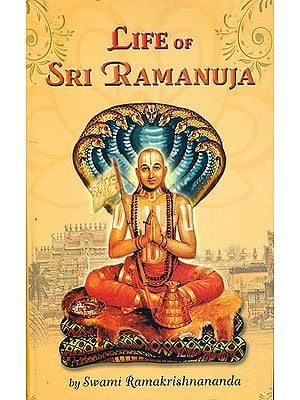
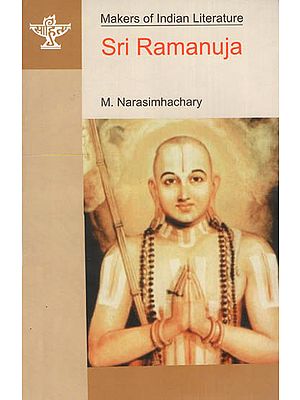
Ramanuja (A. D. 1017-1137)
To Ramanuja, the Brahman or Isvara of Vedanta is actually Narayana (or Visnu) inseparably associated with Sri or Laksmi. Narayana creates the world with his twofold prakrti (basic nature), the acit (insentient matter) and the cit (sentient beings, the jivas or individual souls). He sustains it and, at the end of a cycle, withdraws it.
Sri or Lakshmi is his divine consort, the personification of his compassion. She intervenes with Narayana on behalf of the jivas and gets them what they want, including liberation. Bhakti or devotion to both of them is the chief means of liberation. Since Ramanuja gives equal importance to Sri (or Laksmi) along with Visnu-Narayana, his system is known as Srivaisnavism.
Madhva (A. D. 1238-1317)
The credit for establishing Vaisnavism on a firm foundation and making it popular among the masses should go to Madhva or Madhvacarya. His philosophy, known as Dvaita Vedanta, can be summed up as follows: Srihari (Visnu-Narayana) is the highest truth who can be known only through the Vedas.
The created world is real. The jivas are all different from one another and are dependent on Srihari. Among them also, there are differences of quality and status. Mukti or liberation is actually the experiencing of one's real nature as ananda or bliss.
This can be got through pure devotion to Srihari.' From this philosophy of devotion to Visnu evolved the various corollaries such as ritualistic worship and devotional singing, giving rise to a regular movement of saints of devotion.
Nimbarka (12th century A. D.)
Nimbarka's philosophy is known as Dvaitadvaita. Parabrahma or God is Krishna. He is the supreme independent reality. The jivatmas (individual souls) are infinite in number and are atomic in size. Prakrti is insentient nature out of which the world is made. The jivas and prakrti are dependent realities ever inseparable from Parabrahman.
The relationship between them is like that of the sea and the waves or the sun and its rays. Bhakti or devotion to Krishna along with Radha, surrender to them and obedience to the guru of spiritual teacher are the chief means of liberation. Nimbarka was the first Vaisnava teacher to introduce Radha as Krishna-sakti or divine consort.
Ramananda (A. D. 1400-1470)
Though ordained by a monk of the Ramanuja sect of Vaisnavism, Ramananda deviated from it in advocating devotion to Rama as the best means of liberation and initiated persons of all castes into his cult. Kabir (A. D. 1440-1518), barber Sena (of Maharashtra) and Padmavati, a woman, were among his group of disciples. Tulasidas (A. D. 1532-1623) was a follower of Ramananda's path of devotion. He succeeded to a great extent in spreading Vaisnavism with Rama as the central deity.
Kabirdas (A. D. 1440-1518)
Prominent among the leaders of the Bhakti movement of the Middle-Ages, Kabir (supposed to be a Muslim) was a disciple of Ramananda. Devotion to Rama, ignoring the many social conventions, was the path he accepted and preached. In course of time his followers formed a separate sect in his name and came to be known as Kabirpanthis.
Vallabha (A. D. 1473-1531)
Originally hailing from the Telugu country (the present Andhra Pradesh) Vallabha settled down in Vrndaban. He was not only a great scholar but also a great devotee. He further strengthened the movement of Krishnabhakti. Himself remaining a householder he preached an easy path of worship of and total surrender to Krishna.
Like Ramananda he too accepted disciples from all castes and even from other religions. His disciples were responsible for building temples of Krishna and spreading the sect. Pustimarga ('path of spiritual nourishment') which advocates the path of total self-surrender to God receiving proper initiation from a qualified guru is Vallabha's special contribution.
Caitanya (A D. 1486-1533)
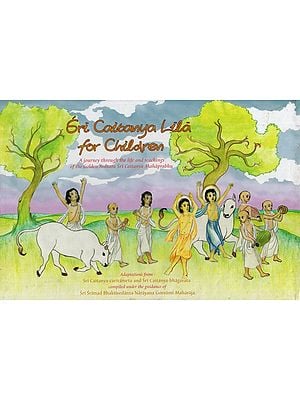
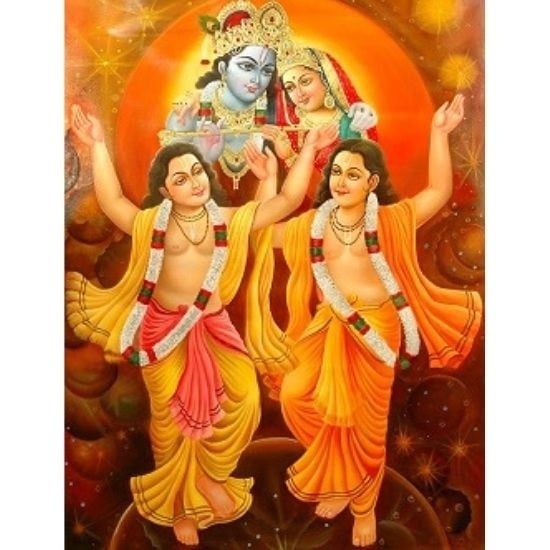
Caitanya or Srikrishna Caitanya, who hailed from Bengal, is another bright jewel shining brilliantly among the leaders of Vaisnavism. Though an unrivalled scholar, especially in logic, revelling in defeating other scholars, he was totally transformed into an equally unrivalled devotee of Krishna, by Isvarapuri, a samnyasin of the Madhva Order.
Group-singing of devotional songs on Krishna and dancing in his name generally called Sankirtan are his contribution. He propagated a philosophy known as Acintyabhedabheda and tried to wipe off caste distinctions in the name of Krishna. His followers consider him a combined incarnation of Radha and Krishna.
Who started Vaishnavism?
The founding of Vaishnavism is traditionally attributed to Nathamuni of the 10th century CE; its central philosopher was Ramanuja of the 11th century, who developed the Vishishtadvaita (qualified non-dualism) Vedanta sub-school of Hindu philosophy. Between the 6th and 9th centuries, the twelve Alvars (poet-mystics) laid the foundations for the Shri Vaishnavas based in Shri Rangam, South India.
After him emerged three other sampradayas headed by Nimbarka (1125–1162), Vishnuswami (1200–1250) and Madhva (1238–1317). From the twelfth century onwards a bhakti renaissance swept across India, bringing waves of devotional sentiment.
Who is the God of Vaishnav?
Lord Vishnu is the God of Vaishnavas. Vishnu is one of the principle deities of Hinduism, and, along with Brahma and Shiva, forms the Hindu trinity. Vishnu is the Preserver of life, known for his steadfast principles of order, righteousness, and truth. When these values are under threat, Vishnu emerges out of his transcendence to restore peace and order on earth.
Vishnu can well be seen as the model of an ideal leader that our Vedic forefathers envisioned. Vaishnavism is one of the major Hindu denominations along with Shaivism, Shaktism, and Smartism. It is also called Vishnuism, its followers are called Vaishnavas or Vaishnavites, and it considers Vishnu as the Supreme Lord.
What are the 4 Vaishnava Sampradayas?
There are four Vaishnava sampradayas – all beginning from Vishnu or Krishna. These are Brahma Sampradaya, Laxmi Sampradaya, and Siva Sampradaya & Kumar Sampradaya. Vaishnavas should study the commentaries written by the heads of these four branches, fully assimilating the import of the essence of their teachings.
A detailed study of each of these branches is essential to understand the deep significance of this Sampradaya. The propagation of these Sampradayas in the Guru-Shishya Parampara enables to maintain the purity and essence as divined upon by its founders.
What are the key beliefs of Vaishnavism?
The key beliefs of Vaishnavism are:
☛ Lord Vishnu is the Supreme Deity from which
everything emanates. He is the cause of all causes and is the Supreme
controller, enjoyer, and proprietor of everything.
☛ The Absolute Truth (God) is not impersonal but has personal features.
☛ We are not our bodies or mind but are spirit souls.
☛ All living entities are eternally the parts and parcels of the Supreme Lord.
☛ By chanting the holy names of the Lord, one reawakens his lost relationship with Him and thus returns to the Lord’s abode, Vaikuntha, the place of eternal happiness.

- Exotic India Art Pvt Ltd
A16/1 WAZIRPUR INDUSTRIAL AREA
Delhi 110052
Delhi
India
Tel:+91-8031404444
- Exotic India
2573 Hamline Avenue N Suite A
Roseville, MN - 55113
United States of America
Phone: +1 347 468 7193
- 71/2 Kirti Nagar Main Road
WHS Block 2
Delhi 110015
India
Tel: +91 95991 00764


Visual Search
 Upload an Image


and exclusive offers!